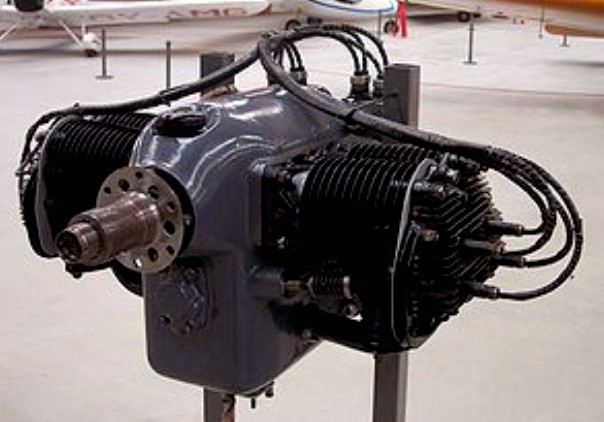
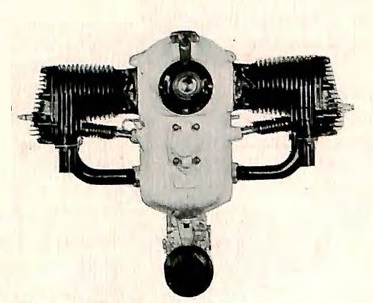
The 37 hp (28 kW) A40 / O-110 was introduced in the depths of the Great Depression. At the time there were a number of small engines available but all suffered from either high cost, complexity, or low reliability. A carbureted four-cylinder, horizontally opposed, air-cooled aircraft engine, it was developed especially for use in light aircraft. The A-40 (ATC 72, 174) addressed all those shortcomings and was instrumental in the production of light aircraft in the difficult economic constraints of the period. The A-40-4 introduced an increase in power to 40 hp (30 kW). The engine later inspired the A-50 and subsequent engines.
The A40 featured single ignition until the A-40-5 version, which introduced dual ignition. All engines in this family have a 5.2:1 compression ratio and were designed to run on fuel with a minimum octane rating of 73.
Produced between 1931 and 1941, the entire family of engines had its certification terminated on 1 November 1941. Engines produced before that date are still certified, but none can be produced after that date.
Continental A-40 37hp
Variants:
A40 Single ignition, 37 hp (28 kW) at 2550 rpm, dry weight 144 lb (65 kg)
A40-2 Single ignition, 37 hp (28 kW) at 2550 rpm, dry weight 144 lb (65 kg)
A-40-3 Single ignition, 37 hp (28 kW) at 2550 rpm, dry weight 144 lb (65 kg) Featured cadmium-nickel connecting rod bearings.
A40-4 Single ignition, 40 hp (30 kW) at 2575 rpm, dry weight 144 lb (65 kg), Steel backed connecting rod inserts
A40-5 Dual ignition, 40 hp (30 kW) at 2575 rpm, dry weight 156 lb (71 kg)
Applications: Aeronca KC Piper J-2 Cub Piper J-3 Cub Porterfield Collegiate Rose Parakeet Taylor E-2 Cub Taylorcraft A Welch OW-5M
Specifications:
A40-5 Type: 4-cylinder air-cooled horizontally opposed aircraft piston engine Bore: 3.125 in (79.3 mm) Stroke: 3.75 in (95.3 mm) Displacement: 115 in³ (1.9 L) Length: 27.9375 in (710 mm) Width: 26.4375 in (672 mm) Height: 20.4375 in (519 mm) Dry weight: 154 lb (69.9 kg) dry with carburrettor and magnetos Valvetrain: One intake and one exhaust side-valve per cylinder with a flathead valve design. Fuel system: CMC Stromberg NA-82 carburetor Fuel type: minimum 73 octane Cooling system: Air-cooled Power output: 40 hp (30 kW) at 2,575 rpm Specific power: 0.35 hp/in³ (15.3 kW/L) Compression ratio: 5.2:1 Specific fuel consumption: 0.72 lb/hp/hr (0.439 kg/kW/hr) Oil consumption: 0.025 lb/hp/hr (0.0153 kg/kW/hr) Power-to-weight ratio: 0.28 hp/lb (0.45 kW/kg)
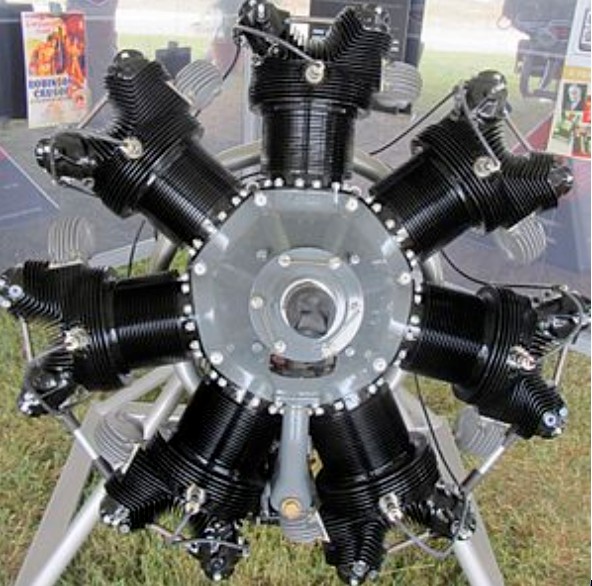
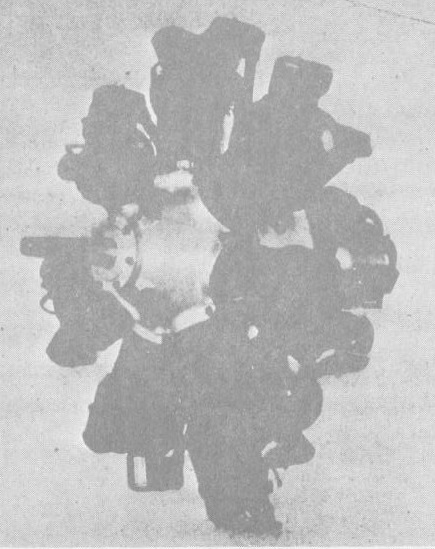
The Continental R-670 (factory designation W-670 (ATC 80 and 120)) was a seven cylinder four-cycle radial aircraft engine produced by Continental displacing 668 cubic inches (11 litres) and a dry weight of 465 lb (211 kg). First run in 1934, horsepower varied from 210 to 240 at 2,200 rpm. The engine was the successor to Continental’s first radial engine, the 170hp Continental A-70. This engine was used on many aircraft in the 1930s and 1940s. The R-670 was widely used in the PT-17 Stearman primary training aircraft of the U.S. military.
W-670
The 1934 W-670 received ATC 168.
In addition to being used in aircraft, the R-670 was used in a number of light armoured vehicles of World War II.
Variants:
W-670-K carburettor, 5.4:1 compression, 73 Octane, front exhausts and 225 hp (168 kW)
W-670-L carburettor, 5.4:1 compression, 73 Octane, rear exhausts and 225 hp (168 kW)
W-670-M carburettor, 6.1:1 compression, 80 Octane, front exhausts and 240 hp (179 kW)
W-670-N carburettor, 6.1:1 compression, 80 Octane, rear exhausts and 240 hp (179 kW)
W-670-K1 fuel injection, 5.4:1 compression, 73 Octane, front exhausts and 230 hp (172 kW)
W-670-L1 fuel injection, 5.4:1 compression, 73 Octane, rear exhausts and 230 hp (172 kW)
W-670-M1 fuel injection, 6.1:1 compression, 80 Octane, front exhausts and 250 hp (186 kW)
W-670-N1 fuel injection, 6.1:1 compression, 80 Octane, rear exhausts and 250 hp (186 kW)
W670-6A (military R-670-5)
W670-6N (military R670-4, -11A)
W670-17 (military R-680-8)
Applications: American Airmotive NA-75 Boeing Stearman CallAir Model A Cessna 190 Fairchild PT-23 G class blimp M1 Combat Car M2 Light Tank M3 Stuart LVT-4 Water Buffalo Timm N2T Tutor Waco 240-A Waco UEC and UIC Waco VKS-7 Waco QCF-2
Specifications:
R-670-K Type: Seven cylinder air-cooled radial Bore: 5+1⁄8 in (130.2 mm) Stroke: 4+5⁄8 in (117.5 mm) Displacement: 668 cu in (10.95 l) Length: 34+3⁄16 in (868.4 mm) Diameter: 42+1⁄2 in (1,079.5 mm) Dry weight: 450 kg (992.1 lb) Valvetrain: 1 inlet and 1 exhaust valve per cylinder Fuel system: 1 Stromberg NA-R6 Carburetor Fuel type: 65 octane Oil system: Dry sump, one pressure pump, one scavenge pump, encoesed valve-train Cooling system: Air-cooled Power output: 225 hp (168 kW) at 2,175 rpm Specific power: 0.337 hp/in³ Compression ratio: 5.4:1 Fuel consumption: 13 US Gal/hr (49 l/hr) at cruising rpm Specific fuel consumption: 0.54 lb/hp/hr (0.328 kg/kW/hr) – at rated rpm Oil consumption: 0.4 US Gal/hr (1.5 l/hr) at cruising rpm Power-to-weight ratio: 0.49 hp/lb at cruising rpm
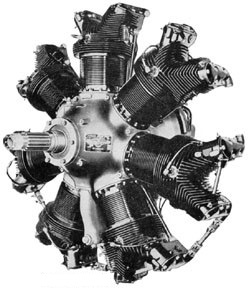
The 1928 A-70 (ATC 32) featured a cast aluminium crankcase in two sections, a two piece forged chrome-nickel steel crankshaft, and one piece master connecting rod. All rods were H section. The crankshaft was mounted on ball and roller bearings.
The pistons were unribbed cast aluminium in composite steel and aluminium cylinder assemblies. The heads were screwed and shrunk to steel barrels. The valves were tulip, tungsten inake and CNS exhaust.
All accessory drives except pump cross shaft were on plain bearings with full pressure lubrication. The rocker arms were on ball bearings.
There was no rotary induction system, but a double branch manifold feeding a horseshoe header. The lubrication system elibinated all internal and external piping.
The engine could be installed in the mounting ring without removal of any accessories.
Standard equipment was the exhaust nose ring and piping complete, nose cowling, air heater and cleaner assemblies, priming pump and fittings, ignition switch, and tool kit.
Accessories available at extra cost were any starter (including Heywood) using standard SAE mounting cylinders drilled for Heywood fittings, any generator with SAE flange, any fuel pump with SAE flange, and propeller hub.
Type: 7 cylinder air cooled radial Dept of Commerce Approved Certificate Rating: 165 hp at 2000 rpm Displacement: 544 cu.in Compression ratio: 5.4-1 Bore: 4 5/8 in Stroke: 4 5/8 in Length: 39 in Diameter: 41 3/4 in Weight: 430 lb Fuel consumption: not more than .55 lb/hp/hr Oil consumption: not more than .035 lb/hp/hr Lubrication: Pressure and scavenger gear pumps, 75 lb/sq.in Ignition: 2 Scintilla magneto Carburation: Stromberg Spark plugs: 2 per cylinder B.G. Price: $2700
Founded in 1929, Continental Motors, Inc. is an aircraft engine manufacturer located at the Brookley Aeroplex in Mobile, Alabama. Although Continental is most well known for its engines for light aircraft, it was also contracted to produce the air-cooled V-12 AV-1790-5B gasoline engine for the U.S. Army’s M47 Patton tank and the diesel AVDS-1790-2A and its derivatives for the M48, M60 Patton and Merkava main battle tanks. The company also produced engines for various independent manufacturers of automobiles, tractors, and stationary equipment (pumps, generators and machinery drives) from the 1920s to the 1960s.
In 1929, Continental introduced its first aircraft engine, a seven-cylinder radial designated as the A-70, with a displacement of 543.91 cu in (8.91L) that produced 170 hp (127 kW). In August 1929, the Continental Motors Company formed the Continental Aircraft Engine Company as a subsidiary to develop and produce its aircraft engines.
During the late 1930s, early 1940s the Gray Marine Motor Company adapted Continental engines for maritime use. On 14 June 1944 the company was purchased by Continental for US$2.6 million. John W. Mulford, the son of one of Gray’s founders was appointed general manager of Gray by Continental. Gray’s continued to make marine engines in the post-war period until its closure by Continental in about 1967.
As the Great Depression unwound, 1930 saw the company introduce the 37 hp (28 kW) A-40 four-cylinder engine. A follow-on design, the 50 hp (37 kW) A-50 was introduced in 1938 and was used to power the Taylor Cub and derivative Piper Cub. As the Second World War started in 1939 Continental commenced building aircraft engines for use in British and American tanks. Continental formed Continental Aviation and Engineering (CAE) in 1940 to develop and produce aircraft engines of over 500 hp (373 kW) Continental ranked 38th among United States corporations in the value of wartime production contracts.
During the late 1930s, early 1940s the Gray Marine Motor Company adapted Continental engines for maritime use. On 14 June 1944 the company was purchased by Continental for US$2.6 million. John W. Mulford, the son of one of Gray’s founders was appointed general manager of Gray by Continental. Gray’s continued to make marine engines in the post-war period until its closure by Continental in about 1967.
During the 1950s, the A-65 was developed into the more powerful 90 hp (67 kW) C-90 and eventually into the 100 hp (75 kW) O-200. The O-200 powered a very important airplane design milestone: the Cessna 150. By the 1960s turbocharging and fuel injection arrived in general aviation and the company’s IO-520 series came to dominate the market.
In 1969, Teledyne Incorporated acquired Continental Motors, which became Teledyne Continental Motors (TCM). That same year, the Continental Tiara series of high output engines were introduced, although they were dropped from the line after 1978. The company brought the TSIO-520-BE for the Piper PA-46 to market in 1984 and it set new efficiency standards for light aircraft piston engines. Powered by a liquid-cooled version of the IO-240, the Rutan Voyager was the first piston-powered aircraft to circumnavigate the world without refueling in 1986.
NASA selected Continental to develop and produce GAP in 1997, a new 200 hp (150 kW) piston engine to operate on Jet-A fuel. This was in response to 100-octane aviation gasoline becoming less available as a result of decreased demand, due to smaller turboprop engines becoming more prevalent.
In 2008, Teledyne Continental’s new president, Rhett Ross announced that the company was very concerned about future availability of 100LL avgas and as a result would develop a diesel engine in the 300 hp (220 kW) range for certification in 2009 or 2010. By the fall of 2009 the company was feeling the effects of the economic situation and the resulting reduced demand for aircraft engines. The company announced that it would close its plant for two one-week periods in October 2009 and January 2010. Salaried employees would move to a four-day work week with one week vacations for Thanksgiving and Christmas, with the aim “to protect as much of our valuable employee base as possible”.
On December 14, 2010, Continental’s parent Teledyne announced that Teledyne Continental Motors, Teledyne Mattituck Services and its general aviation piston engine business would be sold to Technify Motor (USA) Ltd, a subsidiary of AVIC International, for US$186 million in cash. AVIC is owned by the Chinese government. In May 2011, the transaction was reported as complete and the company renamed Continental Motors, Inc.
Diesel engines are manufactured in Germany by Continental Motors Group, Ltd., an AVIC International Holding Corporation company. Previously the company was known as Centurion Aircraft Engines before its 2013 acquisition by Continental. Several diesel engines were available from Continental in 2016: the CD-135 and CD-155 four cylinders and V6 CD-300, producing 310 hp.
Diesel engines are manufactured in Germany by Continental Motors Group, Ltd., an AVIC International Holding Corporation company. Previously the company was known as Centurion Aircraft Engines before its 2013 acquisition by Continental. Several diesel engines were available from Continental in 2016: the CD-135 and CD-155 four cylinders and V6 CD-300, producing 310 hp.
USA Based at Amityville, Long Island, NY, in 1919; was then building KB-3T two-seat trainer biplane, designed by Vincent Burnelli and powered by Curtiss OX engine.
Long range sea surveillance flying boat, USA, 1939
Engine: 2 x Wright R 3350-8 Cyclone, 2268 hp Length: 74.081 ft / 22.58 m Heigh : 25.164 ft / 7.67 m Wingspan: 110.007 ft / 33.53 m Wing area: 1047.983 sqft / 97.36 sq.m Max take off weight: 48007.3 lbs / 21772.0 kg Weight empty: 29339.7 lb / 13306.0 kg Max. speed: 215 kts / 398 km/h Cruising speed: 118 kts / 219 km/h Service ceiling: 21391 ft / 6520 m Wing load: 45.92 lb/sq.ft / 224.00 kg/sq.m Range: 2850 nm / 5279 km Armament: 1x 37mm Cannon, 4x cal.50 MG (12,7mm)
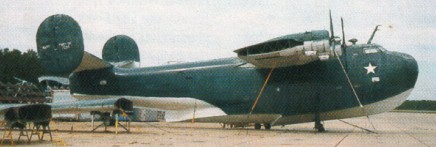
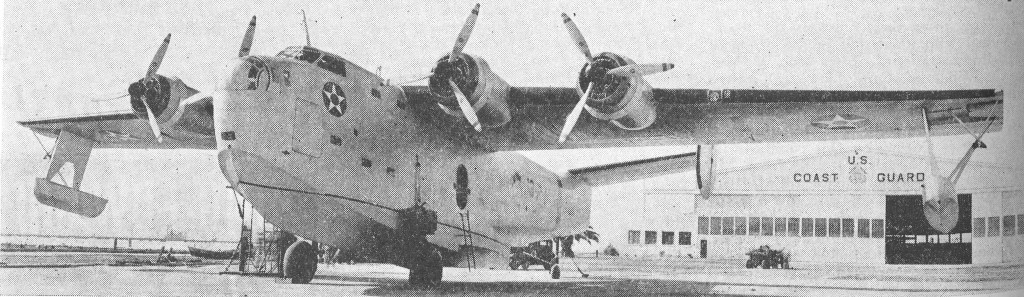
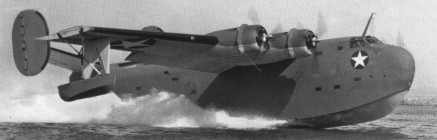
The Consolidated PB2Y Coronado series was a planned replacement for the 1930’s era Consolidated PBY Catalina design already in place.
The PB2Y Coronado first appeared in the XPB2Y-1 prototype form, was first flown in December 1937, and delivered to the US Navy in August 1938. After service trials it served for some time as Flagship of Aircraft, Scouting Force, US Navy. It suffered almost immediately with poor water-based handling and equally dangerous in-air instability issues related largely to the single fin tail design. The tail section was redesigned to incorporate twin-rounded vertical fins which helped iron out the handling issues. The US Navy took this redesigned model as the PB2Y-2 and continued testing as needed. Results necessitated the addition of better armor protection and self sealing fuel tanks which further produced the PB2Y-3. This model would go on to become the definitive production model and also join service in limited numbers with the British RAF.
The first PB2Y-2 (the production development) went into service in January 1941. The PB2Y-3 was ordered in quantity in 1941 and remained in production until 1944 as a long-range patrol-bomber flying-boat.
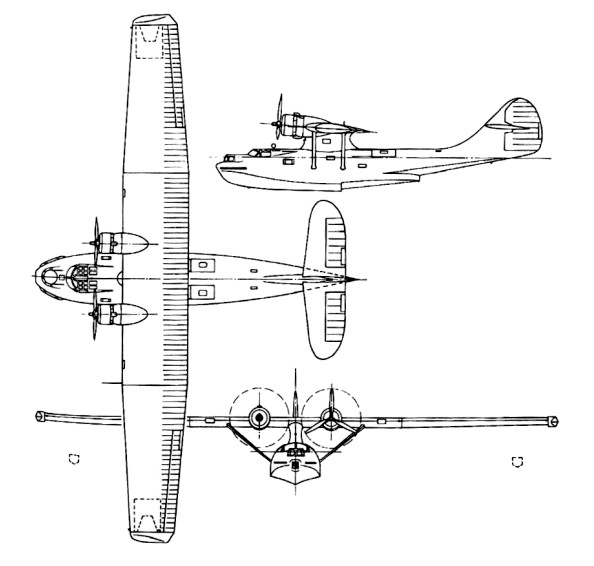
The large ASV radome was visible just aft of the cockpit. Wings were high mounted and forward on the tall fuselage and featured retractable wing-tip floats which helped in building better aerodynamic tendencies (this function was similar to the PBY Catalina). The twin fin tail section was also mounted high on the design at rear.
Armament of the Coronado was twin 12.7mm (.50 caliber) M2 machine guns housed in a bow turret, a dorsal turret amidships and a rear turret just aft and between the twin tail fins. An additional 12.7mm machine gun was positioned to fire from hatches in the beam position on either side. The Coronado could fulfill an offensive role by being fitted with up to 1,000 pounds of bombs (held internally in the wing roots) or two Mark 13 type torpedoes held externally.
Despite being of sound design, the Coronado did not dislodge the PBY Catalinas in long distance reconnoitering sorties. Additionally, the Coronado was not implemented greatly as a bomber or anti-ship element, being superseded in this role by the equally capable Consolidated PB4Y-1 series, and aircraft similar in scope but dedicated to land bases and thus not needing any specialist training for water operations.
Many Coronado flying-boats were converted into transports under the designation PB2Y-3R, with military equipment removed, nose and tail turret positions faired over and the four 894kW Pratt & Whitney R-1830-88 Twin Wasp engines replaced by R-1830-92. Accommodation in this version was for a crew of five (instead of ten) and 44 passengers; 7,257kg of cargo; or 24 passengers and 3,900kg of cargo. A naval ambulance version of the Coronado was also produced as the PB2Y-5H, accommodating 25 stretchers.
In British service, the PB4Y Coronado was known as the Coronado Mk I, of which some 10 PB2Y-3 models were acquired by RAF Transport Command for transatlantic freight carrying. Several subvariants appeared as the PB2Y-3R – a dedicated transport seating some 45 passengers or cargo – and the PB2Y-5R – a converted model for air ambulance duties with room for 25 litters.
PB2Y-3R at San Diego Bay 1944
In all, 210 Coronados were produced with most models serving in the Pacific Theater (sans the RAF models in the Atlantic).
Consolidated PB2Y Coronado Long range flying boat bomber, USA, 1937 Engine : 4 x Pratt&Whitney R 1830-88 Twin Wasp, 1184 hp Sizes and weights Length : 79.265 ft / 24.16 m Height : 27.493 ft / 8.38 m Wingspan : 114.993 ft / 35.05 m Wing area : 1779.935 sqft / 165.360 sq.m Max take off weight : 68011.0 lb / 30844.0 kg Weight empty : 40942.4 lb / 18568.0 kg Max. speed : 194 kts / 359 km/h Cruising speed : 123 kts / 227 km/h Service ceiling : 20505 ft / 6250 m Cruising altitude : 1509 ft / 460 m Wing load : 38.34 lb/sq.ft / 187.00 kg/sq.m Maximum range : 2059 nm / 3814 km Range : 1191 nm / 2205 km Armament : 8x cal.50 MG (12,7mm), 5443kg Bomb.
Consolidated PB2Y-3 Coronado Engines: 4 x Pratt & Whitney R-1830-88 Twin Wasp 14-cylinder air-cooled radial, 1,200hp, 895kW Length: 79 ft 3 in (24.2m) Wingspan: 114.99ft (35.05m) Wing area: 165.36 sq.m / 1779.92 sq ft Height: 27 ft 6 in (8.38m) Empty Weight: 40,935lbs (18,568kg) Maximum Take-Off Weight: 68,002lbs (30,845kg) Maximum Speed: 223mph (359kmh; 194kts) Cruise speed: 227 km/h / 141 mph Maximum Range: 2,371miles (3,815km) Rate-of-Climb: 570ft/min (174m/min) Service Ceiling: 20,505ft (6,250m; 3.9miles) Armament: 2 x 12.7mm machine guns in bow turret 2 x 12.7mm machine guns in dorsal turret 2 x 12.7mm machine guns in tail turret 1 x 12.7mm machine gun in left beam position 1 x 12.7mm machine gun in right beam position 8 x 1,000lb (454kg) bombs held internally in wings OR 2 x Mark 13 torpedoes (externally held) Accommodation: 10 + 45 Hardpoints: 2
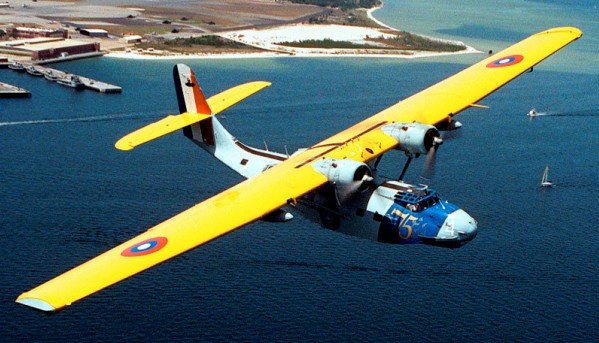
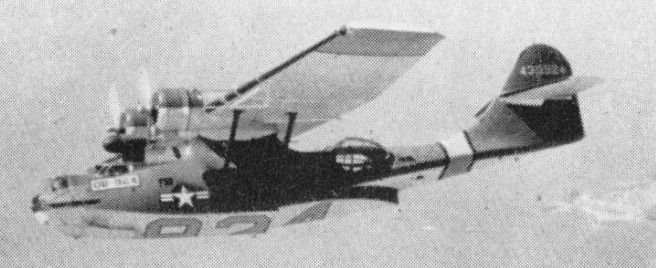
The Consolidated Model 28, designed by Isaac Laddon, originated from a US Navy requirement of late 1933.
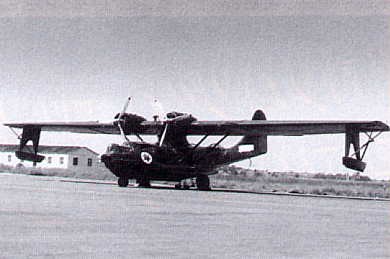
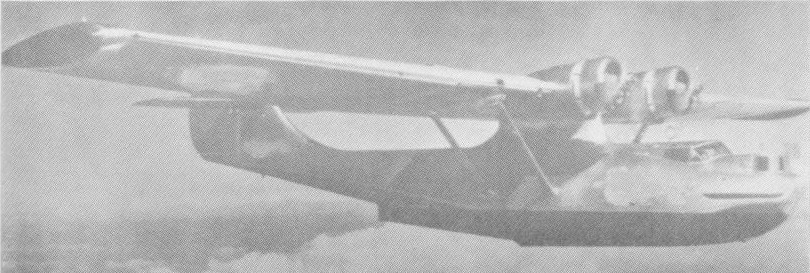
The prototype XP3Y-1, developed from the PY-1/P2Y and flown for the first time on 28 March 1935, introduced the parasol wing constructed on the basis of a cantilever wing requiring no supporting structures, although two small-section struts were mounted between wing and hull on each side. Another new feature was the introduction of stabilising floats which retracted in flight to form the wingtips. Power was from two 825 hp R-1830-54 engines.
Initial trials of the prototype left little doubt that the Navy was about to acquire a significant aircraft. Sixty PBY-1 ordered in 1933 and powered by 850 hp engines were ordered and began to enter squadron service in 1937. By mid-1938 14 squadrons were operational.
The first 22 aircraft built were PBYs and were built in the USA. Also built by Boeing Aircraft of Canada at their Vancouver plant, as the PB2B-1. Fifty-five Boeing Canada-built PBY-5 were eligible for conversion to 28-5ACF status which allows further conversion to air transport category.
Production as a pure flying-boat ended with the PBY-4, for the last of these was converted to an amphibian with retractable tricycle-type landing gear, under the designation XPBY-5A. Subsequent aircraft had this as standard. Production of the PBY series would be undertaken by Consolidated in the United States, Canadian Vickers and Boeing of Canada in Canada, the Naval Aircraft Factory in Britain and state factories in the Soviet Union under the Lend-Lease Act. Between 27 and forty Model 28 Catalinas were built in the Soviet Union as the MP-7.
On 7 May 1945, RAF Coastal Command flew its last raid against a German submarine when a Catalina of 210 Sqn, piloted by Lt. K. Murray, located a U-boat that had stopped dead between Shetland Islands and Norway, and recorded engine noises showing that the U-boat must be in distress. The Catalina dropped a series of depth charges. The boat was U-230 under 1st Lt. Emmerich, and it radioed later that it was badly damaged. On Wednesday 9 May 1945, the U-230 went down with all her crew off Bergen, Norway.
Initial export aircraft went to Russia, where the type was built subsequently in large numbers under the designation GST. The RAF acquired a single example for evaluation in 1939 and almost immediately ordered a batch of 50, the first of many to serve with Coastal Command. The name Catalina (adopted first by the RAF) was used later by the USN for the various versions which entered service. The type was also to serve with the RAAF, RCAF, RNZAF and the air arm of the Dutch East Indies.
The RNZAF operated 56 Catalinas, both PBY 5 and PB2B 1 models. They were used for maritime reconnaissance and air sea rescue between 1943 and 1956. The PBYs were withdrawn from service post war and sold for scrap in 1952; the PB2Bs soldiered on until replaced by Short Sunderlands in 1953 54.
The RCAF chose the PBY-5A as its replacement for the Supermarine Stranraer. During World War II, Boeing Aircraft of Canada, Canadian Vickers and Canadair Ltd. made almost 800 PBY’s. The RCAF called its version the ‘Canso A’ – A for amphibious. The PBY-5A first flew for the Royal Canadian Air Force on 20 March 1944.
Canadian Vickers built 130 for the RCAF, 9806-9844, and 11001-11100, and 230 to the USAF as OA-10A, 44-33868 to 44-34097.
139 were exports to the RAF, 36 as Catalina IIA, 12 PBY-5A as Catalina III, 11 PBY-5A as Catalina IV, and 70 PBY-5B as Catalina IVA.
A number were operated by the USAAF as OA-10As. Seventy-five went to the USAAF as OA-10B in 1945.
Israeli Air Force PBY-5A Catalina
The Amtorg KM-2 was an improved PBY Catalina, built under Consolidated license.
The GST (Russian State Aircraft Factory) was responsible for the production for a licence-built version. Russian-built engines were substituted and armament consisted of three 12.7mm or 7.62mm machine guns.
Russian State Aircraft Factory PBY
Altogether 2398 were built by Convair, 676 in Canada, and others in Russia.
Steward-Davis built about 13 Super Catalina civil conversion of PBY-5A/-6A wth two 1900hp Wright R-2600, larger squared tail, prop spinners, and faired-over nose turret. Many served in USFS fire duty, notably N6453C and N9505C.
In 1964 the province of Quebec, Canada, was using seven modified PBY to reduce forest fires. Field Aviation of Toronto modified the PBY to carry 800 USG of water that could be dumped in 0.8 sec and refilled in 14 sec during a touch and go on lakes or rivers.
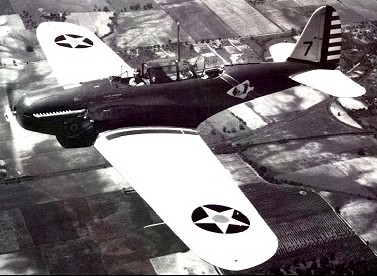
By May 1932 the service had decided to explore the basic Y1P design further. The Y1P-27 and Y1P-28 variants, to be powered by Pratt & Whitney Wasp engines of different marks, were seriously contemplated but never built. Four 503kW supercharged Curtiss V-1710-57 Conqueror-powered service-test machines were completed as P-30s and later machines were redesignated PB-2 (for pursuit, biplace). The basic design, after being allocated several designations, became the principal USAAC two-seat fighter between world wars.
By 1934, flight tests of the P-30 were under way, the aeroplane carrying an officer/pilot and enlisted man/gunner. Gunners found their semi-open perch aboard the P-30 uncomfortable and, at high altitude, very cold. Heavy clothing, required to keep the gunner from freezing, seriously impaired his effectiveness. For this and other reasons, the P-30 was never effective at high altitude, the very regime where USAAC doctrine called for it to fly and fight. Development of the parallel A-11 attack aircraft was suspended after delivery of four airframes and some airmen argued that the P-30, too, had reached the limit of its usefulness. But on 6 December 1934, the Army placed a firm contract for a production batch of 50 P-30As and made plans for the 1st Pursuit Group at Selfridge Field, Michigan, to operate the type. The operational machines received the 522kW Curtiss V-1570-61 powerplant. They became a familiar sight in war games at USAAC aerodromes during the 1930s. A single P-30A was built as a single-seater and competed without success in the 1936 fighter competition which produced the Curtiss P-36 Mohawk. Shortly after the P-30A entered service, the ‘pursuit bi-place’ category was closed, surviving P-30 airframes becoming PB-2s and the single-seat P-30A becoming the PB-2A. This heavy and heavily-armed fighter was to take in one further designation in an unbuilt variant, XP-33, before passing into history. A few PB-2As (former P-30As) are thought to have remained in service as late as the eve of Pearl Harbour.
P-30A Engine: 522kW Curtiss V-1570-61 Take-off weight: 2560 kg / 5644 lb Empty weight: 1953 kg / 4306 lb Wingspan: 13.39 m / 43 ft 11 in Length: 9.14 m / 29 ft 12 in Height: 2.51 m / 8 ft 3 in Wing area: 27.59 sq.m / 296.98 sq ft Max. speed: 442 km/h / 275 mph Cruise speed: 346 km/h / 215 mph Ceiling: 8530 m / 28000 ft Range: 820 km / 510 miles Armament: 2 x 7.62mm fixed machine-guns + 1 x 7.62mm machine-gun in the rear