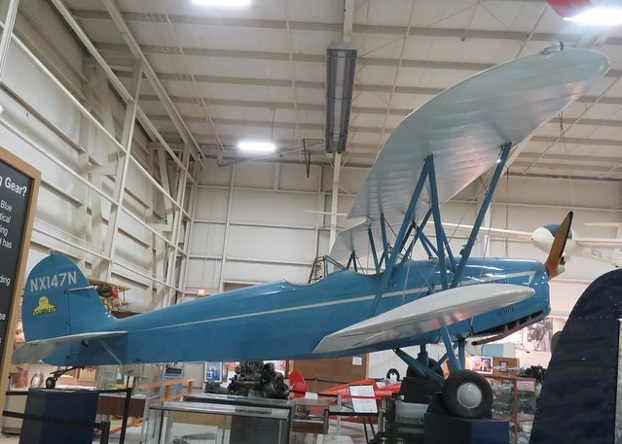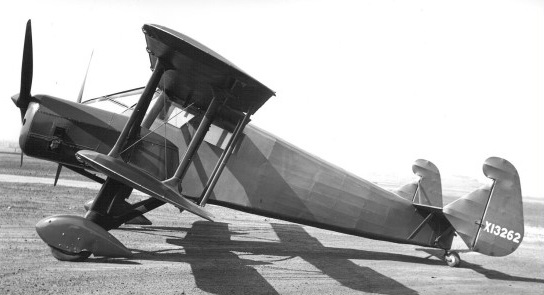
Considered to fill a courier-observation requirement but was rejected by the US Army Materil division.
Considered to fill a courier-observation requirement but was rejected by the US Army Materil division.
C-B Aircraft Co
Pawtucket RI.
USA
Built the Dragon IV engine in 1932 and Dragonfly aircraft.
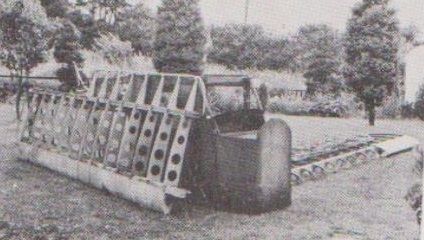
The Crossley Tom Thumb cabin high-wing monoplane was built in Banbury in 1937 but never got further than this.
It became the property of the Midland Aircraft Preservation Society in the early 1960’s. Allocated BAPC.32, it was stored in Coventry.
Pictured on 29 June 1969.
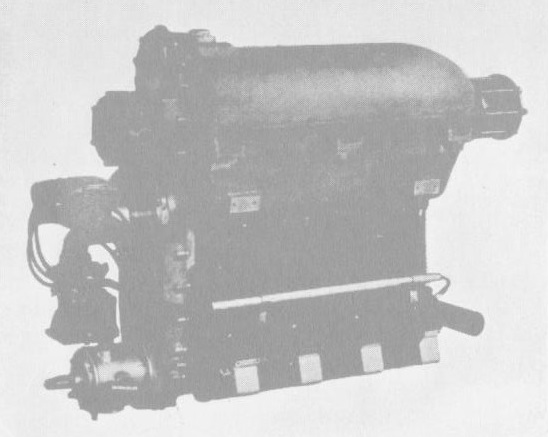
The engine featured one piece nickel iron cylinders with an underhead camshaft having all valve gears enclosed in a cast aluminium housing which could be removed without disturbing the engine timing. The camshaft was driven by a spur gear train. Gears were made of nitralloy steel, and a generator drive was provided.
Type: 4 cylinder inverted inline, air cooled
Rating: 100 hp at 2100 rpm
Displacement: 301 cu.in
Compression ratio: 5-1
Bore: 4 1/4 in
Stroke: 5 5/16 in
Length: 45 5/8 in
Width: 20 in
Weight: 300 lb
Fuel consumption: not more than .56 lb/hp/hr
Oil consumption: not more than .01 lb/hp/hr
Lubrication: Gear pump pressure to all parts, Three gear scavengingng pumps. One functioning on climp, another on glide.
Ignition: Bosch Dual Type FU4R
Carburation: Holley
Spark plugs: 2 per cylinder
Crosley produced two- and three-seat open-cockpit high-wing monoplanes known respectively as the Crosley C-1 and C-2. These two models pioneered the advantages of interchangeability, the complete wing, tail surfaces, landing gear, engines and engine mountings being common to both.
Crosley produced two- and three-seat open-cockpit high-wing monoplanes known respectively as the Crosley C-1 and C-2. These two models pioneered the advantages of interchangeability, the complete wing, tail surfaces, landing gear, engines and engine mountings being common to both.
USA
Established in 1929 at Cincinnati, Ohio, this company was a subsidiary of the Crosley Radio Corporation. It produced two- and three-seat open-cockpit high-wing monoplanes known respectively as the Crosley C-1 and C-2. These two models pioneered the advantages of interchangeability, the complete wing, tail surfaces, landing gear, engines and engine mountings being common to both.
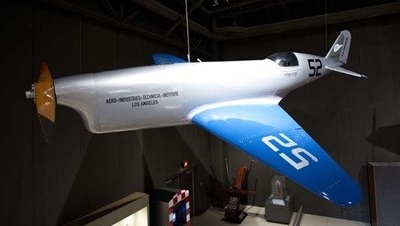
Harry Crosby designed the all-metal CR-4 racer while recuperating from serious back injuries sustained in the crash of its predecessor, the CR-3. The CR-4 incorporated butt joints, flush riveting, and stress skin construction, and was designed to carry a 420 hp ranger V-12 engine. When plans for procuring that engine fell through, Crosby used the Menasco Super Buccaneer from the CR-3.
The airplane first flew in April 1938, but, dogged by engine and gear problems, it didn’t race until 1939. At the 1939 Greve, Crosby was awarded third place despite being flagged down in the 13th lap. He took fourth in the Thompson that year, with an average speed of 244.522 mph. After the race, Crosby and his crew kept the plane in Cleveland to be filmed for the movie Tailspin before trailering it back to California. There the CR-4 spent a few days in a sound stage for engine noise recording and cockpit close-ups for the film.
Before being stored in Crosby’s shop in Burbank, the plane was unofficially clocked at 386 mph, a speed that would have made it faster than Howard Hughes’ racer. Crosby went on to test planes for Northrop, and was ultimately killed testing the XP-79B.
Shortly after the end of World War II, an Air Force pilot named Harry Austell purchased the CR-4 from Crosby’s widow. He intended to restore and race the plane, but Austell apparently never completed that restoration, and the CR-4 itself disappeared. That is until Morton Lester, following up a tip from a friend, discovered the plane’s fuselage on a farm outside Norlina, NC. More searching through the farm’s outbuildings turned up nothing, until Lester looked inside a disused school bus parked in the woods. There he found the plane’s wing panels, landing gear doors, flaps, and other smaller pieces.
Restoration of the plane was begun by Lester and completed by the EAA staff after the aircraft was donated to the museum.
Engine: Menasco C6S-4 Super Buccaneer, 260 hp
Length: 21 ft. 6 in.
Wingspan: 16 ft.
Tailspan: 6 ft. 1 in.
Empty weight: 1540 lbs.
Propeller diameter: 6 ft.
Top recorded speed: 244.52 mph
Harry Crosby designed the all-metal CR-4 racer while recuperating from serious back injuries sustained in the crash of its predecessor, the CR-3.