Curtiss Aeroplane Co

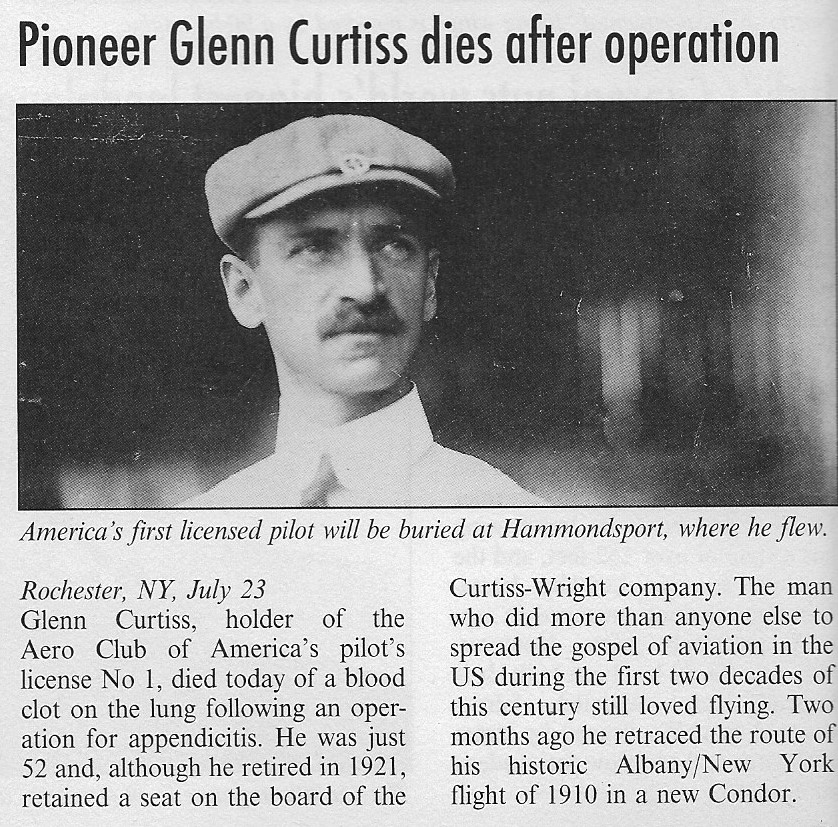
Glenn Curtiss

Curtiss, who was a motorcycle fiend and engine genius, had actually asked the Wright Brothers if they wanted one of his 50 hp engines when he went to discuss some aviation data, but they said no, unaware that Curtiss and the AEA would soon be a major competitor.

Curtiss Aeroplane Co Article

As a member of Alexander Graham Bell’s Aerial Experiment Association (AEA), Glenn Curtiss built the engines for the Red Wing and the White Wing early in 1908, piloted his first plane, and built and flew the June Bug that June.

The AEA disbanded in 1909, and Curtiss formed the Herring-Curtiss Company on 20 March 1909 with Augustus Herring. Its first customer was the Aeronautic Society of New York. Curtiss delivered his first plane to them, the Curtiss No. 1, built to their specifications, on May 29, 1909.

When the Herring partnership split up, Curtiss founded the Curtiss Exhibition Company, the Curtiss Aeroplane Company in December 1911 in Hammondsport, New York, and the Curtiss Motor Company.

As business expanded, the Hammondsport factory became unable to fill all the orders. Curtiss extended its operation to Buffalo, where it rented the site of the company that had supplied Curtiss with his first bicycle engine years before. Curtiss also opened a new plant in Toronto. The quarters in Buffalo quickly became inadequate, and a new 120,000-square-foot (1,115-square-meter) building was constructed that became the company headquarters. Soon after, a new plant that sprawled over 72 more acres was added.

1909-early 1911 – While A, B, and C models are known (or thought) to have existed during this historically important period for Curtiss, where they were applied is not. Numerical assignments, as well, were guesses—Model 2 has appeared for both Rheims Racer and Charles Willard’s Banshee Express but not verified (Willard unjustifiably claimed authorship of that design). By 1910, Model D had been established, in some references tied to Curtiss-Herring, which was actually built after the partners’ dissolution. But there were at least 9 aircraft known to have been produced in this period, the “official” Model D, in one of its many forms, formally appeared in the first company catalog on mid-1911 along with its companion Model E. Production of concurrent Curtiss-Aero Society Model Ds unknown but the design quickly evolved into the Curtiss D (Standard). A Herring-Curtiss, for which plans were published for home-builders of the time, differed from Curtiss D with its ailerons on the front wing struts instead of the rear wing struts. Herring’s contribution, besides that as a temporary partner, was his alleged invention of a gyroscopic stabilization device (claimed, but unsubstantiated, 1909 US patent #12,256), which would circumvent the Wright’s aileron patents, but which was never used on any Curtiss machine.

Curtiss designed and built the following planes
during 1908 – 4,
1909 – 2,
1910 – 4,
1911 – 5,
1912 – 3,
1913 – 3,
total – 21.

In 1916, the Curtiss Aeroplane & Motor Company, Ltd. went public with Curtiss as president. By that time Curtiss had become the world’s largest aviation company, employing as many as 18,000 at Buffalo and 3,000 at Hammondsport.

The Curtiss Aeroplane and Motor Company was created 13 January 1916 from the Curtiss Aeroplane Company of Hammondsport, New York and Curtiss Motor Company of Bath, New York. Burgess Company of Marblehead, Massachusetts, became a subsidiary in February 1916.
In 1916 the company moved its headquarters and most manufacturing activities to Buffalo, New York, where there was far greater access to transportation, manpower, manufacturing, and much needed capital. It became the largest aircraft manufacturer in the world during World War I, employing 18,000 in Buffalo and 3,000 in Hammondsport, New York. Curtiss produced 10,000 aircraft during that war, and more than 100 in a single week.
A third factory (Garden City, Long Island, NY) became boat hull department for flying-boat production. Burgess Company of Marblehead, Massachusetts, became a subsidiary in February 1916. Aircraft built during First World War included A and AH biplanes for USN, Models D and E for U.S. Army, Model F flying-boats for USN, H-4 Small Americas, H-12 Large Americas and H-16 Large Americas (plus 150 by Naval Aircraft Factory).
Best-known were JN-4/JN-6 “Jenny” trainers (5,000 built, plus 1,200 by Canadian Curtiss), HS flying-boats, MF flying-boats, N-9 floatplanes, British S.E.5a fighters, Orenco D fighters, and 5L flying-boats. Total wartime was 4,014 aircraft and 750 aero engines.

After the war, Curtiss, fell on hard times. In August 1920, the company was forced into receivership. Clement Keys, a Canadian financier, obtained funds to manage the company’s debt and led it again to sound financial status. The Buffalo facility became the major facility, and the company remained the largest U.S. aircraft company through the 1920s.

Postwar production, mostly in 1920s, included NC- 1/2/3/4 transatlantic flying-boats (four only); Oriole, Eagle, and Seagull civil types (little success achieved with the few built). Followed by a series of Army (R-6/R-8 etc.) and Navy (CR/R2C/R3C etc.) racers. Twelve B-2 Condor biplane bombers were followed by PW-8 biplane fighters, P-1/P- 6 U.S. Army Hawks, F6C U.S. Navy Hawks, and O-1/11/39 and A-3 Falcons for U.S. Army. The few Carrier Pigeons and Larks were followed by one Tanager biplane, which won 1929 Guggenheim Safe Airplane Competition. Subsequently produced N2C Fledgling, F8C/OC Falcon, and F8C/02C Helldivers for USN.

Foundation of Curtiss-Robertson division in 1928 was followed by, on July 5, 1929, Curtiss Aeroplane and Motor Company became part of Curtiss-Wright Corporation, together with 11 other Wright and Curtiss affiliated companies.
In 1929, shortly before Curtiss died, the Curtiss Aeroplane & Motor Company, Ltd., merged with the Wright Aeronautical Corporation to form the Curtiss-Wright Corporation.
1930

Neither Curtiss or Wright successfully made the transition to the jet age and substantially all aircraft assets were sold to McDonnell and North American by 1950.
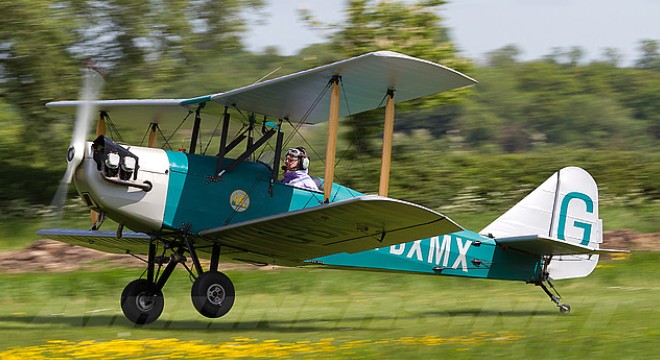
Currie Wot

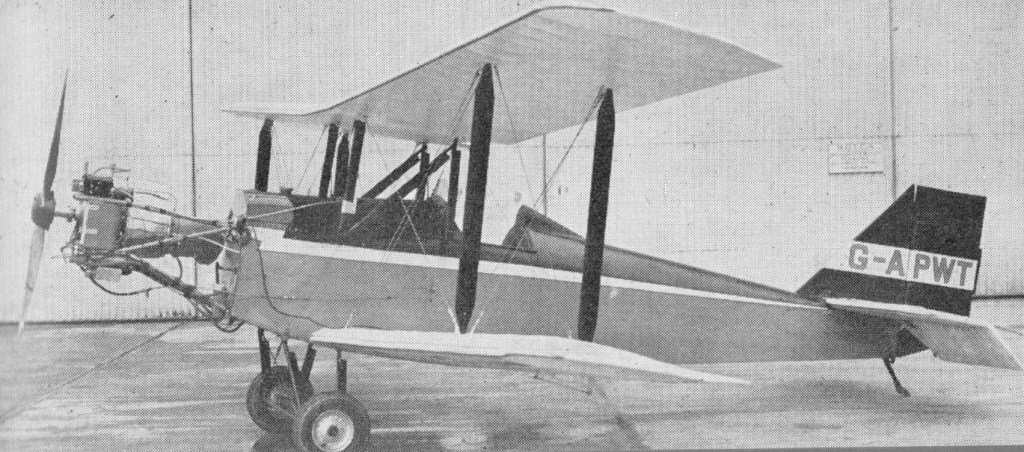
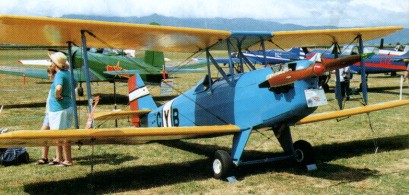
The Currie Wot is a single seat biplane designed by the late John Currie in Great Britain in 1937. Two were built by Cinque Ports Aviation at Lympne in 1937 but were destroyed in an air raid in 1940.

Several examples have been built by amateurs since then and a variety of engines fitted. These include the 37 h.p. lAP, 65 h.p. Mikron, 65 h.p. Continental and an experi¬mentally fitted Rover turbo-prop engine. The larger VW engine should also be suitable. The aircraft has recently been restressed to 6g at an A.U.W. of 900 lb. The fuselage is a conventional box structure, having spruce longerons and struts, and is plywood covered. The wings consist of four separate panels and a centre section, each having two solid spruce spars, built up girder ribs and fabric covering. Ailerons are fitted to the lower wings only. The empennage is a wooden structure, fabric covered. An alternative rounded rudder may be fitted. Longitudinal trim is obtained by an elevator trim tab. The undercarriage is made up of steel tube and incorporates rubber cord shock absorbers. A 12 Imp. gallon fuel tank is located behind the firewall.

After the War the design was revived by Viv Bellamy of the Hampshire Aero Club who built two machines and marketed plans until the rights were sold to Wot-builder Dr. J.H.B.Urmston, who marketed the type under the name of Botley Aircraft. Since then, Phoenix have been marketing the type.

An adaptable airframe, both the Isaacs Fury and SE.5 replicas have been built using the airframe.

The number of different engines and designs has led to a whole series of semi-official names for it. These have included:
Hot Wot – G-APNT fitted with a Walter Mikron II
Hotter Wot – G-APNT fitted with a Walter Mikron III
Jet Wot – G-APWT fitter with a Rover gas-turbine test-bed
Super Wot – G-AVEY with a Pobjoy and re-styled fuselage
Wet Wot – G-APNT and G-APWT with floats
Wot Special – G-AYMP with tail surface improvements

Phoenix Currie Wot
Rover gas turbine powered Currie Wot, early 1960

Gallery

Engine: Continental, 65 h.p.
Span: 22’ 1”.
Length: 18’ 3”.
Wing Area: 151 sq. ft.
Empty Weight: 550 lb.
Max Weight: 900 lb.
Wing Loading: 5.96 lb/sq. ft.
Max. Speed: 100 m.p.h.
Cruise Speed: 90 m.p.h.
Climb: 600 fpm.
Range: 340 miles.

Engine: Continental O-200, 100 hp.
Cruise: 75 kts.

Cunningham-Hall Aircraft Corp

USA
Randolph F. Hall, with other ex-employees of Thomas- Morse Aircraft Corporation, formed this company at Rochester, NY, in 1928, in collaboration with the U.S. automobile company James Cunningham, Son & Co. First aircraft was a six-seat passenger transport (twin-engined PT-6), but only two built. Followed by Model X-90(N) tandem two-seat biplane with special high-lift wings, entered for 1929 Guggenheim Safe Airplane Competition. A developed version (also high-lift wings) led to GA- 21M all-metal monoplane in 1934, which reappeared after a year or so as GA-36 with Super Scarab engine. In 1937 built PT-6F biplane light freighter, a two-seat development of PT-6 with 512kg payload and Wright Whirlwind engine. Company ceased building complete aircraft and produced subcontract aircraft components for other firms during Second World War. It was dissolved in 1948.

Cunliffe-Owen Aircraft Ltd

UK
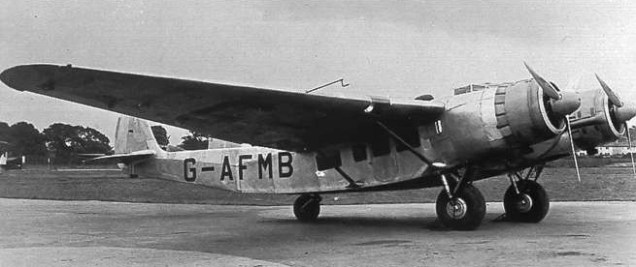
Cunliffe-Owen Aircraft Ltd was founded 1938 at Southampton Municipal Airport, Eastleigh, Hampshire, to build “flying wing” (lifting fuselage) aircraft based on Burnelli concept. First product was improved version of Burnelli UB-14 known as O.A.1 (two crew, 15 passengers). Second version (three crew, 20 passengers) designed as O.A.2, but not produced owing to outbreak of war. France acquired O.A.1 and used it in Africa during the war. Extensive subcontract work for Air Ministry undertaken, mostly “anglicizing” U.S. Consolidated Vultee, Lockheed, and Martin Lend-Lease aircraft for RAF. Late 1945 converted a number of Lancaster B.lll bombers for air/sea rescue. In 1946 began design of airliner, the Concordia 10-seat passenger transport, first flown May 1947. Prototype and one other built, but work suspended November 1947 owing to insufficient orders. Also built that year the prototype W.10 helicopter for Cierva; this project shelved too, and shortly afterwards company abandoned its aviation interests.

Culver V / XPQ-15

Last Culver design started life on paper in 1942. This was the Model V (for Victory) which borrowed from the LCA and the LAR but differed quite considerably in fuselage layout, first flown September 1945. A Simpli Fly control system was fitted to make flying as easy as driving a car, but the aircraft was overweight and the control system prone to failure. It failed to compete in the post war market and only 378 were built before Culver went bankrupt.

Wings were similar in planform to earlier models, but had extra dihedral added to the outer wings. Power was provided by an 85hp Continental C 85 12 which gave a maximum speed of 135mph, a climb rate of 660 ft/min, a service ceiling of 13100 ft and a range of 625 miles. The fuselage had a forward opening canopy and the cockpit was level with the leading edge of the wing, giving the characteristic Y look.

Final model, the V 2, was designed to overcome some of the failings of the V. This grossed 1680 lbs, compared with 1600 lbs for the V, and performance was slightly down. Structurally, the V differed from earlier models in having a wing of semi monocoque structure, covered in plastic bonded plywood. Manually operated flaps were fitted, larger on the V than the V 2.

Four were built as drones designated XPQ-15.

The Culver V was put back into production briefly, in 1956 by the Superior Aircraft Co, and a further six aircraft built, powered by the 95hp Continental, but that was the end of the line. In 1987, of the 380 odd built, some thirty remain on the register.

Engine: Continental, 85 hp
Wingspan: 29 ft
Length: 20 ft 8.5 in
Height: 6 ft 9.5 in
Wing area: 125.9 sq.ft
Empty weight: 1070 lb
Loaded weight: 1600 lb
Cruise: 125 mph
ROC: 600 fpm
Service ceiling: 13,100 ft
Range: 700 mi