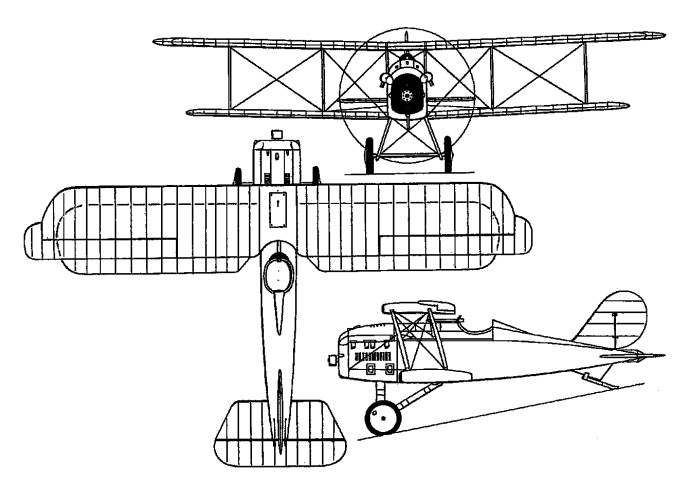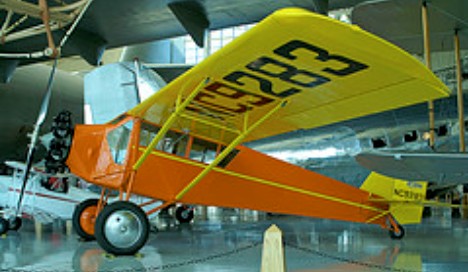
Curtiss Robin / C / J / XC-10

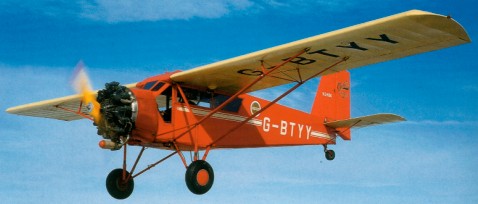
The Robin, was a cabin monoplane with a wooden wing and steel tubing fuselage. The cabin accommodated three persons; two passengers were seated side-by-side behind the pilot. First flowm on August 7, 1928, early Robins were distinguished by large flat fairings over the parallel diagonal wing bracing struts; the fairings were abandoned on later versions, having been found to be ineffective in creating lift. The original landing gear had bungee rubber cord shock absorbers, later replaced by an oleo-pneumatic system; a number of Robins had twin floats added.

The Curtiss Robin, introduced in 1928 at US$7,500, was a high-wing monoplane with a 90 hp (67 kW) V8 OX-5 8-cylinder engine built by the Curtiss-Robertson Airplane Manufacturing Company. Production was centred on the Curtiss factory at St.Louis, Missouri, and by the summer of 1929 there were 17 aircraft a week being produced.

The first Robin was designed to use World War I surplus OX-5 engines. It was later fitted with the more powerful Challenger engine, which developed between 170 and 185 hp (127 and 138 kW). The Model B (90 hp/67 kW Curtiss OX-5 engine), Model C-1 (185 hp/138 kW Curtiss Challenger engine), and Model J-1 (165 hp/123 kW Wright J-6 Whirlwind 5 engine).
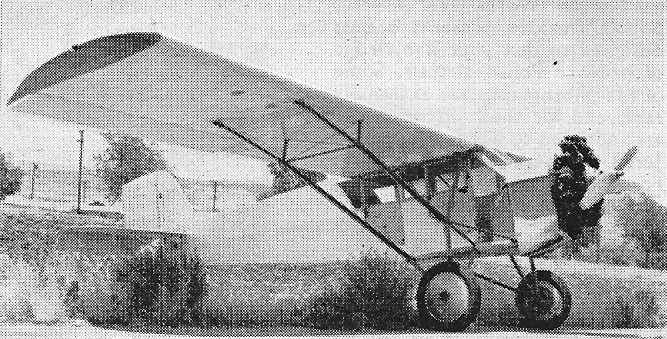
Curtiss-Wright Robin C1 N325K

The plane’s payload with 50 gal (189 l) of fuel was 452 lb (205 kg); it had a cruising speed of 102 mph (164 km/h), a landing speed of 48 mph (77 km/h), a gas capacity of 50 gal/189 l (25 gal/95 l in each wing tank), its oil capacity was 5 US gal (19 l; 4 imp gal).

Cuba’s national airline, Compañía Nacional Cubana de Aviación Curtiss, was founded in 1929 with Curtiss Aircraft serving as its co-founder and major investor. The airline’s first aircraft was a Curtiss Robin; it flew domestic routes as a mail and passenger transport.

From September 1929 to May 1930, a Robin C-1 was used to deliver the McCook, Nebraska Daily Gazette to communities in rural Nebraska and Kansas. The airplane flew a nonstop route of 380 miles (610 km) daily, dropping bundles of newspapers from a height of 500 feet (150 m) to local carriers.
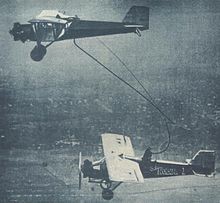
Dale Jackson and Forest O’Brine used Curtiss Robin “St. Louis” (right) during a record flight July 13–30, 1929, St. Louis, Missouri. A Flight endurance record of 17 days, 12 hours, 17 minutes (460 hr 17 min) was set. The Robin C-1 was used to set another world endurance record in 1930 of 647 hours (27 days).

A Curtiss Robin C was purchased by the Paraguayan government in 1932 for the Transport Squadron of its Air Arm. It was intensively used as a VIP transport plane and air ambulance during the Chaco War (1923–1935).

The J-1 version was flown by Douglas Corrigan (nicknamed “Wrongway Corrigan “). In 1938 Corrigan flew from NYC to Ireland after stating he would fly to California.

A single modified Robin (with a 110 hp (82 kW) Warner R-420-1) was used by the United States Army Air Corps, and designated the XC-10. This aircraft was used in a test program for radio-controlled (and unmanned) flight.
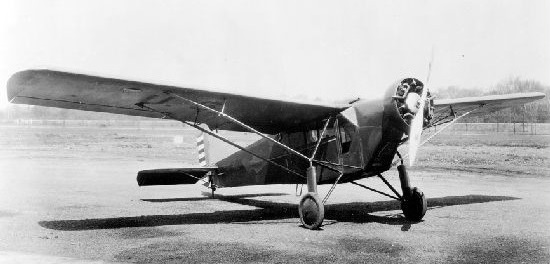
Curtiss XC-10 in 1930

A total of 769 were built.

Robin C-2

Gallery

Variants:

Challenger Robin
An early version of the Robin, powered by a 165 hp (123 kW) Curtiss Challenger radial piston engine.

Comet Robin
One Robin was converted by its owner in 1937, it was fitted with a 150 hp (112 kW) Comet radial piston engine.

Robin B
A three-seat cabin monoplane, fitted with wheel breaks and a steerable tailwheel; about 325 were built.

Robin B-2
This was a three-seat cabin monoplane, powered by a number of Wright piston engines.

Robin C
Three-seat cabin monoplane, powered by a 185 hp (138 kW) Curtiss Challenger radial piston engine; about 50 built.

Robin C-1
An improved version of the Robin C, powered by a Curtiss Challenger radial piston engine; over 200 built.

Robin C-2
A long-range version fitted with an extra fuel tank, it was powered by a 170-hp (127 kW) Curtiss Challenger radial piston engine; six built.

Robin 4C
The four-seat version, powered by a Curtiss Challenger radial piston engine; one built.

Robin 4C-1
Three-seat version with an enlarged forward fuselage section; three built.

Robin 4C-1A
Another four-seat version with an enlarged forward fuselage section; 11 built.

Robin CR
One-off experimental version, fitted with a 120 hp (90 kW) Curtiss Crusader engine; one built.

Robin J-1
It was powered by a 165 hp (123 kW) Wright Whirlwind J-6-5 radial piston engine; about 40 built.

Robin J-2
A long-range version, fitted with an extra fuel tank; two built.

Robin M
The Robin B aircraft, fitted with the 115 hp (86 kW) V-502 engine.

Robin W
It was powered by a 110 hp (32 kW) Warner Scarab radial piston engine. Only a small number were built in 1930.

XC-10
One Robin W was sold to the United States Army Air Corps, it was converted into an unmanned pilotless radio-controlled test aircraft.

Specifications:

Robin OX-5
Engine: 1 × Curtiss OX-5, 90 hp (67 kW)
Length: 25 ft 8½ in (7.83 m)
Wingspan: 41 ft 0 in (12.49 m)
Height: 7 ft 9½ in (2.37 m)
Wing area: 223 ft² (20.71 m²)
Empty weight: 1,472 lb (668 kg)
Loaded weight: 2,440 lb (1,107 kg)
Maximum speed: 100.5 mph (87 knots, 135 km/h)
Cruise speed: 84 mph (73 knots, 135 km/h)
Range: 480 mi (432 nmi, 772 km)
Service ceiling: 10,200 ft (3,109 m)
Rate of climb: 400 ft/min (2.0 m/s)
Crew: one
Capacity: two passenger

Robin C1
Wing span: 41 ft
Length: 25 ft 6 in
Height: 8 ft
Wing area: 224 sq.ft
Empty weight: 1675 lb
Loaded weight: 2523 lb
Max speed: 118 mph
Cruise: 100 mph
ROC: 750 fpm
Service ceiling: 13,200 ft
Range: 338 mi

Robin J-1
Engine: one 165 hp (123 kW) Wright J-6 Whirlwind radial
Seats: 3 (one pilot and two passengers)
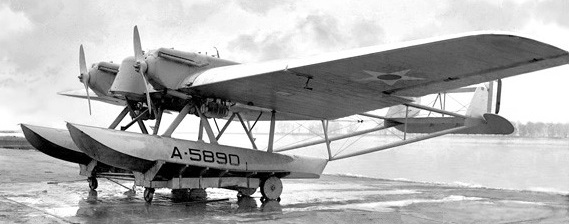
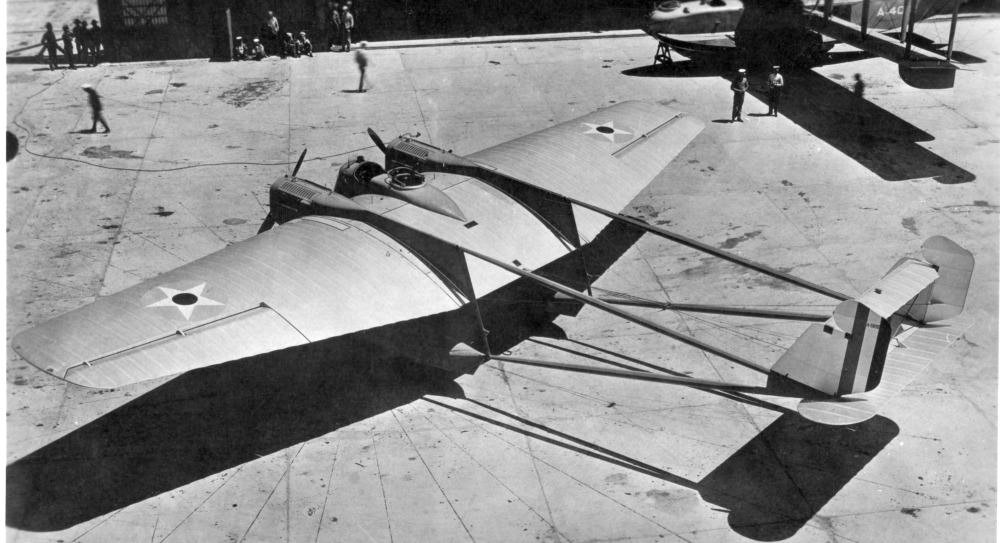
Curtiss CT-1

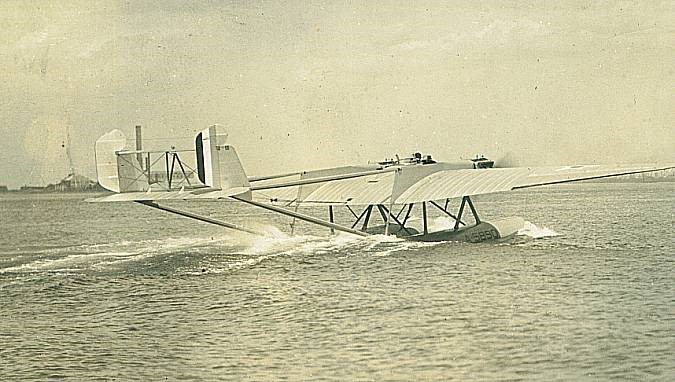
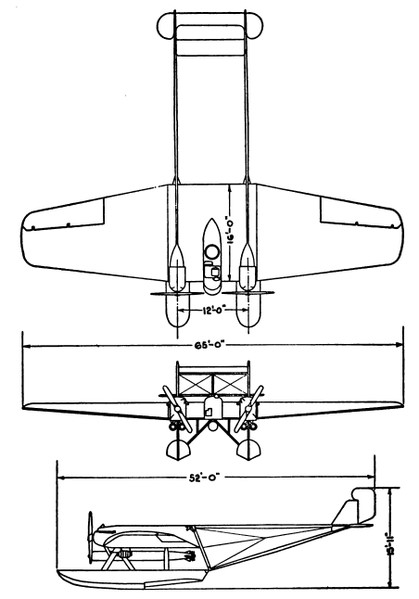
The US Navy was looking for a new torpedo bomber following a demonstration of sinking a battleship with an aircraft. A specification was announced requiring a twin floatplane that could be sled launched and crane recovered at sea. The aircraft had a maximum span of 65 feet (20 m) which could be broken down into 25 feet (7.6 m) sections for shipboard storage.

Designed by Wilbur Gilmore, the Curtiss CT-1 aircraft had twin booms, twin tails, twin floats and a single cockpit. A turret was placed high above and behind the pilot to have a full 360 degree firing arc. The thick airfoil wings were cantilevered without struts or wires using three spars. The fuselage was made of traditional welded tube frame with the-then new technology of an aluminum skin. The rest of the aircraft was of welded tube with a fabric covering. The engine nacelles were deeply recessed into the wings. Two under-wing Lamblin radiators provided cooling. Engine stands were located for mechanics to work on the aircraft. Single-engine operation resulted in a height loss of 100 ft per minute.

The first water taxi tests were performed by Bert Acosta on 2 May 1921 at NAS Rockaway, resulting in larger rudders added for stability. The sheet metal formed motor mounts and tail structure required reinforcement. The engines overheated, and could only fly for 20 minutes at a time.

Prototypes of the Curtiss CT-1, Stout ST-1, Fokker FT-1 and Blackburn Swift F were evaluated at the Annacostia Naval Yard. The CT-1 was demonstrated to the US Navy at the Annacostia Naval Yard and at the war college at Fort McNair, Washington, D.C. The aircraft was given the serial number A-5890, and the navy designation CT-1, for “Curtiss” “Torpedo bomber (number one)”-“variant one”. Curtiss won an initial contract to build nine torpedo bombers on June 30, 1920, but the order was cancelled and only one acceptance prototype was built. The aircraft was constructed in Rockaway, New York.

Gallery

Engines: 2 × Curtiss D-12, 350 hp (260 kW) each
Propellers: 2-blade
Wingspan: 65 ft (20 m)
Airfoil: Curtiss C-32
Length: 52 ft (16 m)
Height: 15 ft 5 in (4.70 m)
Gross weight: 11,208 lb (5,084 kg)
Cruise speed: 93 kn; 172 km/h (107 mph)
Range: 304 nmi; 563 km (350 mi)
Service ceiling: 5,300 ft (1,600 m)
Crew: 3 Pilot, Assistant Pilot, Gunner

Curtiss F4C

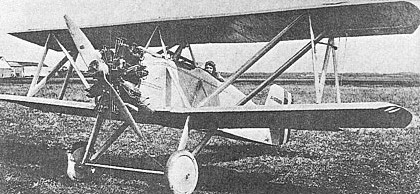
The first Curtiss fighter built under the US Navy designating system combining type, sequence of design and manufacturer, the F4C-1 was designed by Charles W Hall. It was essentially an all-metal version of the wooden Naval Aircraft Factory TS-1, which had been designed by the US Navy Bureau of Aeronautics and production had been assigned to Curtiss.

F4C-1

The F4C-1, two examples of which were built in 1924 and the first flown on 4 September, embodied some aerodynamic redesign. Its wings featured tubular spars and stamped dural ribs, and the fuselage was built up of dural tubing in a Warren truss form, all being fabric covered. By comparison with the TS-1, the lower wing was raised to the base of the fuselage. Armament comprised two 7.62mm machine guns and power was provided by a nine-cylinder Wright J-3 radial rated at 200hp.

Take-off weight: 774 kg / 1706 lb
Empty weight: 466 kg / 1027 lb
Wingspan: 7.62 m / 25 ft 0 in
Length: 5.59 m / 18 ft 4 in
Height: 2.67 m / 8 ft 9 in
Wing area: 17.19 sq.m / 185.03 sq ft
Max. speed: 203 km/h / 126 mph
Range: 845 km / 525 miles

Curtiss PW-8

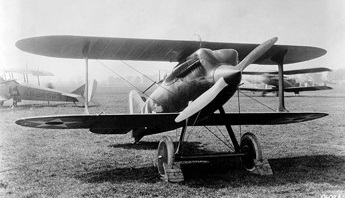
The PW-8 (the “PW” prefix indicating “Pursuit Water-cooled”) was a single-seat two-bay fighter biplane of mixed construction – plywood-covered wooden wings and fabric-skinned welded steel tube fuselage – powered by a 440hp Curtiss D-12 water-cooled 12- cylinder Vee engine. Three prototypes were ordered on 27 April 1923, and the first of these, flown in the previous January, was retroactively designated XPW-8 on 14 May 1924. The second prototype, flown in March 1924, embodied some aerodynamic refinement and provided the basis for the production PW-8, 25 examples being ordered on 25 September 1923 and delivered between June and August 1924.
The PW-8 featured wing surface radiators and armament normally comprised two 7.62mm machine guns. A turbo-supercharger was experimentally fitted to the second production aircraft, and the third prototype (XPW-8A), delivered in February 1924, featured 9.14m span single-bay wings and a revised radiator arrangement. It was subsequently fitted with a tunnel-type radiator (as the XPW-8A) and, in December 1924, with 9.60m span wings of tapered planform and Clark Y aerofoil section as the XPW-8B. It thus became, in effect, the prototype P-1 Hawk.

Take-off weight: 1429 kg / 3150 lb
Empty weight: 994 kg / 2191 lb
Wingspan: 9.75 m / 31 ft 12 in
Length: 6.86 m / 22 ft 6 in
Height: 2.69 m / 8 ft 10 in
Wing area: 26.66 sq.m / 286.97 sq ft
Max. speed: 270 km/h / 168 mph
Range: 708 km / 440 miles

Curtiss R-6 / CR-2

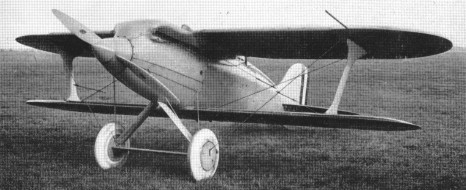
Also entered in the 1922 Pulitzer Race was a pair of Army Curtiss racers originally called CR-2 but later changed to R-6 (Model 2A). Curtiss built them two R-6 developed from the US Navy’s CR. The R-6s were considerably cleaner and a major contribution to drag reduction was the introduction of wing surface radiators.

Lt. Russell Maughan won the race in No. P-279 (68564) at 206 mph, and Lt. Maitland was second (68563) at 199 mph in No. P-278. Both airplanes then flew in the 1923 Pulitzer, Lt. Corkill placing sixth in P-278 at 216 mph, and Lt. Miller fifth in P-279 at 219 mph. In the 1924 Pulitzer, P-278 disintegrated at the start, killing Capt. Burt Skeel, while Lt. Brookley went on to place second at 215 mph in the 1922 winner. The R-6s held the speed record several times: Billy Mitchell flew P-279 (68564) at 224.28 mph in 1922; Russell Maughan flew it 237 mph in 1923, and then Maitiand flew P-279 240 mph a short time later. The Curtiss racers were making a lot of history.

Engine: Curtiss D-12
Wingspan: 19’10”
Length: 18’11”
Useful load: 505 lb
Seats: 1

Curtiss R3C / F3C

R3C-1

In August 1920, Curtiss the company was forced into receivership. Clement Keys, a Canadian financier, obtained funds to manage the company’s debt and led it again to sound financial status. The Buffalo facility became the major facility, and the company remained the largest U.S. aircraft company through the 1920s. Its racing planes, including the CR-1 and CR-3, won several competitions.

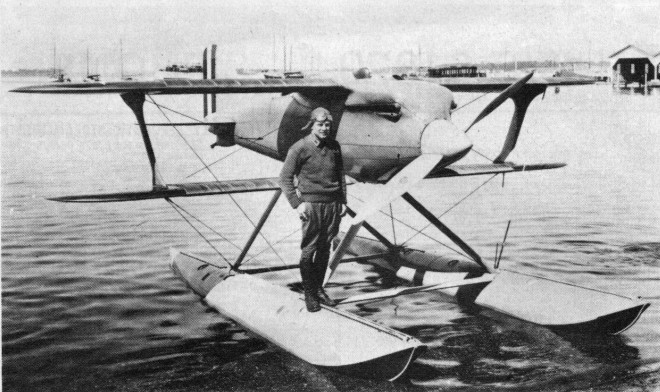
The 1925 Pulitzer saw the R3Cs in a joint Army/Navy project, with No. A-6978 and No. A-6979 going to the Navy, and No. A-7054 to the Army. The airplanes took the 1925 Pulitzer Race at record speed and left everyone else far behind. Army Lt. Cyrus Bettis was the winner in A-7054 at 249 mph, Navy Lt. AI Williams was second in A-6979 at 242 mph.

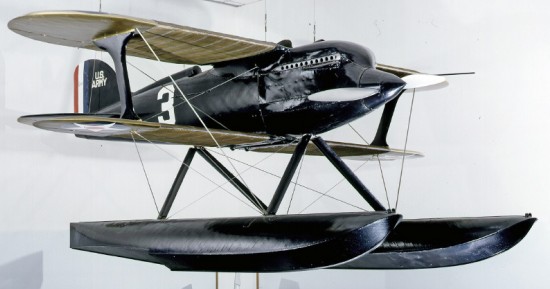
On Oct. 26, 1925, U.S. Army Lt. James H. Doolittle flew the Curtiss R3C-2 to victory in the Schneider Trophy Race on floats with an average speed of 374 km/h (232.17 mph). The next day he flew the R3C-2 over a straight course at a world-record speed of 395 km/h (245.7 mph).

In the Schneider Trophy Race of Nov. 13, 1926, this same airplane piloted by Lt. Christian F. Schilt, USMC, and powered by an improved engine, won second place with an average speed of 372 km/h (231.4 mph).

R3C-2

F2C and F3C were “paper” designations assigned to the R2C and R3C racing aircraft respectively.

R3C-1

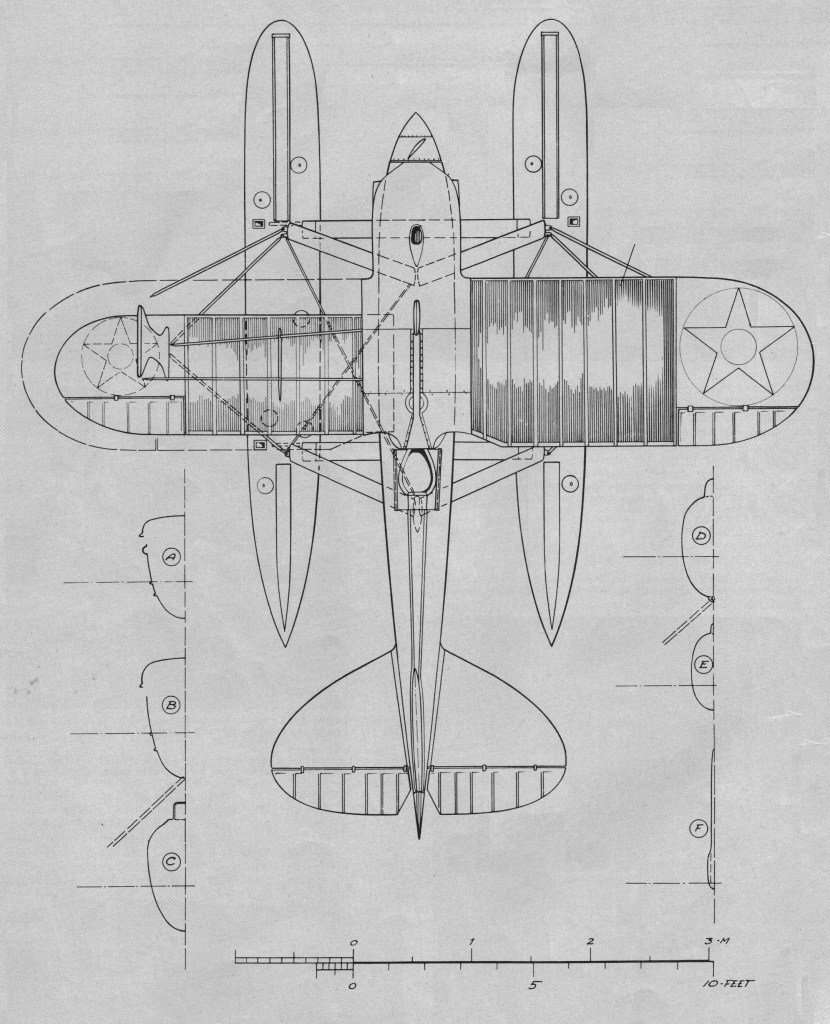
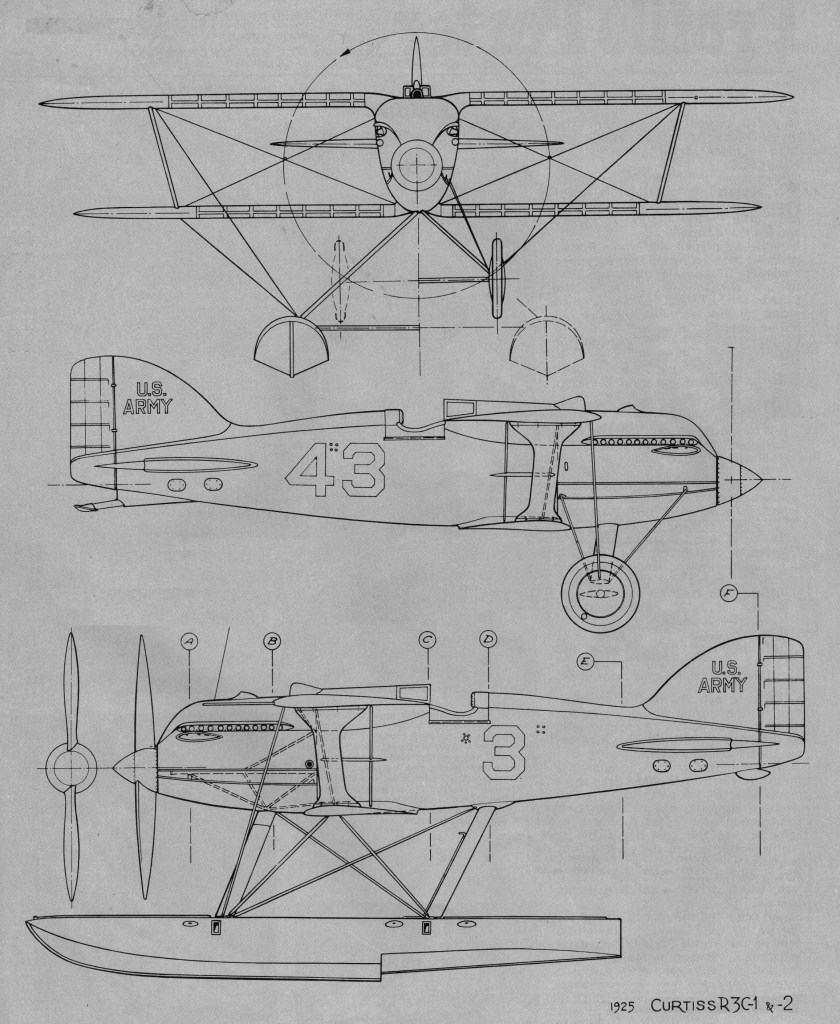
The R3Cs were modified into R3C-1s by the attachment of twin floats and entered in the Schneider Race of 1925. There they caused a sensation, being far and away the most streamlined water-borne flying machines the world had ever seen. In this they heralded the great racing seaplanes to come, for which the Schneider will always be remembered. Prior Schneider racers had been worthy efforts, but little more. From 1925 until the trophy was permanently retired in 1931, it would attract the most exciting aircraft in the world.

In 1925, however, it was strictly an intramural contest between the Army’s Jimmy Doolittle in the Pulitzer-winning A-7054, and the Navy’s George Cuddihy in A-6979 and Ralph Oftsie in A-6978.

On Oct. 26, 1925, U.S. Army Lt. James H. Doolittle flew the Curtiss R3C-2 to victory in the Schneider Trophy Race on floats with an average speed of 374 km/h (232.17 mph). The others failed to finish. The next day he flew the R3C-2 over a straight course at a world-record speed of 395 km/h (245.7 mph).

Curtiss R3C-2 Article

For the 1926 Schneider of Nov. 13, Doolittle’s A-7054 remained much as it had been, except that the pilot was Lt. Christian Schilt. Oftsie’s R3C-2 (A-6978) became the R3C-3 with the change from a Curtiss D-12 engine to a Packard 2A1500, and the addition of a slick, symmetrical cowling; pilot, Lt. William Tomlinson. The final R3C-2 (A-6979) got a new Curtiss V-1550 engine to become the R3C4, while retaining Cuddihy as pilot. Part of the reason for this major effort to gain speed can be explained by the rules of the Schneider Trophy, which awarded permanent possession to the nation which won three times in a row.

Tomlinson’s R3C-3 was wrecked during trials at Hampton Roads, Virginia. Cuddihy once again was forced to pull out before he had completed the race. Schlit did his best, averaging barely 1 mph faster than Doolittle’s 1925 winning speed, but not fast enough to catch deBernardi, who clocked 242 mph in his Macchi M-39. Schilt won second place with an average speed of 372 km/h (231.4 mph). Schilt’s airplane, repainted like the R3C-2 of Doolittle, is now at the USAF Museum, on loan from the National Air and Space Museum.

Curtiss R3C-2

Curtiss R3C-2
Wingspan upper: 6.71 m (22 ft.)
Wingspan lower: 6.1 m (20 ft.)
Length: 6.01 m (19 ft. 8 1/2 in.)
Height: 2.46 m (8 ft. 1 in.)
Weight: Empty: 975 kg (2150 lb.)
Gross: 1152 kg (2539 lb.)
Engine: (1925) Curtiss V-1400 V-12, water-cooled, 610 hp
Engine: (1926) Curtiss V-1400 V-12, water-cooled, 665 hp
Engine: Bore and Stroke: 12.382 cm (4.875 in.) x 15.875 cm (6.25 in.)
Displacement: 22.95 liters (1400 cu. in.)
Engine: Mfg. No. 9
Curtiss-Reed Propeller:
Design: EX-32995
Two-Blades, Fixed-Pitch
Serial No.: M-455
Material: Duralumin
Diameter: 237 cm (92 in.)
Pitch: 284 cm (112 in.)

Curtiss F2C / R2C

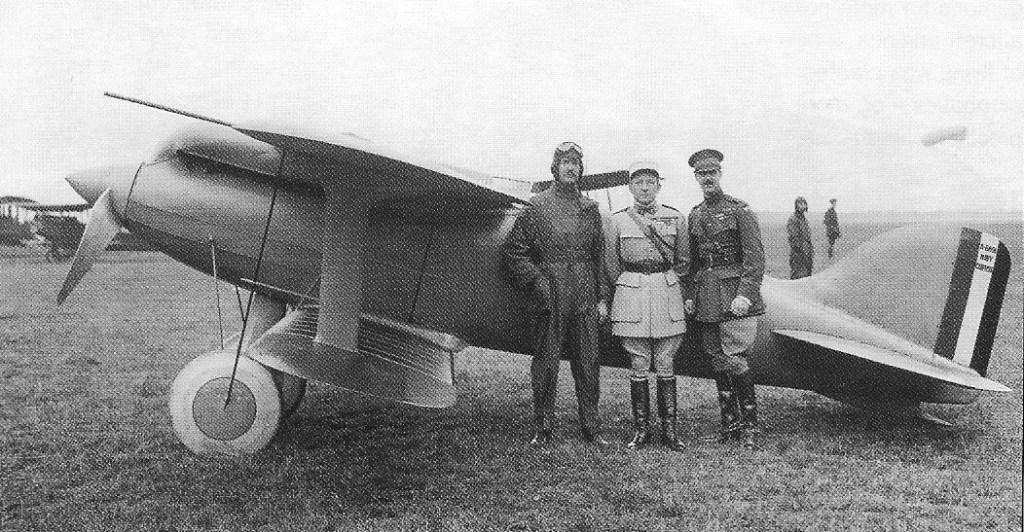
Curtiss R2C – centre – Nungesser

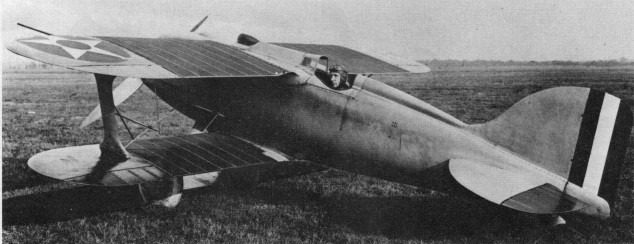
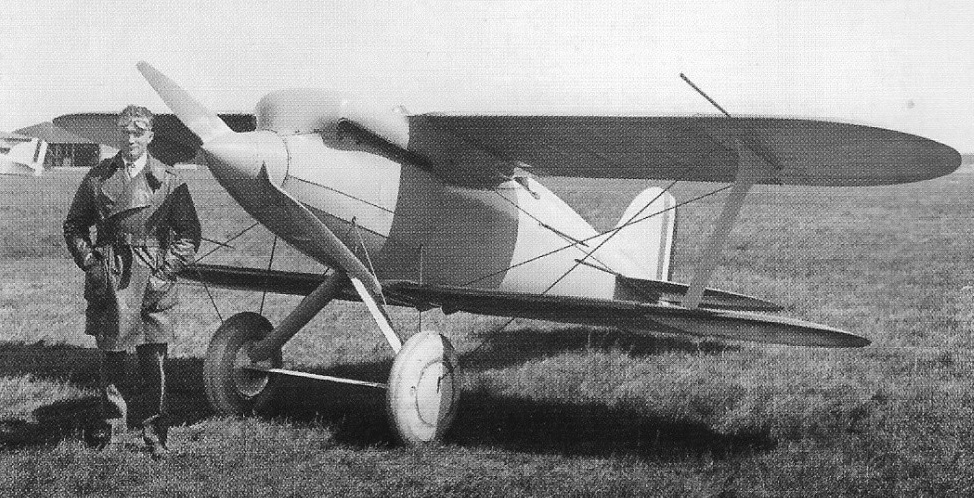
Three 1923 R2C-1 were built (A6691/6692, and A7054). The second became R2C-2, and the first was sold to the Army to become R-8. Is also seen as paper designation F2C.

In the 1923 Pulitzer Curtiss had two new R2C-1s. A pair of larger, but more streamlined, Navy racers. AI Williams won the race in No. A-6692 at 244 mph, closely followed by Harold Brow in No. A-6691 at 242 mph. Brow later took the world speed record away from Maitiand’s R-6 with a run at 259 mph, only to be topped immediately by AI Williams with 267 mph.

R2C-1

F2C and F3C were “paper” designations assigned to the R2C and R3C racing aircraft respectively.

R-8 / R2C-1 A6691 was purchased from the USN for $1.00 and rebuilt by the Army as 23-1235. It crashed before the 1924 race.

R2C-1 with Lt. Alford Williams

The sole R2C-2 from 1924, A6692, was the winner of 1924 Pulitzer Trophy for seaplanes and 227.5 mph. The R2C-2, on 22’7″ twin floats, was developed into the R3C-1.

R2C-1
Engine: Curtiss D-12, 507 hp
Length: 19 ft 9 in
Wingspan: 22 ft 0 in
Empty weight: 1,692 lb
Gross weight: 2,112 lb
Maximum speed: 267 mph
Range: 173 miles
Service ceiling: 31,800 ft
Rate of climb: 2,380 ft/min
Crew: One pilot

Curtiss Oriole

Curtiss produced a sucsessful post-World War I three seat two-bay biplane called the Oriole for the civilian market, with a moulded plywood fuselage and 90 hp Curtiss OX-5 V-8 engine.

Performance was improved when fitted with a Curtiss K-6 or C-6 (150-160 hp).

By 1921 surplus WW-1 machines like the Jenny were flooding the market, and Oriole production was tailed off.

With the closure of the Curtiss Oriole line, a number of complete fuselages became available and Ireland was able to secure these. With help from friends in the Curtiss design office, new wings were created for the Ireland Comet.

Engine: OX-5

Curtiss PN-1

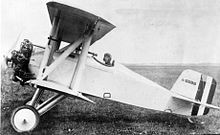
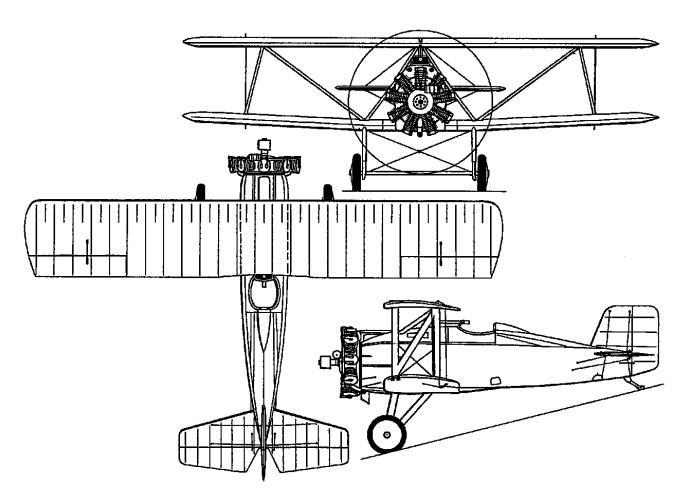
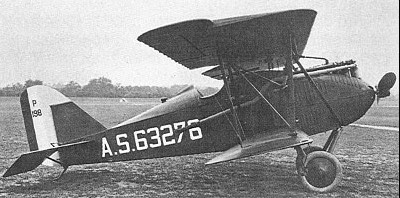
Designed by the US Army Engineering Division as a specialised single-seat night fighter, two prototypes of the PN-1 were built by Curtiss, powered by the 220hp Liberty L-825 six-cylinder water-cooled engine. Optimised for docile handling characteristics at the lower end of the speed range in order to ease operation from small blacked-out fields, the PN-1 was completed without interplane struts, but steel-tube N-struts were introduced to improve torsional stiffness before any attempt to fly the first prototype. Only one PN-1 was completed, and the results of any flight testing are not on record. It is known, however, that the sole prototype was used for static tests at McCook Field during 1921.

Take-off weight: 1048 kg / 2310 lb
Empty weight: 740 kg / 1631 lb
Wingspan: 9.40 m / 30 ft 10 in
Length: 7.16 m / 23 ft 6 in
Height: 3.12 m / 10 ft 3 in
Wing area: 27.87 sq.m / 299.99 sq ft
Max. speed: 174 km/h / 108 mph
Range: 410 km / 255 miles

Curtiss-Orenco D / ORENCO / Ordnance Engineering Corp Model D

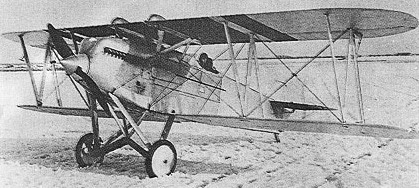
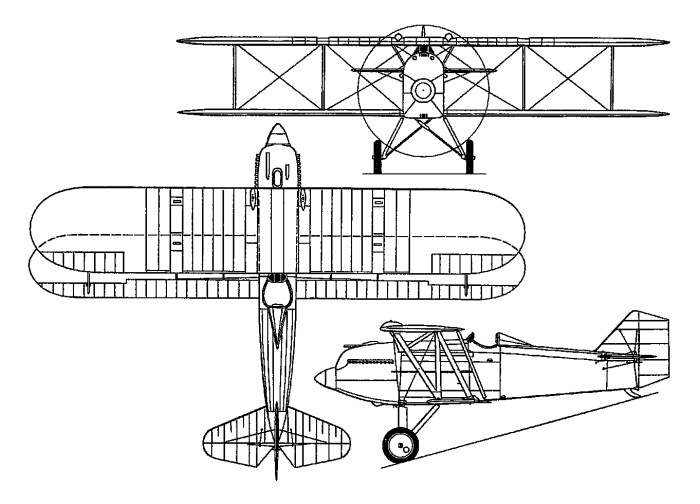
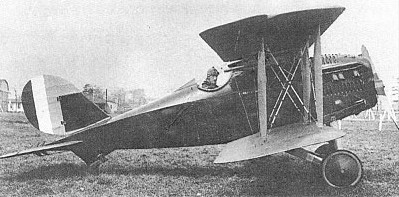
The first single-seat fighter of indigenous US design to achieve production status, the Model D was conceived around the 300hp Hispano-Suiza H eight-cylinder water-cooled engine. The first of four prototypes built by the Ordnance Engineering Corporation (Orenco) was completed in January 1919. Curtiss was assigned a production contract for 50 aircraft and undertook some redesign. This included the introduction of dihedral and overhanging, balanced ailerons, and revision of the engine installation. Of wooden construction with plycovered fuselage and fabric-covered wings, the Curtiss-built Model D utilised a 330hp Wright-built derivative of the Hispano-Suiza and carried an armament of two 7.62mm machine guns. Deliveries commencing in August 1921.
One Model D was experimentally fitted with French Lamblin radiators attached to the fuselage sides, and another was fitted with a turbo-supercharger for high altitude trials.

Take-off weight: 1279 kg / 2820 lb
Empty weight: 865 kg / 1907 lb
Wingspan: 10.05 m / 32 ft 12 in
Length: 6.54 m / 21 ft 5 in
Height: 2.54 m / 8 ft 4 in
Wing area: 25.36 sq.m / 272.97 sq ft
Max. speed: 224 km/h / 139 mph