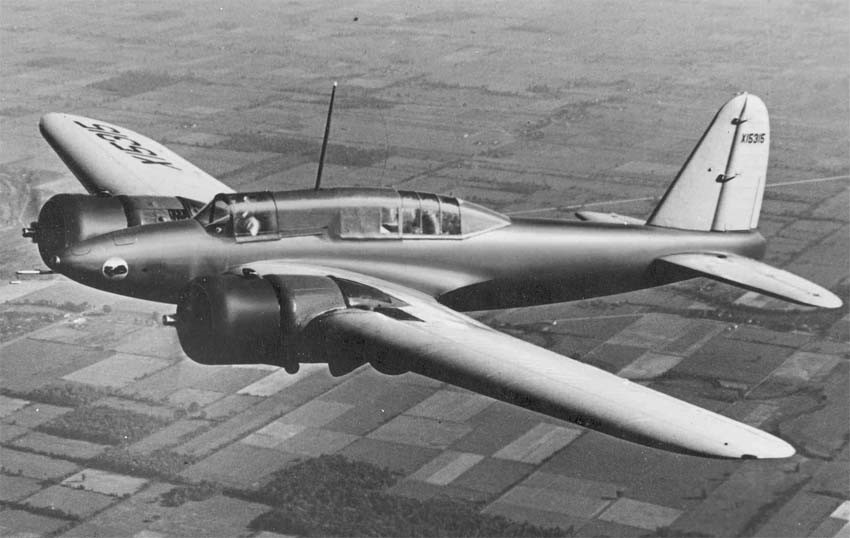
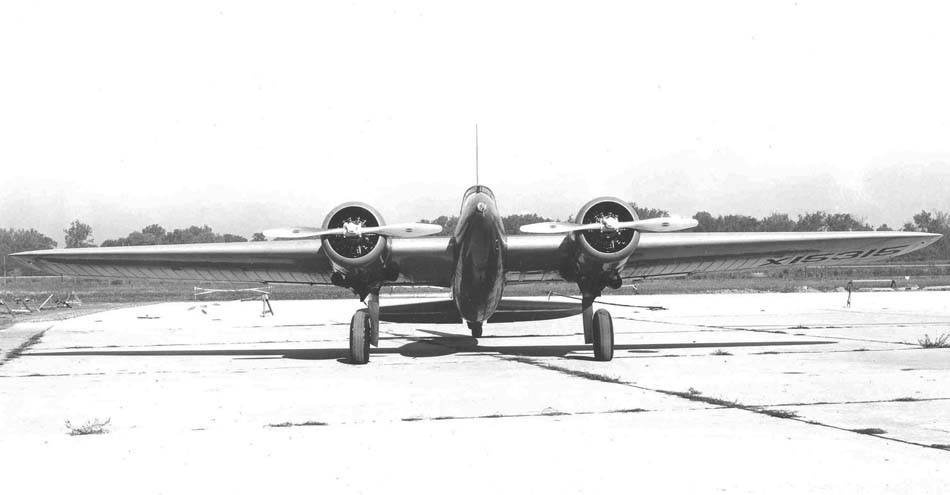
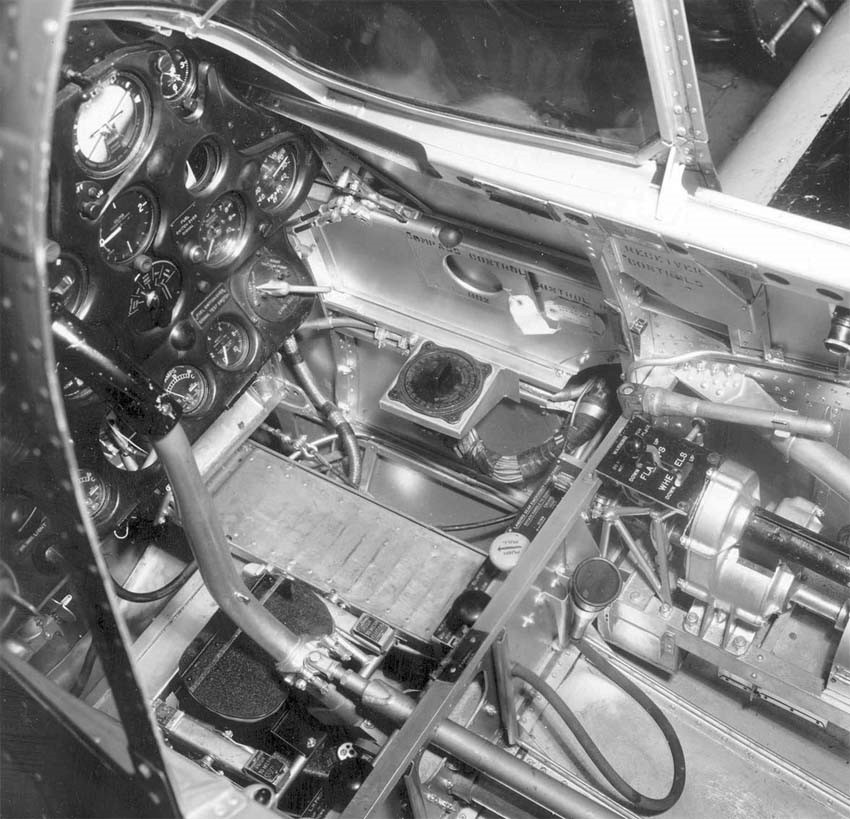
In 1934, Curtiss began work on a brand new twin-engined attack aircraft, which received the designation Model 76 and the name “Shrike”. Originally built as an in-house venture as the Curtiss Model 76, the 76 was of all-metal construction with an oval section semi-monocoque fuselage, described as “pencil slim” with a fabric covering of ailerons, rudder and stabilizers. The main landing gear retracted into the engine nacelles, the rear wheel also retractable
First flying on 17 July 1935, with the civil registration NX15314, the first multi-engine attack aircraft tested by the United States Army Air Corps at the Wright Field air base in Ohio, but in the fall it was returned to the company for improvements. Carrying a crew of two, it was as fast as the standard pursuit aircraft in service at the time.
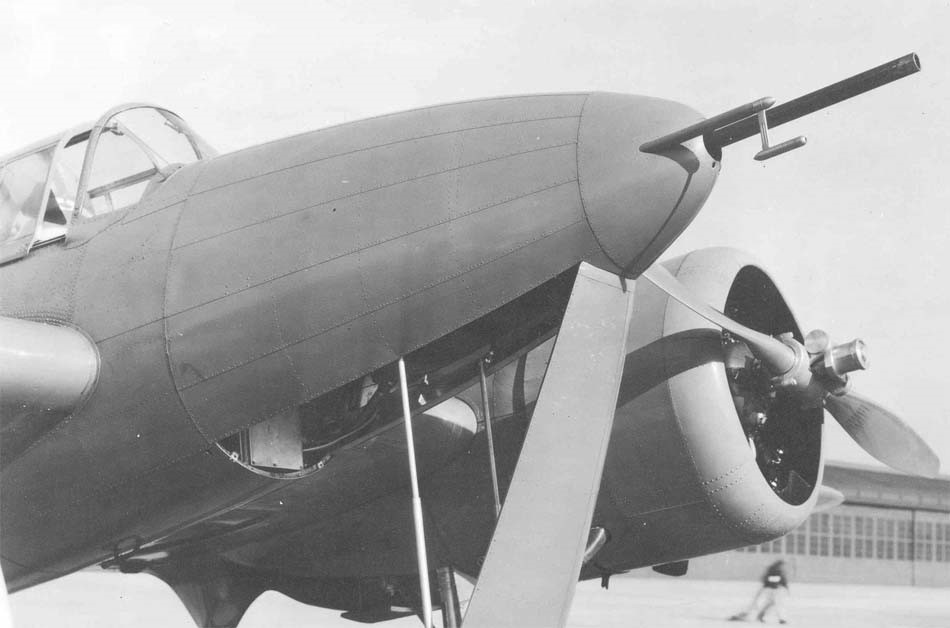
The XA-14 was extensively tested, at one stage being fitted with a 37 mm (1.46 in) nose cannon. Powered by two experimental Wright XR-1510 radial engines, flight testing was sufficiently impressive that after the USAAC appraisal the Model 76 was returned to Curtiss and fitted with two 775 hp (578 kW) Wright R-1670-5 Cyclone engines with two-blade constant-speed propellers. This configuration was accepted by the Army with the designation XA-14 given to the sole example. It had standard Army markings with the serial number 36-146.
The Great Depression of 1929-1932 severely curtailed military allocations. The price of a single Wright engine was then $ 90,000, which was considered excessively expensive for mass construction.
On 23 July 1936, 13 pre-production versions, re-engined with two Wright R-1820-47 Cyclone twin-row radials with three-blade propellers, were ordered into production as the Y1A-18.
The only prototype XA-14 was initially planned to be used to set aviation records, but instead in June 1936 this aircraft was tested with a new 37-mm cannon (sometimes it was called YA-14). At the end of the year, it was dismantled for scrap after 158 hours of flight time.
Engines: 2 × Wright R-1670-5 Whirlwind, 775 hp (578 kW) each Wingspan: 59 ft 5 in (18.11 m) Length: 40 ft 3 in (12.27 m) Height: 10 ft 9 in (3.2.7 m) Empty Weight: 3680 kg Max takeoff weight: 11,750 lb (5,330 kg) Maximum speed: 254 mph (221 kn, 409 km/h) Cruising speed: 340 km / h Range: 825 mi (717 nmi, 1,328 km) Service ceiling: 27,100 ft (8,260 m) Crew: two Armament: 4 × .30 in (7.62 mm) M1919 Browning machine guns forward-firing 1 × .30 in (7.62 mm) machine gun aft-firing 650 lb (295 kg) bombs in internal bay
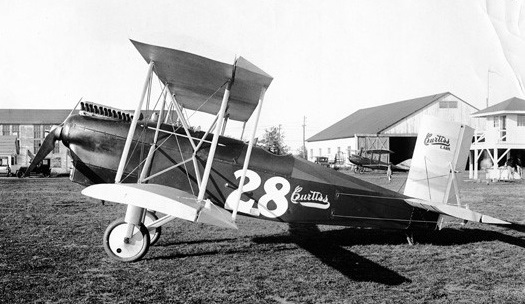
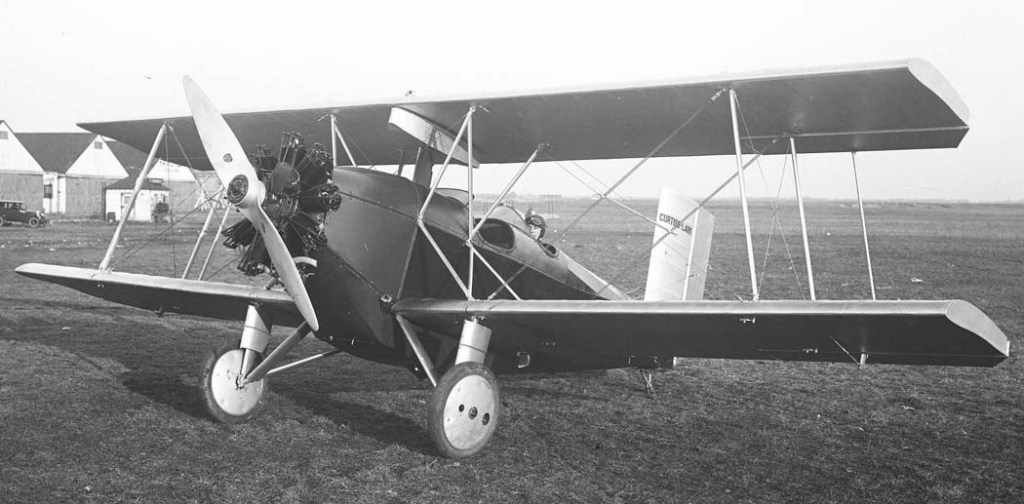
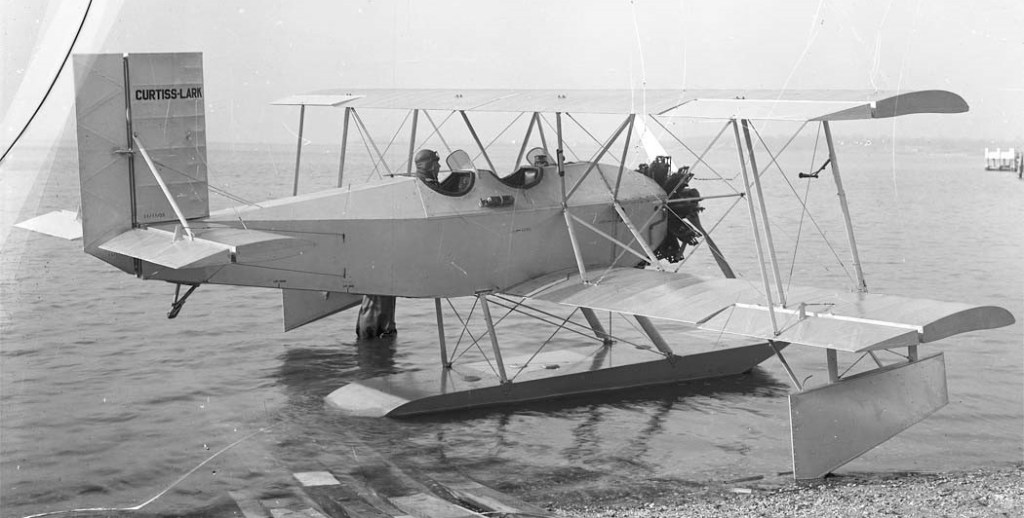
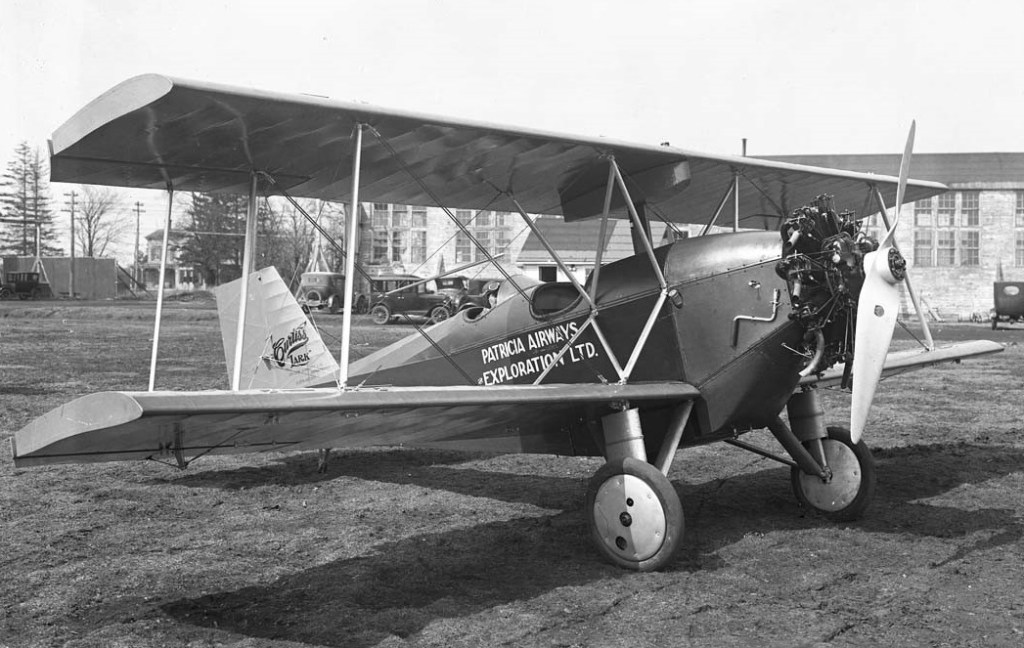
Developed in 1925, the Curtiss Model 41 Lark biplane was based on the Curtiss Carrier Pigeon, a purpose-built aircraft for airmail operations. The Lark also had a longer-span lower wing, similar to the Carrier Pigeon. Some models were converted to floatplane configuration with a central mounted pontoon and wing-mounted floats.
It was a four-seater biplane of a mixed design, equipped with a Curtiss C-6 engine with a power of 160 hp. The biplane was made of welded tube with fabric covering. It was available with three engine choices, the Curtiss C-6, the Wright J-4 Whirlwind, and the Wright-Hisso E. All four wing panels were interchangeable, giving the aircraft its unusual longer lower wings.
Lark with J-4 motor Whirlwind
A 200 hp Wright J-4 variant was tested for the United States Navy with two floats. This installation proved superior in performance to the Curtiss engined model. This version eventually became the basis for the Curtiss Fledgling series of aircraft.
Patrica Airways operated a Lark for early bushplane operations. The aircraft flew with floats in warm weather, and skis in the winter. The aircraft was pressed into service as an early hearse once, with the cargo needing to be seated upside down in the open seat and secured with haywire.
Florida Airways operated a Curtiss Lark Miss Tallahassee on its CAM-10 U.S. airmail route between Miami and Atlanta. The aircraft was bought to take the place of two lost Stout 2-AT Pullman aircraft that could not operate out of the poorly prepared airstrips.
Colonial Air Transport owned the first Curtiss Lark C1052 which was one of the first aircraft to be registered using the new Underwriters Laboratories all-letter system (1921 to 1923). This Lark, a single place special mailplane, registered as N-AABC, was used on the CAM-1 U.S. airmail route.
Engine: 1 × Curtiss C-6, 160 hp (120 kW) Wingspan: 30 ft 7.5 in (9.335 m) Wing area: 264.3 sq ft (24.55 sq.m) Length: 22 ft 2.5 in (6.769 m) Height: 8 ft 11 in (2.72 m) Empty weight: 1,579 lb (716 kg) Gross weight: 2,708 lb (1,228 kg) Maximum speed: 99 kn; 183 km/h (114 mph) Cruise speed: 84 kn; 156 km/h (97 mph) Stall: 48 mph Range: 382 nmi; 708 km (440 mi) Ferry range: 330 nmi; 612 km (380 mi) Absolute ceiling: 13,100 ft Service ceiling: 12,500 ft (3,800 m) Rate of climb: 860 ft/min (4.4 m/s) Crew: one
Engine: Wright J-4 Whirlwind, 160 hp Wing span: 9.34 m Length: 6.77 m Height: 2.72 m Wing area: 24.55 sq.m Empty weight: 692 kg MTOW: 1228 kg Maximum speed: 188 km / h Cruising speed: 163 km / h Range: 611 km Rate of climb: 244 m / min Ceiling: 3993 m Crew: 1 Passengers: 3
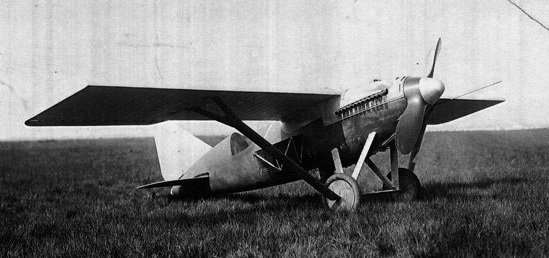
In 1920 the American oil millionaire S.Cox had two specialised racing monoplanes built for him by the Curtiss Aeroplane and Motor Company to take part in the Gordon Bennett Trophy race to be held in France in September 1920. The two aircraft, named Texas Wildcat and Cactus Kitten, were single-engined, braced, high-wing monoplanes powered by a 427 hp (318 kW) Curtiss C-12 inline piston engine. They had streamlined wooden fuselages with the pilot sitting in an enclosed cockpit towards the rear of the fuselage, under a forward sliding canopy. The wing, which had a special double camber airfoil section, was high-mounted, and was braced by struts to the mainwheels of the fixed conventional landing gear. The V-12 engine drove a two-bladed tractor propeller, and was cooled by radiators mounted on the side of the fuselage between the cockpit and the wings.
The Texas Wildcat was briefly tested in the United States before shipment, being fitted with a different wing with a more conventional airfoil for operation out of the confined Curtiss Field. First flying on July 25, it demonstrated a speed of 183 mph (295 km/h), with a speed of 215 mph (346 km/h) expected when fitted with the high speed racing wing. Both aircraft were then sent by ship to France, with no testing carried out on the high speed wing and Cactus Kitten unflown before sailing. Texas Wildcat was reassembled at the Morane-Saulnier factory with the high speed wing, but was found to be unstable at high speeds when flown by test pilot Roland Rohlfs. A set of biplane wings were therefore quickly designed and fitted to Texas Wildcat. Texas Wildcat was wrecked in a landing accident when being flown to Étampes prior to the race.
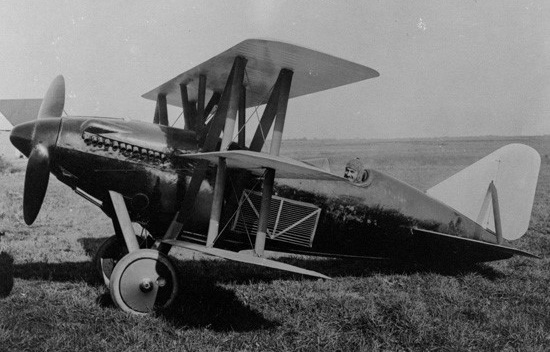
Although the Cactus Kitten was taken to France it remained unflown and was returned to the United States. It was then rebuilt with a set of short-span triplane wings modified from those of a Curtiss 18T, with the enclosed cockpit replaced by a more conventional open cockpit.
Cactus Kitten
Thus modified, it was entered into the 1921 Pulitzer Trophy Race, where, flown by Clarence Coombs at an average speed of 170.3 mph (274.1 km/h), it gained second place behind a Curtiss CR piloted by Bert Acosta. It was later sold to the United States Navy as a trainer for high-speed racing aircraft.
Engine: 1 × Curtiss C-12, 435 hp (324 kW) Wingspan: 20 ft (6.1 m) Wing area: 175 sq ft (16.3 m2) Length: 19 ft 3 in (5.87 m) Gross weight: 2,406 lb (1,091 kg) Maximum speed: 196 mph (315 km/h; 170 kn) Crew: one
The Milwaukee Tank engine was a 115 hp (86 kW) air-cooled version of the Curtiss OX-5, and was intended as an aircraft engine. It was tested in a Waco 10.
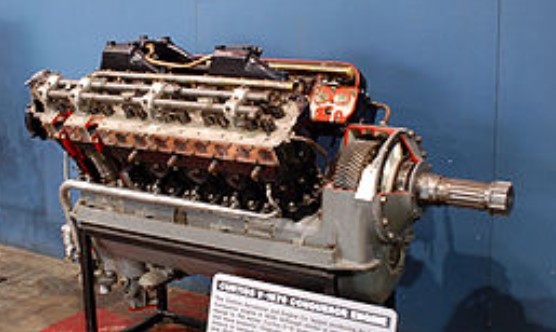
Designed in 1924 as a military successor to the Curtiss D-12, initially named the Conqueror it was later given the military designation of V-1570 (and GV-1570) based on its displacement of 1,569 cubic inches (26 L). Developed from V-1550 by Arthur Nutt in 1929 V-1570 and GV-1570 Conqueror received ATC 7, developing 575-650hp.
The engine featured open ended cylinder liners (advanced technology for the period) and pressurized liquid cooling. Developments including the use of a supercharger gradually increased power output until reliability problems due to overheating and coolant leaks became apparent.
The Curtiss V-1570 Conqueror was a 12-cylinder vee liquid-cooled aircraft engine. Representing a more powerful version of the Curtiss D-12. The Conqueror featured enbloc type jacket construction, in two banks of 6 each. The cylinders were wet sleeve type of heat treated hydraulically forged carbon steel screwed and shrunk into cylinder heads. Four interchangeable tulip valves seating directly in bronze inserts. Th crankshaft was an eight bearing type.
The gear case assembly was geovable as a unit. Pistons were ribbed head type aluminium alloy. Master and articulated connecting rods.
Avaliable at extra cost was and Eclipse hand inertia starter.
The engine entered production in 1926 and flew in numerous aircraft.
Military funding for further development of the Conqueror was cut in 1932, efforts by Curtiss to market the engine for civil airliners failed and the line was dropped from production.
Applications: Consolidated A-11 Curtiss A-8 Huff-Daland XB-1 Curtiss B-2 Condor Tupolev TB-3 Douglas Y1B-7 Atlantic (Fokker U.S.) XB-8 Thomas-Morse YO-23 Douglas O-31 Douglas O-43 Dornier Do X Curtiss P-1 Hawk Curtiss P-6 Hawk Boeing B-9 Boeing XP-9 (Model 96) Curtiss XP-10 Berliner-Joyce P-16 Curtiss YP-20 Lockheed YP-24 Consolidated Y1P-25 Consolidated P-30 Curtiss XO-30 (not built) Mormon Meteor III (custom Bonneville salt flat race car)
Specifications:
V-1570-59 Type: 12-cylinder liquid-cooled Vee aircraft engine Bore: 5 1⁄8 in (130.2mm) Stroke: 6 11⁄32 in (161.1mm) Displacement: 1,570.4 in³ (25.73 L) Cooling system: Liquid-cooled Power output: 675 hp (504 kW) at 2,450 rpm Specific power: 0.43 hp/in³ (19.6 kW/l)
V-1570 Type: 12 cylinder 60 deg V, direct drive and geared, water cooled Rating – direct drive: 600 hp at 2400 rpm Rating – geared drive: 600 hp at 2450 rpm Displacement: 1569 cu.in Compression ratio: 5.8-1 Bore: 5 1/8 in Stroke: 6 1/4 in Height: 36 5/8 in Length – direct drive: 63 1/16 in Length – geared drive: 68 27/32 in Width: 26 5/16 in Weight – direct: 755 lb Weight – geared: 845 lb Fuel consumption: not more than .53 lb/hp/hr Oil consumption: not more than .015 lb/hp/hr Lubrication: Pressure and scavenging pumps Ignition: dual Scintilla Carburation: 2 Stromberg Dual type NA-Y6-O Spark plugs: 2 per cylinder B.G.
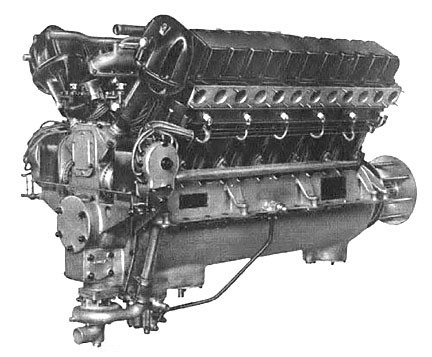
The Army submitted a specification for a new engine on 15 August 1923. The fixed-price contract was won by Curtiss following its bid of 13 November 1923, and was for the construction of three engines, known as the R-1454, with an option for three more. The Curtiss V-2 was a 12-cylinder Vee liquid-cooled aircraft engine. The first engine was delivered in September 1924, and it managed 405hp at 1650 rpm. A modified cylinder (Type M) developed by S.D Heron, an independent contractor, was fitted to the engine, and the Army picked up the option in the contract in February 1926.
The appearance of the lighter Pratt & Whitney Wasp engine effectively killed off the R-1454, and the Army and Curtiss agreed to terminate the contract almost at once, with only three built.
Specifications:
R-1454 Type: 12-cylinder liquid-cooled Vee aircraft engine Displacement: 1,454 in³ (23.8 L) Cooling system: Liquid-cooled Power output: 405 hp (302 kW) at 1,650 rpm
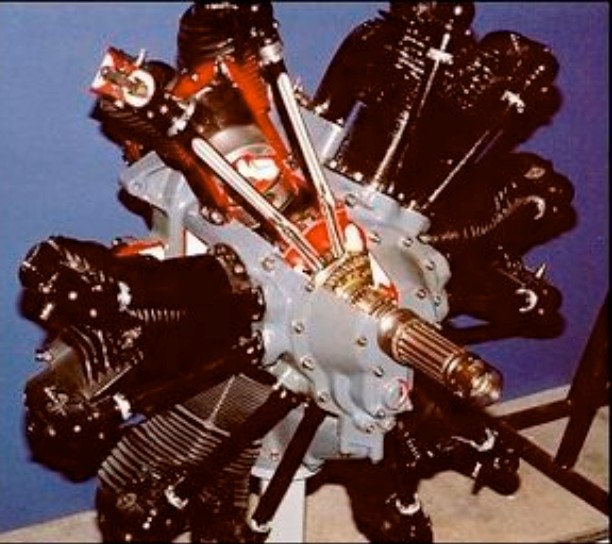
The Curtiss R-600 Challenger was a six-cylinder, double-row, air-cooled, radial engine for aircraft use built in the United States in the late 1920s. It developed 180 hp (134 kW) at 2,000 rpm.
The R-600 featured cast aluminium alloy heat treated cylinder heads screwed and shrunk onto forged steel barrels. The rocker boxes were cast integral with the cylinder heads. The crankcase was cast in two parts, splint on the centre line of the front row of cylinders. There were two Silchrome valves per cylinder, seating on bronze inserts.
The crankshaft was a two-throw counter balance tye, with two master rods each fitted with two short H section link rods. The pistons were ribbed aluminium alloy.
The carburettor is exhaust jacketed around the barrels, using a hot-spot elbow fitted with a valve to control the amount of exhaust heat admitted to the carburettor.
Accessories available at extra cost were a propeller hub, engine driven fuel pump, starter, generator, gun synchroniser, and tool kit.
Applications: ANBO VI Curtiss Robin Rearwin 2000
Specifications:
R-600 Type: 6 cylinder, air cooled, staggered fixed radial Rating: 170 hp at 1800 rpm / 180 hp (134 kW) at 2,000 rpm Displacement: 603.4 cu in (9.89 L) Compression ratio: 4.9-1 or 5.25 to 1 Bore: 5.125 in (130.2 mm) Stroke: 4.875 in (123.8 mm) Length: 42 5/32 in Diameter: 42.625in (1082.7 mm) Weight: 420lb (190.5 kg) Fuel consumption: not more than .55 lb/hp/hr Oil consumption: not more than .020 lb/hp/hr Lubrication: Pressure and scavenging pumps Ignition: 2 Scintilla Carburation: Stromberg 2 barrel NA-U4-J Spark plugs: 2 per cylinder B.G. 1XA
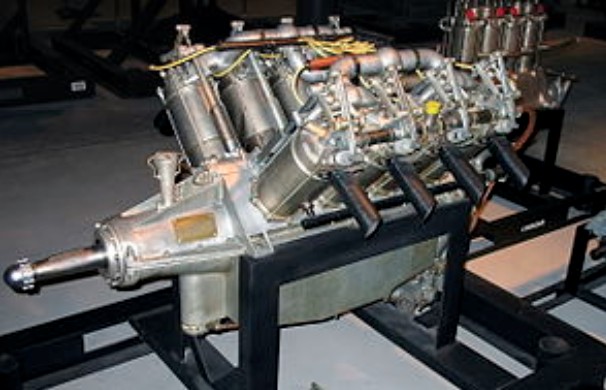
The OX-5 was the last in a series of Glenn Curtiss designed V engines, which had started as a series of air-cooled V-twins for motorcycles in 1902. A modified version of one of these early designs was sold as an aircraft engine in 1906, and from then on the company’s primary market was aircraft. The basic design had slowly expanded by adding additional cylinders until they reached the V-8 in 1906. They also started enlarging the cylinders as well, but this led to cooling problems that required the introduction of water cooling in 1908. These early engines used a flathead valve arrangement, which eventually gave way to a cross-flow cylinder with overhead valves in 1909, leading to improved volumetric efficiency. The US Navy ordered a version of this basic design in 1912 for its A-1 amphibious aircraft, which Curtiss supplied as the OX. These improvements and others were worked into what became the OX-5, which was first built in 1910. The OX-5 was almost identical with OX-2 but Berlin magneto and Zenith carburetor. By this point engine design was a team effort; the team included Charles Manley, whose earlier Manley-Balzer engine had held the power-to-weight ratio record for 16 years.
First run in 1915, the OX-5 was an early V-8 American liquid-cooled aircraft engine built by Curtiss. It was the first US-designed engine to enter mass production, although it was considered obsolete when it did so in 1917. It found widespread use on a number of aircraft, the most famous being the JN-4 “Jenny”. Some 12,600 units were built through early 1919. The wide availability of the engine in the surplus market made it common until the 1930s, although it was considered unreliable for most of its service life. The engine can be found powering many Edwardian automobile racing specials on the historic racing scene.
Like most engines of the era, the OX-5’s high-temperature areas were built mostly of cast iron, using individual cylinders bolted to a single aluminum crankcase, wrapped in a cooling jacket made of a nickel-copper alloy. Later versions used a brazed-on steel jacket instead. Cylinder heads were also attached to the crankcase, using X-shaped tie-downs on the top of the head attached to the block via four long bolts. Fuel was carbureted near the rear of the engine, then piped to the cylinders via two T-shaped pipes, the cylinders being arranged so the intake ports of any two in a bank were near each other. The cylinders had one intake and one exhaust valve, each operated by a pushrod from a camshaft running between the banks. This arrangement caused the outer exhaust valves to have a rather long rocker arm. The pushrods were arranged one inside the other, the exhaust valve rod being on the inside and the intake valve rod a tube around it. The aluminum camshaft bearings were a split type bolted together and held in place by lock screws. The pistons were cast aluminum.
The OX-5 was not considered particularly advanced, nor powerful, for its era. By this point rotary engines such as the Oberursel or Gnome-Rhone were producing about 100 hp (75 kW), and newer inlines were becoming available with 160 hp (120 kW) or more. Nevertheless the OX-5 had fairly good fuel economy as a result of its slow RPM, which made it useful for civilian aircraft. The OX-5 was used on the Laird Swallow, Pitcairn PA-4 Fleetwing II, Travel Air 2000, Waco 9 and 10, the American Eagle, the Buhl-Verville CW-3 Airster, and some models of the Jenny. The primary reason for its popularity was its low cost after the war, with almost-new examples selling as low as $20. It was often used in boats as well as in aircraft.
1927 Swallow OX-5
The engine was considered unreliable, but unreliable is a relative term: aviation engine technology had not fully matured at the end of WWI. Certainly the JN4 with the OX-5 was underpowered, but the OX-5 proved a much better engine than the Hall Scott A7A that was the achilles heel of the Standard J-1, the substitute primary trainer. In particular the valve gear was fragile, and it had no provisions for lubrication other than grease and oil applied by hand, leading to an overhaul interval as short as fifty hours. Additionally the engine featured a single spark plug in each cylinder, and a single ignition system, in an era when ignition equipment was less reliable.
Built by several contractors in large numbers, the OX-5 suffered from uneven quality control. However, while the overwhelming majority of training accidents in the U.S. were in JN-4s, this was because JN-4s were flown by the vast majority of trainee pilots, and the accident rate in the US for primary training was four times less than the advanced training rate in France (virtually all US airmen getting advanced training in France), approximately 2800 flying hours in the US primarily in OX-5 powered JN-4s per fatality to 761 hours per fatality in France in other types. Very few fatal accidents were caused by engine failure, although the lack of power may have been the cause of the many tailspins that took about forty five percent of training lives. The replacement of the A7A in Standard J-1s was contemplated, but the cost of $2,000 per aircraft compared with the need (by the time the J-1s were grounded in June 1918 JN-4s were in sufficient supply) led to the rejection of this idea.
The OX-5 itself would be replaced by the well-proven Wright Aeronautical-built version of the 150 hp Hispano-Suiza HS-8a V8 engine in the nearly 930 examples of the later production Curtiss JN-4H Jenny biplanes.
OX-5 Type: 8-cylinder water-cooled 90° Vee piston engine Bore: 4.0 in (102 mm) Stroke: 5.0 in (127 mm) Displacement: 503 in³ (8.2 l) Length: 56.75 in (1441.45 mm) Width: 29.75 in (755.65 mm) Height: 36.75 in (933.45 mm) Dry weight: 390 lb (177 kg) Valvetrain: One intake and one exhaust valve per cylinder, pushrod-actuated Fuel system: Duplex Zenith Carburetor Oil system: Gear-pump 40 to 60 psi 3-gallon sump Cooling system: Water-cooled Power output: 90 hp (67 kW) at 1,400 rpm 105 hp (78 kW) at 1,800 rpm for brief periods Specific power: 0.21 hp/in³ (9.5 kW/l) Compression ratio: 4.9:1 Fuel consumption: 8.0 US gal/h (30.8 l/h) at 75% power Specific fuel consumption: 0.53 lb/(hp·h) (0.32 kg/(kW·h)) at 75% power Oil consumption: 0.5 US gal/h (1.9 l/h) at 75% power
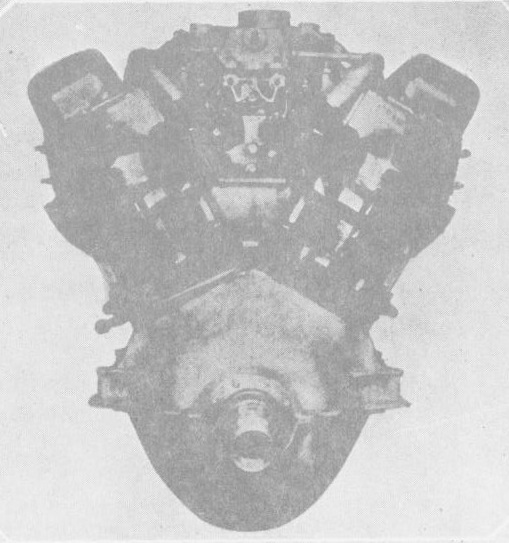
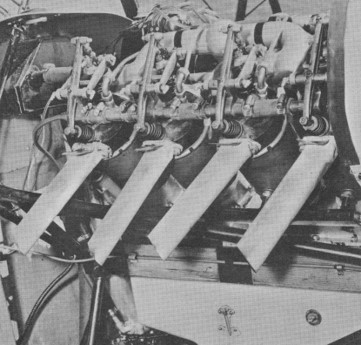
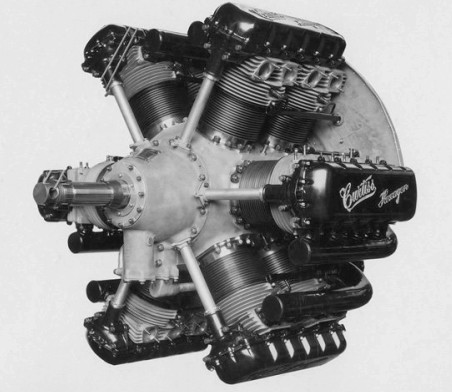
The H-1640 was an air-cooled, two-row 12-cylinder radial with the cylinders aligned fore and aft in a hexagonal layout. The cylinder banks were placed at 60° intervals. One piece cylinder heads shared a single overhead camshaft, the propeller was directly driven. It was thought that the use of a Townend ring would prove more aerodynamically efficient over an inline engine. The engine first ran in 1927, by aligning the cylinders the diameter of the engine was less than more conventional radial engines.
The H-1640 was the first airworthy ‘inline radial’ and was sponsored for flight testing in a range of aircraft by the U.S. Government. Among the types selected were the Thomas-Morse XP-13 and the Curtiss XO-18. Although the engine was also intended for civil use in the 600 horsepower class continued cooling problems with the rear cylinders caused the project to be canceled with few production engines being built.