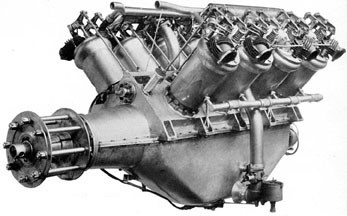
The 1926 Curtiss V-1550 12-cylinder Vee was an enlarged D-12. They produced 575-600hp and received ATC 6.
Inter-Wars
Curtiss V-2
The 1914 water-cooled Curtiss V-2 and V-3 were designed by Charles Manly and were the first Curtiss V-8.
Curtiss C-4
The Curtiss C-4 engine was a four-cylinder, inline, air-cooled engine producing 25hp@1800rpm. With a displacement of 165.12ci, it weighed 110 lb.
Curtiss C-12
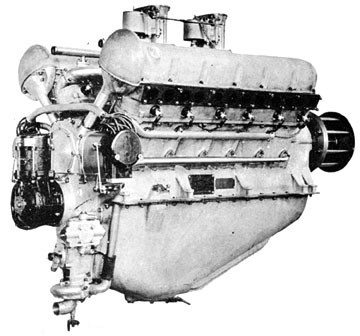
The 1919 Curtiss C-12 was a redesigned K-12. A six-cylinder water cooled engine, it produced 427hp@2250rpm and weighed 705 lb.
The CD-12 was a C-12 with direct-drive prop, producing 325hp@1800rpm with a dry weight of 680 lb.
The Curtiss triplane specifically designed around the Curtiss C-12 engine captured both a world altitude record for a non-supercharged plane and a world speed record (piloted by Roland Rohlfs).
Curtiss 57 Teal
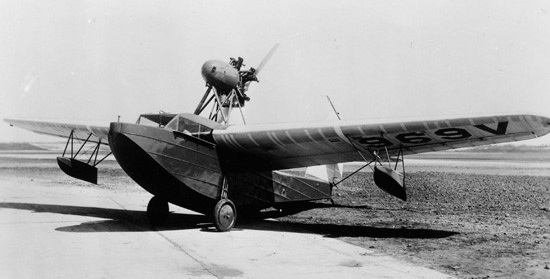
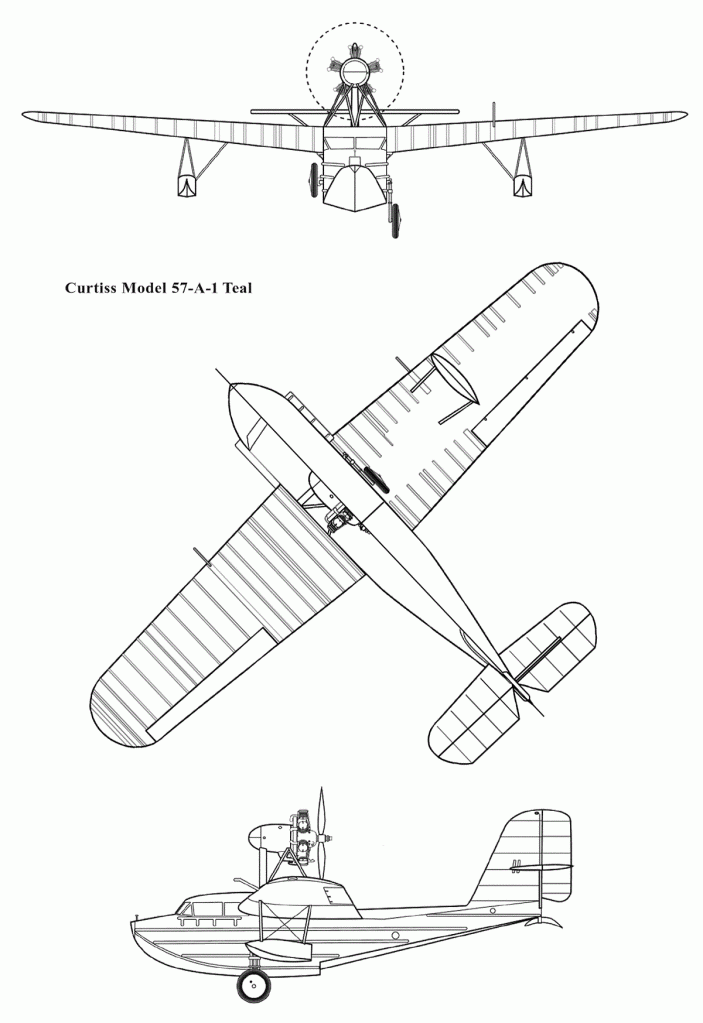
In the late 20s, the Curtiss Airplane and Motor Company developed a Model 57 Teal multi-purpose flying boat. The first A-1 version was completed in 1929.
It was a three-seater with the pusher engine pod-mounted above the wing centre section, equipped with a Wright J-6-5 Whirlwind engine with a power of 165 hp (123 kW).
In 1930, the boat passed flight tests and received a registration N969V. In the same year, the construction of a four-seater B-1 version with a Wright J-6-7 engine with a capacity of 225 hp (168 kW) was started.
Orders for A-1 did not arrive, and then the financial crisis broke out in the USA, as a result of which the company had to stop working on several projects, one of which was Teal. The four-seater B-1 was never completed, although it received a registration number N970V.
Teal A-1
Engine: 1 × Wright J6-5, 165 hp (123 kW)
Length: 30 ft 3 in (9.22 m)
Wingspan: 45 ft 6 in (13.87 m)
Height: 11 ft 6 in (3.50 m)
Wing area: 248 ft2 (23.03 m2)
Empty weight: 2,135 lb (968 kg)
Maximum speed: 99 mph (160 km/h)
Cruise speed: 85 mph (137 km/h)
Range: 450 miles (724 km)
Service ceiling: 10,400 ft (3,170 m)
Rate of climb: 400 ft/min (2 m/s)
Crew: one
Capacity: two passengers
Curtiss 31 CS / SC / Martin SC-1 / SC-2 / Naval Aircraft Factory CS-3 / Martin T3M / T4M / Great Lakes TG
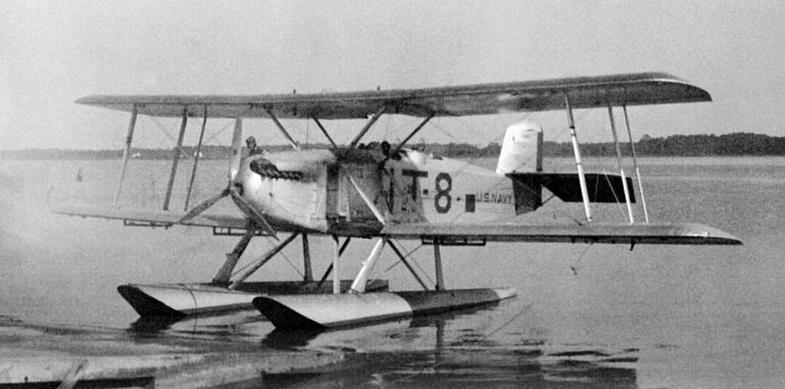
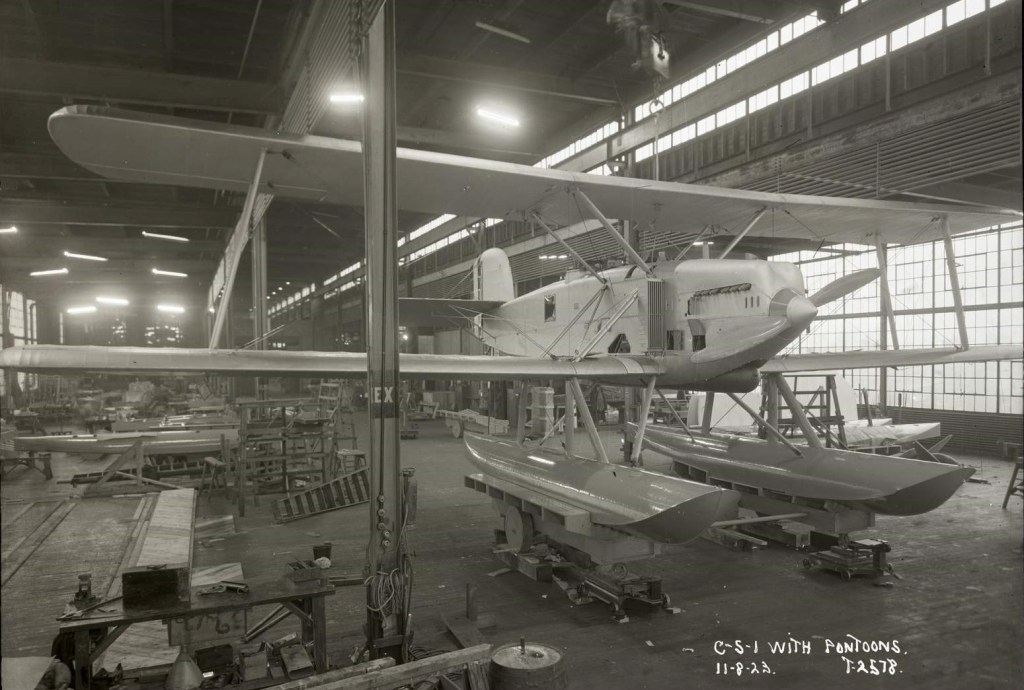
The Curtiss CS (or Model 31) was a reconnaissance and torpedo bomber aircraft used by the United States Navy during the 1920s. It was a large single-engine biplane with single-bay unstaggered wings, the design conventional in all respects other than that the lower wing was of greater span than the upper. The CS was built to allow its undercarriage to be quickly and easily interchangeable between wheeled, tailskid undercarriage, and twin pontoons for operation from water. Provision for the carriage of a torpedo was semi-recessed into the underside of the fuselage, blended in behind an aerodynamic fairing. The pilot and gunner sat in tandem open cockpits, while accommodation inside the fuselage was provided for a third crewmember who served as bombardier and radio operator. This station was also provided with a dorsal hatch aft of the gunner’s position, and a ventral blister aft of the torpedo recess, which was used for aiming bombs or torpedoes.The aircraft was originally designed by the Navy Bureau of Aeronautics. Curtiss won the contract to produce this aircraft, which became the Curtiss CS in the 1922-23 system, standing for Curtiss Scout.
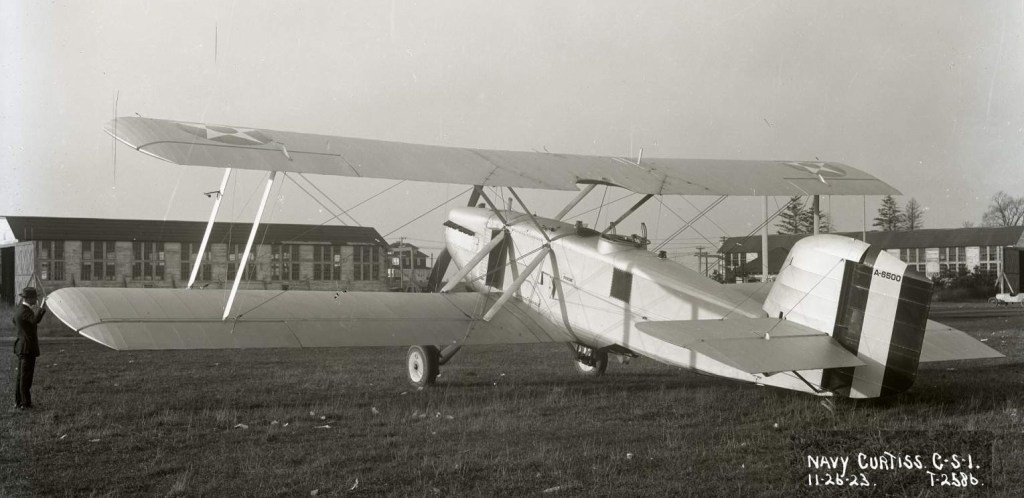
First flying in 1923, Curtiss produced six CS-1 prototypes for the Navy in 1923 powered by 530 hp (395 kW) Wright T-2 engine, which were mostly used for engine tests. Two examples of the improved CS-2 improved version with 600 hp (448 kW) Wright T-3 engine and more fuel were built the following year and set a number of world speed, distance, and endurance records for seaplanes in its class. They were delivered in April 1924 and served with Squadron VT-1. The CS-2 were one converted from CS-1 and two new-built aircraft by Curtiss.
The Navy ordered both the CS-1 and CS-2 into production, but when Curtiss tendered with a price of $32,000 per aircraft, Martin undercut them with a tender of $25,200 for each CS-1 and $19,863 for each CS-2 and won the contract. Curtiss refused to provide full sets of drawings and data to Martin, so Martin-built machines were in part reverse-engineered from a Curtiss-built CS-1 provided by the Navy. These aircraft entered service with squadrons VT-1, VT-2 and VS-1. By the time the Martin-produced aircraft were delivered in 1925–26, the Navy’s designation system had changed, and they entered service as the SC-1 (35 built) and SC-2 (40 built). Martin-built SC-2s suffered from poor handling characteristics and soon earned the nickname “Sea Cow”. The Martin T2M was an alternative designation for the Martin built SC series. Meanwhile, the Naval Aircraft Factory made extensive modifications to the two Curtiss CS-2s leading them to be re-designated CS-3. Curtiss modified a CS-2 with a geared engine, as the CS-3, which formed the basis of the Martin T3M. The Martin XSC-6 was a conversion of an SC-1 with a 730 hp (545 kW) Packard 1A-2500 engine.
Further development of the design was carried out by Martin as the T3M and T4M building 124, and eventually by Great Lakes as the TG.
The XSC-7 was a conversion of a CS-1 with a T-3A engine and increased gross weight.
In all. 83 were built.
In 1924, the CS-2 was used to break numerous world records for seaplanes in its class in three long-range flights. The first of these took place overnight between 22 and 23 June, when Lt Frank Wead and Lt John D. Price set five records – distance (963.123 mi, 1,544.753 km), duration (13 hours, 23 minutes, 15 seconds), speed over 500 km (73.41 mph, 117.74 km/h), speed over 1,000 km (74.27 mph, 119.12 km/h) and speed over 1,500 km (74.17 mph/118.96 km/h).[1] Between 11 and 12 July, the same pilots would break the distance and duration records again (994.19 mi/1,594.58 km over 14 hours, 53 minutes, 44 seconds).[1] On October 10, these same two records would be exceeded by Lt Andrew Crinkley and Lt Rossmore Lyon in a flight of 1,460 mi (2,342 km) in 20 hours, 28 minutes. While these would have been new world records, the flight was not officially timed, and was therefore not recognized as such.
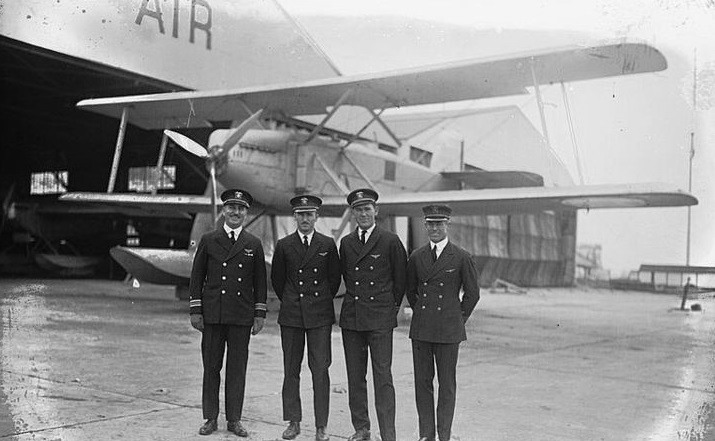
On September 23, 1925, the U.S. Navy flew 23 Curtiss CS-1 floatplanes to Bay Shore Park on the Chesapeake Bay, 14 miles SE of Baltimore, Maryland, on a Friday with the intention of an air show demonstration before the 1925 Schneider Cup Race on Saturday, but that night gale-force winds broke three-inch mooring and anchor ropes on 17 of the biplanes and they were blown onto shore or dashed against seawalls, destroying seven and damaging ten. The next afternoon’s Baltimore Evening Sun had the headline “Plane Disaster in Harbor Called Hard Blow to Navy” and quoted General William “Billy” Mitchell, who called the loss of the CS-1s “staggering” and blamed it on Navy mismanagement of its aviation program.
By the middle of 1927 CS/ SC were still in use with VT-2B, which had a mix of the Martin produced SC-1s and SC-2s. In addition they were used by VN-3D8 training squadron at Pensacola, which operated 15 SC-1s and 15 SC-2s.
Variants:
Curtiss CS-1
Engine: 525hp Wright T-2
Crew: 3
6 built
Curtiss CS-2
Engine: Wright T-3
2 built
Martin SC-1
35 built
Martin SC-2
Engine: Wright T-3, 585 hp (436 kW)
Wingspan: 56 ft 7 in (17.25 m)
Wing area: 856 sq ft (79.5 sq.m)
Length: 37 ft 9 in (11.51 m)
Height: 14 ft 8 in (4.47 m)
Empty weight: 5,007 lb (2,271 kg)
Gross weight: 8,422 lb (3,820 kg)
Maximum speed: 103 mph (166 km/h; 90 kn) at sea level
Range: 1,018 mi (885 nmi; 1,638 km)
Service ceiling: 8,000 ft (2,400 m)
Time to 2,000 ft (610 m): 10 minutes
Armament: 1 × rearward-firing machine gun in ring mount
Bombload: 1 × 1,618 lb (734 kg) torpedo
Crew: 3
40 built
Martin CS-3
CS-2 conversion
Engine: geared Wright T-3
CS-4 / CS-5
Naval conversions
XSC-6
Martin SC-1 (A6835)
Engine: 730hp Packard 1A-2500
SC-6
The second Martin SC-1 (A6824)
Engine: Packard 1A-2500
XSC-7
Single Curtiss CS-1 conversion
Engine: T-3A
Curtiss 56 Thrush
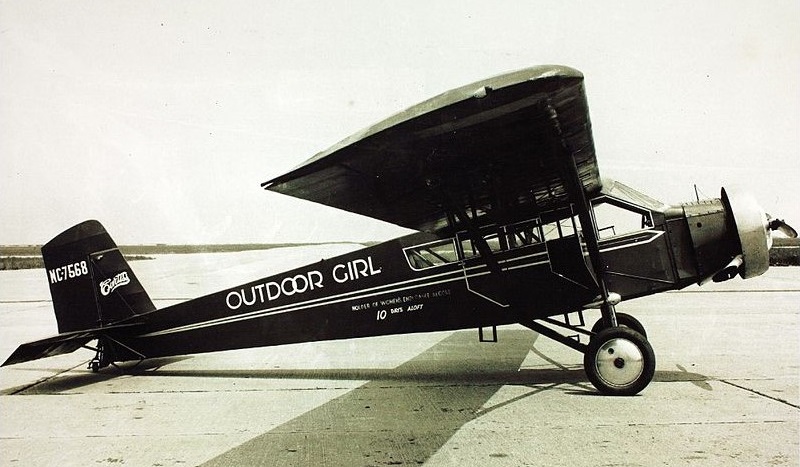
Designed by T.P. Wright, the Curtiss/Curtiss-Robertson Model 56 Thrush was a 1929 six passenger high-wing fixed undercarriage single-engine cabin monoplane airliner and utility transport powered by either a Curtiss Challenger or a Wright Whirlwind radial engine and built as an enlargement of the earlier Curtiss Robin.
The fuselage was built up as a Pratt truss frame formed mainly from Duraluminum tubing and fittings with welded Chrome-moly tubing reinforcing highly stressed areas and covered in fabric. The wing was a fabric covered semi-cantilever braced with steel tube struts, and had solid spruce spars and stamped Alclad ribs with Alclad sheet wrapped over leading edge. A fuel tank is mounted within each wing near the root. Rudder and elevators were welded chrome-moly steel tubing. 116″ track undercarriage is fitted with oleo-pneumatic shock absorbers and Bendix brakes, and is braced to the front struts and lower longerons.
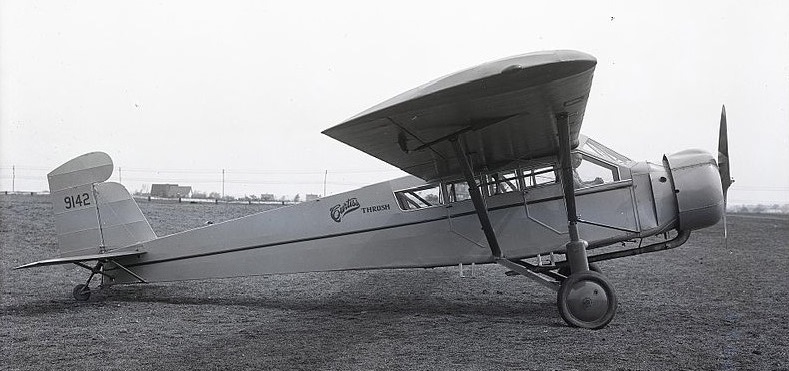
Three 170 hp (130 kW) Curtiss Challenger-engined Curtiss Thrush prototypes (serialled G-1 to G-3 ATC 159 & 160) were built at Curtiss’ Garden City factory, but these were underpowered and production examples, re-designated Thrush J (serialled 1001 to 1010) with 225 hp (168 kW) Wright Whirlwind engines, were built at the Curtiss-Robertson St Louis factory. All three prototypes were later re-engined with Whirlwinds to make them Thrush Js (ATC 236). The fuselage of the Thrush formed the basis for the twin-engine Curtiss Kingbird which was developed roughly in parallel.
Ten of the Thrush J (ATC 261) main production variant with 225 hp Wright J-6-7 Whirlwind were built.
12 examples were ordered by China National Aviation Corporation (CNAC) for $12,000 but only ten production examples were built. All but one was then registered in the US, as many aircraft exported to the CNAC were, however only one example made it to China, which it did in 1930, and it may not have entered CNAC service. One of the ten was lost on its first flight (serial 1006) and its registration was transferred to the next aircraft built. One of the prototypes went to Venezuela to a private individual, and a production example went to Cuba where it was the first aircraft operated by the Compañía Nacional Cubana de Aviación Curtiss (CNCAC), forerunner of Cubana de Aviación, Cuba’s national airline- one example registered NM-3..
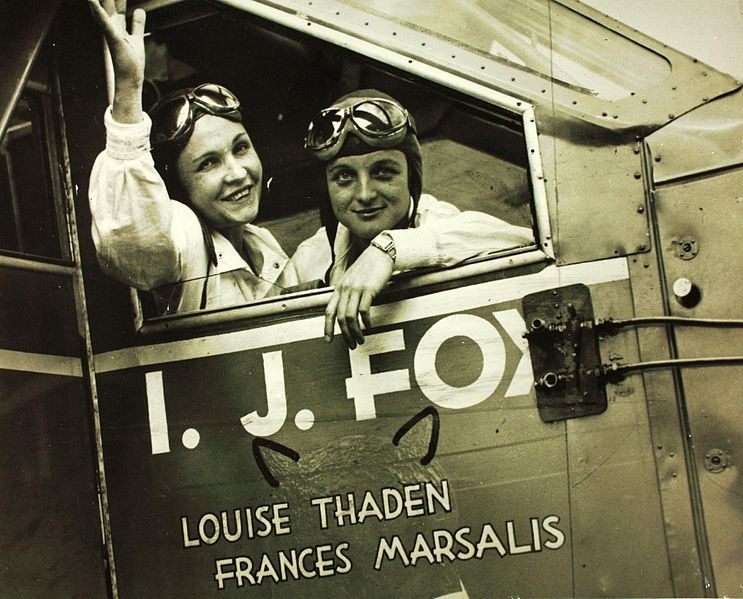
From the 14th to the 22nd of August 1932, Louise Thaden & Frances Marsalis flew prototype Thrush J NC9142 “I.J. Fox” (named for their sponsor, a fur coat company and nicknamed the “Flying Boudoir” by the press) for 196 hours 5 minutes, refuelling in flight from a Curtiss Robin to set an endurance record near Valley Stream, New York. For this and other record-breaking flights, Thaden received the Harmon Trophy in 1936.
Helen Richey and Frances Marsalis flew production Thrush J NC7568 “Outdoor Girl” (named for a brand of women’s cosmetics, a new sponsor) for 237 hours, 42 minutes (nearly ten days) from the 20th to the 30th of December 1933 over Miami, Florida. Like the first flight, it too was refuelled from the air from a Curtiss Robin.
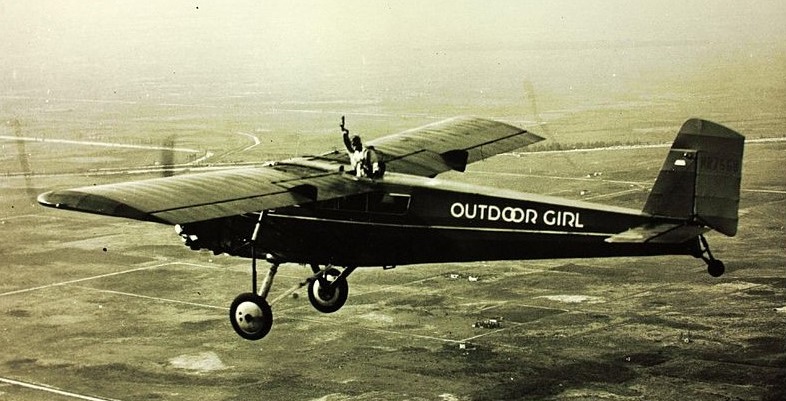
Jean LaRene and Mary Elizabeth Owens made five attempts at the world’s endurance record at the Curtiss-Reynolds Airport in August during the 1934 Chicago World’s Fair in Curtiss Thrush J NR581N “Lone Star” Jean LaRene made another attempt in NR581N on the record with Henrietta Sumner from 30 November 1934 over Oklahoma City but experienced engine problems and was forced down after 198 hours and 13 minutes aloft.
Two examples found their way to Alaska where they were used as bush planes, one by Ralph Savory before he joined Star Air Service, and a second was flown in Alaska by Gordon MacKenzie. The remainder were used in the United States by various operators as air taxis and feeder airliners.
The Thrush Special were one converted from a Thrush J with 240 hp Wright J-6-7 Whirlwind and a second converted with Wright J-5.
Thrush J – ATC 261
Engine: 1 × Wright J-6-7 (R-760), 225 hp (168 kW)
Propeller: 2-bladed Curtiss-Reed metal fixed pitch propeller
Length: 32 ft 7 in (9.93 m)
Wingspan: 48 ft 0 in (14.63 m)
Wing area: 305 sq ft (28.3 m2)
Airfoil: Curtiss C-72 Chord: 7 ft 0 in (2.13 m)
Height: 9 ft 3 in (2.82 m)
Empty weight: 2,260 lb (1,025 kg)
Gross weight: 3,800 lb (1,724 kg)
Fuel capacity: 110 gallons
Oil capacity: 9 gallons
Maximum speed: 122 mph (196 km/h; 106 kn)
Cruise speed: 104 mph (167 km/h; 90 kn)
Minimum control speed: 52 mph (84 km/h; 45 kn)
Range: 900 mi (782 nmi; 1,448 km)
Service ceiling: 13,200 ft (4,000 m)
Rate of climb: 650 ft/min (3.3 m/s) from sea level
Time to altitude: 10 minutes to 5300 feet
Wing loading: 12.46 lb/sq ft (60.8 kg/m2)
Fuel consumption: .76 lb/mi (0.21 kg/km)
Crew: one-two (dual controls)
Capacity: six passengers
Curtiss 55 Kingbird / JC-1 / RC-1
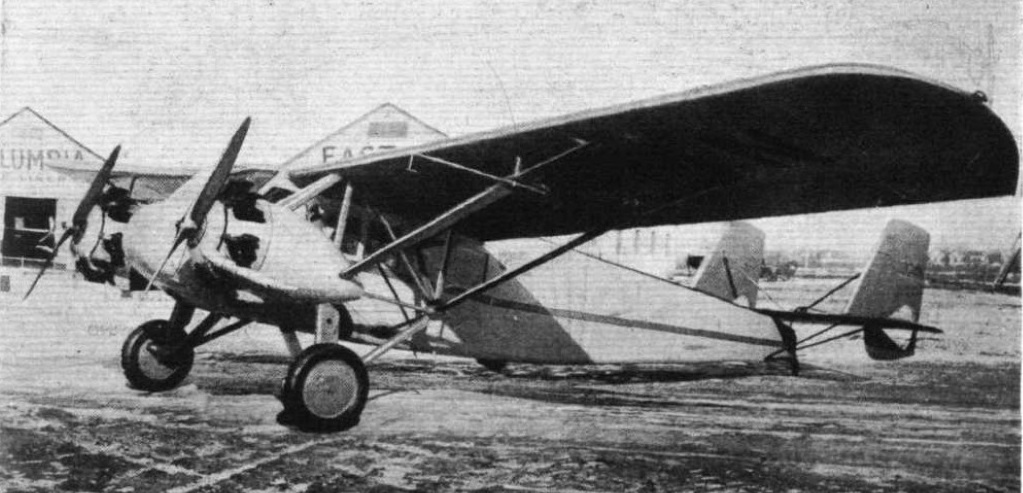
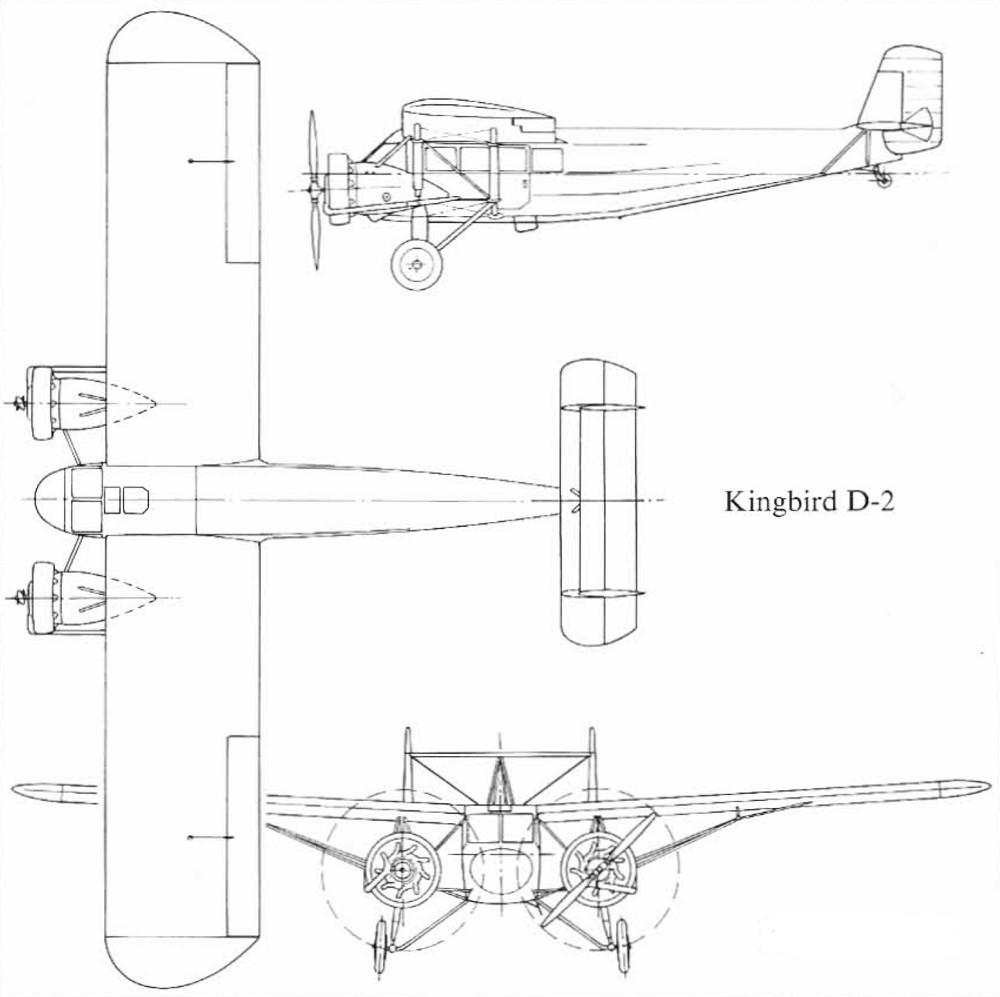
Designed by Theodore Paul Wright and Al Wedburg, the Curtiss Model 55 Kingbird was a twin-engine airliner with a fuselage derived from the single-engine Curtiss Thrush. The Kingbird had two engine nacelles mounted on the struts on either side of the fuselage that braced the wing and the outrigger undercarriage. A distinctive design feature was the aircraft’s blunt nose, located behind the propeller arcs. This allowed the engines to be mounted closer to each other and to the aircraft’s centerline, therefore minimising asymmetrical thrust in case of an engine failure. For the same reason, the Thrush’s single tailfin was replaced by twin tails on the Kingbird, and the main production model, the D-2 fitted a second horizontal stabilizer and elevator between these fins.
The prototype Kingbird C performed the first flight in May 1929 with two Curtiss Challenger motors with 185 hp each.
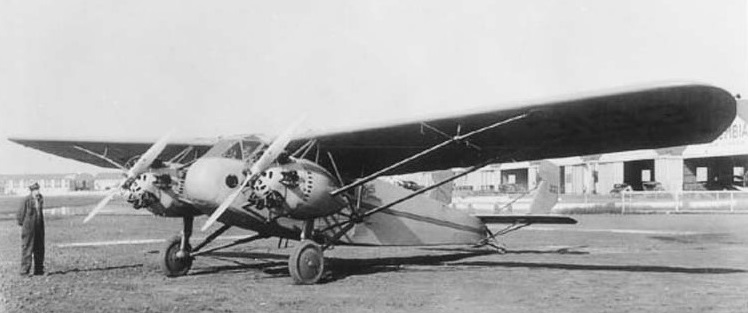
The prototype was followed by two Kingbird D-1s with Wright Whirlwind J-6-7 motors of 225 hp. Airline “Eastern Air Transport” ordered a series Kingbird D-2; two D-1 modified in D-2.
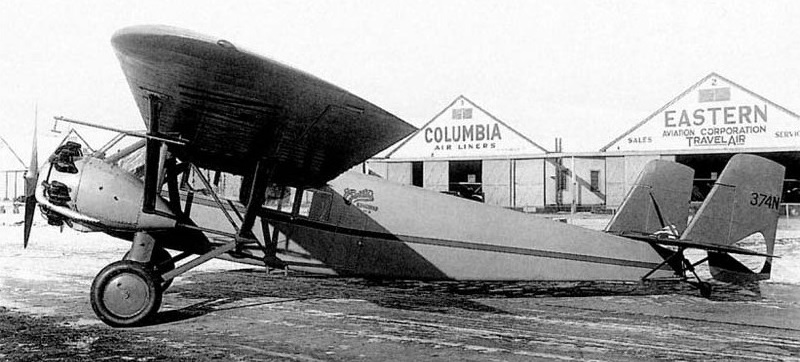
The only Kingbird D-3 took off in the summer of 1931 with two 330-horsepower Whirlwind J-6-9 engines.
Modernization was carried out before the first three Kingbird were assembled. Kingbird C became Kingbird J-1 with Whirlwind J-6-7 motors with 240 hp; the first Kingbird D-1-Kingbird J-2 with Whirlwind J-6-7 motors; the second Kingbird D-1 turned into a Kingbird J-3 with 300-hp Whirlwind J-6-9 motors, which was used to transport mail.
Selling for $25,555 each, Eastern Air Transport was to be the Kingbird’s main operator, flying 14 of them for a few years. The United States Marine Corps also purchased an example in 1931, first designating it JC-1, then RC-1 and using it as an air ambulance. Apart from some improvements to their requirements, it was the usual eight-seater Kingbird D-2. Others were operated by Turkish Airlines (under former official name: State Airlines Administration).
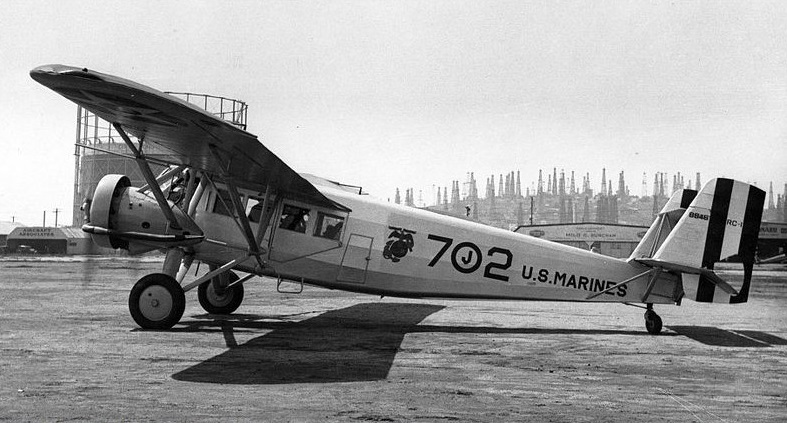
First flying in 1929, 19 were built in total.
Variants:
Kingbird C
Prototype powered by 185 hp (138 kW six-cylinder Curtiss R-600 Challenger engines. One built, but found to be underpowered. Later converted to Kingbird J-1.
Kingbird D-1
Second and third prototypes (previously Kingbird J-3 and J-2) powered by 225 hp nine-cylinder Wright Whirlwind J-6-7 radial engines. Later converted to D-2 standard.
Kingbird D-2
Production aircraft with two 300 hp (224 kW) Whirlwind J-6-9 engines. 14 built plus two converted from D-1s.
Kingbird D-3
One-off Curtiss executive transport. Two 330 hp (246 kW) Whirlwind J-6-9 engines. Seats for five passengers.
Kingbird J-1
First prototype after re-engined with Whirlwind engines.
Kingbird J-2
Third prototype, J-6-7 engines.
Kingbird J-3
Second prototype, J-6-9 engines.
RC-1
Single Kingbird D-2 for US Navy, originally ordered as JC-1 (J for utility), but delivered as RC-1 (R for transport).
Specifications:
D-2
Engines: 2 × Wright J-6-9 Whirlwind, 300 hp (224 kW) each
Wingspan: 54 ft 6 in (16.61 m)
Wing area: 405 ft2 (37.6 m2)
Length: 34 ft 10 in (10.59 m)
Height: 10 ft in (3.04 m)
Empty weight: 3,442 lb (1,561 kg)
Gross weight: 5,202 lb (2,360 kg)
Maximum speed: 142 mph (229 km/h)
Cruise speed: 112 mph (180 km/h)
Landing Speed: 54 mph / 86-8 km/hr
Range: 415 miles (668 km)
Service ceiling: 16,000 ft (4,880 m)
Rate of climb: 850 ft/min (4 m/s)
Crew: one, pilot
Capacity: seven passengers
Curtiss Fledgling / Model 48 / Model 51 / N2C
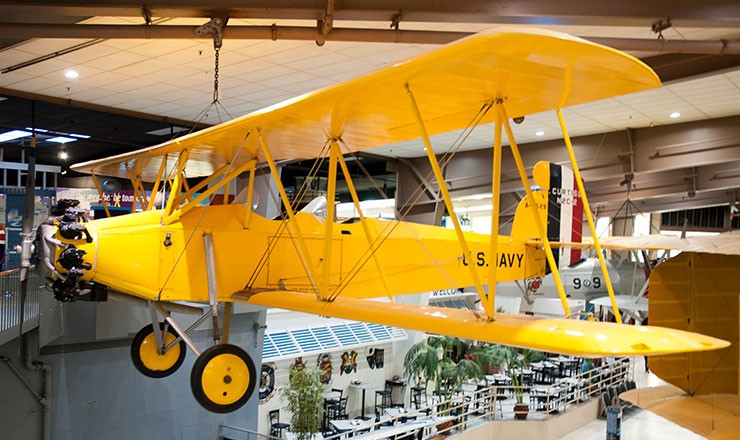
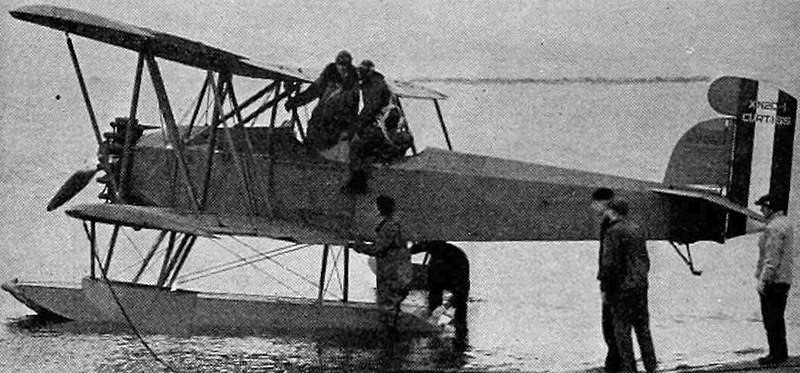
The Fledgling was designed by Theodore Paul Wright in response to a 1927 Navy requirement for a new primary trainer, and was selected after evaluation in competition with fourteen other submissions. The Fledgling was a conventional biplane design with two-bay, staggered wings of equal span braced with N-struts. The pilot and instructor sat in tandem, open cockpits, and the fixed tailskid undercarriage could be easily swapped for a large central pontoon and outrigger floats under the wings for seaplane training. The Navy ordered two batches of the Fledgling, each powered by different versions of the Wright Whirlwind engine, both of which were built under the Curtiss designation Model 48.
In 1928 Curtiss’ XN2C-1 Fledgling trainer was evaluated by the Navy and won the competition for a new primary trainer beating out 14 other competing designs. The original design was powered by the 165 horsepower Curtiss Challenger engine, but in ordering 31 of the aircraft, the Navy specified the 220 horsepower Wright Whirlwind engine in 30 of the aircraft, leaving one aircraft, the only one in naval service, to be powered by the unique Challenger engine that featured twin rows of six cylinders each.
In the United States Navy service they were known as the N2C. The Navy ordered 31 N2C-1s and 20 N2C-2 versions of the airplane. Though trainers, they were not assigned to Naval Air Station (NAS) Pensacola, but instead were operated by Naval Reserve units around the country. By the late 1930s, surviving N2Cs were modified with tricycle landing gear and turned into radio-controlled drones used as targets for anti-aircraft gunners. One drone was used to execute an attack on a target ship, a precursor of today’s anti-ship missiles.
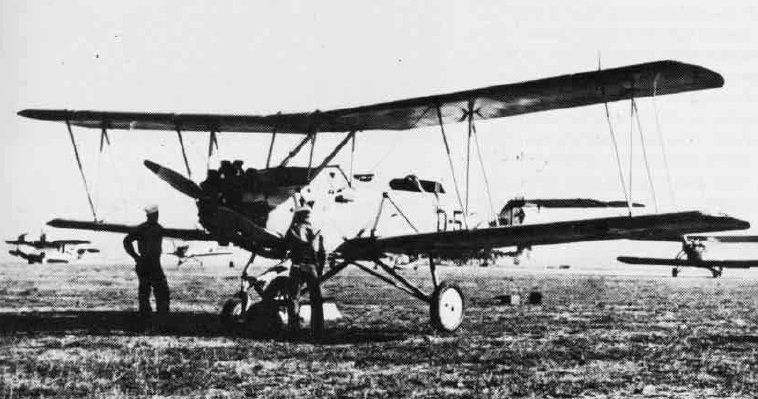
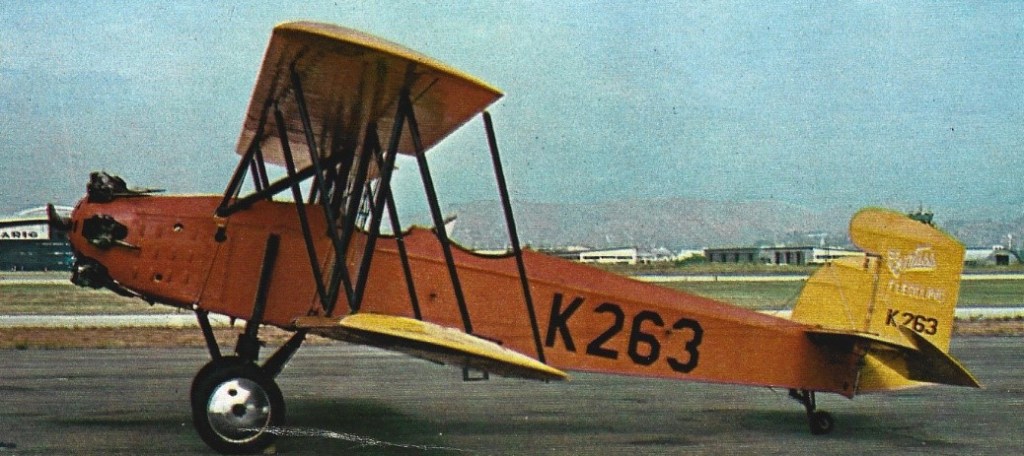
Believing the design to have commercial potential, Curtiss developed the Model 51 as a civil equivalent powered by the less powerful Curtiss Challenger engine. The company operated 109 of these aircraft in its own air taxi service, the Curtiss Flying Service during the 1930s. A number of these aircraft were experimentally fitted with the same Wright engines used in their military counterparts as the J-1 and J-2, but these were not produced in quantity.
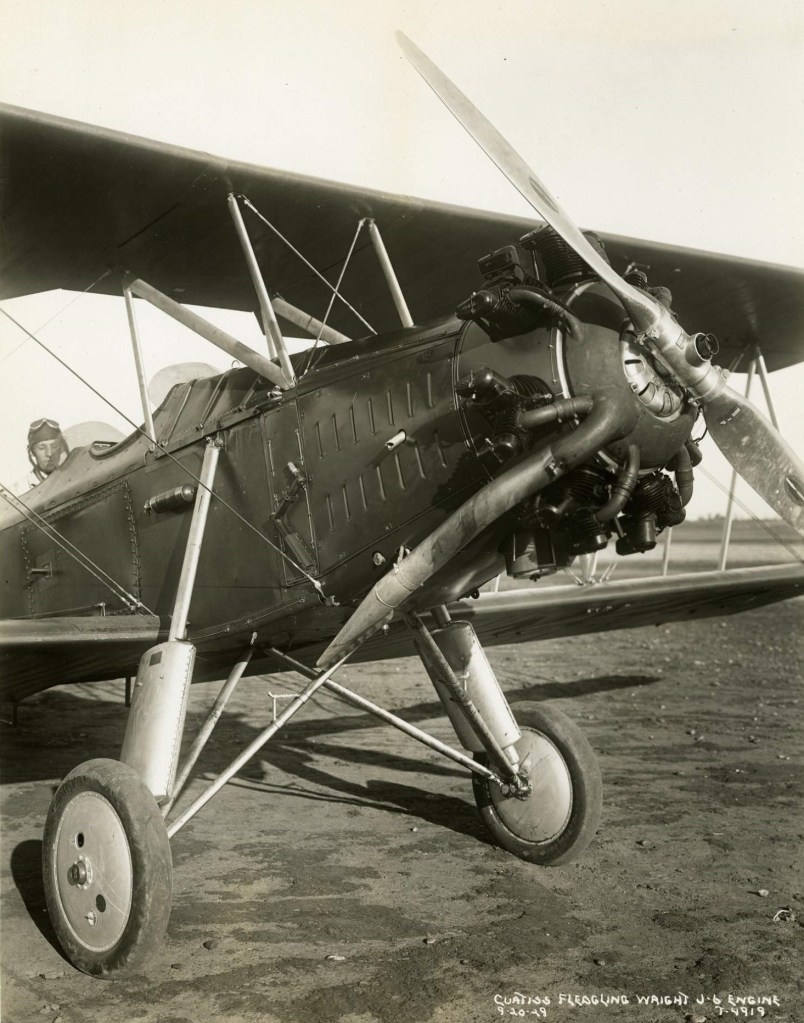
Another experimental variant, the reduced-wingspan Fledgling Junior was produced to the extent of a single prototype only.
First flying in 1927, about 160 of all models were built.
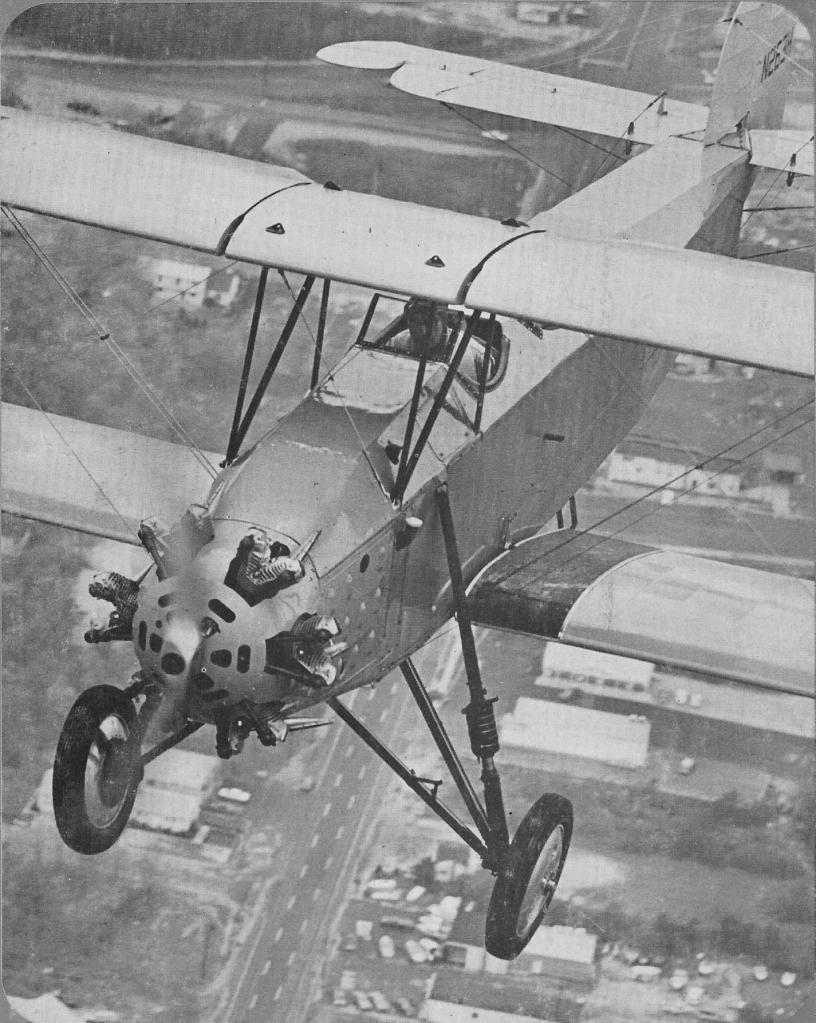
A number of Model 51s were exported to foreign military services for evaluation: four to Canada and one to Czechoslovakia, but these did not lead to any purchases. Curtiss also delivered at least seven N2C-1 kits to Turkey in 1933, as part of an agreement to produce the Curtiss Hawk Model 35 under licence in Turkey. These N2C-1s were used as trainers and liaison aircraft by the Turkish Air Force until 1945. At least one N2C-1 is thought to have been given to Iran as a gift from the Turkish Air Force.
Variants:
Model 48
XN2C-1
Navy prototypes (3 built)
N2C-1
Navy version powered by Wright J-5 Whirlwind (31 built)
N2C-2
Navy version powered by Wright J-6-7 Whirlwind (20 built)
Model 51
Fledgling
commercial version with Curtiss Challenger engine (109 built)
J-1
commercial version with Wright J-6-5 Whirlwind engine (four converted)
J-2
commercial version with Wright J-6-7 Whirlwind engine built to N2C-2 standard (two converted)
Fledgling Junior
reduced wingspan version (one built)
Fledgling Guardsman
convertible civil-military challenger powered versions.
A-3
designation assigned by the United States Army Air Corp USAAC for use of the Fledgling as a radio-controlled target aircraft
N2C-1
Engine: 1 × Wright J-5, 220 hp (160 kW)
Propeller: 2-bladed fixed pitch propeller
Wingspan: 39 ft 2 in (11.93 m)
Wing area: 365 sq ft (33.9 sq.m)
Length: 27 ft 4 in (8.33 m)
Height: 10 ft 4 in (3.14 m)
Empty weight: 2,135 lb (968 kg)
Gross weight: 2,832 lb (1,285 kg)
Maximum speed: 108.7 mph (175 km/h; 94 kn)
Cruise speed: 87 mph (140 km/h; 76 kn)
Range: 366 mi (318 nmi; 589 km)
Service ceiling: 15,100 ft (4,600 m)
Rate of climb: 695 ft/min (3.53 m/s)
Crew: 2
Curtiss 54 Tanager
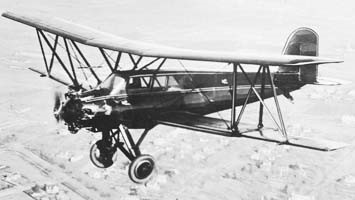
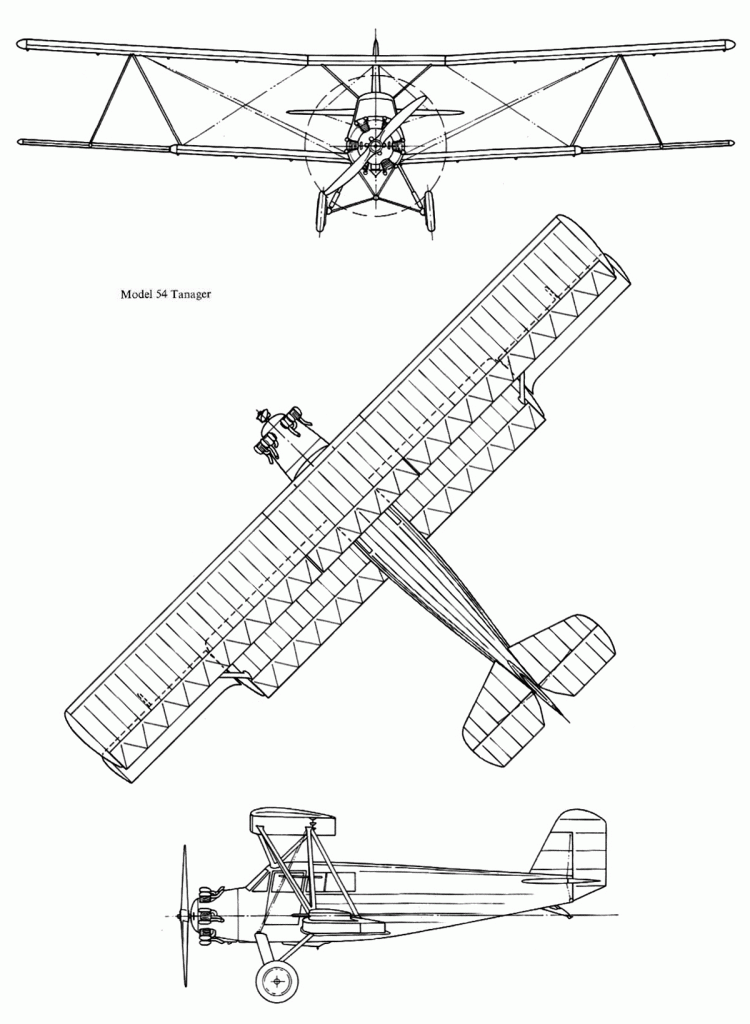
Designed by Robert R. Osborn and Theodore Paul Wright, the Curtiss Model 54 Tanager was an aircraft constructed in 1929 as Curtiss’ entry in the Guggenheim Safe Aircraft Competition organized by Daniel Guggenheim. The purpose of this competition was to create a civilian aircraft with a specific speed range, which allowed at low speeds to avoid accidents with a stall into a tailspin.
In accordance with the requirements of the competition, the minimum safe speed was to be 35 mph (56 km / h) but the requirements also indicated a maximum speed of at least 110 mph (177 km / h). Other specifications included a take-off distance from the starting point to a height of 35 feet (10 meters), not exceeding 500 feet (152 meters), the ability to carry two people for three hours and a payload of at least 5 pounds per horsepower (2, 26 kg / hp).
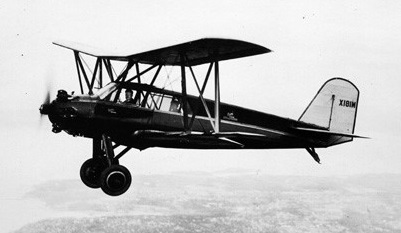
First flying on 12 October 1929, the Model 54 was a conventional biplane design with a highly streamlined fuselage with a closed cockpit that contained a pilot and two passengers. The wings were fitted with a variety of high-lift devices, including automatic leading edge slots on the upper wing, flaps that extended along the entire span of the upper wing, and “floating” ailerons on the lower wing that, in the absence of pilot input, automatically adjusted themselves parallel to the airflow over the wing. To ensure the possibility of flying at minimum speed, the rear edges of both wings were fully occupied by flaps, and the front edges were fully occupied by Handley Page automatic slats. These devices added 33% and 50% to the total lift coefficient, respectively. The combination of these devices gave the Tanager a stall speed of just 31 mph (50 km/h) and allowed it to land in only 90 ft (27 m). The main landing gear had a large shock absorber designed to absorb loads during rough landings and a reinforced fuselage frame in the cabin.
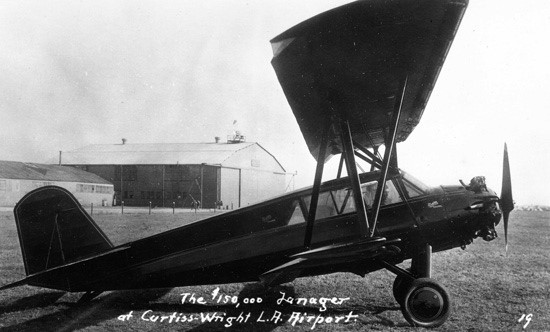
Only the Tanager and the Handley Page Gugnunc passed the qualifying round of the competition, and ultimately, the Tanager was to beat its rival by only one point to claim the $100,000 (£20,000) prize, the Gugnunc failing to achieve a minimum speed below 38 mph. Even before the competition was decided, however, Handley Page was suing Curtiss for the unlicensed use of the leading-edge slot. Curtiss claimed they were using the slots experimentally and would apply for a license for any commercial use. Curtiss counter-sued Handley Page for infringements of six of their patents in the Handley Page machine. They also cited a ruling that the British machine was not permitted to be imported into the US.
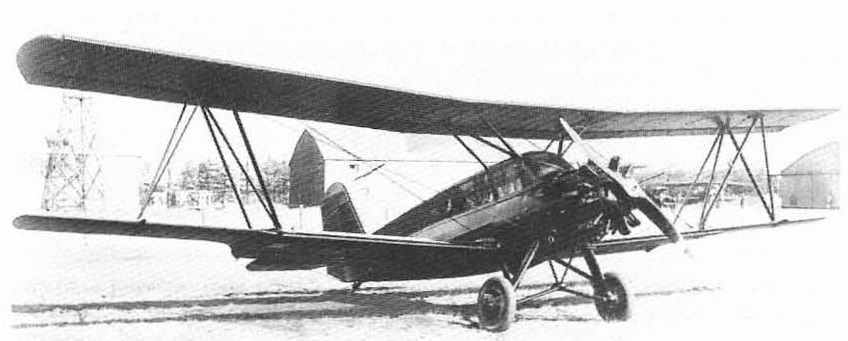
Following the competition, the only Tanager built was destroyed in a fire when sparks from its engine set the grass alight.
Engine: 1 × Curtiss Challenger, 185 hp (138 kW)
Wingspan: 43 ft 10 in (13.35 m)
Wing area: 333 sq.ft (30.93 sq.m)
Length: 26 ft 8 in (8.12 m)
Height: 11 ft 4 in (3.45 m)
Empty weight: 1,958 lb (888 kg)
Gross weight: 2,841 lb (1,289 kg)
Maximum speed: 112 mph (180 km/h)
Cruise speed: 95 mph (153 km/h)
Service ceiling: 12,500 ft (8,810 m)
Rate of climb: 700 ft/min (3.6 m/s)
Range: 535 miles (861 km)
Crew: one pilot
Capacity: two passengers