Curtiss-Wright CW-1 Junior

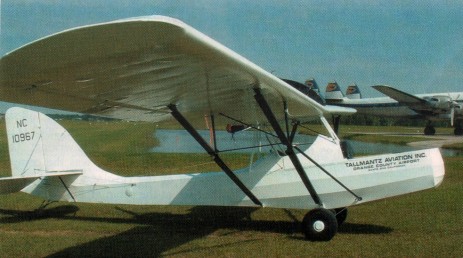
The Curtiss-Wright CW-1 Junior of 1931 (ATC 397) was designed by Karl White (modified from the CR-1 Skeeter). Selling for $1,490-1,595, 270 were built.
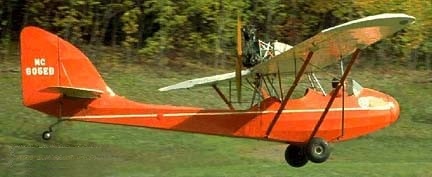
Curtiss-Wright CW-1 NC805EB

Engine options were numerous — even four tiny model-aircraft motors were used at the 1938 Nationals to demonstrate its modest power demands in order to fly, which it did, piloted by Dick Granere). Many were later converted to Continental A-40 to -65 power.
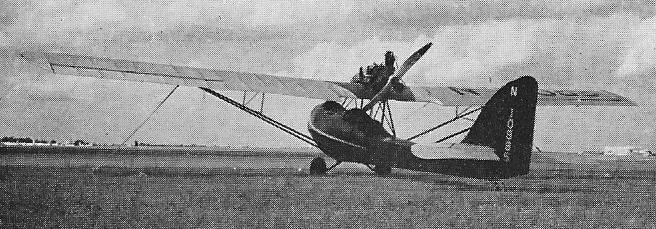
The CW-1A Junior of 1933 (ATC 2-442) was a single CW-1, NC11851, as a test bed for a 35hp Augustine B4-40 engine.

Two CW-1S Junior were built in 1936 (ATC 2-525) as CW-1 with 40hp Salmson AD-9 engines.

CW-1
Engine: 45hp Szekely SR-3 pusher
Wingspan: 39’6″
Length: 21’3″
Height: 7 ft 4 in
Wing area: 176 sq.ft
Empty weight: 570 lb
Loaded weight: 975 lb
Useful load: 420 lb
Max speed: 80 mph
Cruise speed: 70 mph
Stall: 32 mph
ROC: 600 fpm
Service ceiling: 12,000 ft
Range: 200 mi
Seats: 2

Curtiss-Wright CR-2 Coupe

The Curtiss-Wright CR-2 Coupe side-by-side cockpit with unfaired landing gear, strut-braced wing monoplane began as a Curtiss-Robertson project. Two were built in 1930, N627V and N637V, the design later evolved into the CW-19L.

Engine: Wright-Gypsy, 90hp
Wingspan: 38’0″
Length: 25’0″
Useful load: 611 lb
Max speed: 110 mph
Cruse speed: 90 mph
Stall: 45 mph
Range: 450 mi
Seats: 2

Curtiss-Wright CR-1 Skeeter

Designed by Karl White and Walter Beech, the CR-1 Skeeter, open cockpit, monoplane parasol wing design is thought to be from the Snyder Buzzard Light Plane, the rights to which were purchased in July 1930 by Curtiss, although White later claimed to have actually begun a similar preliminary design long before that while working with Beech at Travel Air Co.

First flown on 5 October 1930 piloted by Lloyd Child, only one was built, N607V, considered the prototype for the 1931 CW-1 series.

Engine: ABC Scorpion, 24hp pusher
Wingspan: 39’6″
Length: 21’3″
Seats: 2

Curtiss-Wright CA-1

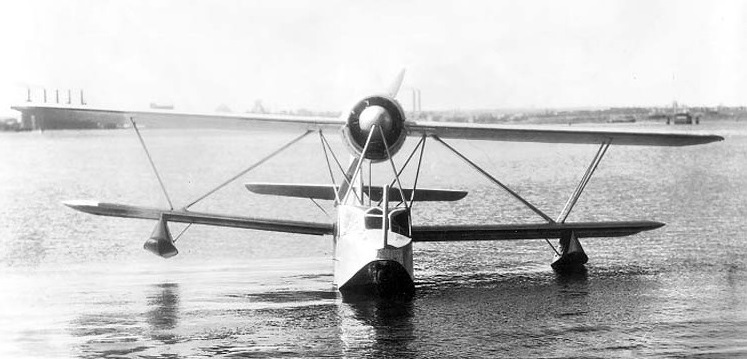
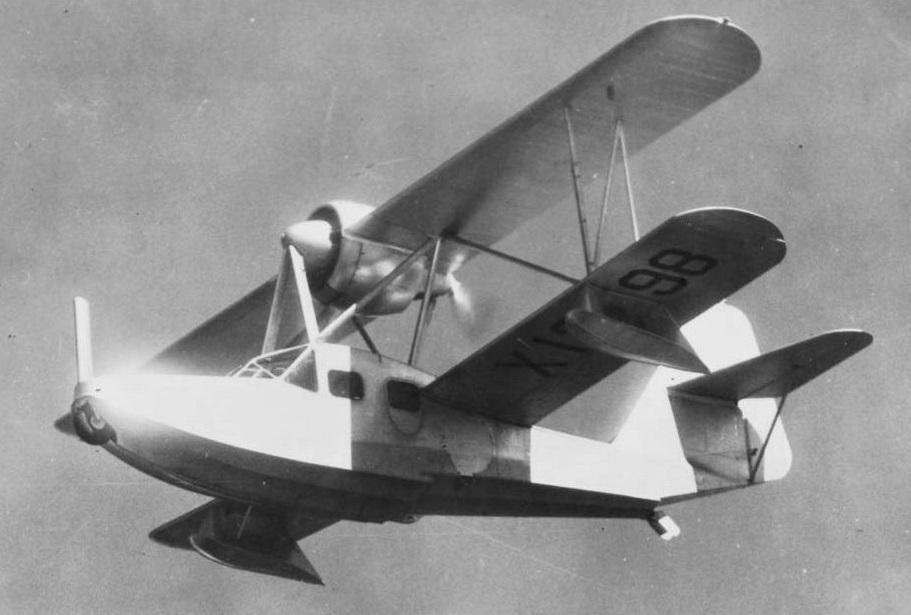
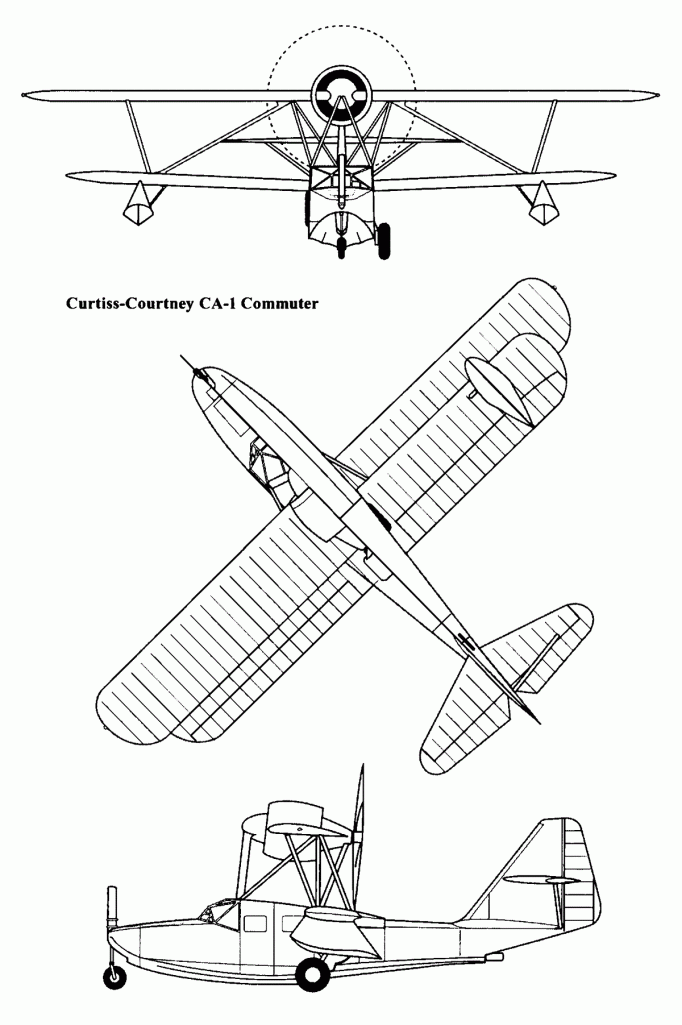
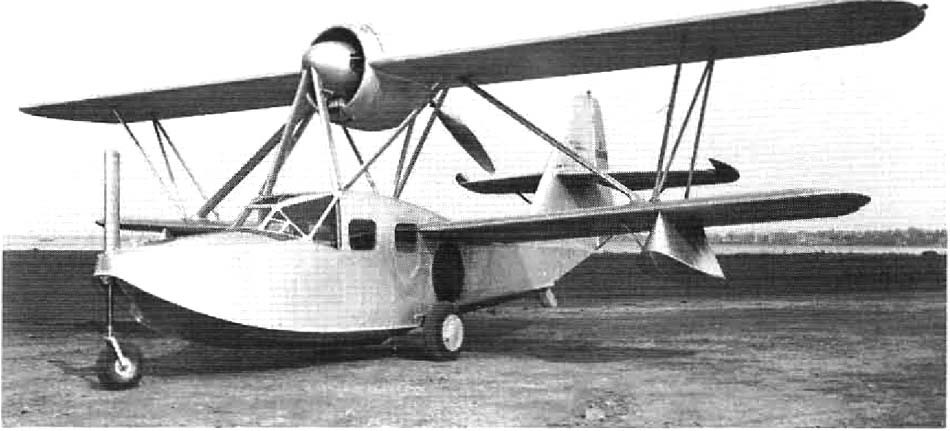
Designed by the British test pilot Frank Courtney, the Curtiss CA-1 (sometimes known as the Commuter or the Courtney Amphibian), was a five-seat amphibian. The CA-1 was powered by a 365 hp (272 kW) Wright 975E-1 radial, cowled and fitted into the leading edge of the top wing driving – through an extension shaft – a pusher propeller. When Wright told Courtney that this could not be done, the Briton went to a non-Curtiss-Wright mechanical workshop and successfully assembled his design.

Possessing a metal hull and wooden wings, the CA-1 had a nose wheel landing gear and an enclosed cabin for the pilot and passengers.

The three prototypes were built at the St. Louis plant, the first flying in 1935.

CA-1 (factory number 101; registration number 13298) in January 1935 received ATC No.2-397, and CA-1 (factory number 102; registration number 11780) in September received ATC 582, aircraft of this type did not go into mass production. Only three aircraft were built and they were all sold in Japan along with the project documentation, designated LXC by the Imperial Japanese Navy Air Service.

Gallery

Engine: 1 × Wright 975E-1 (J-6-9), 365 hp (272 kW)
Wingspan: 40 ft 0 in (12.19 m)
Length: 31 ft 0 in (9.45 m)
Height: 3.65 m
Empty weight: 1352 kg
MTOW: 2109 kg
Maximum speed: 151 mph (243 km/h; 131 kn)
Cruise speed: 125 mph (201 km/h; 109 kn)
Stall speed: 60 mph (97 km/h; 52 kn)
Range: 550 mi (478 nmi; 885 km)
Ceiling: 4267 m
Crew: one
Capacity: four passengers
Baggage: 240 lb (110 kg)

Curtiss-Wright

Formed from merger on August 9,1929 between Curtiss Aeroplane and Motor Co Inc. and Wright Aeronautical Corporation. Subsequent production mainly by Curtiss Airplane Division of Curtiss-Wright (aircraft still being “Curtiss” types rather than “Curtiss-Wright,” except for those with “CW” designations. In August 1929, stock changed hands, and the Curtiss Wright Corporation be¬came the controlling power in Travel Air. Travel Air’s production had been one ¬tenth of the total U. S. output of commercial airplanes.
In 1936 complete reorganisation dissolved all main subsidiaries except Wright Aeronautical Division. From 1930 onwards main products included F9C Sparrowhawk fighter, carried on board USN airships; F11C/BFC Goshawk for USN and export versions Hawk I/ II/ III/ IV; SBC Helldivers for USN; SOC Seagull for USN; BT-32/ CT-32/ T-32 Condor bomber and civil/military transport; A-8/10/12 Shrike for USAAC; P-36 for USAAC and export Hawk 75s; one CW-20 prototype (later used by BOAC); C-46 Commando (USAAF) and R5C (USN) transport developments of CW-20; CW-21 Demon fighters; SNC trainers for USN, developed from CW-21; P-40 Warhawk/Tomahawk/Kittyhawk fighters for USAAF and other Allied services, of which 13,738 built during Second World War; C-76 Caravan transports for USAAF; O-52 Owl observation biplanes for USAAF/USN; SO3C Seamew for USN and Fleet Air Arm; SB2C Helldiver; AT-9 Jeep twin-engined trainers for USAAF; SC Seahawk scout seaplanes for USN; Republic P-47 Thunderbolt fighters for USAAF. Total wartime production (1940-1945) was 26,755 aircraft and 223,036 aero engines.
After the war many Curtiss factories closed and most aircraft construction discontinued. Some Boeing B-29 modification undertaken until end of 1945, but Curtiss- Wright basically then undertook overhaul and repair of aircraft and manufacture of components, subassemblies and spare parts. By 1952 was concerned exclusively with production of aero engines and propellers. At the end of the 1950s Curtiss-Wright made a brief return to aircraft production with Skydart rocket-propelled target drone and prototype VZ-7AP VTOL “Flying Jeep” for Army trials. Last type produced by the company was the X-19A, a six-seat convertiplane with twin engines driving tandem pairs of tilting propeller/rotors; first flight June 26,1964, but development discontinued 1966. By 1970s main activities of the corporation included nuclear research, data transmission, and research into new advanced engine designs for USAF and NASA, although still made components for Boeing 747 airliners.
The Aerophysics Development Corporation was absorbed by Curtiss Wright Corporation and became its Santa Barbara Division.

Curtiss Robertson

Founded at St Louis, Missouri, in 1928 as division of Curtiss- Wright Corporation with William B. Robertson as president. Main products were Robin three-seat high-wing cabin monoplane (noted for its endurance records) and Kingbird seven-passenger development with twin engines. Neither was produced on a large scale.

Curtiss-Reid Aircraft Co

Canada
Founded in Montreal in January 1929 by a merger of the Reid Aircraft Company (founded 1928) and the Curtiss Aeroplane & Motor Co of New York. W. T. Reid, formerly chief designer of Bristol Aeroplane Company, had founded Reid Aircraft to build a light biplane of his own design. This was produced by the new company as the Curtiss-Reid Rambler, powered by a license-built Cirrus engine, and at least six of these aircraft were supplied to the RCAF. Opened flying school in 1930. Built also the Courier, a single-seat lightweight mail-carrying monoplane.

Curtiss R-1454

The Army issued a specification for a new engine, known as the R-1454, on 15 Aug 1923. Development of the engine itself had been carried out by the Army through Wright, Lawrance, and an independent engineer, S D Heron, and had been through many changes, to the cylinders in particular. The fixed-price contract was won by Curtiss, following its bid on 13 Nov 1923, and was for the construction of three engines with an option for three more. The first engine was delivered in Sept 1924 and it gave up to 405hp @ 1650rpm. A modified cylinder developed by Heron (Type M) was fitted to the engine, and the Army instructed Curtiss to proceed with the other engines called for under the contract in Feb 1926.

Output: 400hp
Capacity: 1454ci.