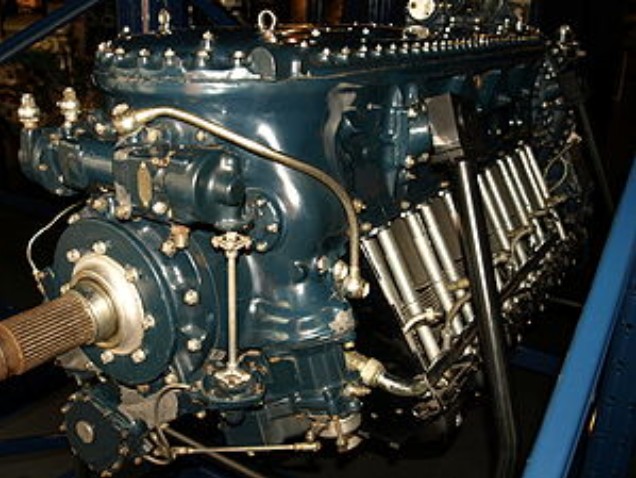
de Havilland Gipsy Six / Industria Aeronautică Română IAR 6G1

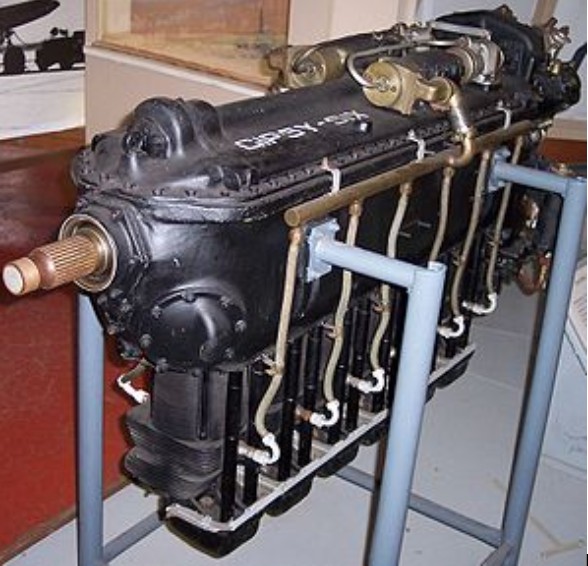
The de Havilland Gipsy Six is a British six-cylinder, air-cooled, inverted inline piston engine developed for aircraft use in the 1930s. It was based on the cylinders of the four-cylinder Gipsy Major and featured a low cross-sectional area.

The de Havilland company had hoped to produce a version of the basic engine capable of utilising a hydraulically actuated variable pitch (VP) airscrew based on the American Hamilton “Bracket-Type.” Since there was so little time to perfect this installation, as a compromise, a French “Ratier” VP airscrew was fitted to the Comets’ “R” engines, which utilised a simple air-filled bladder for a once-per-flight automatic pitch change. Later on, Comets were fitted with the Series II engine, which eliminated this crude system. Power for the “R” was increased to a takeoff rating of 223 hp by increasing the compression ratios from 5.25:1 to 6.5:1, while fitting aluminium alloy cylinder heads, domed-pistons and modified valve gear. Production of the basic fixed-pitch Gipsy Six unit began in 1935, with the engines rated at 200 hp (150 kW) at 2,400 rpm for takeoff.

In 1934, the basic bronze-headed Gipsy Six, rated at 185 horsepower (138 kW) at 2,100 rpm was modified for use in the DH.88 Comet air racer as the Gipsy Six “R” which produced 223 horsepower (166 kW) at 2,400 rpm for takeoff.

This was quickly followed by production of the 205 hp Gipsy Six Series II for use with the hydraulically actuated airscrews that de Havilland were by then producing under a licence acquired from Hamilton Standard in 1934. This was effectively the engine that the company did not have time to develop for the 1934 MacRobertson race, but without the significant increase in compression-ratio needed for the Comet. The Series II unit, while superficially similar to its predecessor, utilised a hollow, splined crankshaft to permit the fitting of the VP airscrew utilising boosted pressurised oil from the engine’s dry-sump lubrication system via a pilot-operated control valve. As well as differences to the crankcase and crankshaft, different cylinder barrels, pistons and aluminium cylinder heads were utilised. The “pilot-friendly” constant speed units (CSUs) were not available for these engines until 1939. The Series II was also equipped with AMC (Automatic Mixture Control) a barometric device, without which it was exceedingly difficult to adjust for a correct mixture with a CSU fitted. This feature was also carried over onto the similar Queen II. Pilots were then able to simply select the required RPM and Boost pressure required. This reduction in over-leaning also tended to extend the TBO (time between overhauls). The twin down-draught, Claudel-Hobson A.I.48 carburetters were common to all these engines. In the mid-1930s, the induction system was skilfully designed to automatically obviate the effects of carburetter icing. The series of engines proved to be reliable, and the time between overhaul (TBO) was more than doubled within a few years.

These engines powered many, if not most of the racing and record-setting aircraft of the 1930s. The engines were subsequently developed into the similar de Havilland Gipsy Queen III and Queen II for military applications. Later developments, such as the postwar Queen 30 and Queen 70 series engines took the rated power from 185 hp up to nearly 500 hp, and, while being entirely new designs, still used all of the same basic configuration of the original Gipsy Six of the mid-1930s and were in use by operators such as the Royal Air Force (RAF) and Royal Navy (RN) until the 1980s.

In all, 1139 were built.

Alfa Romeo built two engine types based on the Gipsy Six design, the Alfa Romeo 110 and Alfa Romeo 115.

Variants:

Gipsy Six I
Bronze cylinder heads, 200hp. For fixed-pitch airscrews.

Gipsy Six Series II
Aluminium cylinder heads, designed for leaded fuel. 210 hp. For VP airscrews.

Gipsy Six ‘R’
Racing engine with high lift camshaft. 220 hp. For VP airscrews.

Gipsy Queen
Military version of Gipsy Six. Queen III, 205 hp, for fixed-pitch airscrews. Queen II for VP airscrews, 210hp. Later Queens differed substantially.

IAR 6G1 – licence-built by Industria Aeronautică Română

Applications
ASJA Viking II
Cierva W.9
de Havilland Dragon Six
de Havilland Dragon Rapide
de Havilland Express
de Havilland DH.88
Koolhoven F.K.57
Miles Mentor
Parnall Heck
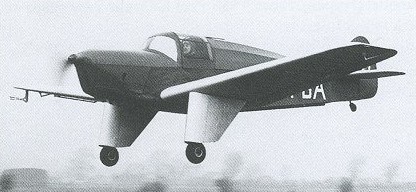
Percival Mew Gull
Percival Petrel
Percival Vega Gull
Rogožarski SIM-XII-H

Specifications:

Gipsy Six I
Type: 6-cylinder air-cooled inverted inline piston aircraft engine
Bore: 4.646 in (118 mm)
Stroke: 5.512 in (140 mm)
Displacement: 560.6 in3 (9.186 L)
Length: 62.1 in (1,578 mm)
Width: 19 in (485 mm)
Height: 32.4 in (823 mm)
Dry weight: 468 lb (213 kg)
Valvetrain: OHV
Fuel system: Two downdraught Claudel-Hobson A.I.48F carburettors
Oil system: Dry sump, gear-type pump
Cooling system: Air-cooled
Power output: 200 hp (149 kW) at 2,350 rpm (on 70 octane fuel)
Specific power: 0.357 hp/cu in (16.2 kW/L)
Compression ratio: 5.25:1
Fuel consumption: 10 gph (45.4 L/ph) at 2,100 rpm
Oil consumption: Up to 4 pints (2.4 L) per hour.
Power-to-weight ratio: 0.42 hp/lb (0.7 kW/kg)
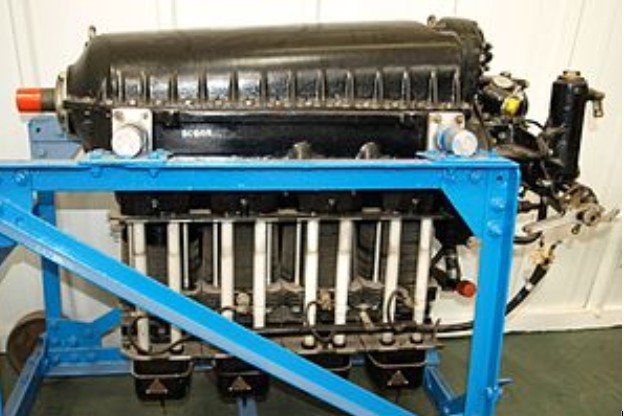
de Havilland Gipsy Queen

de Havilland Gipsy Queen 70-4

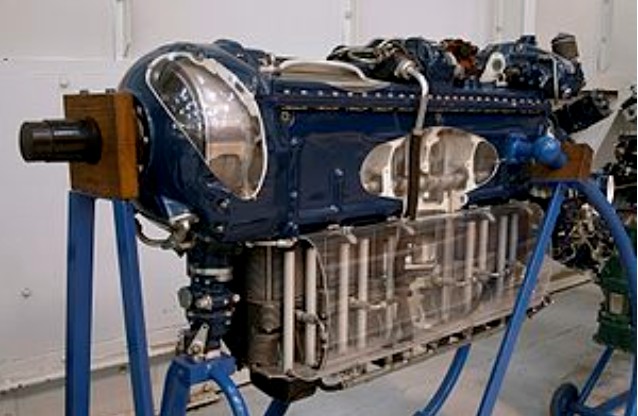
The de Havilland Gipsy Queen is a British six-cylinder aero engine of 9 litres (550 cu in) capacity that was first run in 1936 by the de Havilland Engine Company. It was developed from the de Havilland Gipsy Six for military aircraft use. Produced between 1936 and 1950, around 5000 Gipsy Queen engines were built.
Variants:

Gipsy Queen I
(1936) 205 hp (153 kW), military version of Gipsy Six II. Splined crankshaft.

Gipsy Queen II
(1936) 210 hp (160 kW), military version of the Gipsy Six Series II. Strengthened crankcase. Splined crankshaft for V/P airscrew.

Gipsy Queen III
(1940) 200 hp (150 kW), military version of Gipsy Six, strengthened crankcase, tapered crankshaft for fixed-pitch;-1,358 built.

Gipsy Queen IV
(1941) Supercharged version, originally designated Gipsy Queen IIIS, designated Gipsy Queen 50 in June 1944.

Gipsy Queen 30
All-new engine from this point. (120 mm x 150 mm = 10.18 L)
(1946) 240 hp (180 kW), 1,762 built.

Gipsy Queen 30-2
(1946) 240 hp (180 kW).

Gipsy Queen 30-3
(1946) 240 hp (180 kW).

Gipsy Queen 30-4
(1946) 240 hp (180 kW).

Gipsy Queen 32
(1946) 250 hp (190 kW).

Gipsy Queen 33
As Gipsy Queen 30 for pusher installation.

Gipsy Queen 34
As Gipsy Queen 30.

Gipsy Queen 50
(1944) 295 hp (220 kW), Single-speed, single stage supercharger. 14 built.

Gipsy Queen 51
295 hp (220 kW), as Gipsy Queen 50.

Gipsy Queen 70-1
(1946) Renamed Gipsy Six S.G, 1,889 built. Supercharged with reduction-drive.

Gipsy Queen 70-2
380 hp (280 kW)3. Supercharged with reduction-drive.

Gipsy Queen 70-3
380 hp (280 kW). Supercharged with reduction-drive.

Gipsy Queen 70-4
340 hp (250 kW). Supercharged with reduction-drive.

Gipsy Queen 71
(1950) 330 hp (250 kW). Supercharged with reduction-drive.

Applications:
Airspeed Oxford
Breda Ba.44
Cierva W.9
Fiat G.46 bis and G.46-2
de Havilland Dragon Rapide
de Havilland Dove
de Havilland Heron
Handley Page Marathon
Heston A.2/45
Miles Mentor
Miles Merchantman
Parnall Heck
Percival Merganser
Percival Prentice
Percival Proctor
Planet Satellite
Scottish Aviation Pioneer
Short Sealand
Youngman-Baynes High Lift

Specifications:

Gipsy Queen I
Type: 6-cylinder inverted inline piston engine
Bore: 4.646 in (118 mm)
Stroke: 5.512 in (140 mm)
Displacement: 560.6 cu in (9.186 L)
Length: 63.5 in (1,587 mm)
Width: 20.5 in (513 mm)
Height: 33.5 in (838 mm)
Dry weight: 486 lbs (220 kg)
Valvetrain: Overhead valve
Fuel type: 87 octane petrol
Oil system: Dry sump
Cooling system: Air-cooled
Power output: 208 hp (155 kW) at 2,400 rpm
Compression ratio: 6.5:1
Power-to-weight ratio: 0.43 hp/lb (0.7 kW/kg)

de Havilland Gipsy Major / Gipsy IIIA / CNIAR 4GI

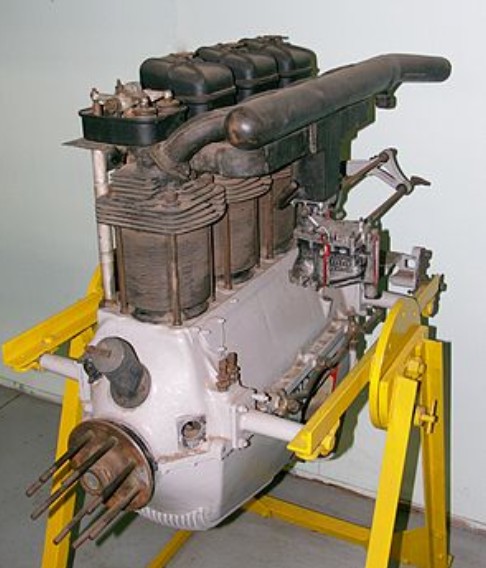
The de Havilland Gipsy Major or Gipsy IIIA is a four-cylinder, air-cooled, inline engine, first run in 1932, and used in a variety of light aircraft produced in the 1930s, including the Tiger Moth biplane.

The engine was a slightly modified Gipsy III, which was effectively a de Havilland Gipsy engine modified to run inverted so that the cylinders pointed downwards below the crankcase. This allowed the propeller shaft to be kept in a high position without having the cylinders blocking the pilot’s forward view over the nose of the aircraft. One initial disadvantage of the inverted configuration was the high oil consumption (up to four pints per hour) requiring regular refills of the external oil tank, this problem improved over time with the use of modified piston rings. The Major was a slightly bored-out (118 mm from 114 mm) Gipsy III. First built in 1932, total production of all Gipsy Major versions was 14,615 units.

The CNIAR 4GI was a licence-built 130 hp De Havilland Gipsy Major.

1949

In Canada the Gipsy Major was the engine of choice for the DHC1 Chipmunk trainer, which later replaced the Tiger Moth in the RAF. By that time however, the Gipsy Major was eclipsed by the Blackburn Cirrus Major and the American Lycoming and Continental horizontally opposed engines. In its final supercharged form, the Gipsy Major used in helicopter applications delivered 220 hp (164 kW).

Variants:
Gipsy Major I
Gipsy Major IC – Higher compression ratio (6:1) and maximum RPM for racing use.
Gipsy Major ID – Fuel pump added, plus screened ignition harness and priming system.
Gipsy Major IF – Aluminium cylinder heads, 5.25:1 compression ratio.
Gipsy Major 7 – Military version of Gipsy Major 1D, increased climb RPM.
Gipsy Major 8 – Sodium cooled exhaust valves, cartridge starter for DHC Chipmunk.
Gipsy Major 10 – Electric starter option.
Gipsy Major 30 – Major redesign, bore and stroke increased. 6.5:1 compression ratio.
Gipsy Major 50 – Supercharged. 197 hp.
Gipsy Major 200 – Designed as a light helicopter engine. 200 hp.
Gipsy Major 215 – Turbo-supercharged helicopter engine. 220 hp.

Applications:
Airspeed Ferry
AISA I-115
Arrow Active
Auster Aiglet
Auster Autocar
Auster Autocrat
Beagle Terrier
Boulton Paul P.92
British Aircraft Cupid
British Aircraft Eagle
British Aircraft Double Eagle
Blackburn B-2
Chrislea Super Ace
Comper Mouse
Comper Streak
Comper Swift
De Bruyne Snark
de Havilland Dragon
de Havilland Dragonfly
de Havilland Australia DHA-3 Drover
DHC-1 Chipmunk
de Havilland Fox Moth
de Havilland Hornet Moth
de Havilland Leopard Moth
de Havilland Moth Major
de Havilland Puss Moth
de Havilland Tiger Moth
de Havilland T.K.2
de Havilland T.K.4
Elliotts Newbury Eon
Fairey Primer
Foster Wikner Wicko
General Aircraft Cygnet Major
General Aircraft Monospar
Handley Page Manx
Hirtenberg HS.9
Ikarus Aero 2
Koolhoven F.K.43
Koolhoven FK.47
Koolhoven F.K.54
Miles Aerovan
Miles Falcon Major
Miles Gemini
Miles Hobby
Miles Hawk Trainer
Miles M.35 Libellula
Miles M.39B Libellula
Miles Magister
Miles Mercury
Miles Messenger
Miles Minor
Miles Monarch
Miles Sparrowhawk
Miles Whitney Straight
Percival Gull Major
Reid and Sigrist Desford
Rogozarski SIM-Х
RWD-5bis
RWD-19
Saab 91 Safir
Saunders-Roe Skeeter
Spartan Cruiser
Stampe SV.4
Thruxton Jackaroo
VL Viima

Specifications:

Gipsy Major I
Type: 4-cylinder air-cooled inverted inline piston aircraft engine
Bore: 4.646 in (118 mm)
Stroke: 5.512 in (140 mm)
Displacement: 373.7 in³ (6.124 L)
Length: 48.3 in (1227 mm)
Width: 20.0 in (508 mm)
Height: 29.6 in (752 mm)
Dry weight: 300 lb (136 kg) Mk 1F to 322 lb (146 kg) Mk 1D
Valvetrain: OHV
Fuel system: Downdraught Hobson A.I.48 H3M (Mk 1C and Mk 7) or H1M (others)
Oil system: Dry sump, gear-type pump
Cooling system: Air-cooled
Power output: 122 hp at 2,100 rpm, 145 hp (108 kW) at 2,550 rpm
Specific power: 0.39 hp/in³ (17.6 kW/L)
Compression ratio: 5.25:1 (Mk 1 and 1F) or 6.0:1 (others)
Fuel consumption: 6.5 to 6.75 gph (28.4 to 30.7 L/h) at 2,100 rpm
Oil consumption: 1.75 pints (0.99 L) per hour.
Power-to-weight ratio: 0.48 hp/lb (0.78 kW/kg)

de Havilland Gipsy Twelve / Gipsy King

The de Havilland Gipsy Twelve was a British V-12, piston aero engine developed by the de Havilland Engine Company and first run in 1937. Approximately 95 were manufactured. It was known as the Gipsy King in Royal Air Force service.

Applications:
de Havilland DH.91 Albatross
de Havilland DH.93 Don

Specifications:

Gipsy King I
Type: Inverted 60 degree V-12 inline piston engine
Bore: 4.646 in (118 mm)
Stroke: 5.512 in (140 mm)
Displacement: 1121.3 cu in (18.3 L)
Length: 82.6 in (2,098 mm)
Width: 31.5 in (800 mm)
Height: 37.4 in (950 mm)
Dry weight: 1,058 lb (480 kg)
Valvetrain: Overhead valve
Supercharger: Single speed
Fuel type: 87 Octane petrol
Cooling system: Air cooled
Reduction gear: Spur geared, reduction ratio 0.667:1
Power output: 425 hp at 2,450 rpm at 0 psi boost (five minutes maximum)
Compression ratio: 6:1
Power-to-weight ratio: 0.4 hp/lb

de Havilland Ghost (V8)

Designed by Geoffrey de Havilland the air-cooled V-8 ‘Ghost’ was developed from the ADC Cirrus aero engine by using two banks of four cylinders and first run in 1928. This appeared at first to be a retrograde step as the Cirrus was itself developed from the Renault 80 hp V8 engine however with the improved Cirrus cylinders the Ghost developed over twice the power of the French engine for a lower weight. Another difference from the Renault was the use of a propeller reduction gear, the Ghost’s sole known aircraft application was the prototype de Havilland Hawk Moth high-wing cabin monoplane.

Specifications:
Type: Inline air-cooled, upright, 90-degree, V-8 piston engine
Bore: 4.5 in (114 mm)
Stroke: 5.0 in (128 mm)
Displacement: 498.56 cu in (8.17 L)
Designer: Geoffrey de Havilland
Valvetrain: One inlet and one exhaust valve per cylinder
Fuel system: Carburettor
Fuel type: 74 octane petrol
Cooling system: Air-cooled
Reduction gear: Spur geared, right hand tractor
Power output: 198 hp (148 kW)
Compression ratio: 5:1

de Havilland Gypsy

Gypsy II

By 1927 the Moth threatened to become a victim of its own success as continuing demand was depleting the stockpiles of surplus Renaults needed to build its Cirrus engine. The Moth having provided a solid financial cushion, de Havilland Aircraft decided to start its own engine factory. Geoffrey de Havilland went to Frank Halford and this time asked him to design a completely new aircraft engine of weight and performance comparable to the latest version of the Cirrus, the 105 hp (78 kW) Cirrus Hermes.

Halford and de Havilland agreed on a 135 hp (101 kW) test engine later to be de-rated to 100 hp (75 kW) for production models. While Halford went to build the engine, de Havilland designed its test-bed: the D.H.71 racer. Two D.H.71s were built and although in a bout of over-confidence named Tiger Moth, their racing career was rather uneventful. Their only notable claim to fame came in capturing a world speed record of 186 mph (299 km/h) for their weight class. What the D.H.71 did not accomplish in racing successes, it did accomplish in developing the new engine and by the time the career of the D.H.71 was over, the 100 hp (75 kW) production version of its engine, now named the Gipsy, was ready to start its career.

The upright four-cylinder Gipsy I was an air-cooled in-line engine weighing 300lb and developed 98hp at 2100rpm. With a cylinder bore of 4.5in and stroke of 5in, displacement was 319cu.in (5.231t).

It was soon developed further into the 120 hp (89 kW) Gipsy II with its stroke increased to 5.5in. Both types were to be used in the D.H.60G Gipsy Moth. The new engine proved itself to be docile, easy to maintain and, as demonstrated in many long distance flights by the new Gipsy Moth, reliable.

The new engine still had its cylinders built on top of the crankshaft and therefore were sticking out of the top of the fuselage, right in the pilot’s field of vision. Lowering the engine was impossible as the crankshaft was directly connected to the propeller and the propeller could not be placed too low. The solution came as several pilots boasted that they would be able to fly their Moth upside down for as long as they wanted if it were not for the carburettor and fuel tank now being inverted. Halford decided to test this by mounting a Gipsy engine upside down and then inverting its carburettor so it was now right side up again. The design proved to run just as flawlessly as the regular Gipsy engine and soon the Gipsy I and II were replaced on the production lines by the Gipsy III inverted four-cylinder engine. The Moth with this new engine became the D.H.60 G-III; as the Gipsy III was quickly developed further into the Gipsy Major, the D.H.60 G-III was baptised the Moth Major.

Building on the success of the D.H.60, de Havilland now started building other sports aircraft and trainers, all of which were powered by its own Gipsy engines. The company now produced Gipsy engines for other manufacturers as well and the Gipsy Major in particular became the engine of choice for scores of light aircraft designs, British as well as foreign. Most notably it was the engine of the D.H.82A Tiger Moth trainer.

Variants:

Gipsy I
Original production version. 1,445 built.

Gipsy II
Stroke increased to 5.5 in (140 mm). Power 120 hp (90 kW) at 2,300 rpm. 309 built

Gipsy III
As Gipsy II, inverted. 611 built.

Gipsy IV
A smaller inverted four-cylinder in-line engine, derived from the Gipsy III, intended for light sporting aircraft. Forerunner of Gipsy Minor. Power 82 hp (61 kW).

Gipsy R
Racing engine for de Havilland DH.71 Tiger Moth. 135 hp (100 kW) at 2,850 rpm.

Wright-Gipsy L-320
Licence production in the USA of the Gipsy I

Applications:

Gipsy I
Avro Avian
Bartel BM-4
Blackburn Bluebird IV
Breda Ba.15
de Havilland DH.60G Gipsy Moth
de Havilland DH.60T Gipsy Moth Trainer
de Havilland D.H.71 Tiger Moth racer
PZL.5
Simmonds Spartan
Southern Martlet
Spartan Arrow
Westland Widgeon

Gipsy II
Airspeed Ferry
Avro Avian
Blackburn Bluebird IV
de Havilland DH.60G Gipsy Moth
de Havilland DH.60T Gipsy Moth Trainer
PZL.5
RWD-4
Saro Cutty Sark
Saro Windhover
Short Mussel
Simmonds Spartan
Southern Martlet
Spartan Arrow
Spartan Three Seater

Gipsy III
Airspeed Ferry
Arrow Active
Avro Avian
Bartel BM-4
Blackburn Bluebird IV
Blackburn B-2
Blackburn-Saro Meteor
Breda 33
Cierva C.24
Comper Swift
Darmstadt D-22
de Havilland Fox Moth
de Havilland DH.60G Gipsy Moth
de Havilland Hornet Moth
de Havilland DH.60GIII Moth Major
de Havilland Leopard Moth
de Havilland Puss Moth
de Havilland DH.82A Tiger Moth I
de Havilland T.K.1
Desoutter Mk.II
Heinkel He 64C
Klemm Kl 26
Klemm Kl 27
Klemm Kl 32
Miles Hawk
Miles Hawk Major
Pander P-3
PZL.19
Saro Cutty Sark
Saro-Percival Mailplane
Spartan Cruiser
Westland-Hill Pterodactyl

Gipsy IV
de Havilland Swallow Moth

Gipsy R
de Havilland DH.71 Tiger Moth racer

Specifications:

Gipsy I
Type: 4-cylinder air-cooled inline piston aircraft engine
Bore: 4.5 in (114.3 mm)
Stroke: 5 in (127 mm)
Displacement: 318.1 cu in (5.21 L)
Length: 40.5 in (1028.5 mm)
Width: 20 in (508 mm)
Height: 29.9 in (759.5 mm)
Dry weight: 285 lb (129.3 kg)
Valvetrain: Overhead valve
Fuel system: Zenith carburettor with altitude control
Fuel type: Petrol (Aviation grade fuel not required)
Cooling system: Air-cooled
Power output: 85 hp at 1,900 rpm (sea level): 98hp / 73kW at 2100rpm
Compression ratio: 5:1
Power-to-weight ratio: 0.3 hp/lb

Gipsy II
Power output: 120 hp (89 kW)
Stroke: 5.5in

de Havilland Cirrus / American Cirrus Engines Inc American Cirrus / ACE Cirrus

American Cirrus Engines Inc American Cirrus

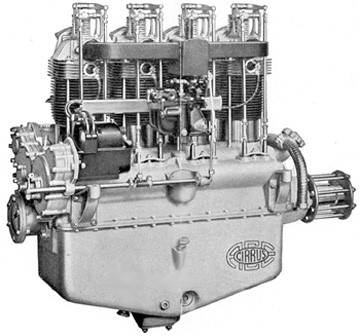
In 1925 Geoffrey de Havilland was looking for a reliable cheap engine for use in a light sports aircraft. Halford gave it to him by building a four-cylinder crankcase and adding to it half of the air-cooled V8 240 hp (180 kW) Renault 8G’s cylinders, several other of the Renault’s components, and standard parts used in car engines.

The result was a 60 hp (45 kW) in-line aircraft engine that, although it fell short of the promised horse-power, was still superior to all contemporary engines for light aircraft. It was a true aircraft engine at a time where its competitors were more often than not motorcycle engines adapted to running at high altitude. The engine secured, de Havilland Aircraft commenced manufacture of the D.H.60 Moth and the combination of reliable powerplant – the ADC Cirrus – and reliable training craft – the Moth – marked the start of serious sports flying in Britain.

American Cirrus
Type: 4 cylinder in line, vertical air cooled
Rating 5.1 compression: 90 hp at 1900 rpm
Rating 5.1 compression: 95 hp at 2100 rpm
Rating 5.4 compression: 93 hp at 1900 rpm
Rating 5.4 compression: 98 hp at 2100 rpm
Displacement: 310 cu.in
Compression ratio: 5.1-1 to 5.4-1
Bore: 4 3/8 in
Stroke: 5 1/8 in
Length: 38 1/2 in
Height: 36 3/8 in
Width: 18 3/4 in
Weight: 275 lb
Fuel consumption: not more than .54 lb/hp/hr
Oil consumption: not more than .0213 lb/hp/hr
Lubrication: Force feed, wet sump
Ignition: 2 Scintilla magnetos
Carburation: Stromberg
Spark plugs: 2 pr cylinder B.G. and AC
Price: $1600

de Glymes DG X

The de Glymmes DG X OO-AKV (c/n 01) was designed by engineer Raoul de Glymes of Hollebecque, Belgium, and fabricated in collaboration with Alfred Herrmann.

This two-seater aircraft was equipped with a Renard 100hp engine and was registered as OO-AKV in 1931.

In 1931, R. Van de Velde owner and pilot of the aircraft flew Brussels – Nuremberg – Vienna (1400 Km) in 9 flight hours with an average speed of 155 Km/H.

On August 22nd, 1931 the same pilot won the first place of a Belgian air raid organized by the “Aeroclub Royal de Belgique”.

The registration and the plane disappeared in 1935.