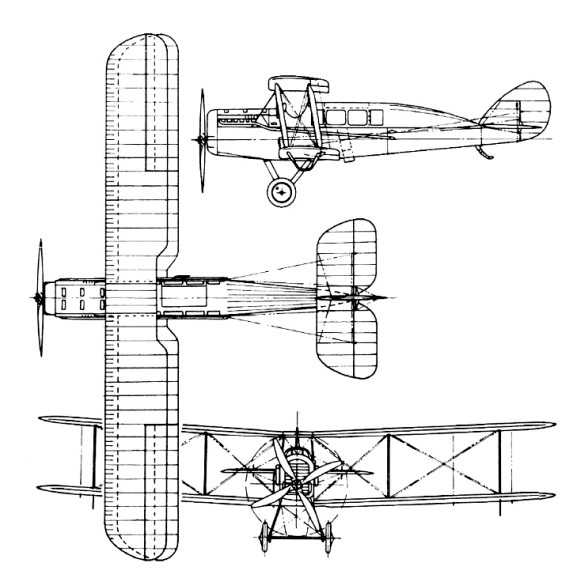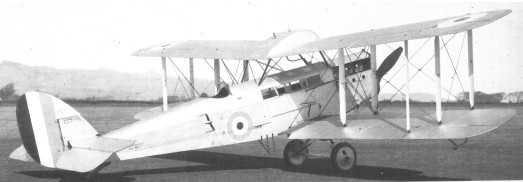
de Havilland DH 50

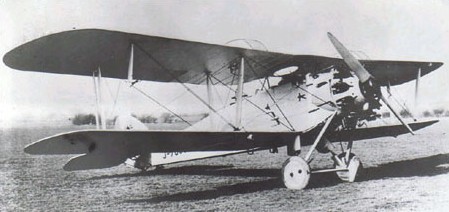
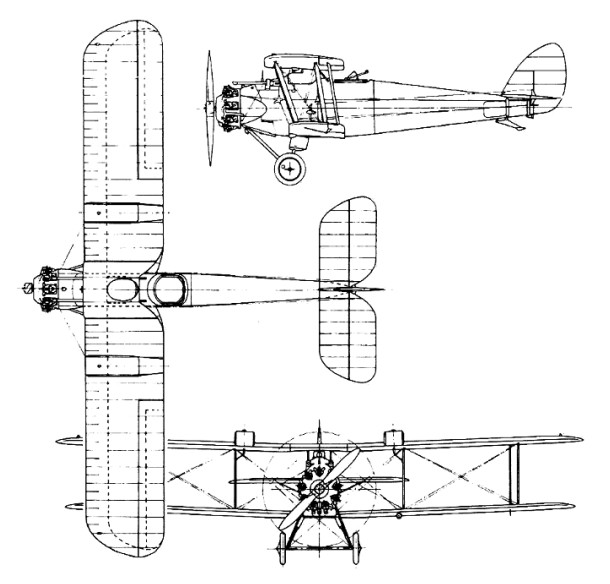
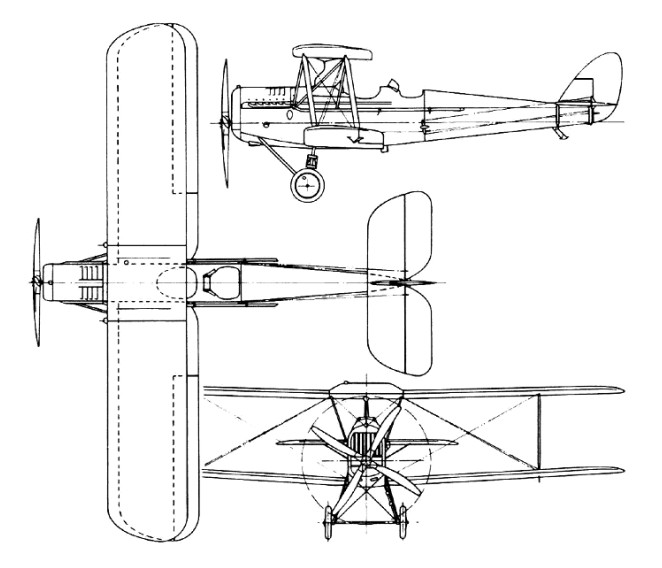
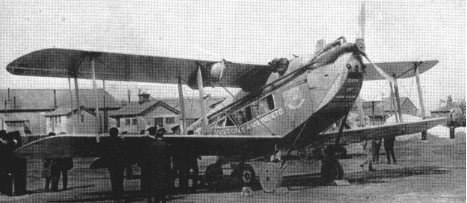
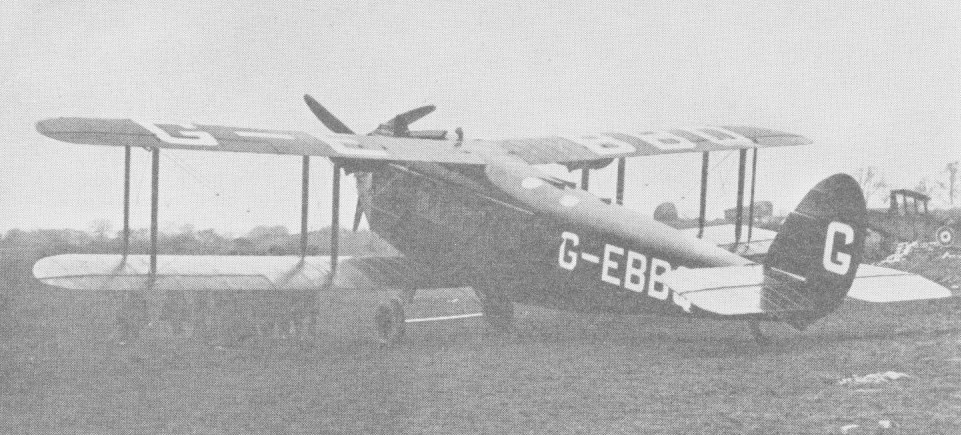
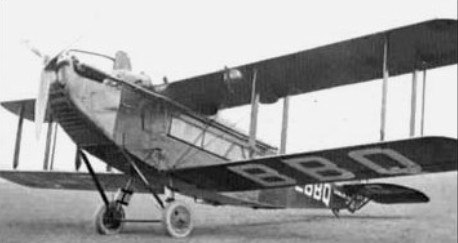
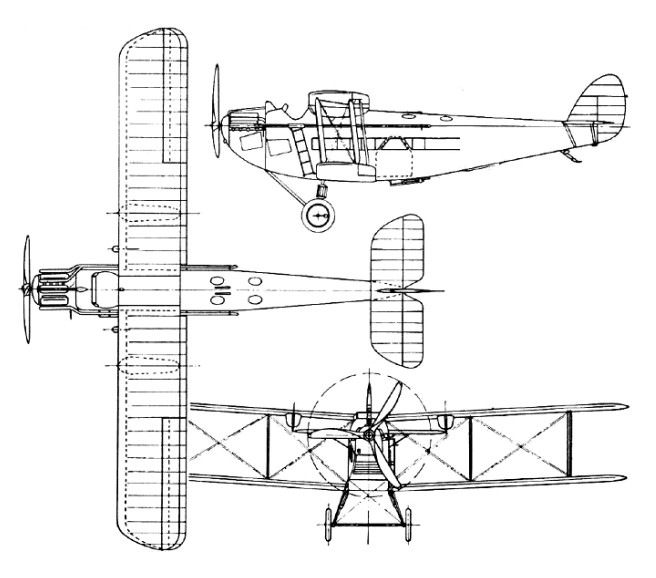
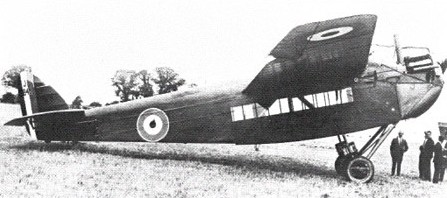
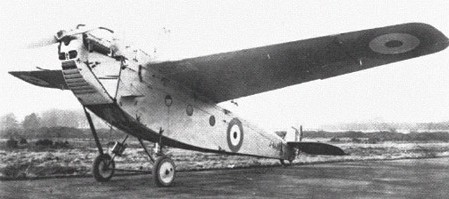
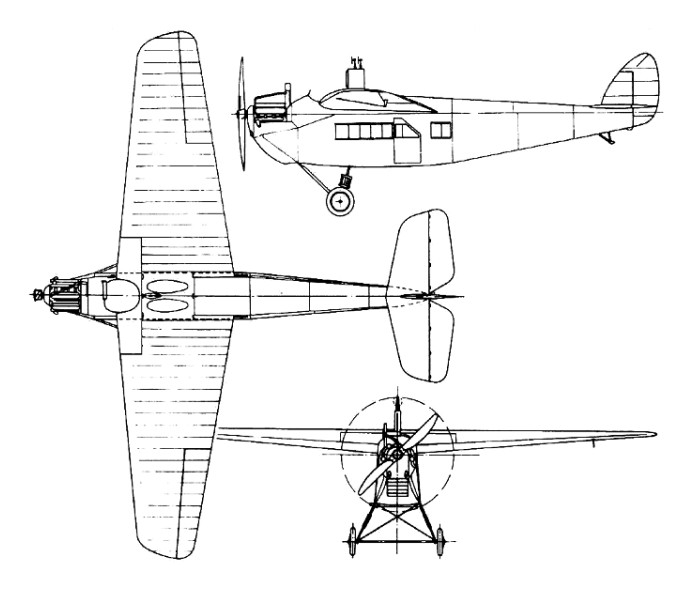
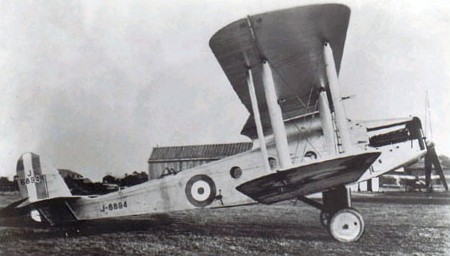
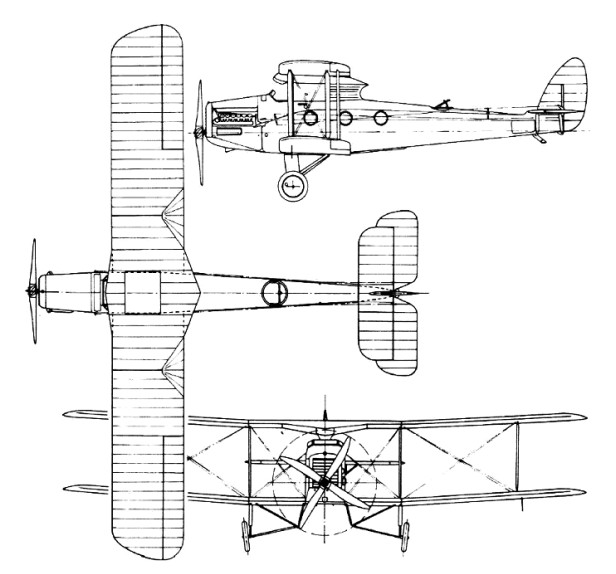
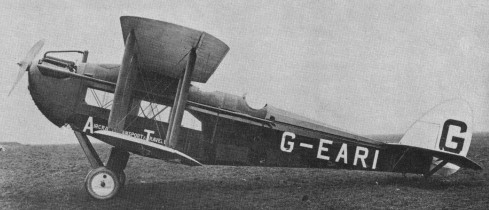
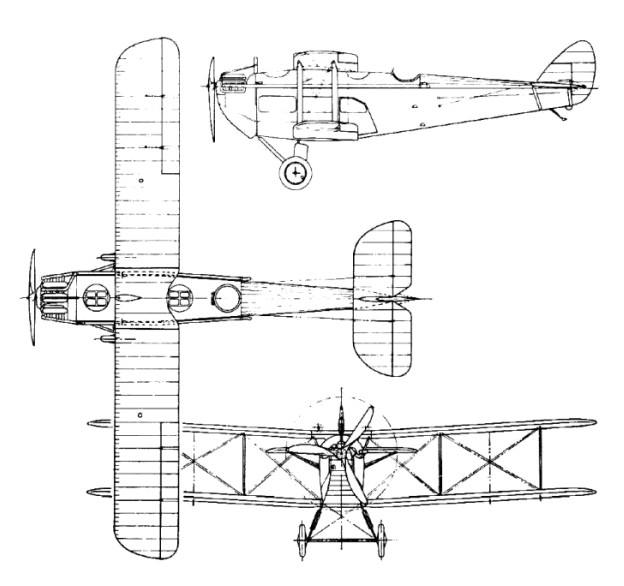
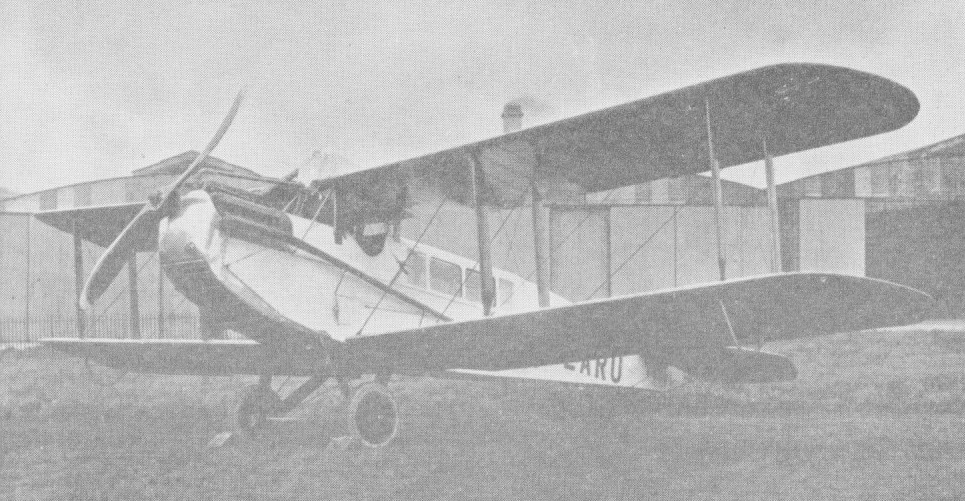
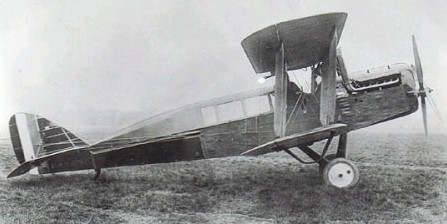
In 1922 de Havilland used the experience gained in its operation to design a replacement for war-surplus D.H9s, the de Havilland D.H.50.
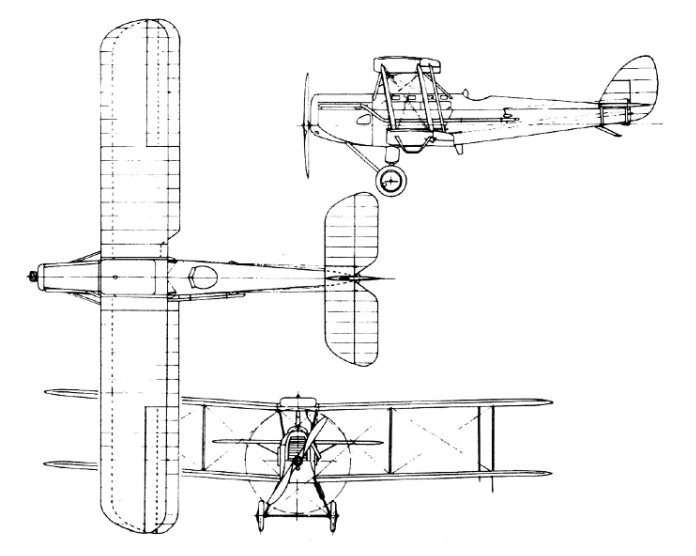
The D.H.9C’s Siddeley Puma engine was retained and they carried four passengers in an enclosed cabin between the wings, with the pilot to the rear in an open cockpit, first flown on 30 July 1923.
It was flown by Alan Cobham to compete and win first prize in reliability trials which were being flown daily between Copenhagen and Gothenburg from 7-12 August.
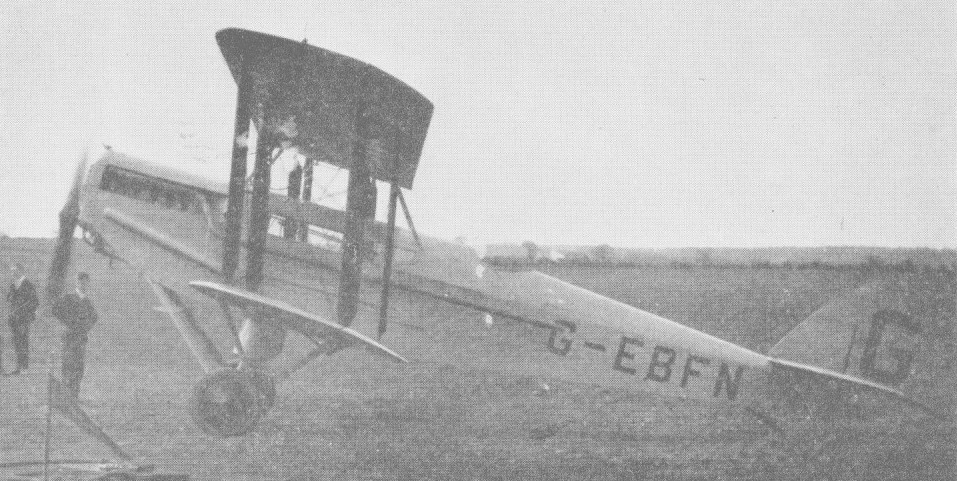
In 1924 Alan Cobham entered the King’s Cup with the prototype D.H.50, G-EBFN, with which he won at an average of 106.6 mph.

Between 10 November 1924 and 17 March 1925, a survey flight to India and Rangoon, Burma, was made in a DH50. In the aircraft were Sir W. Sefton Brancker (then director of civil aviation), Alan Cobham, and representatives of Imperial Airways. As a result, landing grounds and routes were established to Ramadi, Iraq.
Cobham made several long-distance flights with the prototype before using the second aircraft, powered by a 287kW Armstrong Siddeley Jaguar radial engine and re-designated D.H.50J, for a 25,749km flight from Croydon to Cape Town, carried out between 16 November 1925 and 17 February 1926. This was followed later in 1926 by a survey flight to Australia and back, for which twin floats were fitted.
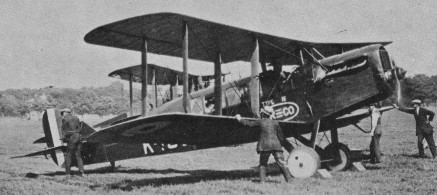
The second DH.50, G-EBFO, was fitted as a floatplane.
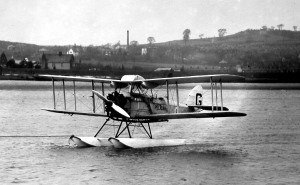
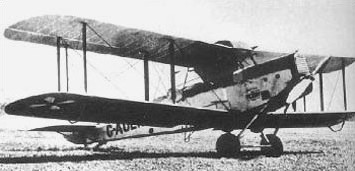
D.H. 50J

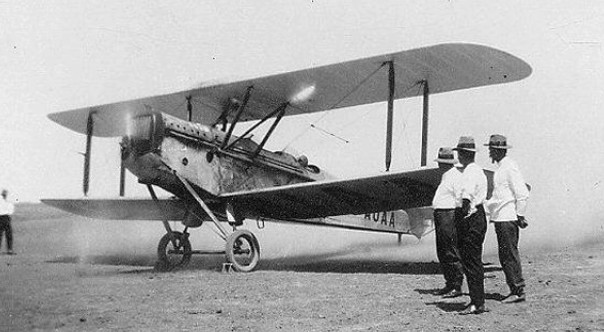
Initially 14 DH50As were built; 9 for an Australian order. One, sold to QANTAS in 1924, later became the first aeroplane to be used for the Australian Flying Doctor Service.
QANTAS began building DH50s at Longreach in the late 1920s, and the first was completed in August 1927. Four DH50As and three DH50Js were completed.
In 1925 26 one of these aircraft, refitted with a 385 hp Jaguar radial engine, was used by Sir Alan Cobham for his famous survey flights to Cape Town and Australia behalf of Imperial Airways.
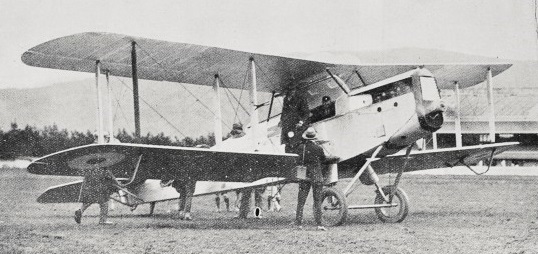
West Australian Airways Ltd was formed at Perth in 1921 to operate Geraldton-Derby airline and licensed to build the de Havilland D.H.50 in Australia. They produced their first aircraft in 1926. Larkin Aircraft Supply Company built a single D.H.50A.
Seven were built by Aero in Prague, Czechoslovakia, and three D.H.50As at Brussels by SABCA in Belgium. The SABCA aircraft were used in the Belgian Congo.
Of the total de Havilland production (17 aircraft), only four were based in the UK, two of them with Imperial Airways. One went to the Czech.government, 10 to Australia and one to New Zealand. The one in RNZAF service was from 1927 to 1931.
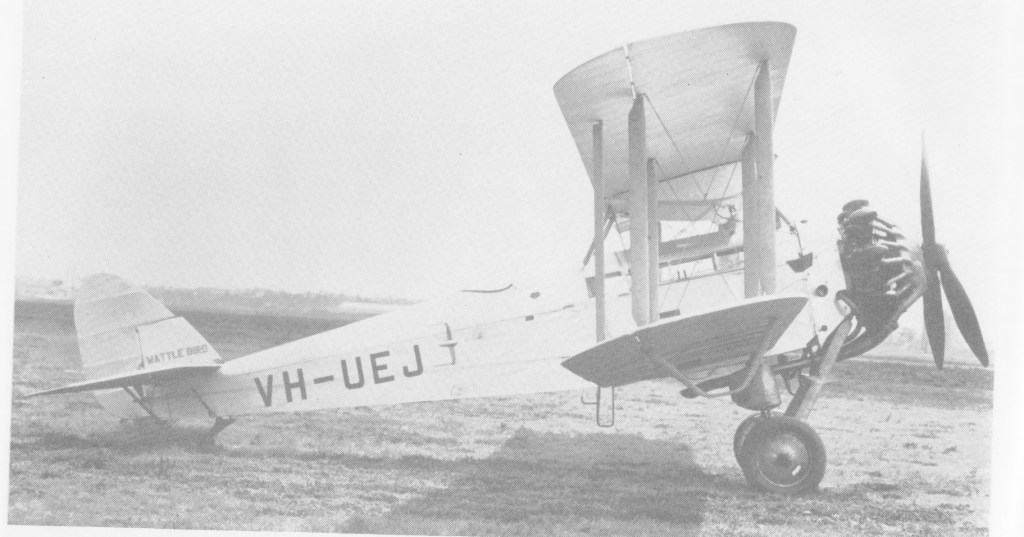
The longest survivor was the 15th British production aircraft, delivered in 1928 to the Australian Controller of Civil Aviation and destroyed by enemy action in New Guinea during 1942.
A wide variety of engines was used in the D.H.50 family; including the 224kW A.D.C. Nimbus, 313kW Bristol Jupiter IV, 336kW Jupiter VI, 384kW Jupiter XI, 336kW Pratt & Whitney Wasp C and, in the Czech-built versions, the 179kW Walter W-4.
Gallery

DH.50
Engine: 1 x Siddeley Puma inline piston, 172kW /
Prop: 2-blade
Take-off weight: 1769 kg / 3900 lb
Empty weight: 1022 kg / 2253 lb
Wingspan: 13.03 m / 42 ft 9 in
Length: 9.07 m / 29 ft 9 in
Height: 3.35 m / 10 ft 12 in
Wing area: 40.32 sq.m / 434.00 sq ft
Max. speed: 180 km/h / 112 mph
Cruise speed: 153 km/h / 95 mph
Ceiling: 4450 m / 14600 ft
Range: 612 km / 380 miles
Crew: 1
Pax cap: 4

DH50A
Engine: Siddeley Puma, 230 hp
Max speed: 109 mph
ROC: 605 fpm
Range 375 miles
de Havilland DH 37

De Havilland’s first venture into the field of private-owner aircraft was the de Havilland D.H.37, a two-seat biplane built to the specification of Alan Butler, a DH director. The first of two aircraft flew in June 1922 and the second in 1924, the second being sold to Australia. Butler’s aircraft was used extensively over the next five years, and in 1927 its Rolls-Royce Falcon III engine was exchanged for a 224kW A.D.C. Nimbus, the aircraft being converted to single-seat configuration for racing as the D.H.37A. However, in June that year it crashed while flying as a two-seater, killing the passenger and injuring the pilot.
The Australian D.H.37 had a longer life, being used initially by the Controller of Civil Aviation and later by the Guinea Gold Company in New Guinea, being the first aeroplane in that country. It crashed in New South Wales in March 1932.

de Havilland D.H.37 G-AUAA (c/n 105)

D.H.37
Engine: 1 x Rolls-Royce Falcon III inline piston engine, 205kW
Take-off weight: 1505 kg / 3318 lb
Empty weight: 961 kg / 2119 lb
Wingspan: 11.28 m / 37 ft 0 in
Length: 8.53 m / 27 ft 12 in
Wing area: 36.97 sq.m / 397.94 sq ft
Max. speed: 196 km/h / 122 mph
Ceiling: 6400 m / 21000 ft

de Havilland DH 34

Instone’s DH.34 City of New York

Building on commercial experience obtained with the D.H.18 and structural experience with the D.H.29, de Havilland began work on the de Havilland D.H.32, in 1921.

Plans for construction of the first aircraft (with the 268kW Rolls-Royce Eagle engine as its powerplant) had been announced, but since the main customers would be Instone and Daimler Hire, who were already using Napier Lion-powered D.H.18s, de Havilland, redesigned the aircraft to use that engine.

The first of 11 aircraft flew on 26 March 1922, and made an inaugural Croydon- Paris flight on 2 April. Daimler Hire eventually used six D.H.34s and Instone four, while one was sold to Dobrolet, the Russian airline. When Imperial Airways was formed in 1924 it took over seven D.H.34s and used them over the next two years before re-equipping with larger aircraft.

Some 8,000 flying hours were recorded by December 1922, less than nine months after the prototype’s appearance, and over 160,000km flown without overhaul by the second Daimler aircraft. Six D.H.34s were lost in accidents, several of them fatal. An early stalling crash led to extensions being added to the top wing to increase its area, as the D.H.34B. The last four D.H.34s in UK service were scrapped in 1926.

Gallery

D.H.34
Engine: 1 x Napier Lion inline piston engine, 336kW
Take-off weight: 3266 kg / 7200 lb
Empty weight: 2075 kg / 4575 lb
Wingspan: 15.65 m / 51 ft 4 in
Length: 11.89 m / 39 ft 0 in
Height: 3.66 m / 12 ft 0 in
Wing area: 54.81 sq.m / 589.97 sq ft
Max. speed: 206 km/h / 128 mph
Cruise speed: 169 km/h / 105 mph
Range: 587 km / 365 miles
Seats: 10.

de Havilland DH 27 Derby

Two prototypes. No production.

Engine: 1 x 650hp Rolls-Royce Condor III
Take-off weight: 5241 kg / 11554 lb
Empty weight: 3059 kg / 6744 lb
Wingspan: 19.66 m / 64 ft 6 in
Length: 14.43 m /47 ft 4 in
Height: 5.13 m / 16 ft 10 in
Wing area: 104.05 sq.m / 1119.98 sq ft
Max. speed: 169 km/h / 105 mph
Ceiling: 3901 m / 12800 ft
Range: 886 km / 551 miles
Armament: 1 x 7.7mm machine-gun / 4 x 250kg bombs

de Havilland DH 18

The designation D.H.17 was allocated to a project for a twin-engined 16-passenger biplane which was not built. The next type number, de Havilland D.H.18, was allocated to a large single engined biplane accommodating eight passengers in an enclosed cabin; the pilot was seated in an open cockpit behind the wings.
During 1920 the Aircraft Manufacturing Company, which had been building de Havilland designs, was re-formed as the de Havilland Aircraft Company Ltd. The new organisation built two modified aircraft at Hendon designated D.H.18A for lnstone Air Line, followed by a third.

Disembarking on arrival at Hounslow on the inauguration day of London-Paris service.

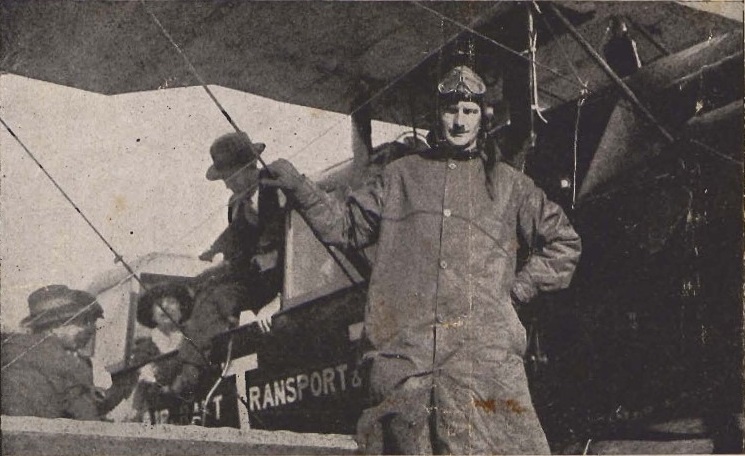
The D.H.18 first flew early in 1920 and was delivered to Aircraft Transport & Travel Ltd This D.H.18 had a short life, terminated by a forced landing near Croydon in August of the same year.

These were kept busy on Croydon-Paris service until the first, having accumulated high flying hours, was withdrawn from use in September 1921; another was lost in a crash only two months after delivery. The third production D.H.18A, delivered to Instone in June 1921, was passed to Daimler Hire Ltd in April 1922, only to be destroyed over France a few days later in a mid-air collision with a Farman Goliath.

The last two aircraft were designated D.H.18B, and had plywood-covered fuselages and increased weights; they served with Instone for a short time before the second was dismantled in 1923. The first was used in Air Ministry flotation tests, being deliberately landed in the sea off Felixstowe in May 1924. Strangely, the last surviving D.H.18 was the first production aircraft which, following its withdrawal from Instone’s use in 1921, was delivered to RAE Farnborough for test purposes. It was finally scrapped in 1927.

D.H.18A
Engine: 1 x Napier Lion inline piston engine, 336kW
Take-off weight: 2956 kg / 6517 lb
Empty weight: 1833 kg / 4041 lb
Wingspan: 15.62 m / 51 ft 3 in
Length: 11.89 m / 39 ft 0 in
Height: 3.96 m / 12 ft 12 in
Wing area: 57.71 sq.m / 621.18 sq ft
Max. speed: 206 km/h / 128 mph
Cruise speed: 161 km/h / 100 mph
Ceiling: 4875 m / 16000 ft
Range: 644 km/ 400 miles

de Havilland DH 16

The end of World War I and the subsequent vast surplus of military aircraft was not a time for new civil designs to emerge. Instead, many conversions of military models were attempted, but the de Havilland D.H.16 was a redesign of the D.H.9A with a wider fuselage for four passengers. Following its first flight at Hendon in March 1919, the D.H.16 was sold to Aircraft Transport and Travel Ltd (AT&T), who used it for pleasure flying before it inaugurated a London-Paris service on 25 August 1919.

On September 2, 1919, Handley Page Transport Ltd, operating from Cricklewood, began flights between London and Paris, and to Brussels and Amsterdam.

Handley Page used converted O/400 bombers on the London-Paris, London-Brussels routes, and converted de Havilland 9s on the London-Amsterdam. The converted DH9s were designated DH.16s. The fuselage of the aircraft was rebuilt as a cabin with room for four passengers.

Total D.H.16 production was nine aircraft, all but one being used by AT&T. The sole exception was sold to a customer in Buenos Aires, where it operated a service to Montevideo. The first six D.H.16s were powered by the 239kW Rolls-Royce Eagle engines, the last three having Napier Lions.

AT&T closed in December 1920 and its seven remaining D.H.16s (one had been lost in a crash) were stored. Five were broken up in 1922 and two sold for newspaper delivery flights; one of these was lost in a fatal crash in 1923, and the remaining aircraft was subsequently withdrawn and scrapped.

Engine: Rolls-Royce Eagle, 325 hp.
Speed: 95 mph.
Pax cap: 4.

Engine: 1 x Napier Lion inline piston engine, 336kW
Take-off weight: 2155 kg / 4751 lb
Empty weight: 1431 kg / 3155 lb
Wingspan: 14.17 m / 46 ft 6 in
Length: 9.68 m / 31 ft 9 in
Height: 3.45 m / 11 ft 4 in
Wing area: 45.5 sq.m / 489.76 sq ft
Max. speed: 219 km/h / 136 mph
Cruise speed: 161 km/h / 100 mph
Ceiling: 6400 m / 21000 ft
Range: 684 km / 425 miles

de Havilland DH.15 Gazelle

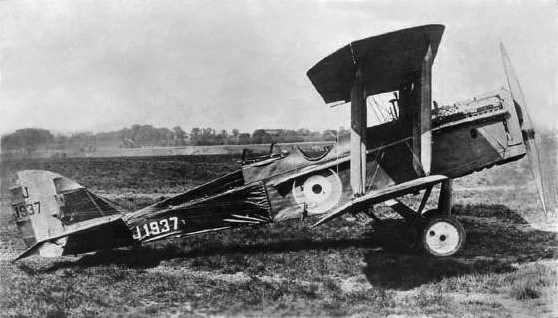
Airco DH.15 J1937

Enquiries were also made of the 500 hp Galloway Atlantic engine that was currently under evaluation. Seventy-two of these engines were ordered in September 1918 with a possible increase to 1000, but only one was ever fitted into a DH.9A, which was re-designatd the DH.15.

The DH.15 Gazelle, more often known just as the DH.15, was a standard DH.9A, complete with original armament, converted for use as an engine testbed. The engine involved was the 500 hp (373 kW) B.H.P. Atlantic, a water-cooled V-12 unit produced by the Galloway Engineering Co., which merged two six-cylinder inline B.H.P. engines onto a common crankcase. This replaced the DH.9A’s standard 400 hp (300 kW) Liberty 12, although without great change in appearance, as the Atlantic was mounted behind a similar large rectangular radiator. Both engines were upright V-12s, both with crankshafts near the base, and in each case the propeller was mounted low on the nose. The exhaust pipes on the DH.15 were longer than the usual DH.9A set, running straight back from the upper sides of the engine, ending at the observer’s cockpit.

Two DH.15s were ordered, but only one was built. It completed many flights with the Atlantic engine, through 1919 to 1920.

Engine: 1 × B.H.P (Galloway Atlantic), 500 hp
Wingspan: 45 ft 11.38 in (14.00 m)
Wing area: 486.75 ft2 (45.13 m2)
Length: 29 ft 11 in (9.12 m)
Empty weight: 2,312 lb (1,049 kg)
Gross weight: 4,773 lb (2,165 kg)
Maximum speed: 139 mph (224 km/h)
Service ceiling: 20,000 ft (6,100 m)
Rate of climb: initial 1,500 ft/min (7.62 m/s)
Crew: two

de Havilland

Geoffrey de Havilland built his first (unsuccessful) aircraft in 1909. His second, flown in 1910, was bought by the War Office, and de Havilland was taken on as designer at the Balloon Factory (later Royal Aircraft Factory), where between 1911 and 1914 he designed the F.E.2, S.E.1, S.E.2, B.E.1, and B.E.2. In 1914 he joined the Aircraft Manufacturing Company at Hendon, designing the D.H.2 pusher fighter, D.H.3, and D.H.10 twin-engined bombers, D.H.5 fighter, and D.H.4 day bomber. The latter was extensively built in the USA. The D.H.9 and 9a were variations; the 9a equipped post-war RAF bomber squadrons and it, too, was built in the USA. Nearly 3,000 were constructed in Russia as the R-1.

Geoffrey de Havilland Article

The Aircraft Manufacturing Co. was sold in 1919 to the B.S.A.-Daimler group who, disappointed at the failure of air transport in 1919-20, shut the firm down. Almost immediately de Havilland and C.C.Walker, financed largely by Holt Thomas, out of money which he got by selling B.S.A. shares which he received in payment for the A.M.C. Ltd, started de Havilland Aircraft Co. Ltd. Airco name was temporarily revived January 1958 for production of D.H.121 jet transport.

The first aeroplane built at Stag Lane was the DH.18.
The D.H.53 Humming Bird ultralight was the best entrant in the 1923 Air Ministry Light Aeroplane competition, but de Havilland realised that their passion for lightness was an error, and in 1925 produced the first Moth to more sensible proportions. It was sold all over the world. A number of cabin monoplanes and a military version, the Tiger Moth, followed; over 8,000 Tigers were built for various air forces.
The three-engined D.H.66 Hercules was flown by Imperial Airways from 1926, and in the 1930s many domestic and foreign airlines used the twin-engined D.H.84/89 Dragon/Dragon Rapide and four-engined D.H.86 Express.
In 1934 de Havilland designed the all-wood D.H.88 Comet twin-engined racer for entrants in the “MacRobertson” England-Australia race. At a fixed unit price of GBP5,000 this gamble paid off; three were entered, and one of these won the speed prize. By 1939 the firm was producing the D.H.91 Albatross, a fast airliner with four engines; the twin-engined D.H.95 Flamingo feederliner and the diminutive D.H.94 Moth Minor. All production of these ceased at the outbreak of war, which also cut short a promising bombertrainer, the D.H.93 Don. In 1938 work started on a fast unarmed wooden bomber, the D.H.98 Mosquito. It became one of the most versatile aircraft of its time, and by the end of the war a single-seat fighter version attained a speed of 760km/h. The Vampire, de Havilland’s first turbojet fighter, Venom, Sea Venom and later Sea Vixen, served for a decade after the war.

Geoffery de Havilland in a Vampire cockpit

The other problem arising from the cancelled Don order was the under-utilisation of woodworking skills at the de Havilland factory. To compensate the Company, on 2nd September 1938 the Air Ministry awarded them orders for a large batch of Tiger Moths, some more Queen Bees, plus a contract to build 150 all wooden Airspeed Oxford trainers for the RAF. When Geoffrey de Havilland read the letter, he saw red – de Havilland’s did build somebody else’s aeroplane. de Havilland gave Nixon a simple order – “Buy that company!”

As it transpired, this order took some doing and it would be several years before de Havilland’s owned Airspeed Ltd, of Portsmouth. Airspeed joined de Havilland in 1951.
Back in civil work, the company produced the twin-engined Dove, four-engined Heron and, in 1949, the first jet airliner in the world, the D.H.106 Comet. The Comet 1 ran into constructional problems, but the Mark IV achieved success. The last DH designs were the D.H.121 Trident, a three-engined airliner for BEA, and the D.H.125 executive jet (both first flown 1962). Both were still in production in 1978, long after the company’s absorbtion into the Hawker Siddeley Group in 1960, and the D.H.125’s successors were still in production at the turn of the new century.