Research aircraft was built on this principle by the Societe Anonyme Frangaise de Recherches Aeronautiques in 1938.
Inter-Wars
Delanne D.ll L’bis Bleu
Maurice Delanne produced his first design, a light aircraft, the D.ll L’bis Bleu, at Chateauroux in 1929.
Delanne
France
Maurice Delanne produced his first design, a light aircraft, the D.ll L’bis Bleu, at Chateauroux in 1929. Proposed a tandem wing arrangement (the “Nevadovich biplane”) in 1936. Virtues claimed for this arrangement included an exceptional e.g. travel and very low stalling speed. The Delanne 20 research aircraft was built on this principle by the Societe Anonyme Frangaise de Recherches Aeronautiques in 1938. A full-scale fighter design, the Arsenal- Delanne A-D 10, was built by Arsenal de I’Aeronautique at Villacoublay in 1939. Completed during the German occupation, it was taken to Germany for further testing.
Deicke
Deicke was quite prolific; he built 10 types from 1908 until 1933, when he introduced a “Volksflugzeug”, the Deicke ADM 11.
de Havilland Aeronautical Technical School TK.5
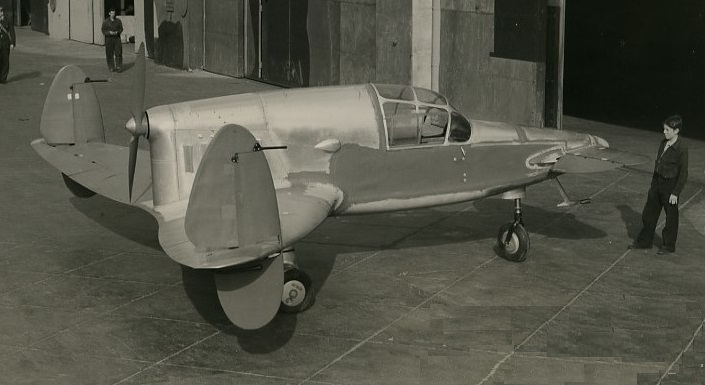
The de Havilland T.K.5 was an unflown British single-seat canard research aircraft designed and built by students of the de Havilland Technical School between 1938 and 1939.
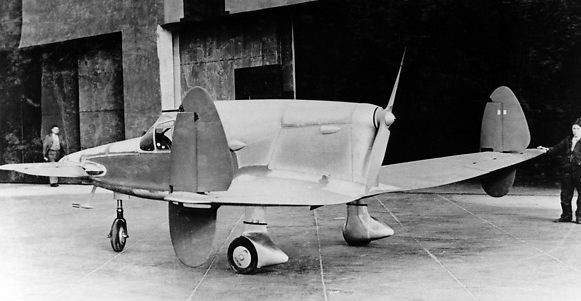
It was a low-wing monoplane with a 140 hp (104 kW) de Havilland Gipsy Major IC piston engine driving a pusher propeller.
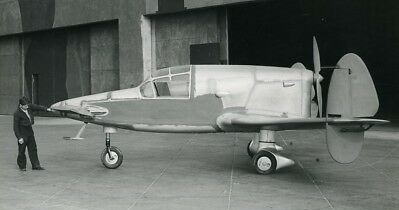
The only T.K.5, registered G-AFTK, was tested by Geoffrey de Havilland in 1939 but it refused to leave the ground and was scrapped.
Engine: 1 × de Havilland Gipsy Major IC, 140 hp (104 kW)
Wingspan: 19 ft 8 in (7.83 m)
Length: 18 ft 3 in (5.56 m)
Gross weight: 1366 lb (620 kg)
Crew: 1
de Havilland Aeronautical Technical School T.K.4
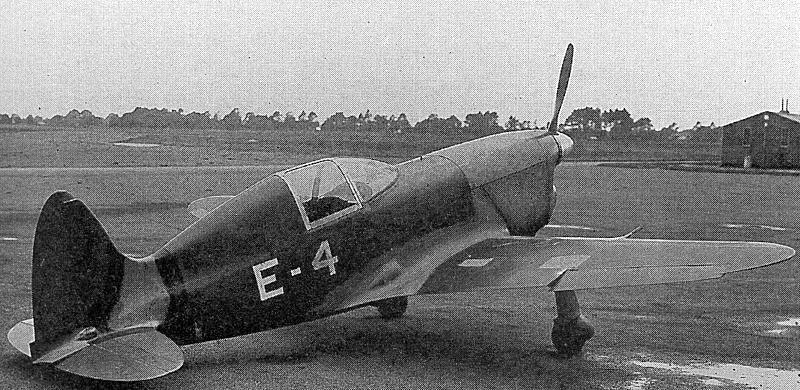
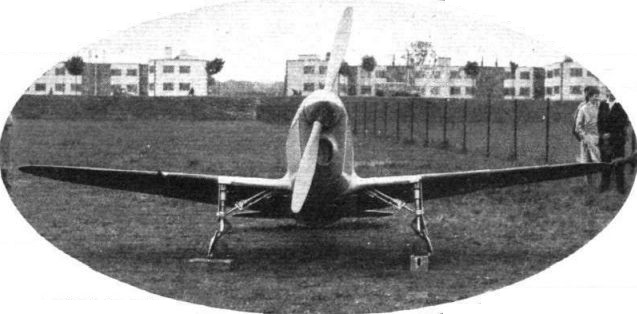
The T.K.4 single-seat racing monoplane was designed and built by students of the de Havilland Technical School at Stag Lane Aerodrome in 1937 with the aim of building the smallest possible aircraft around the 140 hp (104 kW) de Havilland Gipsy Major II.
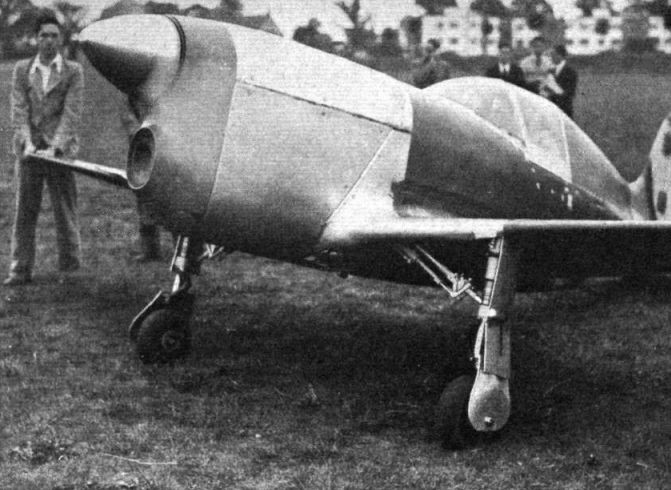
It was a low-wing monoplane with a conventional retractable landing gear and had a variable-pitch propeller and was fitted with slots and flaps.
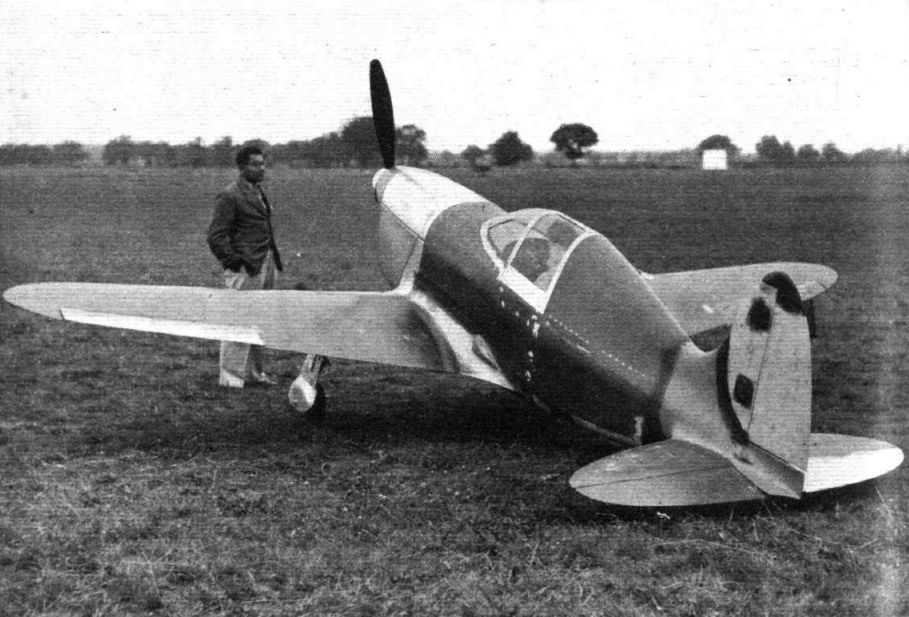
The only T.K.4, registered G-AETK, was first flown on 30 July 1937.
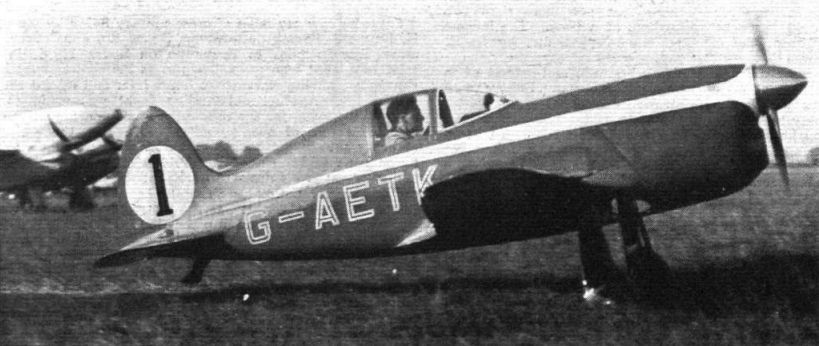
It was 9th in the 1937 Kings Cup Race at a speed of 230.5 mph. The aircraft crashed on 1 October 1937 killing the pilot R.J. Waight while he was attempting a 100 km class record.
Engine: 1 × de Havilland Gipsy Major II, 140 hp (104 kW)
Wingspan: 19 ft 8 in (6 m)
Length: 15 ft 6 in (4.73 m)
Empty weight: 928 lb (421 kg)
Gross weight: 1450 lb (616 kg)
Maximum speed: 230 mph (369 km/h)
Range: 500 miles (311 km)
Service ceiling: 21,000 ft (6,400 m)
Rate of climb: 1,350 ft/min (6.9 m/s)
Crew: 1
de Havilland Aeronautical Technical School T.K.2
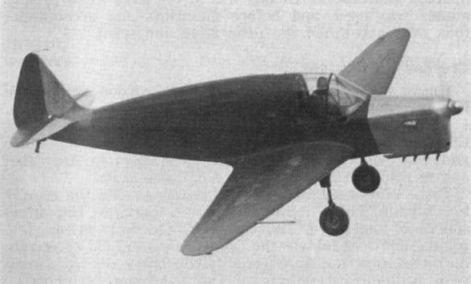
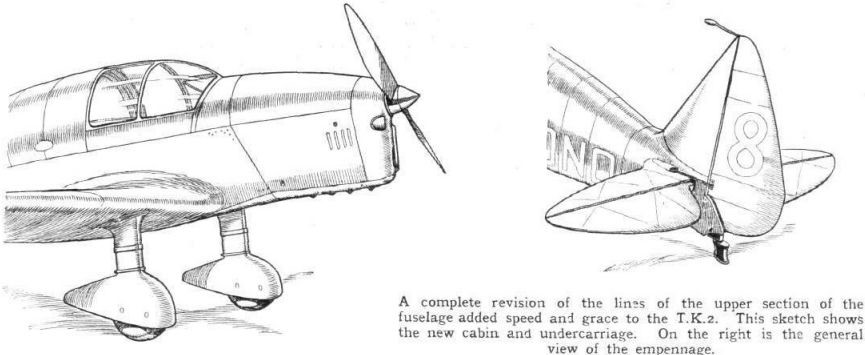
The T.K.2 was designed by students of the de Havilland Aeronautical Technical School as a high speed tourer, under the leadership of Marcus Langley, the school’s instructor in design. It was a single-engined, two-seat low cantilever wing monoplane, with an enclosed cockpit and fixed spatted undercarriage.
It first flew on 16 August 1935 at Hatfield Aerodrome, piloted by Hubert S. Broad, and powered by a 147 hp (110 kW) de Havilland Gipsy Major inverted inline engine. Subsequently, for racing purposes, the passenger seat was usually replaced with an additional fuel tank.
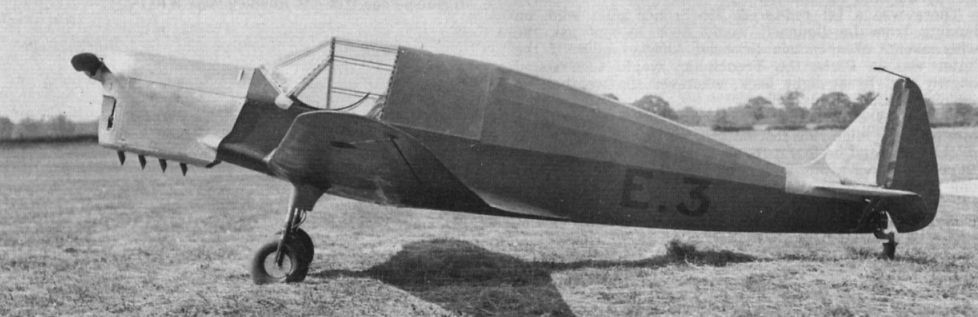
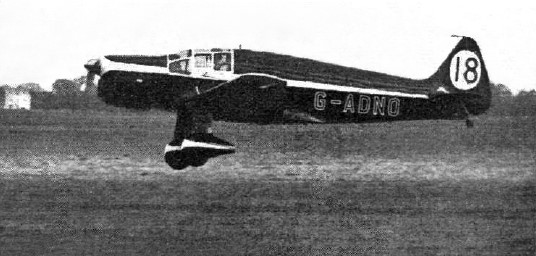
It won two races before World War II, and afterwards set a class closed circuit speed record.
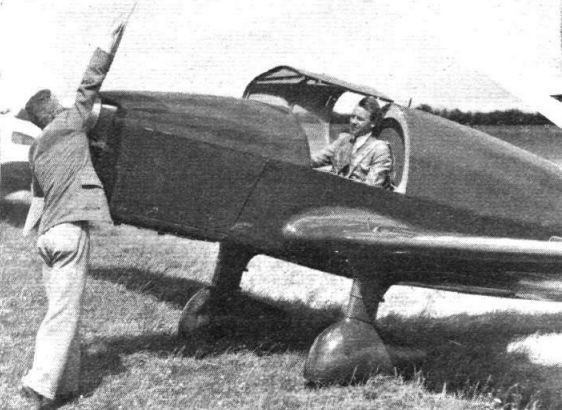
In late 1935 or early 1936, it received a more aerodynamically refined canopy, and spats extended rearwards. In 1938, it flew with wings clipped by 4 ft (1.22 m) to 28 ft 0 in (8.53 m) and re-engined with a 140 hp (104 kW) de Havilland Gipsy Major II. At the same time, the forward canopy section was revised again, its sides extended downwards below the rear cockpit rim. Post-WWII, it flew with a Gipsy Major 10 engine. The aircraft was not intended for production, and only one T.K.2 was built. It was test flown on various occasions under ‘B conditions’ with identities E-3, E-5 and E-0235, but otherwise carried the official registration G-ADNO.
Engine: 1 × de Havilland Gipsy Major, 147 hp (110 kW)
Wingspan: 32 ft 0 in (9.75 m)
Wing area: 125 sq.ft (11.6 sq.m)
Length: 22 ft 5 in (6.83 m)
Empty weight: 1,049 lb (476 kg)
Gross weight: 1,600 lb (726 kg)
Maximum speed: 182 mph (293 km/h)
Crew: 2
de Havilland Aeronautical Technical School T.K.1
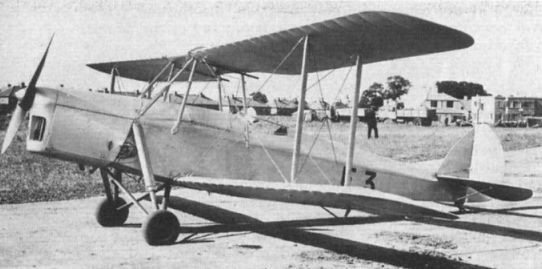
The de Havilland T.K.1 was a two-seat biplane and the first design built by students of the de Havilland Technical School. The T.K.1 was built by students under the direction of Marcus Langley at Stag Lane Aerodrome in 1934.
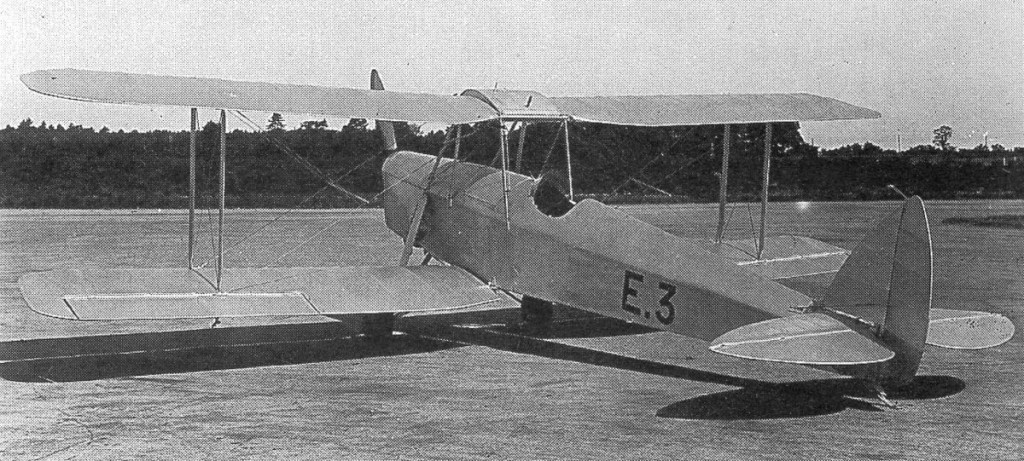
It was based on converting the de Havilland Swallow Moth monoplane to a biplane. It was a conventional two-seat biplane powered by a 120 hp (90Kw) de Havilland Gipsy III and first flown in June 1934.
It was flown by Geoffrey de Havilland to 5th place in the 1934 Kings Cup Race with a speed of 124.4 mph. It was sold onto a private owner in 1936 who flew it for a short time as a single-seater before it was scrapped.
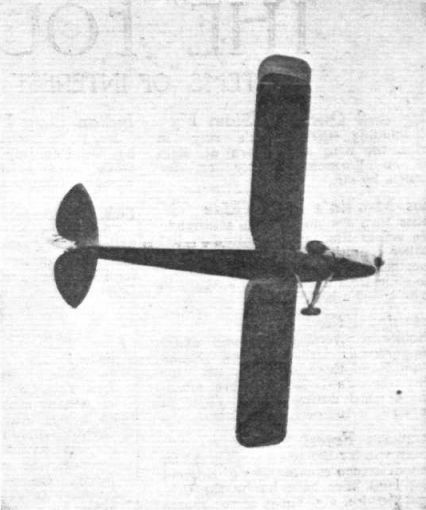
Engine: 1 × de Havilland Gipsy III, 120 hp (90 kW)
Wingspan: 27 ft 0 in (8.23 m)
Length: 24 ft 0 in (7.32 m)
Empty weight: 950 lb (431 kg)
Gross weight: 1450 lb (658 kg)
Maximum speed: 118 mph (189 km/h)
Cruise speed: 100 mph (160 km/h)
Crew: 2
de Havilland Aeronautical Technical School
The de Havilland Aeronautical Technical School was founded in 1928, initially to provide owners of de Havilland Moth aircraft with technical maintenance skills and to enhance de Havilland’s apprenticeship scheme. From 1933, the students designed aircraft, and the best of these were built.
The Technical School was started at Edgware, London, England by Geoffrey de Havilland, founder of the de Havilland aircraft company, together with Frank Hearle. In 1934, the School moved to Hatfield, Hertfordshire, following the establishment of Hatfield Aerodrome there. The curriculum widened to cover the design, manufacture, and operation of aircraft in general. The instructors were engineers from the de Havilland company.
The drawings for the first one were done by a Dutch student, Juste van Hattum who entitled it the T.K.1, with T.K. for “Tekniese Kollege”. Three T.K. aircraft were built and flown, the T.K.1, the T.K.2, and the T.K.4. They did not receive DH style type numbers.
As school projects 4 aircraft were built by the students.
The de Havilland T.K. 1
The de Havilland T.K. 2
The de Havilland T.K. 4
The de Havilland T.K. 5
In 1940, the School was bombed by the Germans in a World War II raid and it was forced to move to Welwyn Garden City nearby. It then transferred to Salisbury Hall in 1941, now the location of the de Havilland Aircraft Heritage Centre. During 1947–48, the School was moved to Astwick Manor, to the northeast of Hatfield Aerodrome.
In 1963, the de Havilland company became part of Hawker Siddeley Aviation and the School was renamed to become the Hawker Siddeley Aviation (Hatfield) Apprentice Training School in 1965. Later it became part of Hatfield Polytechnic and then the College Lane campus of the University of Hertfordshire.
There were also associated schools at Broughton, Christchurch, Lostock, and Portsmouth.
de Havilland Canada
Formed in 1928 at Downsview, Toronto, as a constructional and service facility. Built 1,553 Tiger Moths (1938- 1945), erected about 40 D.H.60M Moths, a Giant Moth, some 25 Puss Moths, and 200 Tigers (from U.K.-built parts). Developed ski and float installations for DH products. Built 1,134 Mosquitoes (1942-1945) and 54 Fox Moths (postwar). Undertook design and construction of the Tiger Moth replacement, the DHC-1 Chipmunk, built in Canada, Britain, and Portugal. Further Canadian designs have concentrated on STOL capability: the DHC-2 Beaver transport, DHC-3 Otter transport, DHC-4 Caribou pistonengined freighter (company’s first
twin), DHC-5 Buffalo twin-turboprop freighter (first flown 1964), DHC-6 Twin Otter twin turboprop transport (first flown 1965), DHC-7 Dash 7 quiet STOL four-engined airliner (first flown 1975), and DHC-8 Dash 8Q short-range twin-turboprop regional airliner (first flown June 1983 and remaining in major production, with latest Series 400 for up to 78 passengers first flown January 1998). Special variants of its aircraft have included maritime surveillance, navigation training and airborne over-the-horizon telemetry relay models of the Dash 8. The company became part of the Hawker Siddeley Group in 1960, but retained the name de Havilland. From 1974 owned by Canadian Government, then Boeing (as Boeing Canada) from 1986.
In 1992 Bombardier purchased 51 percent of de Havilland Canada. In January 1997, they purchased the remaining 49 percent of DHC from the Province of Ontario, as part of Bombardier Aerospace Group in 1992 and since known as de Havilland Inc.
By 2007 Viking Air owned the rights to all early de Havilland Canada products from the Chipmunk through to Beaver, Otter, Caribou, Twin Otter and Dash 7.

