Dornier Do.J Wal

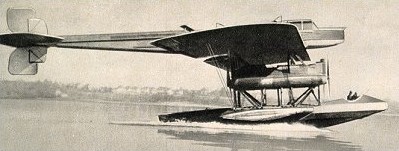
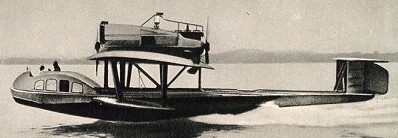
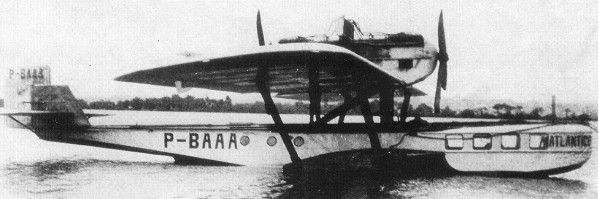
The Wal all-metal flying-boat was a direct development of the Gs I of 1919 and the uncompleted Gs II.
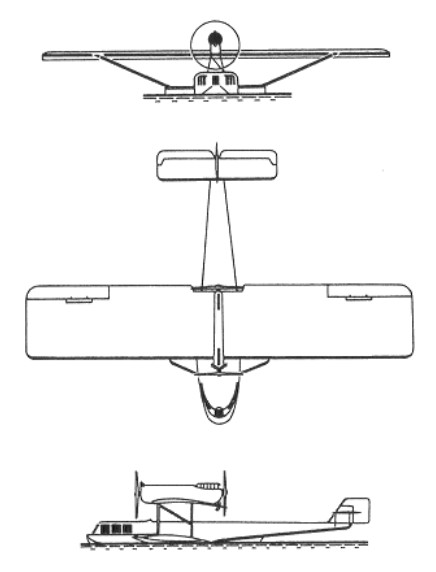
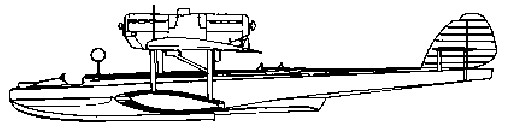
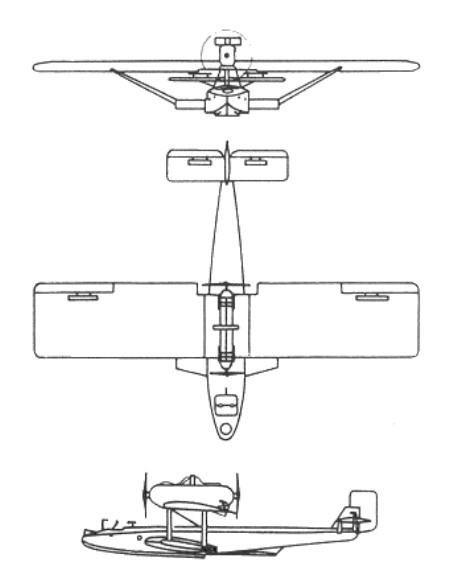
The Wal had a two-step hull, strut-braced untapered parasol wing, sponsons, single fin and rudder, and two engines in tandem above the centre section.
The prototype flew on 6 November 1922. Because of the Allied ban on German construction of this class of aeroplane, production was undertaken by GMASA in Italy with the first aircraft completed in 1923.
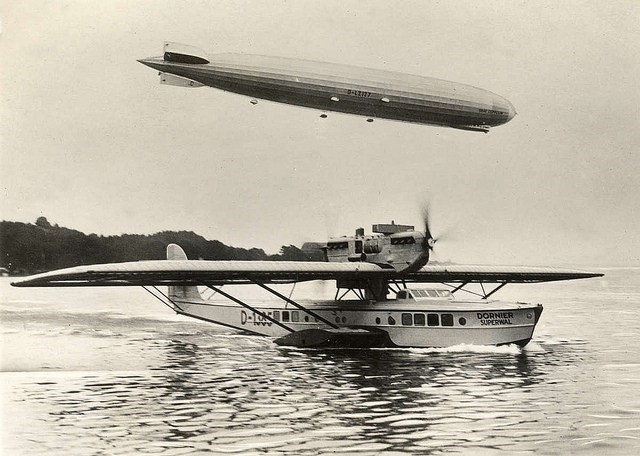
LZ127 Graf Zeppelin & Dornier Wal. 1928

Passenger, mail-carrier and military versions were produced with a wide range of engines of 223.6-559kW. There were four different wing spans and the maximum weight grew from about 4,000kg to 10,000kg. Wals were also built by Piaggio and in Japan, the Netherlands and Spain, and later in Germany. About 300 were built before production ceased in the mid-1930s.
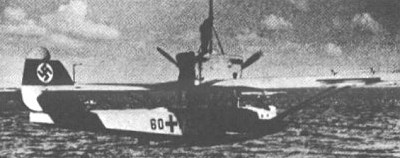
Wals pioneered air services in South America, were widely used in the Mediterranean (with eight-ten seats) and, operating from depot ships, established Luft-Hansa’s South Atlantic mail services.

To carry mail over the Berlin to Rio de Janeiro Atlantic route, Lufthansa converted the 5400 tonne Wesfalen cargo vessel into a floating airbase. The flying boat, usually a Do.J, would land near the ship, and then be hauled by a crane up a ‘dragsail’, a semi-rigid blanket that stretched into the water over the stern to act as a slipway. The Wal was then moved to the bow, from where it was launched into the air by a compressed air catapult. The complete system was first tested in June 1933, 940 miles / 1500 km off the Gambian coast.
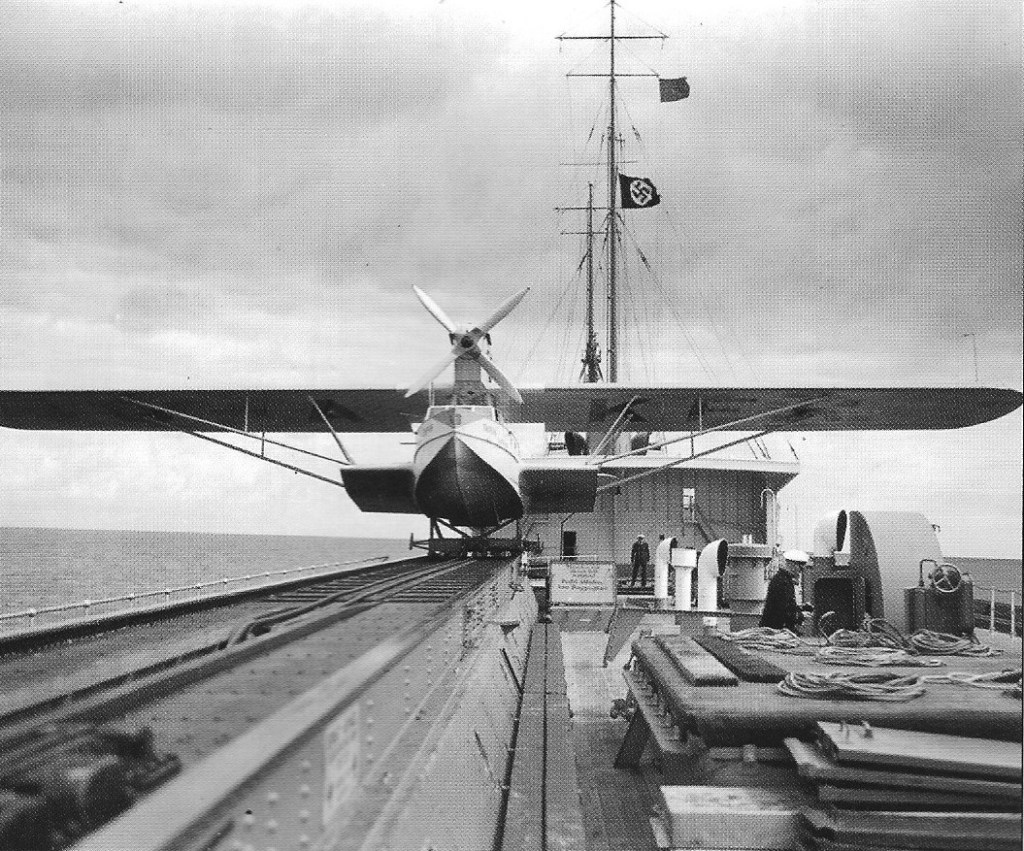
On board a Westfalen Line ship

Gallery

Engines: 2 x RR 1928, 265kW
Max take-off weight: 4100 kg / 9039 lb
Empty weight: 2720 kg / 5997 lb
Wingspan: 26.5 m / 86 ft 11 in
Length: 16.2 m / 53 ft 2 in
Height: 4.7 m / 15 ft 5 in
Wing area: 96.0 sq.m / 1033.33 sq ft
Max. speed: 180 km/h / 112 mph
Cruise speed: 150 km/h / 93 mph
Ceiling: 3500 m / 11500 ft
Range w/max.fuel: 3600 km / 2237 miles
Crew: 2-4
Passengers: 10-12

Wal
Engine : 2 x BMW VI, 690 hp
Length : 60.039 ft / 18.3 m
Height : 17.552 ft / 5.35 m
Wingspan : 76.115 ft / 23.2 m
Wing area : 1033.344 sq.ft / 96.0 sq.m
Max take off weight : 17640.0 lb / 8000.0 kg
Weight empty : 10363.5 lb / 4700.0 kg
Max. speed : 124 kts / 230 km/h
Landing speed : 57 kts / 105 km/h
Cruising speed : 108 kts / 200 km/h
Initial climb rate : 590.55 ft/min / 3.0 m/s
Service ceiling : 9843 ft / 3000 m
Wing load : 17.02 lb/sq.ft / 83.0 kg/sq.m
Range : 1026 nm / 1900 km
Crew : 4
Armament : 2x MG15
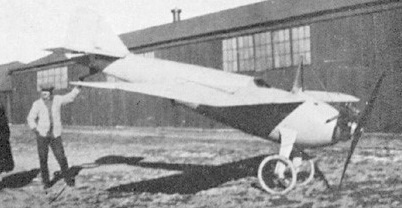
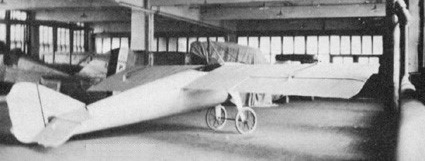
Dornier Do.H Falke / Seefalke

Dornier pursued the clandestine development of military aircraft, including the DoH Falke and Seefalke all metal cantilever high wing fighter monoplanes in 1922 and the DoD twin float torpedo bomber monoplane in 1926.
Manufactured at Altenrhein / Pisa, the Do.H was a relatively modern design. Fitted with floats, the Falks was available a sea-based fighter, too. Several engine variants existed.
In cooperation with Wright, the Wright H3 was fitted and the Falke offered to the US-Navy.

Dornier H Falke
Engine : BMW IV a, 296 hp
Length : 24.377 ft / 7.43 m
Height: 9.318 ft / 2.84 m
Wingspan : 32.808 ft / 10.0 m
Wing area : 215.28 sq.ft / 20.0 sq.m
Max take off weight : 2646.0 lb / 1200.0 kg
Weight empty : 2039.6 lb / 925.0 kg
Max. payload weight : 110.3 lb / 50.0 kg
Max. speed : 140 kts / 260 km/h
Landing speed : 49 kts / 90 km/h
Cruising speed : 119 kts / 220 km/h
Initial climb rate : 1161.42 ft/min / 5.90 m/s
Service ceiling : 25591 ft / 7800 m
Wing load : 12.30 lb/sq.ft / 60.00 kg/sq.m
Range : 259 nm / 480 km
Crew : 1
Armament : 2x MG

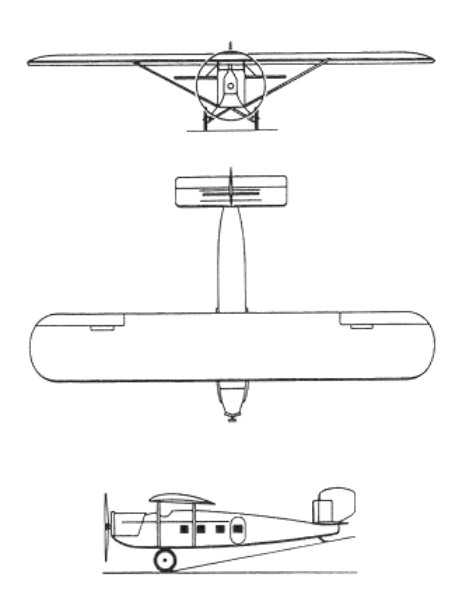
Dornier Do.C Komet I / Komet II / Do.D / Do.T / Do.B / Do.G / Merkur

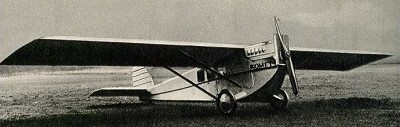
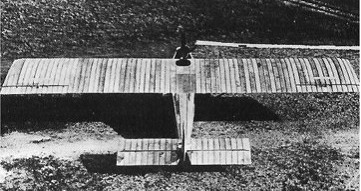
Komet II

These aircraft were three of a large family of civil/military aircraft produced in the late 1920s, and surviving documentation on their design and weaponry is both sparse and conflicting, due to the fact that Germany was officially an ‘unarmed’ country at that time.

Dornier Komet Article

Development began in 1920 with the Do C III (Komet I). This was a high wing commercial transport with an open cockpit for the pilot and an enclosed cabin seating four passengers. It had an exceptionally long wingspan of 17 m (55 ft 9.25 in) and could be powered by either a 180 hp BMW III or 185hp BMW IIIa engine. It was built in small numbers and used by various German airlines with some success.

Designed in 1920 a modified version, the Komet II, utilized the same wing configura¬tion, but with an increased overall length. The Komet II was a five-seat (pilot in open cockpit and four passengers in cabin) monoplane with a thick wing placed on top of the deep box-section fuselage. Powered by a 134kW / 250 hp BMW IV engine, it made its first flight on October 9, 1922.
A small number were built with 250 hp BMW IV engines and were operated from 1922 by Deutsche Luft-Reederei, and Rolls-Royce Falcon-engined examples went to Spain, Colombia, Russia and the Ukraine.
This was followed by the six passenger Komet III, which first flew on December 7, 1924, with a 360 hp Rolls Royce Eagle powerplant. This same engine was used in a parasol wing development, the Do C, produced shortly afterwards as a training air¬craft. Some Do Cs were operated by the Fuerza Aerea de Chile as light bombers in about 1930.

The Do D torpedo bomber, which flew for the first time in July 1926, was a twin float version of the Do C, with a 600 hp BMW VI engine, which entered limited production for the Yugoslav naval air service in 1927. In 1925, two other versions of the Kornet III were evolved: an ambulance model, designated Do T, and a passenger counterpart with a 600 hp BMW VI, the latter receiving the name Merkur (or Do B).

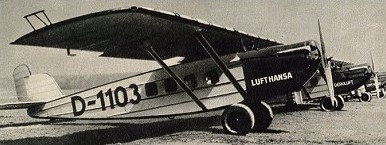
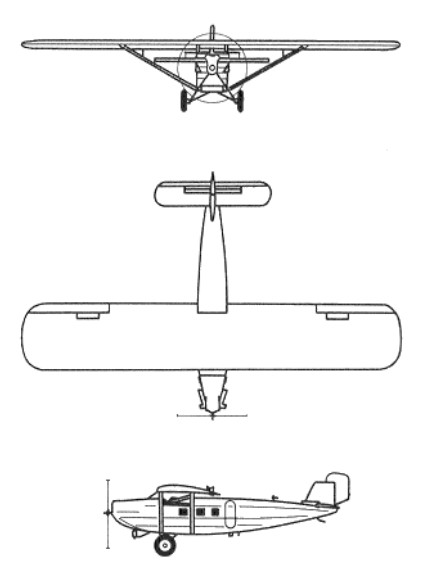
Do.B Merkur

The final development of the Komet type was the Do.B Merkur, which first flew in February 1925 and was produced from 1926 as an eight-ten passenger airliner powered by a BMW VI engine. It could cruise at 175km/h. Following long-distance overland trial flights, dual controls and adjustable pilot seats were fitted. Deutsche Luft-Hansa received the greatest number with nearly 30 aircraft and these operated from Berlin to Konigsberg and elsewhere. Examples were operated by Deutscher Aero Lloyd and DDL in Europe, were exported to the Ukraine and licence-built in Japan and perhaps Switzerland in civil/military guises.

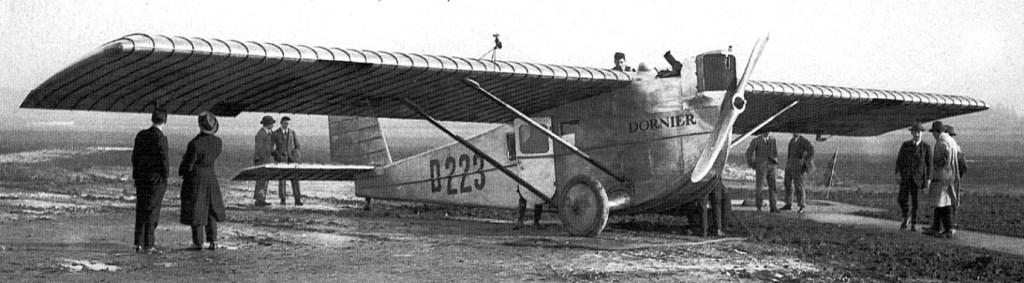
Komet II D223 at Croydon Airport

Aero-Lloyd Komet II D223 was the first German commercial aircraft to visit the UK since the First World War. It brought three Aero-Lloyd directors to visit Daimler Airways to finalise arrangements for a London-Berlin service. The Komet II had flown from Berlin via Amsterdam and Rotterdam, and due to bad weather landed in a field near Lympne, Kent, where crew and Passengers spent the night before arriving at Croydon Airport.
The Komet III used three different kind of powerplants. Some of them employed the Rolls-Royce 360 horsepower Eagles, others used the Napier 465 horsepower Lions, and the third powerplant was the 400 horsepower Liberty engine.

A twin-float seaplane version was also produced and Chile received a number as Do G trainers/torpedo-bombers. The Do D was similar to the Do C built for the Yugoslav Naval Air Service, while the Do T was an ambulance derivative of the Merkur.
The Merkur used a 600 horsepower engine as its powerplant.
Production details are impossible to give. It is known that the civil Komet and Merkur series, together with the Do T, were built openly in Germany; the para military variants most likely emanated from the Dornier factory at Alteirrhein in Switzerland.

Komet II
Engine: 1 x BMW IV, 185kW
Take-off weight: 2200 kg / 4850 lb
Empty weight: 700 kg / 1543 lb
Wingspan: 17.0 m / 55 ft 9 in
Length: 10.3 m / 33 ft 10 in
Height: 3.3 m / 10 ft 10 in
Wing area: 50.0 sq.m / 538.20 sq ft
Max. Speed: 165 km/h / 103 mph
Cruise speed: 135 km/h / 84 mph
Ceiling: 5000 m / 16400 ft
Range w/max.fuel: 500 km / 311 miles
Crew: 1
Passengers: 4

Do C
Span: 19.60 m (64 ft 3.75 in)
Length: 12.43 m (40 ft 9.5 in)
Gross weight: 3900 kg (8598 lb)
Maximum speed: 195 kph (121 mph)

Do.B Merkur
Engine: 1 x BMW VI, 500kW
Take-off weight: 3700 kg / 8157 lb
Empty weight: 2280 kg / 5027 lb
Wingspan: 19.6 m / 64 ft 4 in
Length: 12.8 m / 41 ft 12 in
Height: 3.8 m / 12 ft 6 in
Wing area: 62.0 sq.m / 667.36 sq ft
Ceiling: 5200 m / 17050 ft
Range w/max.fuel: 1000 km / 621 miles
Crew: 2
Passengers: 6-7

Dornier Komet II / Komet III
Dornier Do B Merkur

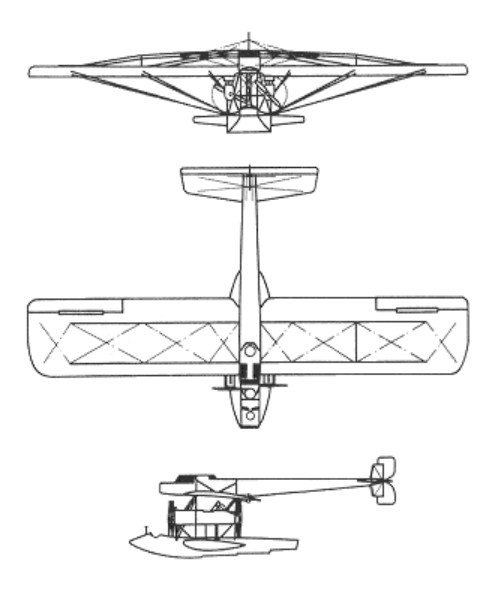
Dornier GsII Wal

The two improved GsIIs under construction at Seemoos fell foul of the Allied Commission and were destroyed in 1919. Dornier commissioned the firm’s Italian subsidiary to continue development and construction of the forbidden type. The GsII, the famous Wal, which flew in 1922, was built under license in Japan, Netherlands, and Spain and would evolve through the 1920s and into the 1930s. Between the first production Wal of 1923 and the military type of 1932, the airplane’s wingspan increased greatly, its engine power more than doubled, and its loaded weight rose from 8820 to 22000 pounds. It was used for civilian mail service and long range reconnaissance, and the commercial and military models differed little.

Engine: 2 x MB IVa, 190kW
Take-off weight: 4315 kg / 9513 lb
Empty weight: 1200 kg / 2646 lb
Wingspan: 21.0 m / 68 ft 11 in
Length: 15.3 m / 50 ft 2 in
Height: 4.7 m / 15 ft 5 in
Wing area: 80.0 sq.m / 861.11 sq ft
Max. Speed: 170 km/h / 106 mph
Cruise speed: 140 km/h / 87 mph
Ceiling: 4250 m / 13950 ft
Range w/max.fuel: 600 km / 373 miles
Crew: 2
Passengers: 6

Dornier GsI

After the armistice, Dornier built a six passenger flying boat, the GsI, with the inher¬ently stable broad beam hull and sponsons that characterized his later boats. First flown in July 1919 the GsI went to Switzerland for test flights, it returned to Fredrichshafen on the 10/12/1919. From there it went on a sales tour to the Netherlands on the 3rd March 1920. The craft was a success, but after a demonstration in the Netherlands, the Allies demanded its destruction because the Control Commission had forbidden that category of aircraft. The GsI was scuttled at Kiel-Holtenaeu on the 25 th April 1920 to prevent it falling into the hands of the Allied Inspection Commission.

Dornier Metallbauten GmbH / Aktien Gesellschaft für Dornier Fluzeuge / Dornier-Werke GmbH

Dr Claude Dornier

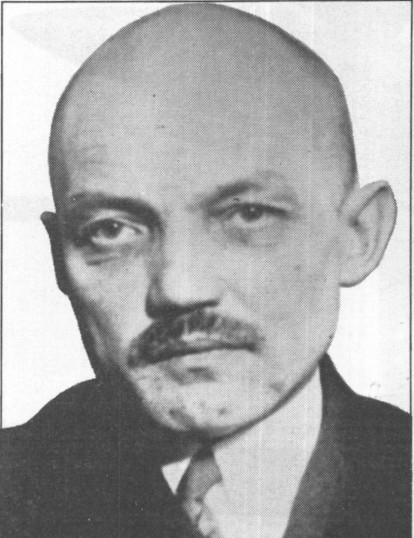
Dr Claude Dornier was employed by Count Zeppelin in 1910, and in 1914 was in charge of the design and construction of large all-metal marine aircraft at Zeppelin-Werke Lindau. Here he produced the Rs.I in 1915, then the largest aircraft in the world, with a span of 43.5m. By 1918 three more giant flying-boats had been built, Rs.II, III, and IV, as well as prototypes of single-seat and two-seat fighters.

Dornier Seaplanes Article

All employed Dornier’s techniques of advanced metal construction. After the war the works were transferred to Manzel, near Friedrichshafen, where some two-seaters for the Swiss Air Force were completed. At Manzel, between 1920 and 1925, appeared the Libelle, Delphin, Komet and Merkur, small civil aircraft, and the Falke, an unsuccessful fighter. In 1922 the company became Dornier Metallbauten GmbH and in 1926, as the Manzel works were too small, it transferred to Altenrhein in Switzerland (Aktien Gesellschaft für Dornier Fluzeuge). Here, for the next three years, Aktien Gesellschaft fur Dornier Flugzeug was occupied in building three Do X flying-boats, the largest aircraft of their time, powered by 12 engines. Two were sold to Italy. Bomber designs followed, the Do N, P, and Y being built 1929-1931. These led to the Do F which, like the Do 11, began in 1933 to reequip the German Air Force.
However, in 1932 production was resumed in Germany. The Swiss factory subsequently became the Eidgenossisches Flugzeugwerk.
1932 production in Germany, this time as Dornier-Werke GmbH, began with the military Wal (later the Do 18) and Do 11 bomber, supplanted later by the Do 23. In 1934 appeared its first modern warplane, the Do 17, evolved from a fast, six-passenger mailplane designed for Deutsche Luft Hansa. The Do 17 and its successor, the Do 217, which served as a nightfighter, were the only Dornier designs to see largescale production during 1935-1943. Towards the end of the war the company produced the Do 335 push-pull twin-engined heavy fighter with a top speed of 763km/h, probably the fastest piston-engined Second World War fighter.

After the war Dornier became established in Spain. The first postwar aircraft developed completely in Germany was the twin-engined STOL Do 28. An experimental STOL jet transport followed, the Do 31, and the Do 29 research aircraft. From 1966 the company developed the Skyservant and was involved in international programs. Collaboration with Avions Marcel Dassault-Breguet Aviation on Alpha Jet development and production included research into supercritical wing.
Merkle joined Dornier in 1969.
Became Dornier GmbH in 1972. A majority shareholding was acquired by Daimler-Benz AG in 1985. In 1989 Deutsche Aerospace AG was formed as a corporate unit of Daimler-Benz Group and intended to unite the work of Dornier, MBB, MTU and more, and was renamed Daimler- Benz Aerospace AG. in 1995, with the Regional Aircraft division administered by Dornier Luftfahrt GmbH. In June 1996 Fairchild Aerospace purchased 80% of Dornier Luftfahrt from Daimler-Benz Aerospace, forming Fairchild Dornier Germany Dornier Luftfahrt GmbH. Within Daimler Chrysler Aerospace AG, Dornier Flugzeugwerft GmbH represents part of the Military Aircraft business unit.

Dormoy Bathtub

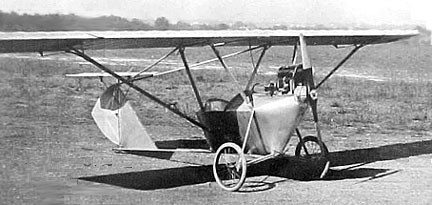
The 1924 Dormoy Bathtub won the Rickenbacker Trophy for its class at the 1924 Nationals. After the 1924 races Dormoy sold it to a farmer, who taxied it around his cow pasture, but was afraid to fly it. It eventually ended up parked in the field, and his cows chewed the wings away.

The 1925 Bathtub was built from scratch with a full-length, covered fuselage.

Only the two originals were built. Many subsequently replicated by home-builders even into the 1990s.

Engine: 25hp 4-cyl Henderson
Wing span: 24’0″
Length: 13’5″
Useful load: 190 lb
Max speed: 70 mph
Cruise speed: 60 mph
Stall: 25 mph
Sats: 1

Dormoy 1919 biplane

Designed by Etienne Dormoy in 1919 as a single place open cockpit biplane experiment in ultralights. A basic framework with wings and a pilot’s seat behind the 18hp Henderson motor. The idea was carried over into Dormoy Bathtub.

Flown successfully at Selfridge Field, Detroit, only the one was built, sometimes listed as a Packard Motor Co product but actually spare-time project by Dormoy and his co-workers while employed there.