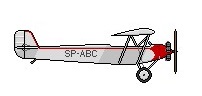
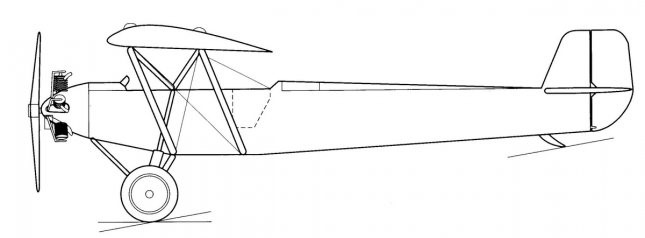
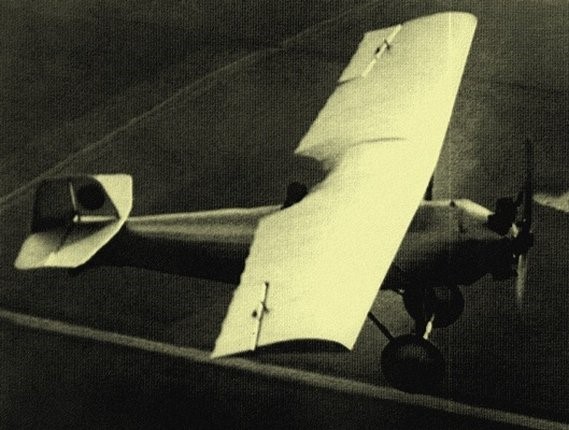
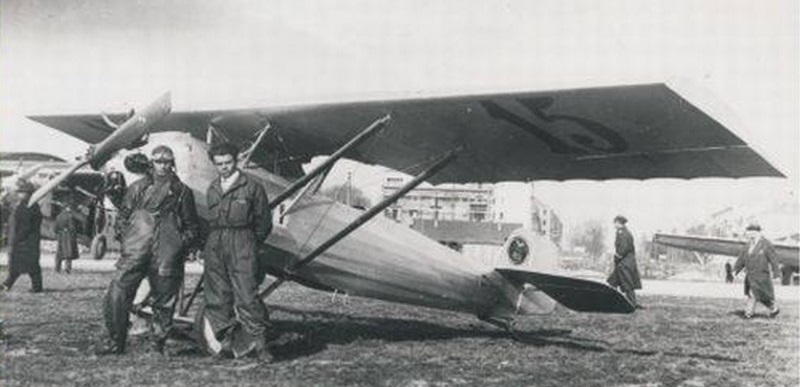
In 1929-1930 the Działowski brothers designed the three-seater sports planes DKD-VII and DKD-VIII (differing only with engine: Siemens 55hp or Genet 80hp respectively), however aerodynamic trials at Aerodynamics Institute in Warsaw exposed numerous shortcomings of the design and further work was cancelled.
In 1930, the construction of DKD-VIII began as a high wing aircraft of mixed construction.
Suspension of support for the project and lack of financial resources, as well as the constructor’s interest in the new project (DKD-X) resulted in discontinuation of works on DKD-VIII.
Engine: DKD-VII: Siemens-Halske Sh-4, 40 kW (55 hp) DKD-VIII: Armstrong Siddeley Genet, 59 kW (80 HP). Span: 11.0 m Length: 7.3 m Height: 2.35 m Wing area: 20.0 m2
Empty weight: 380 kg Max weight: 800 kg Max speed: 155 km / h Cruising speed: 135 km / h Stall: 60 km / h Rate of climb: 3 m / s Ceiling: 3600 m Range: 640 km
Following their experience with the Działowski D.K.D.3 at the first National Lightplane Contest in 1927, the Działowski brothers, Stanisław and Mieczysław, set about designing and funding their entrant to the following year’s competition. Several established Polish aircraft companies offered both easy terms for purchase of material and free assembly. The costs of materials were covered by LOPP, while the engine was purchased thanks to the collection of money. The materials were purchased at PZL, PWS and Plage and Laśkiewicz.
Both the Kraków branch of LOPP and the Kraków Aeroclub agreed to buy an example. LOPP decided to use a 34 kW (45 hp) Anzani 6 six-cylinder radial engine, the Działowskis’ original choice, but the Aeroclub selected a 41 kW (55 hp), five cylinder Siemens-Halske Sh 4 radial. The latter was initially designated D.K.D.5, soon revised to DKD.4bis.
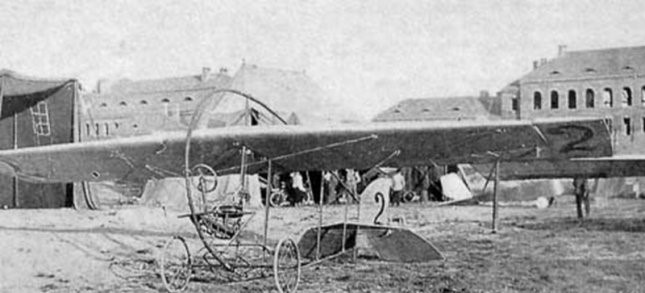
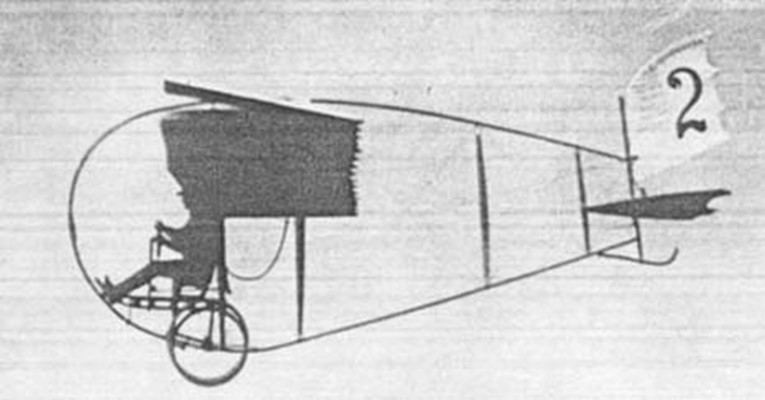
The D.K.D.4 was a two-seat parasol monoplane with a three part, wooden, two spar, fabric covered wing which was trapezoidal in plan. The central section was mounted on two outward-leaning pairs of steel cabane struts from the upper fuselage, one to each spar and each outer panel was braced to the lower fuselage longerons with a pair of steel struts to the spars. Its wingtip ailerons were short and broad. There was a large semi-circular cut-out in the central trailing edge to ease cockpit access and enhance the upward field of view.
Its fuselage was similar to that of the D.K.D.3, which had a welded steel tube girder structure with wooden frames, stringers and fabric covering, producing an oval cross-section apart from a flat underside. The radial engines of both versions were mounted with their cylinders exposed but otherwise under a duralumin cowling. The D.K.D.4’s empennage was conventional and tidier than that of its predecessor. Its trapezoidal horizontal tail was mounted on top of the fuselage and its similarly shaped fin mounted a rectangular, unbalanced rudder which reached down to the keel, working in a cut-out between the elevators. Their steel tube structure was fabric covered. Larger area, balanced rudders area were added to both examples in late 1929, together with larger ailerons.
The prototypes had simple, single axle, fixed landing gear with two V-struts with a bracing crossbar between their vertices, though the sole production example dispensed with the crossbar.
The two copies of the DKD-IV aircraft were built: one (factory number 1) with Siemens engine, designated DKD-IV bis, and initially named DKD-V, for LOPP, and the second (factory number 2), named DKD-IV for the Academic Aeroclub in Krakow. DKD-IV bis also differed from DKD-IV with cut ends of ailerons. Both copies were built in Park 2 of the Air Regiment in Krakow and flown in September 1928.
The D.K.D.4 and the 4bis both made their first flights in September 1928. This gave time for trials and development before the second National Lightplane Contest, which started on 29 October with twelve contestants. Both took part in the 2nd National Competition of Light Ships. J. Bargiel (the winner) and Iwaszkiewiczówna took part in the DKD-IV, and DKD-IV bis, piloted by Kaczmarczyk 9 came 5th) and M. Działowski. The D.K.D.3, flown by its designer, came third.
During the flight from Krakow to Warsaw for the Competition, both planes were damaged, but thanks to the help of the employees of the Polish Aeronautics Company, they were repaired in time. In the DKD-IV Competition he was 1st, and DKD-IV as 3rd.
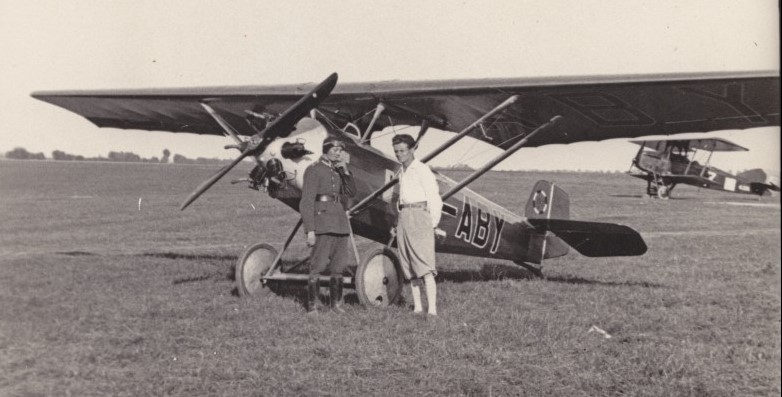
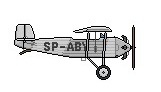
In the autumn of 1928 the commander of the 2nd Air Regiment wanted to order 25 DKD-IV for military aviation, but the Aeronautics Department did not accept the order. The first plane in the series for the army was already under construction. At the turn of 1928 and 1929, S. Działowski completed the construction of this copy (factory number 3), with the Anzani engine for the Academic Aeroclub of Krakow. In 1929 aircraft received new registration marks: DKD-IV bis factory No. 1- SP-ABA, later changed to SP-ABX, DKD-IV factory number 2- SP-ABL and factory number 3 SP-ABY.
In 1929, SP-ABA was exhibited at the Universal National Exhibition in Poznań. In May 1930, K. Piotrowski made a flight to Olomouc and Brno in DKD-IV. Airplanes were used for training and promotion flights (eg during ski competitions in Zakopane). In addition, they took part in the South-Western Polish Flight in 1929 (Działowski at SP-ABY won the 3rd prize) and in Podhalańskie Złot Awionetka in Nowy Targ on October 3, 1930. In the Third National Competition of Light Ships in 1930. DKD-IV bis took 11th place. DKD-IV No. 2 SP-ABL was renovated in 1934 and converted into a single-seater, and the fuselage was covered with cloth directly, resulting in its sides becoming flat. The aircraft, after renovation, was used by the Kraków Aeroclub from May 1934 to July 1935.
On 28th January 1930 pilot J.Soltykowski flew the DKD.4bis SP-ABL under the Debnin bridge at Krakov three times.
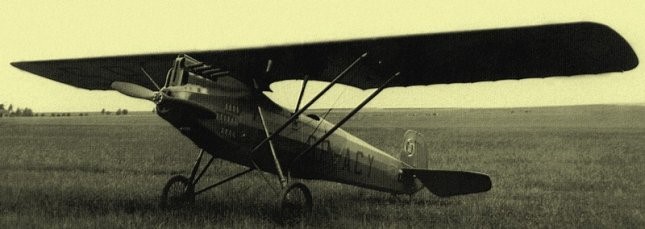
The later D.K.D.5 was a fully aerobatic and final development of the D.K.D.4 design. It was powered by a 63 kW (85 hp) Cirrus III four cylinder upright air-cooled inline engine mounted exposed. An aerodynamic clean-up included a divided undercarriage with cranked axles and a long oleo strut from the outer axle to the upper longeron on each side. Its wings were foldable and their span and area were 11% greater than the D.K.D.4. It first flew in July 1930, piloted by its designer. Despite a slight increase in weight over the D.K.D.4bis, the large increase of power and the clean-up raised its maximum speed to 175 km/h (109 mph), gave it a ceiling of 4,500 m (14,800 ft) and enabled it to reach 1,000 m (3,300 ft) in six minutes.
The D.K.D.5 SP-ACY did not reach the Warsaw Second International Tourism Challenge as it was badly damaged in an emergency landing after a fuel pipe broke during its flight to Warsaw at Końskie. S. Działowski (with competition number 03) suffered serious injuries. It was rebuilt and operated by the Kraków Aeroclub and competed in competitions and rallies.
DKD.4 Engine: Anzani 6, 34 kW (45 hp) Span: 9.0 m Length: 5.5 m Height: 2.28 m Wing area: 13.5 m2 Empty weight: 264-318 kg Payload: 230 kg Max weight: 548 kg Speed max: 135 km / h Cruising speed: 126 km / h Stall: 75 km / h Rate of climb: 1.5 m / s Ceiling: 2270 m
DKD.4bis Engine: Siemens-Halske Sh 4, 41 kW (55 hp) Propeller: 2-bladed Wing span: 9.0 m (29 ft 6 in) Length: 5.6 m (18 ft 4 in) Height: 2.2 m (7 ft 6 in) Wing area: 13.5 sq.m (145 sq ft) Empty weight: 345 kg (761 lb) Payload: 242-294 kg MAUW: 638 kg (1,407 lb) Speed max: 140 kph / 87 mph / 76 kn at sea level Cruising speed: 125 kph / 78 mph / 67 kn Stall: 80 km / h ROC: 1.4 m / s Time to 2,000 m (6,600 ft): 23 min Service ceiling: 3,000 m (9,800 ft) Seats: 2
DKD.5 Engine: Cirrus III, 63 kW (85 hp) Span: 10.0 m Length: 6.6 or 6.3 m Height: 2.7 or 2.1 m Wing area: 18.0 m2 Empty weight: 440 kg Gross weight: 650 kg Max speed: 175 km / h Cruising speed: 150 km / h Stall speed: 75 km / h Rate of climb: 2.5 m / s Ceiling: 3500 m
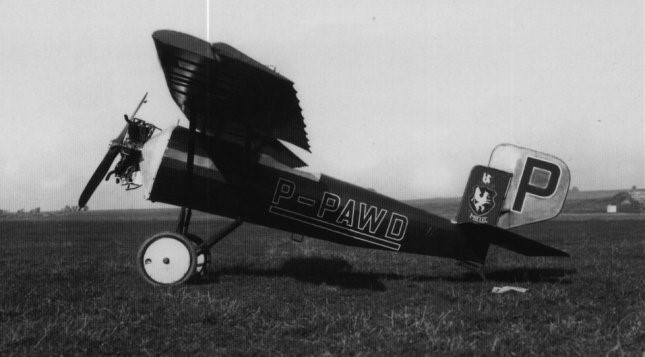
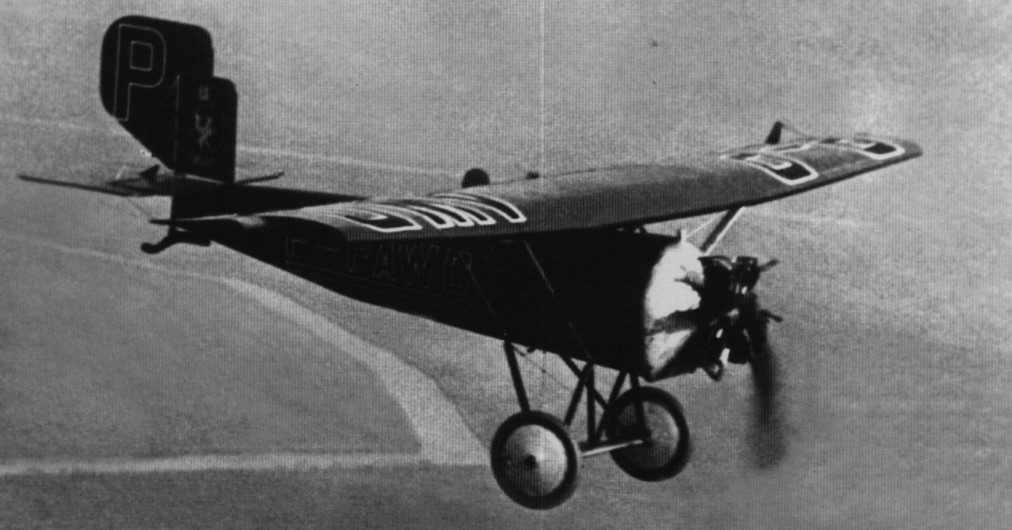
In the summer of 1927, Stanisław Działowski transformed the wrecked DKD-I plane into a single-seat DKD-III aircraft. With the help of his colleagues, Działowski made a new fuselage and chassis in the 2 Air Regiment workshops in Kraków, and renovated the batten, which came with the tail from DKD-I. From Aeronautics Department MSWojsk rented an Anzani engine.
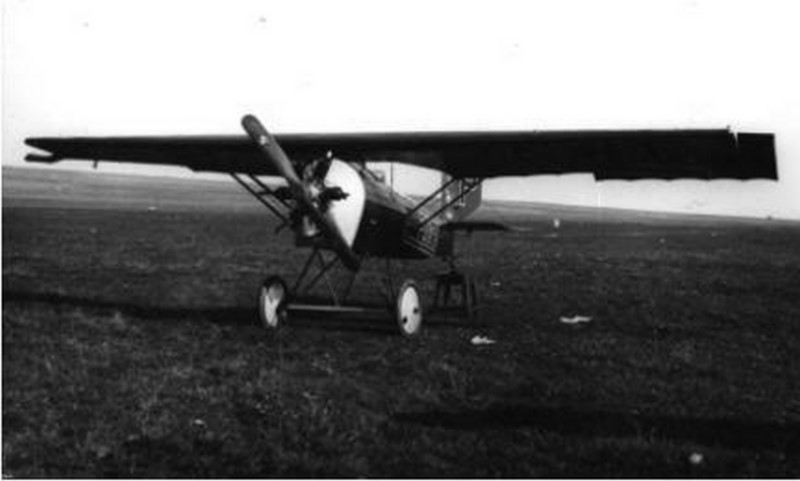
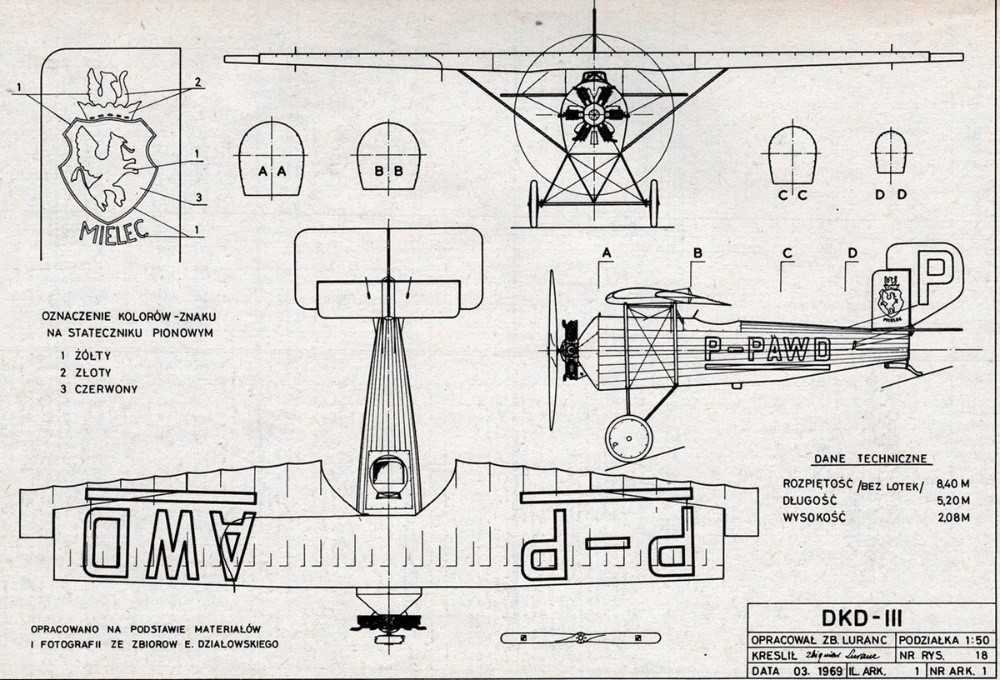
A single-seat high-wing aircraft with mixed construction. Trapezoidal wing, wooden, covered with fabric. The nose is covered with plywood. The wing was attached to the hull on a turret of steel pipes and supported by two pairs of steel pipe braced with steel wire. Equipped with ailerons. The truss-welded hull was from steel pipes, covered with fabric. The front of the hull was covered with sheet metal. There was an open cockpit and classic fixed undercarriage.
The plane was built for the First National Competition for Light Ships and was flown on 4.10.1927 at the Kraków-Rakowice airport. It received the registration P-PAWD.
The next day, after the flight, Działowski made a flight from Krakow via Dęblin to Warsaw for the Awionettes Competition. In the competition, the aircraft received the best score for attempts to take off, landing, altitude and disassembly, but due to the engine defect during the flight it finally took 4th place.
In 1928, the aircraft was improved, but at the cost of increasing its weight. In the 2nd Awionette Competition in 1928, S. Działowski took fifth place at the DKD-III.
In 1929, the aircraft received SP-ACR registration marks.
In 1930, it took part in the Third National Competition of Light Ships, but was damaged during a forced landing in a circular flight.
The DKD-III was used for several years and made a total of about 1800 flights with a total time of 431 hours.
Engine: Anzani, 33 kW (45 hp) Span: 9.0 or 8.4 m Length: 5.2 m Height: 2.1 m Wing area: 11.5 m2 Empty weight: 293 kg (after mod. 314 kg) Total weight: 420 kg (after mod. 463 kg) Maximum speed: 125 km / h Cruising speed: 110 km / h Stall: 72 km / h Rate of climb: 2 m / s Ceiling: 3800 m Range: 500 km
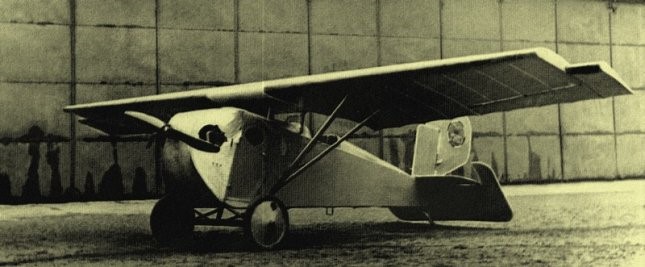
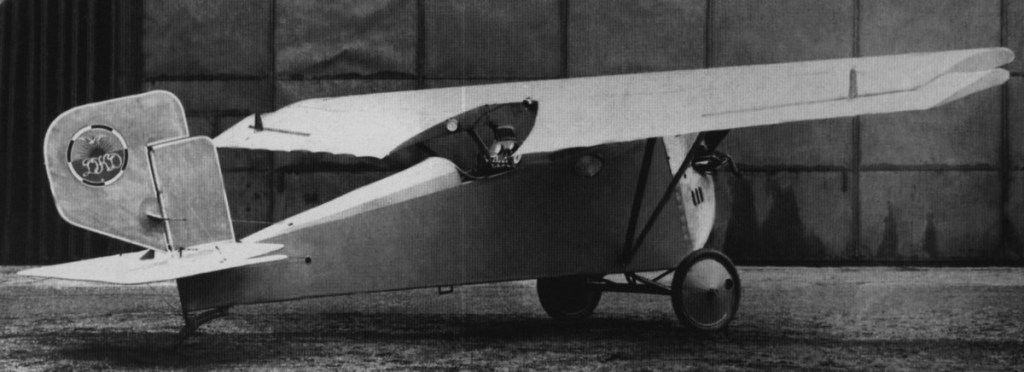
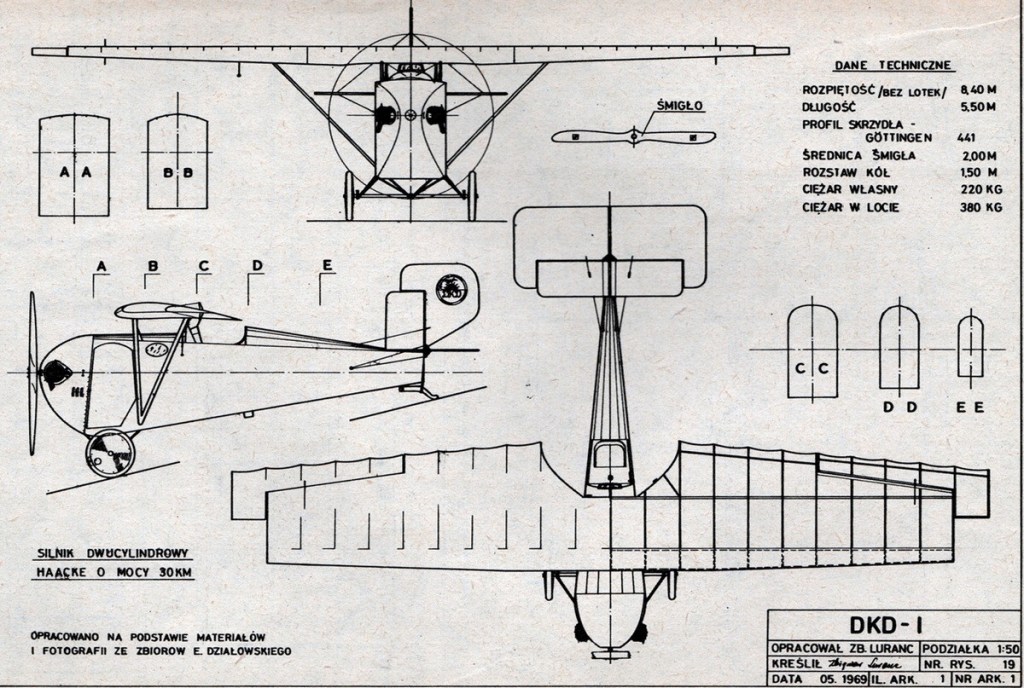
The design of the DKD-I aircraft was developed by the brothers Stanisław and Mieczysław Działowski in 1925. The aircraft was designed for the Haacke engine. It was bought by Gabriel Bydgoszcz shoemaker Jan Krüger from the Gabriel brothers. The engine came from the Gabriel PV airplane. Construction began in the basement of the house at ul. Pomorska in Bydgoszcz, and completed in the Pilotów School in Bydgoszcz.
It was a two-seater high-wing with mixed construction. Trapezoidal wing, wooden, covered with fabric, the leading edge covered with plywood and attached to the hull on four steel pipes, crossed with wire, supported by V-shaped braces. Wings were equipped with ailerons.
A hull with a rectangular cross-section, truss, welded from steel pipes. The front of the hull is covered with aluminum sheet. Under the airfoil, in the center of gravity of the aircraft there was an indoor passenger cabin with windows in the sides of the fuselage, the pilot’s cabin uncovered. Rectangular poles, welded from steel pipes, covered with cloth, and a classic fixed undercarriage.
The Haacke flat engine had 22 kW (30 HP).
The DKD-I plane was flown on February 1, 1926 at Bydgoszcz airport.
In order to improve the visibility from the cab, the airfoil was raised above the hull and the airfoil was enlarged near the cabin. After removing the defects and alterations on November 20, 1926, the plane, although it was made as a two-seater, was used as a single-seater.
On 25-27.05.1927, S. Działowski made the first inter-city trip with the DKD-I – from Bydgoszcz via Toruń to Warsaw (2 hours 10 minutes). In Warsaw, the plane was shown on May 1927, at the LOPP Exhibition. After the exhibition, during a flight from Warsaw to Krakow, the plane was seriously damaged during a forced landing. After it was damaged its components were used to build the DKD-III.
Engine: Haacke, 22 kW (30 HP Span: 9.0 or 8.4 m Wing area: 11.5 m 2 Length: 5.5 m Height: 1.9 m Empty weight: 220 kg Maximum weight: 393 kg Max speed: 120 km / h Cruise speed: 100 km / h Stall: 65 km / h
In mid-1924, brothers Stanisław and Mieczysław Działowscy started the construction of the “Bydgoszczanka” glider in their own project at the Pilotów School in Bydgoszcz.
A single-seat high wing aircraft with wooden structure. The Bydgoszczanka was a trapezoidal, double-girder flap, to the first girder covered with plywood, then with canvas. The wings are fastened to a reinforced rib, hull grids placed on vertical struts and stiffened with wires running to the upper and lower hull frame strips. Ailerons with large horn aerodynamic relief could be pivoted down or up simultaneously, supporting the operation of the elevator. Horizontal ballast and rudders were covered with canvas.
The hull in the form of a flat grate, consisting of an oval frame glued together from several layers of slats and vertical struts, crossed with wires. On the horizontal bar in the front of the fuselage, pilot’s seat. Chassis at first skids, later wheels.
The construction of the glider was completed in 1925. “Bydgoszczanka” took part in the Second Glider Competition in Oksywie, Gdynia, in May-June 1925, piloted by Strzelczyk. The first flight of 15 seconds was made on May 18, 1925.
During the competition, 8 flights were made on it in the total time of 1 min 12 s. The glider was broken at the end of the competition. Initially, the glider had a skid chassis, a high altitude rudder, and a high rudder rudder. After the failure after the failed start, the glider was processed, making a cut in the rudder (on the rudder) and placing the rudder downwards, and the chassis was changed to a wheel.
Bydgoszczanka Span: 10.24 or 10.25 m Length: 6.5 m Height: 2.6 m Wing area: 15 sq.m Empty weight: 78 kg Total weight: 148 kg
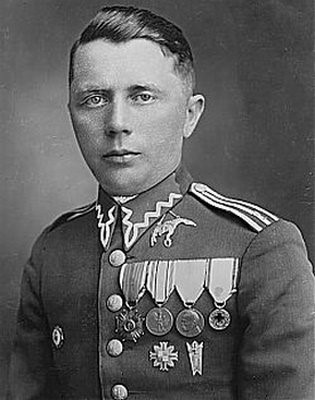
Stanisław Działowski was born on 11.04.1900 in Mielec. He completed six years of elementary school and two classes of high school. In the years 1914-1915 he was in locksmith practice in Vienna, which he did not finish. On December 3, 1916, he joined the air force in the Austro-Hungarian army in Vienna, from where he was sent to the aircraft construction school in Hungary (Szeged), where he stayed until the end of the First World War. After returning to Poland, he joined the Polish army in November 1918 and, as a corporal, he became the head of the airfield assembly plant in the pilot school park, with which in 1919 he was transferred to Bydgoszcz. In this post he worked until 1926. On April 1 that same year, he joined the pilot school as a pilot student, after which (November 1, 1926) he was assigned as a pilot to the ITBL in Warsaw, at the same time acting as a pilot in the main port training squadron. In May 1927, he passed on his own request to the 2nd Air Regiment to Krakow, where he works as a pilot and constructor of the air park. In 1928, together with his brother Mieczysław Działowski, he founded the aviation company Bracia Działowscy in the park with the thought of producing airplanes for the army.
In 1936, he was released from the army and retired to the rank of senior pilot sergeant. He then worked as a civilian in the 2nd Air Regiment. In 1938, together with his brother, he started working at PZL Warszawa, Mokotów (WP-1) as master assembly master. In 1939, he was transferred to work in PZL WP-2 in Mielec , from where he moved to SHL in Kielce just before the war.
In the interwar period, he belonged to extremely talented aircraft designers. Resigned only to his own strength, working amateurishly, he built with his brother Mieczysław, five successful prototypes of sports aircraft, glider and the original car-plane (not completed due to lack of funds) so-called “Aeromobil” .
In 1925, they built the glider “Bydgoszczanka”, which competed in the Second National Glider Competition in Gdynia, Oksywie, where it received a diploma for a very original design. Shortly after the break-up of the “Bydgoszczanka” glider at the 2nd Glider Competition, they began to build the aircraft. Stanisław Działowski, who was the constructor of the aircraft, had nine years of experience in servicing aircraft and renovations, including five years as head of the Pilots Park Aviation Park in Bydgoszcz. The construction of the plane was made possible by the Bydgoszcz-based shoemaker Jan Krüger, an aviation enthusiast who bought the Haacke engine from Gabriel’s brothers. From here, the aircraft received the DKD-I designation, from the names of the contractors and the founder of the engine. In 1926, the brothers took the first Polish interurban flight from Bydgoszcz to Warsaw. The following airplane constructions of the Działowski brothers are: DKD-II , DKD-III (participated in 1927 in the National Awionete Competition and 3rd place for KKA in 1928), two DKD-IV (with Anzani engine and Siemens-Halske engine, the machine with this first engine has won the 1st place in the 2nd National Competition of Light Ships in 1928, with the second 5th place, both constructors – participants of the competition, also as pilots received for the 1st and 3rd place of their machines the prize of 13 thousand PLN), DKD-V (built on the Challenge in 1932, crashed during a forced landing) KKA in 1928), and pilot S. Działowski suffered severe injuries), DKD-VI , DKD-VII , DKD-VIII (the last two not fully built) and “Aeromobil” (air taxi, unfinished).
Before the outbreak of the war he gave up independent construction work, discouraged by constant financial difficulties and poor health after the crash.
In September 1939, he was appointed to the army and then found himself in Romania, from where he managed to get to France. In France he worked in the assembly plant of Lioré-et-Olivier LeO 451 aircraft. In March 1940, he became a pilot instructor at the 108th Aviation Battalion in Montpellier. After the fall of France, he was evacuated to Great Britain. On June 27, 1940, he was admitted to the RAF and, after training, he flew in the 2nd Anti-Aircraft Cooperation Unit (AACU – Anti-Aircraft Cooperation Unit). On 15.10.1941, he was wounded in a combat flight and sent to a military hospital in East Kilbrick, Scotland. On March 17, 1941, he was released from the RAF for health reasons. He died on 19.03.1942 at the RAF Sanatorium in Perth. Buried in the Wellhill Cemetery there.
As a pilot, he flew on 20 types of aircraft about 800 hours, he also made 12 parachute jumps. He had the following badges and decorations: Bronze Cross of Merit, Medal of the XII anniversary, Field Pilot Badge, Gold Honorary LOPP Badge and parachute badge.
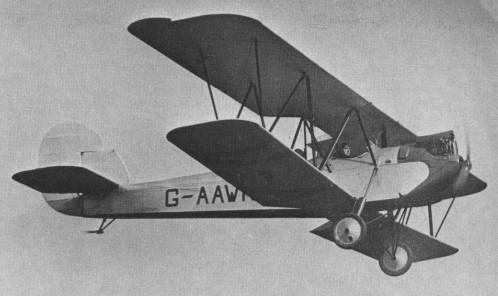
During 1929, Dudley Watt was approached by T. Neville Stack who had an idea for a slow landing, safe -flying training biplane combining the advantages of folding wings with natural stability. Watt agreed to finance the construction and formed a company, D. W. Aviation Co, at Brooklands. The aircraft was designed by Captain K. N. Pearson, M.C., AFRAeS, and dubbed the D.W.II. By the end of 1929, first wood had been cut. Drawings for the tail unit were completed by March 1930 from which time forward construction proceeded at full speed. . The work team consisted of Bill Hellon, a former Handley Page general mechanic who had worked with Savage Skywriters at Hendon, and Bill Whitaker, an aircraft craftsman who had formerly worked for both Vickers and Hawkers. The chief engineer responsible for the project was William A. Baker. The building of the D.W.II took place in the “black sheds” at Brook¬lands and on May 17, 1930, G AAWK made its public debut in the hands of Dudley Watt. The engine was a 90 h.p. ADC Cirrus III. The D.W.II was an instant success. Everything seemed set fair for this biplane with its “unusually high lift” wings which cruised at a respectable 75 m.p.h. on such comparatively low power. It was at this point that the whole enterprise left Brooklands for Ford Aerodrome, Yapton, Sussex, where larger hangars were available. Here was to be set up a production line. But things did not work out as planned and the Dudley Watt fortunes took a turn for the worse. Inspired by the success of the D.W.II, work had already begun on the mock up of a three seat version to be known as the D.W.III. This was never to be and just before Christmas, 1930, the collapse came. In spite of its success, orders did not materialise for the D.W.II and there was now no cash left to allow speculative building. Dudley Watt was forced to sack his workforce. Watt and the D.W.II turned up at aviation meetings during the following season but afterwards gradually faded from the aviation scene. The D.W.II was sold in 1934 to Brian Field who dismantled it into oblivion.
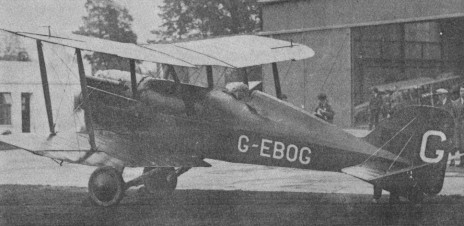
The Aircraft Disposal Co Ltd was selling off refurbished ex RAF SE.5s. Inspired by the potential of the S.E.5a just as had McCudden and others before him, Dudley Watt rebuilt his machine as a high perform-ance model. The 200 h.p. Wolseley Viper was replaced by a 300 h.p. Hispano Suiza enclosed in a stream-lined cowling and cooled by under¬slung radiators. The rear fuselage decking was redesigned to fair in with the pilot’s headrest and a smaller windscreen was fitted. Now named the D.W.l., the work on this Hisso–powered hybrid was carried out in a shed at Brooklands near the old Henderson School of Flying hangars. Dudley Watt raced it as a standard S.E.5a at Bournemouth in April 1927. In its re vamped form it should have been a race winner but records do not show it to have been a flag dropper. The D.W.1 was finally burned at Whitchurch in 1932.
Designed by Colonel V. E. Clarke and financed by Fairchild, was built in 1938 to test plastic-bonded plywood processes. It was also used by Fairchild as a test bed for their 420 hp Ranger engine. Research based on this aircraft was employed in the design of the Fairchild AT-21 Gunner.
USA The Duramold F.46A, designed by Colonel V. E. Clarke and financed by Fairchild, was built in 1938 to test plastic-bonded plywood processes. It was also used by Fairchild as a test bed for their 420 hp Ranger engine. Research based on this aircraft was employed in the design of the Fairchild AT-21 Gunner.