Experimental XFG-1 Navy fighter tested 1926/27.
Inter-Wars
Eberhart Aeroplane & Motor Co Inc
Parent company was Eberhart Steel Products Co (established 1918), making not only aircraft but bomb-carriers, bombsights, synchronizing gears etc. In 1922 assembled 50 British-designed S.E.5E fighters from spare parts, “E” suffix denoting company name and plywood-covered fuselage. Aircraft division, named Eberhart Aeroplane & Motor Co Inc, formed in 1925. Developed steel-construction techniques and supplied components to U.S. aircraft industry. Experimental XFG-1 Navy fighter tested 1926/27.
EAY / Empresa Aeronáutica Ypiranga EAY-101
Empresa Aeronáutica Ypiranga began its activities with the realization of a glider, the EAY-101, in 1931. A copy of the German Stamer Lippisch Zögling, of which 6 examples were built.
EAY / Empresa Aeronáutica Ypiranga
Empresa Aeronáutica Ypiranga (EAY) is a Brazilian company created in São Paulo in 1931 on the initiative of the American Orthon Hoover, the Brazilian Henrique Dumont Villares and the German Fritz Roesler.
Having come to Brazil in 1914 to assemble three Curtiss seaplanes bought by the Brazilian Naval Air Force, Horton settled permanently in Brazil in 1928. He had collaborated with Frederico Brotero in the development of the IPT Bichinho. Henrique Dumont Villares was a nephew of Santos-Dumont and Fritz Roesler (born in Strasbourg), had been a fighter pilot during the First World War before reaching Brazil. Roesler had founded in 1923 in a district of São Paulo, Ypiranga, a flight school, then participated with George Coubisier, Francisco Matarazzo and others, in the creation of the airline VASP.
Empresa Aeronáutica Ypiranga began its activities with the realization of a glider, the EAY-101, a copy of the German Stamer Lippisch Zögling, of which 6 examples were built. The second achievement of the firm was copied from the Taylor Cub. The EAY-201 was a 40 hp Salmson 9Ad radial-engine, high-wing tandem tandem school two-seater which began testing in 1935. Only 5 were built. In 1942, EAY was absorbed by Companhia Aeronáutica Paulista (CAP), EAY-201 then becoming CAP-4 Paulistinha.
Earl 300 hp
In 1929 Earl Aviation Corp built a 300 hp, air-cooled 18-cylinder radial aero engine.
Earl Popular
Two-seat biplane with tandem open cockpits.
Earl 95
Two-seat lightplane with American Cirrus engine.
Earl Aviation Corp
(Harry W) Earl Aviation Corp,
Portland OR.
USA
Based at Los Angeles about 1930. Built Earl 95 two-seat lightplane with American Cirrus engine; also two-seat biplane called Earl Popular, with tandem open cockpits.
EAF / State Aircraft Factory (Greece)
In 1925 the Blackburn Aeroplane & Motor Co concluded an arrangement with the Greek Government to organise an aircraft factory at Phaleron, near Athens, Greece. The factory constructed a series of Velos two seat torpedo planes, designed by Blackburn; a series of Armstrong Whitworth Atlas two seat fighters; and a series of Avro 504O 504N trainers.
Działowscy DKD-X Aeromobil
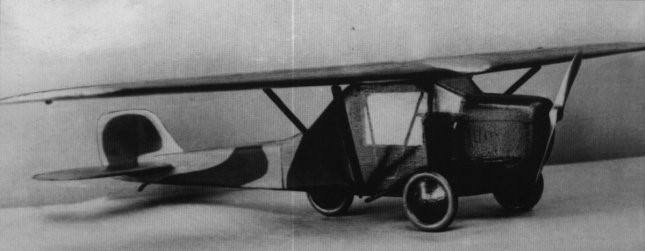
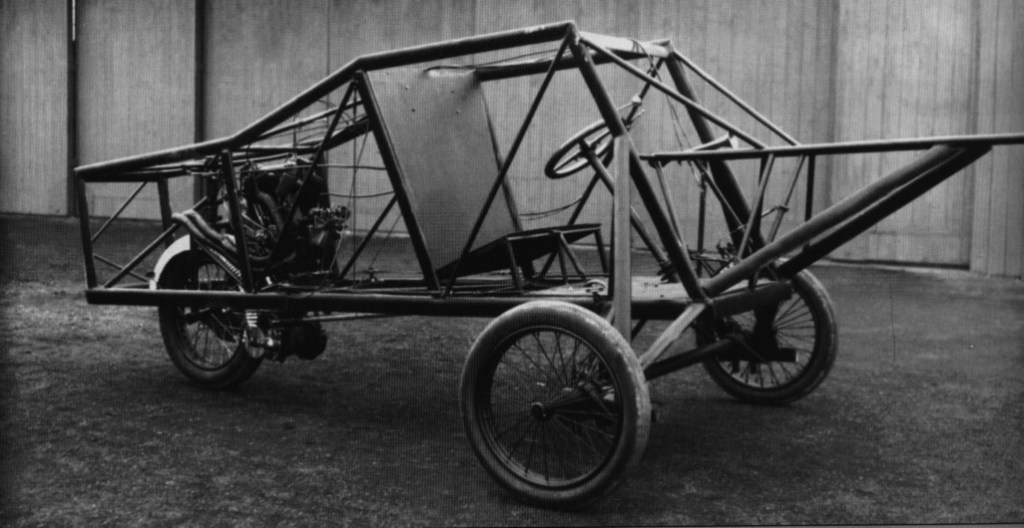
Stanisław Działowski developed the DKD-X “Aeromobil” car project during 1930-1931. The ”Aeromobil” took so much that he abandoned the implementation of previous projects. The plane was to serve as an air taxi or a liaison aircraft. In 1931, together with his brother Mieczysław Działowski, they started the construction of a three-wheeled self-propelled trolley constituting the traction part of the future aircraft, which, after detaching the back of the hull and wings, could move on the ground like a car. The construction of the trolley was completed in October 1932 and it was demonstrated on the streets of Krakow in October 1933.
In 1934, Stanisław Działowski developed an improved version of the DKD-X / 2 with a stronger engine with larger dimensions and wing surface, and a more aesthetic appearance. The funds for constructing the prototype were obtained from social contributions, emitting, among others, brick stamps, unfortunately the unit’s command expressed opposition, prohibiting this form of collecting funds. This forced the constructor to suspend work on advanced construction.
A two- or three-seater high-winged craft with mixed construction. The wings were double-spared, wooden, supported by V-braces, and folded for hanger and transport. The nose was covered with plywood, the remaining part with fabric.
The hull trolley was truss welded from steel pipes, covered with fabric. The front part of the fuselage contained a cabin with two seats next to each other, in the second version there was a third seat or place for a stretcher, it was covered with sheet metal. The back of the fuselage is removable from the trolley, was welded from steel pipes, covered with fabric.
A three-wheeled chassis provided with two steering wheels at the front and one wheel driven by gearboxes at the rear. The front wheels were fixed. During the flight, the wheel with the drive was to be concealed in the hull, and to move on the ground, extended to 1/3 of the height of the wheel. The rear wheel was driven by a separate small engine.
In the opinion of IBTL, it was stated that DKD-X will reach the calculated speed of 210 km / h, and only 140 km / h. This reduced the attractiveness of the offer. The severe illness that Stanisław Działowski later underwent pushed for an indefinite period of completion of construction.
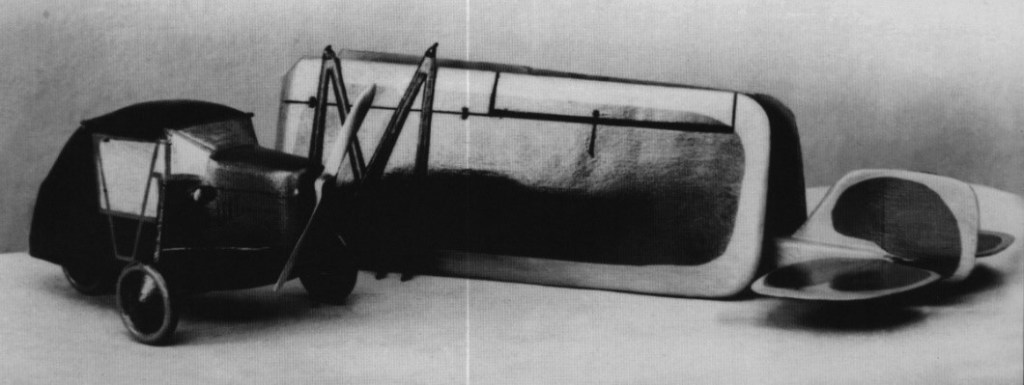
Being later the technical director of the LOPP Pilots School in Stanisławów, he worked on improving the structure, which was not finished before the war. In May and June 1938, the DKD-X / 2 hull was exhibited at the 1st National Air Show in Lviv.
DKD-X / 1
Engine: Napier Javelin, 110-125 kW (150-170 hp) + Moto Schakosch, 12 kW (16 HP)
Span: 9.00 m
Length: 6.80 m
Height: 1.70 m
Wing area: 16.00 m2
Empty weight: 380) kg
Payload: 220 kg
Total weight: 600 kg
Speed on the road: 40-45 km / h.
DKD-X / 2
Engine: 15 kW (20 HP) BMW wheel drive
Span: 12.95 m
Length: 7.45 m
Height: 1.73 m
Wing area: 211-25.00 m2
Empty weight: 450 kg
Total weight: 750-800 kg
Max speed: 210 km / h
Cruise speed: 180 km / h
Stall: 75 km / h
Speed on the road: 50 km / h.

