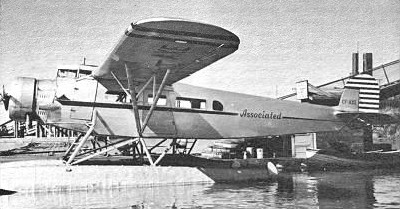
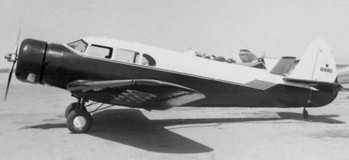
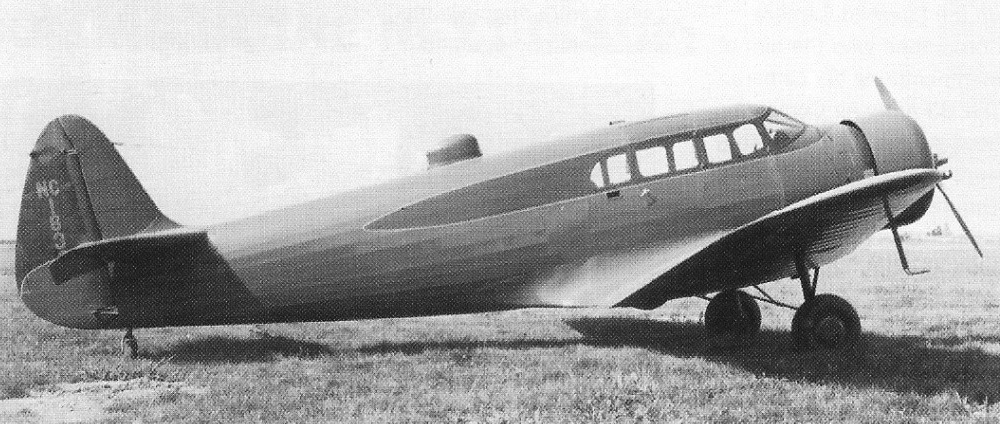
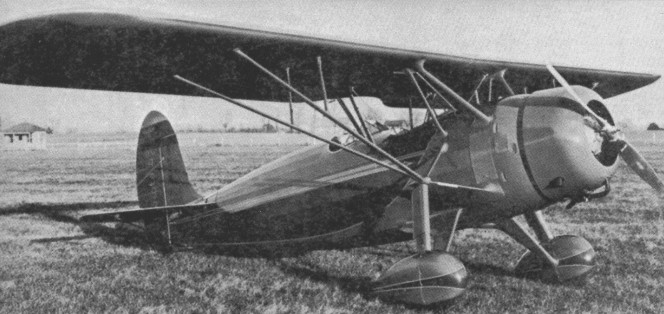
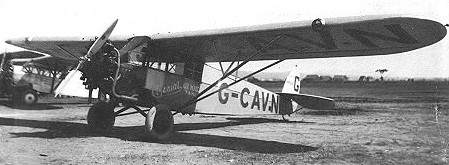
During 1935-36 Fairchild Aircraft Ltd in Canada continued development of the Super 71, leading to the larger ten-seat Fairchild 82, with a more conventional enclosed cockpit for two pilots, seated side by side forward of the wing giving much improved vision. It was a braced high-wing monoplane with a braced tail unit, tail-wheel landing gear (optionally replaceable by floats or skis) and powered by a Pratt & Whitney Wasp radial engine. Only about 12 Fairchild 82s were built, four were exported and the remainder operated by Canadian airlines.
Engine; 1 x Pratt & Whitney S3H1 Wasp, 410kW Max take-off weight; 2869 kg / 6325 lb Empty weight; 1630 kg / 3594 lb Wingspan; 15.54 m / 50 ft 12 in Length; 11.25 m / 36 ft 11 in Wing area; 31.86 sq.m / 342.94 sq ft Max. speed; 249 km/h / 155 mph Cruise speed; 227 km/h / 141 mph Ceiling; 5335 m / 17500 ft Range; 1054 km / 655 miles
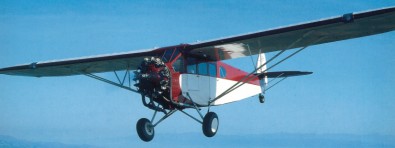
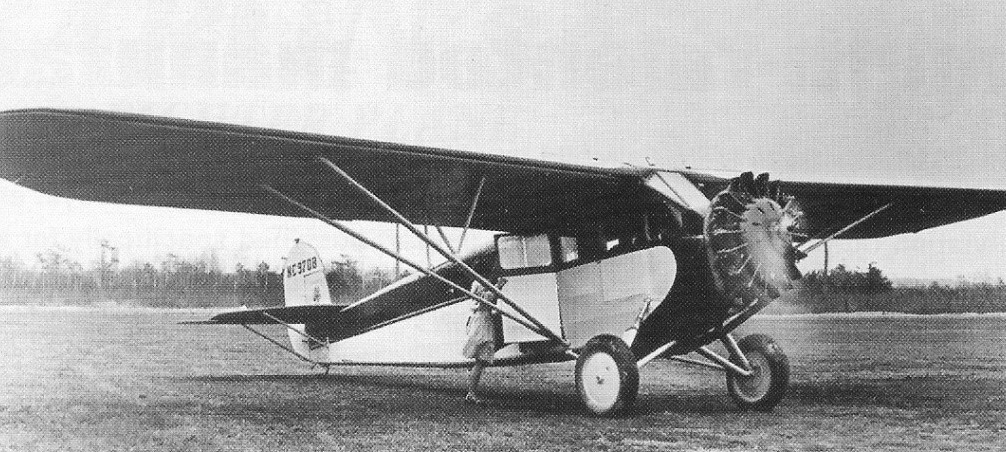
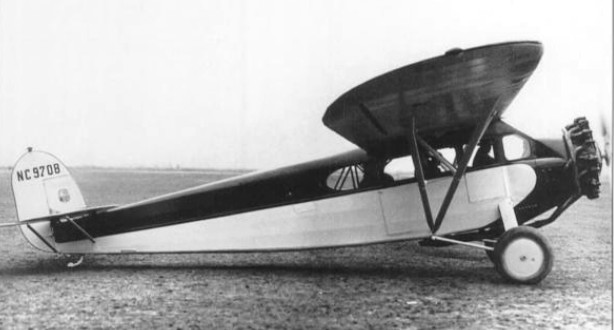
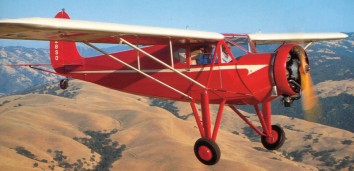
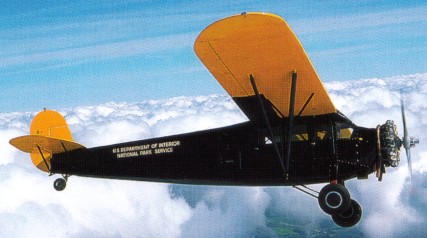
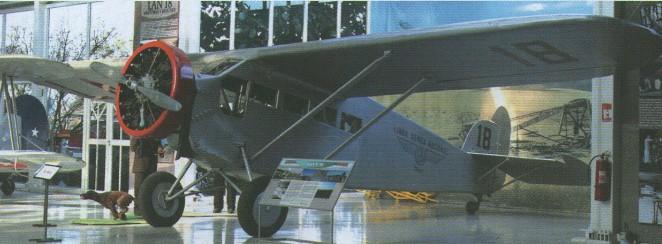
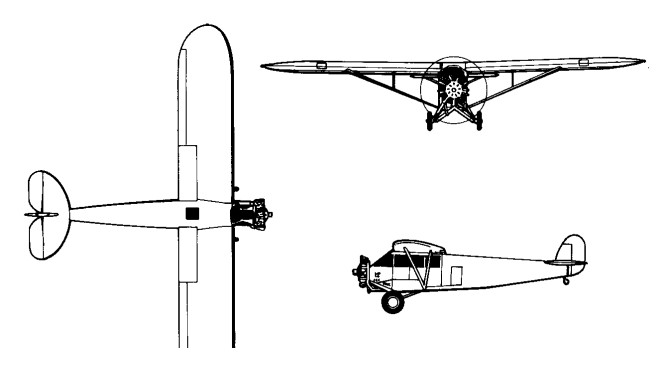
Basically an updated version of the Fairchild FC-2W2, the Fairchild 71 incorporated many improvements that resulted from experience with the FC-2 and its variants. Providing seating for a pilot and six passengers, it was powered by a 313kW Pratt & Whitney Wasp 9-cylinder radial engine. First flown in 1929, the Fairchild 71 was built in small numbers from 1929 until 1930, when it was replaced in production by the Fairchild 71A. This differed primarily by having a few degrees of sweepback on the wings, and it introduced a number of refinements to the interior. All Fairchild 71s are of mixed construction with wooden wings and steel-tube fuselage structures.
Though civil operators acquired most of the Fairchild 71s and 71As, the US Army acquired one for evaluation as a light transport under the designation XC-8; dedicated later for photographic work it was redesignated XF-1. Eight service-test aircraft were ordered under the designation YF-1, and all nine were later redesignated C-8. Six production Fairchild 71As were then bought by the US Army with the designation F-1A, later redesignated C-8A The US Navy also acquired a single example for service test under the designation XJ2Q-1, later redesignated R2Q-1.
In 1930 a Canadian branch of the company was established at Longueuil, Quebec, as Fairchild Aircraft Ltd. In addition to providing support for approximately 70 Fairchild aircraft operating in Canada, it began producing the Fairchild 71 for the Canadian Department of National Defence. These aircraft differed from standard by the removal of the features introduced for passenger comfort and were equipped specifically for aerial photography. A commercial Fairchild 71-C was built and marketed later and was available also as the Fairchild 71-CM with a metal-skinned fuselage.
In the mid-1930s Kreider-Reisner built the Fairchild 22 two-seat open-cockpit monoplane and the Fairchild 24 cabin type, also producing the Fairchild 71 amphibian.
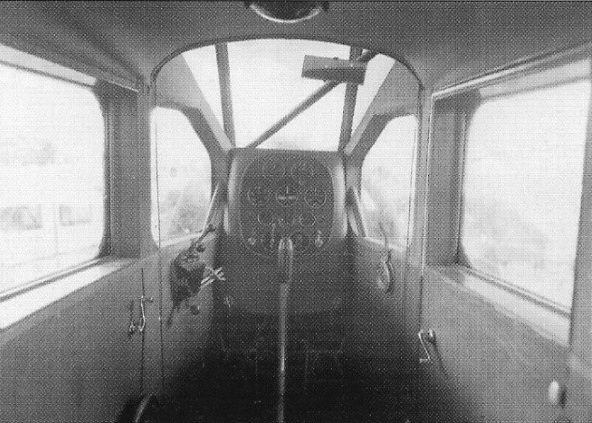
The model 71 could be readily fitted with floats, skis or wheels. Its standard range was between 750 and 800 nautical miles, depending on whether it was on floats or skis/wheels. Twenty one model 71s were built. With a view to meeting Canadian requirements for a freight carrier of greater capacity than the standard Fairchild 71, the Fairchild Super 71 floatplane was developed in 1934. Of slightly greater span, it had also a longer and entirely new oval-section fuselage of light alloy construction. The pilot was given a cockpit on the upper surface of the fuselage, to the rear of the 13-foot cabin, with a somewhat restricted forward view between the top of the fuselage and the undersurface of the wing. The cabin could accommodate eight passengers, but the seats were easily removable to create an uncluttered cargo space. Large cargo doors were inset in the port side of the cabin and a passenger door to starboard, the entire accommodation being heated and ventilated. Power was provided by a Pratt & Whitney Wasp radial engine enclosed completely in a low-drag cowling. In 1936, the Royal Canadian Air Force bought two the two Super 71Ps – a modified version fitted with a forward mounted cockpit – for use as photo-survey aircraft. They did not prove successful. One of them was destroyed in August 1937, and the second machine was struck off strength in April 1940.
71-C Engine: One Pratt & Whitney R 1340 1 Wasp, 420 hp. Prop: 2 blade. Wing span: 50 ft 0 in (15.24 m). Length: 32 ft 10 in (10.00 m) Height: 10 ft 6 in Wing area: 335 sq ft (31.12 sq.m). Gross weight: 5,500 lb (2495 kg). Max speed: 129 mph (208 km/h) at 5,000 ft (1525 m). Cruise: 95-100 kt. Landing speed: 55 mph Initial climb rate: 900 fpm Range: 900 miles (1,450 km). Service ceiling: 17,000 ft Accommodation: Crew of 1 / 6 passengers, or equivalent mail or freight load. Fuel capacity: 160 USgal
Super 71 Engine: 1 x Pratt & Whitney Wasp, 388kW Max take-off weight: 3175 kg / 7000 lb Empty weight: 1544 kg / 3404 lb Wingspan: 17.68 m / 58 ft 0 in Wing area: 36.24 sq.m / 390.08 sq ft Max. speed: 249 km/h / 155 mph Cruise speed: 209 km/h / 130 mph Range: 1314 km / 817 miles
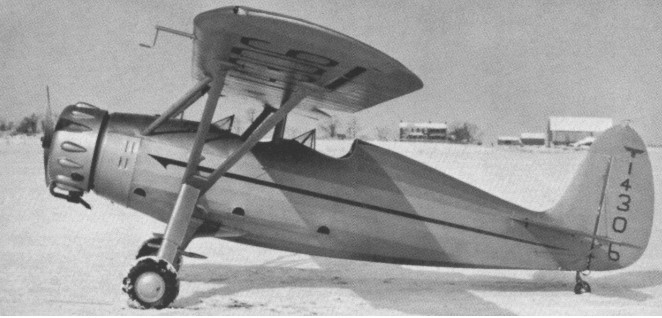
First introduced in 1936, the F-45 was a five-seat cabin monoplane intended as a high-performance personal transport aircraft. Primarily used as an executive aircraft, it was built with a mixed construction that made use of a fabric-covered steel-tube fuselage and a wooden outer wing section.
While the prototype was powered by a 220 hp Jacobs radial engine, subsequent production models received the 370 hp, seven-cylinder Wright Whirlwind radial engine. Many re-engined versions are still in active service powered by 450 hp Pratt & Whitney Wasp Juniors and 475 hp Wright Whirlwinds. Original Model 45s were capable of cruising at 164 mph at 75% power and 8,000 feet. Accommodations provided for two at the controls and three on a cross-seat in the back of the cab. A door on each side of the cabin made for easy entry.
Two Model 45-80 Sikanis were built, first flown 1937.
Engine: 370 hp Wright Whirlwind Gross weight: 4,000 lbs Empty weight: 2,474 lbs Fuel capacity: 90US gal Top speed: 170 mph Cruise speed: 164 mph Stall speed: 49 mph Initial climb rate: 1,140 fpm Range: 840 nm Service ceiling: 19,000 ft. Seats: 5
The mounting sales of the Fairchild 22 Model C7A induced the company to produce what was basically an enclosed cabin version of that aircraft. To achieve this, the configuration was changed to that of a braced high-wing monoplane, the resulting cabin seating two side-by-side. Other changes included the introduction of a tailwheel, and the initial Fairchild 24 Model C8 was powered by a 71kW A.C.E. Cirrus (licence-built) Hi-Ace 4-cyclinder inverted inline engine and first flew in 1932.
Fairchild’s 24R first appeared in 1939 and was produced for the civilian aircraft market until the United States entered World War II. Certificated during April 1932, only 10 examples of the basic Fairchild 24 Model C8 were produced.
The type certificate for the Fairchild 24 C8-A was issued on 1 September 1933. At least 25 examples of the C8-A were produced by the Kreider-Reisner Aircraft Co.
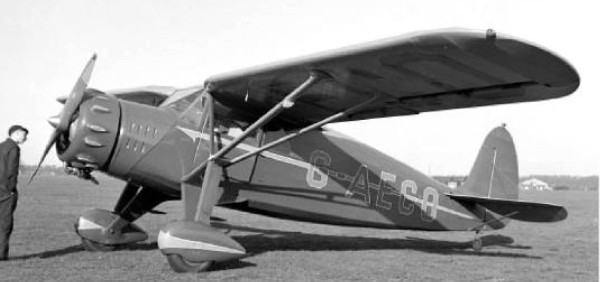
Fairchild 24 C.8C G-AECO – 8 March 1936
In 1937 production of the four-seat F-24J began. This was built with the 145 hp Warner Super-Scarab radial and the 165 hp Ranger R-690-D3 inline engines. In 1938, the similar Ranger-powered F-24K appeared to be followed in 1939 by the F-24R-0 with the Ranger engine and F-24W-9 with the Warner.
In 1941, the United States Army Air Force contracted for a utility transport and communications version Warner R-500-1 F-24W-41, to be known as the UC-61 Forwarder. Under Lend-Lease arrangements, of the 163 built, about 161 of these aircraft served with the Royal Air Force and the Air Transport Auxiliary (ATA) ferry organisation, under the name Argus. The Argus I had a 145 hp Warner Super Scarab engine; the Argus II had a 165 hp Super Scarab engine, and the Argus III had a 175 hp inverted in-line engine.
The UC-61A was similar, the USAAF retaining 148 of the 412 built.
UC-61A
As an innovative concept, the aircraft was available with two powerplants, Warner’s Scarab and Fairchild’s in-house 200 hp Ranger series in the F24 C8D, E and F. Initially the 1932 model Fairchild 24 C8B used a Warner 125 hp radial engine, and the Fairchild 24 C8C used the Warner 145 hp radial. American Cirrus III and Menasco Pirate inline engines were also occasionally used in some earlier Fairchild 24s. Later models such as the 24Ws upgraded to the 165 hp Warner Super Scarab.
1934 Fairchild F 24C-8-C 145hp Warner
In 1942, production of the F-24R was shifted to a military version, which was designated UC-61K. The F-24R is equipped with a 175 hp, six-cylinder, air-cooled Ranger engine that delivers a near 120 mph cruise speed for more than 600 miles. Other versions of the F-24 were powered by a 145 hp or 165 hp Warner Super Scarab radial, 200 hp inline Ranger and 450 hp Pratt & Whitney Wasp Junior.
Temco built the 24-R46 and 24-W46 versions of the Fairchild 24-R9 and 24-W9.
Turns while taxiing are accomplished through the use of a steerable tailwheel and construction of the F-24 is a steel-tube fuselage, heavily faired to shape with formers and spruce longerons. Wings are 66 inch chord, wooden with fabric covering. Most variants were available with optional float or ski landing gear. The Army’s World War II version, the UC 61. Twenty-nine Fairchild 24K ‘short nosed” 24s were delivered with 165 horsepower Rangers.
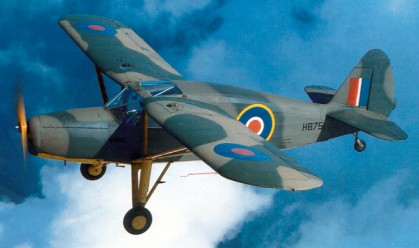
Fairchild 24R Argus III
Production of the commercial models F-24W-46 and F-24R-46 was resumed after the war.
1934 Fairchild F 24C-8-C Engine: 145hp Warner Cruise speed: 100 mph Fuel burn: approx 36 l/hr
24 C8F Ranger
24-G Engine; 1 x Warner Super Scarab 50, 108kW Max take-off weight; 1089 kg / 2401 lb Empty weight; 669 kg / 1475 lb Wingspan; 11.07 m / 36 ft 4 in Length; 7.26 m / 23 ft 10 in Height; 2.24 m / 7 ft 4 in Wing area; 16.09 sq.m / 173.19 sq ft Max. speed; 209 km/h / 130 mph Cruise speed; 190 km/h / 118 mph Ceiling; 5030 m / 16500 ft Range; 764 km / 475 miles
24K Engine: Ranger, 165 hp.
24 R40 Engine: Ranger, 165 hp
F-24W Engine; 1 x Warner
24 W40 Engine: Warner Super Scarab, 145 hp
Fairchild 24 W41 Argus Engine: Warner Super Scarab, 145 hp Wingspan : 36.319 ft / 11.07 m Wing area : 173.193 sqft / 16.09 sqm Length: 23.819 ft / 7.26 m Height: 7.349 ft / 2.24 m Max take off weight : 2401.2 lb / 1089.0 kg Weight empty : 1475.1 lb / 669.0 kg Wing load : 13.94 lb/sq.ft / 68.00 kg/sq.m Top speed: 145 mph Cruise: 125 mph Range: 720 mi Service ceiling: 16,000 ft
24 W41A / C-61 Engine: Warner Super Scarab, 145 hp
C-61 Argus Wingspan: 36ft. Engine: Ranger, 175 hp Gross wt: 2,562 lb Empty wt: 1,863 lb Wing area: 193.6 sq.ft Wing loading: 14.7 lb/sq.ft. Dihedral: 2.5 degree. Airfoil: N 2. Tread: 9 feet, 3 in. Elevator span: 12 feet, 15/8 in. Cruise: 105-120 mph. ROC: 750 fpm. Useful load: 699 lb. Fuel cap: 60 USG. Vmax: 133mph. Vne: 185 mph. Vs (clean): 57mph Vs full flap: 53mph. Takeoff to 50 ft: 1,100 ft. Landing 50ft: 1,000. Range: 600 mile. Ceiling: 14,000 ft.
Engine: 145 hp Warner Scarab Gross weight: 1,750 lbs Empty weight: 1,102 lb Top speed: 133 mph Cruise speed: 115 mph Initial climb rate: 900 fpm Service ceiling: 20,000 ft Range 350 nm Seats: 2
Argus II Engine: 165 hp Warner R-500 Super-Scarab 165 Wingspan: 36 ft 4 in Length: 23 ft 9 in Height: 7 ft 7.5 in Wing area: 193.3 in Empty weight: 1613 lb Loaded weight: 2562 lb Max speed: 132 mph Cruise 75%: 117 mph ROC: 700 fpm Range: 640 mi
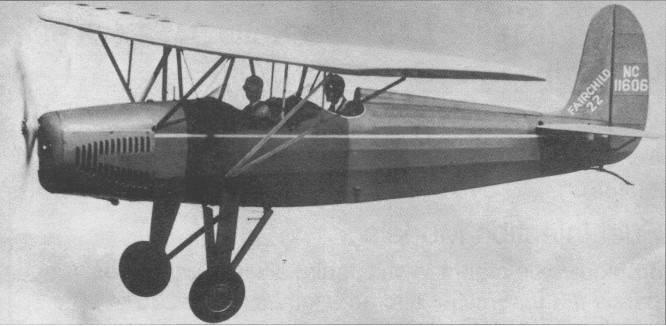
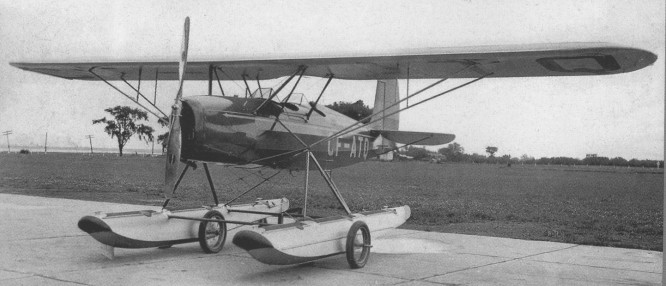
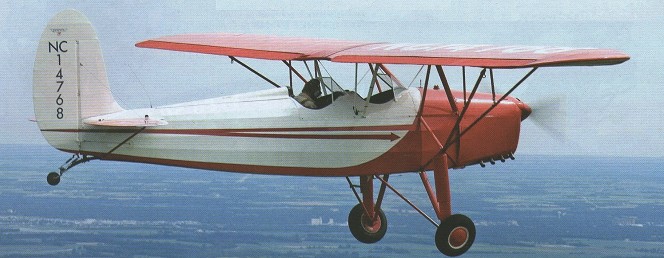
The Kreider-Reisner Division of Fairchild produced this tandem two-seat parasol monoplane in 1931. The F 22 was a parasol winged monoplane, generally being cheaper to build and therefore to buy, even if performance was sacrificed for economy.
The prototype of the new model C-7, X783W, was initially powered by the 80 hp Armstrong Siddeley Genet engine before this was replaced by the inline 75 hp Rover engine, complemented by, a more aerodynamic tail group.
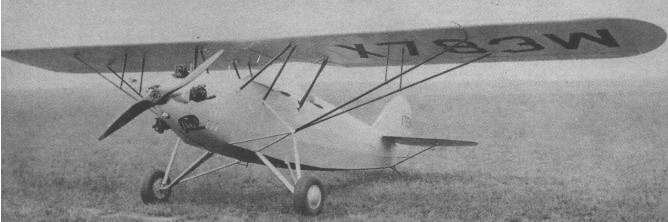
Fairchild F 22 C7A, NC11000 powered by the 75hp Rover
The basic aircraft featured a fabric covered, welded steel tube, truss type fuselage which accommodated a tandem seating arrangement with provision for dual controls. The slender wing featured two spruce spars and truss type ribs and was braced internally with steel tie rods. External bracing was accomplished with sloping Vee streamlined steel struts to the apices of the two steel tube pyramids on the sides of the fuselage, to which were attached the legs of the fixed undercarriage. The Rover engine in the C-7 produced a reasonable performance. Maximum speed was 107 mph (172 km/h), ceiling 10,000 ft (3048 m) and range 350 miles (563km or 4 hours flying time). 12 examples were built at the Fairchild Aviation Corp, Hagerstown, MD and they remained popular even with the advent of the more powerful examples.
The C-7A was the first to improve the power of the F 22 and was fitted with a Cirrus Hi-Drive 4 cylinder inverted inline engine, built under licence from Cirrus Aero Engines at Croydon. It provided 20 hp more than its predecessor without altering the lines of the type, and began production during 1935. Several were exported offshore and the aircraft was further developed as a seaplane. Around 60 examples being manufactured fitted with Edo floats, a metal propeller, hand crank-inertia engine starter and navigation lights.
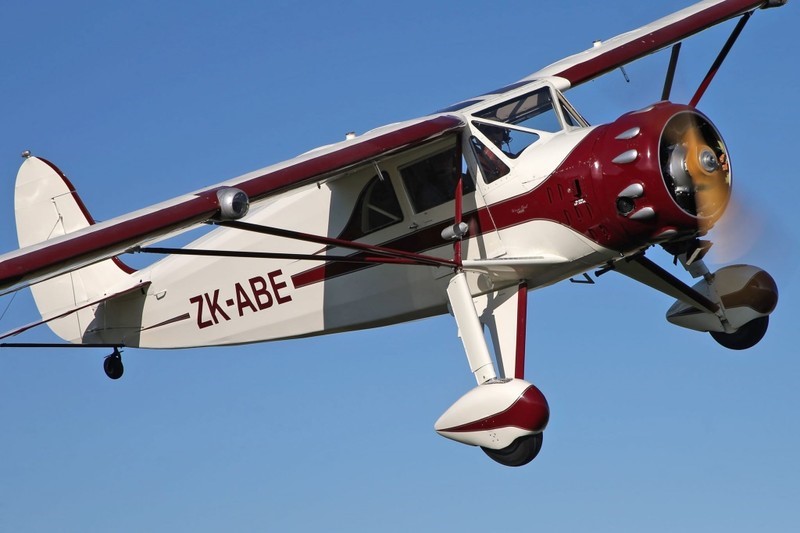
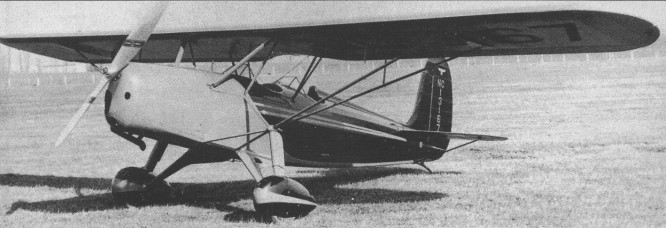
The G7B was specially developed for the more strenuous requirements of the advanced pilot and was powered by the new 4 cylinder ‘Pirate’ inverted inline which produced 125 hp for a maximum speed of 125 mph (201 kph), a ceiling of 18,000ft (5486 m) and a range of some 400 miles (644 kms). Price was still reasonable at US$3,400 from the factory. There were a few refinements over the C-7A – these including streamlined ‘sport type’ landing gear, bucket seats fitted for a parachute pack and the instrument panels were mounted on rubber. The optional one or two piece wing was now fitted with a leading edge spoiler strip to eliminate float and provided a stall warning as a useful bonus. The wing has I box spars and 14 ribs each, with the same plan shape and profile as the F 24, and a 66 inch chord.
F 22C-7B, Menasco Pirate 172 hp
Only one example of the C-7C was built, in 1933, powered by a Wright-Gipsy L-320 engine with a 21 USG fuel tank, for operation in Canada before the C-7D was introduced.
The F22-C7B was powered by a Menasco 125 Super Pirate engine.
F22 C7-D Wright-Gypsy 90 hp
Built during the depression the D model was introduced as the cheapest model available. The C-7D was powered by the 4 cylinder Wright-Gipsy 90 hp upright engine. This necessitated a subtle redesign of the cowl, it being higher in front of the cockpit. Maximum speed was 112 mph (180 kp h) and it had a cruising range, using 6 gallons per hour, of 320 miles (515 km). 21 were manufactured, priced at US$ 2,475 from the factory.
F22 C7DM
The fitting of the 125 hp Warner Scarab radial engine began with the C-7E and his changed the profile considerably with the fuselage contoured to match the frontal profile of the radial. Around a dozen being built.
F22 C7E
The engine was replaced with the improved ‘Super Scarab’ of 145 hp on the C7F. It is thought that only around nine examples were completed.
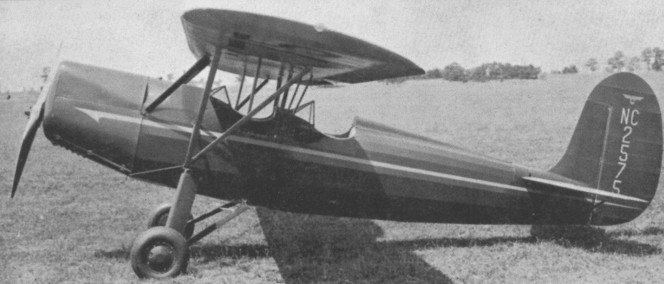
With pilots requests for engine starters (rather than propping by hand), radios and other comforts,’ Fairchild designed the 22C7G to accommodate this and still remain true to the sport plane ethos. This model featured a completely new wing, which not only supported the greater weight of the aircraft, but enhanced manoeuvrability and had the strength to withstand unrestricted acrobatics. Strutted together into several rigid sections the slightly contoured fuselage was very strong, and the whole airframe was capable of + 11G and –9G.
F22 C7G
The aircraft had an acceptable but unspectacular performance, attaining a maximum speed of 135 mph (217 km/h), a service ceiling of 16,000 feet (4877 m) and cruising range of 500 miles (804 km).
Production of the F 22 struggled through until the end of the Depression, with the market beginning to improve potential customers turned their attention toward higher performance machines and the comfort of enclosed cockpits. This spelt the end for the F 22, production halting after 127 of all models were built. Fairchild then turned its attention the Fairchild F 24.
C-7 Prototype X783W Engine: 80 hp Armstrong Siddeley Genet
F 22 C7A Engine: 75hp Rover Maximum speed: 107 mph (172 km/h) Ceiling: 10,000 ft (3048 m) Range 350 miles (563km) Endurance: 4 hr
F-22 C7A Engine: American Cirrus Hi-Drive, 95 hp
F-22 C7B Engine: Menasco 125 Pirate, 172 hp Maximum speed: 125 mph (201 kph) Ceiling: 18,000ft (5486 m) Range: 400 miles (644 kms) Price: US$3,400
F 22C7C Engine: Wright-Gipsy L-320 Fuel capacity: 21 USG
F22-C7D Engine; Wright-Gipsy L-320, 90 hp Wing span; 32 ft 10 in Length; 21 ft 8 in Maximum speed: 112 mph (180 kp h) Load; 558 lb Fuel capacity; 21 USG Cruising range: 320 miles (515 km) Fuel burn: 6 USGPH ATC 503 Priced: US$ 2,475
F22 C-7E Engine: 125 hp Warner Scarab Wing span: 32 ft 10 in Length: 22 ft Height: 8 ft Empty weight: 1102 lb Loaded weight: 1750 lb Max speed: 128 mph Cruise: 110 mph ROC: 700 fpm Service ceiling: 18,000 ft Range: 50 mi
F22 C7F Engine: Warner Super Scarab, 145 hp Gross weight: 1,750 lbs Empty weight: 1,102 lb Top speed: 133 mph Cruise speed: 115 mph Initial climb rate: 900 fpm Service ceiling: 20,000 ft Range: 350 nm Seats: 2
22C7G Load limits: + 11G / –9G Maximum speed: 135 mph (217 km/h) Service ceiling: 16,000 feet (4877 m) Cruising range: 500 miles (804 km).
Previously the Kreider-Reisner C-4 Challenger of 1929. Construction was of welded steel tube.
Two were built, NC567K and NC11607A.
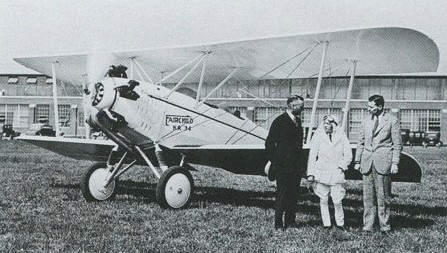
The KR-34B built in 1928 and early 1929 was a single engine, open cockpit, two-bay version carrying a pilot and two passengers, with a 130 hp Comet engine. Several examples were built.
One KR 34B2 was built, NC205E, in 1934. It uses a Continental A70 engine of 165 hp. NC205E was owned by David Carpenter in 2017.
KR-34A Engine: Wright J-6 Whirlwind, 165 hp Propeller: two-bladed fixed pitch Wingspan:: 9,17 m Length: 7,06 m Height: 2,82 m Wing area: 26,48 sq.m Empty weight: 690 kg MTOW: 1075 kg Wing loading: 40,596 kg/sq.m Power loading: 6,515 kg/hp Max speed: 193 kmh Cruise speed: 164 kmh Ceiling: 4265 m Range: 820 km.
KR-34B Engine: Wright J-6 Whirlwind, 130 hp Weight: 485 kg Max speed: 193 km/h Cruise: 164 km/h Stall: 72 km/h Ceiling: 5029 m Range: 820 km Seats: 3
In the early 1920s Sherman Fairchild designed what he considered to be an ideal aircraft for aerial photography and survey. Tenders for construction of a number of these aircraft was prohibitive so Fairchild acquired premises at Farmingdale, Long Island, to build them ‘in house’. The FC-1 was built in Farmingdale, Long Island, New York, and towed 12 miles by truck to Rooservelt Field, where it first flew.
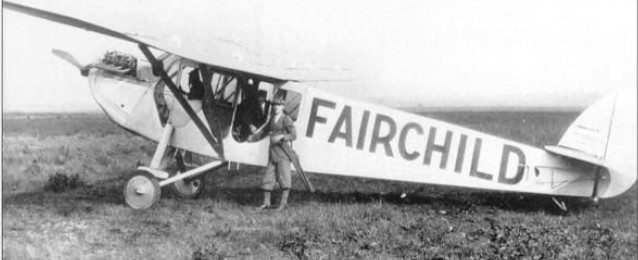
As first flown in mid-1926, the Fairchild FC-1 was of braced high-wing monoplane configuration, with a wing that could be folded for storage, a braced tail unit, tailskid landing gear and power provided by a 67kW Curtiss OX-5 8-cylinder Vee engine. The fuselage had an enclosed-cabin for a pilot and one or two passengers, and there were ample windows and ports for easy use of cameras. The FC-1 received publicity in 1926’s Ford National Air Tour of the US, flying at an average speed of 90.3 mph. Richard H. Depew flew this first FC-1, carrying Corydon M. Johnson as a passenger. It finished 18th out of a field of 25 aircraft in a tour that began at Ford’s Dearborn Airport near Detroit, Michigan, and covrered 2585 miles.
After extensive testing during 1926, the FC-1 was re-engined with a 149kW Wright J-4 Whirlwind 9-cylinder radial engine, being redesignated FC-1A.
Further tests followed into 1927 and a decision was made to put the aircraft into production for general sales under the designation FC-2. This version differed by having increased cabin volume to seat a pilot plus four passengers, and a Wright J-5 Whirlwind engine (standard) or Curtiss C-6 engine (optional). FC-2s were also available with float or ski landing gear. Fairchild created the six passenger FC-2W 2. One, the Stars and Stripes, was used by Richard Byrd in his 1928 Antarctic Expedition.
FC-2W-2
A total of 56 FC-2s were built over an eight-month period from 1 June 1927.
The FC-2C was the first aircraft to be equipped with brakes and hydraulically operated landing gear.
FC-2 Engine; 1 x Wright J-5 Whirlwind 9-cylinder radial, 149kW / 225 h.p. Take-off weight; 1633 kg / 3600 lb Empty weight; 980 kg / 2161 lb Wingspan; 13.41 m / 43 ft 12 in Length; 9.45 m / 31 ft 0 in Height; 2.74 m / 8 ft 12 in Wing area; 26.94 sq.m / 289.98 sq ft Max. Speed; 196 km/h / 122 mph Cruise speed; 169 km/h / 105 mph Ceiling; 3505 m / 11500 ft Range; 1127 km / 700 miles
FC-1A Engine: Wright J-4, 200 hp Top speed: 120 mph
As a result of the recognition achieved with the KRA Midget, Kreider-Reisner began manufacturing the Challenger, which became a popular sport plane in the 1920s. In the Spring of 1929, Fairchild acquired 82% of the common stock in Kreider-Reisner, making the Hagerstown company a subsidary of the Fairchild Aviation Corporation, which eventually became Fairchild Aircraft Company.
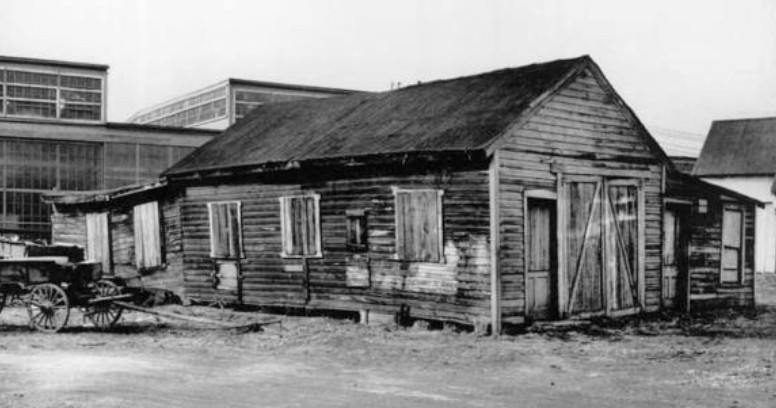
The “Little Green Shed” off Pennsylvania Avenue in Hagerstown was part of the original Kreider-Reisner factory complex.
Sherman Fairchild founded Fairchild Airplane Manufacturing Corporation in 1925. Changed to Fairchild Aviation Corporation in 1929 with premises at Lonqueil, Quebec, and the parent company withdrew manufacturing license from Canadian Vickers. When The Aviation Corporation acquired a controlling interest.
Sherman Fairchild withdrew in 1931, retaining a subsidiary, Kreider-Reisner Corporation, Hagerstown, Maryland, which was renamed Fairchild Aircraft Corporation in 1935. This became Fairchild Aircraft Division, Fairchild Engine and Airplane Corporation, in 1939; Fairchild Stratos Corporation in 1961. Fairchild Hiller Corporation in 1964 on acquisition of Hiller Aircraft Company.
In 1964 Fairchild-Stratos Corp purchased Hiller Aircraft with cash, not stock transactions. Hiller capabilities fitted into one of Fairchild’s primary goals – vertical takeoff and landing aircraft. The Hiller plant was to remain in Palo Alto.
Acquiring Republic Aviation Corporation in September 1965 and this becoming the Republic Aviation Division of Fairchild Hiller Corporation and, later, the Fairchild Republic Company division of Fairchild Industries; Fairchild Industries Inc in 1971 (acquired 90 percent interest in Swearingen Aviation Corporation in November 1971, which became Fairchild Aircraft Corporation in 1982). Metro Aviation, with 97 percent shareholding in Fairchild Aircraft Corporation, sold by Fairchild Industries to GMF Investments, but in 1990 Fairchild Aircraft filed for bankruptcy protection and was sold to Fairchild Acquisition Incorporated that year. The name for producer of Metro, Merlin, and Expediter series of twin-turboprop commuter airliner, executive transport and freighter aircraft (plus MMSA multi-mission surveillance aircraft variant of Metro 23) became Fairchild Aircraft Incorporated. Finally, in June 1996 parent company Fairchild Aerospace bought 80% of the German manufacturer Dornier Luftfahrt from Daimler-Benz Aerospace, resulting in Fairchild Aerospace owning all of the renamed Fairchild Dornier U.S.A. Fairchild Aircraft Incorporated and 80% of Fairchild Dornier Germany Dornier Luftfahrt GmbH.
Fairchild built FC-1, FC-2 and Model 71 lightplanes 1925-1931. Continued production of Kreider-Reisner Model 24C8, later supplied in four-seat version as USAAF UC-61 Forwarder and as RAF Argus. M-62 Cornell trainer introduced 1940 with variety of engines. Wartime production was Bristol Bolingbroke for RCAF, and 300 Curtiss Helldivers for U.S. Navy 1943-1945. AT-21 gunnery trainer entered production in 1942. C-82 Packet twinboom cargo/troop transport flown September 1944; superseded by developed C-119, first flown November 1947. In the early 1950s, the number of Fairchild employees reached approximately 10,000 who built 1112 C-119s between 1948 and 1952. Manufactured 326 C-123 Providers 1954-1958, designed by Chase Aircraft. License-production of Fokker F-27/FH- 227 airliner began 1957; 205 built. Hiller UH-12 and H-1100 helicopters continued in production after acquisition of Hiller company. Production of Pilatus Turbo-Porters begun June 1966; 15 of COIN version delivered to USAF as AU-23A Peacemaker, transferred to Royal Thai Air Force. In 1967 work initiated on 52 USAF AC-119 gunships. Contracts awarded after acquisition of Republic for weapons delivery enhancement of F-105 Thunderchief, subcontract assemblies for McDonnell Douglas F-4, Boeing 747.
In 1964 Fairchild-Stratos Corp purchased Hiller Aircraft with cash, not stock transactions. Hiller capabilities fitted into one of Fairchild’s primary goals – vertical takeoff and landing aircraft. The Hiller plant was to remain in Palo Alto.
Won USAF A-X competition for close-support aircraft, prototype YA-10A flown 10 May 1972; production of A- 10A Thunderbolt II ended 1984 after 713 built, and were in U.S. service in A-10A attack and OA-10A forward air control variants with the USAF, Air National Guard and Air Force. Main feature of A-10A is nose-mounted GAU-8/A Avenger 30 mm seven-barrel cannon with 1,174 rounds of armor-piercing ammunition. Also manufactured wings for Merlin and Metro twin-turboprop aircraft.