Farman F.301

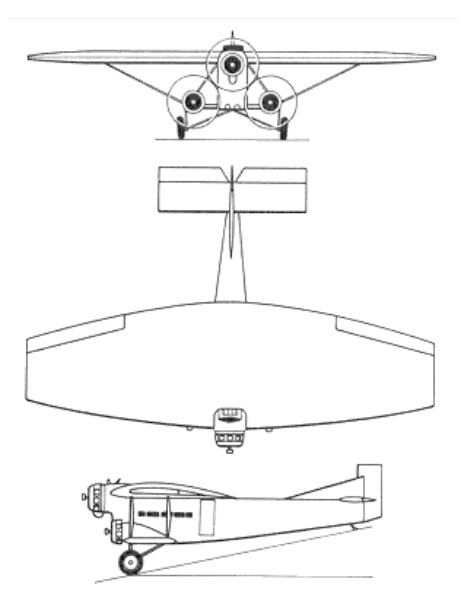
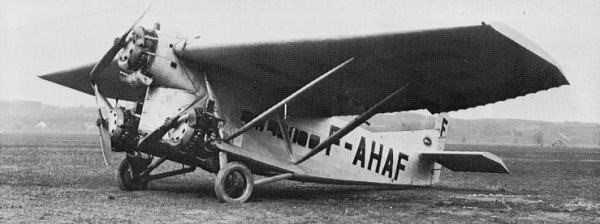
The Farman F.280 was a three engine, cantilever wing monoplane designed in France as a mail carrier in the early 1930s. The F.280 was the response to a program that aircraft to fly on two engines, without descending to an altitude equal to or greater than 1 000 m, while bearing 300 kg of mail and maintaining a speed of 145 km / h. Underpowered and slow, only two were built and briefly used.
The F.280 used an F.190 wing, though, modified to carry two of the F.280’s three engines on its upper surface; its span of 14.38 m (47 ft 2 in) made it a smaller aircraft than the near contemporary three engined F.300.
Structurally, the wing was built around two spars. Over most of the span the wings had parallel chord but the outermost section, where the ailerons were carried, tapered to straight tips. A pair of parallel aluminium struts inside streamlined spruce fairings took lift and drag loads to the lower fuselage longerons. There were additional vertical struts, small ones as on the F.190 but more sturdy ones under the outboard engines. The empennage of the F.280 was also similar to that of the F.190, with a double strutted rectangular tailplane carrying separate elevators, with a rudder cut-out between them. This deep rudder, tabbed and horn balanced was likewise square edged, mounted on a very wide chord, shallow, straight edged fin.
The F.280 had a flat sided fuselage with the pilot’s cabin under the wing, the windscreen just forward of the wings, with the third engine mounted in the nose. Square windows lit the interior. The conventional undercarriage had main legs attached vertically to the forward wing struts as extensions of the struts between the latter and the engines and with slimmer bracing to the upper fuselage longerons. Spilt axles hinged at the lower fuselage centre and radius arms from the lower longerons took the longitudinal loads. The single mainwheels were spatted.
The F.280 flew for the first time in February 1931, piloted by Jean Liron. With one of its three engines out, it could maintain altitude at 1,000 m and 145 km/h, carrying a load of 300 kg. It was slow to climb to 300 m, though, so in August 1932 the Salmson radials were replaced by the newer Renault 4Pb, aircooled, inline engines. These produced the same power but turned faster, and the resulting model F.281 was 40 kg (88 lb) lighter.
In October1932, the aircraft ended its tests, have demonstrated a speed of 182 km / h at 2000 m above sea level and 800 km range with a payload of 400 kg and 550 lt of fuel. It took off in 250 m and stops in 185 m. At full load, with a stopped engine, it climbs from 1350 m to 1750 m altitude. It achives in the first series an hour flight to 1000 meters with one engine stopped.
It was purchased by SGTA as a night mail carrier and delivered on 26th October 1932 and was tested on the Paris-Berlin route, which connected via Cologne to Sweden. Journey time was 4 h 55 min.
In mid-1933 several airlines, SGTA amongst them, joined together to form Air France. The F.280 flew little if at all with the new organisation; by 31 April 1935 it had only logged 24 hours of flight, with just 4 hours since January 1933. It never received a route certificate and was always too slow but it was used to investigate aspects of the continental network. It was equipped with dual controls to serve at the PSV for training of Air France pilots.
In the hope of higher speeds Farman built a second F.280 series aircraft, the F.282, which had 105 kW (140 hp) Renault 4Pei Bengali engines, inverted and uprated versions of those of the F.281. Despite the extra power, maximum speed was only increased by 10 km/h (6 mph). It was tested by the Société Central pour l’Exploitataion de Lignes Aériennes in July 1933, who found it precise to fly but still underpowered. As a result no more F.280 series were built and development of the two existing machines ceased. Records from Air France show the F.282 as still on their books in December 1934, but says nothing of its use.
Variants:
F.280
3×Salmson 7Ac 7-cylinder radial engines, 70 kW (95 hp) each: 1 only (F-ALKR).
F.281
3×Renault 4Pb 4-cylinder upright aircooled inline engines 70 kW (95 hp): F-ALKR re-engined August 1932.
F.282
3×Renault 4Pei Bengali 4-cylinder inverted aircooled inline engines 105 kW (140 hp): 1 only.
Specifications:
F.280
Engines: 3 × Salmson 7Ac, 71 kW (95 hp)
Propellers: 2-bladed
Length: 10.50 m (34 ft 5 in)
Wingspan: 14.38 m (47 ft 2 in)
Height: 3.10 m (10 ft 2 in)
Wing area: 40.20 m2 (432.7 sq ft)
Empty weight: 1,360 kg (2,998 lb)
Gross weight: 2,240 kg (4,938 lb)
Maximum speed: 220 km/h (137 mph; 119 kn)
Range: 575 km (357 mi; 310 nmi)
Service ceiling: 5,000 m (16,404 ft)
Crew: 3
F.281
Engines: 3 x Renault 4PB, 95 hp
Wingspan: 14.38 m
Wing area: 40.20 sq.m
Height: 3.65 m
Length: 10.50 m
Empty weight: 1321 kg
Total weight: 2200 kg
Max speed: 230 kph
Ceiling: 5000 m
Range: 575 km
Crew: 3

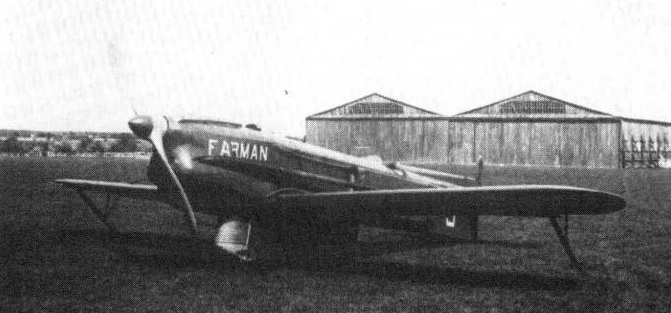

The Farman F.230 and its derivatives were a family of light touring aircraft first flown in France in 1930. They were low-wing cantilever monoplanes of conventional configuration, with fixed tailskid undercarriage and two open cockpits in tandem. The thick-section wing used on these designs was a distinguishing feature.
During the course of the 1930s decade, aircraft of this family held various world records in their class for speed, altitude, duration, and distance; the F.356 model alone held no fewer than 18 such records.
Typical of these exploits was Marcel Lalouette and Jean de Permangle’s long-distance flight on 12 January 1931, where they flew an F.231 from Istres, France, to Villa Cisneros, in colonial West Africa during which they covered 2,700 km (1,690 mi) in 22 hours and set a new distance record. In another feat, Jean Réginensi and André Bailly set three world airspeed records in October 1933 (over 100 km, 500 km, and 1,000 km) flying a F.239.
A Farman F.231 was featured in the Cigars of the Pharaoh, the fourth volume of The Adventures of Tintin comics series by Belgian cartoonist Hergé.
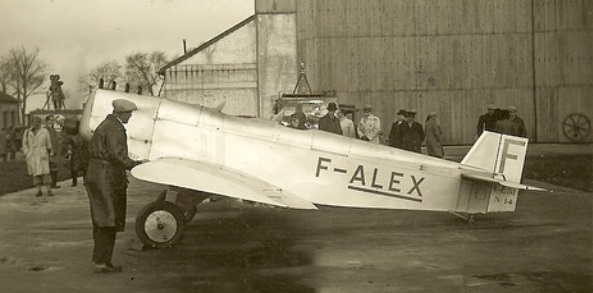
One of the first version with the Salmson 9ad 40 hp engine was flown by the then famous French aviator Lena Bernstein.
One of the F.231 flown by Marcel and Jean de Lalouett Permangl on January 12, 1931 broke the world distance record by flying 2700 km in 22 hours.
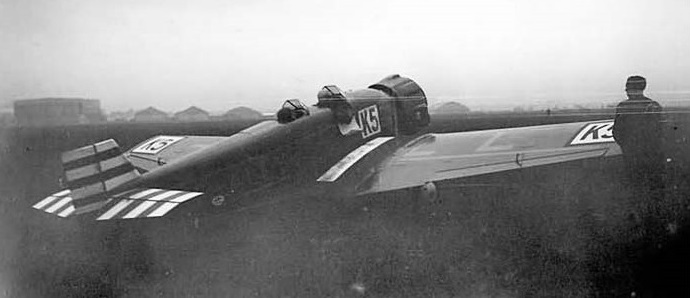
A float equipped F.231 crashed in 1931 while trying to break the world record and the F.239 (1 Pobjoy R) piloted by Jean Redzhinensi and Andre Baylli, set three world speed records for light aircraft.
The Spanish Republican Air Force operated F.354.

Variants:
F.230 – initial version with Salmson 9Ad engine, (11 built)
F.230bis – conversion of F.230 (1 converted)
F.231 – version with Renault 4Pb engine (47 built)
F.231bis – seaplane version of F.231 (1 converted)
F.232 – version with Michel IV-AT3 engine (4 built)
F.233 – version with de Havilland Gipsy I engine (1 built)
F.234 – version with Salmson 7Ac engine (16 built)
F.235 – version with Hispano-Suiza 6Pa engine (1 built)
F.236 – version with Salmson 9Ad engine (4 built)
F.237 – similar to the F.235, but powered by a 100-hp (75-kW) Renault engine.
F.238 – version with de Havilland Gipsy III engine (1 built)
F.239 – version with Pobjoy R engine (1 built)
F.350 – version with Renault 4Pb engine (2 built, plus 4 converted from F.231)
F.351 – version with Renault 4Pb engine and enclosed cabin (1 built, plus 1 converted from F.231)
F.352 – version with Salmson 7Ac engine (1 built, plus 1 converted from F.234)
F.352H – seaplane version of F.352 (1 built, plus 1 converted from F.234)
F.353 – version with de Havilland Gipsy III engine (1 built)
F.354 – version with de Havilland Gipsy I engine (1 built)
F.355 – version with Renault 4Pdi engine (1 built)
F.356 – version with Renault 4Pc engine (1 built)
F.357 – version with Renault 4Pdi engine (1 built)
F.358 – version with Hispano-Suiza 6Pa engine (1 built)
F.359 – version with de Havilland Gipsy III engine (1 built)
F.360 – version with Salmson 9Ad engine (1 built)
F.361 – version with Salmson 9Adr engine (2 converted from F.236)
Specifications:
F.230
Engine: Salmson 9Ad , 40 hp
Wingspan: 10.8 m
Length: 5.58 m
Take-off weight: 445 kg
Top speed: 150 km / h
Range: 450 km
F.230bis
Engine: Salmson 9Ad , 40 hp
Wingspan: 10.31 m
F.231
Engine: 1 × Renault 4Pb, 71 kW (95 hp)
Length: 6.13 m (20 ft 1 in)
Wingspan: 9.14 m (30 ft 0 in)
Height: 2.13 m (7 ft 0 in)
Wing area: 15.8 m2 (170 ft2)
Empty weight: 411 kg (906 lb)
Gross weight: 678 kg (1,495 lb)
Maximum speed: 186 km/h (116 mph)
Range: 450 km (280 miles)
Service ceiling: 5,000 m (16,400 ft)
Crew: One pilot
Capacity: 1 passenger
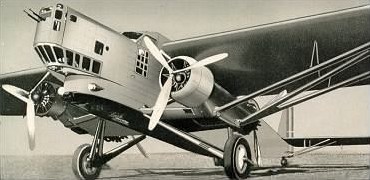
In May 1929, the Service Technique Aeronautique issued a requirement for a BN5 aircraft (Bombarde-ment de Nuit, 5 seat) to replace the ageing LeO 20 series then in service with the Avia¬tion Militaire. The result was the prototype Farman 220 01, which flew for the first time on May 26, 1932. It was powered by four Hispano Suiza 12 Lbr, V type engines, mounted in tandem pairs in nacelles beneath the wings, each driving one tractor and one pusher three blade propeller. This prototype later flew for many years as F ANLG Centaure with Air France on air mail services to South America.
In the sum¬mer of 1933, a second bomber prototype, the F221 01, was flown with 800 hp / 596kW Gnome-Rhone 14Kbrs radial engines, armed with three manually operated gun turrets in nose, dorsal and ventral positions, and a more extensively glazed nose permitting a better field of view for the pilots. The number of crew members in the F221 was increased to seven. Ten examples of the F221 Bn5-series bombers (some later converted into F.222) were built at Billancourt from 1934. On June 16 of that year, the prototype set up a new international payload to height record by lifting 5000 kg (11025 lb) to an altitude of 7000 m (22 970 ft). The first five production F221s were delivered to the 15e Escadre de Bombardement of the Armee de l’Air (as the Aviation Militaire had by then been retitled) in April 1936.
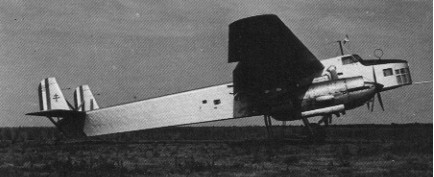
The F.221 were followed by 11 F.222 with retractable undercarriage, designated F222/1; seven were delivered in April 1937 to GB I/15, and the other four to the 4e Eseadre at Tong, French Indo China. The final bomber version was the F.222/2, 24 of which were built during 1937-38 with a lengthened and redesigned front fuselage sections and dihedral on the outer wing sections, and the step beneath the bomb-¬aimer’s position removed. The last 16 machines had 685.6kW engines. The first eight (with Gnome Rhone 14 Kirs engines) were manufactured by Farman factories and the other 16 by the SNCA du Centre.
These latter aircraft had 860 hp Gnome Rhone 14N 11/15 powerplants, and the first official trials began in November 1937. The aircraft were of all metal construction, with a rectangular¬ section fuselage. A manually operated turret, fitted with a single 7.5 mm (0.29 in) MAC 1934 machine gun, was positioned in the extreme nose, and single guns of the same calibre were installed in the manually operated dorsal turret and in a ventral housing. The bomb bay, in the undersides of the wings, comprised four compartments for up to 4200 kg (9260 lb) of bombs of varying sizes.
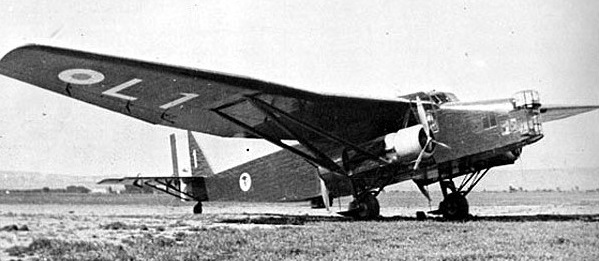
Escadre GB 11/15 operated F.221 from November 1936, then F.222 from April 1937. These were the largest bombers to serve in France between the world wars. After the outbreak of World War II the bombers flew leaflet raids over Germany, but night bombing raids during May and June 1940 led to three losses.
About two dozen Farman 221s and 222s remained in service in September 1939. Dur¬ing the early stages of the Second World War, they flew on antisubmarine and ship¬ping patrols along the West African coast. Night sorties were made to Germany and Czechoslovakia in late 1939, but mainly on reconnaissance or leaflet dropping missions. Two were allocated to the Aeronavale for maritime reconnaissance in November 1939, and were subsequently transferred with their unit to Casablanca in January 1940. Fitted with two 1000 litre (220 Imperial gallons) auxiliary fuel tanks occupying half of the bomb bay, they were used for Atlantic patrol duties. On May 14, 1940, Groupement 15 utilized F 222s on night bombing raids over the Rhine, Wurtternburg and Bavaria; this unit moved to North Africa a month later.
The French navy came up with the idea to attack Berlin during the French campaign. At 3.00pm on 7 June 1940, one of France’s three Farman F.223.4 long-range naval reconnaissance aircraft, F-ARIN, the ‘Jules Verne’, was cleared for take-off at Bordeaux-Merignac airfield. The four-engined high-wing monoplane, painted dull black, had already logged several missions. At 3.30pm the Jules Verne rolled u for take-off carrying a bombload of 2000 kg. this was the first bomb assault of the war made on the German capital. The crew commander was Captain de Corvette Dailliere, a former professor of aerial navigation at the Ecole de Guerre. With him flew Paul Comet, an ex-chief navigator of the Air France airline. “t once we set a northern heading for the English Channel. I flew the plane visually; the weather was clear and I was completely familiar with the first route via Pas de Calais and Holland. We did not meet with a single aircraft; we came under heavy anti-aircraft fire only over Sylt. By sunset we were flying over Denmark, some time later the Baltic Sea lay beneath us. When Stettin appeared on our right, we took a southern heading, flew at high altitude over the Meckleburg lake district, and reached the northern outskirts of Berlin at exactly the appointed time. I got ready to release the bombs and realised that someone had failed to install our bombsight, so I pressed my nose to the glass of the cockpit. Visibility was good, but I could not identify any of the numerous lakes around Berlin and the city lay in complete darkness. Suddenly, as if on command, countless searchlights lit up the night and all calibre of flak opened fire. We circled over he city centre for a while, throttled the engines, let them run again full blast, then repeated the process. We wanted to create the impression that a whole formation was over Berlin. Then we turned off toward a northern suburb and dropped our payload there on one of the numerous factories. The attack certainly did not cause any great destruction, but after all we were more concerned with the psychological effect.”
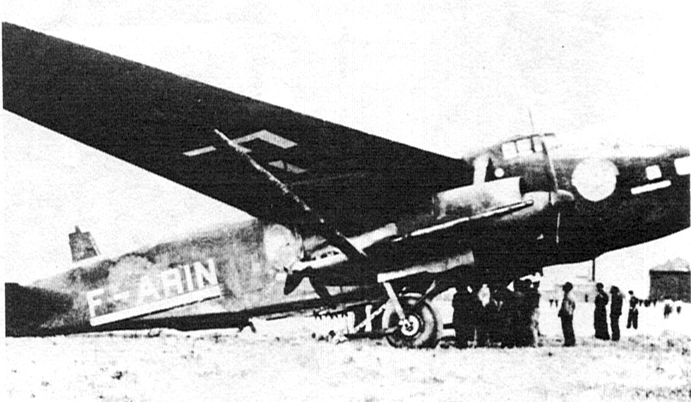
The Jules Verne then set course for Leipzig, crossed all of Germany unmolested by either fighters or flak, and landed at Paris-Orly at around 5.00am, after a 13.5 hr flight of almost 3000 miles.
Next day the French Admiralty announced “On the night of June 7-8, a formation of French long-range bombers bombed an industrial quarter in north Berlin as retaliation for the German air attack on Paris. All our aircraft came back”.
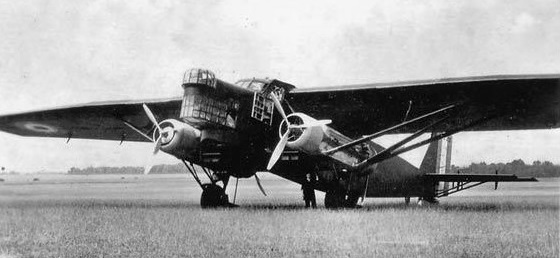
The Vichy authorities disbanded most Groupes de Bornbardement after the French armistice in 1940, but F221s and 222s formed part of a transport and communications unit which was based in Morocco in late 1942. Although Allied attacks destroyed many aircraft, operations continued in the Mediterra¬nean and North Africa and the type was still in use as late as January 1944, but by September of that year the few survivors had been withdrawn from service and scrapped.
The improved F.223 had a more streamlined fuselage, slimmer wings, simplified strutting and twin fins and rudders. Originally fitted with radial engines, eight were re-engined during 1939-40 with 820kW Hispano-Suiza water-cooled 12Y50/51. After June 1940 a number of F.222 and F.223 bombers were used as military transports.
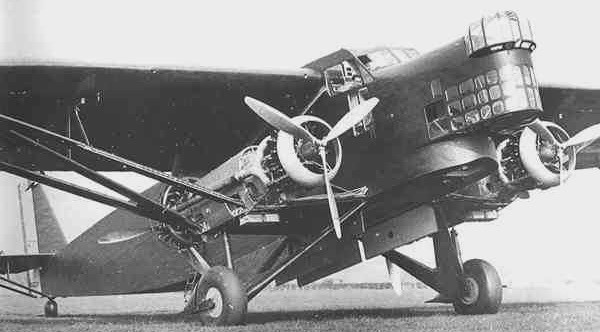
Civil passenger/mailplane versions of the F.220 family included Le Centaure, the converted F.220.01, four F.2200 and a single F.2220 – all with in-line engines and intended for the South Atlantic service. Six radial-engined F.224, with new deep fuselages for 40 passengers, were rejected by Air France and subsequently went to the Armee de l’Air. The F.2231 and F.2232 were civil equivalents of the F.223 bomber; the F.2231 made a spectacular flight to South America in November 1937 piloted by Paul Codos.
Three F.2234 built during 1938-39 had the thin tapering wings of the F.223 and F.2231/2, but featured a new streamlined fuselage with a pointed nose section. All were requisitioned by the French Navy in September 1939. One (“Jules Verne”) made the first Allied air raid on Berlin in June 1940. After the French collapse in June 1940 these three machines were returned to Air France. “Le Verrier” was shot down in the Mediterranean on 27 November 1940.
F.221
Engine: 4 x G+R 14 Kbrs, 715kW
Max take-Off Weight: 15200-18700 kg / 33510 – 41227 lb
Empty Weight: 10488 kg / 23122 lb
Wingspan: 36.2 m / 118 ft 9 in
Length: 21.5 m / 70 ft 6 in
Height: 5.2 m / 17 ft 1 in
Wing Area: 188.0 sq.m / 2023.61 sq ft
Max. Speed: 320 km/h / 199 mph
Cruise Speed: 280 km/h / 174 mph
Ceiling: 8000 m / 26250 ft
Range W/Max.Fuel: 1995 km / 1240 miles
Armament: 3 x 7.5mm machine-guns, 4200kg of bombs
Crew: 5-6
F 222/2
Span: 36 m (118 ft 1.25 in)
Length: 21.45 m (70 ft 4.5 in)
Gross weight. 18 700 kg (41230 lb)
Maximum speed. 325 km/h (202 mph)
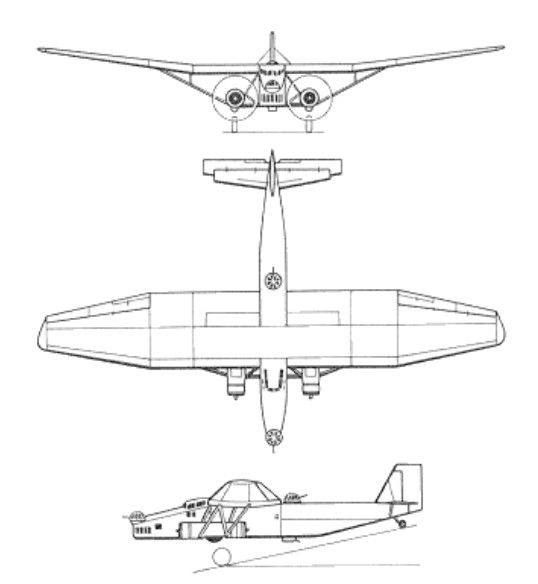
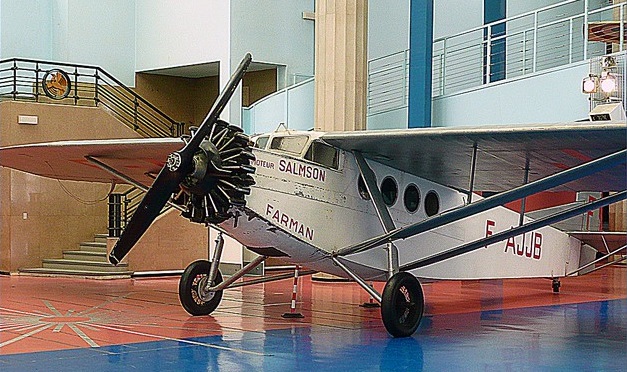
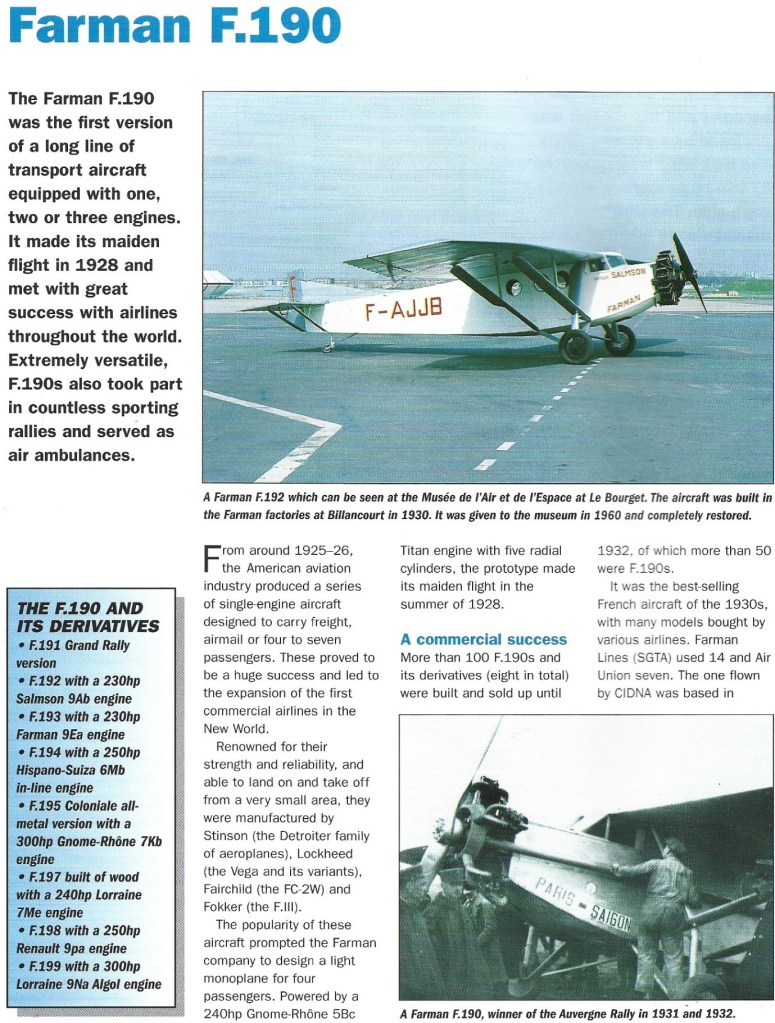
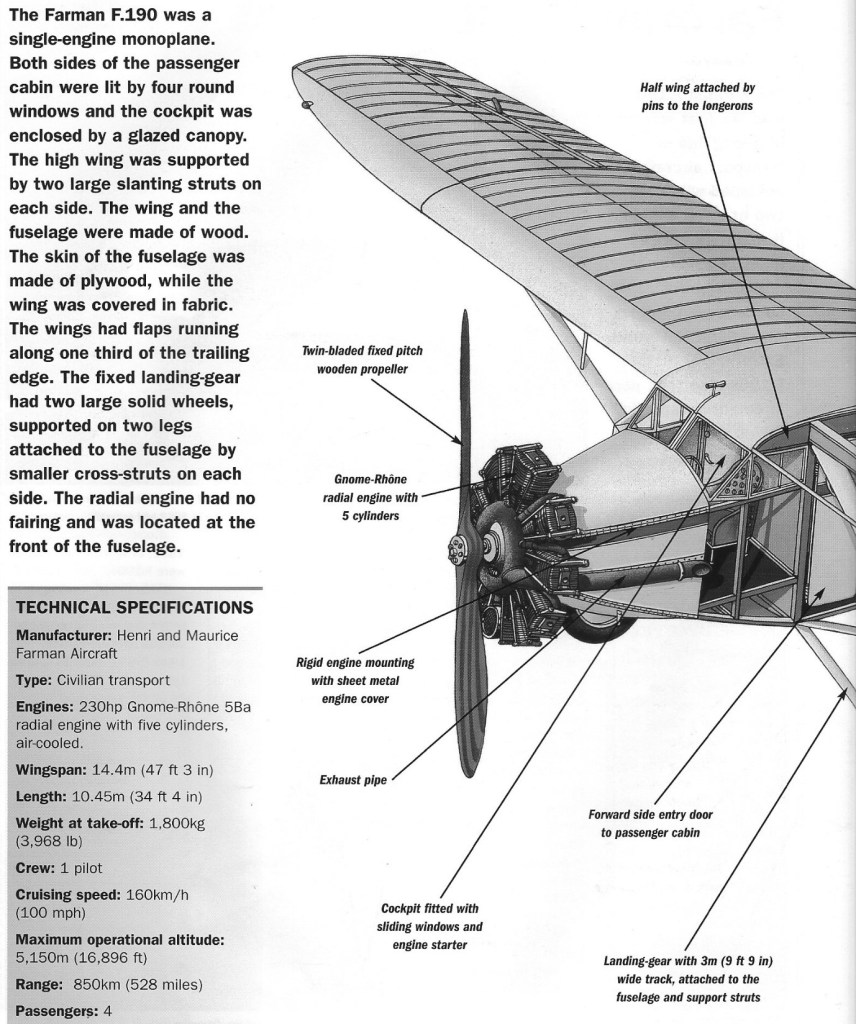
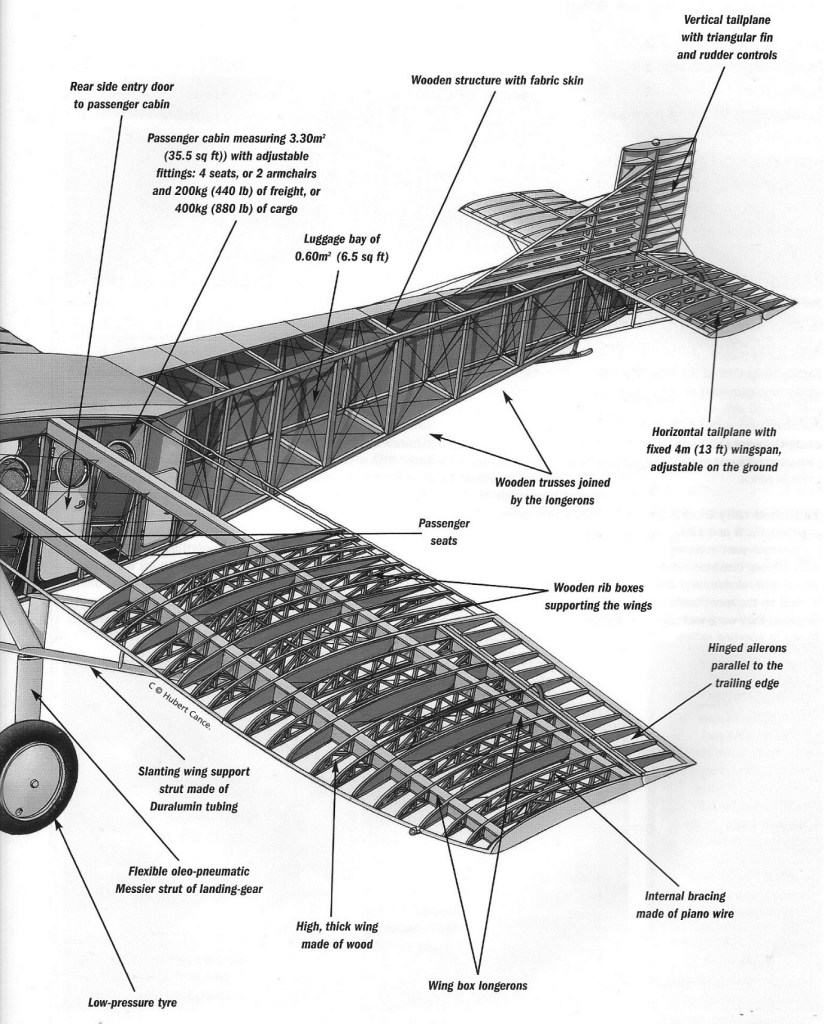
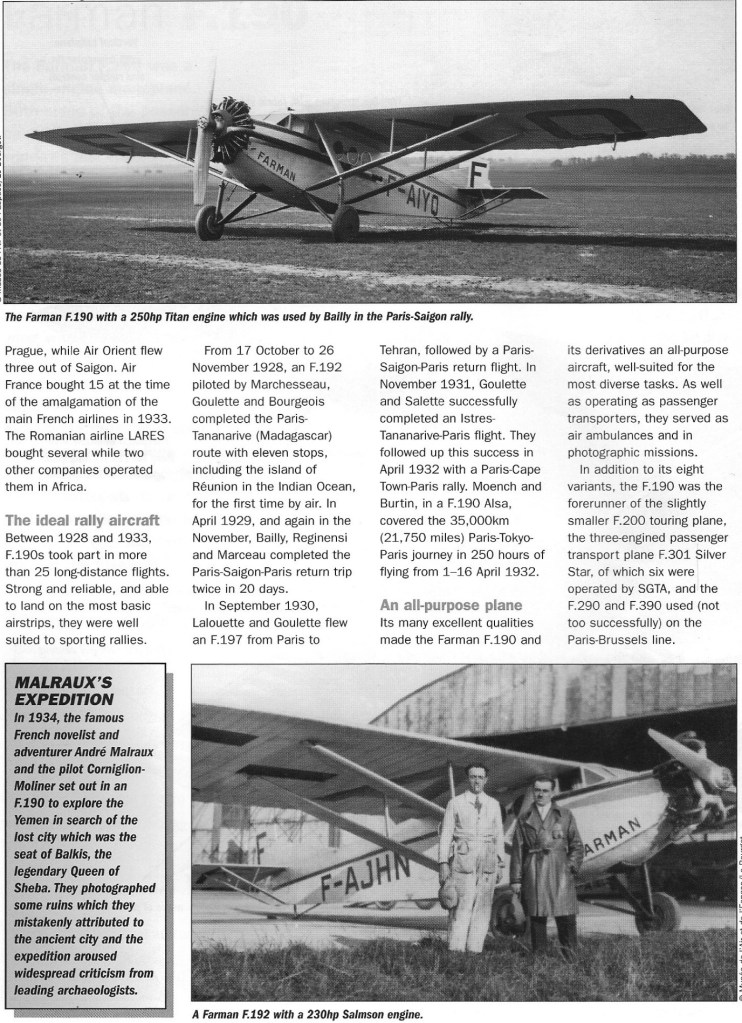
Farman F.190 Article
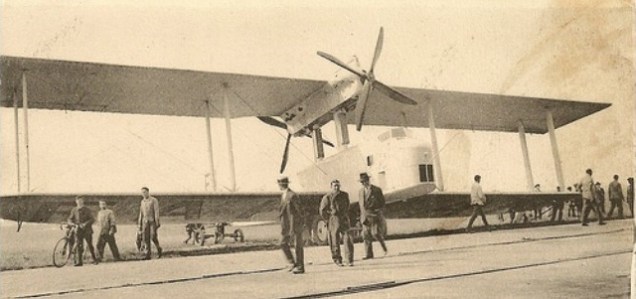
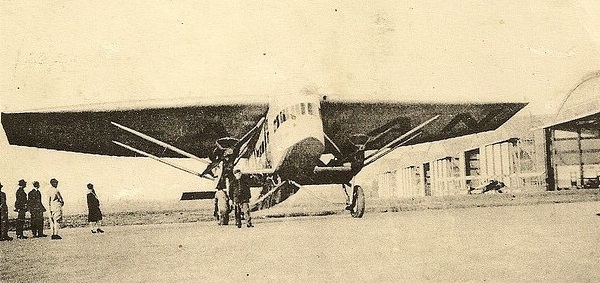
The nine-passenger F.121 was originally known as the F.3X and was a high-mounted wing, deep slab-sided fuselage aircraft powered by four 134kW Hispano-Suiza 8Ac engines in tandem pairs. The F.121 won the 1923 French Grand Prix des Avions Transports and 500,000 francs. At least three different radiator arrangements were tried in attempts to cure the Jabiru’s chronic cooling problems.
Four flew on the Farman airline’s Paris-Brussels-Amsterdam route from 1926 and Danish Air Lines used a few between Amsterdam and Copenhagen. Four even uglier F.4X six-passenger aircraft followed, each with three uncowled 223.5kW Salmson Az.9 engines, two engines mounted above the landing gear on the lower stub wings and one in the upper fuselage nose. These served with Compagnie Internationale de Navigation Aerienne (formerly CFRNA) along with the more attractive Caudron 81 and Potez 32.
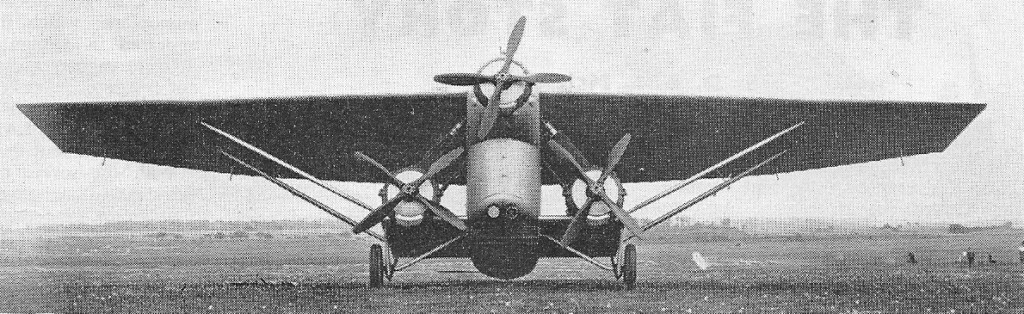
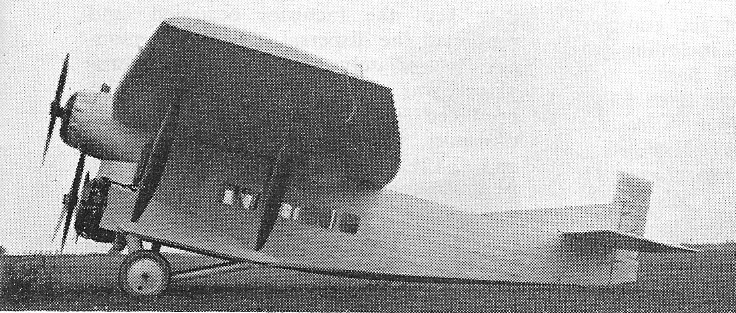
Passengers sat in wicker chairs angled towards the centre, and had a view from the continuous row of windows around the cabin.
Military Jabirus also appeared as prototype heavy bombers and escort fighters with stepped noses, each carrying twin Lewis guns on a Scarff ring in a nose cockpit and light bombs in a fuselage bay. Heavier bombs or, a torpedo could be carried under the fuselage.
Engine: 4 x HS 8AC, 132kW
Max take-off weight: 5000 kg / 11023 lb
Empty weight: 3000 kg / 6614 lb
Wingspan: 19.0 m / 62 ft 4 in
Length: 13.7 m / 44 ft 11 in
Wing area: 80.0 sq.m / 861.11 sq ft
Max. speed: 180 km/h / 112 mph
Ceiling: 4000 m / 13100 ft
Range w/max.fuel: 600 km / 373 miles
Crew: 1-2
Passengers: 9