Farman F.90 / Farman F.91

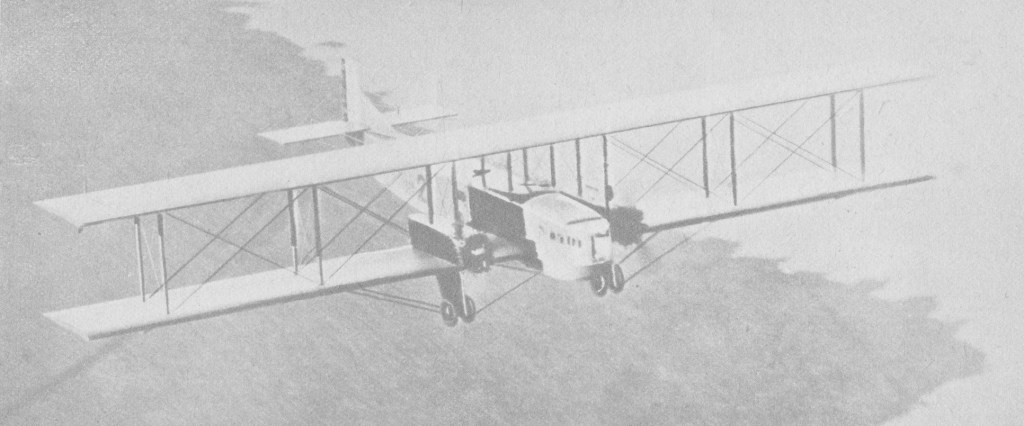
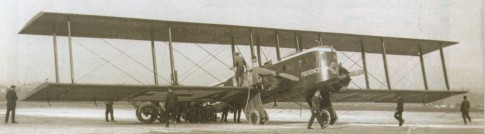
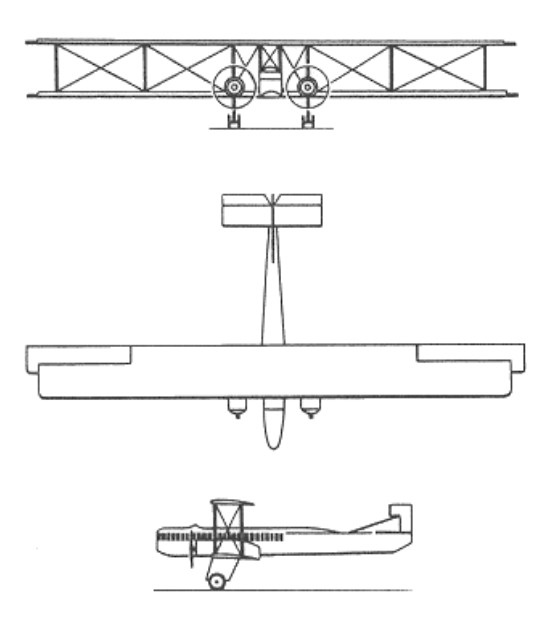
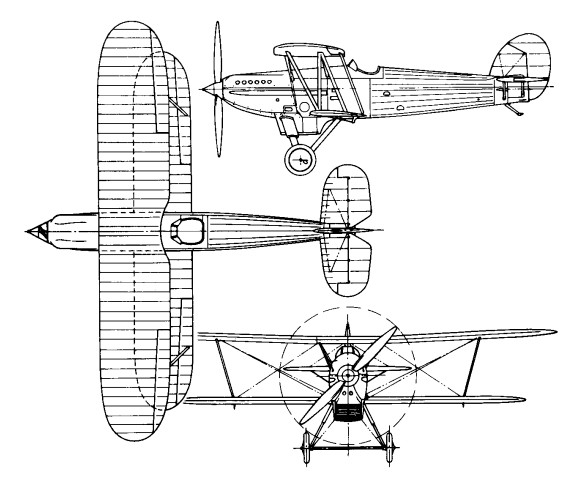
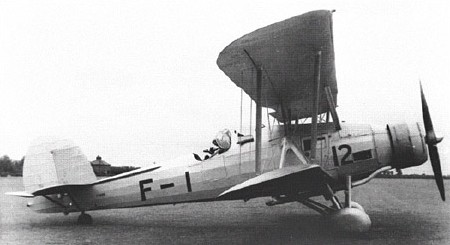
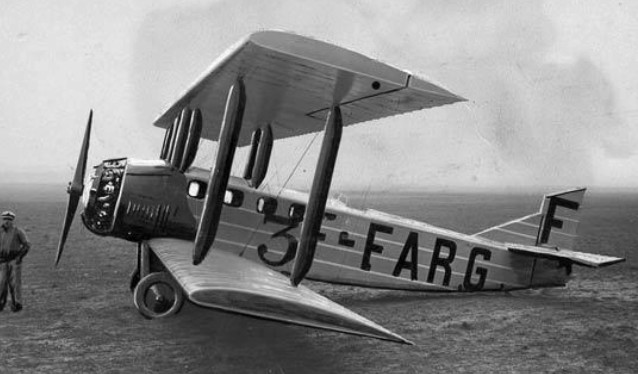
The Farman F.90 passenger transport first flew in 1921. It was a single engine, single bay biplane with unstaggered, rectangular wings and ailerons on the upper wings only. The interplane gap was large, with the upper plane held high above the fuselage by a set of four vertical centre section struts. The interplane struts were also simple parallel pairs. Its tailplane and elevators were fixed to the top of the fuselage; it had a triangular fin and a rudder with a tip at the same angle but vertically displaced, producing a nick in the leading edge.

The F.90 was initially powered by a 260 hp (194 kW) Salmson AZ 9 9-cylinder radial engine, neatly enclosed in a short nose. The fuselage was deep and flat sided, though with a slightly rounded decking. The passenger compartment, with four small windows on each side, began near the wing leading edge and stretched aft a little beyond the trailing edge. The pilot had an open cockpit behind the cabin with a clear forward view under the high wing. The F.90 had a conventional undercarriage with single mainwheels under the wing leading edges and a rear skid.

Flight trials began in 1921, conducted by Farman pilots Lucien Coupet and Jules Landry. By 1923 the Salmson radials had been updated from the mark AZ to CM for its appearance the Zenith Cup competition of that year. It was re-engined again, this time with 380 hp (283 kW) Bristol Jupiters, for the same competition in 1926. This change came with a new type number, F.91. Only one F.90/1 was built.

The F.90/1 won several Cups but no orders. It won the 1922 Grand Prix de Paris, the only single engine aircraft amongst five competitors, where it was flown by Louis Boussoutrot and his mechanic, Henri Carol. This contest included a 600 km (370 mi) circuit, which the F.90 completed at an average speed of 144.4 km/h (89.7 mph), and rewarded Farman with FF 80,000 and a statuette.

It appeared in the Zenith Cup, a fuel consumption competition funded by the Société du Carburateur Zenith, twice, winning it both times. This competition required the contestants to make out and return flights from Paris to Lyon and back on successive, prescribed days. The round trip distance was 770 km (480 mi). The winner was the aircraft that used the least fuel for the load it carried, measured by the ratio of weight of fuel used to weight of useful load. In 1923 there were nine entrants, though three were non-starters. On 21-22 July 1923, fitted with its new Salmson CM 9 engines and flown by Boussoutrot, it won with a fuel to load ratio of 0.475, well ahead of the 0.616 of the runner-up, a Potez VIII A two-seater.

Three years later, on 3-4 July, the same machine, now the F.91 with Bristol Jupiters and Bristol Triplex carburettors, was one of seven competitors. The Farman, flown by Maurice Drouhin, won again with a much improved fuel to load ratio of 0.253, though the runner-up, a Caudron was close behind at 0.256. Each win gained Farman the Cup plus the first prize of FF 30,000; in 1926 at least the winning pilot also got FF 3,000.

Only the one example was ever built.

F. 90
Engine: 1 × Salmson AZ 9, 190 kW (260 hp)
Propellers: 2-bladed
Wingspan: 14.03 m (46 ft 0 in)
Wing area: 66.80 m2 (719.0 sq ft)
Length: 9.30 m (30 ft 6 in)
Height: 3.86 m (12 ft 8 in)
Empty weight: 1,100 kg (2,425 lb)
Gross weight: 2,350 kg (5,181 lb)
Maximum speed: 180 km/h (112 mph; 97 kn)
Range: 70 km (43 mi; 38 nmi)
Crew: 1
Capacity: 6 passengers
Farman F.60 / F.61 Goliath / F.62 / F.63 / F.65 / F.68

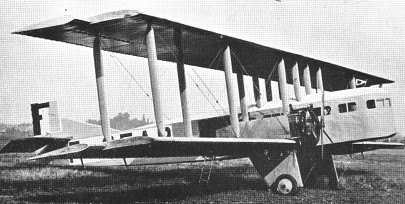
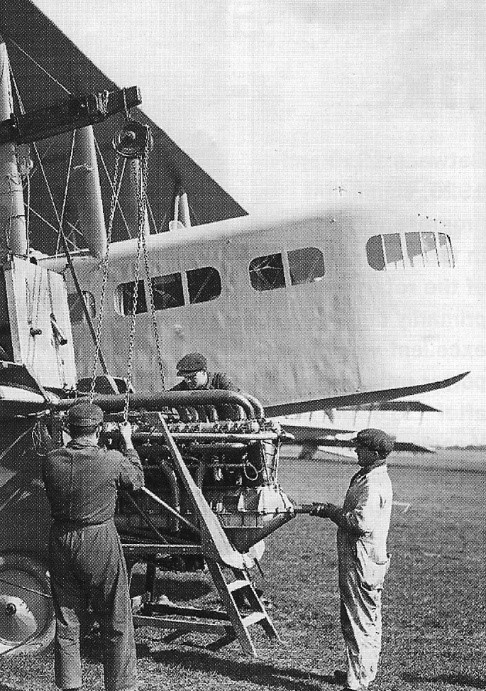
The two FF.60 bomber prototypes of 1918 started a great family of passenger airliners and night bombers. The F.60 of 1915 16 was an F.40 with the more powerful 190 hp Renault; the F.61 was the 190 hp version of the F.41. The type was an equal-span biplane with a conventional monoplane-type tail unit. The landing-gear legs had trousered fairings and each supported twin wheels. Immediately above each leg was an engine set in a large nacelle on the lower wing, with minimal clearance between the propeller and the slab-sided fuselage.

Farman F.60 Article

Bomber versions had gunners cockpits in the nose and amidships, while the pilot and co-pilot/navigator were seated in tandem in open cockpits. Commercial transport Goliaths had a nose cabin for four passengers and an aft cabin for eight, separated by a raised open cockpit for the two pilots under the leading edge of the upper wing.

The Farman brothers commenced Paris-London flights on 6 February 1919 using an F.60 Goliath.

Renault 300 hp on a Farman 60

About 60 commercial Goliaths were built in several versions with Salmson, Renault, Lorraine, Gnome-Rhone-built Jupiter, Armstrong Siddeley Jaguar and Farman engines, among the most important being those powered by 171.4kW Salmson Z.9 radial engines operated by Air Union.

Goliath – Armstrong Siddeley Jaguar engines

Several flew with other airlines including the Farman airline, and indeed it was this company that started the world’s first regular international passenger service, beginning on 22 March 1919 between Paris and Brussels. Of course this had not been the first international passenger service by an airline between European capital cities, this being officially recognised as the Farman flight between Paris and London on 8 February 1919 carrying military personnel. However the latter was not the start of a sustained or civil passenger service and as such does not conflict with the Paris-Brussels “first”. Versions operated by the Farman airline included the Renault-powered F.61 and Gnome-Rhone-built Jupiter-powered F.63bis. Six passenger-carrying Goliaths were also built under licence in Czechoslovakia, two going to the air force.

F.60

Thirty-six F.60 bombers (with Salmson engines and cut-down noses) served with the French 21 and 22 Regiments d’Aviation and 24 square-nosed Jupiter-powered Goliaths equipped naval escadrilles 6R1, 6B1 and 6B2, following tests with a passenger type. These could be mounted on twin floats (with stabiliser floats under the lower wings) as an alternative to the normal wheel-type landing gear. Russia purchased sufficient F.62s to equip two units which formed the embryo of its new heavy bomber force; Japan and Italy bought a single example each for testing; and Poland acquired 32 F.68 bombers. Export bombers – like the 42 F.63 for the French Army and a large batch of F.65 for the French Navy – each had a ‘balcony’-type nose-gunner’s cockpit with a ‘step’ below.
The Belgian Aviation Militaire had two squadrons of F.41s and 60s a few F.40 series were used by the RNAS and 30 were supplied to the American Expedtionary Force.
Conversions to airliner were operated by Air Union circa 1929.

Engine: 2 x Salmson CM.9, 190kW
Max take-off weight: 4870 kg / 10737 lb
Empty weight: 2500 kg / 5512 lb
Wingspan: 26.5 m / 86 ft 11 in
Length: 14.3 m / 46 ft 11 in
Wing area: 161.0 sq.m / 1732.99 sq ft
Max. speed: 130 km/h / 81 mph
Cruise speed: 120 km/h / 75 mph
Ceiling: 4000 m / 13100 ft
Range w/max.fuel: 400 km / 249 miles
Crew: 2
Passengers: 12

Farman F.60 Goliath

Farman

Henri Farman

On November 9,1907 Henri Farman, in aVoisin-50 Antoinette biplane, made the first powered flight in Europe to last over a minute. At a 1909 Reims meeting he flew his own Farman III, the first aircraft with effective ailerons. Brother Maurice was also a designer; the two formed Avions Henri et Maurice

Farman Brothers Article

Maurice Farman designed the MF-7 Longhorn (1913) and MF-11 Shorthorn (1914), both used as trainer and observation aircraft by the Allied forces. Farman F.20 and F.40 developed, the latter with streamlined two-seat nacelle and powered by 135hp Renault engine. Farman F.50 night bomber followed; four-engined F.140 night bomber introduced 1925, replaced by F.221 and F.222 in 1937, the latter used subsequently by Vichy air force after June 1940 as a transport. Civil airliners included the F.60 Goliath. Twin-engined F.180 biplane, F.190 single-engined monoplane introduced 1928, three-engined F.300 in 1930.

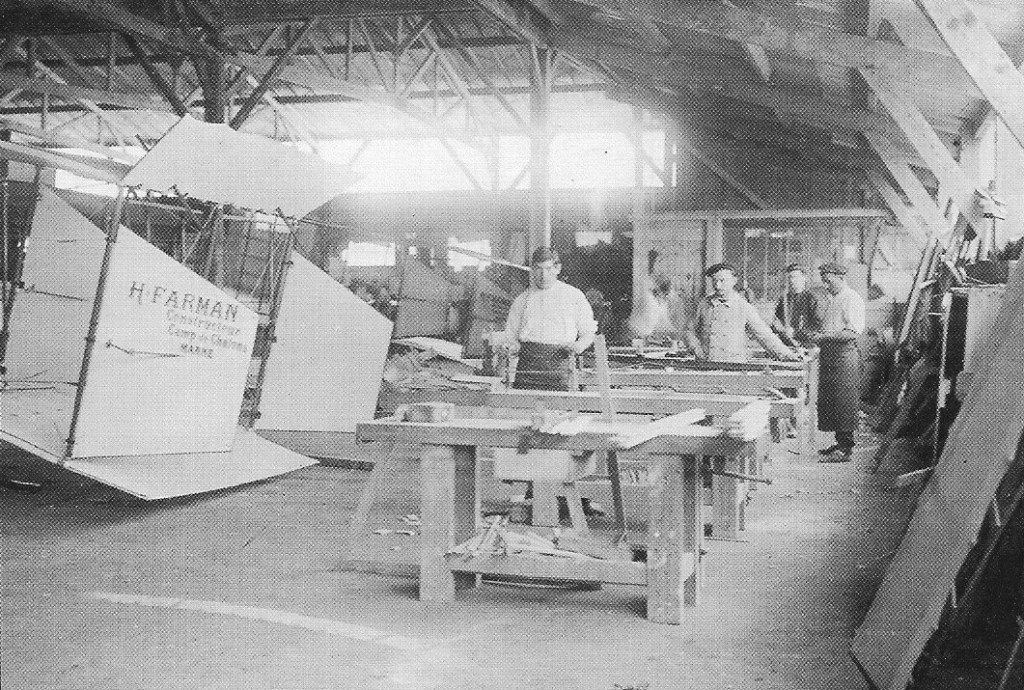
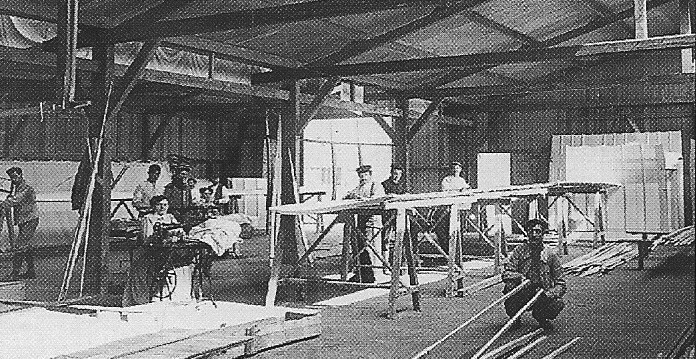
The French aircraft manufacturer Socété des Avions H. M. et D. Farman, with factories at Billancourt (Seine), began aircraft engine design and manufacture aimed at civil aviation shortly after WWI.

In France, the Socialist Government of the so called Popular Front brought all the companies building military aircraft, aero engines and armament under its control in 1936. The immediate result was the socialized oblivion of such established companies as Marcel Bloch, Bleriot, Nieuport, Potez, Dewoitine, Hanriot and Farman within half a dozen nationalized groups or Societies Nationales, named according to their geographical location (Nord, Ouest, Centre, Midi and so on). Hanriot joined Farman at Billancourt in 1936, eventually nationalized in 1937, to become SNCA du Centre.

Farman becoming part of SNCAC.
After nationalization, in 1939 the Farman brothers acquired the license to manufacture the Stampe SV.4 trainer biplane. Although SNCAC was assigned manufacturing rights postwar, Farman retained license and with Jean Stampe the Societe Anonyme des Usines Farman developed Monitor I monoplane powered by 140 hp Renault engine. Variants included the II, III and IV, the latter being taken over by Stampe et Renard, Brussels.

Fairey P.24 Monarch / Prince 4

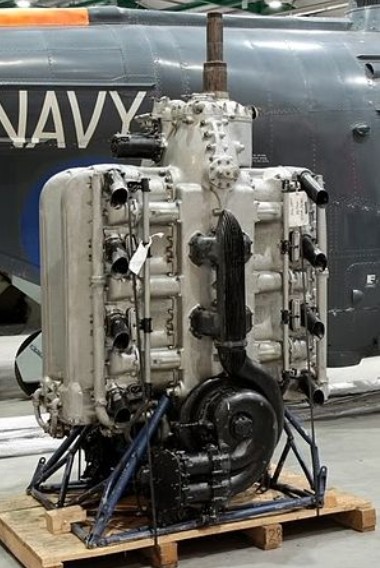
The Fairey P.24 Monarch or Prince 4 was a British experimental 2,000 hp (1,490 kW) class H-24 aircraft engine designed and built by Fairey in the late 1930s.

The P.24 Monarch was an enlarged development of the Prince, designed by chief engine designer Captain A.G. Forsyth. Similar in layout to the Napier Dagger the cylinders were arranged vertically in two separate blocks, driving contra-rotating propellers via separate shafts and gears. Like the smaller Prince engine each bank of cylinders could be shut down in flight to drive only one propeller, an idea that was reused much later in the Armstrong Siddeley Double Mamba turboprop. The engine was test flown in a Fairey Battle, serial K9370, with its first flight taking place on 30 June 1939.

Fairey Battle with Fairy P24 Monarch engine and coaxial propellers

The engine was considered for use in the Hawker Tornado and K9370 was later shipped to Wright Field in the US, where testing (Project MX-229) was carried out in 1942 with a view to using the potentially 3,000 hp of the P .24 in the Republic P-47 Thunderbolt, a total of around 250 hours of test flying in the Battle being completed at Wright Field before the idea was abandoned. Following cancellation, the engine provided three trouble-free years of service in K9370.

Fairy P24 Monarch

P.24 Monarch
Type: Liquid-cooled H24 engine
Bore: 5.25 in (133.35 mm)
Stroke: 6.0 in (152.4 mm)
Displacement: 3,117 in³ (51.08 L)
Length: 86.25 in (2191 mm)
Width: 43 in (1092 mm)
Height: 52.5 in (1333.5 mm)
Dry weight: 2,180 lb
Valvetrain: 2 intake, 1 exhaust valve per cylinder
Supercharger: Four-speed, two stage
Cooling system: Liquid-cooled
Reduction gear: Spur gear, 0.543:1
Power output: 2,240 hp (1,670 kW) at 3,000 rpm at 9,000 ft

Fairey P.16 Prince (H-16)

The Fairey P.16 Prince was a British experimental 1,500 hp (1,118 kW) class H-16 aircraft engine designed and built by Fairey in the late 1930s.

The Prince P.16 was a radical design by Captain A.G. Forsyth who was the Fairey company’s chief engine designer. Similar in layout to the Napier Rapier, the cylinders were arranged vertically in two separate blocks, driving contra-rotating propellers via separate shafts and gears. Each bank of cylinders could be shut down in flight to drive only one propeller, an idea that was reused much later in the Armstrong Siddeley Double Mamba turboprop. First run in 1939, the engine was test flown in a Fairey Battle.

The idea came from the desire to deliver high power in a reliable form for naval use. A twin engined aircraft could not be designed such that even when “folded” it came within the limits for aircraft carrier use; with two power blocks the failure of an accessory would not lead to failure of the engine as a whole. The engine did not go into production.

Specifications

P.16 Prince 3 / Prince H-16S
Type: Liquid-cooled H16 engine
Bore: 5.25 in (133.35 mm)
Stroke: 6.0 in (152.4 mm)
Displacement: 2,078 in³ (34.05 L)
Dry weight: 2,180 lb (989 kg)
Supercharger: Two-speed, single stage
Cooling system: Liquid-cooled
Power output: 1,540 hp (1,148 kW) at 3,000 rpm at 9,500 ft, +2 lb/sq/in boost
Power-to-weight ratio: 0.7 hp/lb (0.86 kW/kg)

Fairey P.12 Prince / V-12

The Fairey P.12 Prince was a British experimental 700 hp (520 kW) class V-12 aircraft engine designed and built by Fairey in the early 1930s. The engine did not go into production.

The Prince was a privately funded project designed by Captain A.G. Forsyth who had joined the Fairey company in 1931 as their chief engine designer. The company had hoped to obtain Air Ministry orders for the engine but faced opposition with the ministry favouring Bristol and Rolls-Royce engines instead.

Three prototypes were built in secrecy with the engines running by 1933, a single Prince was installed and test flown in a Fairey Fox II biplane in 1934 but no orders materialised.

Variants
P.12 Prince I or Prince V-12
650 hp (485 kW) – Unsupercharged

P.12 Prince II or Super Prince V-12S
720 hp (537 kW) projected – Fully supercharged

Specifications:

Prince I
Type: Liquid-cooled 60-degree V12 engine
Bore: 5.25 in (133 mm)
Stroke: 6.0 in (152 mm)
Displacement: 1,558.62 in³ (25.54 L)
Cooling system: Liquid-cooled
Power output: 670 hp (500 kW) at 2,500 rpm at 2,000 ft

Fairey G.4/31

Air Ministry Specification G.4/31 called for a General Purpose aircraft, capable of level bombing, army co-operation, dive bombing, reconnaissance, casualty evacuation and torpedo bombing. The Vickers Type 253 won against the Fairey G.4/31, Westland PV-7, Handley Page HP.47, Armstrong Whitworth AW.19, Blackburn B-7, Hawker PV-4 and the Parnell G.4/31.
One prototype Fairey G.4/31 was built, first flown on 29 March 1934.

Engine; 1 x 750hp Armstrong Siddeley Tiger IV
Take-off weight; 3991 kg / 8799 lb
Empty weight; 3172 kg / 6993 lb
Wingspan; 16.15 m / 52 ft 12 in
Length; 12.45 m / 40 ft 10 in
Height; 4.78 m / 15 ft 8 in
Wing area; 61.13 sq.m / 658.00 sq ft
Max. Speed; 253 km/h / 157 mph
Ceiling; 7071 m / 23200 ft
Crew; 2-3
Armament; 2 x 7.7mm machine-guns, 1 x 450kg or 3 x 227kg bombs or 1 torpedo

Fairey P.4/34

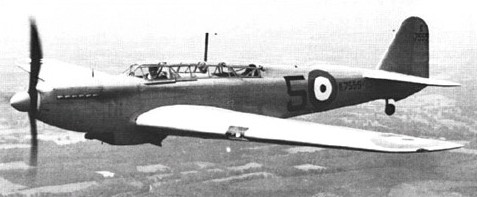
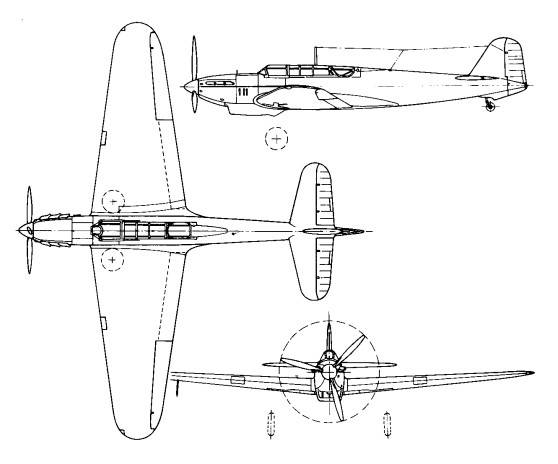
Two prototypes, first flown on 13 June 1937. No production.

Engine; 1 x 1030hp Rolls-Royce Merlin I (later II)
Take-off weight; 3989 kg / 8794 lb
Empty weight; 2908 kg / 6411 lb
Wingspan; 14.43 m / 47 ft 4 in
Length; 12.19 m / 39 ft 12 in
Height; 4.29 m / 14 ft 1 in
Max. Speed; 456 km/h / 283 mph
Ceiling; 8108 m / 26600 ft
Range; 1481 km / 920 miles
Crew; 2

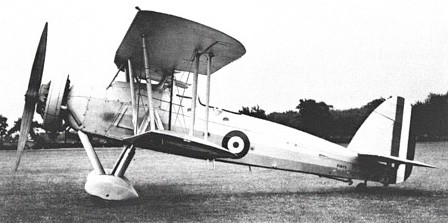
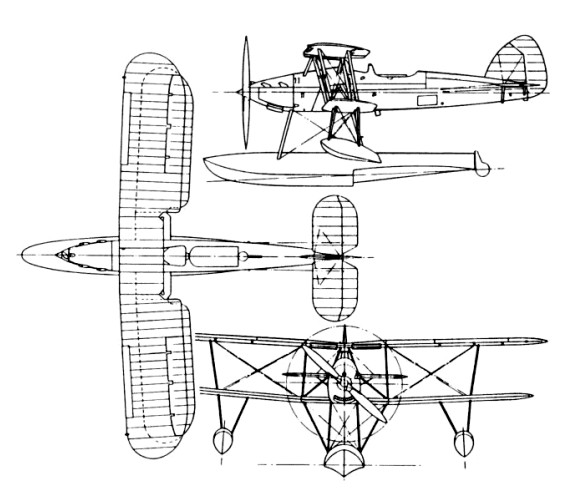
Fairey S.9/30 / Fairey TSR.1

In 1933 the Fairey Aviation Company privately financed and built the TSR.1, a biplane torpedo spotter reconnaissance aircraft, from which the Swordfish evolved. Although the first TSR.I crashed, it had undergone sufficient tests to prove the feasibility of the design, and Fairey built the TSR.II, a slightly larger aircraft.

One S.9/30 prototype, first flown on 22 February 1934. One TSR.1 prototype, first flown on 21 March 1933. No production.

S.9/30 (landplane)
Engine; 1 x 525hp Rolls-Royce Kestrel IIMS
Max take-off weight; 2606 kg / 5745 lb
Wingspan; 14.02 m / 45 ft 12 in
Length: 10.39 m / 34 ft 1 in
Height: 4.27 m / 14 ft 0 in
Wing area: 41.06 sq.m / 441.97 sq ft
Max. speed: 237 km/h / 147 mph
Armament; 1 x 7.7mm machine-gun, 540kg of bombs
Crew; 3

TSR.1