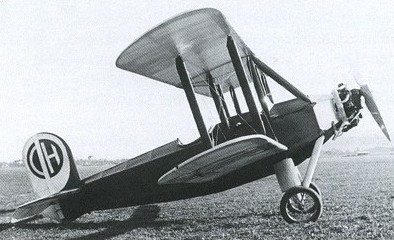
The 1933 W.F.11 Tourist was 2-seat biplane tourer, powered by an 80 hp Pobjoy R.
The 1933 W.F.11 Tourist was 2-seat biplane tourer, powered by an 80 hp Pobjoy R.
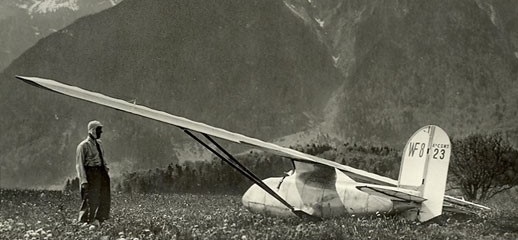
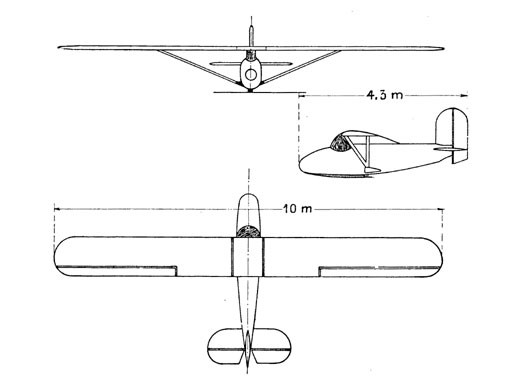
The 1933 wood and canvas Farner WF.8 single-seat parasol training glider was designed by Willi Farner & Hermann Aecherli.
The only WF.8 built was stored at the Swiss Museum of Transportation.
Wingspan: 10.00 m
Wing area: 9.8 sq.m
Length: 4.3 m
Height: 1.2 m
Empty died: 66 kg
Max weight: 136 kg
Min speed: 45 kph
Glide ratio: 18
Min sink: 1.2 m/sec
Seats: 1

Thee 1933 Farner WF. 7 single-seat biplane glider was designed by Willy Farner and Hermann Aecherli.
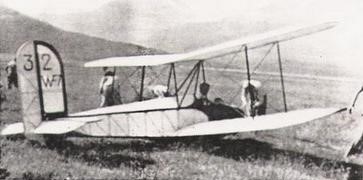
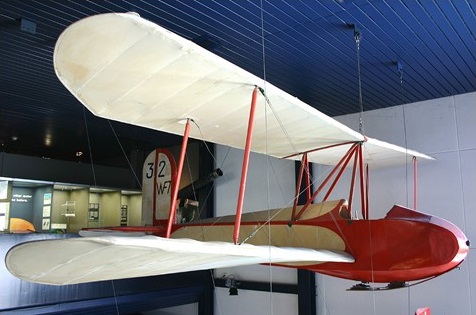
Wing span: 7.50 m
Length: 5 m
Empty weight; 48 kg
Wing area: 16.2 sq.m
Speed: 42 kph
Min sink: 1.2 m/sec
Glide ratio: 12

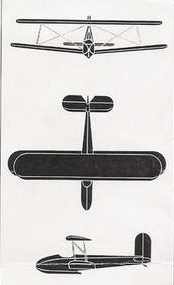
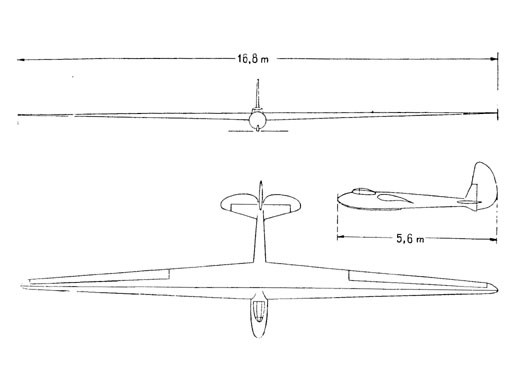
The 1932 Farner WF-6 sailplane was a single seater.
Wingspan: 16.8 m
Length: 5.6 m
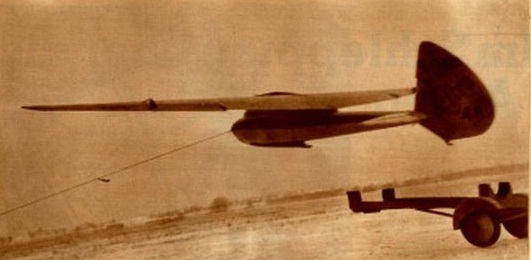
The “Elmer Citro” glider is a WF 5 and was built in 1932 by Willy Farner (assisted by August Hug). The glider is unique. Farner was the first pilot in the world who did aerobatics using the WF5 in 1932. It gave him a reputation even outside Switzerland.
Willy Farner made his first demonstration of gliding with the WF5 at the international aviation meeting in Zürich in 1932. He subsequently did demonstrations at the end of 1932 in Basel, and then in 1933 at an international meeting in Paris. He was towed for this occasion from Zürich to Paris, then for the return, by a Max Gugolz.
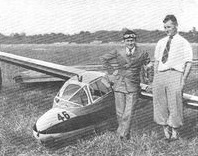
On February 13, Willy Farner, aboard his “Elmer Citro” was towed through the Alps by Robert Fretz flying a Puss-Moth. The tow train carries 7 bags of philatelic mail for a total of 51.5kg. Takeoff place in Dübendorf 2:45 p.m. ET was the landing of the aircraft tug airport has Tagliedo 16.48. Farner follows 14 minutes later, after a total flight time of 2:17. The two pilots were connected by a phone that takes the sound in the larynx rather than in the mouth, whose cable was wound around the tow rope. On the flight back the next day, Farner had to land at Bellinzona because of a storm over the Alps and Fretz carried the letters in his plane until Arosa, where it was distributed to its recipients.
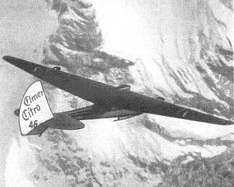
WF 5 “Elmer Citro”
Wingspan: 11.00 m
Length: 5.30 m
Wing area: 11 sq.m
Wing loading: 21 kg/ sq.m
Empty weight: 150 kg
Takeoff weight: 230 kg
Glide ratio: 15
Sink rate: 1.4 m/sec
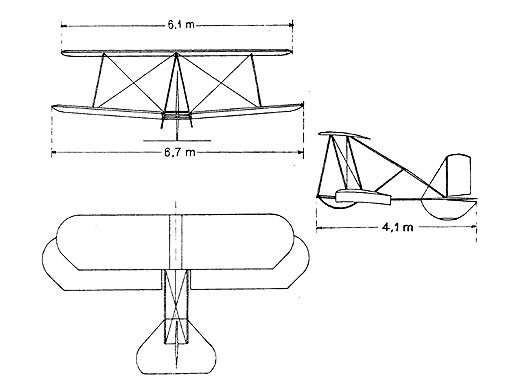
The 1925 Farner W.F.3 biplane ultra-light/hang glider experimental design was similar to the W.F.-1 and W.F.-2. Only one was built.
Wingspan: 6.70 m
Length: 4.1 m

The 1924 Farner W.F.2 biplane ultra-light/hang glider had a larger tail than W.F.-1 and a revised wing shape. An experimental design with ‘X’ wing bracing, only one prototype was built.
Wingspan 6.00 m
Wing area: 14 sq.m
Length: 3.5 m
Empty weight: 32 kg
Max weight: 102 kg
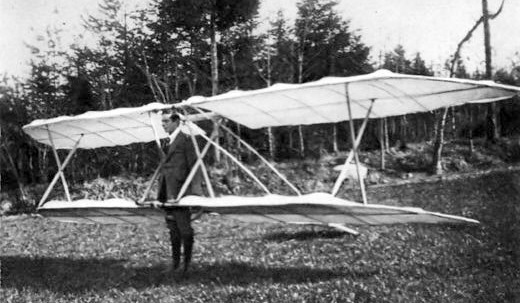
The Farner W.F.-1 was a 1923 biplane ultra-light/hang glider. An experimental wood and canvas design with ‘X’ wing bracing, only one prototype was built.
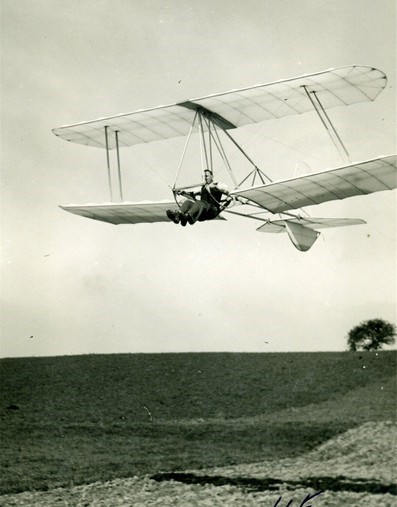
Wingspan: 6.00 m
Wing area: 10 sq.m
Length: 3.5 m
Empty weight: 25 kg
Max weight: 102 kg
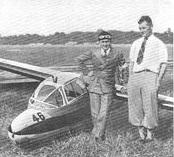
Willy Farner (1905-1978), aka Willi Farner or ‘Willy Farner de Granges’, based at Granges airfield in the Swiss canton of Fribourg, began as an amateur glider constructor. In 1933 (or 1934, sources vary), he formed Willi Farner Flugzeugbau Grenchen (later known simply as Farner-Werke AG). The number of employees was only ten, but it expanded and employed about 100 skilled men.
Farner AG. was an overhaul and repair organization which produced a two-seat biplane in 1934, and in 1935 a four-seat WF.21/C4 monoplane based on the three-seat Compte AC-4 Gentleman.
From 1934 on, Willi Farner Flugzeugbau Grenchen, produced spare parts for the Swiss military and presumably also for the German military, since Willi Farner Flugzeugbau Grenchen was put on a British ‘ban’ list, and for various makes of gliders.
Prototype WF.12 two-seater built 1943, powered by Cirrus Minor located behind cabin and driving via shafts a tractor propeller mounted at wing level.
In 1946, merged in 1946 with Moutier-based Motorenbau Farner SA (formed in 1942 with German capital).
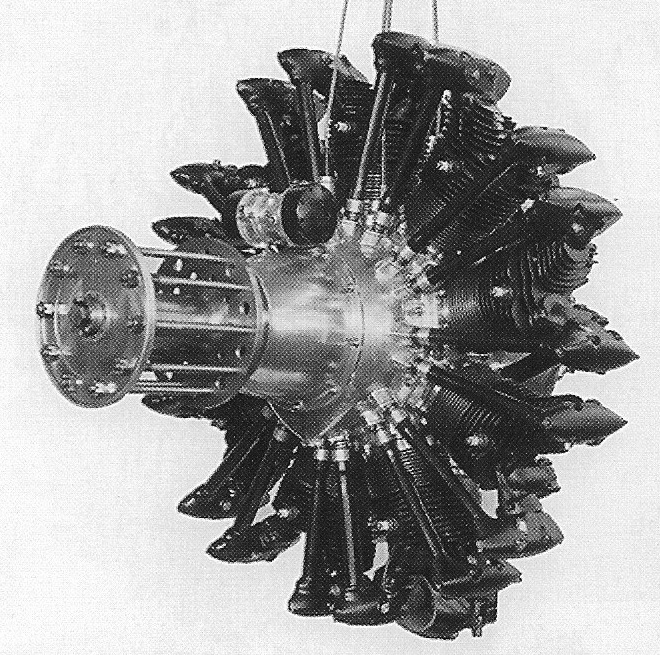
The 9Ea was an air-cooled nine-cylinder radial with a 2:1 Farman reduction gear, 115 mm (4.528″) bore, 120 mm (4.724″) stroke, 11.218 l (684.6 in³) displacement and 5.75:1 compression ratio that was rated 250 hp at 2,600 rpm and capable of 280 hp at 2,700 rpm. Dry weight was 583 lb, or 2.33 lb/hp. Fuel consumption was 0.5 lb/hp/hr and oil consumption was 0.033 lb/hp/hr. Outside diameter was 42″ and length was 46″.
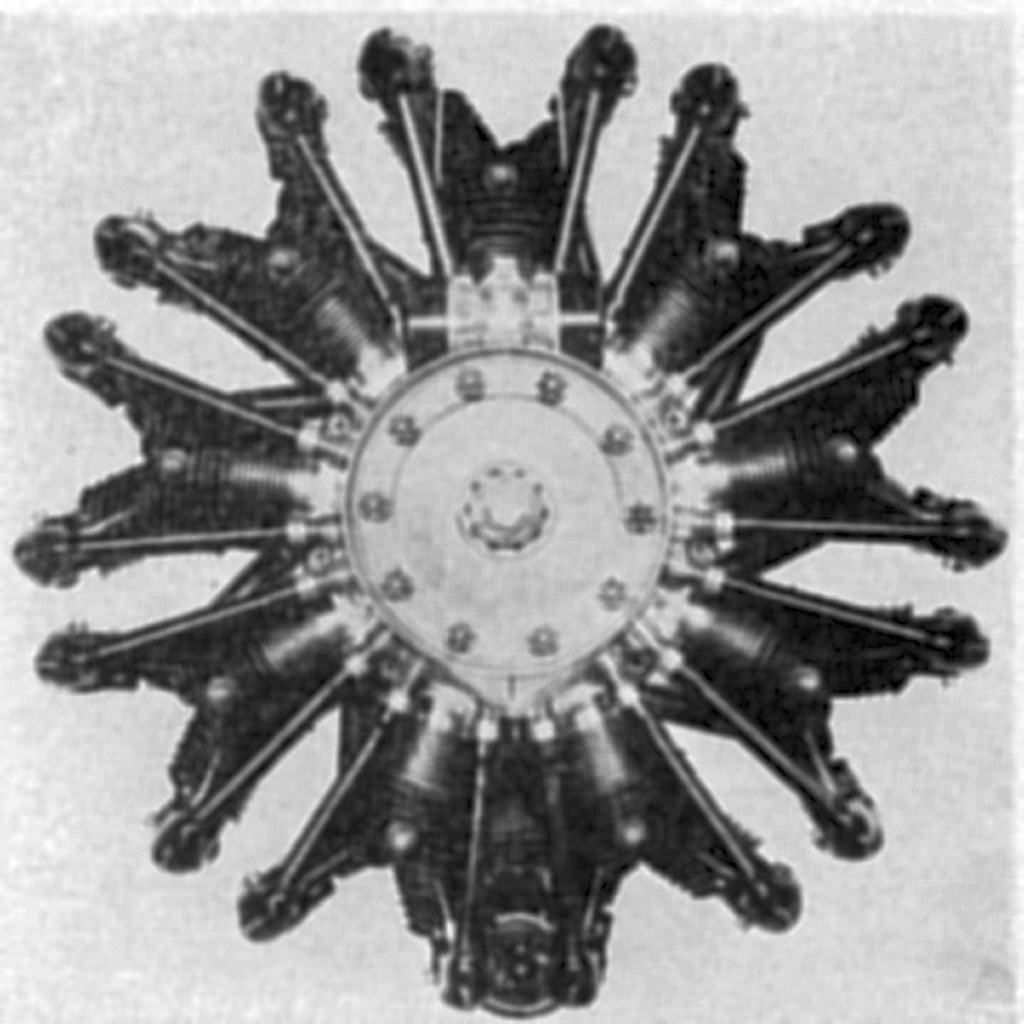
The 9Ea cylinders used steel barrels with integrally turned cooling fins that were screwed into cast aluminum alloy heads. Two inclined valves were operated by fully enclosed push rods and rocker arms driven by a cam ring at the engine front. A full-floating piston pin, two compression rings and two scraper rings were fitted to each aluminum piston. The two-piece forged steel crankshaft included a crankpin integral with the front section. The master connecting rod big end was fitted a floating bushing. The four-section crankcase inner sections were joined in the cylinder plane. The forward inner section housed the timing gears and distributors, and the rear section contained a mixture distribution fan driven at four times crankshaft speed. The nose section enclosed the propeller reduction gears, and the rear cover supported the oil pumps, generator and starter. The mixture was supplied by a Claudel carburetor, and the ignition by battery and coil. Lubrication was a force-fed dry-sump type using gear pumps; oil was scavenged from both crankcase ends.

The 9Eb, introduced in 1929, had a 115 mm (4.528″) bore, 135 mm (5.315″) stroke, 12.62 l (770.1 in³) displacement and 5.4:1 compression ratio. It was rated 250 hp at 2,150 rpm and 270 hp at 2,200 rpm. Dry weight was 550 lb. The mixture was furnished by a Stromberg carburetor, and dual ignition by Ducellier magnetos. Fuel consumption was 0.53 lb/hp/hr and oil consumption 0.0265 lb/hp/hr. The 9Eb diameter was 41.76″ and its length was 47.28″. Farman continued to improve the 9Eb and produced other 9E models through the 1930s.

