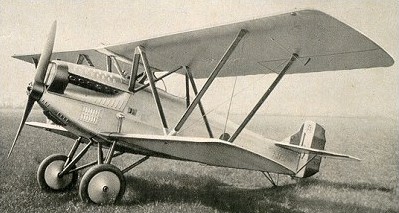
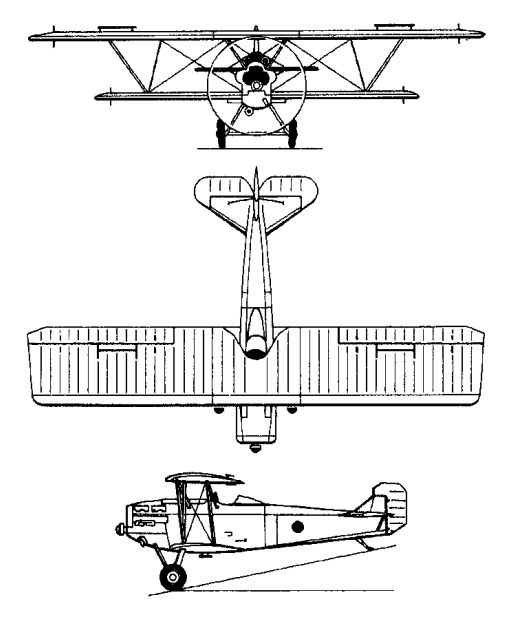
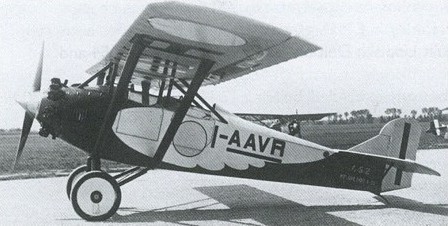
Engine: 1 x FIAT A.20, 295kW Max take-off weight: 1400 kg / 3086 lb Empty weight: 940 kg / 2072 lb Wingspan: 9.8 m / 32 ft 2 in Length: 6.6 m / 21 ft 8 in Height: 2.7 m / 8 ft 10 in Wing area: 25.8 sq.m / 277.71 sq ft Max. Speed: 280 km/h / 174 mph Ceiling: 7900 m / 25900 ft Range w/max.fuel: 600 km / 373 miles Armament: 4 machine-guns Crew: 1
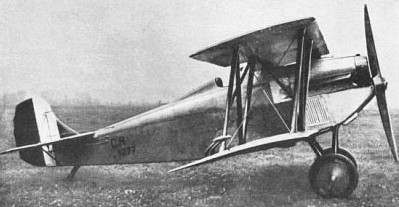
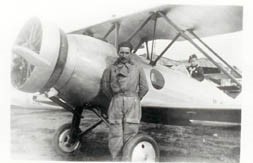
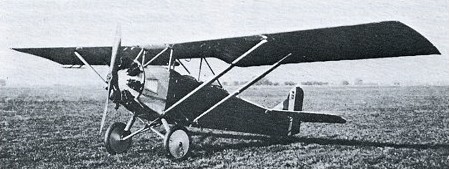
Two prototypes of the Fiat CR.1 biplane fighter, designed by Celestino Rosatelli, were flown in 1923, and the type was selected for large- scale production for the newly formed Regia Aeronautica. First deliveries of an eventual 240 production aircraft, designated CR.1, began in 1925. During the 1930s many Italian CR.1s were given more powerful Isotta Fraschini engines, and these were to continue in service until 1937. Nine aircraft were exported to Latvia. The Fiat CR.2, CR.5 and CR. 10 were variants of the basic aircraft fitted with different engines, usually on an experimental basis.
Fiat CR.1 Engine: 1 x 300hp Hispano-Suiza 42 8-cylinder Take-off weight: 1154 kg / 2544 lb Wingspan: 8.95 m / 29 ft 4 in Length: 6.16 m / 20 ft 3 in Height: 2.40 m / 7 ft 10 in Max. Speed: 272 km/h / 169 mph Ceiling: 7450 m / 24450 ft Armament: 2 x 7.7mm machine guns
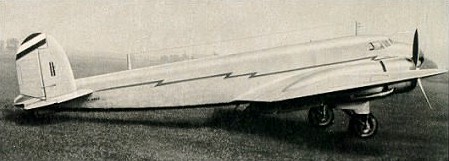
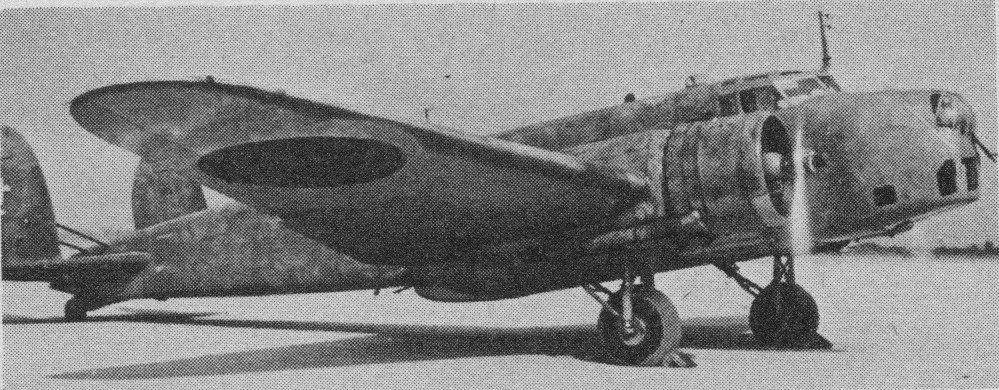
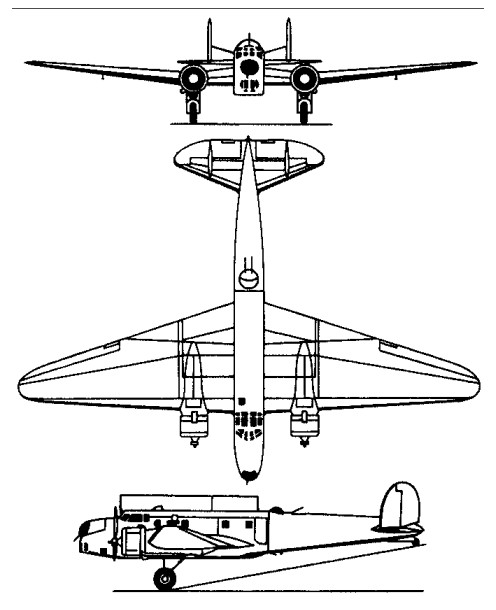
A medium bomber, the Fiat BR.20 Cicogna (stork) series was nearing obsolescence by the outbreak of World War II. Designed by Ingeniere Celestino Rosatelli, and owing much of its design to the Fiat APR.2 commercial transport, the Fiat B.R.20 prototype flew first on 10 February 1936.
Powered by two 745kW Fiat A.80 RC.41 radial engines, the B.R.20 possessed a maximum speed of 430km/h at 4000m, and was armed with two 7.7mm and one 12.7mm machine-guns. The first unit of the Regia Aeronautica to receive B.R.20s was the 13º Stormo BT stationed at Lonate Pozzolo: the 7º Stormo BT, also at Lonate, received Fiat B.R.20s in February 1937. Elements of the 7º and 13º Stormi BT were despatched to Spain in May 1937 for combat experience, while other B.R.20s were exported to Japan, and saw service with indifferent results in China and Manchuria as the JAAF’s Army Type 1 Model 100 Heavy bomber. Modified nose contours, increased armour protection and revised armament featured in the B.R.20M, of which 264 were produced.
When Italy declared war on 10 June 1940 the Regia Aeronautica had 162 Fiat B.R.20s and B.R.20Ms in commission with the 7º, 13º, 18º and 43º Stormi BT. The first bombing mission was made on 13 June when 19 B.R.20Ms of the 13º Stormo BT attacked installations at Hyeres and Fayence in southern France. A detachment of 80 B.R.20MS of the 13º and 43º Stormi BT were sent to the Belgian airfields of Chieveres and Melsbroeck in late September 1940 to assist the Luftwaffe in its bombing campaign against England. As part of the Corpo Aereo Italiano the B.R.20Ms suffered losses as a result of crew failings and fighter attacks. The campaign in Greece saw the 116º Gruppo (37º Stormo) in action from bases in Albania, followed by action over Crete, and on a day and night attacks against Malta. In the USSR B.R.20MS of the 38º and 116º Squadriglie operated from August 1942 in the southern sector.
Fifteen of the improved B.R.20bis model were produced. These were powered by two 932kW Fiat A.82 RC.42S engines, had additional 7.7mm machine-guns and a power-operated dorsal turret. Early in 1943 the B.R.20M bomber had been withdrawn from active service with the Regia Aeronautica, units being re-equipped either with CANT Z.1007s or with Savoia-Marchetti S.M.79S. Production totalled 602 of all marks.
In 1938 the JAAF purchased 80 BR.20 bombers for use in China, designated Type-I Italian Type. Western sources originally called it ‘Mikado’. It appeared in code lists as ‘Ruth’.
JAAF BR.20
FIAT BR. 20 Cicogna Engine: 2 x FIAT A. 80 RC.41, 986 hp / 745kW Length: 53 ft 2 in / 16.2 m Height: 14.108 ft / 4.3 m Wingspan: 70 ft 10 in / 21.56 m Wing area: 796.536 sqft / 74.0 sq.m Max take off weight: 21829.5 lb / 9900.0 kg Weight empty: 14112.0 lb / 6400.0 kg Max. speed: 267 mph / 233 kts / 432 km/h at 4000m Cruise speed: 340 km/h / 211 mph Service ceiling: 29528 ft / 9000 m Wing loading: 27.47 lb/sq.ft / 134.0 kg/sq.m Range w/max.fuel: 1620 nm / 3000 km Armament: 1x MG 12,7mm, 2x MG 7,7mm, 1600kg Bomb. Crew: 4-5
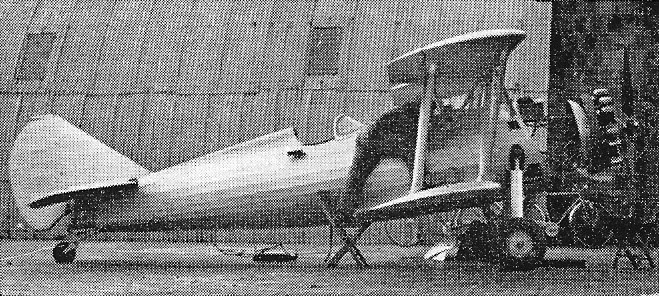
The Fiat G.8 was a military utility aircraft produced in Italy in the mid-1930s. Its design and production were undertaken at the CMASA works in Pisa which became part of Fiat in 1930, hence the type is sometimes referred to as the CMASA G.8 or Fiat-CMASA G.8.
Designed by Giuseppe Gabrielli, it was a conventional biplane design with staggered wings of unequal span braced by struts arranged in a Warren truss. The pilot and a single passenger (or instructor) sat in tandem open cockpits, and the aircraft was fitted with fixed tailskid undercarriage with divided main units.
The prototype first flew on 24 February 1934, sixty more of these aircraft were purchased by the Regia Aeronautica and used for liaison and training duties. They were retired in 1950.
Powerplant: 1 × Fiat A.54, 99 kW (135 hp) Wingspan: 8.76 m (28 ft 9 in) Wing area: 18.9 m2 (203 sq ft) Length: 7.00 m (23 ft 0 in) Height: 2.50 m (8 ft 2 in) Empty weight: 560 kg (1,230 lb) Gross weight: 840 kg (1,850 lb) Maximum speed: 212 km/h (132 mph, 115 kn) Range: 925 km (575 mi, 500 nmi) Service ceiling: 5,200 m (17,100 ft) Crew: one, pilot Capacity: one passenger
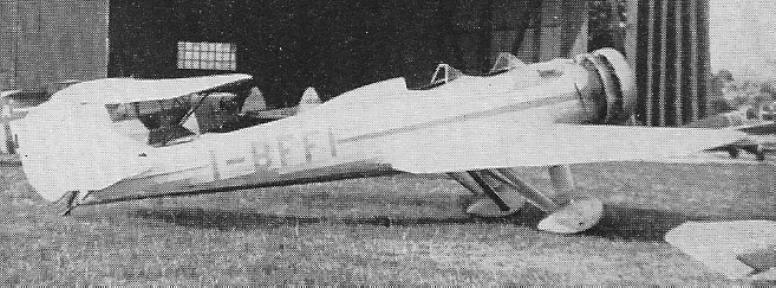
The Fiat G.5 tandem two-seat touring and training monoplane was produced in 1933 in two versions, the G.5 with a 140 hp Fiat A.54 radial engine, and the G.5bis with a 205 hp Fiat A.70 radial.
The prototype G.5 was powered by a 142 hp Fiat A.60 four cylinder inverted inline engine. The wing structure was entirely wood and the fuselage a welded steel-tube structure. Dual controls were fitted and the aircraft is fully aerobatic.
The G.5 was also produced as a three-seater.
G.5 Engine: 140 hp Fiat A.54
G.5bis Engine: 205 hp Fiat A.70 Max speed: 143 mph Cruise: 126 mph Ceiling: 18,900 ft Range: 478 mi Empty weight: 1280 lb Loaded weight: 1898 lb Wing span: 34 ft 1.5 in Length: 25 ft 9 in Height: 7 ft 11.75 in
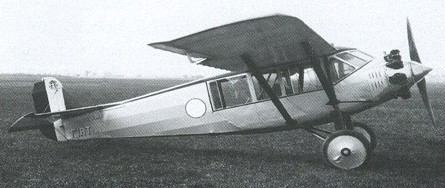
The Fiat AS.1 was a light touring aircraft developed in Italy in the late 1920s. It was a basic and conventional design: a parasol wing monoplane with tailskid undercarriage and seating for two in tandem open cockpits. The type proved extremely popular, and the production run would eventually extend to over 500 machines, with roughly half of these purchased by the Regia Aeronautica as trainers and liaison aircraft. Construction was of wood throughout, covered by plywood, fabric, and (around the nose) metal. A later development, designated TR.1 featured a metal structure instead.
TR.1
AS.1s were used successfully in a number of competitions and record-breaking events. In August 1929, they participated in the Challenge 1929 international contest, and in January 1930, an AS.1 piloted by Renato Donati with mechanic Gino Capannini was used to set endurance, distance, and altitude records in its class (29 hr 4 min 14 sec, 2,746.2 km/1,706.4 mi, and 6,782 m/22,251 ft respectively). On 28 December 1932, Furio Niclot and Mariano Lanciani used a specially-engined example to set the seaplane altitude record in its class (7,362 m/24,154 ft), then swapping wheels for pontoons, the same aircraft went on to set the equivalent landplane record two days later (9,282 m/30,453 ft). Long-distance feats included flights from Rome to Mogadishu and Vercelli to Tokyo (both by Francis Lombardi and Gino Capannini) and an aerial circumnavigation of Africa (27,600 km/17,150 miles) in 54 days by Francis Lombardi, Count Lodovico Mazzotti, and Mario Rasini).
AS.2
Variants
AS.1 – initial version with Fiat A.50 engine AS.1 Idro – floatplane version AS.1 Sci – ski-equipped version AS.2 – version with strengthened structure and Fiat A.50S engine TR.1 – version with metal structure and enclosed cabin
AS.1 Engine: 1 × Fiat A.50, 67 kW (90 hp) Length: 6.10 m (20 ft 0 in) Wingspan: 10.40 m (34 ft 2 in) Height: 2.53 m (8 ft 4 in) Wing area: 17.5 sq.m (188 sq.ft) Empty weight: 450 kg (990 lb) Gross weight: 690 kg (1,520 lb) Maximum speed: 158 km/h (98 mph) Range: 1,000 km (621 miles) Service ceiling: 6,800 m (22,310 ft) Crew: 1, pilot Capacity: 1 passenger
ITALY Aeronautica d’ltalia SA was the aeronautical branch of Fiat, occupying the factories of the old Ansaldo company which it had absorbed by the 1920s, although the Ansaldo name was still used. For this company and the Societa Italiano Aviazione the name Fiat (or Fiat-Aviazione, or Fiat- Divisione Aviazione) was used after 1924. Renamed FIAT, SOCIETA PER AZIONE 1949 to succeed Aeronautica d’ltalia, inheriting its plant and program. (Fiat’s Divisione Aviazione merged subsequently with Aerfer as Aeritalia formed November 12,1969, fully operational January 1,1972.) Fiat G49 advanced trainer flown September 1952. G80 jet trainer with de Havilland Goblin 35 engine, first flown December 9,1951, was first postwar Italian jet aircraft. In conjunction with Macchi built 80 de Havilland Vampire FB.52As; built 221 F-86K all-weather fighters for Italy, France, and West Germany, first example completed June 1955. G91 adopted as NATO light tactical fighter; prototype flown August 9,1956 and several hundred built subsequently. Prototype of G91Y variant first flew December 27,1966; 65 built for Italian Air Force. License-built 205 F-104S Starfighters for Italian Air Force. G222 twin-turboprop military transport project initiated before establishment of Aeritalia. Aeritalia was created in 1969 by a merger of Fiat’s aviation divisions with two smaller companies.
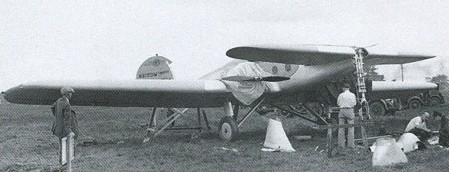
Constructed by Fernic, the T-9 made its first flight September 9, 1929. It was an 8 passenger transport powered by two Wright Whirlwind 220 hp.
Engines: two Wright Whirlwind 220 hp Wingspan: 18 m Canard span: 6.70 m. Length: 13 m. Height: 4.12 m Weight: empty: 2268 kg MTOW: 4536 kg Maximum speed: 196 km/h. Cruise: 161 km/h Landing speed: 68km/h.
USA Fernic Airplane Co., Westfield, NJ, built to designs of George Fernic (ex-Romanian AF): T-9 Cruisaire light transport 1929 followed by T-10 smaller test version 1930.