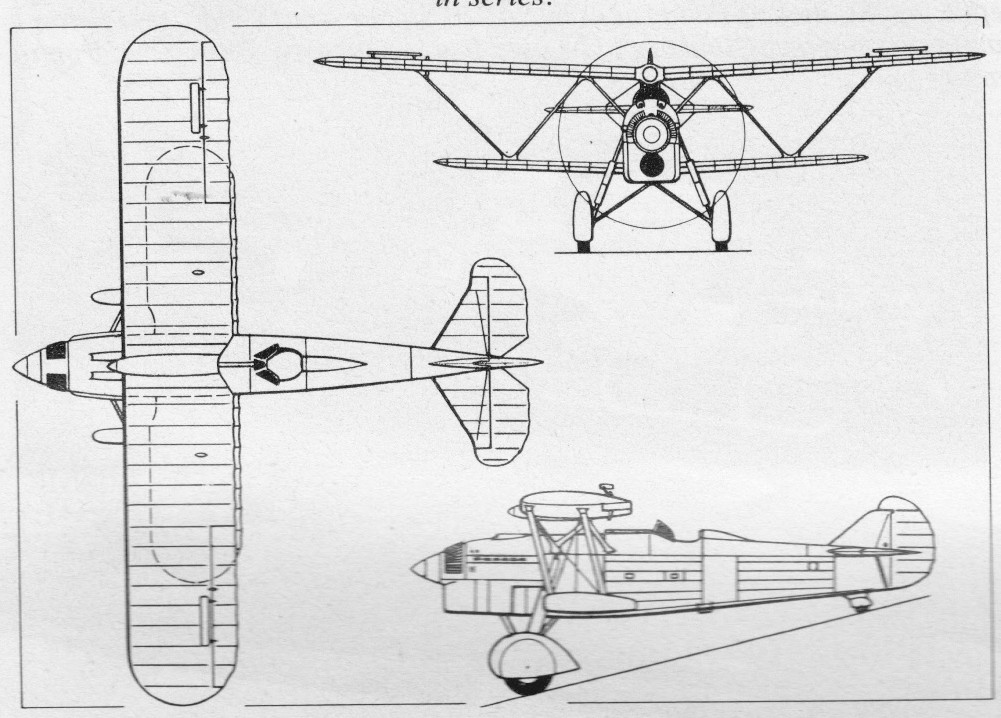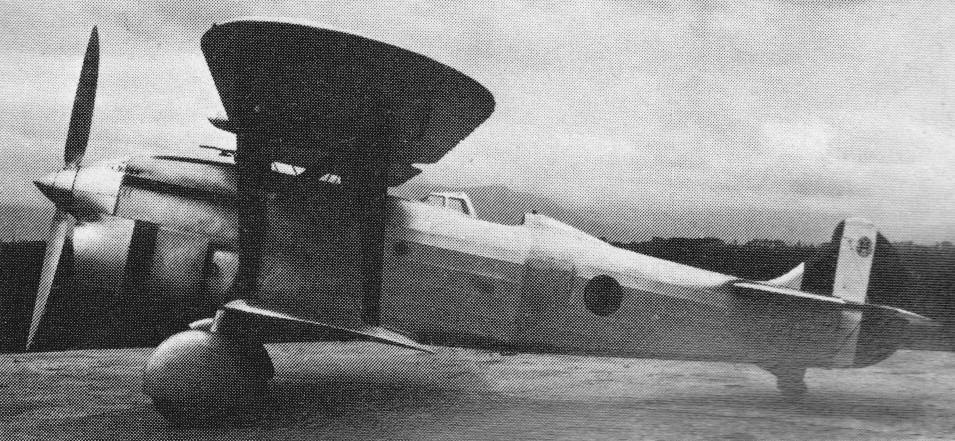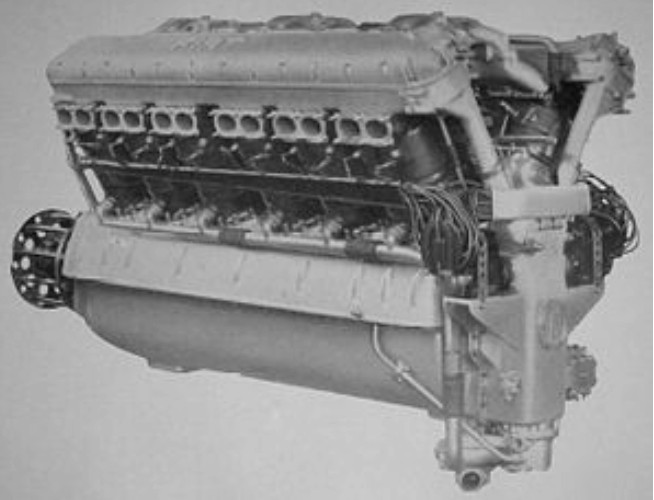
Fiat A.25

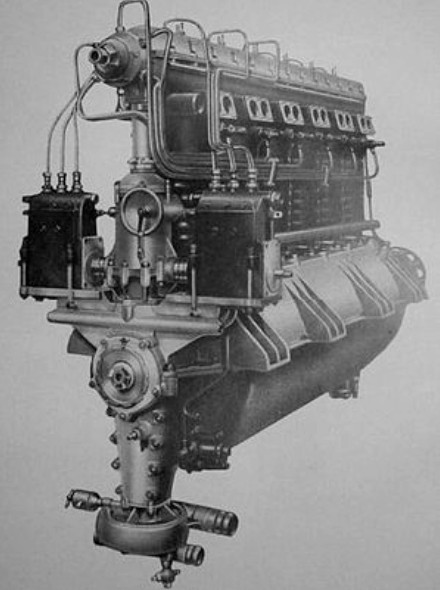
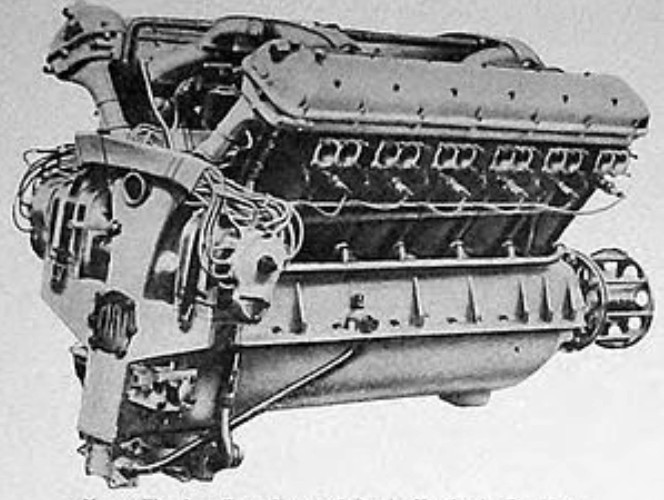
During the 1920s Fiat introduced several water-cooled aircraft engines, including the A.20, A.22, A24, A.25 and A.30. They were all upright V-12s with 60 degrees between the cylinder banks; capacities ranged between 18.7 L and 54.5 L (1,141-3,324 cu in) and power outputs between 320 kW and 745 kW (430-1,000 hp).

The Fiat A.22 produced 708 kW (950 hp) and was used by the Regia Aeronautica for fifteen years to power their Fiat BR.2 and BR.3 bombers.

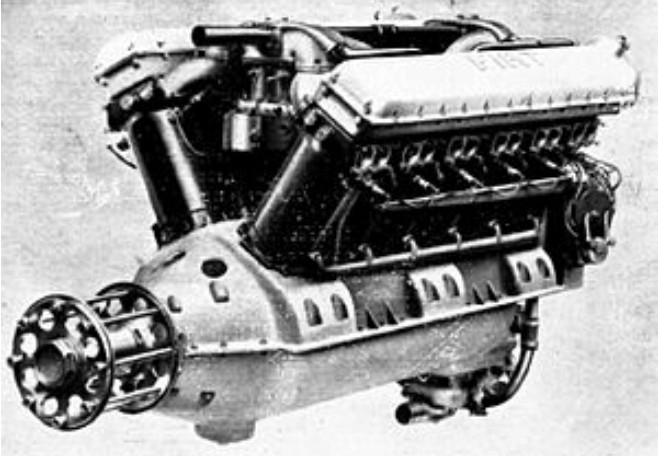
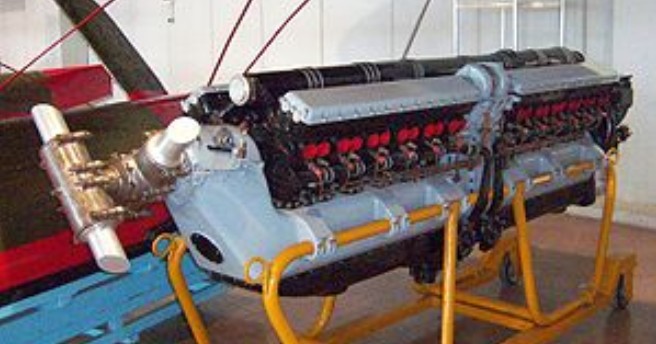
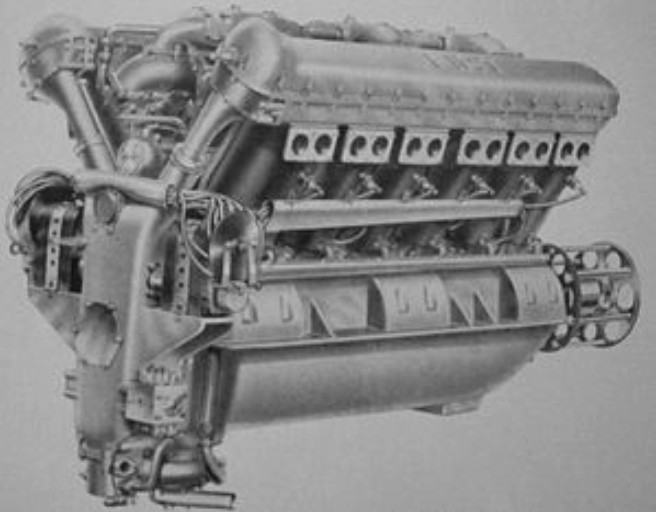
Producing 710 kW (950 hp) from 54.5 L (3,324 cu in), the A.25 was the largest and most powerful in the range. When Fiat were advised by the government to simplify their water-cooled product line, they focussed on the A.20, A.22 and A.30 models, so the A.25 was not further developed. They concentrated their higher power development effort on radial engines instead.

The only series produced types powered by the A.25 were the Fiat BR.2 and BR.3 single engine bombers. These began operating with the Regia Aeronautica in 1925. Some, used as trainers, were still in service in 1939.

Applications:
Fiat BR.2
Fiat BR.3
Fiat BR.4

Specifications:
Type: water cooled 60° upright V-12
Bore: 170 mm (5.31 in)
Stroke: 200 mm (6.29 in)
Displacement: 54.48 L (3,324 cu in)
Dry weight: 841 kg (1,854 lb)
Valvetrain: Two overhead camshafts, driven via enclosed, inclined shafts. The cams operate two inlet and two exhaust valves per cylinder. Housed under aluminium casings.
Fuel system: Three water heated Fiat carburettors mounted between cylinder banks, one serving each bank. Four spark plugs per cylinder, supplied by two Marelli MF.12 magnetos.
Oil system: One delivery pump and two scavenge pumps, in a single unit.
Cooling system: water, with centrifugal pump.
Cylinders: Forged steel barrels, with closed, flat ends.
Pistons: Aluminium alloy, two compression rings and one scraper ring above a fully floating gudgeon pin, with a second scraper ring below it.
Crankshaft: Each six throw, seven bearings.
Crankcase: Each an aluminium casting, split on crankshaft centre line. Bolted-on duralumin end caps.
Power output: normal, 708 kW (950 hp) at 1,700 rpm at sea level. Maximum, 745 kW (1,000 hp) at 1,900 rpm.
Compression ratio: 5.25:1
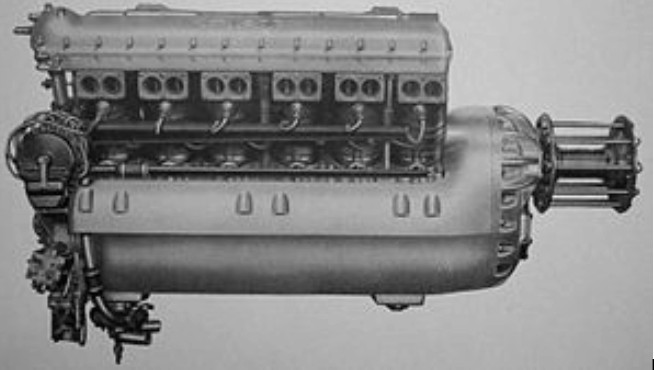
Fiat A.24

Fiat A.24R

The Fiat A.24 was an Italian water-cooled aircraft engine from the 1920s, built in modest numbers. It produced 520 kW (700 hp).

During the second half of the 1920s Fiat introduced several water-cooled aircraft engines, including the A.20, A.22, A24, A.25 and A.30. They were all upright V-12s with 60 degrees between the cylinder banks; capacities ranged between 18.7 L and 54.5 L (1,141-3,326 cu in) and power outputs between 320 kW and 745 kW (430-1,000 hp).

Producing 520 kW (700 hp) from 32.3 L (1,971 cu in), the A.24 was towards the centre of this range. When Fiat were advised by the government to simplify their water-cooled product line, they decided to focus on the A.20, A.22 and A.30 models so that the A.24 was not manufactured in large numbers.

Initial A.24version was ungeared, the A.24R had a geared output.

Applications:
CMASA MF.5
Fiat BRG
Savoia-Marchetti S.55A
Savoia-Marchetti S.66

Specifications:

A.24R
Type: water cooled 60 degree upright V-12
Bore: 140 mm (5.51 in)
Stroke: 175 mm (6.89 in)
Displacement: 32.3 L (1,971 cu in)
Length: 1.770 m (69.69 in)
Width: 735 mm (28.9 in)
Height: 1.065 m (41.93 in)
Dry weight: Dry 550 kg (1,213 lb)
Valvetrain: Two overhead camshafts, geared together, driving two inlet and two exhaust valves per cylinder. Housed under aluminium casings.
Fuel system: Twin water heated Fiat carburetters mounted between cylinder banks, one serving each bank. Two spark plugs per cylinder, placed horizontally and opposite each other, supplied by two Marelli MF.12 magnetos.
Oil system: One delivery pump and two scavenge pumps, in a single unit.
Cooling system: water, with centrifugal pump.
Reduction gear: 1.545:1 spur gear, lubricated via oil spout.
Cylinders: Forged steel barrels, with closed, flat ends.
Pistons: Aluminium alloy, two compression rings and two scraper rings above fully floating gudgeon pin.
Crankshaft: Each six throw, seven bearings.
Crankcase: Each an aluminium casting, split below crankshaft centre line. Bolted-on duralumin end caps.
Power output: 520 kW (700 hp) at 2,000 rpm, continuous.
Compression ratio: 5.7:1
Fuel consumption: 0.302 kg/kW/h (0.496 lb/hp/h)

Fiat A.22

Fiat A.22 T

The Fiat A.22 was an Italian water-cooled V-12 aircraft engine from the 1920s. It produced 425 kW (570 hp) and powered several absolute world distance records as well as commercial passenger flights.

During the second half of the 1920s Fiat introduced several water-cooled aircraft engines, including the A.20, A.22, A24, A.25 and A.30. They were all upright V-12s with 60 degrees between the cylinder banks; capacities ranged between 18.7 L and 54.5 L (1,141-3,326 cu in) and power outputs between 320 kW and 745 kW (430-1,000 hp).

Producing 425 kW (570 hp) from 27.5 L (1,678 cu in), the A.22 was towards the middle of these ranges. When Fiat were advised by the government to simplify their water-cooled product line, they focussed on the A.20, A.22 and A.30 models. The A.22 was first run in 1926 and a “few hundred” were built.

The A.22 was best known for its contribution to some world long distance record flightsmade by the single engine landplane Savoia-Marchetti S.64, which used the specially adapted A.22 T version. Between 31 May and 2 June 1928 this aircraft flew non-stop for 7,665 km (4,763 mi) to capture the world closed circuit distance record. The flight lasted 58 hr 34 min; the two crew, Capt. Arturo Ferrarin and Major Del Prete took turns as pilot. A month later, the same crew set a new world straight line distance record of 7,187 km (4,467 mi), flying from Italy to Brazil in 47 hr 55 min. The closed circuit record was later taken by the French but a slightly revised S.64bis recovered it for Italy with a distance of 8,187 km (5,088 mi) flown in 67 hr 13 min on 31 May-2 June 1930.

The A.22 R powered more conventional, airline, flights in a Savoia-Marchetti S.66 three engine flying boat operated by Ala Littoria on the Rome-Cagliari-Tripoli and Rome-Athens-Alexandria routes.

Variants:
A.22
Ungeared.

A.22 R
Geared.

A.22 T
Special version for Savoia-Marchetti S.64.

Specifications:

A.22 R
Type: water cooled 60° upright V-12
Bore: 135 mm (5.31 in)
Stroke: 160 mm (6.29 in)
Displacement: 27.5 L (1,678 cu in)
Dry weight: including propeller hub, 455 kg (1,004 lb)
Valvetrain: Two overhead camshafts, driven via enclosed, inclined shafts. The cams operate two inlet and two exhaust valves per cylinderHoused under aluminium casings.
Fuel system: Twin water heated Fiat carburettors mounted between cylinder banks, one serving each bank. Two spark plugs per cylinder, placed horizontally and opposite each other, supplied by two Marelli MF.12 magnetos.
Oil system: One delivery pump and two scavenge pumps, in a single unit.
Cooling system: water, with centrifugal pump.
Reduction gear: spur gear, lubricated via oil spout.
Cylinders: Forged steel barrels, with closed, flat ends.
Pistons: Aluminium alloy, two compression rings and one scraper ring above a fully floating gudgeon pin, with a second scraper ring below it.
Crankshaft: Each six throw, seven bearings.
Crankcase: Each an aluminium casting, split on crankshaft centre line. Bolted-on duralumin end caps.
Power output: normal, 425 kW (570 hp) at 1,900 rpm at sea level. Maximum, 462 kW (620 hp) at 2,100 rpm.
Compression ratio: 5.5:1

Fiat A.20

The Fiat A.20 was an Italian aero-engine of the 1920s. It was a water-cooled V12 engine that was used by early versions of the Fiat CR.20 fighter and the Macchi M.41 seaplane.

In 1923, FIAT built the A.15, a 430 hp (320 kW) water-cooled V12 engine. While no production of the A.15 ensued, it formed the basis for the Fiat A.20, which differed in being a Monobloc engine, and delivered a similar power despite a reduction in capacity from 20.3 to 18.7 L (1,239 to 1,141 cu.in).

Applications:
CANT 15
CANT 25
Fiat CR.20
Macchi M.41
Macchi M.71
Piaggio P.6
SIAI S.58 bis
SIAI S.67
Ansaldo AC.4

Specifications:

Fiat A.20
Type: Water-cooled V12 engine
Bore: 115 mm (4.5 in)
Stroke: 150 mm (5.9 in)
Displacement: 18.7 L (1,141 in3)[6]
Length: 1,645 mm (64.8 in)
Width: 645 mm (25.4 in)
Height: 845 mm (33.3 in)
Dry weight: 317.5 kg (699 lb)
Fuel system: twin carburettorss
Cooling system: water-cooled
Power output: 410 hp (306 kW)
Specific fuel consumption: 220 g/hp hour

Fiat AS.6

The Italian 1931 Schneider Trophy entrant, the Macchi M.C.72, required an engine of 2,300 horsepower (1,700 kW) with the capability of producing up to 2,800 horsepower (2,090 kW) while having a weight of not more than 840 kilograms (1,850 lb). The contract was awarded to Fiat, but their most powerful V engine to that date was the 1,000-horsepower (750 kW) 12-cylinder Fiat AS.5 that had also been used for Schneider Trophy racing.

The solution was to couple two AS.5 engines in tandem to produce a V-24 with each engine independently driving one of a pair of contra-rotating propellers through co-axial shafts. The rear engine drove the front propeller through a reduction gearbox, located between the two engines, up to a shaft that passed between the cylinder banks of the reverse-mounted forward engine. The latter’s crankshaft drive faced rearwards and drove the rearmost propeller in a likewise manner, but instead via a hollow shaft through which the rear engine driveshaft passed. A large rear-mounted supercharger was used to boost the engine, with the fuel/air mixture being delivered to the cylinders through a manifold that was centrally mounted between the cylinder banks of both engines.

The apparent advantages were that this configuration maintained a small frontal area, and that Fiat already had previous experience with the AS.5, while having a combined displacement of 50 litres (3,066 cu in) it was thought that the power requirement would be easily met.

In practice the engine was plagued with technical problems that led to the Italian team being unable to compete in the 1931 Schneider Trophy event. On 23 October 1934 however, after backfiring problems had been solved with the assistance of the British engineer “Rod” Banks, the AS.6 was used by Francesco Agello to set a new airspeed record for piston-powered seaplanes at 709.2 kilometres per hour (440.6 mph), a record that still stands today.

Applications
Macchi M.C.72

Specifications:

AS.6
Type: 24-cylinder V-engine
Bore: 138 mm (5.4 in)
Stroke: 140 mm (5.5 in)
Displacement: 50.25 L (3,066 cu in)
Dry weight: 930 kg (2,050 lb)
Valvetrain: Two intake and two exhaust valves per cylinder
Supercharger: Single-stage, centrifugal running at up to 19,000 rpm. Boost pressure 1.82 bar.
Fuel system: Carburettor
Cooling system: Liquid-cooled
Power output: 3,100 hp (2,300 kW) at 3,300 rpm
Compression ratio: 7:1
Power-to-weight ratio: 2.47 kW/kg (1.5 hp/lb)

Fiat AS.5

The Fiat AS.5 was an Italian 12-cylinder, liquid-cooled V engine designed for the 1929 Schneider Trophy contest Fiat planned a new seaplane to counter the British challengers from Gloster and Supermarine. To minimise frontal area they chose a compact V-12 engine design that set new size standards for a 1,000-horsepower (750 kW) class engine. This unsupercharged engine had a high power-to-weight ratio due to the use of a high compression ratio and a special fuel blend containing a 50/50 mix of petrol and benzole.

A problem encountered with the AS.5 was that it developed maximum power at high crankshaft speeds (3,000 rpm) but lacked output gearing, so that great care had to be taken with the choice of propellers. The production version did feature a reduction gear. The AS.5 was developed into the AS.6, essentially a tandem-coupled combination of two AS.5 units.

Applications
Fiat C.29

Specifications:
AS.5
Type: 12-cylinder V-engine
Bore: 138 mm (5.4 in)
Stroke: 140 mm (5.5 in)
Displacement: 25.13 L (1534 cu in)
Dry weight: 348 kg (767 lb)
Valvetrain: Two intake and two exhaust valves per cylinder
Fuel system: Carburettor
Cooling system: Liquid-cooled
Power output: 1,000 hp (750 kW) at 3,200 rpm
Compression ratio: 8:1
Power-to-weight ratio: 2.15 kW/kg (1.3 hp/lb)

Fiat AS.2 [engine]

The Fiat AS.2 was an Italian 12-cylinder, liquid-cooled V engine designed for the 1926 Schneider Trophy contest held at Hampton Roads, Virginia, the AS.2 featured separate steel cylinders and cast aluminium alloy cylinder heads. The starting point for the Italian engine was the earlier Fiat A.22. The ‘S’ in AS stood for ‘Spinto’ (thrust). A weakness of the engine was its magnesium alloy pistons, a new engineering material at the time. Many pistons were holed. Despite the engine’s technical problems it was successful at the Schneider Trophy event, winning on 13 November 1926, with a second AS.2 powered aircraft placing third.

Applications
Macchi M.39

Specifications:

AS.2
Type: 12-cylinder V-engine
Bore: 140 mm (5.5 in)
Stroke: 170 mm (6.7 in)
Displacement: 30.955 litres (1,889 cu in)
Width: 720 mm
Height: 850 mm
Dry weight: 408 kg (900 lb)
Valvetrain: Two intake and two exhaust valves per cylinder
Fuel system: Carburettor
Cooling system: Liquid-cooled
Power output: 596 kW (800 hp) at 2,500 rpm
Compression ratio: 6:1
Power-to-weight ratio: 1.46 kW/kg (0.9 hp/lb)

Fiat AN.1

Fiat’s interest in Diesel engines dated from 1907, initially focused on slow turning factory engines then moving to higher speed marine and railway motors. The water cooled straight six cylinder AN.1 was their first foray into Diesel aero-engines. To shorten its development time and to concentrate on the higher combustion chamber pressures, different burning temperatures and fuel supply systems of the Diesel cycle, they based its design on the Fiat A.12. This was a petrol engine first run in 1916 and produced in large numbers during World War I, a water-cooled, upright, overhead camshaft straight six. The AN.1 kept the external dimensions and the lower section, crankshaft, crankcase, sump, plus the lubrication and water-cooling supplies of the older engine but required new cylinders, pistons, valve gear and fuel delivery systems to replace carburettors and magnetos. The cylinder barrels had to be stronger to withstand the greater combustion pressures (2-300 atmospheres) required by the compression ignition Diesel. The swept volume of the Diesel engine was reduced by 23.4 % as the cylinders had a bore of 140 mm (5.51 in), compared with the A.12’s 160 mm (6.30 in). Two camshafts were fitted to operate the four valves per cylinder, though they were driven via the same tall vertical rod used for the single camshaft of the A.12, at its top, and the water pump of both models at its bottom.

The AN.1 was test flown in at least two aircraft, easily replacing the standard Fiat A.12bis in an Ansaldo A.300/4 reconnaissance and attack aircraft and also mounted in a specially designed biplane, the Fiat AN.1.

The first public performance of the AN.1 engine was at the Aerial Pageant held at Rome in June 1930 in the AN.1 biplane. This was flown by Renato Donati from the Fiat works at Turin to Rome, a distance of about 510 km (315 mi), on the first morning of the Pageant then displayed over Littorio Airport.

Applications
Ansaldo A.300/4
Fiat AN.1

Specifications
Type: Six cylinder inline, four stroke Diesel
Bore: 140 mm (5.51 in)
Stroke: 180 mm (7.09 in)
Displacement: 16.63 L (1,015 cu in)
Length: 1.78 m (70 in)
Width: 0.59 m (22 in)
Height: 1.14 m (45 in)
Dry weight: 390 kg (860 lb)
Valvetrain: Inlet and exhaust valves are driven directly from two parallel camshafts. The inlet valves draw in ambient air.
Fuel system: Each cylinder has its own fuel pump, arranged into two transverse banks of three at the rear of the engine. These meter, time and deliver fuel to an atomiser nozzle in the cylinder head which opens under fuel pressure.
Fuel type: Diesel (heavy-oil, naptha)
Cooling system: Water.
Cylinders: Steel barrels with two inlet and two exhaust valves formed in each cylinder head and with a central seating for the fuel injector. Water jackets and valve chambers welded on.
Pistons: Aluminium, with shaped heads to provide optimum compression ignition.
Power output: normal 180 hp (134 kW) at 1,600 rpm; maximum 220 hp (164 kW) at 1,700 rpm
Fuel consumption: 27 kg/(kW hr) (42 lb/(hp hr))

Fiat CR.32 / Hispano HA-132-1 Chirri

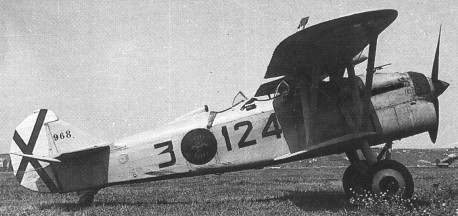
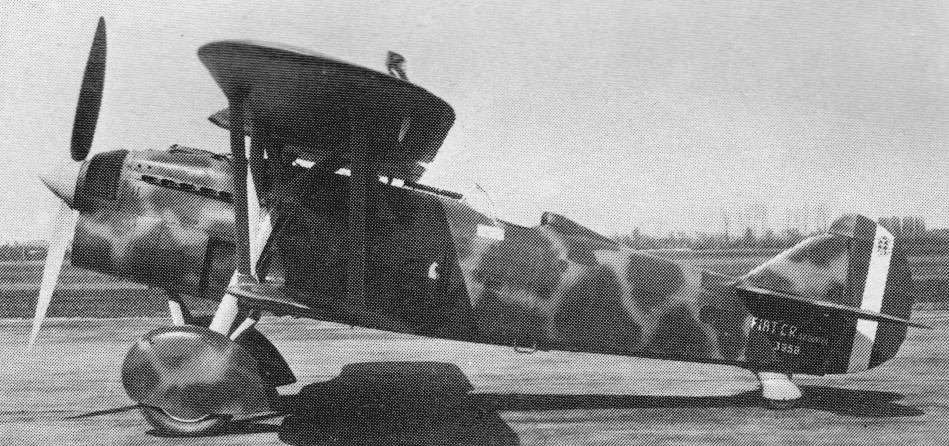
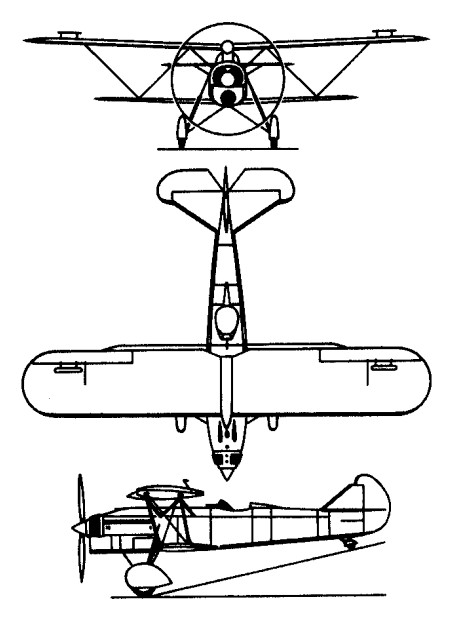
Italy’s most important fighter of the late 1930s, the CR32 biplane was first flown in August 1933 as a development of the CR30 using the same type of metal/fabric-covered all-metal structure and Warren-type interplane bracing but with smaller overall dimensions plus improved performance and agility, and Fiat A 30 RA engine.

First flown on 28 April 1933, the initial production series of 24 was supplied to China. Between March 1934 and February 1936, 282 CR.32s were delivered to the Regia Aeronautica and this fighter first saw active service in the Spanish Civil War with the Aviacion del Tercio in August 1936.

Fiat CR.32 Article

The CR.32 was numerically and operationally the most important fighter fielded by the Nationalists and their Italian allies in the Spanish Civil War, and the first 12 examples reached Nationalist units in Morocco as early as August 1936. A total of 377 of this type were sent to Spain, where they equipped the Nationalists’ 2-G-3 and 3-G-3 fighter units as well as five Italian gruppi. The CR.32 was faster in level flight and in the dive than the 1-15, and was also better armed when there arrived the CR.32bis and CR.32ter with heavier machine-guns; and by comparison with the -16 the CR.32 was more agile and more heavily armed. By a judicious use of tactics, therefore, Nationalist and Italian pilots were generally able to prevail over the Republican fighters.

The initial CR.32 delivered in 1935 had the 447-kW (600-hp) Fiat A.30 RAbis engine and two 7.7-mm (0.303-in) machine-guns, and these 350 aircraft were followed by 283 examples of the CR.32bis close-support version.

The CR.32bis had the improved 600 hp A 30 Rabis engine, two 12.7 mm and two 7.7-mm (0.303-in) machine-guns

Forty-five similar examples were supplied to Austria and 52 to Hungary (who eventually acquired 38 from Austria).

Next came 150 examples of an improved CR32, the CR.32ter for the Regia Aeronautica in July-December 1937, with revised landing gear and improved equipment, and the final aircraft here 337 CR.32quater fighters essentially similar to the CR.32ter but with a lightened structure and updated equipment.

CR.32quarer

Examples similar to the V were purchased by Paraguay (5) and Venezuela (9).

It was used in the early months of World War II in Greece and East Africa.

Hispano Aviacion SA manufactured over 100 Fiat CR. 32quater biplane fighter as the HA-132-1 Chirri between 1938- 1942. Forty of these later converted as two-seters.

Production of the CR.32 totalled 1211 aircraft.

FIAT CR 32 Chirri
Engine: FIAT A.30 RAbis, 592 hp / 440kW
Length: 24.442 ft / 7.45 m
Height: 8.629 ft / 2.63 m
Wingspan upper: 31.168 ft / 9.5 m
Wingspan lower: 6.2 m / 20 ft 4 in
Wing area: 237.884 sqft / 22.100 sq.m
Max take off weight: 4079.3 lb / 1850.0 kg
Weight empty: 2921.6 lb / 1325.0 kg
Max. speed: 202 kts / 375 km/h / 233 mph
Service ceiling: 28871 ft / 8800 m
Wing loading: 17.22 lb/sq.ft / 84.0 kg/sq.m
Range: 367 nm / 680 km
Crew: 1
Armament: 2x MG 7,7mm Breda-SAFAT

CR.32bis
Engine: l x Fiat A.30 RAbis, 447 kW (600 hp).
Span: 9.50m (3lft 2.25in).
Length: 7.47m (24ft 6in)
Normal T/O weight: 1975 kg (14,350 lb).
Max speed: 224 mph at 9,845 ft.
Operational range: 466 miles.
Armament: 2 x 12.7-mm (0.5-in) and two 7.7-mm (0.303-in) mg plus 100 kg (220 lb) of bombs

CR.32ter
Engine: l x Fiat A.30 RA bis, 447kW (600 hp).
Span: 9.50m (31ft 2in).
Length: 7.45m (24ft 5.25 in).
Height: 2.63m / 8 ft 7.5 in
Wing area: 22.10 sq.m / 237.88 sq.ft
Empty weight: 3205 lb / 1454 kg
Max T/O weight: 1915kg (4,222 lb).
Max speed: 295 mph / 330 kph at SL / 220 mph at 9840 ft. / 3000 m
Time to 3280ft / 1000m: 1.58min
Operational range: 485 m / 780 km at 196 mph / 315 kph
Armament: 2 x 12.7-mm (0.5-in) mg plus bombs

CR.32quater

CR.32quater