Fieseler Fi 98

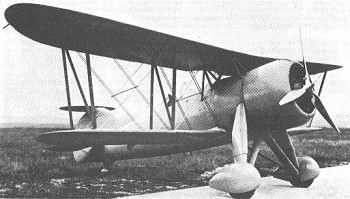
The Fi.98 was a biplane dive bomber that competed with the Hs.123, but was abandoned early. Only one was built, the second prototype was cancelled.

Engine: 1 x BMW 132A-3, 485kW
Take-off weight: 2160 kg / 4762 lb
Empty weight: 1450 kg / 3197 lb
Wingspan: 11.50 m / 37 ft 9 in
Length: 7.40 m / 24 ft 3 in
Height: 3.00 m / 9 ft 10 in
Wing area: 25.5 sq.m / 274.48 sq ft
Max. Speed: 295 km/h / 183 mph
Ceiling: 9000 m / 29550 ft
Range: 470 km / 292 miles
Armament: 2 x 7.92mm machine-guns

Fieseler F3 Wespe / Delta Ivb

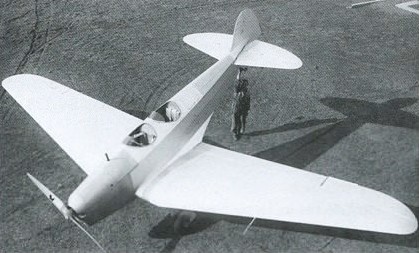
The pre war German airshow flier Gerhard Fieseler enlisted Lippisch’s help in designing a two seat tailless touring aircraft for the 1932 Europarundflug the air races and trials then held every four years. Fieseler’s F3 Wespe (Wasp) or Delta IVb had delta wings which folded (Rundflug aircraft had to be able to fit into a small storage shed) and two engines arranged in a centreline thrust push pull configuration. Fieseler flew it before Lippisch was fully satisfied with the design. He crashed, and rapidly lost interest in tailless aircraft.
The F3 had tractor and pusher engines, and rebuilt, he hired a young man named Wiegmeier, who proceeded to crash both Deltas III and IV on consecutive flights. Lippisch fired him.
Lippisch was able to rebuild the Wespe once again as the DFS 39 Delta IVc, a single engined two-seater with a drastically modified wing planform incorporating sharply drooped tips. The modified type was awarded a certificate of airworthiness in 1936 and won Lippisch leadership of the design team for Projekt X.

Gerhard Fieseler Werke GmbH

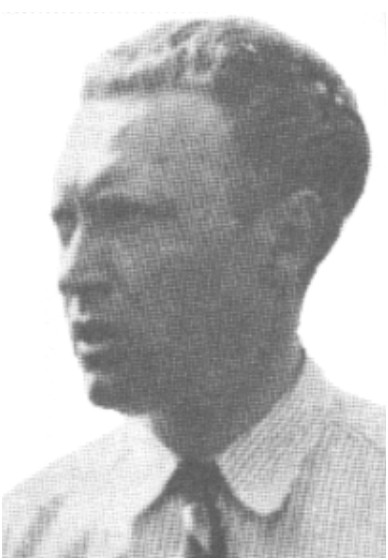
Gerhard Fieseler

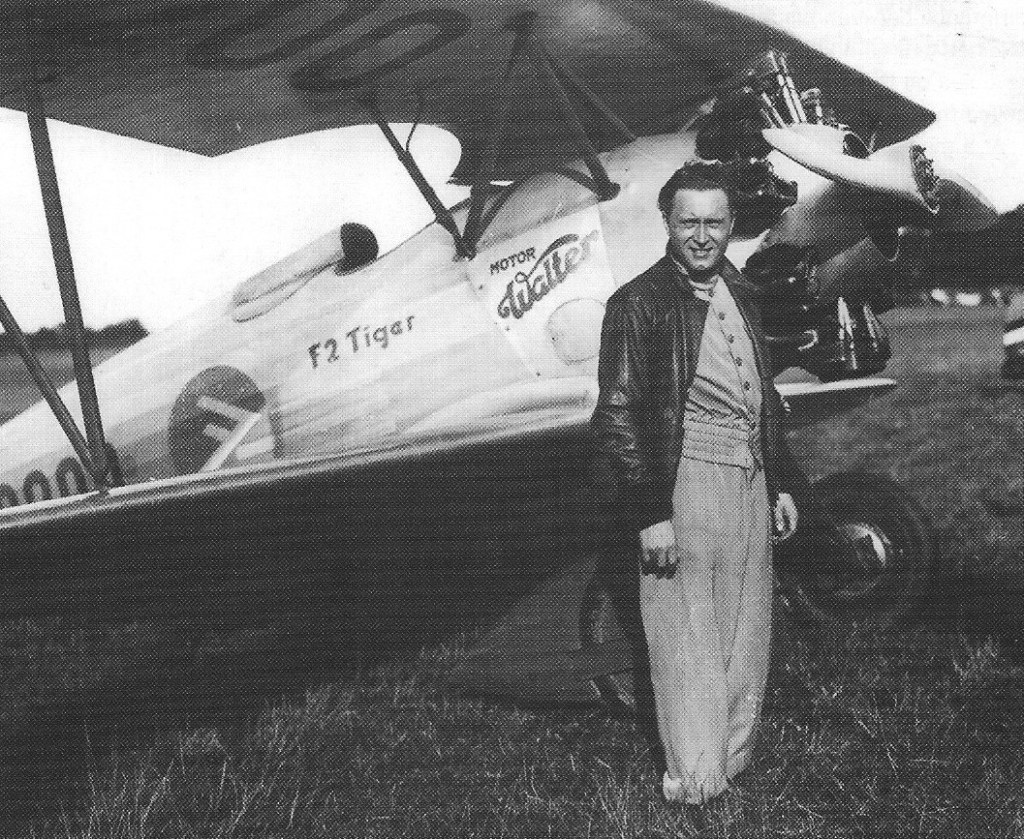
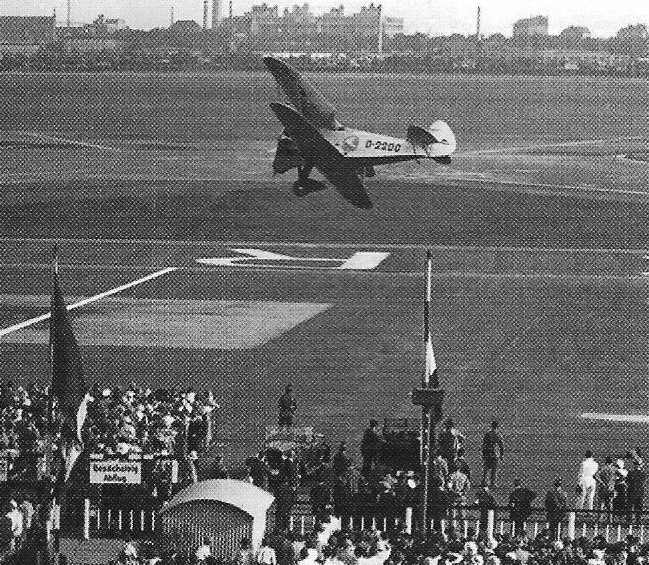
Gerhard Fieseler Werke GmbH established by the aerobatic pilot in 1930. Fi 2 Tiger produced for Fieseler’s own use. Fi 5R two-seat lightplane and Fi 97 four-seat cabin monoplane preceded Fi 156 Storch liaison and communications aircraft with high-lift slots and flaps. Also built Fi 167 torpedo bomber/reconnaissance biplane, designed for carrier operation. Manufactured Messerschmitt Bf 109 fighters.

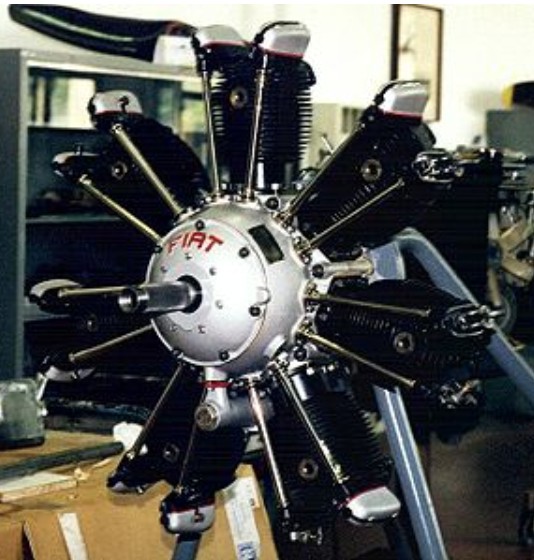
Fiat A.74

Fiat A.74 RIC38

The Fiat A.74 was a two-row, fourteen-cylinder, air-cooled radial engine produced in Italy in the 1930s as a powerplant for aircraft. It marked a transition for Fiat from liquid-cooled inline engines, to large air-cooled radial engines. Fiat had made a number of smaller radial air engines over the years but the A.74 marked a major increase in power and size. The A.74 family was widely produced and spawned a number of related engines such as the A.76, A.80 and A.82. Each successive generation being larger and more powerful than the previous. The entire series grew from 14 cylinders to 18 cylinders with a power output of 870 hp to 1,400 hp.

Applications:
CANSA FC.20
Fiat CR.42
Fiat G.50
Fiat RS.14
Macchi C.200

Variants:
R.C.38
R.C.42

Specifications:
A.74
Type: 14-cylinder air-cooled radial
Bore: 140 mm (5.512 in)
Stroke: 145 mm (5.709 in)
Displacement: 31.25 L (1,906.9 cu in)
Length: 1,044mm (41.13 in)
Width: 653mm (25.71 in)
Height: 1,195 mm (47.05 in)
Dry weight: 565 kg (1,246 lb)
Valvetrain: One intake and one sodium-cooled exhaust valve per cylinder
Fuel system: 1 Stromberg carburettor
Fuel type: 87 octane
Cooling system: air-cooled
Power output: 870 cv (858 hp, 640 kW) at 2,520 rpm at sea level (take-off power); 960 cv (947 hp, 706 kW) at 2520 rpm at 3,000 m (Emergency power)
Compression ratio: 6.7:1
Power-to-weight ratio: 0.67 hp/lb

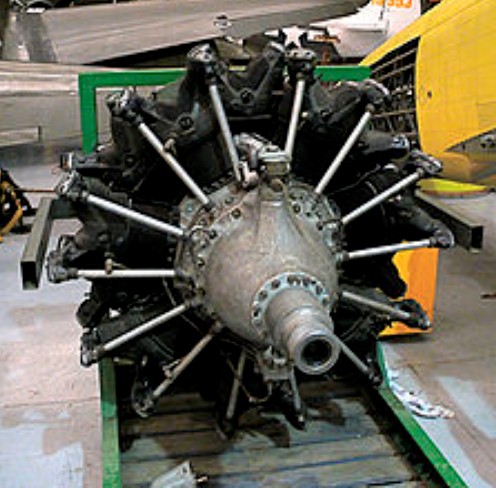
Fiat A.54

The Fiat A.54 was a seven-cylinder, air-cooled radial engine developed in Italy in the 1930s as a powerplant for aircraft. Amongst others, it powered the Ambrosini SAI.1 and SAI.2 racing aircraft.

Applications:
Ambrosini SAI.1
Ambrosini SAI.2
Caproni Ca.100
Fiat G2.4
Jona J-6

Specifications:
Type: 7-cylinder air-cooled radial
Bore: 105 mm (4.13 in)
Stroke: 120 mm (4.72 in)
Displacement: 7.27 L (443.9 cu in)
Length: 1,770 mm (69.69 in)
Width: 734 mm (28.93 in)
Height: 1,065 mm (41.93 in)
Dry weight: 150 kg (330.7 lb)
Valvetrain: One intake and one sodium-cooled exhaust valve per cylinder
Fuel system: 1 Stromberg carburettor
Fuel type: 74 octane
Cooling system: Air-cooled
Power output: 140 hp (104 kW) at 2,100 rpm
Compression ratio: 5.5:1
Power-to-weight ratio: 0.42 hp/lb (0.7 kW/kg)

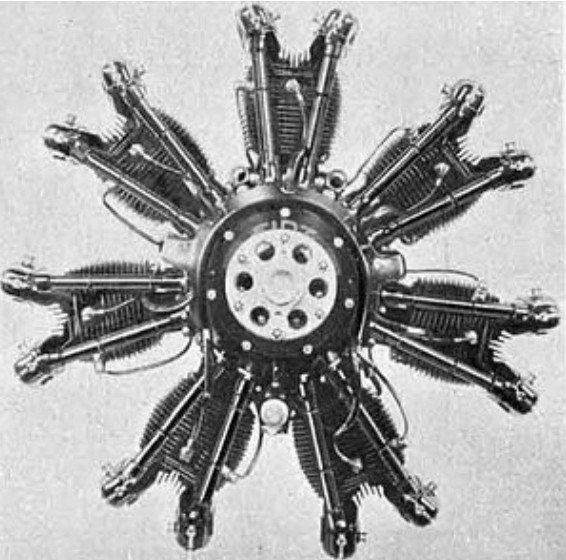
Fiat A.50

The Fiat A.50 was a seven-cylinder, air-cooled radial engine for aircraft use built in Italy in the 1930s. It was first run in 1928, it had a bore and stoke of 100 mm × 120 mm (3.94 in × 4.72 in)(6.6 L / 402.6 cuin) and was rated at 78 kW (105 hp) at 1,800 rpm.

Applications:
Ambrosini SAI.3
Ambrosini SAI.10
CANSA C.5
CANT 26
Caproni Ca.100
Fiat AS.1
IMAM Ro.5

Specifications:
Type: Seven-cylinder radial engine
Bore: 100 mm (3.94 in)
Stroke: 120 mm (4.72 in)
Displacement: 6.6 L (402.6 cu in)
Fuel system: Carburettor
Cooling system: Air-cooled
Power output: 78 kW (105 hp)

Fiat A.30

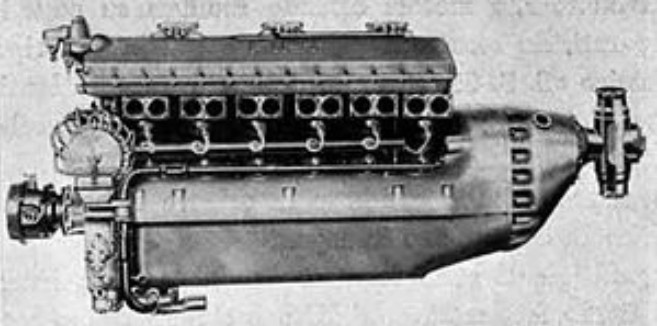
The Fiat A.30 R.A. was an Italian water-cooled V-12 aircraft engine from the 1920s, built in large numbers and serving with several air forces up to the beginning of World War II. It produced 447 kW (600 hp).

During the second half of the 1920s Fiat introduced several water-cooled aircraft engines, including the A.20, A.22, A24, A.25 and A.30. They were all upright V-12s with 60 degrees between the cylinder banks; capacities ranged between 18.7 L and 54.5 L (1,141-3,326 cu in) and power outputs between 320 kW and 745 kW (430-1,000 hp). Producing 447 kW (600 hp) from 24.0 L (1,464 cu in), the A.30RA was towards the low power end of these ranges. The R, (Riduttori – reduced), indicated that the output was geared down.

Many of the production A.30 R.A.s were fitted in Fiat’s own fighters and fighter trainers, particularly in the Fiat C.R.32. Both this aircraft type and the Meridionali Ro.37 remained in service with the Regia Aeronautica when Italy joined in World War II in 1940; by then the engine was seriously dated. Before the war similarly powered CR.30s had been sold to the air forces of Austria, China and Paraguay, the Austrian aircraft ending their service with the Luftwaffe after the Anschluss. Ultimately 2,679 A.30 R.A. and A.30 R.A.bis engines were built.

Variants:
A.30 R.A.
A.30 R.A.bis

Applications:
CMASA MF.10
Fiat CR.30
Fiat CR.32
Fiat CANSA FC.12
IMAM Ro.37

Specifications:

A.30RA
Type: water cooled 60 degree upright V-12
Bore: 135 mm (5.31 in)
Stroke: 140 mm 5.51 in)
Displacement: 24.0 L ( 1,464 cu in)
Length: 1.751 m (68.94 in)
Width: 653 mm (25.71 in)
Height: 935 mm (36.82 in)
Dry weight: Dry 480 kg (1,060 lb)
Valvetrain: Two overhead camshafts, geared together, driving two inlet and two exhaust valves per cylinder. Housed under aluminium casings.
Fuel system: Twin water heated Fiat carburetters mounted between cylinder banks, one serving each bank. Two spark plugs per cylinder, placed horizontally and opposite each other, supplied by two Marelli MF.12 magnetos.
Oil system: One delivery pump and two scavenge pumps, in a single unit.
Cooling system: water, with centrifugal pump.
Reduction gear: 1.611:1 spur gear, lubricated via oil spout.
Cylinders: Forged steel barrels, with closed, flat ends.
Pistons: Aluminium alloy, two compression rings and one scraper ring above a fully floating gudgeon pin, with a second scraper ring below it.
Crankshaft: Each six throw, seven bearings.
Crankcase: Each an aluminium casting, split on crankshaft centre line. Bolted-on duralumin end caps.
Power output: Normal, 447 kW (600 hp) at 2,000 rpm at sea level. Take-off, 596 kW (800 hp) at 2,900 rpm.
Compression ratio: 8:1
Fuel consumption: 0.322 kg/kW/h (0.529 lb/hp/h)