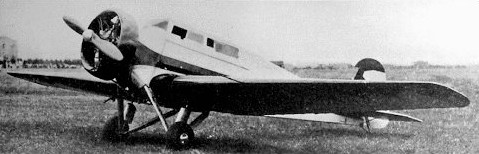
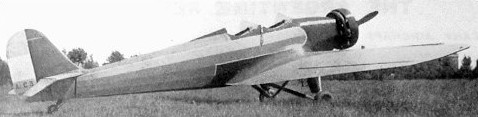
FMA Ae.C.4

1936

Engine; 1 x 130hp de Havilland Gipsy Major
Wingspan; 12.16 m / 40 ft 11 in
Length; 7.44 m / 24 ft 5 in
Height; 2.70 m / 9 ft 10 in
Wing area; 16.00 sq.m / 172.22 sq ft
Max take-off weight; 932 kg / 2055 lb
Empty weight; 610 kg / 1345 lb
Max. speed; 200 km/h / 124 mph
Cruise speed; 165 km/h / 103 mph
Ceiling; 6000 m / 19700 ft
Range; 1000 km / 621 miles
Crew; 2

FMA Ae.C.3

Ae.C-3 light aircraft of 1934.

Engine; 1 x 145hp Armstrong Siddley Genet Major
Wingspan; 12.30 m / 40 ft 4 in
Length; 8.20 m / 27 ft 11 in
Height; 2.50 m / 8 ft 2 in
Wing area; 16.90 sq.m / 181.91 sq ft
Take-off weight; 964 kg / 2125 lb
Empty weight; 670 kg / 1477 lb
Max. speed; 170 km/h / 106 mph
Cruise speed; 152 km/h / 94 mph
Ceiling; 5500 m / 18050 ft
Range; 700 km / 435 miles
Crew; 2

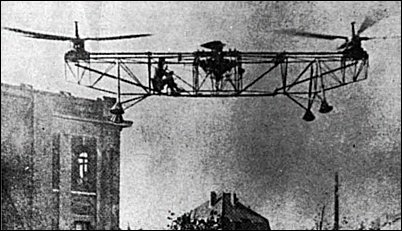
FMA Ae.C.2

The Ae.C-2 trainer of 1932.

Engine; 1 x 165hp Wright Whirlwind R-54013
Wingspan; 12.00 m / 39 ft 4 in
Length; 7.90 m / 26 ft 11 in
Height; 2.70 m / 9 ft 10 in
Wing area; 19.00 sq.m / 204.51 sq.ft
Max take-off weight; 1130 kg / 2491 lb
Empty weight; 650 kg / 1433 lb
Max. speed; 220 km/h / 137 mph
Cruise speed; 175 km/h / 109 mph
Ceiling; 5000 m / 16400 ft
Range; 1500 km / 932 miles
Crew; 1
Passengers; 2

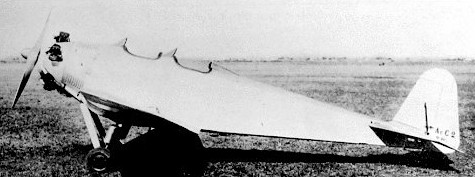
FMA Ae.C.1

The first Argentine plane designed and built was the Ae.C.1A three-seat monoplane of April 1931.

Engine; 1 x 150hp Armstrong Siddeley Mongoose
Wingspan; 12.00 m / 39 ft 4 in
Length; 7.75 m / 25 ft 5 in
Height; 3.16 m / 10 ft 4 in
Wing area; 19.00 sq.m / 204.51 sq ft
Max take-off weight; 1120 kg / 2469 lb
Empty weight; 700 kg / 1543 lb
Max. speed; 171 km/h / 106 mph
Cruise speed; 154 km/h / 96 mph
Ceiling; 4300 m / 14100 ft
Range; 1300 km / 808 miles
Crew; 1
Passengers; 2

FMA / Fabrica Militar de Aviones / Aerotecnico / DINFIA / LMMASA

Originally founded in 1927 as the Fabrica Militar de Aviones SA (FMA), for aeronautical research and production at Cordoba.

The biggest aeronautical development and production center in Argentina was the Fábrica Militar de Aviones in Córdoba, an inland city 700 kilometers from Buenos Aires. The company first built airplaces (1929) and engines (1930) under license and later began building its own planes the Ae.C.1, a three-seated passenger plane with a covered cockpit.

Redesignated Institute Aerotecnico 20 October 1943.
As Industrias Aeronauticas y Mecanicas del Estado (IAME) formed March 28,1952 to take over State activities concerning military and civil aircraft, and incorporating the Institute Aerotecnico (formerly Fabrica Militar de Aviones). I.A.35 was twin-engined multipurpose monoplane; I.A.33 Pulqui II (first flown February 1951) a swept-wing jet fighter designed by Kurt Tank. Six Pulqui built 1955/56.
Nationalized 1957, with aircraft works at the Fabrica Militar de Aviones at Cordoba, under DINFIA (Direccion Nacional de Fabricaciones e Investigaciones Aeronauticas) name. Began with design and construction of IA 46 light aircraft, twin-engined transports IA 35, IA 45, the IA 38 four-engined tailless transport designed by Dr. Reimar Horten, and the IA 37, a small delta-wing aircraft. In 1966 began license construction of Cessna 182 and indigenous light turboprop and piston-engined transports.
Reverted to name FMA in 1968, becoming part of Area de Materiel Cordoba division of the Argentine Air Force.
December 1994 agreement between the Government of Argentina and Lockheed Aircraft Service Company to privatize FMA aircraft factory and maintenance depot at Cordoba, with Lockheed operating as the management organization from July 1995.
License-production 1927-1943 included Avro 504R, Dewoitine D.21 C, Bristol F.2B, Focke-Wulf Fw 44J, Curtiss Hawk 75. Indigenous designs included Ae.C-1 three-seat monoplane, Ae.C-2 trainer of 1932, Ae.T-1 fiveseater of 1933, Ae.C-3 light aircraft of 1934, and Ae.M- 01 built for Argentine Army. El Boyero two-seater built 1939-1940. Production of the IA.58 Pucara twin-turboprop COIN aircraft for Argentine Air Force ended in 1986. First flight of IA.63 Pampa advanced and weapon training jet trainer, and also for light attack, took place in October 1984.

In 1995 FMA was closed and privatized in 1995 to Lockheed Martin Corporation.

Flygindustri AB

Sweden
Subsidiary of Junkers FlugzeugWerkeAG., established at Linhamm, Malmo, effectively escaping restrictions on aircraft construction in Germany. Civil production included the A 20 two/three-seat mail/freight aircraft introduced in 1923, G 23/G 24 three-engined nine-passenger airliners in 1924/25 and the single-engined, six-passenger W 34 built up to 1935. Three-engined K-30C bomber built 1924 and supplied to Russia as R 42; K-37 twin-engined light bomber flown 1927; 174 built in Japan by Kawasaki and Mitsubishi. K-47 monoplane appeared 1928, used as research aircraft for dive-bombing techniques, benefiting later Ju 87 program.

Florov, Ilya Florentievich

Ilya Florentievich Florov (Russian: Илья Флорентьевич Флоров) was born on 5 August of 1908 in Novocherkassk, son of a military engineer who reached colonel in the Russian Army and participated in the Russo-Japanese War.

His father disappeared during the civil war and mother, with her children, moved to Yekaterinodar. In this city Florov completed high school and in 1926 he entered the mechanics department of the Novocherkask Aviation Institute, graduating in 1931.

After graduating he began working at Gorky Aviation Factory No.21 in the construction and drawing department (ChKO), dedicated to meeting the needs of the factory’s series production. At that time Factory No.21 was mass-producing the Polikarpov I-5 fighter and the VVS urgently needed a new training aircraft for this fighter.

For this purpose, a new group was created at the factory, led by engineer BV Kupryanov, including Ilya Florov and Alexei Borovkov . The new model was known as UTI-1 and about 20 copies were built. This was Florov’s first serious aircraft construction work. Later he would participate in the development of several versions of training aircraft on the I-16 fighter known as UTI-2, 3 and 4.

In 1936 the ChKO was divided into two independent departments: The Special Construction Bureau (BOK) and the Mass Production Monitoring Bureau. The BOK soon became known as the Experimental Construction Bureau (OKO), after the acronym for Opitni Konstruktorskoye Biuró. 43 BOK technicians and specialists and another 10 from Moscow were integrated into this organization. IF Florov was appointed as head of the OKO and therefore replacement for Nikolai Polikarpov,.

In 1935 Florov, together with AA Borovkov, developed a compact biplane fighter with no connection between the planes. The VVS management decided to support this initiative and a new OKB was soon created at Factory No.207 for the development of this project. In 1937 the first example of this aircraft was created with an 800 hp M-85 engine that would lead to the I-207. Various configurations were tested until the beginning of the Great Patriotic War.

From 1941 Florov began to work in Bolkhovitinov’s OKB as head of department and substitute for the main constructor, participating in the creation of the first reactive interceptor of the USSR, the Bereznyak / Isayev BI.

Starting in 1944, Florov developed in the NII-1 a group of investigations on the development prospects of aviation with different types of power plants. Here under his direction a reactive powerplant aircraft designed to use an AM Isayev engine (Airplane No.4302) or an LS Dushkin engine (Airplane No.4303) was created and tested. These works were continued until 1948, when the aviation sector of the NII-1 was closed.

In 1948 the NII-1 was absorbed by the TsIAM and under the direction of Florov these works were continued in the aviation department of this institution, directed by him until 1952 and then between 1957 and 1982.

Florov received two Order of the Red Banner of Labor and the Order of the October Revolution.

Ilya Florentievich Florov died in Moscow in 1983. In December 2003 a plaque was unveiled in Moscow in memory of Ilya Florov.
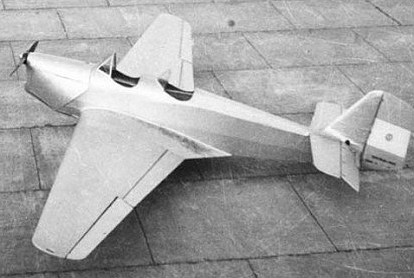
Florine Helicopter

The first twin tandem rotor machine to fly was built by Nicolas Florine in Belgium. First flown in April 1933, it soon attained an altitude of 6m and an endurance of 8 minutes. Although the rotors did not counter-rotate, they were tilted slightly in opposite directions to counter torque.
One interesting development effort of the early 1930s was a series of tandem-rotor helicopters built by Russian-born engineer Nicolas Florine in Belgium, one of which hovered at altitude for ten minutes.