The obvious promise in the Fw 61’s basic design led to a development contract for a 6-passenger feeder transport, the Fa 266 for Deutsche Lufthansa, and a prototype of this aircraft (D-OCEB) was completed during the early part of 1939. War intervened, however, before this machine could be flown, and it was subsequently developed for a military role with the type number Fa 223.
Inter-Wars
Focke-Achgelis Fa 224
Despite the great success of the Fa 61 and the large amount of publicity its noteworthy flights received, it was in reality no more than an experimental machine to put Prof Focke’s ideas to the test. There was, however, to have been a two-seat sports version of the Fa 61, designated Fa 224, which would have had performance augmented by use of the more powerful 270hp Argus As 10C engine, but this was shelved with the advent of war.
Focke-Achgelis Fa 186
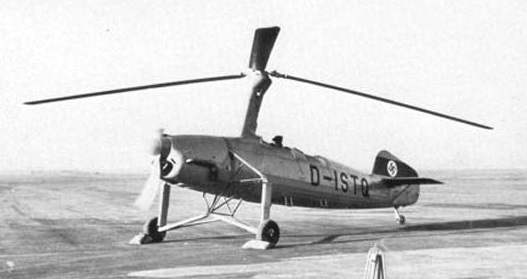
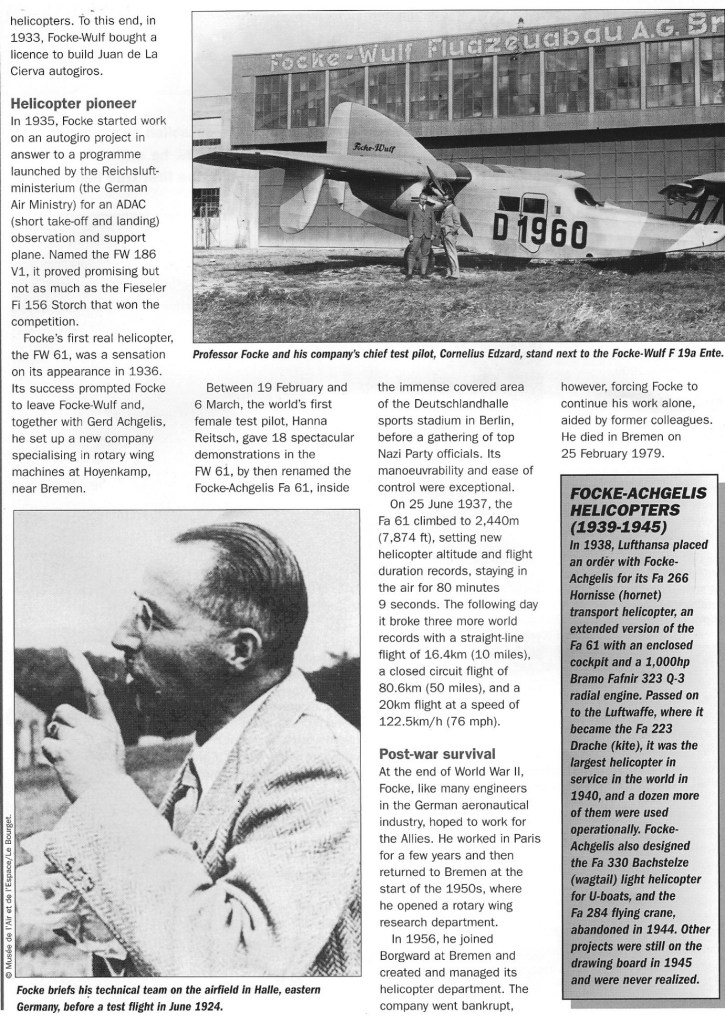
German helicopter development began with Focke Wulf’s acquisition of the rights to manufacture Cierva autogyros during the 1920’s. Over 30 Cierva C.19 and C.30 autogyros were built during the late twenties and early thirties, and from this experience, Heinrich Focke, the engineering half of the Focke Wulf organization, decided to develop an original autogyro design to compete in the Luftwaffe’s contest to provide a utility-liaison aircraft. The Fa 186 was a one-man autogyro built by Focke-Wulf in 1937 with backing from the RLM (ReichsLuftfahrtMinisterium – Reich Aviation Ministry).
The Fa-186 was essentially a FW-56 “Stosser” parasol wing advanced trainer, with the wings removed, tail unit and landing gear redesigned and configured for two seats in tandem. The engine remained unchanged, with a clutch arrangement installed to start the blades rotating for takeoff. An autogyro uses the main powerplant for forward thrust while the rotors freewheel in flight. The aircraft could take off and land in very short distances, but it could not hover or take off and land vertically. Although the Fa-186 was successfully flown it was beaten out by the Fieseler Fi-156 Storch for the Luftwaffe contract. Only one prototype of the aircraft was constructed, and the project was abandoned when the RLM preferred the Fieseler Fi 156 Storch over the Fw 186.
The ilmavoimat / Maavoimat team did evaluate the Fa-186 very early in 1938, and while it was considered not suitable for the intended role and was removed from consideration, one of the Maavoimat Officers on the evaluation team (who was also familiar with the Glider Program underway) considered the gyrocopter interesting enough to recommend further discussions with the FockeWulf company to his own immediate Command.
Engine: Argus As 10C, 240 hp
Maximum speed: 112 mph
Focke-Achgelis Fa-61
In December 1934 talks were held by the development group of the RLM (LC II) in the presence of State Secretary Milch which were to lead to important decisions concerning future air armaments.
The following is noted in the minutes under Section 4 “Rotary Wing Aircraft”: “The development of rotary wing aircraft is to receive preferential treatment. Consequently all work now under way is to be accelerated, as these aircraft will presumably be of significance for land and sea use in the future.”
In the LC II.1’s general working plan (Dec. 1935) “rotary wing aircraft” appeared under the heading: “Sport, basic training, advanced training and special aircraft” (Report II/1a). The following types are listed: Fi 184, Fw 61, Focke Wulf project (the later Fw 186) and LC 30 Focke-Wulf license.
Focke-Achgelis became licensed by Cierva to manufacture his patented components. For a number of years before the outbreak of World War II, Focke-Achgelis produced the C-19 Autogyro, and they drew heavily from the knowledge and experience gained from Cierva’s design to rapidly advance the development of their FA-61 helicopter.
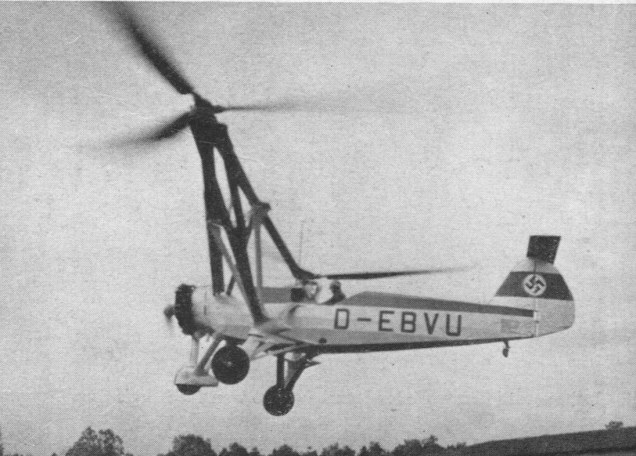
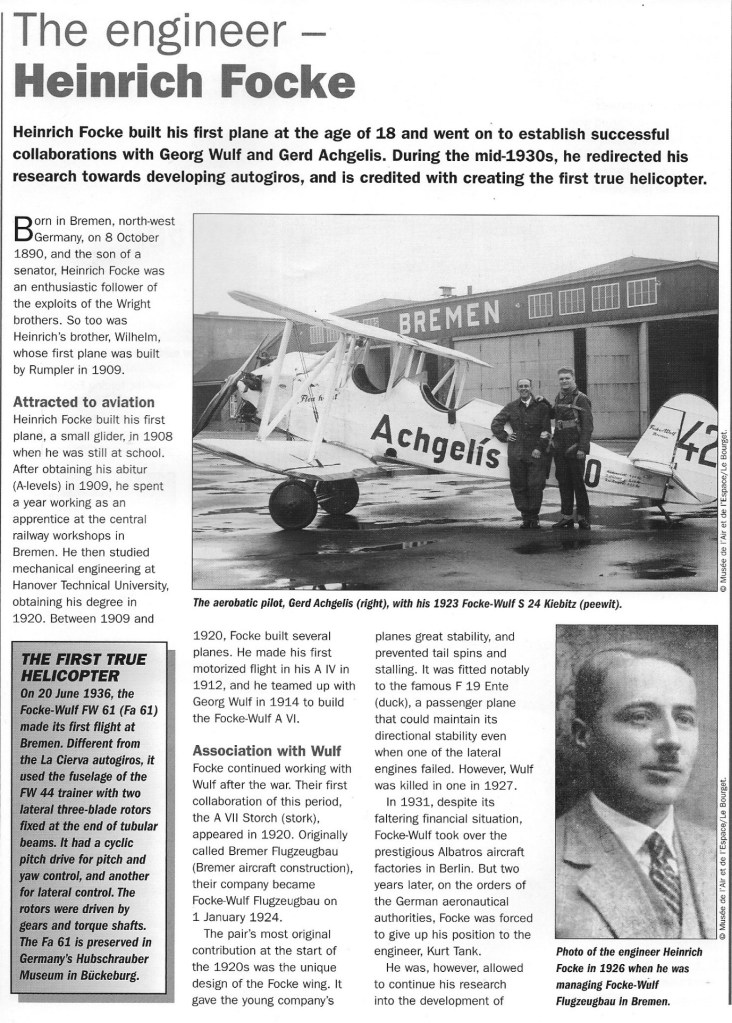
On 26 June 1936, Germany’s first successful helicopter flew, lasting 28 seconds, with test pilot Ewald Rohlfs at the controls. Professor Heinrich Focke’s Fa 61 was a true helicopter. Registered D-EBVU, the Fw 61V1 utilised a nose-mounted 160 hp Siemens engine driving two outrigger mounted fully-articulated three blade rotors via gears and torque shafts; the propeller was merely for cooling. The twin rotor blade angle could be increased or decreased so as to provide lateral movement of the aeroplane by creating a lift differential between one side and the other. Having been adapted from a Focke Wulf Stieglitz trainer, the Fa 61 none the less proved more tractable than any previous vertical lift aircraft.
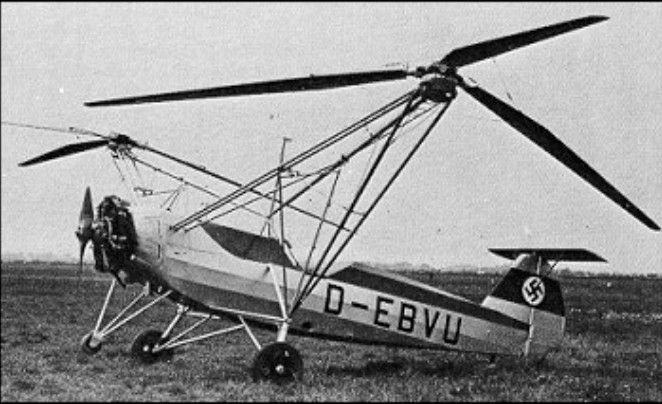
On 25 June 1935, test pilot Edwald Roffifs set altitude and duration records of 2440 m (8002 ft) and 80 minutes 49 seconds. Next day he flew at 123 kph (76.15 mph) over 20 km (12.4 miles) and set a closed circuit record of 80 km (49.7 miles).
In May 1937 the Fw 61 made its first landing using autorotation, and in February 1938 the aircraft’s controllability was convincingly demonstrated by Germany’s celebrated aviatrix Hanna Reitsch flew the helicopter inside Berlin’s Deutschlandhalle at the 1938 German Motor Show. On 14 successive evenings Flugkapitdn Hanna Reitsch demonstrated the machine in front of audi¬ences of 20,000 people, including some interested foreign military attaches.
Meanwhile a second prototype, D-EKRA, had been completed, and from mid-1937 the Fw 61 established the following list of FAI world records for helicopters:
25/26 June 1937 (pilot Ewald Rohlfs): 2439m altitude; 1 hr. 20 min. 49 sec. endurance; 80.604km distance in a straight line; 122.553km distance over a closed circuit; 16.40km/h speed over a closed circuit.
25 October 1937 (pilot Hanna Reitsch): 108.974km distance in a straight line between Bremen and Berlin.
20 June 1938 (pilot Karl Bode): 230.348km distance in a straight line.
29January 1939 (pilot Karl Bode): 3427 m (11,243 ft) altitude.
This model could reach a 122 km/h speed.
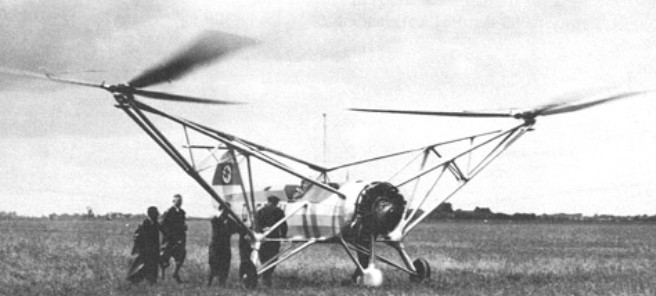
Engine: 1 x Bramo Sh.14A, 119kW
Rotor diameter: 7.0m
Length: 7.3m
Height: 2.65m
Max take-off weight: 950kg
Empty weight: 800kg
Max speed: 112km/h
Cruising speed: 100km/h
Service ceiling: 2620m
Range: 230km
Crew: 1
Focke-Achgelis
Formed in 1933 by Heinrich Focke, formerly of Focke-Wulf, and aerobatic pilot Gerd Achgelis. Developed world’s first completely successful helicopter, Fw 61, flown as a prototype on June 26,1936. Also designed Fw 186 Argus As 10C-engined autogyro to similar requirement that had produced the Fieseler Storch. Twin-rotor Fa 223 Drache, first flown August 1940, ordered into production 1942 at Hoyenkamp factory, later at Laupheim; in 1945 a captured Drache became first helicopter to cross English Channel. Fa 330 Bachstelze rotor kite deployed operationally aboard U-boats from 1942.
Focke, Henrich
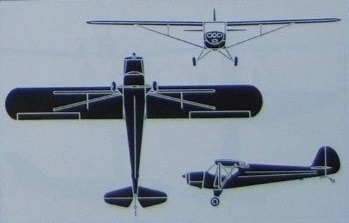
FMA I.A.20 El Boyero
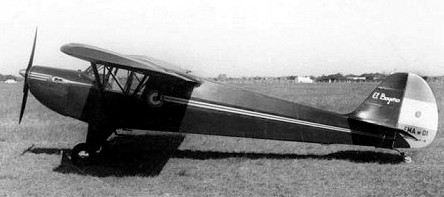
The two-seat El Boyero was designed by the Fabrica Militar de Aviones in 1939 and the first of two prototypes were flown on 2 November 1940.
The FMA’s preoccupation with the manufacture of military aircraft necessitated the transfer of production to SA Sfreddo y Paolini. However, the inability of the company to acquire the necessary materials resulted in production of El Boyero being shelved until 1949 when manufacture was undertaken by Petrolini Hermanos on behalf of the Direccion General de Aeronautica Civil, 130 being produced of which a number were delivered to the Air Force and Army for liaison and AOP tasks.
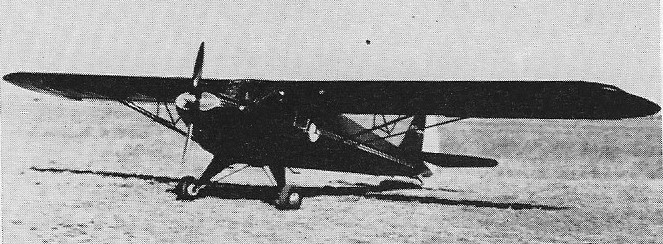
Whereas the prototypes were powered by the 50 hp Continental A-50 engine, the production model had 65 hp Continental A-65-8 engines.
The FMA.20-B has a 75 hp Continental A-75.
Petrolini took over production of the El Boyero two-seat light monoplane from the Instituto Aerotecnico in late 1940s, and built 160 to government contracts for flying clubs and schools.
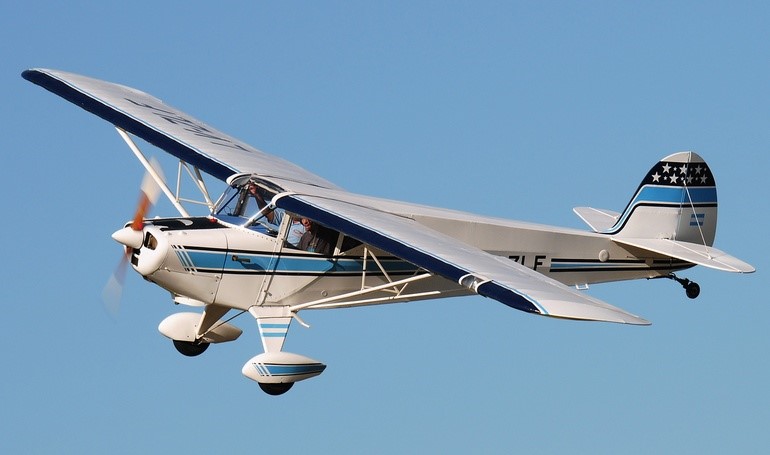
Engine; 1 x 65hp Continental A-65-8
Wingspan; 11.50 m / 38 ft 9 in
Length; 7.10 m / 23 ft 4 in
Height; 1.80 m / 6 ft 11 in
Wing area; 17.70 sq.m / 190.52 sq ft
Max take-off weight; 500 kg / 1102 lb
Empty weight; 225 kg / 496 lb
Max. speed; 160 km/h / 99 mph
Cruise speed; 145 km/h / 90 mph
Ceiling; 4000 m / 13100 ft
Range; 650 km / 404 miles
Crew; 2
FMA Ae.M.B.1 / M.B.2
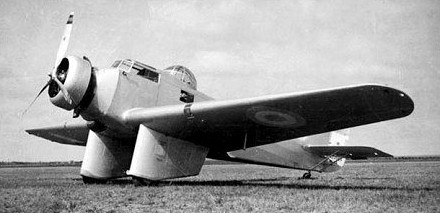
The Ae.M.B.1 was the first light bomber built in Argentina, and this aircraft, built by the Fabrica Militar de Aviones. Was flown for the first time on 9 June 1935, powered by a Wright Cyclone SGR-1820F.3 engine rated at 715 hp at 6890 ft.
Extensive modifications to the design were made, and the bomber entered production as the Ae,M.B.2, fifteen machines being completed during 1936.
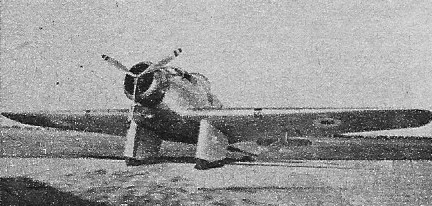
Similarly powered to the prototype, the Ae.M.B.2 was a low-wing cantilever monoplane with a fixed, spatted undercarriage, and defensive armament of a single fixed forward-firing 7.65mm Madsen 1933 machine gun in the engine Cowling, two similar weapons in a manually operated dorsal turret, and an 11.35mm machine gun firing though a ventral hatch.
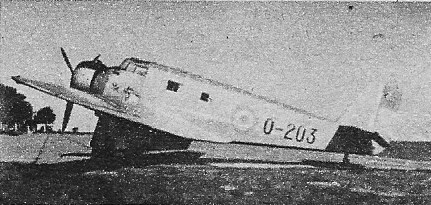
Popularly known as the ‘Bombi’, the Ae.M.B.2 was equipped with Telefunken radio, a Nistri camera, and an 880 lb bombload.
Ae.M.B.2
Engine; 1 x 715hp Wright SGR-1820-F3 Cyclone
Wingspan; 17.20 m / 56 ft 5 in
Length; 10.90 m / 36 ft 9 in
Height; 2.80 m / 9 ft 2 in
Wing area; 35.00 sq.m / 376.74 sq ft
Max take-off weight; 3500 kg / 7716 lb
Empty weight; 2120 kg / 4674 lb
Max. speed; 285 km/h / 177 mph at 6890 ft
Cruise speed; 240 km/h / 149 mph at 6890 ft
Service ceiling: 19685 ft
Ceiling; 6700 m / 22000 ft
Time to 3280 ft: 3 min 30 sec
Time to 9840 ft: 14 min 36 sec
Range; 600 km / 373 miles
Endurance: 5 hr
Crew; 4
Armament; 2 x 7.76mm machine-guns, 1×11.35mm machine-gun
Bombload: 400kg
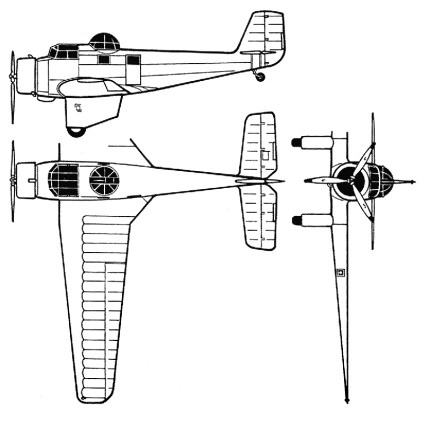
FMA Ae.T.1
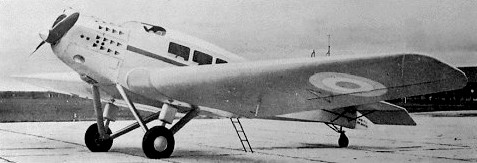
A five seater of 1933
Engine; 1 x 450hp Lorraine-Dietrich 13Eb
Wingspan; 17.30 m / 57 ft 9 in
Length; 9.70 m / 32 ft 10 in
Height; 4.36 m / 14 ft 4 in
Wing area; 37.00 sq.m / 398.26 sq ft
Max take-off weight; 2810 kg / 6195 lb
Empty weight; 1750 kg / 3858 lb
Max. speed; 225 km/h / 140 mph
Cruise speed; 195 km/h / 121 mph
Ceiling; 6000 m / 19700 ft
Range; 1170 km / 727 miles
Crew; 1
Passengers; 3-4
FMA Ae.M.O.1
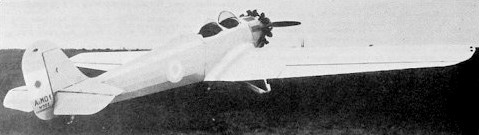
The Ae.M- 01 was built for Argentine Army in 1934.
Engine; 1 x 235hp Wright Whirlwind R-760ÅÒ
Max take-off weight; 1434 kg / 3161 lb
Empty weight; 950 kg / 2094 lb
Wingspan; 12.32 m / 40 ft 5 in
Length; 7.85 m / 26 ft 9 in
Height; 2.70 m / 9 ft 10 in
Wing area; 19.00 sq.m / 204.51 sq ft
Max. speed; 220 km/h / 137 mph
Cruise speed; 196 km/h / 122 mph
Ceiling; 6200 m / 20350 ft
Range; 926 km / 575 miles

