Frank L Odenbreit Co Inc,
Los Angeles CA.
USA
Built the Floco A-7-R aero engine in 1927.
Frank L Odenbreit Co Inc,
Los Angeles CA.
USA
Built the Floco A-7-R aero engine in 1927.
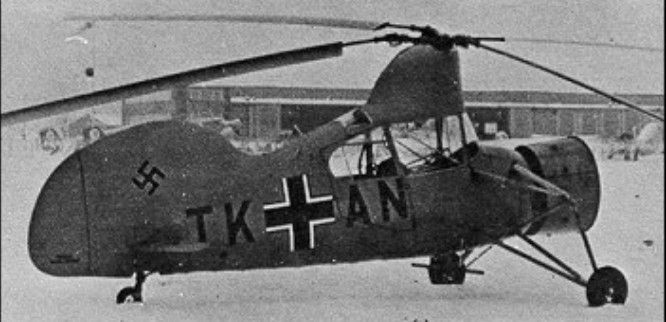
In 1937 Flettner began to design the first helicopter to use intermeshing contra-rotating synchronized rotors. Many of his advisers thought that the airflow disturbed by the intermeshing blades would make this system less efficient than one using a single rotor; but Flettner believed that any problems thus encountered would be more than offset by the reduced drag resulting from having no external rotor-carrying structure.
Six Fl 265’s were ordered in 1938 with a view to developing a machine suitable for shipboard reconnaissance and anti-submarine patrol for the German Navy. They were to be powered by a 7-cylinder air-cooled engine to drive its two intermeshing two-bladed rotors and with an inertia damping system to reduce the shake of the control stick. The six prototypes were built (Werk-Nr. 1579 -1584), one of which (TK+AN) was tested in the large wind tunnel at Chalais Meudon (Paris) in the summer of 1940.
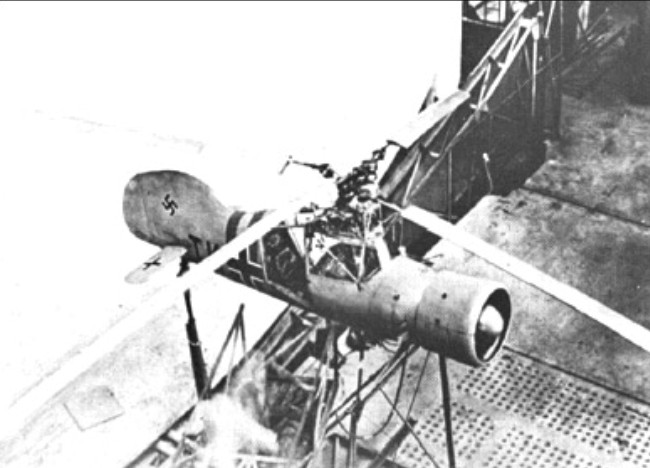
This was of similar airframe configuration to the Fl 185, but dispensed with the outriggers and propellers, and introduced two two-bladed counter-rotating inter-meshing and synchronised main rotors which, because they were rotating in opposite directions, each cancelled the effects of the other’s torque. To simplify control problems a tail unit incorporated an adjustable tailplane for trimming purposes, and for steering a large fin and rudder to augment the use of differential collective-pitch change on the two rotors.
The 160hp Bramo Sh 14A radial engine provided the power for the two two-blade rotors, which had inclined shafts mounted close together and had an inertia-damping system to reduce the vibration reaching the control column.
The Fl 265 V1 D-EFLV took off on its maiden flight in May 1939 in the hands of Flugkapitan Richard Perlia following an extensive series of ground tests (first full-power run on 17.01.1939, first tethered flight at a height of 20 cm on 14.03.1939). D-EFLV made its first autorotative descents the following August, The aircraft was lost in an accident some three months later when the counter-rotating blades struck each other, but the Fl 265 V2 was used successfully for a variety of military trials. It was used for extensive military testing in conjunction with the Kriegsmarine (for example deck landings on an approximately 25-meter-square landing platform on the cruiser Köln and even made landings on U-boat decks) in the Baltic and Mediterranean. The aircraft was removed from service on April 29, 1940.
One Fl 265 was lost due to its refuelling being overlooked. The Fl 265 V3 crashed due to pilot error on August 21, 1939 and was destroyed in the ensuing fire. The Fl 265 V5 (retired on 26.11.1941) and the Fl 265 V6 (retired 25.03.1942) were still on hand at the Flettner Company in November 1942. Their return to service was postponed and eventually abandoned.
The Fl 282 exhibited significant improvements compared to preceding designs, for example the double rotor with intermeshing blades, automatic changeover from helicopter to autogiro flight (autorotation, from the V4), and the ability to switch back to helicopter flight.
Although the Fl 265 had performed its duties well, had flown in adverse conditions and had no trouble going into and out of autorotation, natural doubts were expressed concerning its vulnerability to aerial attack. Consequently, a test was made in which a Messerschmitt Bf 109 and a Focke Wulf Fw 190 fitted with camera guns made determined simulated attacks on an Fl 265 for 20 minutes but failed to score one hit because of the helicopter’s manoeuvrability.
All the Fl 265 prototypes accumulated the following in the course of testing: pure flight time 126 hours, 32 minutes; takeoffs 1.180; running time 518 hours, 44 minutes (flight time + tethered flights + engine run-up time). At the time this represented a record number of hours of operation for a helicopter.
In 1940, an order was placed for quantity production. By then, however, Flettner had designed a more advanced two-seat helicopter and it was decided instead to proceed with the development and manufacture of this improved aircraft.
Flettner Fl.265
Engine: 1 x Bramo Sh.14A, 119kW
Rotor diameter: 12.3m
Max take-off weight: 1000kg
Empty weight: 800kg
Speed: 160km/h
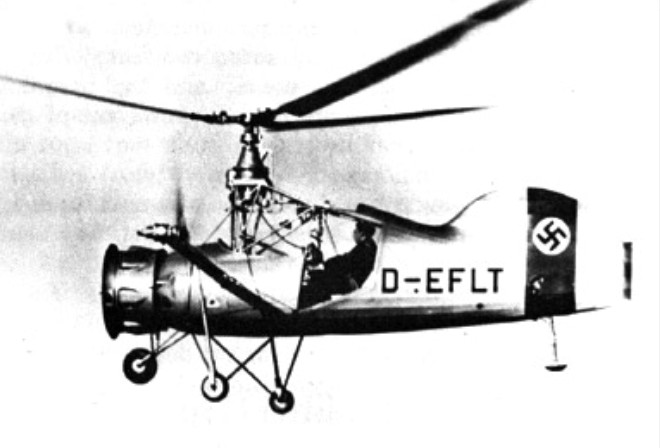
The development contract for the Fl 185 was issued by the RLM in February 1937; two SV-Types were planned. It was given the designation “Helicopter Conversion 184” in the Aircraft Development Program, because the planned Fl 184 V3 was used in the construction of the Fl 185 V1. The Fl 185 project was financed with the insurance sum received from the destroyed Fl 184 V1 and a grant of approximately RM 50,000 from the RLM. Mockup inspection took place in April 1937.
The Fl 185 was a gyroplane equipped with a three-blade rotor. Torque balance was achieved by means of variable-pitch pusher propellers driven by extension shafts located at the ends of outriggers mounted on each side of the fuselage. The starboard propeller produced backward thrust, the port forward, so that the total moment exerted on the fuselage balanced that of the main rotor. The centrally-mounted Sh.14A engine drove, in addition to the rotor and anti-torque propellers, a large cooling fan in the nose consuming about 14hp. The main gearbox was in the front part of the cockpit.
The sole prototype built was the Fl 184 V1 D-ELFT, which carried out a number of flights m 1938. The Fl.185, which had a three-wheeled undercarriage, was given only a few tests near the ground, and then abandoned in favour of the Fl.265, which embodied the intermeshing rotor system on which Flettner had now begun to work.
Fl 185
Engine: 1 x Siemens-Halske SH 14A, 140hp
Rotor diameter: 12m
Weight fully loaded: 898kg
Empty weight: 771kg
Seats: 1
In December 1934 talks were held by the development group of the RLM (LC II) in the presence of State Secretary Milch which were to lead to important decisions concerning future air armaments.
The following is noted in the minutes under Section 4 “Rotary Wing Aircraft”: “The development of rotary wing aircraft is to receive preferential treatment. Consequently all work now under way is to be accelerated, as these aircraft will presumably be of significance for land and sea use in the future.”
In the LC II.1’s general working plan (Dec. 1935) “rotary wing aircraft” appeared under the heading: “Sport, basic training, advanced training and special aircraft” (Report II/1a). The following types are listed: Fi 184, Fw 61, Focke Wulf project (the later Fw 186) and LC 30 Focke-Wulf license.
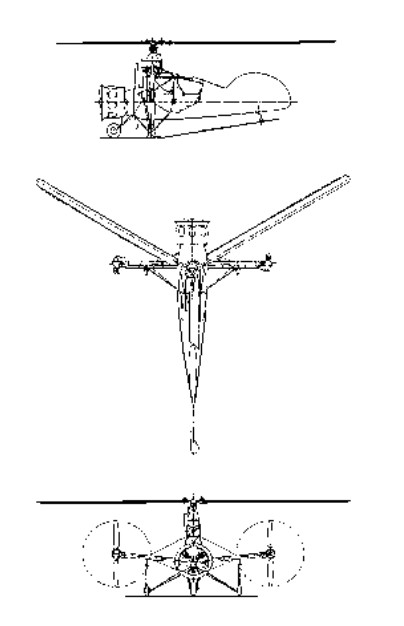
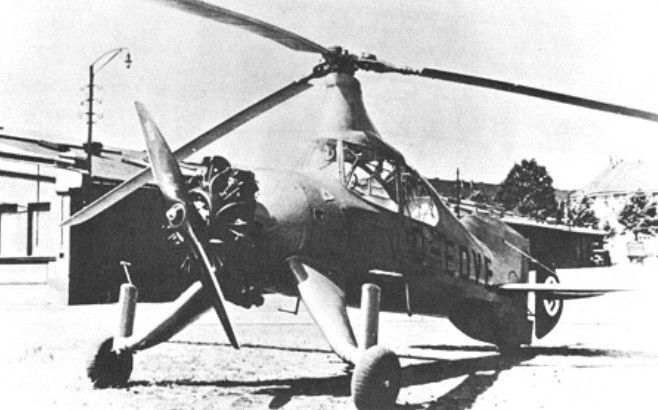
In January 1935 Flettner received a development contract from the RLM for an “experimental autogiro” (autogiro with three-blade rotor). Three so-called “SV-Types” were planned. Inspection of the mockup took place in June 1935. Only one prototype, the Fl 184 V1 D-EDVE was built. The aircraft was destroyed as a result of pilot error in the course of its maiden flight in December 1936. The Fl 184’s external shape still exhibited a certain similarity to the C 30 autogiro being built under license by Focke-Wulf at that time. Power was provided by an Sh 14 engine driving a conventional propeller.
The Fl 185 project was financed with the insurance sum received from the destroyed Fl 184 V1 and a grant of approximately RM 50,000 from the RLM.
Fl 184
Engine: 1 x Siemens-Halske 14, 140hp
Rotor diameter: 12m
Seats: 1
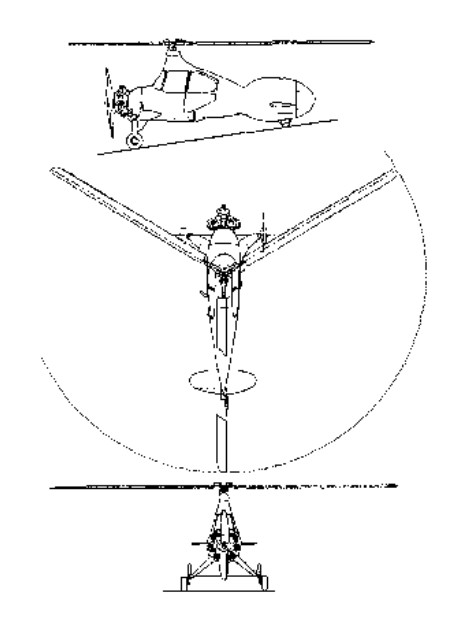
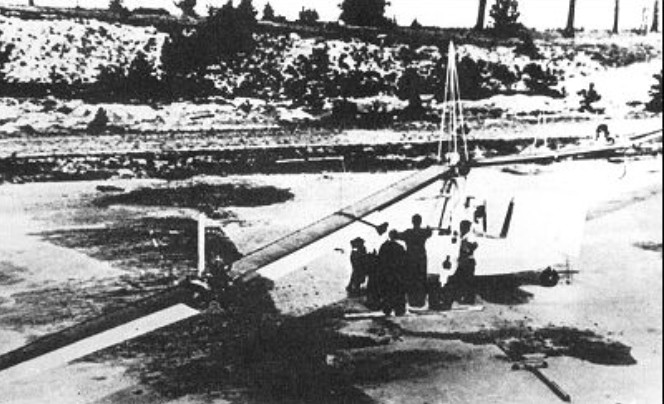
Flettner began work on his first experimental helicopter in 1930. Arranged over a relatively small fuselage was a twin-blade rotor of 30.5 meters diameter; the blades were supported by bracing wires extending from a bracing tower above the rotor axis which rotated with the rotor. A 30hp Anzani engine driving a puller propeller was mounted rather far outboard on each blade. As a result of this direct drive of the rotor blades there was no torque moment to compensate for. Fuel was drawn from a tubular tank mounted fore or aft of the engine.
The prototype, of wood and plywood construction, was built by “Segelflugzeugbau Edmund Schneider” of Grunau in 1934. A gust of wind destroyed this prototype while in tethered flight.
Anton Flettner G.m.b.H
Anton Flettner (1885-1961) was born in Germany and attended the Fulda State Teachers College in Germany. On finishing his studies, he was employed by Zeppelin on development work into remote-control systems for lighter-than-air craft. When he was teaching mathematics and physics in a high school in Frankfurt, he began to develop ideas leading to his work for Germany in World War I.
After the war, he was named managing director of the Institute for Aero and Hydro Dynamics, Amsterdam, The Netherlands. He held that post until 1931.
From 1926 to 1945, Mr. Flettner was president of the Anton Flettner Aircraft Corporation in Berlin.
The “Anton Flettner G.m.b.H.” was a small engineering company dedicated to helicopters. It is believed that the firm was founded in Berlin in 1935. The earliest document the author has been able to find is a letter from the Military Economics inspectorate (W.I.) III, Berlin to the RLM concerning firms involved in production for the Luftwaffe and dated October 2, 1936. The letter states that the W.I. III first became aware that the firm had been given important work by the RLM (LC II) as the result of a formal application for an exemption from military service for one of Flettner’s skilled workers.
The same inspectorate sent the secrecy agreements to the Flettner Company, Berlin-Johannisthal, Segelfliegerdamm 27, for signature on January 22, 1937.
Due to the growing number of air raids on Berlin, in August 1943 the company began transferring its operations to Schweidnitz in Silesia (approx. 50 km SW of Breslau); due to the deterioration of the transportation system the operation took several months. The Fl 282s on hand with the company were also flown to Schweidnitz to continue the test program. In February 1944 the workforce reached approximately 120 men, its highest level ever.
With the Red Army approaching Silesia, in January/February 1945 the company moved back to Berlin-Tempelhof. Any systematic work or further production was of course out of the question under these circumstances. To make matters worse, two days after its arrival the rest of the company’s equipment was destroyed in a night raid on Tempelhof. What was left of Flettner was subsequently evacuated to Bad Tolz (Upper Bavaria); two Fl 282s were also flown there. The history of the Anton Flettner G.m.b.H. ended there with the arrival of American troops.
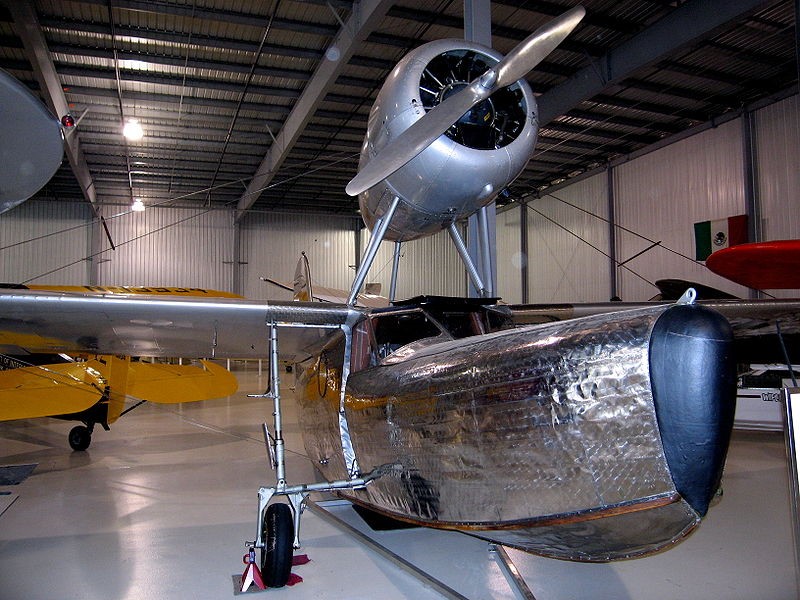
The Sea Bird was an amphibious utility aircraft designed in 1934–1935 by James C. Reddig for Fleetwings, Inc., of Bristol, Pennsylvania. While the aircraft’s basic configuration had a precedent in the design of the Loening “Monoduck” developed by the Grover Loening Aircraft Company as a personal aircraft for Mr. Loening (for whom Reddig worked from 1929 to 1933), the Sea Bird was unusual because of its construction from spot-welded stainless steel. It was a high-wing, wire-braced monoplane with its engine housed in a nacelle mounted above the wings on struts.
The pilot and passengers sat in a fully enclosed cabin.
First flying in 1936, Fleetwings initially planned to manufacture 50 production units, but at a price approaching $25,000 during the Depression, there proved to be no sustainable market and only five production F.5 Seabird were built.
The Sea Bird found use with private pilot owners and saw service with the oil support industry in Louisiana, including operation by J. Ray McDermott & Co.
Variants:
F-4 Sea Bird – 4-seat prototype (1 built)
F-5 Sea Bird – 5-seat production aircraft (5 built)
Powerplant: 1 × Jacobs L-5, 285 hp (213 kW)
Wingspan: 40 ft 6 in (12.34 m)
Wing area: 235 sq ft (21.8 m2)
Length: 31 ft 5 in (9.58 m)
Height: 12 ft 6 in (3.81 m)
Empty weight: 2,320 lb (1,052 kg)
Gross weight: 3,450 lb (1,565 kg)
Fuel capacity: 52 US gal (43 imp gal; 200 L)
Maximum speed: 150 mph (240 km/h, 130 kn) at sea level
Cruise speed: 133 mph (214 km/h, 116 kn)
Range: 400 mi (640 km, 350 nmi)
Service ceiling: 15,000 ft (4,600 m)
Rate of climb: 900 ft/min (4.6 m/s)
Crew: 1
Capacity: 3 passengers
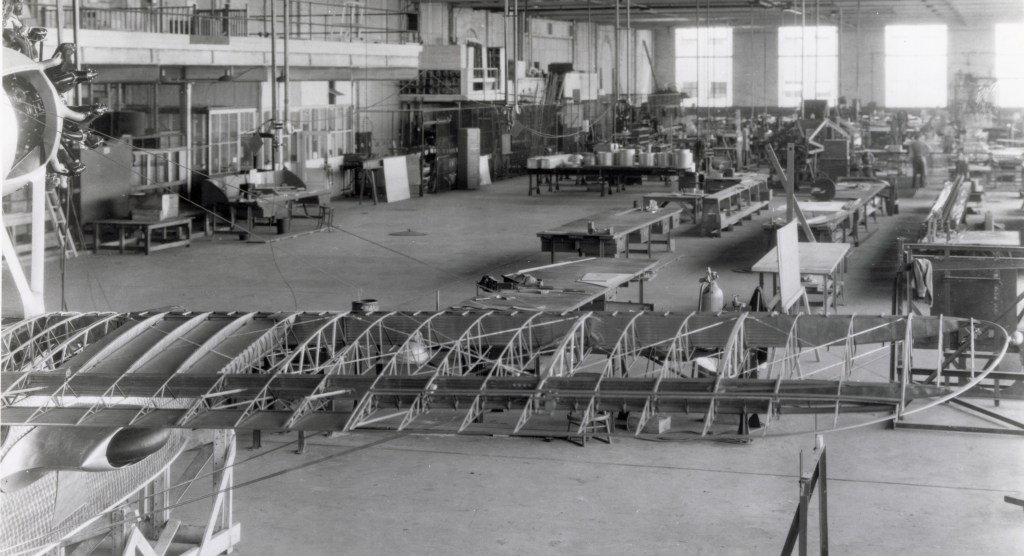
Fleetwings Division Of Kaiser Cargo Inc was formed 1929 and acquired Keystone Aircraft Corporation factory in 1934. Specialized in stainless-steel structure, including wings for the Douglas Dolphin and company’s own Sea Bird amphibian, the first stainless-steel aircraft to receive U.S. Approved Type Certificate. Wartime production included subcontract parts manufacture. Acquired by shipbuilder Henry J. Kaiser in March 1943 and developed Model 23 Tandem and Model 33 trainers. Designed XBTK-1 torpedo bomber in 1943; only three completed.
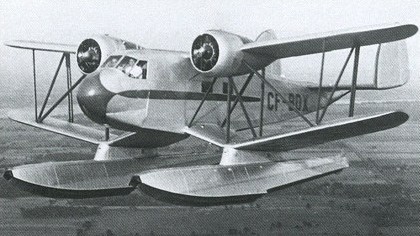
The Fleet 50 Freighter was a twin-engine biplane Canadian general utility aircraft designed and built by Fleet Aircraft. Design was started in 1936 to create a general purpose twin-engined utility aircraft for the Canadian market. It was designed as a short take-off freighter with features added to ease cargo handling. The Freighter was a biplane with the lower wing an inverted gull wing with either a float or wheel landing gear. Two radial piston engines were mounted in nacelles on the upper wing panels.
The fuselage structure was welded steel tubing with duralumin formers, and a semi-monocoque duralumin nose section. The wings were stressed-skin metal structure on the inboard panels and fabric-covered wood beams and duralumin ribs on the outboard panels. The fuselage had room for two crew and up to ten passengers. Large doors and a roof-mounted chain hoist were fitted for use in the cargo role.
The prototype designated the 50J first flew on 22 February 1938, powered by two 285 hp (213 kW) Jacobs L-5MB 7-cylinder radial engines. It was later re-engined with 330 hp Jacobs L-6MB engines and re-designated the 50K. A further four aircraft were built, all with L-6MB engines.
None of the aircraft was operated for long, as the design was under-powered and could not maintain altitude on only one engine.
Fleet 50K landplane
Engines: 2 × Jacobs L-6MB 7-cylinder radial engine, 330 hp (246 kW) each
Length: 36 ft 0 in (10.97 m)
Wingspan: 45 ft 0 in (13.72 m)
Height: 13 ft 1 in (3.99 m)
Wing area: 528 ft² (49.05 m²)
Empty weight: 4600 lb (2087 kg)
Gross weight: 8326 lb (3777 kg)
Maximum speed: 150 mph (241 km/h)
Range: 650 miles (1046 km)
Service ceiling: 15,000 ft (4570 m)
Crew: 2
Capacity: 10 passengers or freight
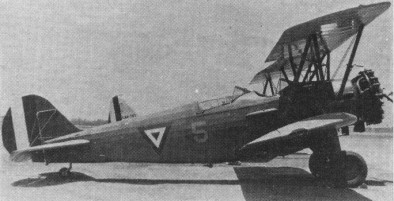
Fleet Aircraft Company built eleven Consolidated Model 21 aeroplanes for its parent company, Consolidated, in 1936 and 1937. Ten of these were exported to Mexico as basic trainers for the Mexican Air Force. The eleventh was produced in 1937 as a demonstrator for Fleet, which tried to interest the RCAF in this large biplane. Unfortunately, the days of the biplane were already numbered, and monoplanes were emerging from the world’s aircraft factories in greater quantities.
Originally built as the Model 21M with a Pratt & Whitney R-985 Wasp Jr. engine, some were converted to a Model K with the Jacobs L-6MB engine.
21M
Engine: Pratt & Whitney R-985 Wasp Jr
21K
Engine: Jacob L-6-MB, 330 hp
Wing Span: 31ft 6in (9.6m)
Length: 27ft (8.23m)
Height: 9ft 5in (2.88m)
Speed: 139 mph (224km/h)
Seats: 2

