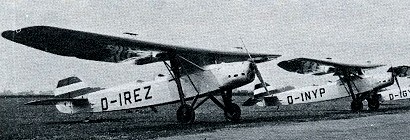
Focke-Wulf A-47

Developed to meet the requirements of the German meteorological service, the two seat, open cockpit prototype Focke-Wulf A 47 weather reconnaissance aircraft was first flown in June 1931 by Cornelius Edzard. Powered by a 164kW Argus As 10 engine, the A 47 was a parasol-wing monoplane with a wing of wood construction and a fabric-covered steel-tube fuselage. It was tested extensively by the Reichsverband der Deutschen Luftfahrtindustrie (predecessor of the present BDLI, or Federation of the German Aerospace Industries) and then evaluated operationally at the Hamburg weather centre, beginning in December 1932. Successful completion of the programme led to production orders, delivered between 1934 and 1936, and used by the meteorological service all over Germany.

Engine: Argus Aces 10, 220 hp
Prop: two-blade variable pitch 2,80 m diameter
Wingspan: 17,76 m
Length: 10,50 m
Height: 3,04 m
Wingarea: 35,00 sq.m
Empty weight: 950 kg
MTOW: 1475 kg
Fuel: 2x 75 lt
Wing loading: 42,142 kg/sq.m
Pwr loading: 6,704 kg/hp
Vmax: 172 km/h
Stall: 77 km/h
ROC: 1000 m in 6 min, 2000 m in 13,3 min, 4000 m in 34 min
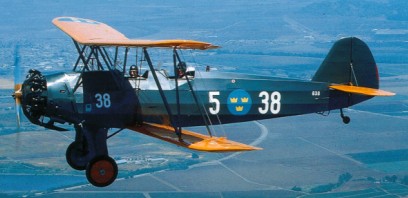
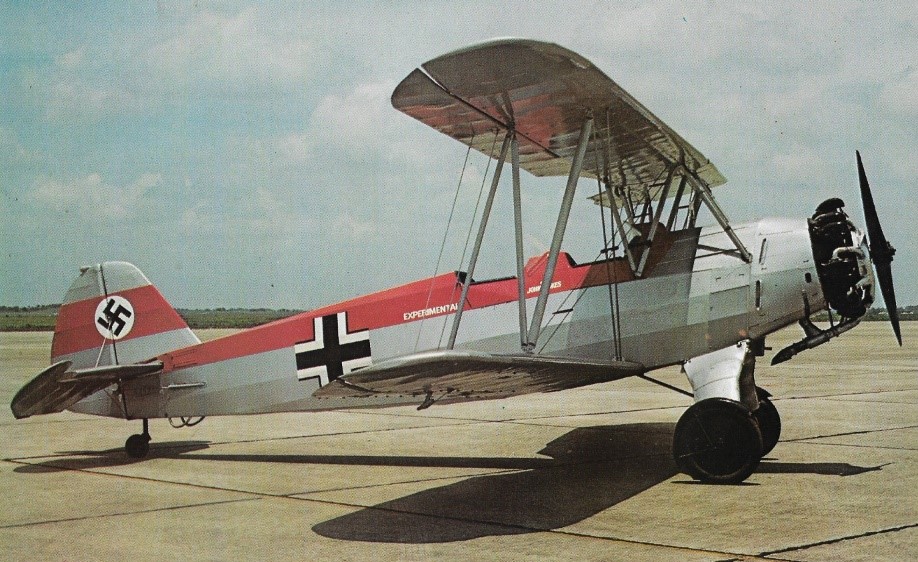
Focke-Wulf Fw-44 Stieglitz

Fw-44J

The development of the Fw.44 with the Focke-Wulf Flugzeugbau started in 1931, and the Fw 44A prototype first flew in the summer of 1932 powered by Argus As-8 in line engine which was replaced by the Siemens-Haiske Sh 14a radial engine in the production aircraft. Aerobatic champion Gerd Achgelis conducted the maiden flight of the Fw 44 Stieglitz (goldfinch) trainer late summer 1932.

In its basic form the type had severe handling problems, and these were eradicated by the newly arrived Kurt Tank in an intensive development programme that turned the Stieglitz into a superb aerobatic machine.

In addition to export orders from Bolivia, Chile, China, Czechoslovakia, Finland, Romania, Switzerland and Turkey, the Fw 44 was built under licence in Argentina, Austria, Brazil, Bulgaria and Sweden (85 designated Sk-12).
The major operator was the Luftwaffe with the Fw 44B using the 109-kW (135-hp) Argus As 8 inline, followed by the Fw 44C that reverted to the Sh 144. Variants of the Fw 44C with detail improvements were the Fw 44D, F and Fw 44J.
The Sk 12 Swedish license built Focke Wulf Fw 44J was first delivered to the Swedish Air Force Flying School in 1938.

Fw 44A
Engine: Sh 144, 112kW (150hp)
Span: 9m (29ft 6.25in)
Length: 7.3m (23ft 11.5 in)
Armament: none
Max TO weight: 900 kg (1,984 lb)
Max speed: 115 mph at sea level
Operational range: 419 miles.

Fw 44B
Engine: Argus As 8, 109-kW (135-hp)

Fw 44C
Engine: Argus Aces 10C, 240 hp
Prop: two-blade fixed pitch 2,80 m diameter
Wimgspan: 17,76 m
Length: 10,57 m
Height: 3,04 m
Wing area: 35,00sq.m
Empty weight: 1065 kg
MTOW: 1580 kg
Fuel: 2 x 75 lt
Vmax: 191 Kmh
Vcruise: 175 km/h
ROC: 1000 m in 4 min
Ceiling: 5000 m
Range: 640 km

Fw 44D
Engine: Argus Ace 10D or E, 270 hp
Prop: two-blade fixed pitch 2,80 m diameter
Wingspan: 17,76 m
Length: 10,57 m
Height: 3,04 m
Wingarea: 35,00 sq.m
Empty weight: 1095 kg
MTOW: 1475 kg
Fuel: 2xX 75 lt

Fw 44E
Engine: Argus Ace 10D or E, 270 hp
Prop: two-blade fixed pitch 2,80 m diameter
Wingspan: 17,76 m
Length: 10,57 m
Height: 3,04 m
Wingarea: 35,00 sq.m
Empty weight: 1095 kg
MTOW: 1475 kg
Fuel: 2xX 75 lt

Fw 44F

Fw 44J

Focke-Wulf F.19 Ente

Focke-Wulf F 19a “Ente”

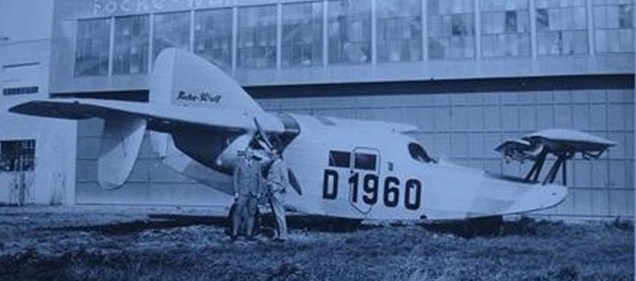
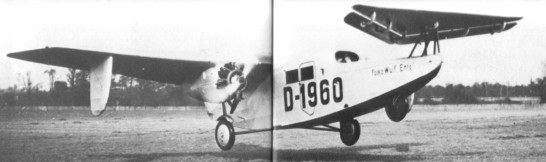
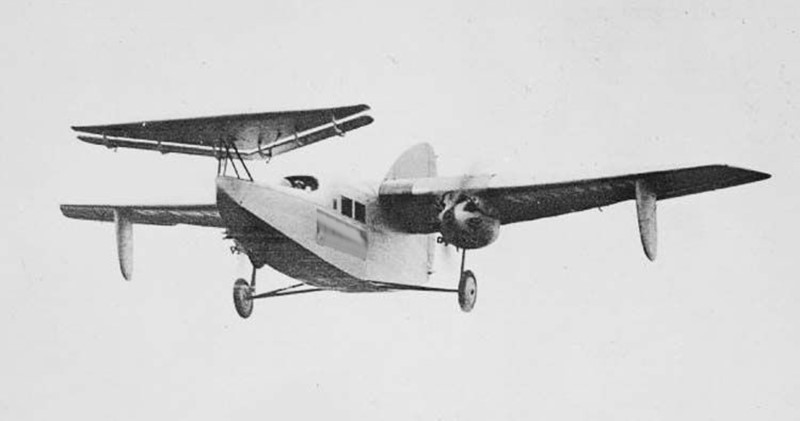
Focke Wulf Flugzeugbau G.m.b.H. built a twin engined canard in 1927. They called it the F.19 Ente, claiming that the tail first configuration gave it ‘exceptional stability and control at low speeds’. Stability and control in slow flight means safety.

Georg Wulf was killed September 29, 1927 test-flying an F-19 Ente canard.

Focke-Wulf Flugzeugbau GmbH

An association between Heinrich Focke and Georg Wulf was formalized January 1,1924 with formation of Focke-Wulf Flugzeugbau AG. at Bremen. Financial support followed success of A 7 Storch two-seater, flown November 1921.
First company design was A16 three/four-seat commercial transport, followed by the eight/nine-seat A17, the more powerful 650 hp BMW Vl-powered A 29 and the three-crew/ten-passenger A 38 airliners.
In 1931 acquired license to build Cierva C.19 Mk IV autogiro. Focke concentrated on rotary-wing activities, fixed-wing design was entrusted to Kurt Tank, formerly of BFW and of Rohrbach Metallflugzeug GmbH. Albatros Flugzeugwerke GmbH, Berlin, amalgamated with Focke- Wulf. On Focke’s resignation to form Focke-Achgelis, Tank appointed technical director. Reorganized June 1936 as GmbH under control of AEG. Ceased operations 1945, reformed 1951 and combined with Weser Flugzeugbau to form Vereinigte Flugzeugtechnische Werke.
S 24 Kiebitz two-seat trainer won 1931 German Aerobatic Championship flown by Gerd Achgelis, who conducted maiden flight of Fw 44 Stieglitz trainer late summer 1932, widely used by embryo Luftwaffe and in European and South American countries. First Tank design produced in any numbers (approximately 1,000) was Fw 56 Stosser fighter/dive-bomber advanced trainer, followed in 1935 by Fw 58 Weihe communications aircraft/crew trainer and in 1938 by Fw 189 reconnaissance aircraft. Fw 200 Condor airliner flown July 1937, developed into Fw 200C long-range reconnaissance aircraft. With production total of more than 19,000, Fw 190 fighter was the most notable of Focke-Wulf’s designs; after the first flight on June 1,1939, entered squadron service August 1941. High-altitude version, with revised high aspect ratio wing, designated Ta 152.
Focke-Wulf joined VFW in 1964.