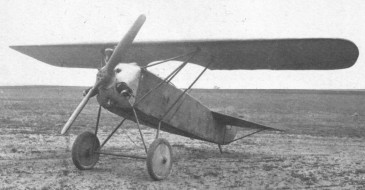
The V.40 was an even lighter sports aeroplane than the V.39. Powered by a 35 h.p. Anzani engine, it was the smallest aeroplane ever built by Fokker, but there was no market for the type.
The V.40 was an even lighter sports aeroplane than the V.39. Powered by a 35 h.p. Anzani engine, it was the smallest aeroplane ever built by Fokker, but there was no market for the type.
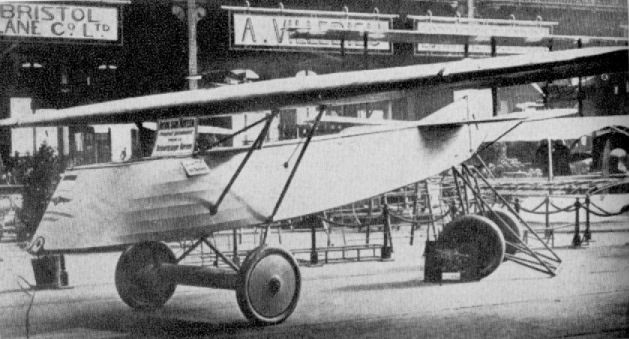
The glider V.30 identity is nowhere to be seen in contemporary reports of the Paris exposition, just the Fokker glider or ‘planeur’. So this identity has crept in through the years.
Till now no original documents on the Fokker glider / or glider bomb has been found.
The V 30 was a V.26 converted into a glider with the pilot’s cockpit moved to the extreme nose. One such machine was exhibited at the Paris Aero Salon in 1921.
A Fokker V.31 was equipped with a hook to tow the V.30 glider.
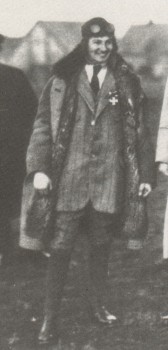
Antony Fokker was born on 6 April 1890 on the island of Java in the Dutch East Indies, but came with his family to the Netherlands four years later. In his youth, Fokker showed a greater disposition toward design and invention than toward formal schooling. During his adolescence he acquired a passion for cars, inventing a tire that could not be punctured, and then discovered aviation. His real desire was to learn to fly, but as his parents opposed this course most vehemently, the young Fokker contented himself initially with model planes built of wood and paper.
Anthony Fokker Article
Enrolling in an engineering school, after his military service had been cut short by an accident, the young Fokker finally obtained the structured educational basis which finally allowed him to construct his first plane, the Spin, in 1910.
After gaining his pilot’s license in 1911, Fokker moved to Germany, which he saw as a nation more likely than the Netherlands to take aviation to its bosom. Registered originally Fokker Aviatik GmbH, on 22 February 1912, Antony Fokker’s first company operated under Fokker Aeroplanbau GMBH at Berlin-Johannisthal then, moved to Schwerin, Mecklenberg, in 1913. Name changed later to Fokker Flugzeugwerke.
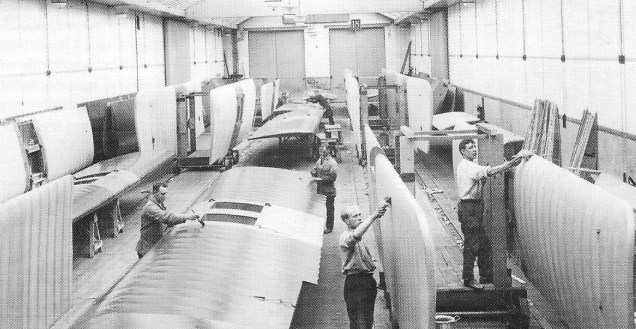
In 1912 Fokker sold his first plane to the German army, but the two years before the outbreak of the First World War were a distinct uphill struggle for the young Dutchman in financial terms. All this changed with the beginning of the war. Fokker accepted all commissions placed with him by the Imperial German air service, despite the fact that he might not be able to honour all of them. During the course of the war the Fokker company grew very considerably, producing for Germany many aircraft types both indifferent and good.
Indifferent types included the Eindecker series of armed monoplanes that nevertheless ushered in the concept of the true fighter, while good types included the classic Dr 1, DVII and D VIII fighters. The Fokker company was also notable for the development of the world’s first effective synchronizer gear to allow a fixed fuselage-mounted machine gun to fire directly forward without shooting off the propeller blades.
Some civil aeroplanes were built at Schwerin in 1918 under the supervision of Platz, but production soon ended, and the Fok¬ker Aeroplane Works, where some 3,350 aeroplanes had been built during the War, was liquidated. It became Schwerin Indus¬trial Works Ltd, producing yachts, motor¬boats, canoes and, later, bedsteads and scales.
The defeat of Germany and the revolutionary fever that swept the country toward the end of 1918 persuaded Fokker to beat a precipitate retreat to the Netherlands during November. The company was liquidated following Fokker’s return to Holland after the First World War. Here Fokker rebuilt his aviation empire, on 21 July 1919, founding the NV Koninklijke Nederlandse Vliegtuigenfabriek Fokker with factory at Veere, Zeeland, assembly at Amsterdam, with a series of important warplanes and a family of monoplane transports, including the classic F VII.
Fokker rented the Witteman-Lewis aircraft factory at Teterboro, together with the adjoining airfield at Hasbrouck Heights, New Jersey, USA, as the Netherlands Aircraft Manufacturing Company. In May 1924 a new company was formed, the Atlantic Corporation, with Lorillard Spencer as President and Robert B. C. Noorduyn as General Manager. Later named the Fokker Aircraft Corporation of America and, under the overall ownership of the General Motors Corporation in 1930, the General Aviation Corporation.
Often known as “The Flying Dutchman”, Fokker died on 23 December 1939 but his name survives as the manufacturer of some of the world’s most important short-haul airliners.
Production during Occupation included Arado Ar 196 floatplanes, Bucker Bu 181 Bestmann trainers and Dornier Do 24 flying-boats.
Postwar activity included conversion of military Dakotas and Skymasters for civil use, license-production of various types including 24 Hawker Sea Furies, 460 Hunter F.4, and F.6 fighters; final assembly and parts manufacture of 350 Lockheed F.104Gs; share in European manufacturing program for F-16 fighter; associate member of Airbus Industrie
On February 1st, 1947 an agreement was signed between Fokker, Aviolanda and De Schelde’s aviation department by which the long awaited merger was achieved. The name of the new conglomerate was “United Netherlands Aircraft Factories ¬Fokker”.
To commemorate Fokker’s thirty years of aircraft manufacture in the Netherlands, they were granted the title “Royal Dutch Aircraft Manufacturer Fokker” on 21 July 1949.
On April 1st, 1949 it became apparent that the merger between Fokker, Aviolanda and De Schelde had failed, and the con¬trolling body appointed Messrs. Vos, Beel¬ing, and During directors of the Fokker factory.
A new factory at Schiphol was opened in 1951.
On February 16th, 1954 Avio Diepen ¬became a subsidiary of Fokker.
The aircraft construction department of the Royal Company De Schelde, joined Fokker on May lst, 1954.
Around 1960 Fokker was looking for and American partner. Lockheed turned down the proposal because they thought it could not be profitable, but Northrop agreed to by a twenty-one percent share.
Formed a joint company with Vereinigte Flugzeugtechnische Werke in 1969.
VFW and Fokker joined in 1970 to form VFW-Fokker.
In the 1970s German interest in general aviation was maintained by one or two smaller companies, but there has also been quite a large R&D investment by Rhein Flugzeugbau, a subsidi¬ary of VFW Fokker, in ducted fan propulsion for a new generation of lightplanes represent¬ed by its revolutionary Fanliner.
By 1995 Fokker was a member of the Daimler-Benz Aerospace group.
In March 1996 company filed for bankruptcy, but Stork Group bought Fokker Aviation to continue as Fokker Aircraft BV for product support, electronic systems and components, aerostructures, and special products. Several attempts to purchase the aircraft manufacturing business by foreign companies came to little, leading to the end of all aircraft production in May 1997 (latterly under trustees).
Until production ended after Fokker collapsed due to financial problems on 15 March 1996, Fokker have developed and constructed over 100 different types of aircraft, both for military and civil aviation.
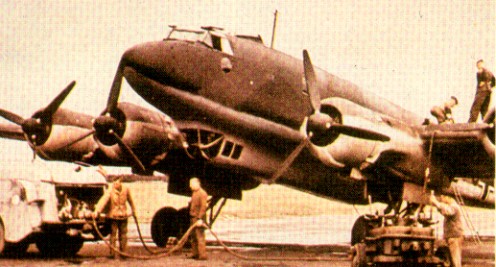
The Fw 200 Condor flew on 3 July 1937 in the form of the first prototype for a 26-passenger long-range airliner.
In 1938 the Fw200 first flew across the north Atlantic to New York, and to Tokyo later that year, but World War II prevented the establishment of proper schedules.
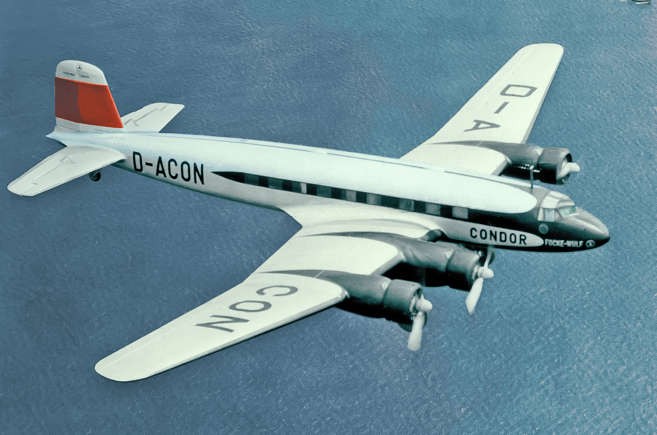
In 1938 the type confirmed its potential by capturing several world records, and about 10 airlin¬ers had been delivered to Brazilian, Det Danske Luftfartselskab Danish and German airlines before the outbreak of the Second World War. A few VIP transports had also been delivered. The B version powered by four 648kW BMW 132H engines. With the outbreak of World War II, Luft-Hansa’s Condors were impressed into the Luftwaffe as transports, while a small number being built for the Japanese Army (including a maritime reconnaissance conversion) were also taken over.
Focke-Wulf Fw-200 Condor Article
Thereafter, development was concentrated on the Fw 200C maritime version, starting with a small number of pre-production aircraft of basically commercial type. In this role the Condor’s long range was decisive, but there were constant problems with the integrity of the military version’s fuselage, which had a tendency to break in heavy landings.
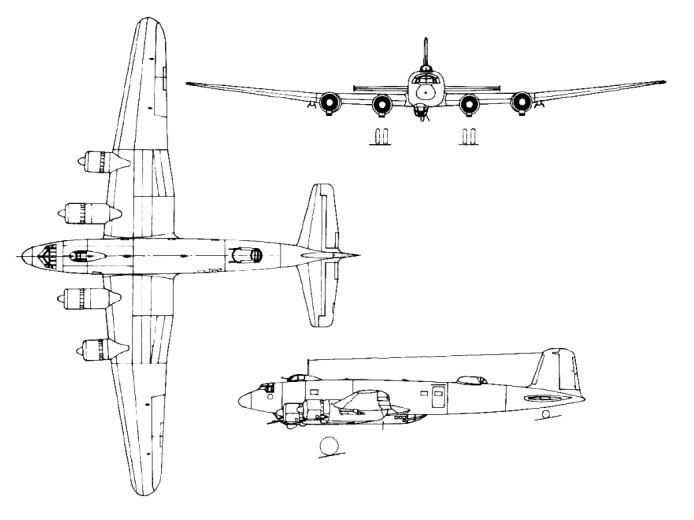
The Fw 200C-1 introduced the long bomb-bay gondola beneath the fuselage, slightly offset to starboard. This contained a bomb aimer’s position at the forward end and gun positions at both the forward and aft ends. The guns were placed on hemispherical mountings with restricted movement. Total defensive armament comprised, according to sub-variant, one 7.9mm machine-gun, 15mm or 20mm cannon in a power-operated turret above the pilot’s cabin, one 13mm machine-gun in an aft dorsal position, two-four 7.92mm machine-guns for lateral fire, one 20mm cannon in the nose of the gondola and one 7.92mm or 13mm machine-gun or 20mm cannon in the tail of the gondola. Power was provided by four BMW 132H-1 engines in the Fw 200C-1 and C-2 versions and 700kW Bramo Fafnir 323R-2s in the C-3 and later aircraft.
Operated in small numbers against allied shipping during 1940, as well as for maritime reconnaissance and mine-laying duties, and from 1941 until the summer of 1944 it was used extensively against convoys and for U-boat cooperation. However, as early as 1943 purpose-designed maritime reconnaissance aircraft began replacing the Condor, whose activities had been curtailed by the introduction of Allied CAM merchant ships carrying expendable Hurricane fighters, long-range Beaufighters and Liberators.
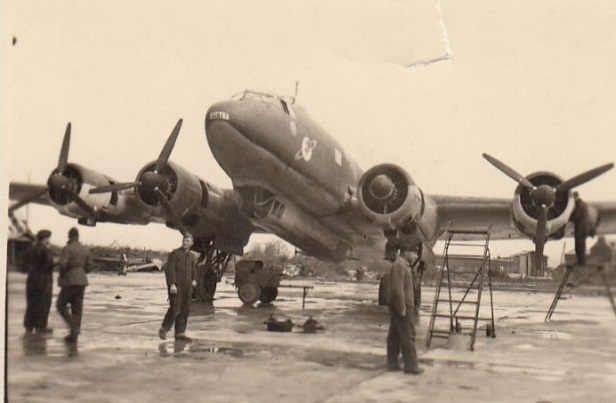
On Saturday 26 October 1940, a Focke-Wulf Fw-200 Condor took off under the command of 1st Lt. Burkhardt, second pilot, NCO Dörschel, flight mechanic; NCO Iwang; 1st radio operator; Airman 2nd Class Mix, 2nd radio operator; Dr Habich, meteorologist, on an armed reconnaissance and weather scouting mission over northwest Ireland. During this flight a large vessel with 3 smokestacks was sighted west of Ireland. Despite powerful anti-aircraft activity which inflicted serious hits on the attacking aircraft after its first assault, the German plane inflicted 2 severe hits on the ship in a total of 4 daring low-level attacks. As the plane was flying away, the ship showed a slight list and was burning along the whole length. Mission ‘weather reconnaissance’ was carried out at the conclusion of this success. The assaulted ship burned for 24 hours and the following day its wreck was sunk by a U-boat. The vessel was the passenger steamer ‘Empress of Britain’, which at 42,000 tons was the tenth largest ship in the international merchant fleet and did service as a troop transport vessel.
Some Condors were equipped to carry the Hs 293 anti-shipping missile under the outer engines. Otherwise they carried up to 2100kg of bombs.
Total production was 276 aircraft. Principal versions – Fw 200A (pre-production airliner), Fw 200B (production airliner with 850- hp/634-kW BMW 132 radials), Fw 200C-0 (pre-production military model), Fw 200C-1 (production type with 3,757-lb/1,750-kg bombload), Fw 200C-2 (improved C-1 with revised nacelles and underwing bomb racks), Fw 200C-3 (first major version with BMW Bramo 323 Fafnir radials and different armament in several subvariants), Fw 200C-4 (definitive production model with search radar), Fw 200C-6 (model with two Henschel Hs 293 anti-ship missiles), and Fw 200C-8 (revised missile-carrier).

Interest by the Japanese Army in the bomber version of the Fw-200 followed a visit to Japan in 1938. The Fw-200K Kurier version was originally intended for Japan and the allied code ‘Trudy’ was allocated. No deliveries were made.
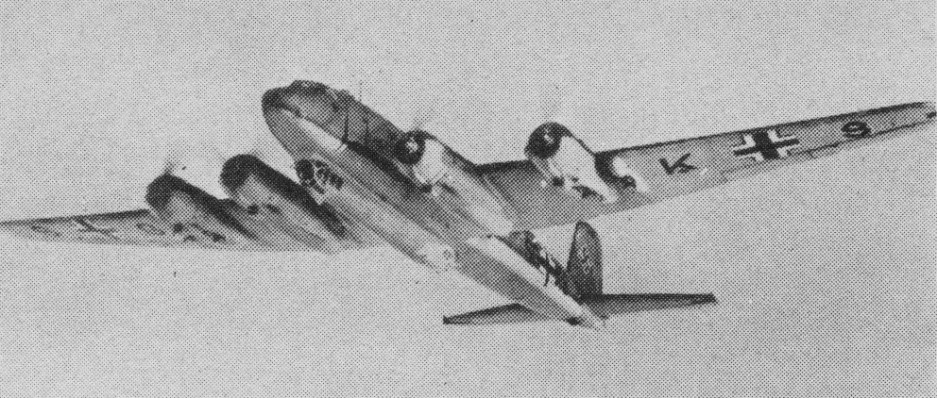
Focke Wulf FW 200 A Condor
Engines: 4 x BMW 132 G, 710 hp
Length: 78.248 ft / 23.85 m
Height: 19.685 ft / 6.0 m
Wingspan: 107.743 ft /32.84 m
Wing area: 1270.152 sqft / 118.0 sq.m
Max take off weight: 37485.0 lb / 17000.0 kg
Weight empty: 24089.6 lb / 10925.0 kg
Max. speed: 202 kts / 375 km/h
Landing speed: 58 kts / 107 km/h
Cruising speed: 181 kts / 335 km/h
Initial climb rate: 1377.95 ft/min / 7.00 m/s
Service ceiling: 24606 ft / 7500 m
Wing load: 29.52 lb/sq.ft / 144.00 kg/sq.m
Range: 956 nm / 1770 km
Crew: 4 + 26
Fw 200C-3/U4
Engines: 4 x Bramo 323R, 895kw
Max take-off weight: 24520 kg / 54058 lb
Empty weight: 17005 kg / 37490 lb
Wingspan: 32.85 m / 107 ft 9 in
Length: 23.45 m / 76 ft 11 in
Height: 3.3 m / 10 ft 10 in
Wing area: 119.85 sq.m / 1290.05 sq ft
Max. speed: 360 km/h / 224 mph
Cruise speed: 335 km/h / 208 mph
Ceiling: 6000 m / 19700 ft
Range: 3560 km / 2212 miles
Armament: 4 x 13mm machine-guns, 1 x 20mm cannon, 4 x 250kg bombs
Fw 200C-8 Condor
Engines: 4 x 1,200-hp (895-kW) BMW Bramo 323R-2 Fafnir
Maximum speed 224 mph (360 kph) at 15,750 ft (4,800 m)
Service ceiling 19,030 ft (5,800 m)
Range 2,175 miles (3,500 km)
Emptyweight 29,367 lb (12,950 kg)
Maximum take-off wieght 50,044 lb (22,700 kg)
Wing span 109 ft 1 in (33.25 m)
Length 78 ft 3 in (23.85 m)
Height 20 ft 4 in (6.20 m)
Wing area 1,270.2 sq ft (118.00 sq.m).
Armament: one 20-mm cannon, four 13.1-mm (0.52-in) machine guns, and one 7.92-mm (0.312-in) machine gun in nose, dorsal, beam and ventral positions, and two HS 293A missiles.
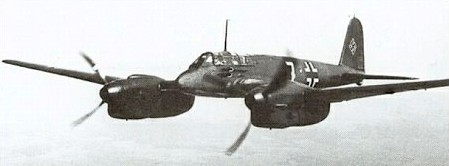
The Fw 187 was a heavy, single-seat, twin-engined fighter. Despite very good performance, the Luftwaffe showed no interest, as it was firmly committed to the Bf 110. Nine were built in total.
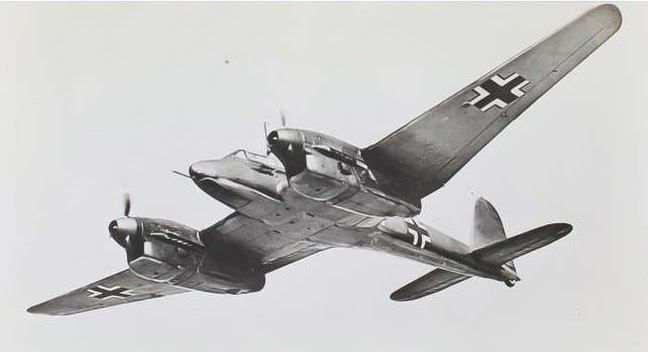
The first was destroyed in an accident on 14/05/1938. The third prototype featured a fuselage remodel and engine nacelles redesign and flew in 1938.
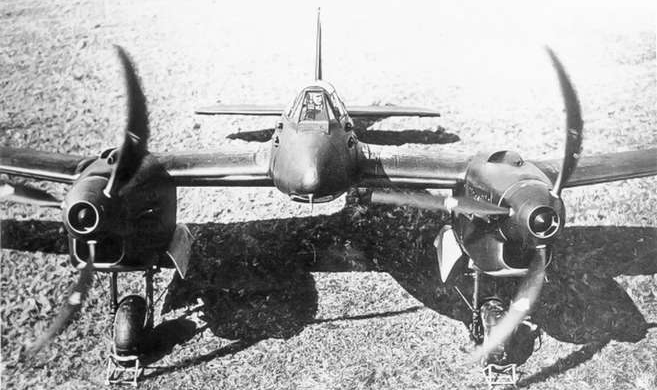
Fw 187 V 1
Engines: 2 x Junkers Jumo 210Da, 630 hp
Props: three-bladed metal Junker-Hamilton
Wingspan: 15,30 m
Length: 11,10 m
Height: 3,85 m
Wingarea: 30,40 sq.m
Vmax: 525 kph
Seats: 1
Armament: 2 x MT MG 17 7,92 mm
1st prototype, D-AANA
Fw 187 V 2
Engines: 2 x Junkers Jumo 210G, 680 hp
Props: three-bladed metal VDM fixed pitch
Wingspan: 15,30 m
Length: 11,10 m
Height: 3,85 m
Wingarea: 30,40 sq.m
Vmax: 525 kph
Seats: 2
Armament: 6 x MT MG 17 7,92mm
First flown: 1937
D-ORHP.
Fw 187 V 3
Seats: 2
Armament: 2 x MG FF 20mm
Fw 187 V-4
Engines: 2 x Junkers Jumo 210G, 680 hp
Props: three-bladed metal VDM fixed pitch
Wingspan: 15,30 m
Length: 11,10 m
Height: 3,85 m
Wingarea: 30,40 sq.m
Vmax: 525 kph
Seats: 2
Armament: 6 x MT MG 17 7,92mm
Fw 187 V-5
Engines: 2 x Junkers Jumo 210G, 680 hp
Props: three-bladed metal VDM fixed pitch
Wingspan: 15,30 m
Length: 11,10 m
Height: 3,85 m
Wingarea: 30,40 sq.m
Vmax: 525 kph
Seats: 2
Armament: 6 x MT MG 17 7,92mm
Fw 187 V-6
Engines: 2 x Daimler-Benz DB 600A, 1075 hp
Props: three-bladed metal VDM fixed pitch
Wingspan: 15,30 m
Length: 11,10 m
Height: 3,85 m
Wingarea: 30,40 sq.m
Vmax: 630 kph
Seats: 2
Armament: 6 x MT MG 17 7,92mm
Fw 187 To 0
Engines: 2 x Junkers Jumo 210G, 680
Props: metal VDM fixed pitch
Wingspan: 15,30 m
Length: 11,10 m
Height: 3,85 m
Wing area: 30,40 sq.m
Empty weight: 3700 kg
MTOW: 5000 kg
Vmax: 525 kph @ 4000 m
ROC: 2000 m in 1 min
Ceiling: 10000 m
Armament: 4 x MT MG 17 of 7,92mm and 2 guns 20 mm.
Number built: 3
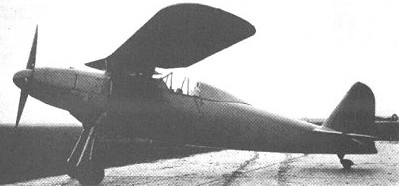
The Fw 159 was a parasol-wing fighter with retractable landing gear, competing with the Messerschmitt Bf 109. Three were built, the first flying in 1935. They suffered from serious problems with their landing gear, the second prototype being reinforced.
V 1
Engine:
Junkers Jumo 210A, 610 hp
Prop: metal three-bladed variable pitch
Wingspan: 12,40 m
Length: 10,00 m
Height: 3,75 m
Wingarea: 20,20 sq.m
Empty weight: 1875 kg
MTOW: 2250 kg
Power loading: 111,38 kg/sq.m
Power loading: 3,688 kg/hp
Vmax: 385 km/h
Ceiling: 7200 m
Range: 650 km
Armament: 2 MT MG 17, 7.92 mm.
V 2
Engine: Junkers Jumo 210B, 640 hp
Prop: Schwartz two-blade wood variable pitch
Wingspan: 12,40 m
Length: 10,00 m
Height: 3,75 m
Wingarea: 20,20 sq.m
Empty weight: 1875 kg
MTOW: 2250 kg
Wing loading: 111,38 kg/sq.m
Power loading: 3,515 kg/hp
Vmax: 333 kph @ SL, 370 kph @ 1500 m, 385 kph @ 4000 m
Vcruise: 365 kph @ 2700 m
ROC: 6000 m in 12 min 30 sec
Ceiling: 7200 m
Range: 650 km
Armament: 2 MT MG 17 7,92 mm
V 3
Engine: Junkers Jumo 210G, 730 hp
Vmax: 405 kph @ 4500 m.
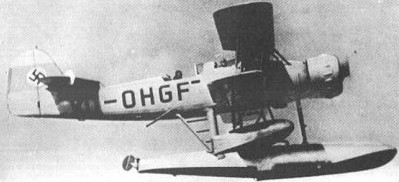
Reconnaissance floatplane, a biplane intended for shipboard duties. The Ar 196 was preferred, and the Fw 62 was merely a back-up design. Only four were built. In 1937 2 standard prototypes were built, V1 and V2.
The first prototype having two floats.
V1
Engine: 1 x BMW 132 cd, 880 hp
Prop: metal two-blade
Wingspan: 12,35 m
Length: 20 m
Height: 3,40 m
Empty weight: 2300 kg
MTOW: 2850 kg
Power loading: 3,238 kg/hp
Vmax: 280 km/h
Ceiling: 5900m
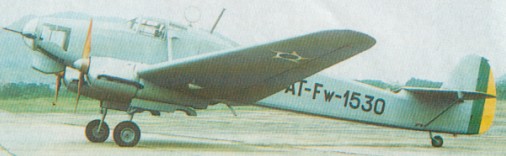
The Weihe was first flown in prototype form in 1935 as an advanced training, light 6 passenger transport and communications aircraft for the Luftwaffe, powered by two 179kW Argus As.10G engines. The main undercarriage retactable, and tail wheel fixed.

Before the outbreak of World War II Deutsche Luft-Hansa received eight as six-passenger commercial transports. Armament in the military training version comprised a gunner’s turret in the nose (which could be replaced by a metal cone for blind-flying instruction) and an aft gun position. The turret had space for an instructor and pupil for machine-gun and bomb-aiming training. Two seats side-by-side were provided in the cockpit for flying training, while a bomb trap with sights in a further compartment was provided for bombing instruction.
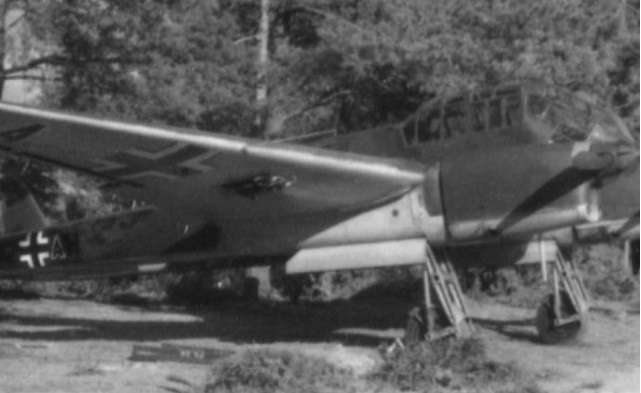
Fifteen were licence built by Brazil’s Oficinas Gerais da Aviation Naval during 1939-40. These were based on the Fw 58B-2 which was used as a gunnery trainer by the Luftwaffe.
Total production: 1350
V-1
Engines: 2 x Argus Ace 10c, 240 hp
Props: two-blade metal fixed pitch
Wingspan: 21,00 m
Length: 14,00 m
Height: 3,90 m
1 prototype
V-2:
Armament: 1 MT MG 15 7,92 mm, 1 MT MG 15, 7,92 m
1 prototype.
V-4:
Armament: 1 MT MG 15 7,92mm
1 prototype
Fw 58B-1
Engines: 2 x Argus Aces 10c, 240 hp
Props: two-blade wood variable pitch
Wingspan: 21,00 m
Length: 14,00 m
Height: 3,90 m
Wingarea: 47,00 sq.m
Empty weight: 2400 kg
MTOW: 3600 kg
Wing loading: 76,595 kg/sq.m
Power loading: 7,5 kg/hp
Vmax: 270 kph
Vcruise: 240 kph
Ceiling: 5600 m
Range: 800 km
Armament: 2 x MT MG 15, 7,92 mm
Fw 58B-2
Fw 58C
Engines: Argus Ace 10c or Hirth HM 508D, 260 hp
Fw 58W
Undercarriage: two catamaran floats
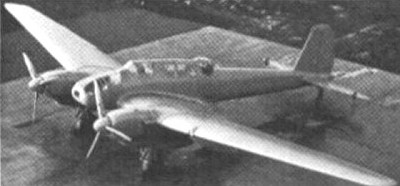
A twin-engined, three-seat strategic fighter, first flown in 1936. The Fw 57 was a contemporary of the Bf 110, with which it competed for orders. It featured a powered dorsal gun turret, and a glazed nose with twin semi-flexible cannon operated by the third crewmember. The Fw 57 was overweight and underpowered. Only three were built.
Fw 57
Engines: 2 x Daimler-Benz DB 600-A, 910 hp
Props: metal three-blade fixed pitch
Wing span: 25,00 m
Length: 16,40 m
Height: 4,08 m
Empty weight: 6800 kg
MTOW: 8300 kg
Vmax: 404 kph
Ceiling: 9100 m
Armament: 2 x MG FF, 20 mm (nose) and 1 Mauser MG FF, 20 mm (dorsal turret).
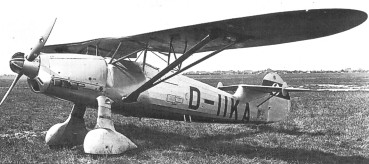
The Stosser (hawk) was the first Focke-Wulf design undertaken by Kurt Tank, and resulted for a German requirement for an advanced trainer with the As 100 engine. The resultant Fw 56 prototype that flew in November 1933 was a parasol-winged aeroplane of mixed construction with cantilever main landing gear units powered by a 179kW Argus As. 10C engine: two more prototypes followed. The V2 prototype had a modified undercarriage and metal wing. The V3 prototype had a further modified undercarriage, similar to the V1, first flying in 1934.
Three Fw 56 A-0 were built with various modifications to the aerofoil. Two MT MG 17 of 7,92 m/m were fitted and provision for 3 bombs of 10 kg.
In the summer of 1935 the Stosser was selected in preference to the Arado Ar 76 and Heinkel He 74, so three Fw 56A-0 pre-production and about 900 Fw 56A-1 production aircraft followed up to the end of production in 1940. These were extensively used as advanced trainers in fighter schools, though after trials that helped to validate the concept of dive-bombing the type was also used in dive-bomber schools. Austria ordered the type before its annexation by Germany, and 12 Stossers were also delivered to Hungary.
Fw 56 V1
Engine: Argus As 10C, 240 hp
Prop: 2 blade fixed pitch
Seats: 2
1 prototype
Fw 56 V2
1 prototype
Fw 56 V3
1 prototype
Fw 56 A-0
Armament: 2 MT MG 17 7,92 mm / 3 bombs 10 kg
Fw 56 A-1 Stosser
Engine: Argus Aces 10c, 240 hp / 179kW
Prop: two-bladed variable pitch
Wingspan: 10,50 m (34ft 5.5 in)
Length: 7,70 m (25ft3in).
Height: 3,55 m
Wingarea: 150.696 sq.ft / 14 sq.m
Empty weight; 695 kg
MTOW: 995 kg
Max. payload weight : 145.5 lb / 66.0 kg
Fuel capacity: 22 gal / 84 l
Vmax: 173 mph / 278 kph @ SL
Landing speed: 49 kt / 90 km/h
Cruising speed : 132 kt / 245 km/h
Take off distance: 551 ft / 168 m
Initial climb rate : 1496.06 ft/min / 7.6 m/s
Service ceiling : 20341 ft / 6200 m
Range: 400 km / 249 miles
Crew: 1
Armament: 1 or 2 Mg 17, 7,92mm plus provision for 3 x 10-kg (22-lb) bombs carried externally.

