Fokker G.I

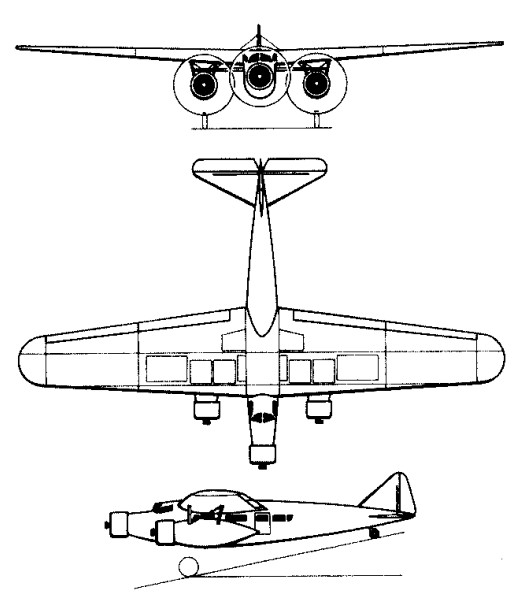
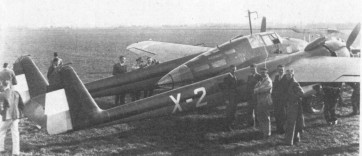
In November 1936 the prototype Fokker G.I heavy fighter was exhibited at the Paris Air Show, a static exhibition in the Grand Palais. The Fokker G.I, a twin engined, two seat aircraft which had been named “Le Faucheur” (The Reaper), had a role as a fighter/reconnaissance and light bomber aircraft.

Fokker G.I Article

After the Show, the G.I was taken to Eindhoven/Welschap airfield, from where its first flight was made on 16 March 1937. The G.1 made its maiden flight with two 750 hp Hispano Suiza engines. The Aviation Department objected to the Hispano Suiza engine because their other aircraft had been equipped with the Bristol Mercury. Moreover, the Hispano 80 02 was new and untried.
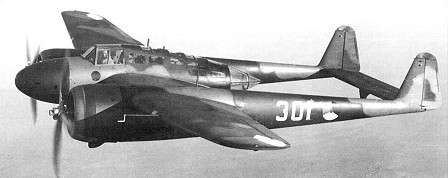
The G.I engines were changed to similarly rated Pratt & Whitney SB4-G Twin Wasp Juniors during reconstruction, after the G.I suffered brake failure and rammed a hangar at Schiphol on 4 July 1937.
Demonstrations had already been given to the Netherlands army air corps at Soesterberg, and considerable interest was shown, resulting at the end of the year in an order for 36 aircraft to be designated G.I Mercury. In order to ease the spares situation, it was stipulated that these must have Bristol Mercury VIII engines.
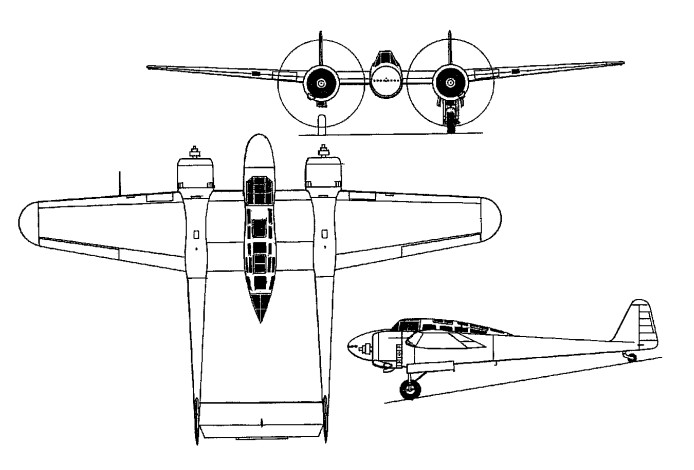
This was a larger version with the armament of two 23mm can¬non and two fixed 7.9mm machine guns, installed in the nose of the aircraft, and a rotatable 7.9mm machine gun in the tail, fitted in a kind of turret. The aircraft can also carry a 400kg bomb load. Its maximum speed is 470km/hr and the radius of action is approximately 1,400km. There is a two man crew. As a reconnaissance aircraft it has a range of 1,600km.
The first production aircraft to fly, actually the second of the batch, became airborne only on 11 April 1939. It remained with the makers for production testing and modifications, and the first aircraft was delivered to Soesterberg on 10 July 1939.
The G.1 Mercury was armed with a battery of eight 7.92 mm (0.312 in) machine¬guns in the nose of the nacelle, plus another flexibly mounted at the rear, and could carry 300 kg (660 lb) of bombs. Twenty three had been delivered by the time of the German invasion in May 1940, and although they fought well, when the fighting was over only one remained. This was flown to England by two escaping Fokker pilots.
Export orders followed the aircraft’s debut at Paris and a number of foreign pilots came to Fokker to fly and evaluate the G.I Mercury export version. Orders were placed by Finland (26), Estonia (9), Sweden (18) and Republican Spain (12), while a licence-production agreement was in negotiation with Denmark and another with Manfred Weiss in Hungary. The Dutch embargo on weapons exports before World War II killed the Spanish order and the Dutch Government took over the aircraft at the end of 1939, but the Finnish batch was under construction when war broke out and a ban was then placed on its export. After lengthy negotiations a contract was drawn up to permit the G.I Mercury’s export on 17 April 1940, by which time 12 had been completed, apart from armament.
By the time of the German invasion 12 of the Finnish G.I Mercurys and the nine confiscated Spanish machines were complete but the intended armament of two 23 mm (0.9 in) Madsen cannon and three 7.92 mm (0.312 in) machine guns had not been fitted.
When Germany attacked the Netherlands on 10 May 1940, 23 G.ls were in service: 12 with the 4th Fighter Group at Alkmaar and 11 with the 3rd Fighter Group at Rotterdam/Waalhaven. The G.ls were successful in destroying several Junkers Ju 52/3ms during the early stages of the German invasion, but by the fifth day, when Dutch resistance ended, only a single example remained airworthy.
The Germans occupied the Fokker factory, ordering completion of the 12 G.ls intended for Finland, and these were used subsequently by the Luftwaffe as fighter trainers. Test flights from the factory were made under German supervision, but on 5 May 1941 two Dutch pilots succeeded in evading an escorting German-flown G.I and escaped to England. Their G.I Mercury was taken to the Royal Aircraft Establishment, Farnborough, for examination, and used subsequently by Phillips and Powis (Miles Aircraft) at Reading for research into wooden construction.
A total of 62 G.ls is believed to have been built, and none survived the war.

There never was a G.lA or a G.lB. They were officially clasified by Fokker as G.1 Wasp and G.l Mercury. Dutch air force referring to them as G.lW and G.lM.

Gallery

Fokker G 1 Mercury
Engines: 2 x Bristol Mercury VIII radial, 819 hp / 619kW
Max take-off weight: 4800 kg / 10582 lb
Empty weight: 3360 kg / 7408 lb
Wingspan: 17.15 m / 56 ft 3 in
Length: 11.50 m / 37 ft 9 in
Height: 3.40 m / 11 ft 2 in
Wing area: 38.30 sq.m / 412.26 sq ft
Max. speed: 256 kts /475 km/h / 295 mph
Cruise speed: 355 km/h / 221 mph
Service ceiling: 9300 m / 30500 ft
Range: 1400 km / 870 miles
Armament: 9 x 7.9mm Madsen machine-guns, 400kg of bombs
Crew: 2-3

G.1 Wasp
Engines: 2 x 750 hp Pratt & Whitney Twin Wasp Junior.
Fokker D.XXI

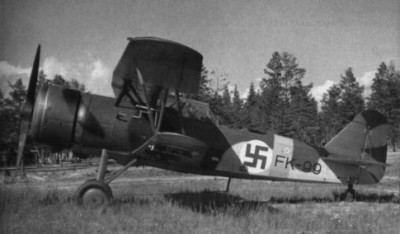
Designed in 1935 by a team led by Dr-Ir Erich Schatzki and retaining traditional Fokker-type mixed construction, the D XXI was in answer to a specification for the KNIL (Koninklijk Nederlands Indisch Leger). The East Indies Army had requested a fixed undercarriage.

Fokker D.XXI Article

Ten days before the first flight of the D.XXI, Colijn, Minister for Colonial Affairs, announced that no fighters would be purchased for the Dutch East Indies, and that instead bombers were to be bought in America. Col Best thought the D.XXI too slow, and did not like the fixed undercarriage.
The intended powerplant was the 650 hp Rolls Royce liquid cooled Kestrel V type engine, but when the prototype first flew on March 27, 1936, from Welschap airfield near Eindhoven, it utilized a 645 hp Bristol Mercury VIS radial engine. The initial production order was placed by the Finnish government, which acquired a manufacturing licence, a contract subsequently being issued in the Netherlands on behalf of the homebased LVA (Luchtvaartafdeling).

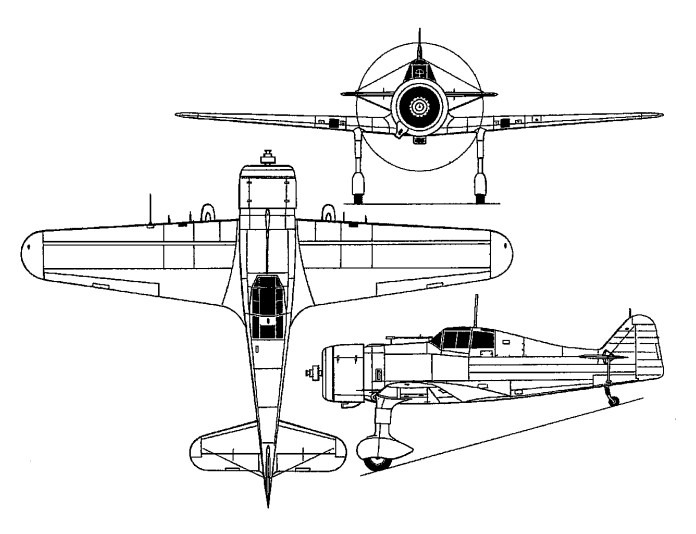
The D.XXI was a low wing monoplane, with enclosed cockpit and fixed, spatted undercar¬riage. It had a 350 litre (77 Imp gal) fuel tank behind the engine and supplementary tanks could be installed in the wings.
The D.XXI construction was, the fuselage and tailplane of welded steel tubing covered with and a wooden wing.
After an intensive testing programme 36 D.XXIs were ordered for the Aviation Department in the summer of 1937. These were to be powered by 830 hp Bristol Mercury VII or VIII engines, and armed with two 7.92 mm (0.312 in) FN Browning machine guns in the wings and two firing through the propeller disc. Delivery began on July 20, 1928, and the last aircraft arrived for service one week after Germany invaded Poland, on September 8, 1939. Twenty nine of this batch, equipping the 1st, 2nd and 5th Fighter Groups of the LVA, were serviceable when Holland was invaded. They acquitted themselves well, but had to be grounded after only three days fighting, due to lack of ammunition.
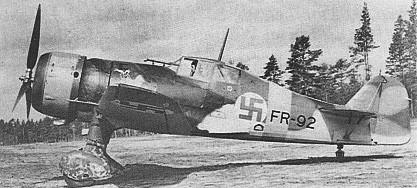
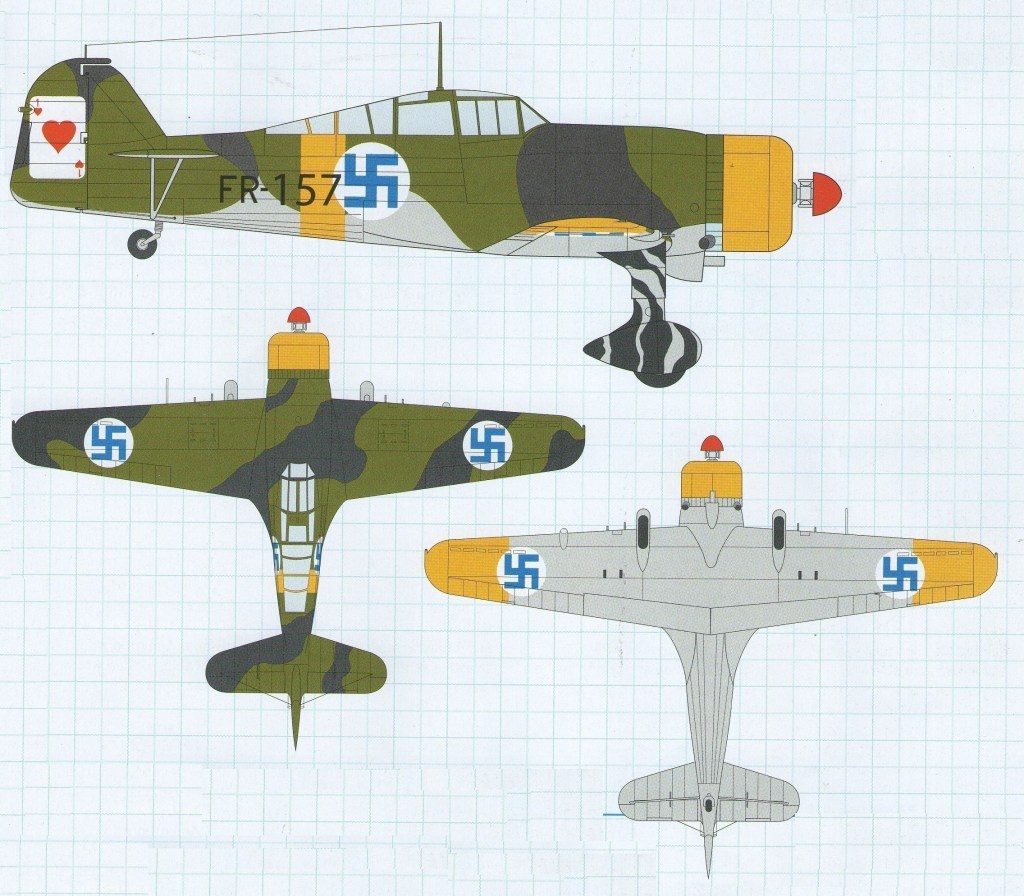
During 1937 the Finnish government purchased seven D.XXIs (Mercury VIII engined), delivery flights commencing 27 August 1937, and 93 were manufactured in Fin¬land under licence between 1939 44 by VL (Valtion Lentokonetehdas). Thirty ¬eight of these were 840hp Mercury VII engined (PZL- or Tampella-built) and 4 machine guns for armament (maximum speed was 460kph); the remainder were redesigned in Finland to accept 825 hp Pratt & Whitney R 1535 SB4G engines, and had all four guns relocated in the wings.
Two D XXIs were purchased by Denmark which subsequently licence-built a further 10 with the Mercury VIII engine. These mounting a pair of 20mm Madsen cannon and two 7.9mm machine guns. These were in service when Denmark was invaded in 1940, one being experimen¬tally equipped with two 20 mm (0.79 in) Mad¬sen cannon in underwing blisters; the others were armed with two 8 mm (0.315 in) DISA machine guns in the upper front fuselage.
Licence manufacture was also initiated in Spain by Hispano Aviacion, assembly being undertaken at the SAF-15 factory at La Rabasa, Alicante. At least one D XXI was completed and flown in Spain with a Soviet M-25 engine taken from an I-16 before the production facility was overrun by Nationalist forces. At that time, 50 sets of wings, 25 fuselages and 25 undercarriages for D XXIs were discovered. The D XXI was offered by Fokker with various engines, including the Pratt & Whitney Twin Wasp Junior, and the basic D XXI was further developed with this engine in Finland by VL. The last Finnish-built Mercury-engined D XXI was fitted with a Finnish-designed retractable undercarriage after suffering a landing accident. It was test flown on 19 June 1941, the fixed gear being restored after another landing accident a month later.
The Finnish state owned aircraft factories fitted two D.XXIs with retractable undercarriages. This modifica¬tion was much too expensive and radical in view of the advantages gained, and was not pursued. The Finns installed extra glaz¬ing behind the cockpit to improve the view. After The Second World War the D.XXI served with the flying training school until 1948.

Max take-off weight: 2 050 kg / 4519 lb
Empty weight: 1450 kg / 3197 lb
Wingspan: 11.00 m / 36 ft 1 in
Length: 8.20 m / 26 ft 11 in
Height: 2.95 m / 9 ft 8 in
Wing area: 16.sq.m / 174.38 sq ft
Max. speed: 460 km/h / 286 mph
Range: 930 km / 578 miles

Fokker C.X

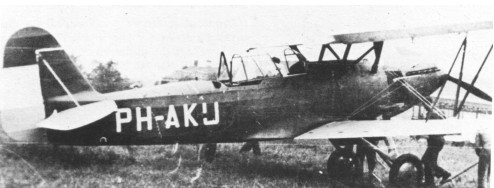
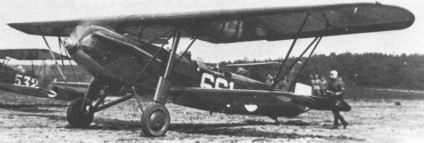
This two seat biplane had wooden wings, and fuselage of welded steel tube covered with fabric. Owing to the prolonged success of the C.V family the C.X did not fly until 1934. The C.X was considerably devel-oped over the three years to 1937.
Early batches were for the East Indies Army Air Service, followed by modified machines for the home LVA (Luchtvaart¬afdeling) with tailwheels and braked main wheels and the last 15 having enclosed cock-pits. All Dutch aircraft had a 650 hp Rolls¬Royce Kestrel V imported from Britain, and were armed with two 7.92 mm syn¬chronized machine guns with a third aimed by the observer. Underwing racks could carry two 175 kg (385 1b) or four 100 kg (22 1¬lb) bombs. Provision was made for army co¬operation radio, camera and other optional equipment. Ten were still serviceable on May 10, 1940, and saw immediate action in the sub¬sequent three days.

Finland imported four examples with the 835 hp Bristol Pegasus XXI radial, which despite considerably greater warload increased maximum speed to 343 km/h (212 mph). Four C.X’s had been purchased as “pattern” aircraft in 1934 along with a manufacturing license and the Ilmavoimat had ordered a further 20 from VL, who built the C.X aircraft over the last half of 1934 through to mid-1935. A further 20 were built through 1935 and early 1936 but with the move of VL to Tampere and the startup of Fokker D.XXI and Bristol Blenheim manufacturing, production was discontinued as the emphasis was placed on the construction of more modern aircraft. In early 1938, the Ilmavoimat briefly considered resurrecting the C.X for the Army Co-operation role. After an initial review, the aircraft was not considered further.

Valtion Lentokonetehdas (VL), the state owned factory at Tampere, Finland, built 35 Pegasus engined C.Xs and 93 D.XXIs under license from 1937 to 1944. The last five were built in 1942.

The last C.X crashed on January 25th, 1958.

Span: 12.0 m (39 ft 4 in)
Length: 9.2 m (30 ft 2 in)
Gross weight: 2250 kg (4960 lb)
Maximum speed: 320 kph (199 mph)

Valtion Lentokonetehdas (VL) C.X
Engine: Bristol Pegasus XXI, 835 hp
Maximum speed: 211 mph
Range: 522 miles
Service ceiling: 27,230 ft
Armament: 2 x 7.9 mm machine guns fixed on top of the front fuselage / 1 x 7.9 mm machine gun rear cockpit
Bombload: Underwing racks for two 385lb (175kg) or four 221lb (100kg) bombs

Fokker F.XXXVI

The sole Fokker F.XXXVI made its first flight on 22 June 1934, flown by Fokker’s test pilot Emil Meinecke. Largest of the Fokker transports, it was a high-wing cantilever monoplane with fixed landing gear and powered by four 559kW Wright Cyclone radial engines mounted forward of the leading edge. Of typical Fokker construction, the F.XXXVI provided accommodation for a crew of four, and 32 passengers in four eight-seat cabins. As an alternative 16 passengers could be carried in sleeping accommodation. Operated on European routes by KLM from March 1935, it was sold in 1939 to Scottish Aviation of Prestwick and was flown from there as a crew and navigational trainer until scrapped in 1940.

Fokker F.XXII

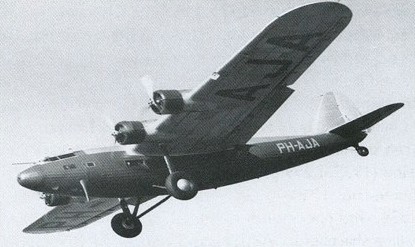
The prototype (PH-AJR) flew in early 1935 and was followed by two production machines, accommodating 22 passengers. All three were delivered to KLM, the prototype in March and the other two in May 1935. One aircraft crashed on 14 July 1935, but the other two operated European routes until they were sold in the UK, PH-AJR becoming G-AFXR in August 1939 on joining British American Air Services, and PH-AJP being re-registered G-AFZP in the following month when it was acquired by Scottish Aviation. Impressed for RAF service as HM159 and HM160 in October 1941, the two aircraft were used for transport and crew training. HM159 caught fire in the air and was lost in the Highlands, but HM160 was returned to Scottish Aviation post-war under its previous civil registration. It flew between Prestwick and Belfast for a time before being grounded finally at the end of 1947.
A fourth F.XXII was built for Swedish AB Aerotransport and delivered in March 1935. Named Lappland, it flew a regular schedule between Malmo and Amsterdam until destroyed in an accident at Malmo in June 1936.

Engines: 4 x Pratt & Whitney Wasp T1D1 radial, 373kW
Max take-off weight: 13000 kg / 28660 lb
Empty weight: 8100 kg / 17858 lb
Wingspan: 30.00 m / 98 ft 5 in
Length: 21.52 m / 70 ft 7 in
Height: 4.60 m / 15 ft 1 in
Wing area: 30.00 sq.m / 322.92 sq ft
Max. speed: 285 km/h / 177 mph
Cruise speed: 215 km/h / 134 mph
Ceiling: 4900 m / 16100 ft
Range: 1350 km / 839 miles
Passengers: 22

Fokker F.XX

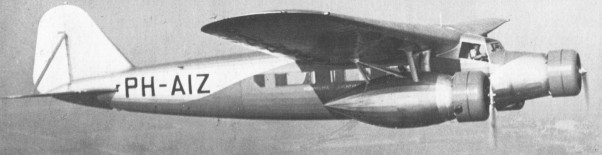
The unique F.XX tri-motor PH AIZ Zilvermeeuw was the first and only Fokker commercial aircraft with a retractable undercarriage. The 12-passenger transport had an elliptical-section fuselage instead of the rectangular form of previous Fokker transports. The cantilever high wing was of wooden construction and the fuselage a steel-tube structure.
Power was provided by three Wright Cyclone R-1820-F radial engines, one mounted in the nose and the other two carried on strut assemblies under the wings, for a cruising speed of 270 kph. The main landing gear units retracted rearwards into the engine nacelles.
Named Zilvermeeuw (Silver Gull), it was flown for the first time in 1933 and handed over to KLM for operation on services from Amsterdam to London and Berlin.
It was later sold via Air Tropic to the Spanish Republican government and was used to maintain liaison between Madrid and Paris during 1937. Its ultimate fate is unknown.

Engines: 3 x Wright Cyclone R-1820-F radial, 477kW
Max take-off weight: 9400 kg / 20724 lb
Empty weight: 6455 kg / 14231 lb
Wingspan: 25.70 m / 84 ft 4 in
Length: 16.70 m / 54 ft 9 in
Height: 4.80 m / 15 ft 9 in
Wing area: 96.00 sq.m / 1033.33 sq ft
Max. speed: 305 km/h / 190 mph
Cruise speed: 250 km/h / 155 mph
Ceiling: 6200 m / 20350 ft
Range: 1410 km / 876 miles
Passengers: 12

Fokker D.XVII

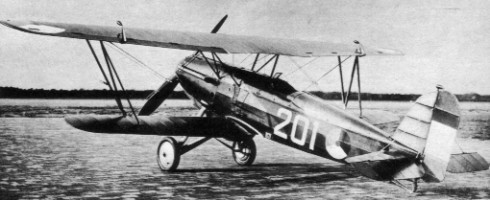
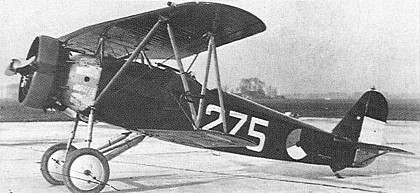
The D.XVII was the last biplane to be built by Fokker, and the first design to be executed under the guidance of Mr Beeling. The first flight in 1931 of another D.XVI prototype, fitted with a Curtiss Conqueror V-1570 engine, was with the object of finding a D.VII replacement for the Dutch East Indies army air service, but no orders were forthcoming. In 1932 it reappeared, with some modifications, as a new prototype designated D.XVII.
With a number of aerodynamic refinements while retaining the basic structure of the earlier fighter and its armament of two 7.92mm M.36 machine guns, ten production examples were ordered by the LVA. The 595 hp Rolls-Royce Kestrel IIS 12-cylinder liquid-cooled engine was selected as the standard power plant and deliveries commencing in October 1932.

The ninth and tenth aircraft were respectively and temporarily powered by the 790hp Lorraine-Dietrich Petrel 12Hfrs and the 690 hp Hispano-Suiza 12Xbrs, both eventually reverting to standard Kestrel-engined configuration. The Conqueror-engined prototype was shipped to the Netherlands East Indies for KNIL evaluation, being shipped back to Holland in 1936 after a crash, and then being rebuilt and delivered to the LVA. Relegated to the fighter training role prior to World War II, the seven surviving D XVII fighters saw some limited operational use during the Wehrmacht invasion of the Netherlands.

Max take-off weight: 1480 kg / 3263 lb
Empty weight: 1070 kg / 2359 lb
Wingspan: 9.60 m / 31 ft 6 in
Length: 7.25 m / 23 ft 9 in
Height: 3.10 m / 10 ft 2 in
Wing area: 20.00 sq.m / 215.28 sq ft
Maximum speed: 335 km/h (208 mph) at 4000m
Range: 600 km / 373 miles

Fokker D.XVI

Since the Luchtvaar¬tafdeling (Netherlands air force) had rejected the D.XI and D.XIII designs, by the late 1920s it was in desperate need of a more modern fighter to replace the now ageing D.VIIs.
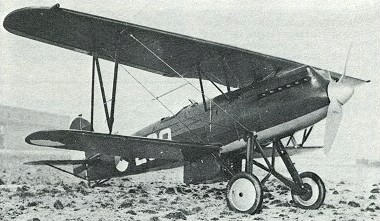
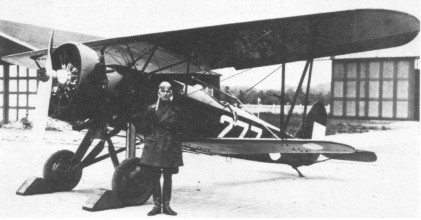
In 1928 the D.XVI was developed from a Fokker design (D.XV/D.XVa). It first flew in 1929, powered by a 450 hp Armstrong/Siddeley Jaguar engine.
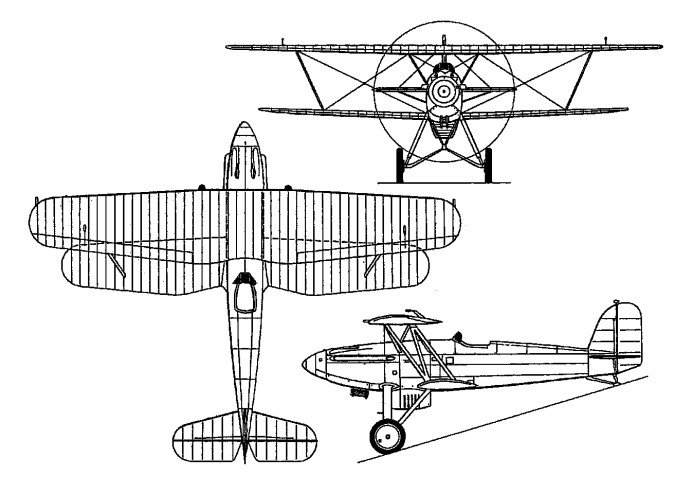
The D XVI single-seat unequal-span biplane was powered by a 460hp Armstrong Siddeley Jaguar 14-cylinder air-cooled radial fitted with Townend rings and flew for the first time in 1929. Possessing a fabric-covered, welded, steel-tube fuselage and ply-and-fabric-covered wooden wings, it was armed with two synchronised 7.92mm machine guns in the upper front fuselage.

The D XVI was ordered by the LVA, 14 aircraft being delivered to that service, these having split-axle undercarriages rather than the crossaxle type of the prototype.
At first the D.XVI s 460 hp Jaguar engine usually seized up after a few hours. This problem became so widespread that the air¬craft were only permitted to fly in the vicinity of their own field, and long climbs were forbid¬den. Finally the factory (technical services) located at Soesterberg reduced away the pistons and solved the problem, though the D.XVI now used ten litres of oil per hour. Of the 15 ordered by the Aviation Department, five crashed within a short space of time and the other ten flew without mishap. One D XVI was subsequently re-engined with a Bristol Mercury radial for aerobatic display purposes.
Four Jupiter engined D.XVIs were sold to Hungary, and one was built for Italy but later sold to China.
Another was fitted with a Curtiss Conqueror engine for the Royal Dutch East Indies Army, and a further D XVI was built with a Curtiss V-1570 Conqueror 12-cylinder water-cooled engine to meet a KNIL (Koninklijk Nederlandslndisch Leger) requirement, although no production order was placed for this version.

Max take-off weight: 1400 kg / 3086 lb
Empty weight: 990 kg / 2183 lb
Wingspan: 9.40 m / 30 ft 10 in
Length: 7.20 m / 23 ft 7 in
Height: 2.70 m / 8 ft 10 in
Wing area: 18.50 sq.m / 199.13 sq ft
Max. speed: 330 km/h / 205 mph
Range: 640 km / 398 miles

Fokker F.XVIII

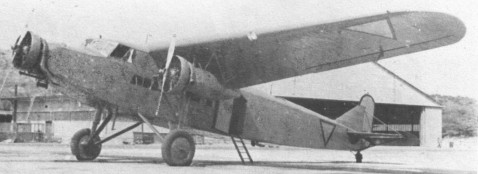
The Fokker F.XVIII retained the same basic design with metal fuselage structure and a high-set cantilever wooden wing but had a number of detail design improvements compared with earlier Fokker tri-motors.
Five F.XVIIIs were built in 1932 and all were put into service on the route from Amsterdam to Batavia in the Dutch East Indies. On this route to the East four passengers were accommodated in the main cabin in seats which converted for sleeping; the cabin also provided accommodation for the wireless operator and the navigator.
Several notable flights were made by F.XVIIIs. Between 15 and 22 December 1934 PH-AIS Snip (Snipe), re-engined with Pratt & Whitney Wasp T1D1 radials, covered 10300km from Amsterdam to Curasao in a flight time of 55 hours 58 minutes carrying 100kg of mail.

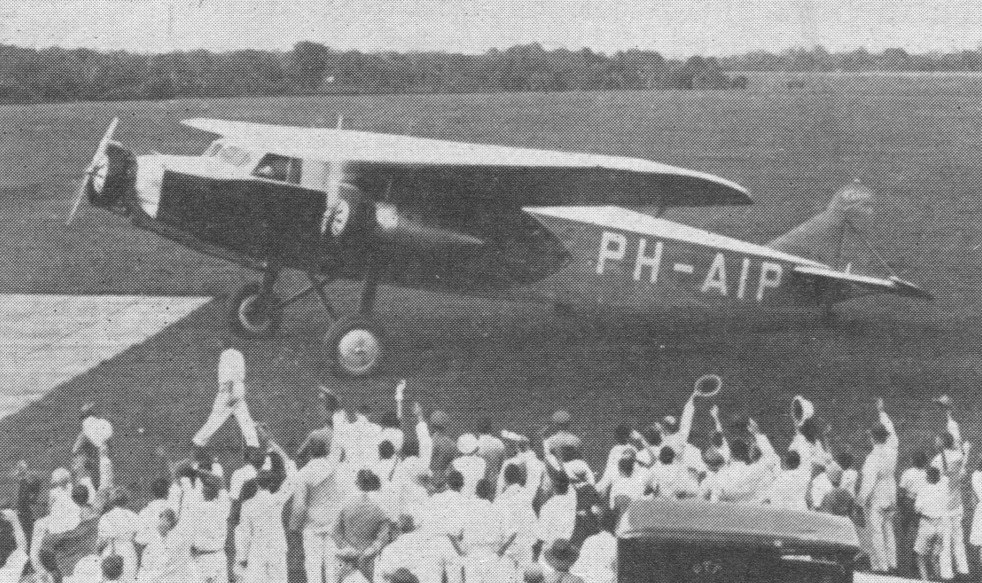
The F-XVIII Pelikaan PH-AIP left Amsterdam on 18 December 1933 and reached Jakarta four days later.

PH-AIP on arrival at Jarkata

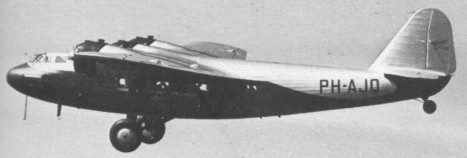
The F.XVIIIs were withdrawn from the long-distance routes in 1935. PH-AIS was joined in the West Indies by PH-AIO Oriol and both remained in service until 1946. The Oriol was converted for military use during the war period and carried a defensive machine-gun.
Two F.XVIIIs were sold to the Czech national line CSA and operated the route from Prague to Berlin and Vienna, normally carrying 13 passengers. Another of the type was sold to a Palestine freight operator and the famous Pelikaan was bought in October 1936 by Air Tropic, a French company acting for the Spanish government, and it is believed that the Pelikaan ended its days on military liaison and transport duties during the Spanish Civil War.

Engine: 3 x Pratt & Whitney Wasp C radial, 313kW
Max take-off weight: 7850 kg / 17306 lb
Empty weight: 4623 kg / 10192 lb
Wingspan: 24.50 m / 80 ft 5 in
Length: 18.50 m / 60 ft 8 in
Wing area: 84.00 sq.m / 904.17 sq ft
Max. speed: 240 km/h / 149 mph
Cruise speed: 210 km/h / 130 mph
Ceiling: 4800 m / 15750 ft
Range: 1820 km / 1131 miles