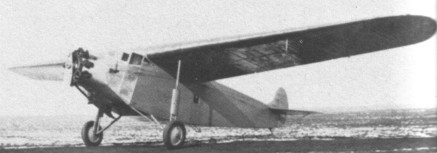
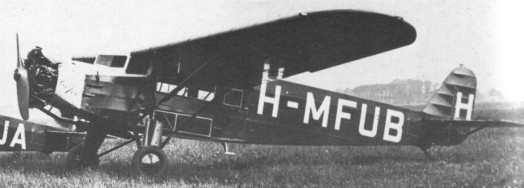
The three engined F.XIV/3m was the passenger carrying version of the F.XIV.
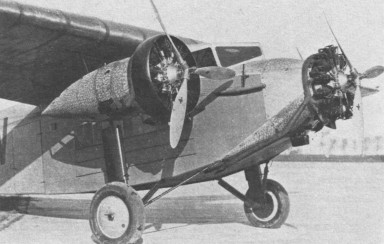
The three engined F.XIV/3m was the passenger carrying version of the F.XIV.
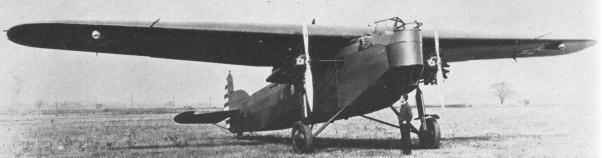
The XLB 2 was a bomber developed by the American Fokker factory and based on the F.VIIBm, the military designation of which was C 2. The XLB 2 had two Pratt & Whitney Hornet radial engines of 525 h.p. each. An observer/bomb aimer, armed with a machine gun, was positioned in the nose.
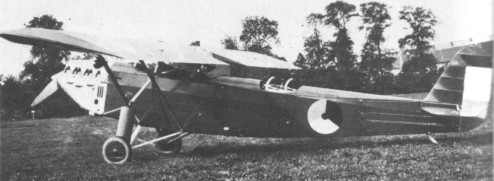
The three seater C.VIII reconnaissance/bomber was the response to a request from the Aviation Department to make a larger reconnaissance aircraft than ever before.
The Dutch Naval Air Service purchased nine C.VIIIWs, which had three man crews.
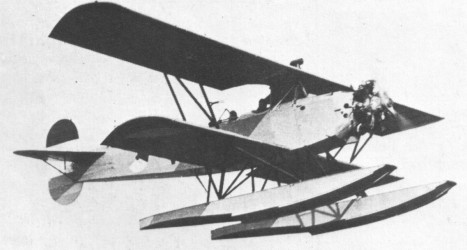
The C.VIIW seaplane was built for reconnaissance and advanced training. Fokker built 30, all of which were delivered to the Naval Air Service.
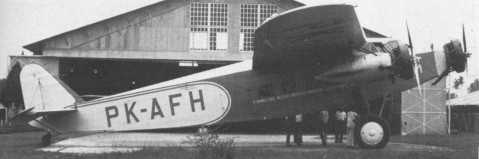
In 1933 Fokker produced the F.XII, an airliner with three 420hp Wasp engines and accommodation for 16 passengers.
The prototype made its maiden flight at the beginning of 1930 and entered service on the KLM route to Batavia in March 1931. Ten more were built by Fokker, all for operation by KLM and its Far Eastern subsidiary KNILM, except for the final machine which was sold to Sweden and operated by AB Aerotransport as the Varmland.
The Dutch-operated F.XIIs maintained the routes to the Far East for two years, and were then switched to the European services connecting Amsterdam with London, Paris, Berlin and other principal cities. On the European runs the F.XIIs carried a crew of two and 16 passengers, but on the Far East route only four passengers were carried in a fair degree of comfort on fully reclining seats.
The Danish Orlogsvaerftet built two F.XIIs under licence for the national airline DDL to operate on the Copenhagen-Berlin route. The second, delivered in May 1935, was designated F.XIIM and had some aerodynamic refinements resulting in improved performance.
Six Dutch F.XIIs were later sold to British operators, and in turn four of the British machines were re-sold to the Spanish government, which had already bought the last KLM-operated aircraft. All were flown in the Spanish Civil War and were lost during the course of the conflict.
Last survivors were the Swedish aircraft and the Danish F.XIIM, the first scrapped in 1946 and the second a year later.
Engines: 3 x Pratt & Whitney Wasp C radial, 317kW
Max take-off weight: 7250 kg / 15984 lb
Empty weight: 4350 kg / 9590 lb
Wingspan: 23.02 m / 75 ft 6 in
Length: 17.80 m / 58 ft 5 in
Height: 4.72 m / 15 ft 6 in
Wing area: 83.00 sq.m / 893.40 sq ft
Max. speed: 230 km/h / 143 mph
Cruise speed: 205 km/h / 127 mph
Ceiling: 3400 m / 11150 ft
Range: 1300 km / 808 miles
Passengers: 16
The F.XI was a feeder liner and air taxi, and was similar to the American Universal in appearance. However, it was definitely not the same aircraft. The Universal was designed in America by Noordwyn; the F. XI in Holland. The aircraft could carry four to six passengers and two pilots. Three aircraft of this type were built, two going to the Hungarian Company Malert, and the third to the Swiss Company Alpar.
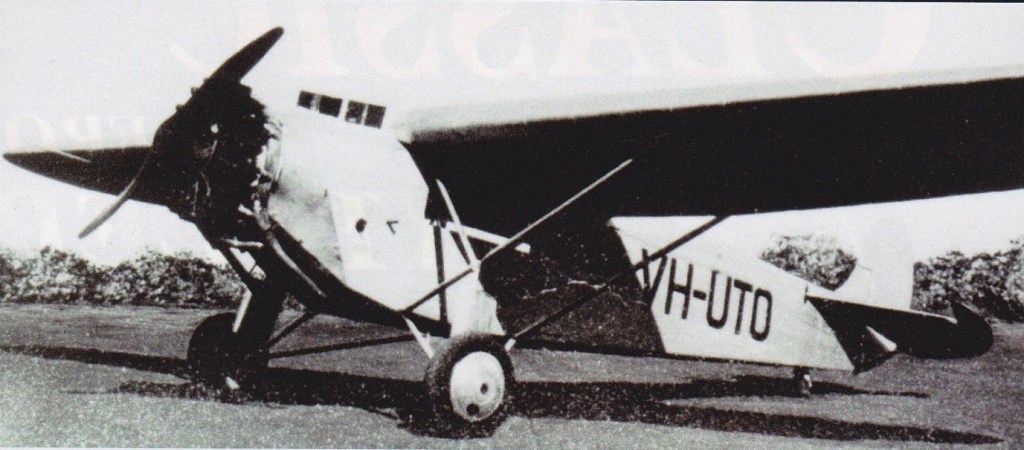
Engine: 1 x 317kW Pratt & Whitney Wasp radial
Max take-off weight: 2390 kg / 5269 lb
Wingspan: 15.44 m / 50 ft 8 in
Length: 11.15 m / 36 ft 7 in
Height: 2.77 m / 9 ft 1 in
Max. speed: 190 km/h / 118 mph
Range: 1086 km / 675 miles
Crew: 2
Passengers: 6
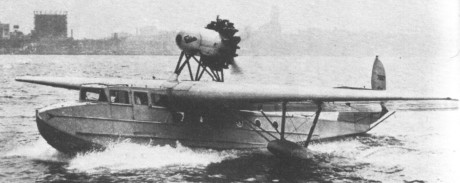
The original version of the B.IVA, the B. IV, also known as F.XI.A pure flying boat, only one was built.
The B.IVA amphibian flying boat had the wheel axles housed in stabilising floats which balanced the aircraft on water. During flight the wheels were retracted into recesses at the ends of the floats to reduce drag.
Twenty metal fuselages were constructed in Amsterdam, the B.IVA wings being made America. The B.IVA was the first Fokker flying boat to achieve any success, only one example of each of its predecessors having been made.
A number of these aircraft were sold, to companies as well as to individuals.
The PJ-1 flying boat developed from the B.4A.
B.IV / F.XI –
B.IVA / F.XIA –
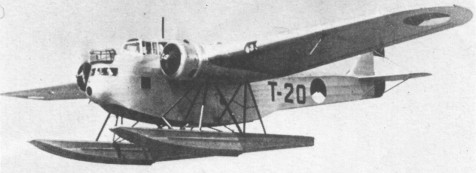
The T.IV, a large torpedo ¬bomber/scout on floats, was produced for the Naval Air Service in 1927.
From 1927 to 1941 12 T-IVs were in service with the Naval Air Service at home and in the Netherlands East Indies. Portugal also acquired three of these aircraft.
The T.IVA differed mainly in powerplant, having Wright Cyclone SR-1820-F2 radial engines in place of the T.IV’s 336kW Lorraine-Dietrich W-type engines. The more-powerful units required a strengthened airframe; at the same time an enclosed cockpit, as well as bow, dorsal and ventral gun positions, were installed. Twelve of these new aircraft were ordered for the Netherlands East Indies naval air force, and in 1936 the surviving T.IVs were brought up to T.IVA standard.
Coastal and sea reconnaissance operations in the Netherlands East Indies were still being flown when the Japanese invasion began in 1942, and the T.IVA was also used for air-sea rescue work, proving to be reliable and seaworthy.
T.IVA
Engines: 2 x Wright Cyclone SR-182.0-F2 radial, 559kW
Max take-off weight: 7200 kg / 15873 lb
Empty weight: 4665 kg / 10285 lb
Wingspan: 26.20 m / 85 ft 11 in
Length: 17.60 m / 57 ft 9 in
Height: 6.00 m / 19 ft 8 in
Wing area: 97.80 sq.m / 1052.71 sq ft
Max. speed: 260 km/h / 162 mph
Cruise speed: 215 km/h / 134 mph
Ceiling: 5900 m / 19350 ft
Range: 1560 km / 969 miles
Armament: 3 x 7.9mm machine-guns, 800kg of bombs
Crew: 4
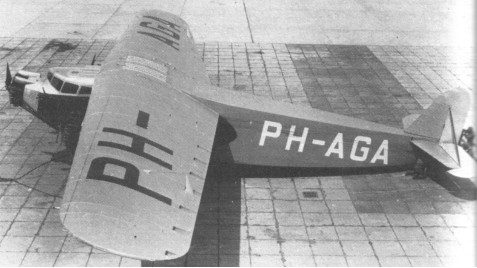
The F.IX, a 20 passenger airliner, two of which went into service KLM, was built under license in Czechoslovakia.
Though the Avia works produced some of Europe’s best fighters between the world wars, it was not judged economically feasible to attempt a heavy bomber. Accordingly, Avia, obtained a licence for the Fokker F.VII/3m, the pre-eminent civil transport of the 1920s, and while producing this for civil use also schemed a bomber version. The Czech army/air force, however, judged this aircraft too small. The upshot was a further licence for the Fokker F.IX, considerably bigger and weighing more than twice as much.
In 1932, Avia built 12 F.IX bombers, powered by three Walter Jupiter VII engines rated at 450 hp, carrying an internal bomb load of up to 1500 kg (3307 lb) and with any of a variety of armament schemes involving manually-aimed Vickers 7.92-mm (0.312-in) Mk 30 guns above and below the fuselage and firing from beam windows. Some aircraft had a retractable ventral ‘dustbin’.
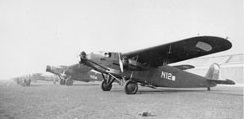
The Avia F-IX was used only in a bomber version through the 30s until the March 15, 1939 German Occupation.
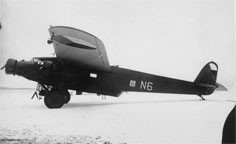
Jugoslavia bought two slightly modified aircraft designated F 39, powered by 560 hp Gnome-Rhone Jupiters, and obtained a sub-licence for this version.
AVIA-Fokker F.IX
Engines: 3 x Walter Jupiter VII, 450 hp
Props: wood 2 blade
Wing span: 27.5 m (90 ft 2.5 in)
Length: 19.4 m (63 ft 7.75 in)
Gross weight: 9160 kg (20194 lb)
Empty weight: 5450 kg
Maximum speed: 209 km/h (130 mph)
Climb rate: 2.5 m/s
Service ceiling: 5000 m
Internal bomb load: 1500 kg (3307 lb)
Undercarriage: fixed
Crew: 2 pilots / 1 navigator
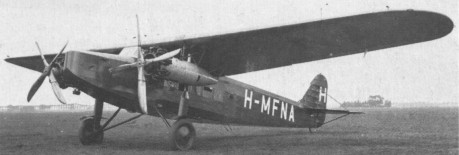
Designed to meet a KLM (Royal Dutch Airlines) requirement for a larger aircraft than the F.VII single-engined series, the 12 15 seat Fokker F.VIII flew in prototype form on 12 March 1927. The nose contained a hinged baggage compartment, and the two 358kW Gnome-Rhone Jupiter VI engines were slung beneath the wings and a crew of two.
The prototype and six production F.VIIIs were delivered to KLM in 1927-28. One of them, PH-OTO, was later converted to have two engines positioned in the wing leading edge. Another was delivered to the Hungarian airline MALERT in 1928, and Manfred Weiss in Budapest built two more for MALERT under licence and were completed as bombers with two machine gun posts.
The KLM aircraft were subsequently re-engined, various aircraft being powered by 515kW Wright R-1820 Cyclone or 373kW Pratt ‘& Whitney Wasp engines.
The only F.VIII to see service in military markings was the last Dutch production aircraft, sold by KLM to British Airways in 1936. It went to Sweden in 1939, and was subsequently donated to the Finnish air force, with whom it served in the Continuation War from 1941.
Engines: 2 x Gnome-Rhone Jupiter VI radial, 358kW
Max take-off weight: 5700 kg / 12566 lb
Empty weight: 3685 kg / 8124 lb
Wingspan: 23.00 m / 75 ft 6 in
Length: 16.75 m / 54 ft 11 in
Height: 4.20 m / 13 ft 9 in
Wing area: 83.00 sq.m / 893.40 sq ft
Max. speed: 200 km/h / 124 mph
Cruise speed: 170 km/h / 106 mph
Ceiling: 5500 m / 18050 ft
Range: 1045 km / 649 miles

