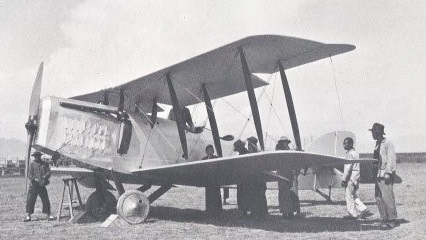
In 1924-25 Governor Yen, the Chinese Governor of Shansi Province, asked Fresson to establish an aircraft factory at Tai Yuan Fu, within the walls of the local Arsenal. This was in an area surrounded by warring local factions and was not particularly safe area to work.
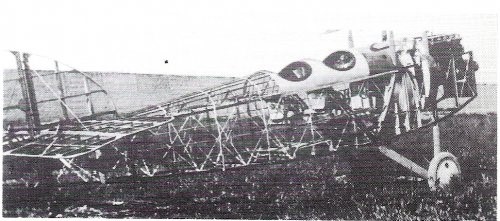
Fresson began designing the Fr.FBI based on the Armstrong-Whitworth FK.8 design and ordered materials from the Aircraft Disposal Company in London. The design was drawn up in Shanghai and construction began in the spring of 1924.
The Fresson design called for two separate cockpits behind the main wings and had a revised Centre of Gravity. He was assisted in the build by a German aero engineer, and English maths expert who worked on the stress aspects and a Chinese carpenter called Loh.
Although built in the Arsenal confines, a separate airfield was built six miles north with an 800 metre runway for testing.
After several successful flights, passengers were carried. There was no further production of the type due to Civil unrest and Fresson returned to Britain to found Highland Airways in Britain.
In 1922 a Chinese War Lord had imported a dismantled Avro 504K and ‘Ted’ Fresson, a former WWI pilot, assembled it for $250 over a period of a fortnight. This was followed by two more years of test flying various Avro’s and Curtiss aircraft in and around Hankow.
In 1924-25 Governor Yen, the Chinese Governor of Shansi Province, asked Fresson to establish an aircraft factory at Tai Yuan Fu, within the walls of the local Arsenal. This was in an area surrounded by warring local factions and was not particularly safe area to work.
Fresson began designing the Fr.FBI based on the Armstrong-Whitworth FK.8 design and ordered materials from the Aircraft Disposal Company in London. The design was drawn up in Shanghai and construction began in the spring of 1924.
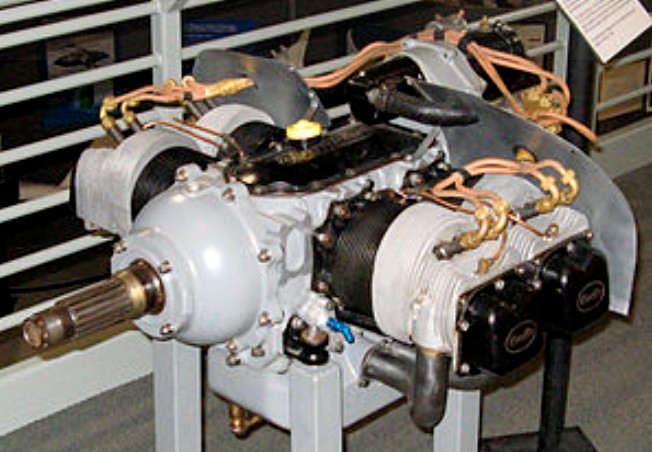
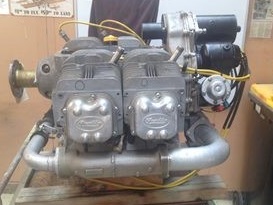
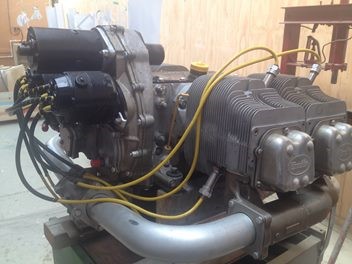
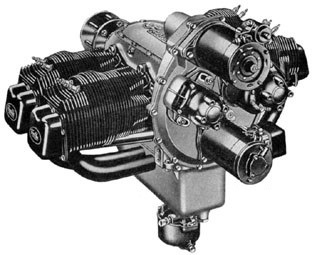
The Franklin 4 (US military designations O-150, O-170, O-175, O-200, O-225 and O-235) was a series of air-cooled aircraft engines of flat-4 configuration produced in the 1930s and 40s. The 4AC was first run in 1938.
4AC-199-B – 65 hp (48 kW) at 1,950 rpm 4AC-199-D – 85 hp (63 kW) at 2,500 rpm 4AC-199-E (O-200-1) – 90 hp (67 kW) at 2,500 rpm 4AC-199-H (O-200-5) – 113 hp (84 kW) at 3,500 rpm
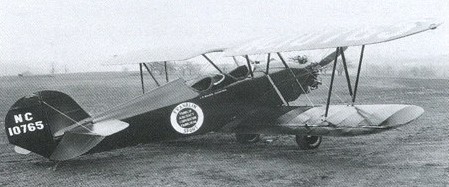
In 1929 Jos P. Bauer designed the Model A tandem-seat biplane (55hp Velie). This led to Franklin Aircraft, at Franklin, PA. Nine Model A were followed by a Model B.
USA The Franklin Aircraft Corporation of Franklin, Pennsylvania (1930-1933) built at least three models of aircraft: the Sport 65 (also known as the A), the Sport 70 (B), and the Sport 90. In 1929 Jos P. Bauer designed the Model A tandem-seat biplane (55hp Velie). This led to Franklin Aircraft, at Franklin, PA. Nine Model A were followed by a Model B (70hp LeBlond) and six Sport 90s (90hp Lambert), ending in 1933.
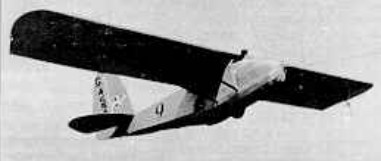
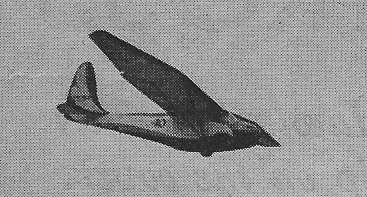
The Franklin PS-2 of the 1930’s won three of the first four U.S. Championships. It gave a start in soaring to notables such as Richard du pont, Warren Eaton, Floyd Sweet, Stan Smith and many others. The designation PS-2 was coined for the intended function of the glider, a primary and a secondary too. The ship has no spoilers, wood/fabric wings, and a steel-tube/fabric fuselage. Several cross-country tow experiments were made with the ship.
The long-wing prototype, the Taxaco Eaglet was towed from California to Elmira by Frank Hawks in 1931. That ship is now at the Smithsonian Air & Space Museum.
The 1934 Lustig Skytrain experiment had Jack O’Meara, R.E. Franklin and Stan Smith towed nose to tail behind a towplane, starting in New York, dropping a glider in Philadelphia one in Baltimore and ending in Washington.
In a more normal application, Ralph Barnaby directed a U.S. Navy primary flight training experiment in Pensacola, FL using PS-2’s in 1934.
1938
The National Soaring Museum has two examples and another (the last of the 6 acquired for the U.S. Navy experiment) belongs to the National Museum of Naval Aviation at Pensacola, FL.