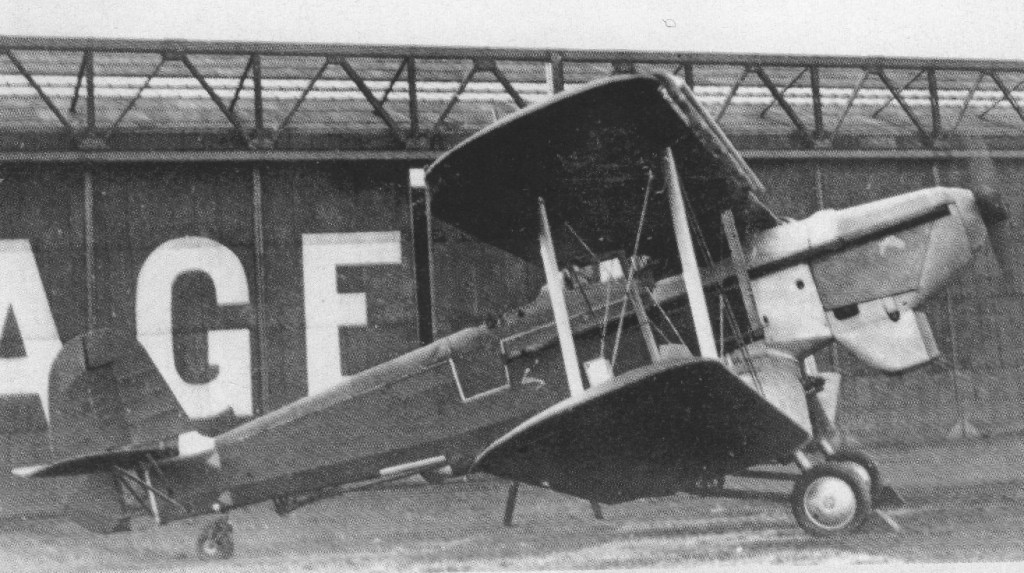
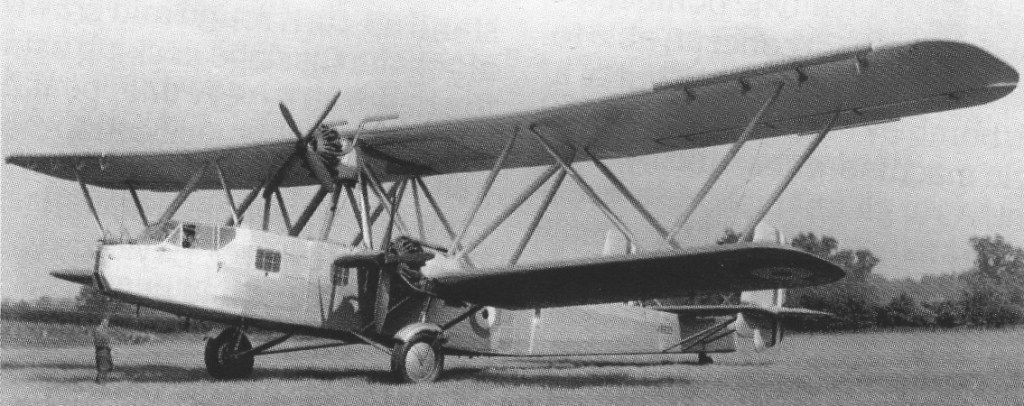
Hanriot H.110

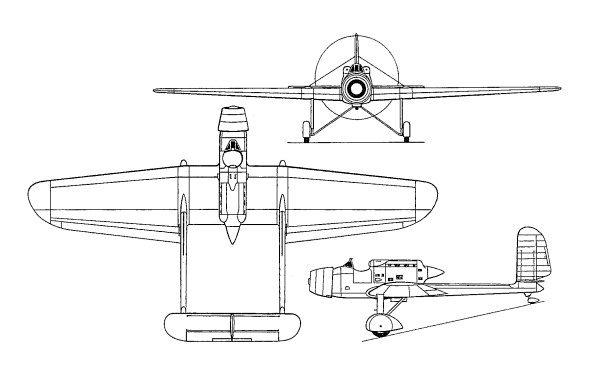
Debuting in April 1933, the H.110 fighter was designed by Jean Biche. It was a contender in the C1 competition promoted initially by the Service Technique de l’Aeronautique in 1930 and upgraded in January 1931 by a supplement to the specification. The H.110 was a single-seat fighter in which the pilot and engine occupied a central nacelle, and twin parallel booms attached to the extremities of the wing centre section carried the tail assembly. Of all-metal construction, the H.110 was powered by a 500hp Hispano-Suiza 12Xbrs geared and supercharged liquid-cooled engine driving a three-bladed pusher propeller. A ring-type radiator was mounted in the nose of the nacelle and embodied an adjustable cone to regulate the airflow. Largest and heaviest of the contending fighters, the H.110, which carried an armament of two fixed 7.5mm MAC machine guns, proved slower and less manoeuvrable than most of its competitors. In March 1934, it was returned to the Bourges factory for modifications, re-emerging as the H.115.

Max take-off weight: 1750 kg / 3858 lb
Empty weight: 1260 kg / 2778 lb
Wingspan: 13.50 m / 44 ft 3 in
Length: 7.96 m / 26 ft 1 in
Height: 2.70 m / 8 ft 10 in
Wing area: 24.00 sq.m / 258.33 sq ft
Max. speed: 355 km/h / 221 mph
Range: 600 km / 373 miles

Hanriot H.31

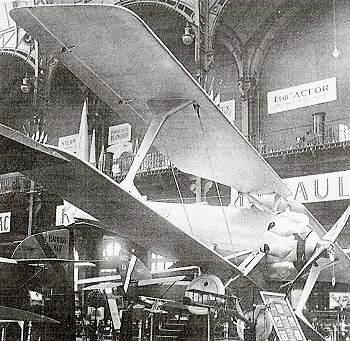
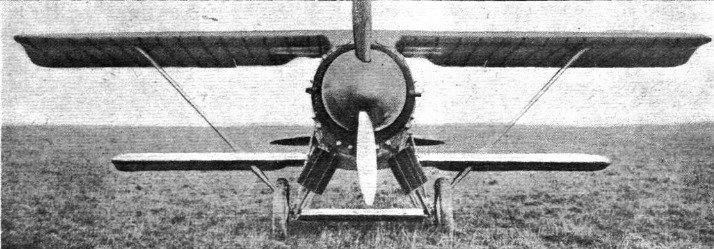
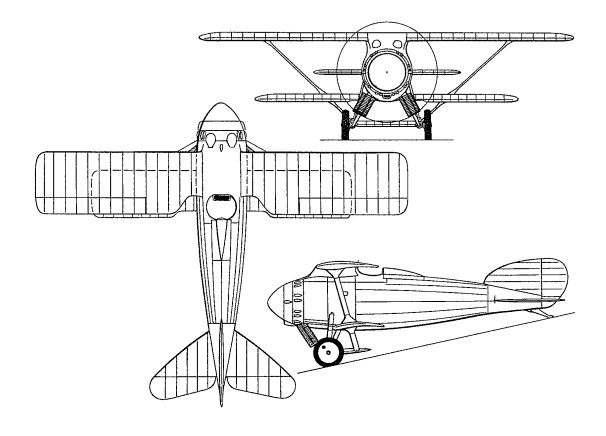
The H.31 was a participant in the 1923 competitive Cl programme, which, calling for single-seat fighters in the 400-500hp category, was most noteworthy for its large number of contending designs. The H.31 was an unstaggered single-bay biplane powered by a Salmson 18Cm 18-cylinder radial engine of 500hp and was of all-metal construction apart from the wing ribs, armament comprising four 7.7mm synchronised machine guns. The fuselage was raised above the lower wing and the centre section of the upper wing incorporated a fullchord cut-out to improve pilot visibility. The engine was close cowled, and to provide adequate cooling for the rear cylinder row, the space between the lower wing centre section and the fuselage was occupied by a large radiator. The prototype H.31 was displayed at the 1924 Salon de l’Aeronautique, but did not commence its flight test programme until the following year. Submitted to the STAe for official evaluation, the H.31 was one of the heaviest of the 12 contending prototypes and proved inferior to all other competing types in both level speed and climb rate, the winning contender being the Nieuport-Delage NiD 42 and the H.32 being abandoned.

Max take-off weight: 1789 kg / 3944 lb
Empty weight: 1287 kg / 2837 lb
Wingspan: 12.00 m / 39 ft 4 in
Length: 7.58 m / 24 ft 10 in
Height: 3.62 m / 11 ft 11 in
Wing area: 34.00 sq.m / 365.97 sq ft
Max. speed: 260 km/h / 162 mph

Hanriot H.26

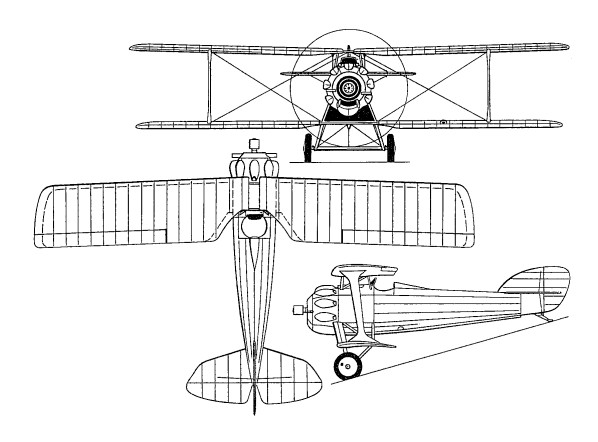
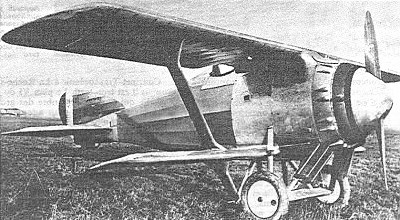
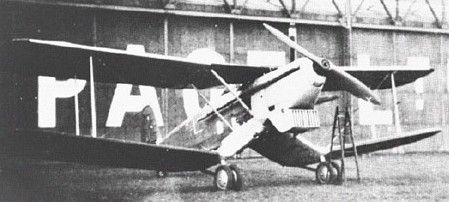
The H.26 (the first Hanriot fighter that did not use the HD nomenclature, where the D was for their long-standing designer Emile Dupont) was designed to compete in the 1921 CI (single-seat fighter) programme, the H.26 was the only participant powered by the 260hp (194 kW) water cooled Salmson 9Z nine-cylinder radial engine. Most other contenders were intended for the water-cooled inline 300 hp (224 kW) V-8 Hispano-Suiza HS 8F. The H.26 design attempted to compensate for lower installed power by means of aerodynamic cleanliness. It was an all-metal single bay sesquiplane, fabric covered except for the fuselage ahead of the cockpit. The lower wing was mounted at the bottom of the fuselage and the upper planes, built in separate pieces, braced close to the upper fuselage on short, faired extensions. There were ailerons only on the upper plane, the plan, structure and bracing of which was greatly altered during 1923.

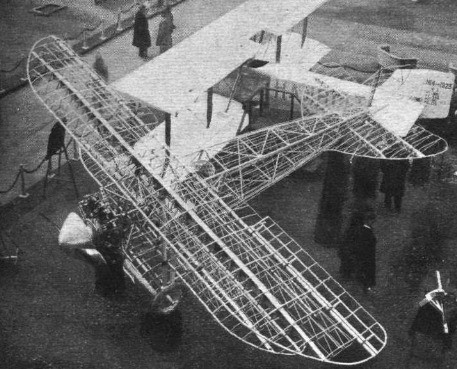
The H.26 before covering at the Paris Aero Show December 1922, with early wings

When the H.26 made its first public appearance, at the Paris Aero Show in December 1922, the still uncovered upper wing of the unflown fighter had long, curved tips outboard of a straight edged, constant chord central section and had a single main spar. Sixteen months later, after the aircraft had flown, the wings had become rectangular and were built around two spars. The short span lower wing retained its single spar structure throughout but it, too, had curved tips replaced with square. The wing bracing had also changed: originally a bracing wire ran from the rear undercarriage structure upwards and outwards, via the lower to the upper wing. This was replaced by a single, wide chord rigid strut with an aerofoil section and widened at its roots.

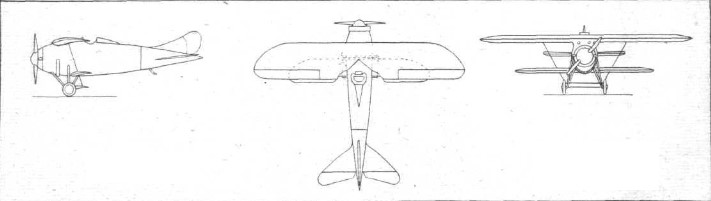
3-view of the H.26 published early 1923, showing early wing plan, wire bracing and a different vertical tail to those of 1924.

The closely cowled radial engine set the diameter of the H.26’s nose and drove a two blade propeller behind a large diameter domed spinner. The Salmson was initially cooled with a semi-circular Botali radiator to the rear of the engine. The H.26 had a fixed conventional undercarriage with mainwheels on a centrally hinged split axle, enclosed within a lift-contributing wing-like fairing and supported by N-form struts attached to the lower fuselage longerons on each side. Originally, these were reinforced by long vertical struts from the shock absorber attachments to the upper wing central section. These were discarded when the interplane wires were replaced by the faired interplane struts, which extended downwards to the rear undercarriage structure; the tops of the shock absorber struts were relocated to mid-fuselage on the engine mounting.

The pilot’s cockpit, with a faired headrest behind it, was at the trailing edge of the upper wing, placed within a small cut-out to improve view. The H.26 had a fuselage built around four metal tube, cross-braced longerons, enclosed within metal formers and stringers to shape it into an oval cross-section. Behind him the fuselage tapered to the broad chord fixed tail surfaces. The mid-fuselage tailplane, which had a strongly swept leading edge, carried round tipped elevators that narrowed inboard. The vertical tail was oval shaped, with a broad chord rudder that ended at the top of the fuselage.

First flown at Orly in 1923, the H.26 utilised a Botali radiator arranged in a semi-circle behind the engine. As this was found to provide insufficient cooling, two Chausson radiators were attached to the undercarriage strutting. The H.26 displayed poor handling qualities, which, coupled with continued engine overheating and an inadequate view offered the pilot, led to the abandonment of further development after several test flights.

H.26 (estimated)
Engine: 1 × Salmson 9Z, 190 kW (260 hp)
Wingspan: 9.05 m / 29 ft 8 in
Length: 7.35 m / 24 ft 1 in
Height: 2.50 m / 8 ft 2 in
Wing area: 18.00 sq.m / 193.75 sq ft
Max take-off weight: 1150 kg / 2535 lb
Empty weight: 820 kg / 1808 lb
Max. speed: 260 km/h / 162 mph
Ceiling: 8500 m / 27900 ft
Range: 750 km / 466 miles
Crew: One

Hanriot

In 1908, while the automobile races are in full swing, René Hanriot wins the World Championship (unofficial) in a Benz of 150 hp. But he already had another sport in mind. In May he bought one of Léon Levasseur’s Antoinette monoplanes with a 25 hp motor. But by the end of 1908, the monoplane was not yet delivered and René Hanriot lost patience. This was when he decided to make his own machine. In February 1909 he creates the Hanriot Monoplane Corporation with 500,000 Francs capital. A shed was used as a hangar, workshop and office. His son assisted with the building of the aeroplane. In the summer of 1909, the first Hanriot I proudly left the workshop for its first flight. The motor seemed questionable as early as the departure. Hanriot bought a 6-cyl
Buchet, that develops 45 hp and weighs 155 kg.
The machine was subsequently displayed at the Salon de la Aeronautique in 1909.

Hanriot Article

By this time, devoting himself to his aviation business, René Hanriot abandons autoracing permanently for the flying. In the winter 1909- 1910, he buys several motors that he installs in his monoplanes. By now several copies and versions of the engine are available:
the V8 E. N. V., 50hp, 105kg, designed in 1908 by the British engineer Paul Rath
the four cylinder Vivinus, 70hp, 159kg
the Grégoire GYP by Pierre Joseph Grégoire, weighing 115kg,
the two cylinder Darracq , 30hp, 55 kg,
and a four cylinder of the Même Marque, 60hp, 130 kg.
But it is with the 4-cylinder Clément-Bayard of 40hp that the best results are obtained. The motor, cooled by water, weighs in at just 78kg, in working condition, and it develops not 40hp, as its competitors, but close to 50 true hp. With this motor the flights during the winter 1909-1910 are successful. The monoplane sometimes being piloted by the father, sometimes by the son.

With money earned racing automobiles, René Hanriot continues to develop his aviation business. Committed to flying, he opens a piloting school in Bétheny in December 1909, then in London in January 1910 where he opens a commercial affiliate The Hanriot Monoplane Company Ltd, with 600,000 Francs capital. The first year, 1910, he gains notoriety in Paris, at the 14, place du Havre, and creates at vast workshop in Paris at 34, rue du Moulin. Prudent, he recruits an experienced airman, Emile Ruchonnet, to develop his flying machines, and serve as engineer and chief pilot in his flight school. Former carpenter and former foreman with Levavasseur, Ruchonnet, who was registered in Reims, August 1909, in an Antoinette monoplane, has had his pilot’s license in France’s flying club since June 21, 1910. In April René Hanriot hires autoracer Louis Wagner as test pilot. He is in charge of representing the company at international meetings. His first competition is in Budapest June 5.
Eugene Ruchonnet, Leon Levasasseurs engineer, subsequent designs, developments of the first constructed at his Rheims workshop, had included the 20-hp, Darracq-engined Libellule and a larger derivative powered by a 40-hp Gype, both of which had enabled him to establish a flying school in Betheney in 1910. Instrumental in these aircraft had been Louis Wagner who, like Hanriot himself, had risen from the ground up as a racing car driver, and Marcel Hanriot, Hanriots son, who, at the age of 15, had become the world’s youngest pilot.

In a few months, Hanriot and Ruchonnet designed a new lighter monoplane, the type II. Baptized “Dragonfly” it flew at Bétheny in April, equipped with a 40hp Clément-Bayard. Then, they create a third type of monoplane, more powerful, intended for the competitions. The type IV, a two place, interested the army.
The type V and type VI were used in 1910 by Marcel Hanriot in air meets. Finishing his school year, Marcel Hanriot spends his Sundays on the grass in Bétheny. His father asks him to try all monoplanes produced by their firm. May 17 in Bétheny, Marcel Hanriot takes engineer Etienne Grandjean, a professor at à l’Ecole supérieure de l’aéronautique, for a flight over Champangne in the two place.
June 9, Marcel Hanriot flies from Bétheny to Mourmelon in their model VI. It gets ahead of Marthe Niel, a woman, flying a slower Voisin biplane. The following day Marcel Hanriot obtains his pilot’s license, with the n° 95. He is the youngest licensed pilot in France and most likely in all of Europe. During the 1910 season, the Hanriot monoplanes, piloted by Wagner (Budapest), Marcel Hanriot (Rouen, Caen, Dijon, Reims, Bournemouth), René Vidart (Lanark) and several foreign pilots, achieve glory in the aerial meetings. They win a number of honors and have several victories, showing off the French brand to the entire world, and reaping great financial rewards for the firm.

Aerial demonstrations are organized throughout the year from April to October, in the field at Budapest, but the summit of the 1910 season was the Grand Prix, from 5 May to 15 May1910 in Vienna, then the big week of aviation, June 5 to June 12, with prizes for flight time, distance traversed, altitude, and best take-off, plus a special prize for the trip (230 km traversed in six hours), with 200,000 Francs payoff.

Beginning 1910, thirty competitors were registered in Hungary. France engaged its habitual stables: with Voisin Rougier, Croquet, the Italian Baron of Caters, the Viscount Montigny and John Adorjan, with H. Farman Paulhan, Nicolas Kinet, Chavez, Efimoff and Jullerot, with Sommer André Frey, Hélène Dutrieu and Amerigo, Latham with Antoinette, Alfred of Pischoff (pardon, von Pischoff it was born Vienna Austria!). Orville Wright registered and entrusted a biplane to Engelhardt. Several pilots of the Austro-Hongrois Empire appear in local machines: Agoston Kutany, Erno of Horvath, Aladan of Zsekely. The day of the competition half of the registered competitors were missing. Dutrieu s’est abattue sur son Sommer to Odessa, and this is the Baroness of La Roche that defends the colors Voisin; she had access to a big ENV engine, as did Frey (Sommer) and Pischoff. The Austrian Illner (Etrich) and the French Wagner (Hanriot) had access to a 40hp Clément-Bayard (Clerget) engine. Kinet, Efimoff and Paulhan had access to Gnome engine with a remarkably effective propeller. The wind was blowing strong during the ten days of the competition and caused several spectacular accidents.
On June 7, Efimoff lost some pieces and crashed. Injured to the forehead and to the leg the French pilot was taken to hospital. On June 9, Latham breaks a wing strap (flying wire?) and crashed. His machine was pulverized but the Frenchman was miraculously unharmed.
The pilot is but one of six injured. Later in the evening, Bielovucic crashed but he was fortunately unhurt. The next day Illner’s airplane returned to service. Louis Wagner succeeded taking off in the evening but is forced to the ground by the wind. His machine is irreparable. Thus begins for Hanriot the 1910 season, and Marcel will outshine his father.

Aeroplanes Hanriot et Cie was founded during the First World War. Its first design was the Le Rhone-engined HD.1 sesquiplane fighter, rejected by the French services but subsequently used very successfully by Italian and Belgian pilots. An HD.2 floatplane version and more-powerful HD.3 two-seat reconnaissance/escort fighter were also built. After the war Hanriot license-manufactured British Sopwith aircraft and produced the H.43 advanced biplane trainer, H.46 Styx liaison and ambulance monoplane, and the H.131 low-wing racing monoplane, which won the 1931 Coupe Michelin. In 1930 the company became a division of Societe General Aeronautique (SNCAC), manufacturing aircraft under the Lorraine-Hanriot name.
In France, the Socialist Government of the so called Popular Front brought all the companies building military aircraft, aero engines and ar¬mament under its control in 1936. The im¬mediate result was the socialized oblivion of such established companies as Marcel Bloch, Bleriot, Nieuport, Potez, Dewoitine, Hanriot and Farman within half a dozen nationalized groups or Societies Nationales, named ac¬cording to their geographical location (Nord, Ouest, Centre, Midi and so on).
Handley Page HP.54 Harrow

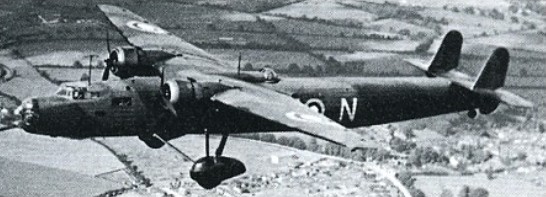
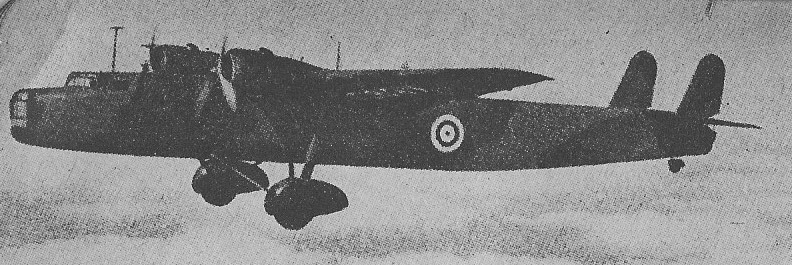
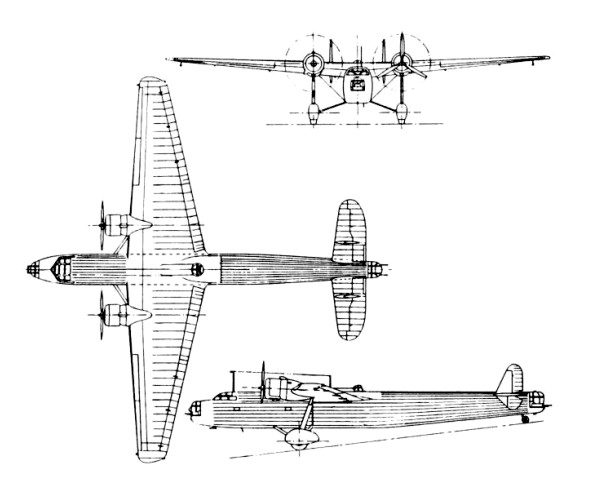
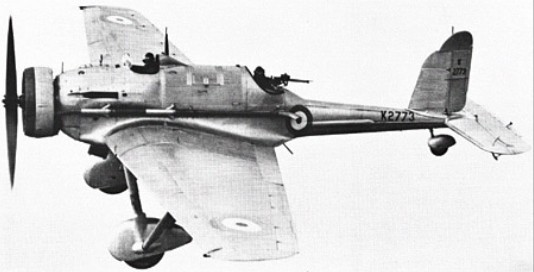
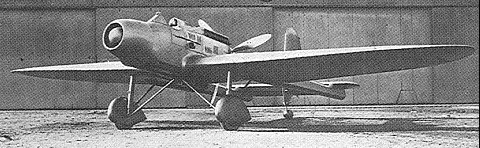
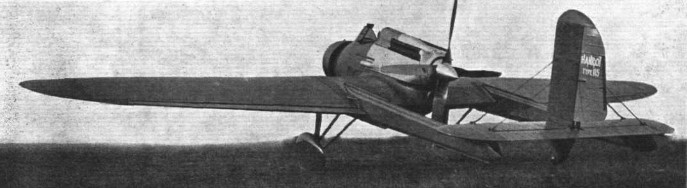
The Harrow was one of the RAF’s first monoplane bombers, and though never used in combat by Bomber Command it played a significant part in the training of bomber crews. The Harrow was based on the H.P.51 troop transport, and first flew on 10 October 1936 14 months after 100 had been ordered ‘off the drawing board’.

The Harrow bomber was a cantilever high-wing monoplane with a fixed divided-type landing gear and a twin fin and rudder-type tail unit. Enclosed accommodation was provided for a normal flight crew of four, who were also expected to man the nose turret, tail turret and mid-upper gun position.

The 38 Harrow Mk I bombers had the 619-kW (830-hp) Pegasus X radial, and were followed by the 62 Harrow Mk IIs with 689kW Pegasus XX engines and improved defensive armament. Production ended in December 1937, 11 months after the type had begun to enter service with No. 214 Squadron. By the time production ceased another four squadrons (Nos 37, 75, 115 and 215) had equipped with the type, and with some Whitley squadrons these formed Bomber Command’s main strength until well into 1939. At the outbreak of war the type was retired to the transport role and tested as an in-flight refuelling tanker circa 1939.

Gallery

Engines: 2 x Bristol Pegasus XX, 690kW / 925 hp
Wingspan: 26.95 m / 88 ft 5 in
Length: 25.04 m / 82 ft 2 in
Height: 5.92 m / 19 ft 5 in
Wing area: 101.26 sq.m / 1089.95 sq ft
Max take-off weight: 10433 kg / 23001 lb
Empty weight: 6169 kg / 13600 lb
Max. speed: 174 kts / 322 km/h / 200 mph at 10,000ft
Cruise speed: 141 kts / 262 km/h / 163 mph
Service Ceiling: 6950 m / 22800 ft
Range: 1086 nm / 2010 km / 1249 miles
Armament: 4 x 7.7mm / 0.303 machine-guns, 1360kg (3,000 lb) bombs
Crew: 6

Handley Page HP.50 Heyford

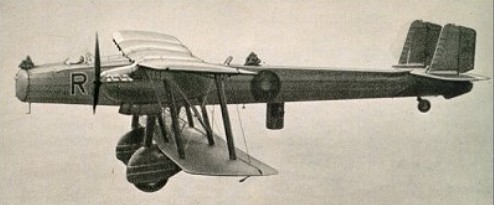
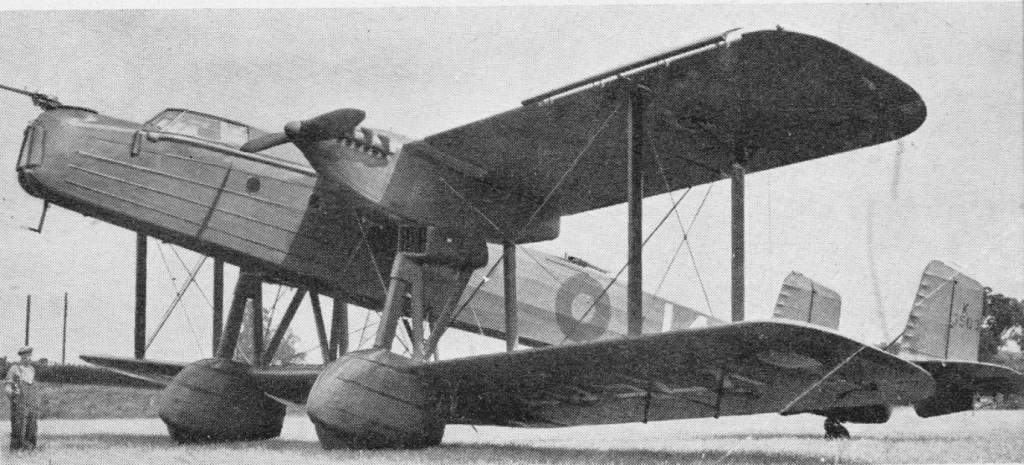
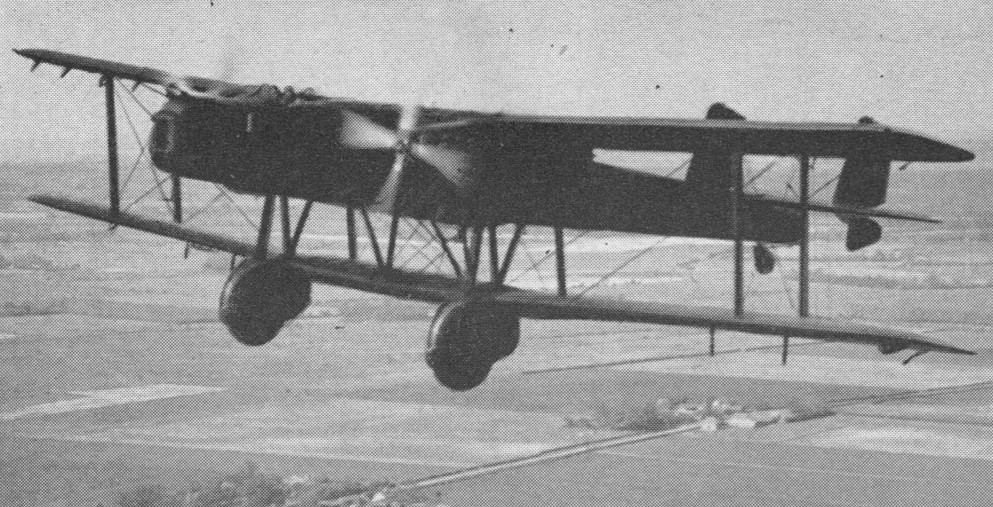
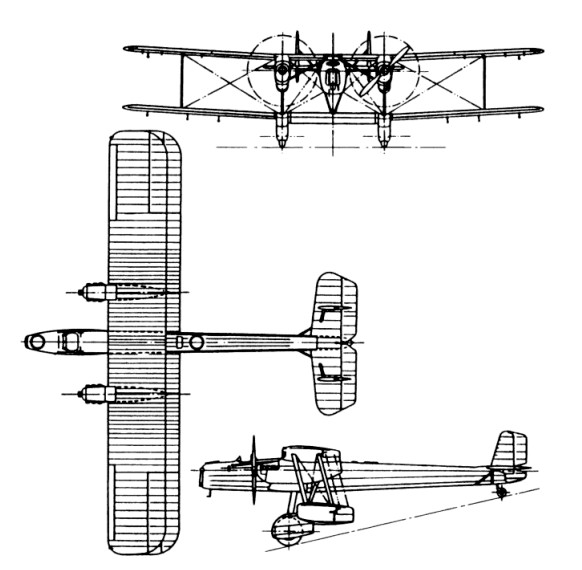
The Heyford was the RAFs last biplane heavy bomber, an unusual type with the fuselage attached to the undersurface of the upper wing and the centre section of the lower wing thickened for internal carriage of the bombload. The long main landing gear units were attached at their upper ends to the engine nacelles, while the wheel spats were attached at their rear to the lower-wing centre section. The Heyford prototype flew in June 1930, and production of 124 aircraft up to July 1936 comprised 38 Mk Is and Mk lAs, 16 Mk Is with de¬rated 391.2kW Rolls-Royce Kestrel VI engines, and Mk IIs and 70 Mk IIIs with fully rated 428.5kW Kestrel VI engines and four-blade propellers.

Handley Page Heyford Article

The Heyford was an equal-span biplane with staggered wings: the upper wing centre-section rested on top of the fuselage, while the lower was positioned well below the fuselage, connected to the under-fuselage by N-type struts. The inner interplane struts supported the engine mountings.
Bombs of various sizes were carried inside the thickened centre-section of the lower wing, each bomb being carried in a separate cell closed by spring doors. The fixed landing gear comprised two large wheels faired into the lower wing.
The nose and dorsal gun positions of the Heyford were equipped with Scarff mountings for their 0.303 in (7,7 mm) Lewis or Vickers guns.
Of the three versions of the Heyford, the Mks I, II and III, the visible differences are primarily in detail, including such items as alternative wheel pants, three and four bladed propellers, and varying radiator intake designs. The main bomb load was housed in the thickened centre section of the lower wing. Additional bombs were carried on external racks.
A total of 124 Heyfords were built, made up of 38 Mk I and IA, 1 intermediate Mk IA/II, 16 Mk II and 71 Mk III – including changes made from the original production orders.

The type entered service in November 1933 with No 99 Sqn at Upper Heyford, and equipped a total of 11 squadrons before being phased out from 1937, removed from first-line service in 1939 and finally declared obsolete in July 1941.

Heyford Mk IA
Engines: 2 x Rolls-Royce Kestrel IIIS, 429kW/ 575 hp
Span: 22.86m / 75 ft
Length: 17.68m / 58 ft
Height: 5.3 m / 17 ft 5 in
Wing area: 136.6 sq.m / 1470.35 sq ft
Empty weight: 4580 kg / 10097 lb
Max T/O weight: 7666 kg / 16,900 lb
Max. speed: 229 km/h / 142 mph at 13,000 ft
Ceiling: 6400 m / 21000 ft
Range: 1480 km / 920 miles with 726-kg (1,600-lb) bombload
Armament: 3 x 7.7-mm (0.303-in) mg, 1588 kg (3,500 lb) bombs

Handley Page HP.47

Air Ministry Specification G.4/31 called for a General Purpose aircraft, capable of level bombing, army co-operation, dive bombing, reconnaissance, casualty evacuation and torpedo bombing. The Vickers Type 253 won against the Fairey G.4/31, Westland PV-7, Handley Page HP.47, Armstrong Whitworth AW.19, Blackburn B-7, Hawker PV-4 and the Parnell G.4/31.

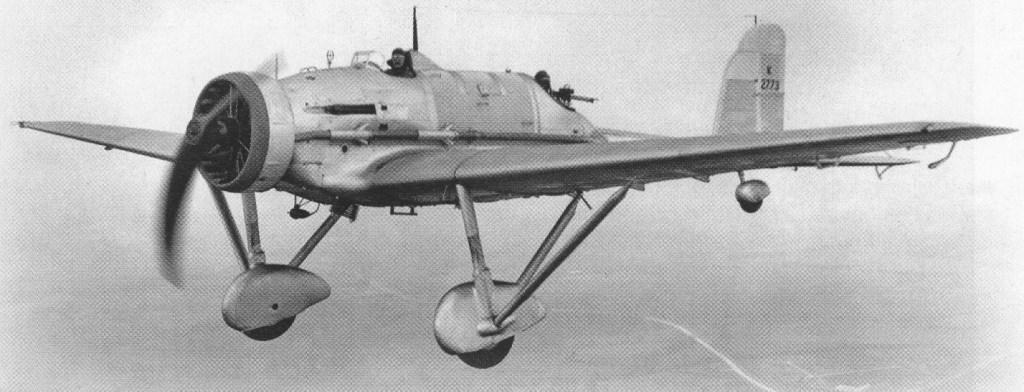
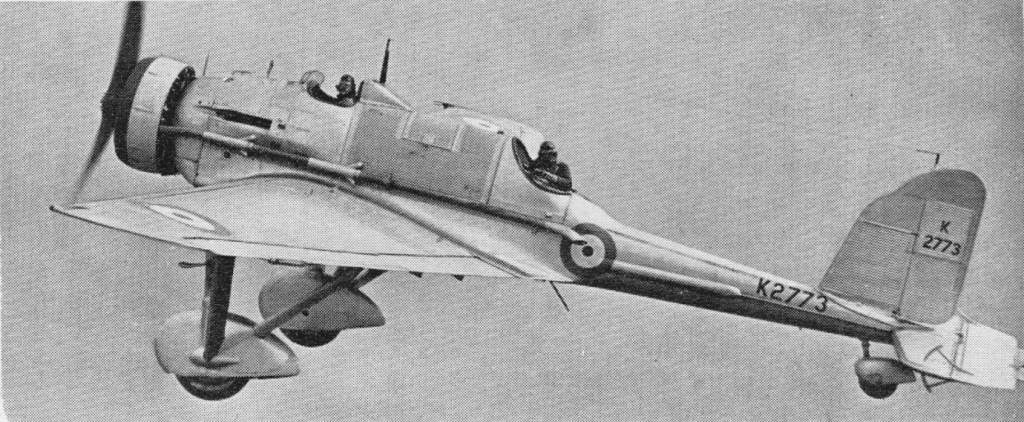
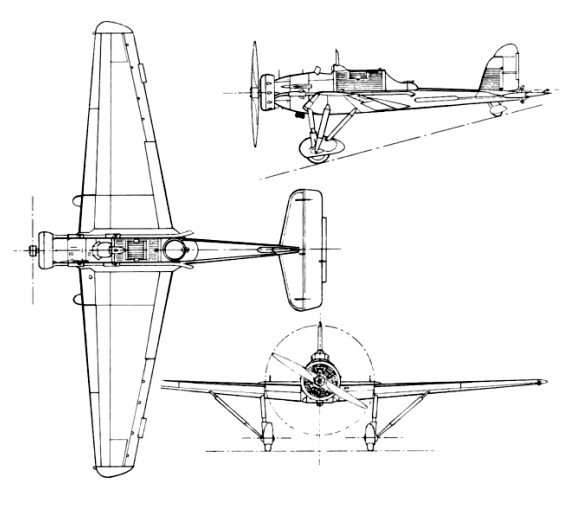
Gustav Lachmann took on the technical development of modern methods of aerodynamics and metal construction, resulting in the building and testing of the H.P.47. One prototype was built, first flown on 27 November 1933. No production was undertaken.

Engine: 1 x 660hp Bristol Pegasus III.M3
Max take-off weight: 4197 kg / 9253 lb
Empty weight: 2434 kg / 5366 lb
Wingspan: 17.68 m / 58 ft 0 in
Length: 11.46 m / 37 ft 7 in
Wing area: 40.69 sq.m / 437.98 sq ft
Max. speed: 259 km/h / 161 mph
Ceiling: 6066 m / 19900 ft
Range: 886 km / 551 miles
Armament: 2 x 7.7mm machine-guns, 2 x 227kg bombs or a torpedo
Crew: 2

Handley Page HP.46

The HP46 was designed to specification M.1/30 for a two seat shipborne torpedo bomber. Powered by an 825 hp Rolls Royce Buzzard III, the HP 46 first flew on 25 October 1932.

The company spent more than £36,000, on the HP46, nearly twice the contract price, but it only flew 5 hr 30 min and was condemned as too dangerous for deck flying. In April 1936 it left Radlett by road for farnborough and was never seen again.

Engine: 1 x 825hp Rolls-Royce Buzzard IIIS
Wingspan: 15.24 m / 50 ft 0 in
Length: 12.01 m / 39 ft 5 in
Wing area: 60.94 sq.m / 655.95 sq ft
Max take-off weight: 4812 kg / 10609 lb
Empty weight: 2838 kg / 6257 lb
Max. speed: 225 km/h / 140 mph
Armament: 2 x 7.7mm machine-guns, 1000kg of bombs or a torpedo
Crew: 2

Handley Page HP.43

The HP.43 was tendered to specification C.16/28 for a three engined bomber / transport. Only one was built, J9833, with three uncowled Bristol Pegasus IM3 radial engines, and it first flew on 21 June 1932.
It had heavy and badly harmonised controls and poor performance, and was converted into the HP.51 twin engined monoplane to C.26/31.

Derived from the Hanibal, it had the same wings, with a new fuselage.

Gustav Lachmann took on the technical development of modern methods of aerodynamics and metal construction, and went on to convert the H.P.43 biplane into the H.P.51, with a modern monoplane wing and aircooled engine nacelles. This led to the order for 100 of a production version, the H.P.54 Harrow.