In 1920, Shorts Bros. export some F.5 to Japan, which then bought a license. The arsenal of Yokosuka to build 10, Aichi 40 and arsenal Hiro 10 before developing in 1927 from F.5 Hiro Type 15 (Hiro H1H).
Inter-Wars
Hiro Naval Air Arsenal
Japan
Hiro’s Navy Type 90-1 three-engined flying-boat, built in the early 1930s, had Japanese-built Hispano-Suiza engines and bore a close resemblance to the German Rohrbach flying-boats. In 1932 the company started work on a twin-engined land-based attack bomber, Hiro G2H1, which went into production in 1935 as Navy Type 95. Only eight were built, two by Mitsubishi, which subsequently developed a long-range reconnaissance version which influenced the design of the successful Mitsubishi G3M bomber.
Hinkler Ibis
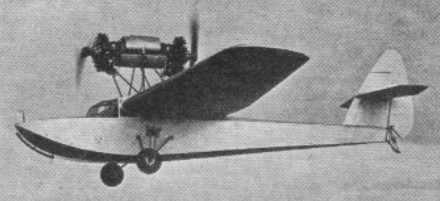
The Hinkler Ibis was a two-seat all wooden monoplane powered by two Salmson AD.9 radials mounted in an over-fuselage nacelle, one pusher, one tractor, Designed and built by H.J.Hinkler and R.H.Bound at Hamble in 1929. Construction of the wing was sub-contracted to Hendy Aircraft Ltd at Shoreham.
It was flown for the first time in May 1930 at Hamble. Registration was G-AAIS c/n 1.
It was put into store in Southampton until 1953 when it was displayed statically for a brief period until it was broken up at Lee-on-Solent in 1959.

Engines: 2 x Salmson, 45 hp.
Hillson Helvellyn
The Helvellyn was a one-off light aircraft, designed by Norman Sykes. Registered G-AFKT, the open cockpit, tandem, two seater, low wing monoplane was built and flown in 1939.
Hillson Pennine
The Pennine was a one-off light aircraft, designed by Norman Sykes. A two seat, side by side, high wing monoplane, registered G-AFBX but not flown before the outbreak of war.
Hills & Sons / Hillson
UK
F.Hills & Sons Ltd was formed by Francis Hills in 1849 as a one-man joinery company in Yarm on Tees. Cooper and Walter Hills (grandsons of Francis) took over in 1907, and during the First World War, the company made ammunition boxes and joinery for the Forces. In 1921, Hills became a limited company, and in 1923, moved to larger premises in Stocton. The company began making aeroplanes after Managing Director W.R.Chown, who was interested in aircraft development, visited Prague, Czechoslovakia to obtain a license to produce the Praga E.114 Air Baby two-seat lightplane. Thirty were manufactured from 1936, known as Hillson Pragas. Following this, he purchased the old Ford Motor Company premisis in Trafford Park, Manchester, for joinery and aircraft production.
The first aircraft built by Hills was a Pou du Ciel, an HM.14 Flying Flea. The aircraft was registered G-ADOU in October 1935, and test flown at Barton Aerodrome.
The first licence-built Praga E.114 was sold to Australia, and the second registered G-AEEU became the company’s demonstrator in April 1936. Total production by Hills amounted to twenty-eight aircraft, plus seven uncompleted.
There followed two-one-off Hillson light aircraft, both designed by Norman ykes: the Pennine, a two seat, side by side, high wing monoplane, registered G-AFBX but not flown before the outbreak of war; the Helvellyn G-AFKT, an open cockpit, tandem, two seater, low wing monoplane was built and flown in 1939.
During 1938-39, Hills built Anson wings and laminated spars for Airspeed Oxfords. During the war, the company produced no less than 480.000 JABLO propeller blades and 10 million square feet of aeronautical plywood for Mosquito and other aircraft.
In addition the company produced more than 800 Percival Proctors and the slip-wing Hawker Hurricane I, after first buillding and testing a research aircraft called the Hillson Bi-mono. An expendable slip-wing was mounted above the fuselage in order to obtain more lift for operating out of small fields and to enable the aircraft to take off at greater than normal gross weight. Once airborne, the wing could be released by the pilot.
Hill Pterodactyl
A series of tailless aircraft was designed by Professor Geoffrey Hill to demonstrate the concept of aircraft that could fly safely at low speed. The first machine was a glider which he built in 1924 and flew from the South Downs, UK. From this a powered version was constructed.
Hill, Geoffrey
A series of tailless aircraft was designed by Professor Geoffrey Hill to demonstrate the concept of aircraft that could fly safely at low speed. The first machine was a glider in 1924, followed by a powered craft.
Hicks Kestrel / Merlin
The Hicks Merlin, initially called the Hicks Kestrel, was a single-seat high performance sailplane designed and built by W.E. Hicks at the Newcastle Gliding Club from 1933 to 1936.
A parasol, braced three-piece wing with no air-brakes or flaps. The undercarriage was a main skid and tail skid. It was fitted with an “Automatic Rudder”.
It was first flown on 2 February 1936 at Moat Law, UK.
No B.G.A. CofA was issued. As the fuselage contours were shaped around Eddie Hick’s profile the Merlin was of ‘little use to any other person’.
It was eventually purchased for £1 for the Newcastle Club bonfire and burnt pre-war.
Wingspan: 10.46 m / 34 ft 4 in
Length: 4.50 m / 14 ft 9 in
Wing area: 7.43 sq.m / 80 sq.ft
Aspect ratio: 14.8
Wing section: Gottingen 652
Empty weight: 40.82 kg / 90 lb
AUW: 116.12 kg / 245 lb
Wing loading: 15.63 kg/sq.m / 3.2 lb/sq.ft
Max L/D: 20
Min sink: 0.61 m/sec / 2.0 ft/sec

HIBM / Ikmal Hava ve Bakim Merkezi
Turkish aircraft in the true sense began only after the founding of the Republic in 1923. A small delegation was dispatched to Europe to procure aircraft for the new Turkish Air Force. After evaluation it was decided to obtain 16 Bréguet XIV A-2, 39 Caudron C-27 and 32 Caudron C-59 aircraft. These aircraft were dismantled in 1924 and shipped to the Gaziemir / Izmir Air Force Base under French supervision. After the first requirements of the Turkish Air Force, the armed force withdrew from the assembly of planes however, this plan did not last long. When in the course of technical development, the maintenance became more complicated and more complex, the maintenance facilities of these forces were again entrusted with the manufacture of spare parts or installation or modernization of aircraft. So the 1st Air Supply and Maintenance Center emerged (1 Ikmal Hava ve Bakim Merkezi, 1.HIBM) in Eskisehir (1926), the 901 Home Depot and production plant for aircraft (the 901.Hava Araci Ana Depo ve Fabrika Komutanligi, nine hundred and first HAADFK) in Polatlı (1948, 1962 in Ankara) and the 2nd Air Supply and Maintenance Center (2nd Hava Ikmal ve Bakim Merkezi, 2.HIBM) in Kayseri (1950).

