The Hirth HM 60 was a four-cylinder inverted air-cooled inline aircraft engine designed in 1923 and first sold in 1924. The engine was of very high quality, and its sales success contributed to Hirth’s rapid pre-war expansion. First run in June 1923, it was a popular engine for light aircraft delivering 80 hp (60 kW) at 2,300 rpm. Later Hirth engines built upon the HM 60’s success and provided greater power with many of the same design features.
Hellmuth Hirth (1886 – 1938) worked for a short time as a foreman at aviation pioneer August Euler in Darmstadt. However, since Euler had difficulties with his Voisin-type flying machine, Hirth returned to Stuttgart to build himself a Blériot machine. Because of the too weak engine, this did not go beyond small aerial jumps, causing Hirth to go to Vienna to fly the Etrich Taube together with Illner. He then became designer at Rumpler and Gotha, before turning to engine development.
1998: Göbler-Hirthmotoren Postfach 62 D 71726 Benningen / Neckar Germany
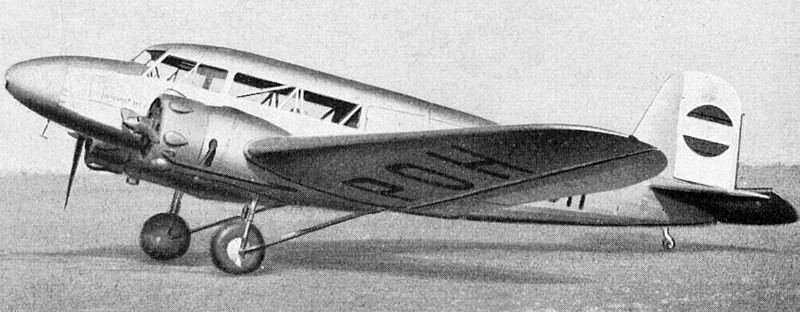
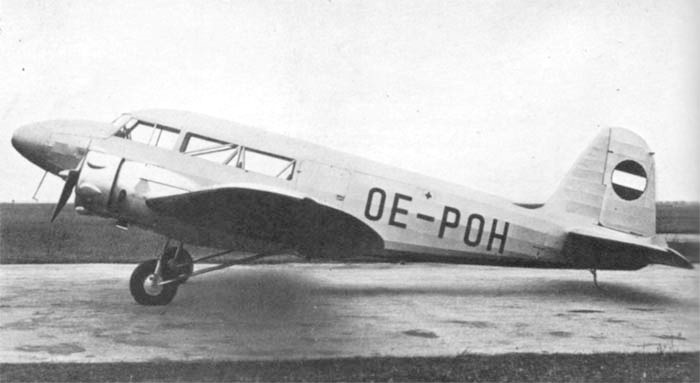
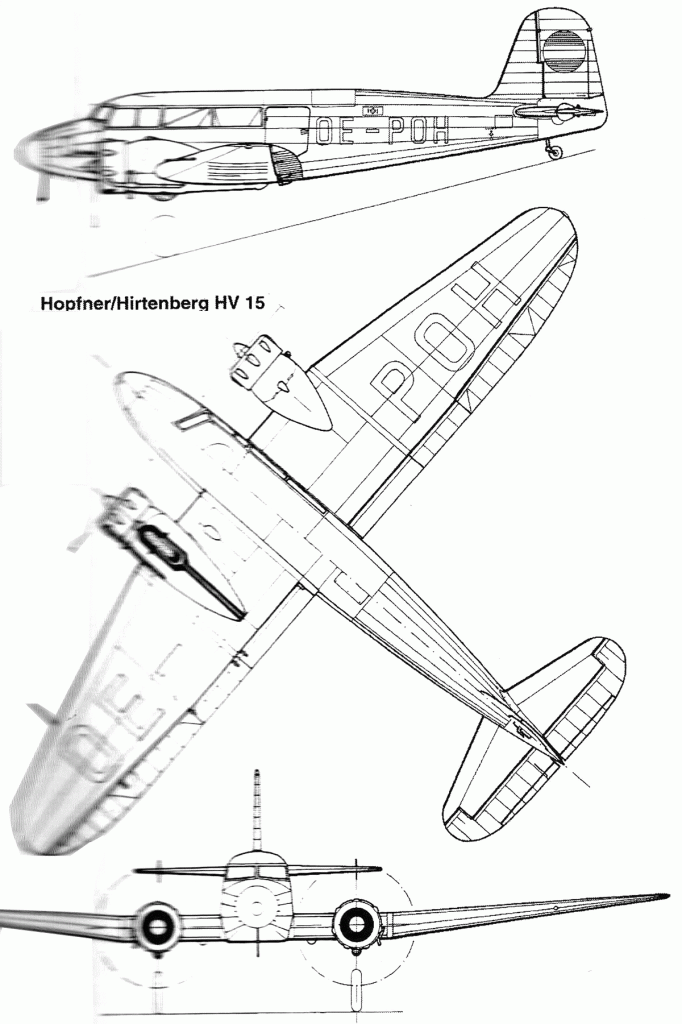
In 1935, the management of the Austrian company Hirtenberger Patronen, Zundhutchen und Metallwarenfabrik AG decided to expand the production of aircraft of its own design and bought the aircraft company Flugzeugbau Hopfner GmbH. The first aircraft, accepted for serial production, was a small twin-engine monoplane, designed for the carriage of passengers or the transport of small loads. The design of the new Hopfner / Hirtenberg HV.15 machine was based on the elements of the previous Hopfner HR.14 / 34 aircraft, developed by the engineer Lumpich in 1934 at Flugzeugbau Hopfner GmbH.
It was a low-wing with a glazed, six-seat, cabin and retractable landing gear. The wing had a wooden structure, and the fuselage was steel tube, fabric covered.
The prototype HV-15 (OE-POH) made its first flight on March 8, 1936. The aircraft was equipped with Austrian-produced Siemens Sh-14a motors (160 hp / 119 kW). Serial production were supposed to get English de Havilland “Gipsy Six” II (204 hp).
Austrian designers planned the release of the military version of NM.15, equipped with French engines of Renault “Bengali Six”, radio navigation equipment and defensive weapons, consisting of 2-3 moving machine guns placed in the fuselage. Suspension of small bombs with a total mass of up to 300 kg was envisaged. The main purpose of NM.15 was the training of pilots and navigators (including for night flights), and also considered the option of using it as a light bomber.
Serial production of HV.15 and NM.15 aircraft did not take place. After the annexation of Austria, its aviation industry underwent a reorganization, and the merger of Hirtenberg became part of the new Wiener-Neustadter Flugzeugwerke GmbH (abbreviated to WNF).
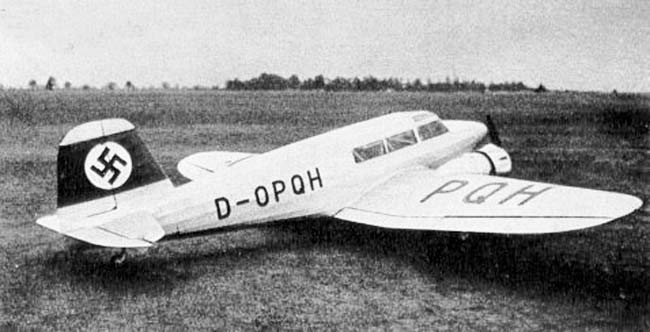
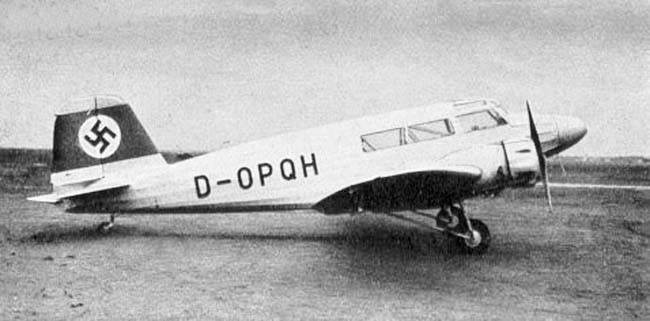
According to the new notation system, HV.15 was renamed to WN-15 (sometimes called WNF 15) and assigned the German registration D-OPQH. The prototype was then transferred to the use of the Austrian police. After flying about three years in Austria, the Wn.15 aircraft was given in 1942/1943 to the German administration of the Croatian Air Force and used some time for transport purposes, bearing a new tactical number 2101. Nothing is known about the future fate of Wn.15.
Engines: 2 × Siemens-Halske Sh 14A, 120 kW (160 hp) each Wingspan: 15 m (49 ft 3 in) Wing area: 33 m2 (360 sq ft) Length: 10.65 m (34 ft 11 in) Height: 2.9 m (9 ft 6 in) Empty weight: 1,550 kg (3,417 lb) Gross weight: 2,200 kg (4,850 lb) Maximum speed: 235 km/h (146 mph; 127 kn) Cruise speed: 198 km/h (123 mph; 107 kn) Range: 900 km (559 mi; 486 nmi) Service ceiling: 5,200 m (17,100 ft) Crew: 2 Capacity: 4 passengers
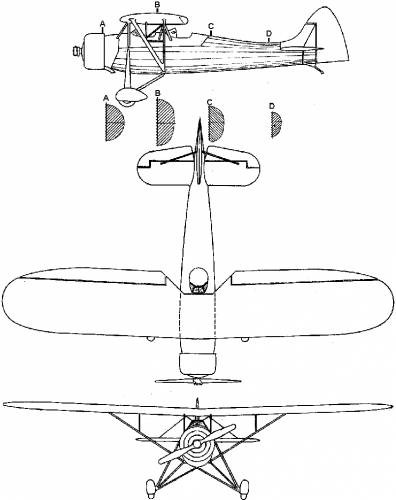
A derivative of the Hopfner HS-5/28 via the Hopfner HS-8/29, the Hirtenberg HS.9 two-seat touring or training aircraft of the late 1920s and early 1930s was an Austrian parasol wing monoplane with a fixed tailskid landing gear and room for two occupants in tandem open cockpits.
Designed by Theodor Hopfner, it had a metal fuselage (front covered with duralumin sheets, the rest – with a cloth) and a wooden wing lined with linen. In the center section there was a fuel tank for 132 liters. The wing consoles, for more convenient storage in the hangar, could be folded along the fuselage.
HS.932
It first flew as the Hopfner HS-9/32 in 1932, powered by a 120 hp de Havilland Gipsy Major I engine. Prototypes HS-9 had civil registration codes A-124 (then changed to OE-ANA) and A-144 (OE-DJH). Later the second prototype was sent to the UK and received the G-AGAK registration there.
Production versions were produced under the designation HS-9/32 (sometimes called the HS-932) and had 150 hp Siemens Sh 14 engines with NACA cowlings and two-bladed screws. As Hopfner’s production facilities were insufficient, HS-9/32 was produced by Hirtenberg Patronen (Hirtenberg), where 9 aircraft were built.
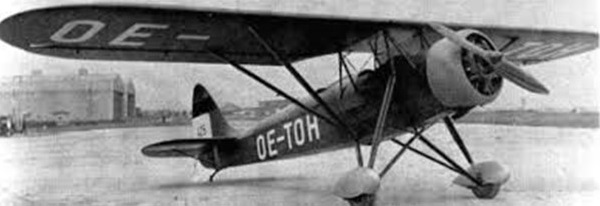
In 1935, four were transferred to the Austrian Air Force for use as training. They were given military registration codes OE-TOH, OE-TUH, OE-TAO and OE-TEO and numbers (Dienst Nummer, DNr.) 426 – 429.
After the annexation of Austria in 1938, several aircraft were still in service. The Germans included captured aircraft in their own air force and left them on Austrian territory, where they were handed over to Nationalsozialistisches Fliegerkorps (NSFK). As of 1939, Gruppe 17 still had five machines of two types: four HS-9/35 with numbers 425-428 and one HS-9 with number 434. As for HS 8/29 (number 412), this aircraft was destroyed in Zeugamt Erding.
A single example of a refined version with an uncowled 125 hp Siemens engine was flown in 1935 as the Hopfner HS-9/35, shortly before the Hopfner company went bankrupt.
HS.9
When Hopfner’s assets were purchased by Otto Eberhardt Patronenfabrik, production continued of both de Havilland- and Siemens-powered (designated HS-9A) aircraft under the Hirtenberg brand.
Hirtenburg HS.9A
Twelve Hopfner HS.932 (HS.9/32) were built from 1932 (2 prototypes + 10 series), including one aircraft with modified ailerons and undercarriage designated as HS.935 / HS.9/35.
In 1935, a significantly modified version of HS-9 \ 35 then in the Fliegertruppen des Osterreichischen Bundesheeres received the code OE-TAR (DNr. 434). With an uncooled Siemens engine it was flown shortly before the Hopfner company went bankrupt.
About 40 were built in total. They were operated by the Austrian Air Force during 1927-1938.
Variants HS-9/32 – Original version by Hopfner HS-9/35 – developed version of HS-9/32 HS.9 – Production aircraft with a Siemens Sh 14a piston engine. HS.9A – Production aircraft with a de Havilland Gipsy Major piston engine. HS.16 – military trainer version of HS.9
HS.9A Engine: 1 × de Havilland Gipsy Major, 90 kW (120 hp) Length: 8.05 m (26 ft 5 in) Wingspan: 10.972 m (36 ft 0 in) Empty weight: 568.8 kg (1254 lb) Gross weight: 948 kg (2090 lb) Maximum speed: 190 km/h (118 mph) Crew: 2
HS.932 Engine: Siemens Sh 14A, 150 hp Wing span: 10.96 m Length: 8.02 m Height: 2.39 m Wing area: 18.00 sq.m Empty weight: 570 kg Maximum take-off weight: 860 kg Maximum speed: 190 km / h Cruising speed: 170 km / h Practical range: 400 km Service ceiling: 4400 m Crew: 2
Hopfner HS-9\35 Engine: Siemens Sh.9, 150 hp Prop: two-bladed wooden Wingspan: 10.96 m Length: 8,02 m Wing area: 18,00 sq.m Height: 2.39 m Empty weight: 570 kg Takeoff weight: 860 kg Maximum speed: 190 km / h Range: 400 km Ceiling: 4400 m Crew: 2
Austria Hirtenberger Patronen Ziindhutchen und Metallwarenfabrik AG began aircraft manufacture in 1935 after taking over Flugzeugbau Hopfner. Only the Hirtenberger HS-9 parasol-wing training/touring monoplane was produced. An open-cockpit tandem two-seater, it had either a 125 hp Siemens or 120 hp de Havilland Gipsy Major engine, the latter variant being designated HS-9A.
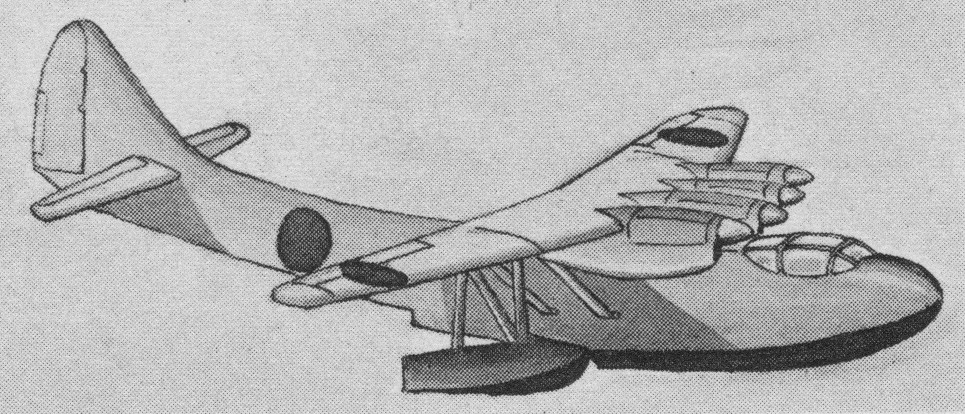
Reports of a copy of the French Leo H-24-6 flying boat led to assignment of the code name ‘Tillie’. The aircraft was actually a Japanese original design powered by Junkers Jumo 205c engines that was dropped in the experimental stages.
The Hiro Type 91, (full designation Hiro Type 91 520 hp water-cooled W-12), was a 12-cylinder, water-cooled, W engine developed for aircraft use by the Imperial Japanese Navy in the mid-1930s. Power was in the 450 kW (600 hp) range. Its design was inspired by the Lorraine-Dietrich 12Eb Courlis. An enlarged more powerful engine, the Type 90 had also been developed using the Lorraine 12F Courlis as inspiration, developing 600 hp.
Specifications: Type 91 500hp-1 Type: 12-cylinder water-cooled W-block (3 banks of 4 cylinders) aircraft piston engine Bore: 135 mm Stroke: 160 mm Displacement: 27.5 L Cooling system: Liquid-cooled Power output: 620 PS for takeoff 520 hp for max continuous
Japan’s military leaders discovered the value of aircraft while participating in World War I. It was necessary to import all of its military aircraft and engines as there was no aviation manufacturing industry in Japan at that time. The Imperial Japanese did not want to rely on foreign products, yet that was all that was available. To remedy this, Japan began importing state-of-the-art aircraft from around the world, and after close examination and study they incorporated the best features of each into their own design, thereby creating a uniquely superior Japanese designed and built product.
In late 1928 the IJN imported a Supermarine Southampton II from Britain. The Southampton was a twin-engine biplane flying boat, with the 500 hp (373 kW) Napier Lion VA W-block tractor engines mounted between the wings. It was one of the most successful flying boats of the between-war period.
In 1929, Lieut-Cdr (Ordnance) Jun Okamura was assigned as chief designer to assist in the design of a new Japanese aircraft using the Southampton as a starting point. After performance testing at Yokosuka, the Southampton was ferried to the Hiro Naval Arsenal for further study. Testing and evaluation revealed several construction innovations when compared to the German flying boats that were also undergoing evaluation. Those features included an all-metal hull and simplified construction, both of which the Japanese Navy hoped to incorporate into the replacement for the outdated Type 15 Flying-boat.
The Napier Lion engines were closely examined by the engineers at Hiro as well. They were charged with creating a new Japanese designed and built engine based on the Napier engine that powered the Supermarine Southampton II. The new engine was identified as the Type 14 engine, as it was accepted in the 14th year of Emperor Taishō’s reign, as that was the designation method used at the time.
The Hiro Type 14 engine, (full designation Hiro Type 14 500hp water-cooled W-12), was first run in 1929. A water-cooled twelve-cylinder W engine built by the Hiro Naval Arsenal (Hiro Kaigun Ko-sho) for the Imperial Japanese Navy. The Hiro Type 14 engine had three banks of four cylinders each, with the center bank upright, and the other two banks angled outward 60 degrees. The first aircraft to be powered by a Type 14 engine was the Hiro H2H flying boat.
The 550 hp Type 14 engine, although notionally more powerful than the Napier Lion, flight tests of the H2H1 indicated the Type 14 engine had poor performance due to insufficient power, and it was replaced by the 600 hp Hiro Type 91 engine (an enlarged development of the Type 14) when manufacturing was shifted to Aichi in 1931.
Designed by the Hiro navy air arsenal in 1932, this twin-engined land-based heavy bomber was not a particularly successful venture, and only eight were built. The prototype made its first flight in March 1933, and a number of faults were revealed during the flight test programme. Most serious were a weakness of the basic airframe structure, and a tendency to wing flutter. Difficulties were also encountered with the original powerplant, which consisted of a pair of 600 hp Hiro Type 94 water cooled engines. The G2H1 went into production in 1935 as Navy Type 95. The production version carried a crew of seven, was armed with four 7.7 mm (0.303¬in) Type 92 machine guns, and carried an internal bombload of six 250 kg (551 1b) or four 400 kg (881 1b) bombs. Only six were built by Hiro, because of the generally unsatisfactory nature of the aircraft. Two others were completed by Mitsubishi, with 900 hp 18 cylinder engines. In 1934, Mitsubishi evolved the Ka 9 long range reconnaissance monoplane based on the G2H1 design. The chief claim to fame of the two types was their influence upon the development of the highly successful Mitsubishi G3M bomber. The few G2H1s built took part in raids against mainland China during the Sino Japanese war. Before long, however, most of them were destroyed in a fire at their base on Cheju Island in the Korea Strait.
Span: 31.68 m (103 ft 11.25 in) Length: 20.15 m (66 ft 11 in) Gross weight: 11000 kg (24 251 lb) Maximum speed: 245 km/h (152 mph).
Hiro’s Navy Type 90-1 three-engined flying-boat, built in the early 1930s, had Japanese-built Hispano-Suiza engines and bore a close resemblance to the German Rohrbach flying-boats.