Jacobs Aircraft Engine Co

The Jacobs Aircraft Engine Company was formed in 1929 in Philadelphia. Later the company moved to Pottstown, Pennsylvania after purchasing the machine workshop of the Light Manufacturing and Foundry Company.

An early product was the Jacobs L-3, a small 55 hp 3 cylinder engine of 1929.
The Cessna UC-78 Bobcat used the L-4 engine

By 1933, Jacobs had developed the L-4 seven-cylinder radial air cooled engine with a power rating of 225 horsepower and a displacement of 757 cubic inches (12.4 litres). It was better known as by its military designation, the R-755. At the time it became known as the best producer of engines in the 200-400 horsepower range. Jacobs was the first to start making engines using forged aluminum pistons, sodium-filled exhaust valves and magnesium alloy crankcases.

The L-4 was used mostly on the Cessna UC-78 Bobcat, Cessna 195 and Stearman PT-18 Kaydet.

Due to the tendency of the L-4 engine to vibrate heavily at low rpms it was given the nicknames Shakin’ Jake and Shakey Jake.

Later developments included the 285 hp L-5 or R-830, and 330 hp L-6 or R-915.

Jacobs engines were fitted to many US-built aircraft of the inter-war period, including several Waco models. They were in use in 26 different countries including in Canada, where 330 horsepower L6-MB engines were used to power the Royal Canadian Air Force’s Avro Anson Mk. II aircraft.

In 1941 the American War Department gave the contract to Jacobs to produce Pratt & Whitney R-985 and R-1340 engines until 1945. Jacobs ranked 87th among United States corporations in the value of World War II military production contracts.

After World War II, Jacobs became a division of Republic Industries (not Republic Aircraft).

Products:
Jacobs LA-1
Jacobs LA-2 (R-590)
Jacobs L-3
Jacobs R-755/L-4
Jacobs R-830/L-5
Jacobs R-915/L-6
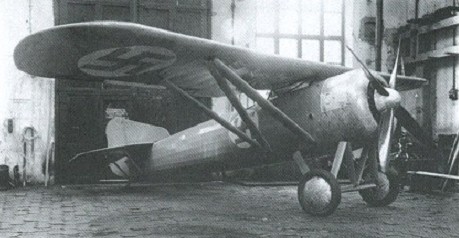
IVL C.IV 25

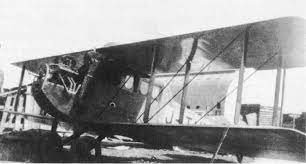
IVL C.VI.25 was a Finnish fighter aircraft designed by IVL as a further development of the IVL C.24.
The aircraft made its maiden flight on June 11, 1925, but was wrecked after a forced landing, due to engine trouble, on December 17, 1925.
The aircraft was under-powered, like its predecessor, and it was not considered possible to further develop the aircraft.

Engine: Siemens-Halske sh 3A 160hp
Top speed: 210 km/h

IVL / Industria Valtion Lentokonetehdas

IVL was founded in 1921 at Sveaborg, near Helsinki, to manufacture aircraft for the Finnish Air Force. The first production was the A-22 seaplane, a license-built version of the Hansa-Brandenburg W.33. A neat biplane reconnaissance/ bombing aircraft, the Korka, was in production in the mid-1920s. Only one nationally-designed combat aircraft saw service in Second World War, the Myrsky single-seat monoplane fighter.

Itoh Emi 31

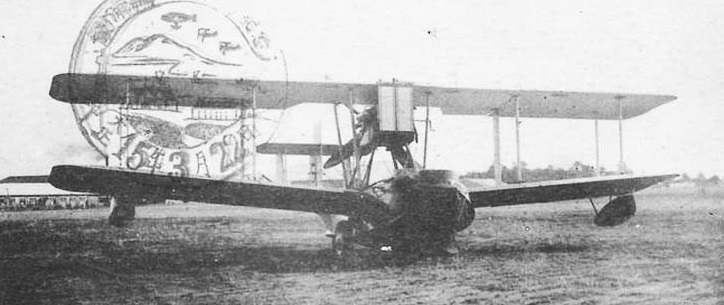
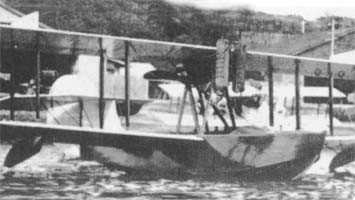
The development of the Emi 31 began in 1922 when the fledgling Japan Air Transport Research Society bought a Curtiss Seagull flying boat as their first passenger aircraft, intended for a service between Tokyo and Yokohama Bay. This was seriously damaged before it could be delivered so the airline’s founders, Sun-ichi Bando and Yukichi Goto who had earlier owned the Emi 16 racer, turned to Itoh for a replacement flying boat. In response Tomotari Inagaki designed the Itoh Emi 28, which was strongly influenced by the Seagull and powered by a 150 hp (110 kW) Hispano-Suiza engine, but this design was never built. Another passenger company, Choichi Inoue’s Japanese Air Transport Research Association (JATRA) that had provided Japan’s first regular airline service using floatplanes between Sakai to Takamatsu and Tokushima, was looking for a suitable passenger flying boat. Aware of the Emi 28 he placed an order for a more powerful development, resulting in the Emi 31.

The Emi 31 was a wooden-structured, pusher configuration biplane. Its unequal span, fabric covered, two bay wings were braced by parallel pairs of interplane struts. The shorter lower wing was mounted on top of the hull and the upper centre section, high above the water, was strengthened by the struts that supported the pusher engine. There were ailerons on the upper wings.

Its 220 hp (160 kW), pusher configuration, water-cooled V-8 Hispano-Suiza 8B engine was pylon-mounted just below the upper wing with two long, upright, rectangular radiators mounted edge-on ahead of the upper leading edge. The Emi 31’s plywood-covered hull was essentially the same as that of the single step Seagull. On the water it was stabilized by small, strongly up-pitched floats mounted below the outer interplane struts. It had two open, side-by-side seat cockpits in tandem. Initially the pilot and flight engineer occupied the forward cockpit with two passengers behind but in service the engineer was often displaced by a third passenger.

The Emi 31’s fabric-covered tail was also similar to that of the Curtiss, with a tailplane and elevator held well clear of the water on top of an abbreviated fin. Its large, comma-profile rudder moved in a deep elevator cutout and had a forward balance area overhanging the tailplane.

The Emi 31 was completed in mid-1922. The date of its first flight is not known but, after test flights at Itoh’s Tsudanuma base, it went to the JATRA base at Sakai to fly the planned route. It was also used by The Asahi Shimbun newspaper to report army manoeuvres, catching the attention of the Prince Regent. There were frequent, poorly recorded modifications; after only a few months of use it had been significantly improved twice. It remained in use with JATRA into 1924, after which it was retired to the water surface, further modified for use as a water taxi and sightseeing-boat.

Powerplant: 1 × Hispano-Suiza 8B, 160 kW (220 hp)
Propeller: 2-bladed wooden
Wingspan: 14.66 m (48 ft 1 in)
Wing area: 26 m2 (280 sq ft)
Length: 7.65 m (25 ft 1 in)
Height: 3 m (9 ft 10 in)
Empty weight: 780 kg (1,720 lb)
Gross weight: 1,350 kg (2,976 lb)
Maximum speed: 121 km/h (75 mph, 65 kn)
Endurance: 2 hr 30 min
Crew: one, with option of a flight engineer
Capacity: three, or two with engineer

Itoh Emi 30

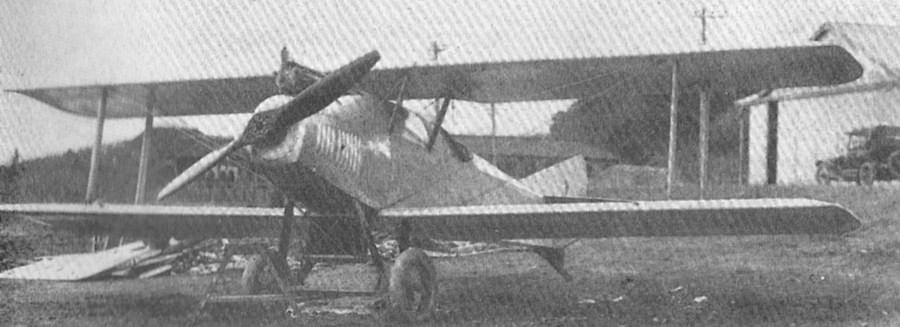
After World War I Itoh had followed design developments in both Europe and the US and had explored these trends with their own designs. The Emi 30 was the first Japanese aircraft influenced by a western interest in small sports aircraft.

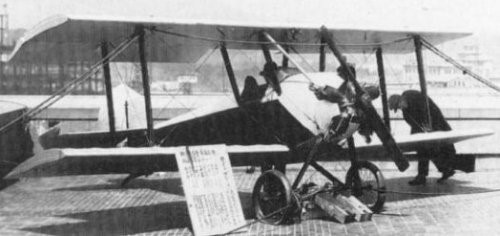
The Emi 30 had a wooden structure and was fabric-covered. It was a single bay biplane with wings braced by parallel pairs of streamlined interplane struts. The lower wing, which had a slightly greater span than the upper one, was mounted on the lower fuselage longerons and the centre section of the upper wing was held over the fuselage by outward leaning, parallel cabane struts from the upper longerons. The two spar wings had thick airfoil profiles compared to most contemporary biplanes. There were inset ailerons on the upper wing.

It was powered by an Itoh built, 40–45 hp (30–34 kW) air cooled 5-cylinder radial engine. The Itoh 11 used the cylinders and pistons from a Japanese-built Renault engine, joined to a new crankshaft and crankcase. Its two-bladed propeller had a domed spinner. The Emi 30 was flown from an open cockpit under the upper wing, with a streamlined headrest which merged into a slender rear fuselage. The tail was conventional, with a tailplane mounted on top of the fuselage and braced from below, and a generous fin and balanced rudder with an overall rounded but pointed profile.

The Emi 30’s landing gear had wheels on a single axle, its ends supported by V-struts from the lower fuselage longerons.

When it was first displayed in 1922 the Emi 30, a single seat civil sports aircraft, was the smallest aircraft in Japan.

It was first seen in public at an exhibition in July 1922, where it was awarded a silver plaque for innovation. The date of the first flight is not known but it was developed in a program flown by Seizo Okhura and later used as an aerobatics trainer by the newly renamed Itoh Aeroplane Manufacturing Works. In March 1924 it was displayed on the roof of a Tokyo department store where it was on sale for 5,000 yen but its later history is not known. There is no firm evidence that more than one was built.

Powerplant: 1 × Itoh 11, 34 kW (45 hp)
Wingspan: 5.80 m (19 ft 0 in)
Wing area: 13 m2 (140 sq ft)
Length: 5.11 m (16 ft 9 in)
Height: 2.10 m (6 ft 11 in)
Empty weight: 295 kg (650 lb)
Gross weight: 605 kg (1,334 lb)
Maximum speed: 130 km/h (81 mph, 70 kn)
Endurance: 2 hr
Crew: one

Itoh Emi 29 Taihoku-go

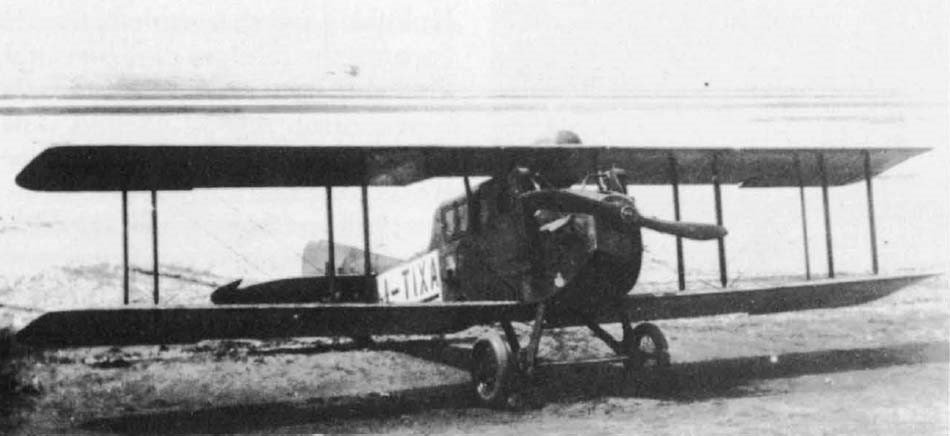
The Itoh Emi 29 Taihoku-go was a 1920s Japanese civil transport designed by Tomotari Inagaki with its two passengers in an enclosed cabin. It was the first of this “limousine” type to be built in Japan

The 1923 Taihoku-go (Taipei) was given its name since it was built to an order from Wen-Ta Shie, a pilot from Taiwan which was then under Japanese rule. It was the first Japanese-designed civil aircraft to enclose its passengers in a cabin, limousine style. Such aircraft had been developed in Europe soon after the end of World War I with conversions of war surplus machines, though luxurious accommodation for more passengers was provided in purpose-built types like the Westland Limousine as early as 1919. Generally, the pilot was separated from the passengers or raised above them, in an open cockpit.

The Emi 29 was a two-bay biplane with wooden-structured, fabric-covered wings braced by parallel pairs of interplane struts and a short, parallel-strutted central cabane. Its ailerons, fitted to both upper and lower wings, were externally interconnected.

It was powered by a 220 hp (160 kW) Hispano-Suiza 8B water-cooled V-8 engine. This had rectangular, side-on radiators just behind the engine, as on the earlier Itoh Emi 14 and Emi 16, and fuel tanks in and above the central upper wing. The pilot’s cockpit was ahead of, but separated from, an enclosed two seat passenger cabin glazed above the upper fuselage longerons and dropping away behind. The flat-sided fuselage was plywood-covered to the rear of the cabin and fabric-covered aft. The tail was conventional, with the tailplane and balanced elevators mounted on top of the fuselage and with a fin and balanced rudder of triangular profile.

The Emi 29’s wide track, fixed undercarriage was also conventional with mainwheels, on a single axle between V-struts from the lower fuselage longerons, and a tailskid.

First flying in 1923, the only Taihoku-go built was operated by Tozai Teiki Kokukai on their Tokyo-Osaka service but was not heavily used.

Powerplant: 1 × Hispano-Suiza 8B, 160 kW (220 hp)
Propeller: 2-blade wood
Wingspan: 10.50 m (34 ft 5 in)
Wing area: 31 m2 (330 sq ft)
Length: 7.25 m (23 ft 9 in)
Height: 3.15 m (10 ft 4 in)
Empty weight: 870 kg (1,918 lb)
Gross weight: 1,710 kg (3,770 lb)
Maximum speed: 141 km/h (87 mph, 76 kn)
Crew: One
Capacity: Two passengers

Itoh Emi 24 Akita-go

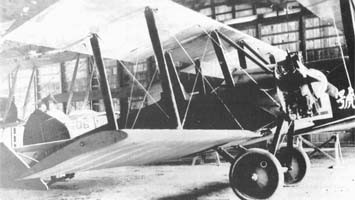
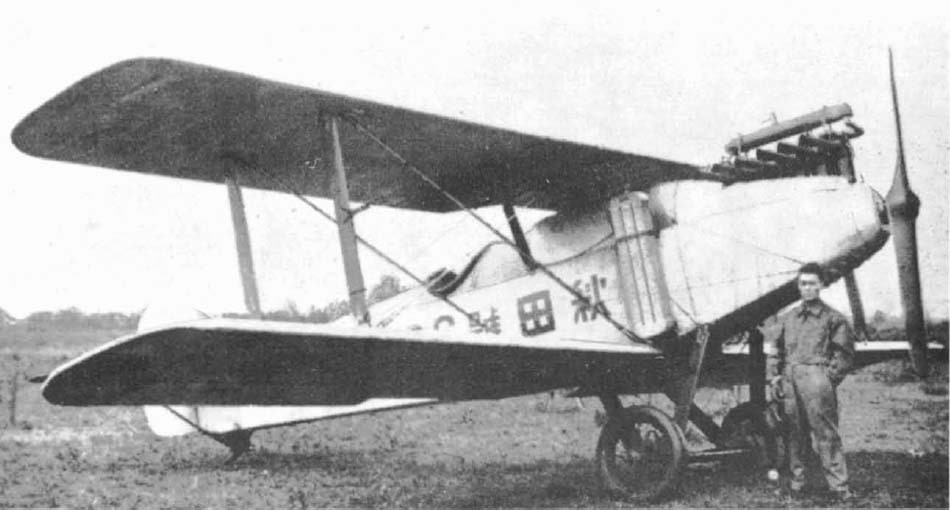
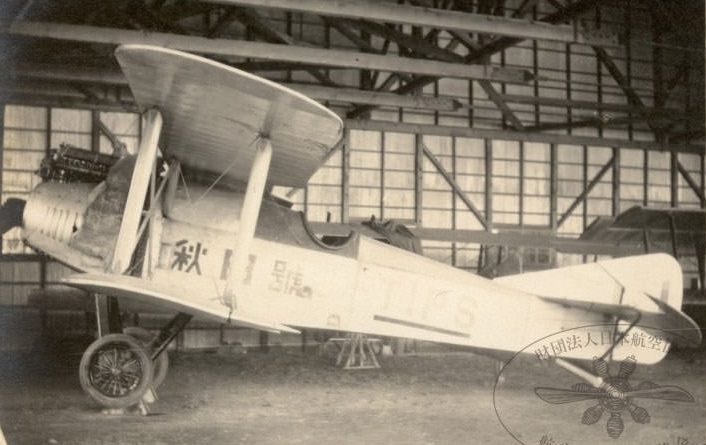
The Emi 24 was the second aircraft specially built by Itoh for the Imperial Japan Flying Association Long Range Competition in Shanghai. The aircraft was commissioned by aviator Yozo Sato and sponsored by Akito Prefecture, after which the aircraft was named Akita-Go.

It was a single-seat single-pillar biplane with a monocoque fuselage, powered by a German Maybach six-cylinder liquid-cooled engine with 320 hp.

After the cancellation of the competition, the aircraft was completed in October 1921 as a light transport. During the tests, it became clear that the design of the aircraft was not perfect and the project was closed.

Engine: Maybach, 320 hp
Wingspan: 10.60 m
Wing area: 28.80 sq.m
Length: 7.71 m
Height: 2.80 m
Empty Weight: 970 kg
Maximum takeoff Weight: 1573 kg
Maximum speed: 180 km/h
Cruise speed: 155 km/h

Itoh Emi 17 Tsurubane No.3

Ito’s assistant Toyataro Yamagata decided to try his hand at aerobatic competitions, and for this purpose, the company ltoh Hikoki Kenkyusho began designing a light sports aircraft in 1920. The project was led by Tomotori Iganaki.

The aircraft, designated Emi 17 Tsurubane No.3, was preparing to take part in the August competition for the prize of the Imperial Japanese Flying Association, but problems with the rotary engine prevented this.

And just two weeks later, Yamagta crashed on Emi 14 and the plane remained ownerless. For some time it was tested with a new engine, and then the car was “abandoned”. Emi 17 was the last of the Tsurunabe family.

Emi 17
Engine: rotary, 80 hp
Wingspan: 9.15 m
Wing area: 27.80 sq.m
Length: 6.30 m
Height: 2.45 m
Empty weight: 590 kg
Maximum takeoff weight: 740 kg
Maximum speed: 121 km/h
Cruising speed: 105 km/h
Crew: 1