Kinner B-5 / B-54

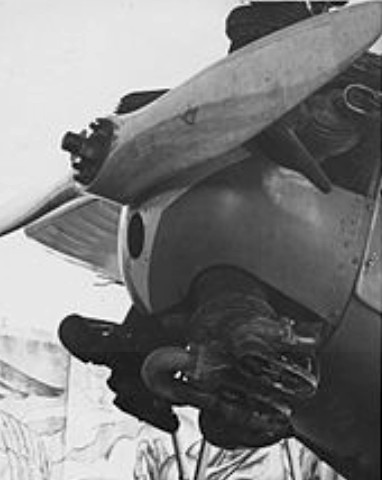
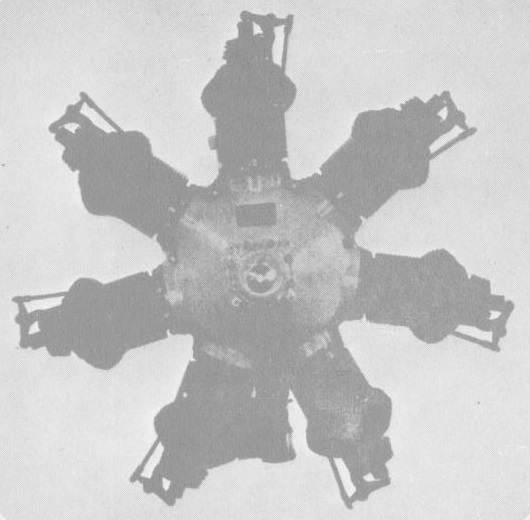
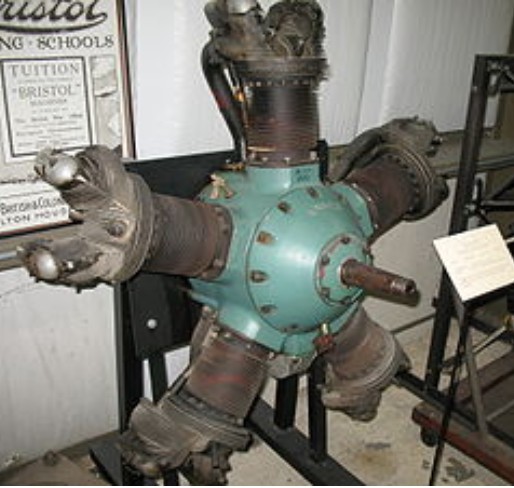
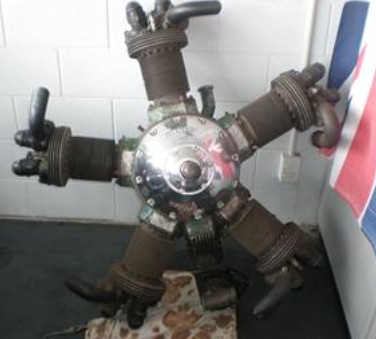
The Kinner B-5 was a popular five cylinder American radial engine for light general and sport aircraft of the 1930s.

The B-5 was a development of the earlier K-5 circa 1928, with slightly greater power and dimensions. The main change was the increase in cylinder bore from 108 mm (4.25 in) to 117 mm (4.625 in) and a corresponding increase in displacement from 372 cu in (6.1 liters ) to 441 cu in (7.2 liters ).

One difference the B-5 had from radial engines of other manufacturers was that each individual cylinder had its own camshaft, a system also used by the contemporary Soviet-built Shvetsov M-11 five cylinder radial, while most other radial engine designs used a “cam ring” for the same purpose, connected to every cylinder’s valves.

The B-5 was a rough running but reliable engine and the B-5 and its derivatives were produced in the thousands, powering many World War II trainer aircraft, its military designation was R-440. The B-5 was followed by the R-5 and R-55.

Gallery

Kinner B-5

Applications:
Fleet Fawn
Fleet Finch
Kinner Sportster
Kinner Sportwing
Monocoupe 125
Savoia-Marchetti S.56

Specifications:
Kinner B-5
Type: Five-cylinder, air-cooled, radial
Bore: 4 5⁄8in (117mm)
Stroke: 5 1⁄4in (133.3mm)
Displacement: 441 cu in (7.2 liters)
Length: 19 in (482mm)
Diameter: 45⅜ in (1152 mm)
Height: 4.5 in (1,104.8mm)
Dry weight: 295 lb (134 kg)
Valvetrain: 1 Inlet and 1 Exhaust valve per cylinder, individual camshafts for each cylinder
Fuel system: 1 Stromberg Carburetor
Fuel type: 73 Octane
Cooling system: Air
Power output: 100 hp at 1810 rpm, 125 hp at 1,925 RPM max/89 hp at 1,725 RPM cruise
Compression ratio: 5.26:1
Power-to-weight ratio: 0.42 hp/lb at cruise
Kinner K-5

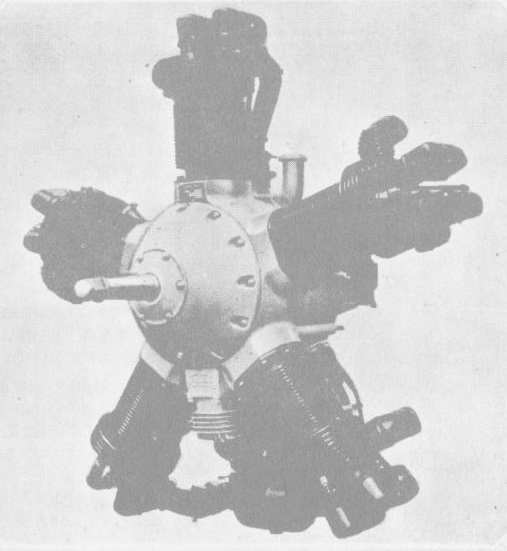
The Kinner K-5 crankcase is manufactures from heat treated aluminium alloy castings, consisting of three pieces, the main cylinder sections and front and rear covers. The removal of the covers makes immediately accessable the crankshaft, bearings, master and link rods, cam gears, followers and magneto drice gears.

The crankshaft is of a special heat treated chrome nickel steel drop-forging, machined all over, counter balanced and supported on two main bearings of special bronze backed babbit. The thrust bearing is a Hoffman ball bearing. Special force feed lubrication is to the link pins.

A special air heater is provided permitting air to be drawn from top or side of the fuselage. A special annualar intake passage is cast in the main crankcase distributes the combustable mixture.

Valve rocker arms are enclosed in a streamlined cover. Inlet and exhaust valves are both necked type of special heat resisting steel alloy. There are individual camshafts for each cylinder.

Accessories available at extra cost were Heywood self starter, Eclipse hand turning gear, and propeller hub.

The Kinner K-5 was a popular engine for light general and sport aircraft developed by Winfield B. ‘Bert’ Kinner. With the boom in civilian aviation after Charles Lindberg’s transatlantic flight the K-5 sold well. The K-5 was a rough running but reliable engine and the K-5 and its derivatives were produced in the thousands, powering many World War II trainer aircraft. The K-5 was followed by the B-5, R-5 and R-55. Circa 1928, the K-5 produced 100 hp at 1810 rpm, with 73 Octane fuel.

Kinner K-5 in a Fleet Model 2

Applications:
Adcox Special
Davis D-1-K
Fleet 2
Kreutzer Air Coach
Waco KSO

Kinner K-5
Type: Five-cylinder, air-cooled, radial
Approval Type Certificate No.3
Dept of Commerce Rating: 90 hp at 1810 rpm
Commercial Rating: 110 hp at 1880 rpm
Power cruise: 70hp at 1,650 rpm
Displacement: 327 cu.in / 6.1 liters
Compression ratio: 5.0-1
Bore: 4 1/4 in / 108mm
Stroke: 5 1/4 in / 133.3mm
Length: 32 1/4 in
Height: 43.5in (1,104mm)
Diameter: 43 in
Weight: 278 lb
Fuel consumption: not more than .60 lb/hp/hr
Oil consumption: not more than .025 lb/hp/hr
Lubrication: Circulating oil system, pressure feed to front & rear main bearings, and to plain link pins, through grooved master rod bearings.
Ignition: Dual Scintilla
Carburation: 1 Stromberg NAR-5-A or Holley
Spark plugs: 2 per cylinder B.. No.4 Hornet
Valvetrain: 1 inlet and 1 exhaust valve per cylinder
Fuel type: 73 Octane
Price: $1800 f.o.b. Glendale

Kinner Sportster / Sportwing

Sportster

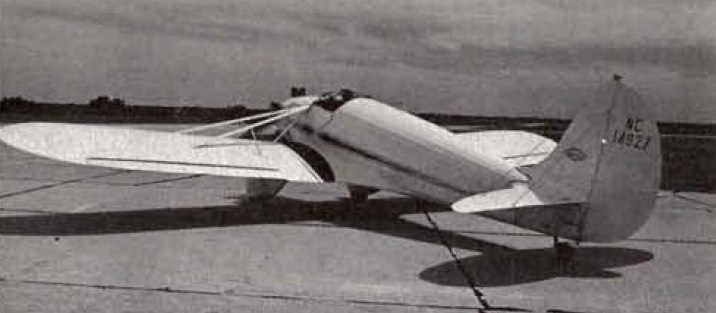
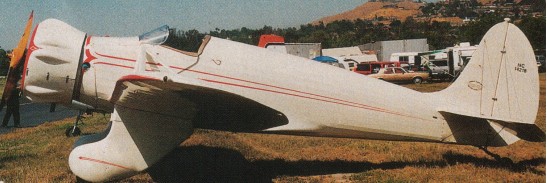
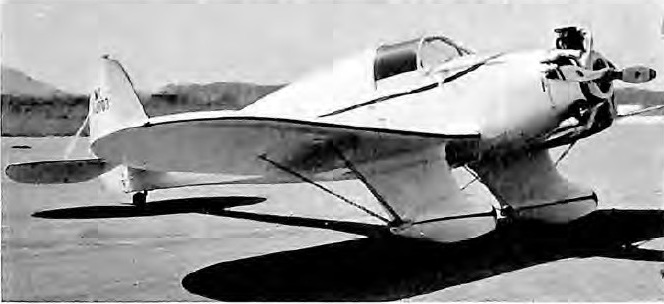
Kinner Airplane and Motor Corp. introduced an airplane of its own design in 1932. The side-by-side two-seat Sportster series of low wing taildraggers was powered by 100-hp Kinner five-cylinder radial engines. Some have been repowered with the 125-hp Kinner. The aircraft employed a mixed construction with the conventional fabric-covered wooden wings and fabric-covered steel-tube fuselage combination.

The Sportwing was a refined version with eight built circa 1935.

Kinner Sportwing

Engine 100-hp Kinner
Seats 2.
Gross wt. 1,875 lb.
Empty wt. 1,218lb
Top speed 104 mph
Cruise 90 mph.
Initial climb rate 800 fpm.
Ceiling 14,000 ft.
Range 340 miles

Kinner Airplane & Motor Co

Formed in 1919. Known chiefly for its air-cooled radial engines. Aircraft designed by the company round its own engines included Courier two-seat parasol monoplane of late 1920s. In 1930s was producing Sportster strut-braced low-wing monoplane with open side-by-side seats. Sportwing was refined version, Playboy was wire-braced and enclosed and Envoy was scaled-up Playboy seating four. Three Envoys acquired by U.S. Navy as XRK-1 were not experimental, but staff transports. During 1937 company still offered six types of engine and was working on twin-engined Invader, but in 1938 was in receiver’s hands, though continuing operations under control of a trustee.

1920s-1935:
635 West Colorado Boulevard
Glendale
California
USA

Kimura HK-1

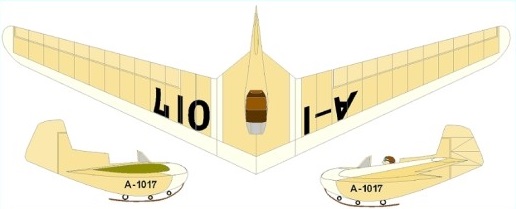
The Kimura HK-1 was a glider designed by Hidemasa Kimura and built by Ito Airplane Works in Japan in 1939 to investigate the possibilities of tailless aircraft. It was a single-seat design with an open cockpit, swept wings, and a single tail fin. The HK-1 made a total of 169 test flights between 15 December 1939 and 7 March 1940, towed aloft behind a car.

By this time, the glider’s success had attracted the attention of the Army, which arranged to purchase the aircraft. It was taken to the Tachikawa factory for testing, but was crashed after only 13 flights, on 16 April 1940. The design proved sufficiently interesting for the Army to commission further research into the tailless concept, which would lead to the Kayaba Ku-2.

Wingspan: 10.00 m (32 ft 10 in)
Length: 3.50 m (11 ft 6 in)
Height: 1.80 m (5 ft 11 in)
Wing area: 14.0 m2 (151 ft2)
Maximum speed: 85 km/h (53 mph)
Crew: One pilot

Kimball Aircraft Corp Beetle K

The Beetle K features a removable exhaust valve cage, ball bearing cam ring, and universal mounting ring.

Available at extra cost was any type of starter.

Type: 7 cylinder air cooled radial
Approved type Certificate No.34
Rating: 135 hp at 1800 rpm
Displacement: 585 cu.in
Compression ratio: 5.2-1
Bore: 4 1/2 in
Stroke: 5 1/4 in
Length: 31 3/4 in
Diameter: 45 in
Weight: 370 lb
Fuel consumption: not more than .54 lb/hp/hr
Oil consumption: not more than .02 lb/hp/hr
Lubrication: Dry sump, force feed and splash
Ignition: Dual Scintilla
Carburation: 1 Stromberg NA-S5
Spark plugs: 2 per cylinder AC
Price: $2900