The KN-2 and KN-3 models shared the common airframe of the KN-1, though they were upgraded with more powerful 300 and 425 horsepower engines.
One KN-2 was built in 1929 and registered X8899. Power was by a Wright J6 of 300 hp.
The KN-2 and KN-3 models shared the common airframe of the KN-1, though they were upgraded with more powerful 300 and 425 horsepower engines.
One KN-2 was built in 1929 and registered X8899. Power was by a Wright J6 of 300 hp.
Felix Knoll, formerly of The Rohrbach Metal Aeroplane Company (Germany) and later the Chief Engineer of the Heinkel Aircraft Company, immigrated to the United States from Germany for better opportunities. Within weeks of being in the country, Wichita business leaders recruited Felix to come to Wichita and start a company of his own. Engineering work, stress calculations, and drawings for the first model, the KN-1, were completed in Room 623 of the Broadview Hotel. Felix and Herbert Schwenke; another German immigrant from The Rohrbach Metal Aeroplane Company, worked on the plans together.
George Siedhoff, who owned and built the Broadview Hotel where the KN-1 was designed, was selected to build a new 50,000 square foot factory on a 148 acre tract of land at the northeast corner of Kellogg and Webb Road. The company set up a temporary shop at 471 W 1st street in the former building of both the Travel Air Company and Laird Whippoorwill. By the end of December, 1928, the first airplane was ready to fly. It was a four-seat cabin biplane with forward stagger.
Over five hundred spectators gathered around the East Airport to watch the KN-1 first flight. Amongst the crowd were Lloyd Stearman, Walter Beech, reporters, and motion picture camerame. The December 30, 1928 first test flight was so successful that pilot Howard Jones chose to double the planned time and stayed in the air for thirty minutes. He took the airplane through loops, rolls, and power dives.
Three KN-1s were built. Registrations were X9090 and X8861. One airplane was destroyed by fire on February 1, 1929 while sitting idle; when a Laird aircraft landed on top of it.
KN-1
Engine: 1 × Wright J-5-9, 220 hp (164 kW)
Wingspan: 33 ft 6 in (10.21 m)
Wing area: 264 sq.ft (24.5 sq.m)
Length: 23 ft 3 in (7.09 m)
Empty weight: 1,800 lb (816 kg)
Gross weight: 3,050 lb (1,383 kg)
Maximum speed: 140 mph (225 km/h)
Range: 1,200 miles (1,931 km)
Service ceiling: 14,000 ft ft (4,267 m)
Rate of climb: 800 ft/min (4.1 m/s)
Crew: One pilot
Capacity: 3 passengers
The Knoll Aircraft Corporation received its state charter on October 10, 1928. Felix Knoll, formerly of The Rohrbach Metal Aeroplane Company (Germany) and later the Chief Engineer of the Heinkel Aircraft Company, immigrated to the United States from Germany for better opportunities. Within weeks of being in the country, Wichita business leaders recruited Felix to come to Wichita and start a company of his own. Engineering work, stress calculations, and drawings for the first model, the KN-1, were completed in Room 623 of the Broadview Hotel. Felix and Herbert Schwenke; another German immigrant from The Rohrbach Metal Aeroplane Company, worked on the plans together.
George Siedhoff, who owned and built the Broadview Hotel where the KN-1 was designed, was selected to build a new 50,000 square foot factory on a 148 acre tract of land at the northeast corner of Kellogg and Webb Road. The building featured two stories, a mezzanine area, clear story windows, and adjacent runway. Assets such as machinery, tools, and equipment were purchased from the bankruptcy of Laird Whippoorwill Airplane Company. The company set up a temporary shop at 471 W 1st street in the former building of both the Travel Air Company and Laird Whippoorwill. By the end of December, 1928, the first airplane was ready to fly.
Over five hundred spectators gathered around the East Airport to watch the KN-1 first flight. Amongst the crowd were Lloyd Stearman, Walter Beech, reporters, and motion picture camerame. The December 30, 1928 first test flight was so successful that pilot Howard Jones chose to double the planned time and stayed in the air for thirty minutes. He took the airplane through loops, rolls, and power dives.
In June 1929 new issues of Stock were released.
By July 1929 the company was not paying its bills. The company assets were found to be embezzled soon afterward. Demand for new aircraft in the summer of 1929 was softening. Arguments between the board of directors and management broke out over the necessity of building the new factory, the hiring of too many engineers, and also the Yunker contract work. Payment for the Yunker work was to have been stock in the Yunker Aircraft Company. The lack of funds, and sales combined with the depression, halted production with three new aircraft in development. The company was placed into receivership on August 26, 1929, under the management of Ray Theis.
On December 18, 1929, the assets were liquidated at auction. Roy Buckley purchased the manufacturing machinery and equipment. He would later found the Buckley Aircraft Company. George Siedhoff purchased uncompleted airframe sections and parts, as well as the rights to X8899. C.V. Snyder bought the new plant and grounds. The Yellow Air Cab Company, in turn, bought it in late 1930. The airport property was then purchased by Beechcraft in 1940 and became their Plant II.
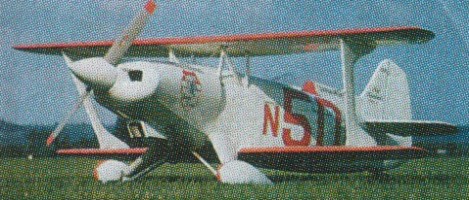
Designed by Vernon Payne in the USA in 1933, the Payne Knight Twister is a single seat biplane with a tube construction fuselage and wooden wings. All fabric covered.
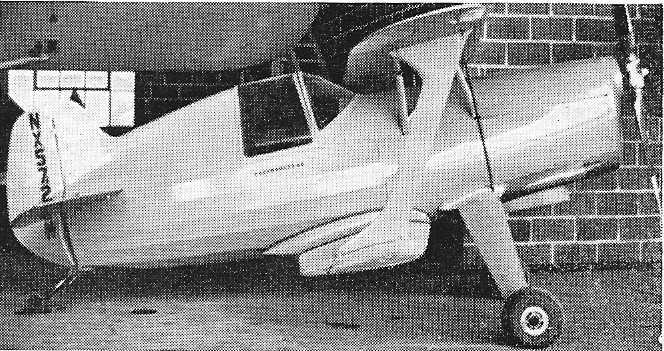
Engine: Lycoming, 108 hp.
HP range: 85-160.
Span upper: 15.00 ft
Span lower: 13 ft
Wing area: 55 sq.ft.
Length: 13.5 ft.
Height: 5 ft.
Weight empty: 517 lbs.
Gross: 865 lbs.
Fuel cap: 20 USG.
Speed max: 180 mph.
Cruise: 165 mph.
Range: 610 sm.
Stall: 55 mph.
ROC: 1800 fpm.
Take-off dist: 400 ft.
Landing dist: 800 ft.
Seats: 1-2.
Landing gear: tail wheel.
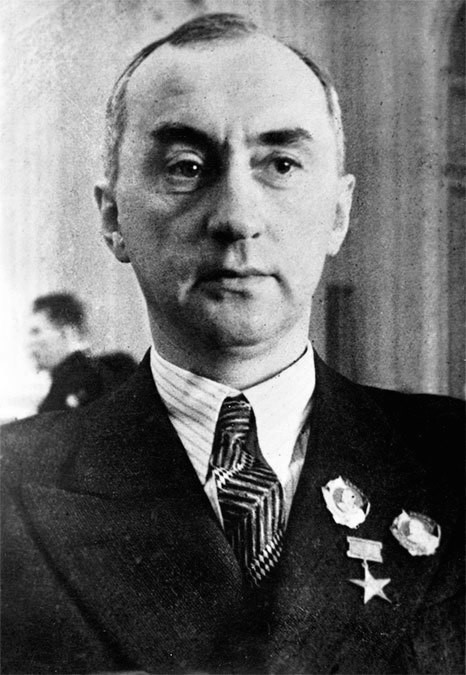
Vladimir Yakovlevich Klimov was born on 23 July 1892 in Moscow and studied at the Technical School Komissarovskom.
In 1918 he graduated from the Faculty of Mechanical Engineering of the Technical State University of Moscow NE Bauman and began his career in October of 1919 in Kolomna factory, an engineering company based in Moscow.
From July 1918 to 1931 he worked interchangeably as chief laboratory engineer, department head, assistant director of the automotive research laboratory of this factory which later became the Soviet Scientific Institute of Engines (NAMI).
After 1931 he became Head of the Department of Technical Control of gasoline engines of the Central Institute of Aviation Engines and at the same time, he worked as a professor at the Moscow Higher Technical School, the Lomonosov Institute and the Military Academy of the Force, Zhukovsky Aerial.
He was also head of the Engine Design Department at the Moscow Aviation Institute.
Vladimir Yakovlevich Klimov participated in the development of the first Soviet air-cooled star-shaped aircraft engines, the M-12, M-23, and others. In 1927 he created the first and most powerful engine of the time (approx. 650 kW (880 horsepower) the M-13 with liquid cooling for cylinders.
In the mid-1930s, it organizes the production of 12-cylinder M-100 engines, whose capacity was 30% more than that of similar foreign engines of the same size, at that time the M-103 series engine for bombers. “SB” designed by AA Tupolev and Arkhangelsk.
In 1935, Vladimir Klimov was appointed Chief Designer of the Rybinsk Engine Plant No. 26.
In August 1941, he worked designing high-power engines for Soviet aircraft destined to defend the USSR during World War II in a factory evacuated to Ufa.
The engines that Klimov had designed in the late 1930s and early 1940s (M-105, VC-105PF, EC-107, EC-108), were installed in Pe-2 dive bombers designed by VM Petlyakov and fighter jets designed by Yakovlev.
In the postwar period Klimov led the design and production of a wide series of jet engines.
During his work and research, Klimov developed and implemented a series of inventions and innovations in aircraft piston engines such as the closed liquid cooling system, the closed system with a special pressure air pump with two speed traction, advanced timing, mixed fuel feed systems in powerful and high-speed engines, and proposed a number of innovative solutions in the construction of the turbojet.
Klimov made a significant contribution to the development of lubrication theory, to the solution of balance piston engine problems, and other aircraft engine problems.
In 1947-1949 he created the first engines with internal centrifugal compressors for jet aircraft.
In 1951, on the basis of the English Nene engine, Klimov created the VK-1F – one of the world’s first turbojet engines equipped with an afterburner.
Vladimir Yakovlevich Klimov was a Deputy of the Supreme Soviet of the USSR from 1946 to 1950.
He reached the degrees of Major General in the USSR Air Engineering Service.
He was also an outstanding academic twice awarded as Hero of Socialist Labor (1940, 1957). Winner of four Stalin Awards (1941, 1943, 1946, 1949).
He died on September 9, 1962. He was buried in the Novodevichy Cemetery in Moscow.
In 2002, the name Klimov was given to a street in the Shevchenko district of Zaporozhye and a park called Academician Klimov already existed there.
Germany
Adlerwerke vorm Heinrich Kleyer AG. was formed at Frankfurt am Main in 1934 to take over Frankfurter Flugzeugbau Max Gerner GmbH. Made low-cost, low-powered all-metal light aircraft with Gerner engines.
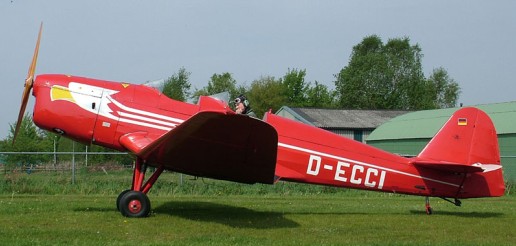
From its beginning in 1926 Klemm produced only cantilever monoplanes, and first flown February 1935 as a civil prototype, the Kl 35a was powered by a 60-kW (80-hp) Hirth HM 60R inline. The Klemm 35 entered production the same year. The Kl 35b second prototype featured the 78-kW (105-hp) HM 504A-2, and this engine was retained for the Kl 35B initial production variant. From this the company developed a primary trainer for the Luftwaffe as the Kl 35D, and this first flew in 1938. By comparison with the Kl 35B the wheel spats were omitted, and the landing gear was beefed up for wheels, floats or even skis.
The Kl35 was generally similar in appearance, but instead of a straight wing, it had a gull wing. The Klemm Kl35D differed in being powered by a 105hp Hirth HM504 A-02 engine and it had a braced and strengthened undercarriage with spats removed. The Luftwaffe also used the type for liaison, courier and postal work, and the type was exported to Czechoslovakia, Hungary, Lithuania, Romania and Sweden, the last also producing the type under licence. The Klemm Kl.35 remained in production until 1941. About 2000 airframes were built.
Kl 35a
Engine: Hirth HM 60R, 60-kW (80-hp).
Kl 35b
Engine: Hirth HM 504A-2, 78-kW (105-hp).
Kl 35B XIV
Engine: BMW Bramo (Siemens) Sh 14A seven cylinder radial, 160 hp.
Prop: 2 blade.
Wing span: 39 ft 4.5 in (12.00 m).
Length: 23 ft 7.5 in (7.20 m).
Wing area: 183 sq ft (17.00 sq.m).
Gross weight: 2,094 lb (950 kg).
Max speed: 130 mph (210kph) at S/L.
Typical range: 495 miles (800 km).
Seats: 3.
Kl 35D
Engine: 1 x Hirth HM 6CR, 60kW (80 hp).
Span: 10.40m (34ft 1.5in).
Length: 7.50m (24ft 7.25 in).
Armament: none.
Max T/O weight: 750kg (1,654lb).
Max speed: 132 mph at sea level.
Operational range: 413 miles.
Seats: 2
A low wing, 4 seat cabin tourer. The Klemm KI 32 appeared in two major versions: the A XII with a 150 hp Hirth HIM 150 in line engine, and the Sh 14A radial engined B XIV. A version redesigned in England by G H Handasyde was built in the UK by the British Klemm Aeroplane Co (later renamed British Aircraft Manufacturing Co) under the name Eagle; this was powered by a 130 hp de Havilland Gipsy Major engine.
A low wing, 3 seat cabin tourer.
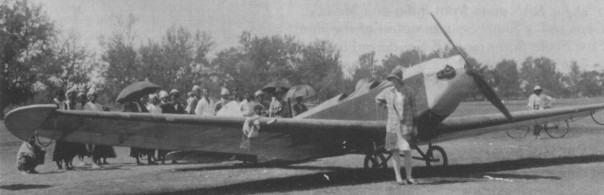
Designed from the Hans Klemm powered glider design, the L.25, one prototype was built in 1928, plus several registered as Leicht-flugzeugbau L-25.
The 2 seat sport L 25 was produced from 1927 with many types of engine. The L 25a was built in 1927 with the BMW Xa, 68 hp radial engine. The AKL-25 made its public debut at the 1928 Nationals where, with its gliderlike characteristics, it won the dead-stick landing contests.
Boland Aeroplane Co was formed in 1928 as a component of Aeromarine Plane & Motor Co Inc. to begin aircraft production. They acquired manufacturing rights to Klemm L.25 and the name, Aeromarine-Klemm, came into use. The design became production Aeromarine-Klemm AKL-25A. About 60 of the AKL-25, AKL-25A aka L-25A were built, of which some were converted to AKL-26A. Production was superseded by the AKL-26.
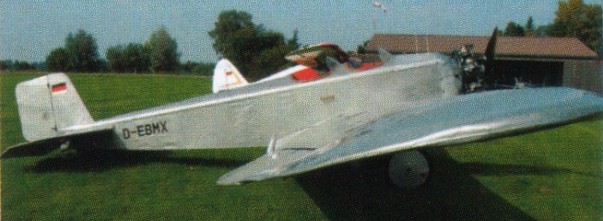
Variants:
Aeromarine-Klemm
L-25
imported Klemm powered glider design (marketed by Boland) (1928, ~60 built)
L-25A
also known as AKL-40 or AKL-25A; Salmson engine (formerly under Type 2-47) (1928) ; EDO twin-float version (1929)
L-25A-1
undocumented version (3 built)
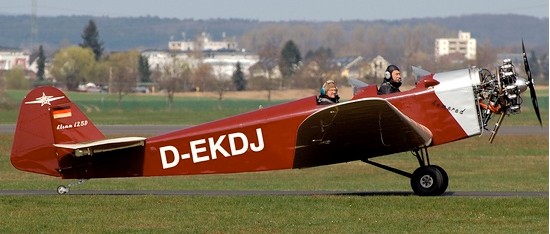
In 1929 the UK sales agency was acquired S.T.Lea at Croydon, and in the following five years thirteen L25s joined the British register. A modification to the UK aircraft was the change in location and size of the tailplane and the rounding and balancing of the rudder, to improve control. Only three survived the war.
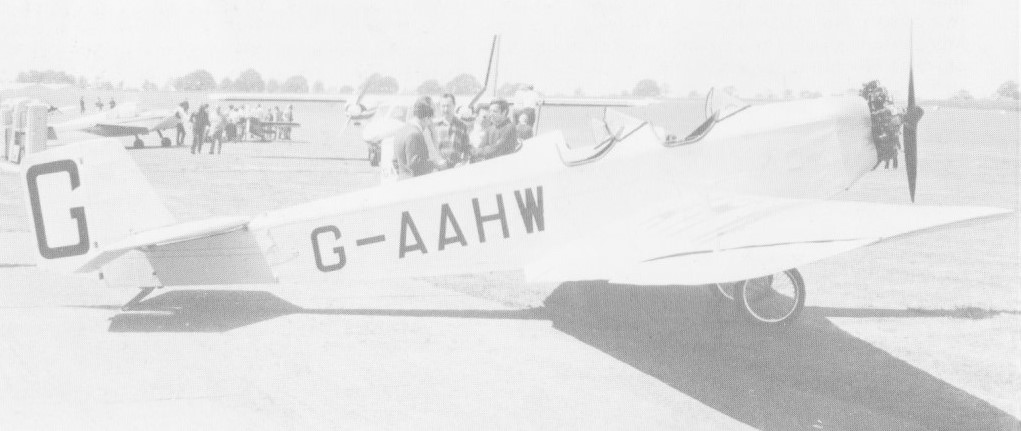
Specifications:
L25
Engine: Salmson AD9, 55 hp
Wingspan: 42 ft 7.5 in
Length: 24 ft 7 in
AUW: 1364 lb
Max speed: 87 mph
L-25 / AKL-25 / AKL-25A
Engine: Salmson AD-9, 40 hp
Seats: 2
Wing span: 40 ft 2 in
Length: 24 ft 6 in
Payload: 510 lb
Max speed: 85 mph
Cruise speed: 75 mph
Stall speed: 35 mph
Range: 325 sm
New price: $3,350
Engine: Mercedes Benz 2 cyl, 20 hp.
L.25a
Engine: BMW Xa, 68 hp
L.25 1a

