Variation: Kochierigin R-9.
Inter-Wars
Kochergin MMSh / BB-21
In the summer of 1940 S.A. Kochierigin developed a new assault aircraft project called MMSh, short for Small Modification of the Sh (ММШ – М алая М одификация Ш турмовика) based on a Shvetsov M-81 powerplant.
The Kochierigin MMSh (Russian: Кочеригин ММШ) development of the Kochierigin Sh-2 appeared in 1940 in order to improve performance and lower construction costs.
The basis for the development of the MMSh was the Kochierigin Sh-2, but with the replacement of the M-87A engine by the 1,280 hp M-81. In an installation under the hood some enlarged oil radiators were located. The fuel was regrouped in 4 protected tanks.
The wings were wood and with a reduction in area to 18 m² (instead of the 24.15 of the Sh-2). There was the same ratio of decrease to the area of the tailplanes and the empennage.
The planned armament included only four ShKAS machine guns and a bomb capacity of 200 kg (which could reach 400 kg in overloaded version).
The preliminary drawings were analyzed in the NII VVS and generally received a positive evaluation. The project was approved by Ya. V. Smuskievich on June 27, 1940. In the analysis report of the preliminary drawings it was verified: – ” taking into account that the aircraft is practically built, it is necessary to prepare and test it… “.
The MMSh was actually completed, tested and recommended for series production as a light bomber. With the designation BB-21 it was assigned to Factory No. 292 for serial production. Soon the preparation was stopped to guarantee the Yatsenko I-28 and later the Yakovlev I-26.
Powerplant: One 1,280 hp M-81
Wingspan: 12.00 m
Wing area: 18 m²
Length: 10.00m
Take off weight: 3800 kg
Wing loading: 211 kg/m²
Power load: 2.97 kg/hp
Speed at sea level: 450 km/h
Speed at 5000 m: 520 km/h
Landing speed: 140 km/h
Time 6000 m: 11 min
Take-off run: 400 m
Landing run: 300 m
Range at top speed: 685 km
Maximum range at economic speed: 905 km/h
Accommodation: 2 crew
Kochergin TsKB-1 / LR
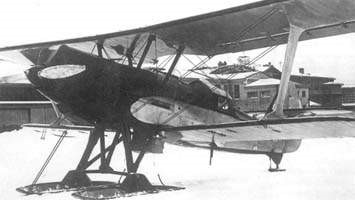
In 1932 the Kochierigin and Tupolev collectives were ordered to work on a light reconnaissance aircraft intended to replace the Polikarpov R-5. Tupolev was immersed in the development of large bombers and his project was not finished.
In 1933 the collective led by SA Kochierigin developed a light reconnaissance aircraft which received the designation LR. Being the first aircraft built after Kochierigin ‘s designation as TsKB brigade director at Factory No.39, the model was designated TsKB-1 (Russian: Кочеригин ЛР (ЦКБ- 1)). The Polikarpov R-5 itself had been taken as the basis for its development.
The LR was designed as a traditional single-engine sesquiplane of mixed construction, and powered by a 650-hp Mikulin M-34.
The fuselage was of welded tubes. The front portion was covered in aluminum. The rest of the fuselage and the tail consisted of a lightweight fabric-covered duralumin structure.
The wings were made of wood. The empennage was made of duralumin with a textile covering. The stabilizer trim angle could be changed in flight.
The construction was very light. Without the motor the structure weighed only 640 kg.
The landing gear was of the conventional type with a tail skid, quite similar to that of the R-5, but with hydro-pneumatic shock absorbers. The wheels featured disc brakes, a first for the USSR.
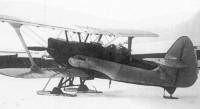
The cockpit was open with the left side folding to allow access to the cockpit. The gunner’s cabin was closed and covered with a protective screen that rotated 360º. On the left side there was a small door for access.
The powerplant was installed on a casing that was fixed to the airframe by four bolts. The radiator was located in the lower part of the fuselage.
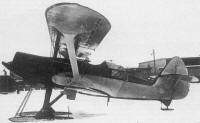
Using a more powerful engine, more refined aerodynamics, and lower flying weight, the LR outperformed the R-5, and even the I-5 fighter. With a flying weight of 2426 kg the maximum speed of the LR at sea level reached 271 km/h and at 5000 m it was 247 km/h. The height of 3000 m could be reached in just 7.3 minutes and the sharp turn was made in 17 seconds.
Armament consisted of a pilot-operated PV-1 synchronized machine gun and a gunner-operated ShKAS from the second cockpit. The aircraft could also carry up to 200 kg of bombs in 8×25 kg or 2×100 kg configuration.
The first prototype was ready in July 1933. During a test flight on January 27, 1934 with the pilot Yu.I. Piontkovsky at the controls, there were problems because the operators had interchanged the aileron control cables. No one was injured and the plane received light damage.
A second prototype was developed in 1934 with a more powerful Mikulin M-34N powerplant with turbo-charger (hence the N – Nagnitatiel) and a nominal power of 752 hp, which brought about a noticeable increase in performance.
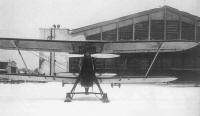
With a takeoff weight of 2,590 kg, the LR M-34N had a speed of 282 km/h at sea level and at 4,000 m it was 319 km/h. Climb time to 3,000 was 6 minutes and turn time to 1,000 m was 17 seconds. The take-off and landing runs were 210 and 250 meters respectively and the range was 340 km.
With a normal bomb load the flight weight reached 2800 kg and the maximum speed at sea level decreased to 273 km/h and at 3700 m it was 303 km/h.
State tests of the M-34N-powered LR were rated as very positive. The aircraft could easily be used as a light attack aircraft by reinforcing the armament. During the tests, refinements were made that allowed the weight to be reduced by about 100 kg.
The report of the state tests, signed by the head of the VVS RKKA Yákov I. Álksnis on October 3, 1934. In it, some deficiencies were pointed out, among which the poor visibility from the second cabin, the tendency to deviate to the left during the takeoff run and the poor completion of the prototype developed in Factory No. 39.
The report also requested to prepare on the basis of the LR M-34N and after solving the problems presented, the serial production of the model as a light reconnaissance and attack aircraft.
It was also proposed to improve the installation of the gunner, increasing the range of the aircraft to 400 km and achieving a speed at 4000 meters of 360 km/h.
However, this machine did not go into series production either. The industry rejected new welding and metal working technologies. Priority was given to the Polikarpov RZ light attack aircraft, obtained as a development of the R-5, but with reduced dimensions and an M-34RN engine (with reducer and compressor) with a nominal power of 750 hp. For the factories that produced the R-5, it was easier to transfer to this model.
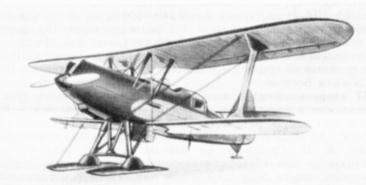
LR M-34
Powerplant: 1 x 650/750 hp M-34
Wingspan upper plane: 13.00 m
Wingspan lower plane: 10.80 m
Wing area: 36.52 m²
Length: 8.64m
Empty weight: 1,734 kg
Normal takeoff weight: 2,426 kg
Wing loading: 66.5kg/m²
Power load: 3.7kg/hp
Maximum speed at sea level: 271 km/h
Maximum speed at altitude: 247 km/h
Landing speed: 93 km/h
ROC: 455 m/min
Time to 1000m: 2.2min
Time to 2000m: 4.6min
Time to 3000m: 7.3min
Time to 5000m: 15.6min
Practical ceiling: 7,400 m
Practical range: 700 km
Armament: One pilot-operated PV-1 synchronized machine gun and one ShKAS in the second cockpit.
Bombload: 200 kg (8 х 25, 4 х 50, 2 х 100 kg)
Accommodation: 2 (pilot and gunner)
LR M-34
Powerplant: 1 x 750/815hp M-34N
Wingspan upper plane: 13.00 m
Wingspan lower plane: 10.80 m
Wing area: 36.52 m²
Length: 8.64m
Empty weight: 1,812 kg
Normal takeoff weight: 2,626 kg
Wing loading: 72.5kg/m²
Power load: 3.5kg/m²
Maximum speed at sea level: 282 km/h
Maximum speed at altitude: 314 km/h
Landing speed: 94km/h
Ascent speed: 455 m/min
Time to 1000m: 2.0min
Time to 2000m: 4.6min
Time to 3000m: 6.0min
Time to 5000m: 10.7min
Practical ceiling: 9,100 m
Practical range: 800 km
Take-off run: 250 m
Landing run: 210 m)
Armament: One pilot-operated PV-1 synchronized machine gun and one ShKAS in the second cockpit.
Bombload: 200 kg (8 х 25, 4 х 50, 2 х 100 kg)
Accommodation: 2 (pilot and gunner)
Kochergin BSh-1 / PS-43

In 1936 the USSR acquired a production license for the Vultee V-11, the first copies to serve as the basis for production in 1937. These were studied in detail by the TsAGI and the NII VVS.
After evaluating the V-11G, it was decided to proceed to series production to become familiar with the construction.
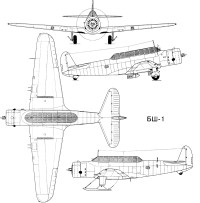
The serial production Vultee V-11, under the designation Kochierigin BSh-1 (Russian: Кочеригин БШ-1), was assigned to the OKB-1 construction brigade under the leadership of SA Kochierigin. The initials BSh-1 corresponded to Attack Bomber – 1 (in Russian: Б омбaрдировщик- Ш турмовик первый). In addition to preparing Factory No.1 to produce the model (with the help of a number of American specialists), Kochierigin had the responsibilities of replacing the original engine with the domestically produced Shvietsov M-62, bringing all the equipment and weapons to the Soviet standard.
Replacing the Wright SR-1820-G2 engine with the Shvietsov M-62 did not present major drawbacks as both were versions of the Wright Cyclone R-1820-F. The USSR had acquired a production license for the SR-1820-F3 for production under the designation Shvietsov M-25. The Shvietsov M-62 differed little from the American engine in terms of dimensions and location of mounting points. The VISh-2PA propeller, selected for the BSh-1, was also not very different from the Hamilton Vultee V-11, as it was also a licensed development.
The project of the Soviet BSh-1 modification began even before the arrival of the specimens in the USSR. On March 22, 1937 Kochierigin discussed his model transformation project. Instead of the 12.7 mm Browning machine guns in the wings, it was planned to place four ShKAS of similar caliber, but with a higher rate of fire. For each pair of machine guns 1600 shots were planned in trunks displaced to the side. The casings were ejected under the wing and the tapes were collected in the trunks. It was proposed to replace the gunner’s firing point with a turret similar to that used on the SR reconnaissance aircraft. Its dimensions made it possible to maintain the shape of the fuselage and the original glazing of the cabin. This modification was not approved.
The lower hatch installation for the gunner was developed from that used on the Ilyushin DB-3. This position had 500 shots.
Bomb capacity was also altered. Inside the fuselage two KD-1-8 cassettes with 8 fixings each were installed. This allowed the use of small aviation bombs between 5 and 25 kg. Unlike the original North American production cassettes that were fixed to the fuselage, the new KD-1-8 cassettes could be moved. The loading of bombs was done in the extended position and then they were collected towards the interior of the belly by means of a system of winches. For the external fixation of bombs in the lower part of the centerplane, two rows of 10 Der-31 mounts capable of supporting bombs up to 100 kg were installed. Bomb release was by an ESBR-2 electrical device with a mechanical reserve system similar to that used on the Kochierigin/Yatsenko DI-6Sh.
Only the installation of the chemical weapons dispensers remained a pending task.
The VVS made the decision on April 15 not to modify the firing point of the gunner, changing only the machine gun for a DA with 750 shots; decrease the number of underwing supports to 8 as in the North American version. On the other hand, urgently develop the necessary modifications to install two DAP-100 chemical weapons dispensers in the fuselage and six VAP-4 cassettes (four in the fuselage and two under the wing consoles).
Supporters of radical modifications to the VVS requested for the first serial copies to replace the machine gun not with the DA, but with a strapped ShKAS. Later install an armored turret. It was also requested to incorporate a radio-compass, which for the time was a luxury. It was proposed to develop the model in three versions: attack aircraft, reconnaissance aircraft and bomber. In the last two cases the crew would be three people. The attack plane would carry 4 machine guns in the wings, the bomber and scout plane would carry only two.
The industry ruled against the profound changes. The delays of the modifications affected the fulfillment of the plans. It was proposed to develop the first series with minimal modifications and then introduce modernizations and changes.
Finally, this was the point of view that prevailed and in the resolution of the Defense Committee of November 11, 1937 it was established that all the examples produced until the end of 1938 would be attack versions with four ShKAS machine guns in the wings with 2400 rounds in total. Degtiariov light machine gun for aviation in the gunner’s position in the original North American installation and without the ventral position. Two KD-1-8 cassettes and eight Der-31 outer mounts were to be installed in the bomb bay.
The Soviet armament was installed in the North American example number 32. In Factory No.1 the Browning machine guns were replaced by four ShKAS with 600 rounds per gun. An aviation Degtiaryov light machine gun with 500 rounds was installed in the rear cabin. To install the KD-1-8 cassettes it was necessary to widen the hatches by 350 mm and cover the front wall with aluminum. Each cassette could be fitted with 8 AO-8MZ, AO-8MB, AO-10, AO-15 or ZAB-10TG bombs. After installing the KD-1-8 the bomb capacity of the BSh-1 decreased slightly from 272 to 260 kg. The US underwing mounts were replaced by Soviet Der-31s. These mounts could carry bombs from AO-10 up to FAB-100 of 100 kg. Installation of the ESBR-2 electrical release system with a backup mechanical system allowed the release of the bombs one at a time, in series, or all at once.
In October 1937, factory tests were carried out with the new armament on “32”. Difficulties arose with the electrical system for releasing the bombs. Another defect found was the impossibility of locating bombs weighing more than 25 kg in the last row of external supports as they collided with the ground. With these defects the aircraft was sent to the Aviation Armament Scientific-Research Park (NIPAV) (Russian: Научно-испытательный полигон авиационного вооружения (НИПАВ)).
17 test flights were carried out with bombs dropped and weapons fired. It could be determined that the substitution of the gunner’s Browning machine gun for the DA did not increase the effectiveness of this position. On the other hand, there were problems with the KD-1-8 cassettes because sometimes the bombs got stuck between the cassette and the cell wall.
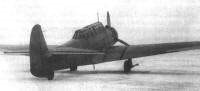
The NKAP attached great importance to the production of the BSh-1. It was expected for the year 1937 itself to have two series ready. The plan for 1938 included 200 examples in the light bomber version and 150 as attack aircraft, the first 10 of which should be delivered in the first quarter. In the second quarter, 20 BSh-1s were to be delivered and should be assigned to the Leningrad Military District. It was planned to equip the light bombardment aviation regiments of the Leningrad, Byelorussian, Kiev and Moscow districts with this new model. Each regiment had to have 63 copies.
Serial production was envisioned at its own Factory No.1 in Moscow, which had previously produced large numbers of Polikarpov R-5SSS and RZ reconnaissance aircraft. This meant an important technological change as there was a big difference between the technological processes of Nikolai Polikarpov’s wooden planes and the all-metal Vultee V-11.
In December 1937, the OKB-1 finished preparing all the detailed plans of the BSh-1, including all the changes in the armament, the substitution of the original materials for others of national production and began the construction of the first copies. By January15, the preparation of the jobs necessary to achieve the production of 8-10 aircraft per month and achieve the delivery of 50 copies for the first semester should be completed.
In practice, things did not go as planned. Preparation for production was delayed, the use of new materials, innovative technology, the introduction of modern electrically-powered machines never before used in Soviet industry, and the low qualification of personnel seriously complicated the construction process.
A large number of pieces had been received already made from the United States and did not match Soviet standards due to the difference in units of measurement. The first five examples were produced practically from these parts, and despite this they were characterized by a large number of defects that caused problems during testing.
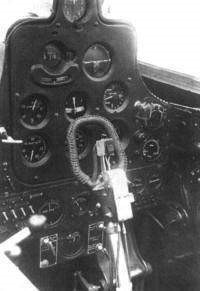
Externally the BSh-1 differed only from the V-11G in the engine with side lattices on the cowl and the propeller hub. Practically all the equipment was Soviet, the motor starting system, the electric generator, the collimators, the bomb launchers were replaced. Although the cabin was quite quiet, an SPU-2 intercom system and SL-36 signal lamps were installed. An attempt was made to replace the Fairchild F-14 photographic apparatus with an AFA-21 in an attack aircraft version and the AFA-27 in a bomber version, but then it was decided to use a single AFA-13. An RSB (Dvina) radio station with antenna attached to a 500mm mast located above the cockpit deck was installed.
After the arrest of the head of the VVS Yakov I. Álksnis, accused of treason, the head of supply of the VVS Yoffe, who replaced the also arrested Bazienkov, wrote a letter on November 29, 1937 to the new director of the VVS AD Loktionov in which he proposed to increase the ammunition of the BSh-1 to 3600 shots, to locate an MV-3 turret with ShKAS machine gunsin the gunner’s position with 600 shots and another in the lower position with 500 shots. He also proposed eliminating the external bombs and increasing the internal capacity to four KF-1-8 cassettes by dooming the fuselage fuel tank. It was proposed to add four VAP-4 chemical weapons containers or a pair of DAP-100.
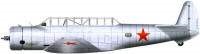
This was the configuration of the series devices that began to be delivered in the second half of 1938. This configuration had been tested at Factory No.1 on the “32” aircraft in November 1937. All the requests were made without problems except for the installation of the chemical weapons system. The installation of the VAP-4 under the centerplane was extremely risky due to the low height above the ground, only 200 mm. Its location under the wings led to structural modifications to the wing.
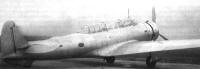
Testing of these canisters at NIPAV showed that the airflow from the propeller influenced the chemicals released. During these tests the entire tail was filled with splashes of the colored water used instead of the dangerous liquid.
As early as January 1938, there was talk of reducing production of the BSh-1 to just 100 examples and then continuing production of a modernized model. In March, the VVS confirmed the characteristics of the modernized version, which included the modifications proposed by Yoffe and other additions such as armor for the pilot’s seat and replacement of the M-62 engine with an M-62R.
The OKB-1 prepared the modifications. On April 27, 1938, the model analysis commission approved these changes with minor modifications. On March 28, the modification of “33” began. Among the modifications introduced was the increase in the trunks of the machine guns to increase the number of projectiles with the installation of electrical systems in this armament, the installation of 4 KD-1-10 cassettes, a new PAK-1 collimator for the pilot and a new ASBR-2 bomb delivery system.
Four Der-31 mounts were installed under the fuselage and two under the wing consoles. This led to reinforcing the wing consoles. The M-62 engine was kept as the M-62R was not ready, nor was the seat armor installed.
An MV-5 turret was installed but not in the standard form, but with smaller dimensions. The gunner was pretty tight.
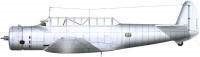
Work on the new version was going slowly. The OKB-1 was working in parallel on the R-9 and the factory management considered the development of the Vultee little prospect. On the other hand, the new KD-1-10 bomb mounts and the new turret were not received. By June 13, it had only been possible to install the electrical systems in two of the machine guns, since there were no others. Only for September 27 could an example of the M-62R engine be received and a normal MV-5 turret was located.
Series production of the modernized model was already postponed to 1939. Meanwhile the Factory no. 1 was still producing the “old” model. At the end of December, the factory director contacted the VVS management to inform him that he would not build the modernized BSh-1. The production management, for its part, ordered the Factory to deliver the first 50 copies and stop production. The military did not protest this time. Despite the fact that their request was for 350 machines and not 50, interest in receiving these technically aging and useless aircraft had been lost.
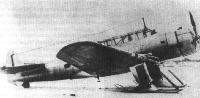
At the beginning of 1939 a BSh-1 with M-62IR engine (with compressor and reducer) was delivered to state tests with ski and wheel landing gear. The aircraft was tested by Major BN Pokrovsky and Captain ID Sololov as a gunner. Already by that time the BSh-1 was surpassed by an important group of national designs. In relation to the original Vultee V-11G it was heavier and the engine power had decreased. The North American SR-1820 developed 850 hp at 1,676 meters and the M-62IR barely achieved 450 hp at 1,500 m, but due to unreliability this power could hardly be achieved. As a result of the poor quality of production, the excellent visibility of theVultee V-11 had been faded into the BSh-1 by poor quality domestic plexiglass. The retraction of the landing gear presented major problems: during the tests on 10 occasions the gear did not deploy or did so incompletely.
By 1939 the BSh-1 had no military value. The possibility of its use was further removed due to the excellent results of the Nieman R-10 and the appearance of Sukhoi BB-1 (future Su-2). As a result the VVS refused to take the BSh-1 into service.
By this time, Factory No.1 had completed the production of 50 copies. The historian Shavrov has written that only 38 were completed, suggesting that perhaps the rest had not been completed by the time the order to stop production was received. Finished models without engines long lined up on the side of the runway at the Moscow Central Airfield.
In order not to lose the work done, it was proposed to Aeroflot to use the aircraft as a mail plane.
The Main Directorate of the Civil Air Fleet (GU GVF) had been interested in the model since 1937, delivering the document with the requirements for the civil version.
The GVF plan for 1937 included the conversion of three V-11 machines with a budget of 400,000 rubles each. Long delays in getting the model ready for production derailed these plans.
By the end of 1938 it was already clear to the Defense Committee the disinterest of the VVS in the model, which is why the transfer of 30 unarmed copies to civil aviation was allowed in December. On December 31, the Economic Council allocated a budget of 15 million rubles to the GU GVF for this task. Civilian machines were officially given the designation PS-43 (Russian: Кочеригин ПС-43).
In practice the planes were still piled up at the aerodrome. For them there were no engines. The M-62IR was produced at a slow pace and its poor quality forced it to be constantly replaced. Priorities were assigned to the VVS, so the GVF had no choice but to wait.
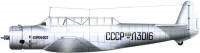
The first converted example were flown in April 1939. By September 1, Aeroflot only had two Vultees: one in the special operations squadron and another used on the Kazakhstan – South route. The plane of the special operations squadron was assigned in the winter of 1939-1940 to the Special Group for the support of the troops during the Winter War with Finland.
In 1940 this example was delivered to the NII GVF for the development of tests that were developed by AA Kolosov. By June 15, Aeroflot had 23 PS-43 examples, although not all were in flight condition. Having spent years outdoors had affected them. At least 27 were converted.
For this reason and the lack of availability of engines by the end of 1940, it was necessary to transfer 16 copies to storage. Despite this, between the end of 1940 and the beginning of 1941, several PS-43s were delivered to Aeroflot , operating on the Moscow – Kiev, Moscow – Tashkent and Kiev – Odessa routes.
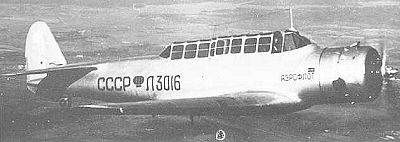
Civilian pilots valued the new model positively, highlighting the comfort of the cockpit and the good layout of the equipment and instruments. The gear retraction system also received quite positive feedback. Under these conditions it was decided to propose developing a passenger version on the PS-43 with capacity for 6 people.
The start of the Great Patriotic War meant that Aeroflot’s PS-43 fleet was destined for the transport of military cargo. As of June 25, 1941, new units and special brigades were organized and assigned to front units.
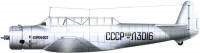
The first two units of the leadership of the Ukrainian civilian fleet were assigned to the Kiev aviation group and by July 1 they had already been shot down. This group would later receive a third copy.
A curious case is a PS-43 that somehow was registered in the 69th fighter regiment that operated in Odessa as part of an attack squadron. It is unknown how this aircraft was armed but it is known that it operated in conjunction with four Ilyushin Il-2s, one Polikarpov R-5 and one ex-Yugoslav Savoia S.79.
During the evacuation from Odessa in October 1941 this example flew to the Crimea, but was damaged on landing. Pilot Major Rykachiev and passengers were unharmed, but the plane had to be decommissioned.
As of June 1941, the PS-43 were concentrated in the 2nd Squadron of the Muscovite Group of Special Operations (MAGON). In the month of June, 8 copies were received, followed by 4 in August and another 8 in September. This was the result of the work of the GVF specialists who, with a forced march, prepared and maintained the stored specimens lined up on the Central Aerodrome runway.
The works were led by engineer IA Ivanov. Aircraft were delivered to the unit by pilots PS Gusiev, VN Ilin, VS Mineyev. Some examples could not be recovered due to an accident that occurred during the landing of a MiG-3.
The PS-43 were basically used for the transfer of mail and officialdom. On August 13, 1941 a PS-43 flown by VS Mineyev was attacked by a Messerschmitt Bf-109 . For half an hour the pilot was maneuvering until he finally managed to escape from the German, but these happy cases were not the most common. Due to German air supremacy the group suffered heavy casualties.
In July one was lost and another the following month. Two more aircraft were lost in September. Due to this the PS-43 began to be armed with defensive machine gunners in the rear position. Aircraft mechanics or men from the postal service were used in the role of artillerymen.
As the Germans approached Moscow, the MAGON group was used quite successfully in recon missions. On September 25, 1941, the Liaison Special Aviation Group (OAGS) (Russian: Особую авиагруппу связи) was created from the 2nd MAGON squadron and the 200th detachment of the GVF Moscow leadership, located at the Moscow airfield of Myachkov.
The 16 PS-43 were sent there in flying condition. Another had been lost by October. The last PS-43 entered the group in December. By the end of 1941 all operational PS-43s were in front units.
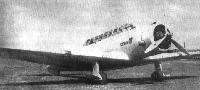
In the winter of 1941-1942 PS -43s participated in the Leningrad airlift.
By the spring of 1942, a high number of accidents and breakages began to be recorded, linked to the need to use pilots with little experience due to the start in front of those with more experience. In the second four-month period of that year, eight accidents occurred in which one of the planes was totally destroyed.
By May 1, 1942, three PS-43 were registered with the Kiev aviation group, 13 with the OAGS and another copy was in Grosny where it had landed after the evacuation of Ukraine, being used by the flight school of the VVS. This last example was reintegrated into the Caucasus-North group of the GVF, but on October 24, 1942, during a landing in Sochi, it was attacked by two Messerschmitt Bf-109, falling into the sea and killing the pilot Nikonov and his passenger.
In 1942, all the PS-43 aircraft in service had their original North American shock absorbers replaced by the other Soviet-produced hydro-pneumatic ones, at the same time an antifreeze mixture began to be used for the landing gear retraction mechanism, since the oil used tended to condense at temperatures below 15ºC, which made it necessary to fly in winter with the gear extended.
At the end of 1942 the OAGS was converted into the 3rd Liaison Division. During the Battle of Stalingrad they were used as liaison and mail transport planes, unloading in Astrakhan from where the delivery continued with Polikarpov R-5s.
The number of PS-43s in the division gradually decreased, mainly due to enemy attacks and accidents.
By January 1, 1943, 14 PS-43s were available and by December of that year the number was 12: on March 12, the pilot Yegupov, flying at low speed, became entangled with the cables of a ship’s mast, dying along with its passenger and on April 29 another PS-43 was attacked by a Messerschmitt during takeoff from Krasnodar.
The plane caught fire, both its pilot VI Timofeyev and its mechanic were hospitalized with severe burns. However, it is fair to note that due to its all-metal construction, the PS-43 aircraft were quite resistant and could receive a high level of damage.
By July 1, 1944, only nine examples of the PS-43 were in service and by the end of the year only eight. Three examples in January 1945 were based in Lvov being used in mail transfer roles for the 1st Ukrainian Front and the 1st Belorussian Front. Two others were located in Minsk and Kaunas, working with the 1st Pribaltic Front and the 2nd and 3rd Belorussian Fronts.
At the beginning of 1945, Douglas A-20 and North American B-25 aircraft received through the Lend-Lease Act began to enter the 3rd Liaison Division. This made it possible to begin deregistering the oldest PS-43. By the month of September, not a single copy of the PS-43 was operational in the USSR.
BSh-1
Power plant: 1 x М-62ИР. 1000 nominal power and 840 hp at height.
Wingspan: 15.25 m
Wing area: 35.07 m²
Length: 11.40m
Height: 3.05m
Empty weight: 2911 kg
Normal takeoff weight: 4056 kg
Maximum speed at sea level: 318 km/h
Maximum speed at altitude: 339 km/h
Practical range: 1700 km
ROC: 435 m/min
Practical ceiling: 7200 m
Accommodation: 2 – 3
Armament: 4 x 7.62-mm ShKAS machine guns, 3600 rounds, MV-3 turret above and MV-2 below.
Bombload: 400 kg
PS-43
Power plant: 1 x М-62ИР. 1000 nominal power and 840 hp at height.
Wingspan: 15.25 m
Wing area: 35.07 m²
Length: 11.40m
Height: 3.05m
Empty weight: 2911 kg
Normal takeoff weight: 4056 kg
Maximum speed at sea level: 318 km/h
Maximum speed at altitude: 339 km/h
Practical range: 1700 km
ROC: 435 m/min
Practical ceiling: 7200 m
Accommodation: 2 – 3
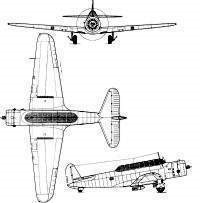
Kochergin DI-7
A development of the DI-6, the DI 7 with 1000 hp M 62, did not enter production.
Kochergin DI-6 / TsKB-11 / TsKB-38
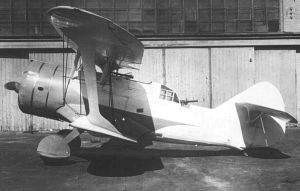
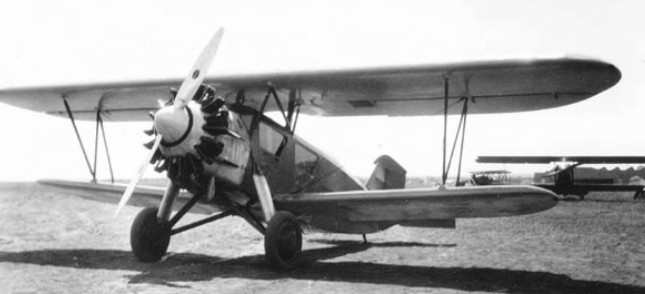
The DI-6 fighter (originally TsKB-11 (Russian: Кочеригин, Яценко ДИ-6)) was a development in 1934 by Kochierigin at the “ Aviorabotnik ” factory. The construction of the DI-6 was commissioned to the aeronautical engineer VP Yatsenko. The new fighter was projected in two main variants: two-seater fighter and attack aircraft. The DI-6 was the first fighter in the world to use a retractable landing gear with shock absorbers located on the main wheel discs.
The fighter’s armament consisted of two 7.62-mm (0.30-in) ShKAS machine guns under the wings and another in a ring in the gunner’s cabin, all with 750 rounds. In the attack version, the gunner’s 7.62-mm (0.30-in) ShKAS machine gun was maintained and four PV-1s were added with a total of 3,000 shots (which could reach 4,000 when the plane was overloaded). In the attack aircraft version, in addition to the four underwing mounts, a weapons bay was provided in the fuselage capable of carrying four 10 kg aviation bombs and the ability to locate two VAP chemical weapons containers under the wings. Underwing racks carried four 12-kg (26-lb) bombs.
The selected powerplant was the Yakovlev M-32 water-cooled V-engine, rated at 600 hp at 5000 meters. Six engines of this type had been produced on an experimental basis between 1932 and 1934, with a total of 1,200 hours of work on test benches, presenting so many difficulties that further development was cancelled. This led to major modifications to the fighter’s plans and mockup, to accommodate a 625-hp Wright Cyclone R-1820F-3 engine.
The wing structure was made up of two midplanes (upper and lower) and two pairs of wings joined by X-shaped studs. Both the upper and lower wings had a double spar structure made of wood with a fabric covering. The upper flange was built to the Clarke UN profile with a relative thickness of 10%. The ailerons with a duralumin structure and textile covering were located only on the upper wing. Two 76-liter fuel tanks were located in the center of the upper wing, which were characterized by their tendency to leak due to the poor quality of their finish. The thickness of the upper centerplane tended to decrease towards its center, being fixed to the fuselage by means of two N-shaped uprights made of chrome-molybdenum tubes.
The fuselage was built of chrome-molybdenum tubes. The fuselage frame was welded to the engine base and lower centerplane. The front cover was made of aluminum sheets. In the back, the covering was made of fabric. The tail was monoplane and of the conventional type. Both the rudder and the elevator were made of duralumin and covered with fabric. The empennage was built in its lower metal part, in the area where the stabilizers were fixed. The upper part featured a duralumin structure and a fabric covering.
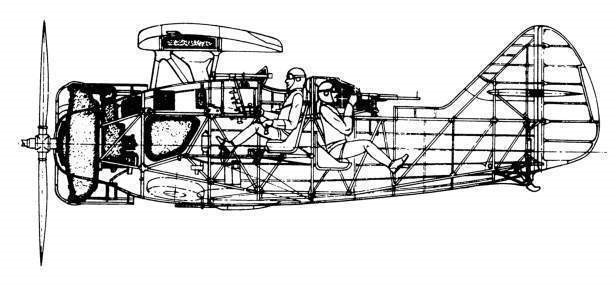
The retractable landing gear featured 750х125mm main wheels with brakes and an internal hydropneumatic damping system. The retraction was carried out by means of a pneumatic system with compressed air and there was a mechanical system for emergencies. The tail skid was fixed and had hydro-pneumatic shock absorption.
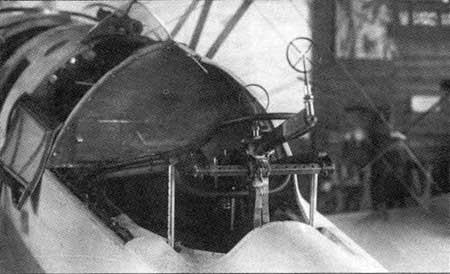
The cockpit was of the open type with a tempered glass windshield. The pilot’s seat was adjustable to accommodate his height. To improve the pilot’s field of vision to the rear, the gunner’s cabin was located at a lower level. This cabin was closed on three sides with transparent celluloid panels and featured glass windows on each side. The shooter had two seats: the main one, facing away from the pilot and used to operate the ShKAS machine gun, and an additional one that folded towards the right wall of the fuselage. The gunner’s cabin windshield was made up of two panels that had to be released in case of emergencies to allow the gunner to leave the aircraft.
In September 1934 the first experimental prototype TsKB-11, with its wings painted red, was delivered to the NII VVS for state testing. IF Petrov was appointed as main test pilot and Vinogradov as gunner. For Factory No. 39, test pilot Yu participated in the tests. I. Piontkovsky and the head of the experimental flight station N. Nikolayev. The first flight was carried out by the NII VVS AI Fili on September 30 and the second flight was only possible in December. During this time, the plane’s engine was replaced, the angle of the stabilizers was modified, and the landing gear retraction system was improved.
The retractable landing gear added some difficulties to the tests due to the lack of experience of the pilots with its handling. Thus, for example, on December 10, during a test flight, the main units could not be retracted due to an error by pilot Petrov in the sequence of the procedure. The following day, during the landing due to another problem, the plane was forced to land on its belly, resulting in slight damage. As a curious fact, the NII VVS sent an information to the Commissioner of heavy industry Sergo Ordzhonikidze, blaming the pilot IF Petrov for the failures. Petrov was called to clarify the facts, of which he made a detailed exposition. Upon returning to the institute, he was informed that by order of the commissioner and in gratitude for his conduct, he was given a new GAZ-1 car.
In the test results report, it was pointed out that due to engine problems in some flight regimes, there was vibration in the wings, especially on the left. The wing entered into resonance with the engine. During the takeoff roll, there was a tendency to lift the tail and the aircraft pulled to the left, which complicated takeoff during takeoff from unprepared aerodromes. The use of the reserve system for the extension of the landing gear demanded a lot of physical strength from the pilot. The lack of effectiveness of the ailerons made the plane tend to turn in flight. Another deficiency detected was that the pilot with his winter coat and parachute was unable to board or leave the device without help in an emergency. The gunner lacked communication with the pilot, which almost made it impossible at high altitudes or when the engine worked at high revolutions. Poor visibility from the cabin downwards and poor firing angle from the rear cabin were highlighted. In an emergency, the gunner did not find it any better than the pilot to leave the aircraft due to the narrowness of the access hatch and the need for great physical force to open the cover.
However, the conclusions were generally positive. The speed, the manoeuvrability and the absence of major defects, made it possible to suppose that the indicated problems could be solved in a short time, highlighting the great interest of the air forces in having an aircraft of its type. The report also pointed out the need to force the development of a second prototype with weapons and deliver it for testing, as well as prepare the conditions to build a small series. Factory No. 39 was asked, in parallel, to develop a single-seat escort fighter variant.
In relation to the landing gear and the wheels with internal cushioning, the report considered that the tests passed. Both the retraction and wheel scheme were recommended as a successful product. The NII VVS received the modified TsKB-11 in May 1935. On this occasion the testers of the aircraft were P. Ya. Fedrovi and VA Stiepanchonok. The tests culminated in November with results considered positive. Weapons were included in these tests, which also received a positive assessment. During these tests the pilots developed the tactical methods of using the new machine. In the surviving reports of the NII VVS several pages can be seen with schemes of variants to attack air targets and manoeuvres to defend against enemy attacks.
Among the deficiencies noted was again the lack of gunner firing angles that allowed the enemy aircraft to easily destroy its tail from the 6 o’clock position. The gunner’s position was awkward, adding to the fatigue. To retract the landing gear the pilot needed to perform 9 operations. Both the wings and the tail began to vibrate when the plane dived. There was a lack of communication between the pilot and the gunner and the difficulties faced by the latter in the event of having to abandon the aircraft in an emergency.
The conclusions of the NII VVS were presented to the head of the VVS RKKA Yákov I. Álksnis, who asked the head of the GUAP to order Factory No.39 in the shortest possible time to prepare one of the ten pre-series copies, which were already beginning to be released. assemble as DI-6M-25, for field tests with the elimination of all detected problems and the installation of an RI ZIET radio station.
In order to assess the ground attack capabilities of fighters, the USSR aeronautical development plans for 1934 called for the development of the following attack aircraft models:
LSh-1 – Based on the Polikarpov I-16M-22;
LSh-2 – Based on the Kochierigin/Yatsenko DI-6 (Russian: Кочеригин, Яценко ДИ-6Ш);
LSh-4 – Based on the Sukhoi I-4 and Polikarpov I-5 fighters;
LSh-5 – On the basis of the I-9, I-10 and I-11 fighter projects
The Kochierigin/Yatsenko DI-6Sh was also known as TsKB-38 because the prototype was developed at the Central Construction Bureau factory. Ground attack aircraft of 1935 developed on the basis of the DI-6 fighter by VP Yatsenko in the collective led by SA Kochierigin.
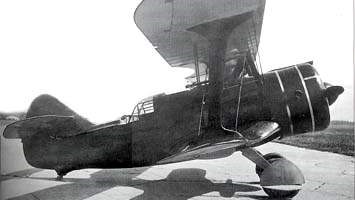
As a result of these plans, the TsKB-38 (DI-6Sh) two-seat fast attack aircraft was conceived, obtained from modifications to the DI-6 biplane fighter developed by Kochierigin.
On August 4, 1935, the S-96 request from the Labor and Defense Committee (STO) was received, which established the modification of the DI-6 as an attack aircraft with a maximum speed between 340 and 350 km/h at sea level and 390 -400 km/h at 3000 m, a landing speed between 90 and 95 km/h, radius of action of 400 – 500 km. Armament was to include six 7.62mm machine guns for attack, one machine gun for rear hemisphere defense, plus a bomb capacity of 80kg. According to this document, GUAP, through Factory No.39, had to develop the prototype in a period of 45 days, allowing it to be delivered without armament, in order to assess its installation once the tests were carried out. The GUAP was also requested industrial preparation for production at Factory No. 81 of the Di-6Sh from [1936].
The DI-6Sh was a development of the DI-6 and kept the same structure. Unlike the fighter version, armored protection was added to the pilot’s back and head and the configuration of the armament was modified, which came to consist of two PV-1 synchronized machine guns firing through the propeller, another four PV-1located under the lower wing at an angle of 12º7” towards the central axis of the aircraft and with 3,000 projectiles (4,000 in the overloaded version). There was also a weapons bay located under the pilot’s seat with a capacity for 40 kg of 8-10 kg bombs and the possibility of placing another 4 under the wings for a total of 80 kg. Two VAP-6 containers for chemical weapons could also be located on the underwing mounts.
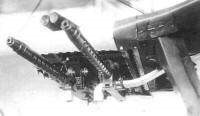
Defensive armament consisted of a 7.62mm ShKAS machine gun in the gunner’s position with 750 rounds.
With a flight weight of 2,115 kg, the DI-6Sh developed a speed of 305 km/h at sea level and 358 km/h at 3,000 meters. Climb time to 5,000 meters was 17.5 minutes.
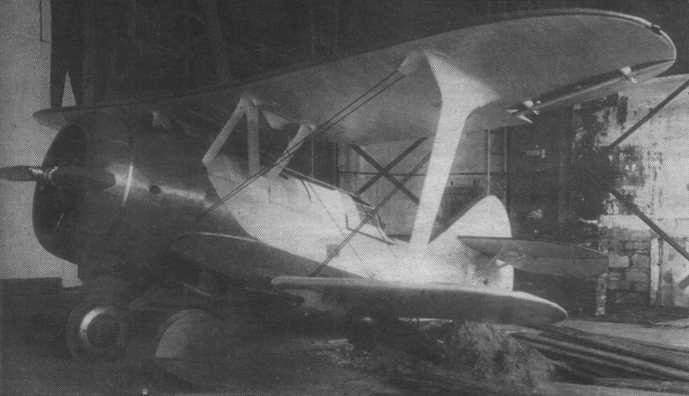
Between October 31 and November 19, 1935, the factory and range tests of the first example DI-6ShM-25 developed at the TsKB of Factory No.39, in the department directed by VP Yatsenko, were carried out.
The tests included only 10 flights. In eight of them the machine guns were tested and they worked without problems and in three bombardments with AO-8 aviation bombs were carried out and in two the spraying of chemical weapons from VAP-6 underwing containers was tested. The underwing machine guns worked properly. A range was prepared with wooden targets simulating soldiers and cavalry. Shooting in low flight, 80% of the models were hit, with more than 20% of the impacts concentrated in the groups of callery. The test was considered positive, noting that at flight heights greater than 17 meters, the pilot’s visibility towards the target decreases considerably. The tests of chemical weapons and the launching of bombs were also positive from the point of view of the work of the equipment.VVS, Yákov I. Álksnis, who decided to develop further armament tests of the DI-6Sh model with the participation of experienced pilots brought from operational units.
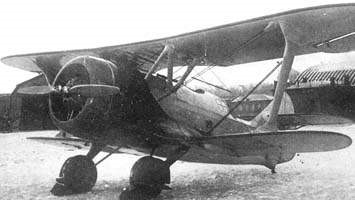
The tests showed that the model was not ready to act as an attack aircraft, not because of problems with the plane, but due to the inability of its configuration. During an approach flight to the target, the pilot’s attention was focused on controlling the aircraft and the gunner, on the other hand, he could not help at all due to his position, with his back turned. The pilot lacked the possibility of orienting himself using a map to reach the objective. The bomb load, located under the pilot’s cabin, meant an additional task for him and was ineffective because the pilot was unable to take aim as the target was covered by the body of the plane. All these reasons led to the loss of the main characteristic of an attack aircraft: the concentration on the ground objective. On the other hand, the range of the model, the number of bombs and their weight made the model useless as an attack aircraft. The long takeoff and landing run made it difficult to operate from battlefields.

On the other hand, the pilots complained that the quantity and caliber of the bombs did not meet the operational needs of the plane. Controlling the aircraft in low-altitude flight became difficult because the aircraft began to vibrate and it was necessary to exert great force on the joystick.
Despite the difficulties, the DI-6Sh was accepted for series production and 61 examples were produced at Factory No. 1 from the end of 1936.
In the summer of 1938, dive bombing regimes with angles between 40 and 90º were tested on the DI-6Sh. As a result of the tests, the recommendations for this type of action were created, establishing a height at the beginning of the dive of no less than 2,500 meters. The dives showed that the aircraft could react to them favorably and the tail vibrations that characterized the model did not occur during the descent.
The deficiencies of the model as an attack aircraft made the decision to use it for training missions for the first stage of preparing the pilots for bombing and diving tasks. The lack of capacity to load bombs and the low caliber made its use as an attack aircraft in combat conditions impractical. For this reason, most of the DI-6Sh ended up in bombing training units.
Despite the country’s efforts, the attack aircraft of the Red Army arrived at the end of the 30s in a state of crisis. Although 12 attack regiments were registered by this time, the inspection carried out in the attack units in the first half of 1938 showed that the level of operation was really low. The diversity of models and the lack of technical availability characterized the attack structures. Of the 561 aircraft of this type there were 200 Polikarpov R-5 units, 62 Polikarpov R-5Sh units, 174 Polikarpov R-5SSS units, 60 Kocherigin/Yatsenko DI-6Sh units, 31 Tupolev R-6 units and 14 Tupolev SB.
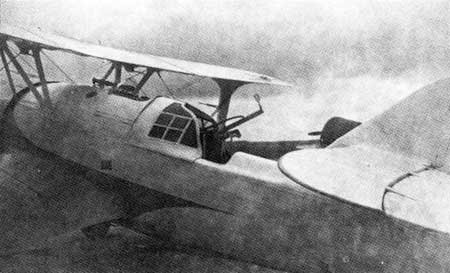
Along with the DI-6Sh, Factory No. 39 delivered in February 1936 two pre-series DI-6M-25 (also sometimes named DI-6I highlighting its use as a fighter) for the development of tests under conditions of Campaign. These tests were led by the NII VVS airfield commander, Major Spirin and included in the brigade were weapons engineer Ssorin and test pilot AI Nikashin. The first tests of the DI-6 were carried out in February with skis undercarriage. The tests of the two prototypes were carried out until April 10, when the snow began to melt and flights were no longer possible. These two with wheels participated in the festivities for May Day. At the end of May, at the NII VVS aerodrome, a third prototype joined the tests.
Field tests ended in June 1936. Mock combat between DI-6 and Polikarpov I-15, I-16 and R-5 reconnaissance aircraft took place. With respect to the R-5, the DI-6 was superior both in vertical and horizontal maneuvers. With respect to the fighters, the advantage of the DI-6 appeared during maneuvers through the vertical.
In June 1936 the first series DI-6 arrived at the NII VVS. Engineer AI Nikashin and test pilot E. Yu. Prieman made 33 flights on it over 28 days. After two years of development, it was not possible to significantly improve its performance. The addition of equipment and improvements based on test data brought about an 81 kg increase in weight. The maximum speed decreased by 16 km/h and the takeoff run had increased by 70%. Tail vibration when entering steep dives could not be fixed. The gunner’s firing angles still did not satisfy the VVS. The main problem was that they were practically the same as those that had been reported since the first tests in the NII VVS. It has been commented that many of the unresolved problems were due to Yatsenko’s difficult nature, which several of his colleagues branded as stubborn and as a person who did not like to give up. However, the DI-6 had already been approved for serial production, so Yákov I. Álksnis was forced to request GUAP to correct all the defects indicated in the aircraft that were already being produced at Factory No.81 as a condition to receive them at the VVS.
In 1937 the series DI-6 began to arrive in units. Meanwhile at the NII VVS work continued to try to improve the airplane. For the month of June, the series DI-6M-25s produced at Factory No.81 began to arrive. These copies had even bigger problems, including some already corrected during development.
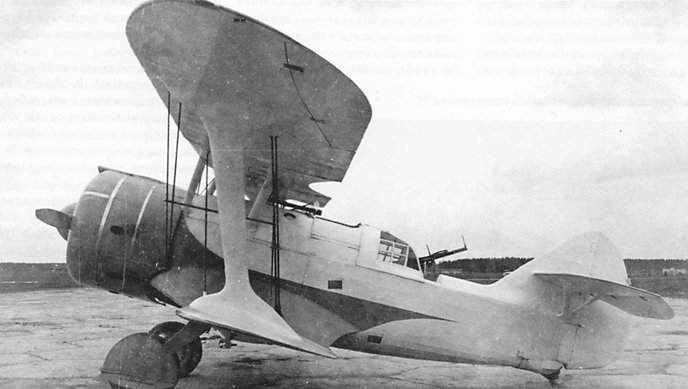
In the fall of 1937 test pilot Nikashin began testing a further improvement of the DI-6M-25 built at Factory No. 81. It differed by presenting an “Eklips” (“Эклипс”) electrical system for starting the engine, made up of an accumulator and a DFS-500 (ДФС-500) generator; a radio system SPU-2 (СПУ-2); improved fuel system with welded tanks; oil cooler of new type and new wheels on the landing gear. The fixing of the protective panels in the gunner’s cabin was modified. In emergencies both panels would come loose. The engine hood was also improved and a new 2.8 meter diameter propeller was added. Another important improvement was introduced in the firing angle of the gunner. All this new equipment increased the weight of the device to 2033 kg, which meant an increase of 159 kg with respect to the TsKB-11, and 80 kg in relation to the first series aircraft of Factory No. 81.
In December 1937 the test pilot Nikashin and his assistant Sokolov completed the state tests of the improved version DI-6M-25B (No. 81024), which differed mainly in the new M-25B engine.of 775 hp, the location of the tailplanes in a lower position, the increase in the area of the ailerons by 0.25 sq.m, the addition of an audible signal for landing gear deployment and retraction. Control of the wheel brakes was transferred to the joystick. The wing machine gun feed system was modified from a Factory No. 81 proposal. The tail modifications significantly decreased vibrations and the tendency to lift the tail on takeoff. Brakes on the lever turned out to be more comfortable than on the pedals. Despite the increase in weight coupled with these modifications, the sec benefits were quite close to those of the first prototype. Despite being slightly inferior in manoeuvrability, the DI-6M-25Bit featured the same horizontal speed as the Polikarpov I-15bis.
In January 1938 the latest version of the DI-6 was tested, the DI-6bis (Airplane “21”). This model was powered by an M-62 engine with a variable pitch propeller. When the prototype was finished at Factory No. 81, the engine was not yet ready, so an M-25B with a constant-pitch propeller and 2.8 m diameter was installed. Unlike previous models the DI-6bis featured fixed landing gear, a single cover oved the pilot and gunner cabins, the controversial tank located in the upper center plane was eliminated and the capacity of the wing tanks was increased, the machine guns were located on the wing and the boxes with the ammunition under the bottom plane. The support of the gunner’s weapon, the brake system (which returned to pedal control) was also modified. The lower wing was fitted with flaps.
During the tests, a decrease in the maximum speed at sea level of 16 km/h and at 3000 meters of 29 km/h was verified. Rate of climb and manoeuvrability were practically unchanged. A set of characteristics if considerably improved: improved take-off, the tendency to turn to the left during the take-off roll disappeared. Landing with the flaps became more complex. The angle of fire of the gunner was improved, which featured a new KTP-5 sight. In the conclusions of the tests it was reflected that the “21” Aircraft, even with the M-62 engine, was not in a condition to compete with the new two-seater fighters, therefore its use as a trainer or scouting aircraft was recommended. Factory No. 81 was requested to make changes to the second cockpit to adapt the aircraft to these new roles. The second prototype with these changes was never completed due to lack of supply of the M-62 engine. In total, 222 examples were built.
The first three series examples tested in the NII VVS, together with seven others, were framed from October 1936 in the 56th fighter brigade of the Kiev district.
The operational career of the DI-6 was not very long. In the second half of 1939 it began to be withdrawn from fighter units, being replaced by the Polikarpov I-15bis. In that year the few copies that remained in operation in the units of the Kiev district were assigned to reconnaissance tasks in two squadrons. Most of the other examples in service were used solely as attack aircraft, but with a capacity of only 40 kg, even in this role it could not be considered effective. In the fall of 1939 the 56th Assault Regiment of the 52nd Aviation Brigade from Omsk, in the Siberian District, which maintained 63 DI-6Sh aircraft (of which 8 were out of service) began to operate the Tupolev SB bomber.
Of the 173 DI-6 planes that were in service on January 1, 1940, it was planned to maintain 39 planes in two squadrons, deliver 99 to training centers and withdraw 35. The copies used in the training center were generally used as study material. No evidence of its use in flight has been found. Claims that DI-6 fighters participated in the Battle of Jaljim Gol or the Finnish War are considered unfounded.
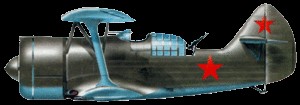
Despite the myriad of problems described along these lines, it’s not fair to characterize the DI-6 as a bad plane. During all the time it was operated, there was never a catastrophe and due to the number of problems reported and small breaks, it did not stand out as a leader in its time either.
A replica of the DI-6 is displayed at the Museum of the Great Patriotic War in Moscow.
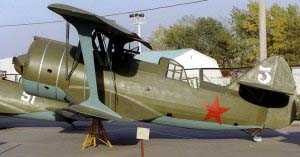
TsKB-11
Initial designation of the prototype.
DI-6M-25
Main production version as a fighter.
Engine: 1 x 700 hp Shvietsov М-25
Upper wingspan: 9.94 m
Lower wingspan: 7.43 m
Wing area: 25.16 m²
Length: 6.87m
Height: 3.20m
Empty weight: 1360 kg
Loaded weight: 1,955 kg
Normal takeoff weight: 2033 m
Wing loading: 78 kg/m²
Maximum speed at sea level: 324 km/h
Maximum speed at altitude: 372 km/h
Cruising speed: 313 km/h
ROC: 611 m/min
Time to 5000 m: 10 minutes
Practical range: 550 km
Practical ceiling: 7700 m
Armament: Three 7.62mm ShKAS machine guns / 750 rounds each.
Bomb load: 40 kg
Accommodation: 2
DI-6M-25B
Improved version of 1937, lowered tailplanes, increased wing area.
Engine: 775 hp M-25B
DI-6Sh (TsKB-11Sh, TsKB-38)
Attack version with four PV-1 machine guns located under the wings.
Engine: 1 x 700 hp Schvietsov М-25
Upper wingspan: 9.94 m
Lower wingspan: 7.43 m
Wing área: 25.16 m²
Length: 6.87m
Height: 3.20m
Empty weight: 1434 kg
Loaded weight: 2155 kg
Normal take-off weight: 2033 m
Wing loading : 78 kg/m²
Maximum speed at altitude: 358 km/h
Cruising speed: 312 km/h
ROC: 611 m/min
Time to 5000 m: 10 minutes
Practical range: 500 km
Practical ceiling: 7200 m
Accommodation: 2 crew members (pilot and gunner)
Armament: 7 x PV-1 machine guns
Bombload: 80 kg
DI-6bis (Aircraft “21”)
Fixed landing gear. Designed for M-62 engine, tested with the M-25B. Just a prototype.
DI-6MMSh
A prototype with an M-300 engine. Its acronym stands for Small Attacker Modification (малая модификация штурмовика). It was not produced.
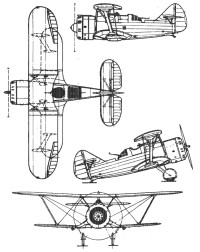
Kochergin
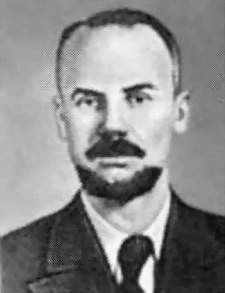
Sergei Alexeyevich Kochierigin (Russian: Сергей Александрович Кочеригин) was born in 1893. In 1912 he entered the Peterburg Technological Institute. In 1917 he completed the theoretical aviation course at the Petrograd Polytechnic Institute and became a military pilot. He began his work at the Shipbuilding Bureau and later went on to work as an instructor at the Naval Aviation School. At the end of the Civil War he continued his studies at the Zhukovski Military Aviation Academy.
He began his work in 1926 in the Nikolai Polikarpov collective. After his arrest in 1929 he went on to direct his KB From him. As a result of the new organization of Soviet aircraft production, the KB was transferred to the “Aviorabotnik” factory named after Menzhinski. In 1933 he became head of the TsKB brigade at this factory.
In 1937 he directed the production under license of the Vultee V-11 and from 1939 he was appointed builder of the OBK-156, attached to the Factory of the same name.
Since 1938 his work group has developed more than 20 projects, mainly fighters, assault planes and light bombers. Although some were relatively successful, most of their designs did not make it past the drawing board, which was mainly due to the fact that, unlike other OKBs of the time, their construction bureau lacked a productive base. Due to the fact that its bureau was integrated within the TsKB, most of its creations present the numbering of the TsKB in parallel with its initials.
The Kochierigin construction bureau was dissolved in 1942. From that date he became the general editor of the NKAP Scientific and Technical Bureau publication.
He died in Moscow in 1958.
Knoll-Brayton Sachem
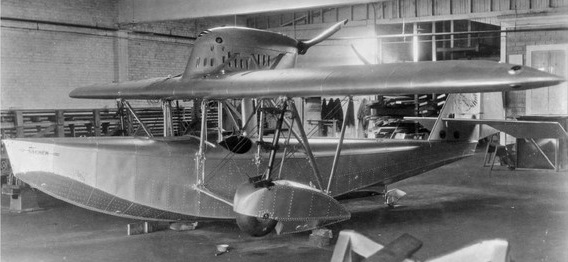
Designed by Felix Knoll and built by Brayton Aeronautical Corp, the Sachem appeared in 1931 as a three place, parasol wing amphibian powered by a 160 hp Menasco B-6 pusher enclosed in a streamlined nacelle. The single step hull was all metal while wings and tail surfaces were fabric covered. Strut mounted sponsons also contained retractable landing gear.
The pontons proved to offer too much resistance in the water and limited speed sufficiently to prevent lift-off from water. Although the craft was equipped to take off and land on the ground, attempts were to wait until water laft-off was achieved.
The Sachem was entered into Govt. competition won by Grumman. Destroyed in New Bedford Ma. 1938 Hurricane
Knoll-Brayton Aeronautical Co
The Knoll-Brayton Aeronautical Co of Norwich, Connecticut, leased Fish Farm, north of Groton airport, and moved all its equipment from Norwich to establish its headquarters there.
Circa 1939s airplsane builder
Knoll KN-3
The KN-2 and KN-3 models shared the common airframe of the KN-1, though they were upgraded with more powerful 300 and 425 horsepower engines. The KN-3 also had an open-place cockpit in back of the cabin, allowing the seating of one additional passenger inside.
On was built in 1929, registered X9950, powered by a 425 hp Pratt and Whitney R-1340.
On June 12, 1929, test-pilot Russell Dick flying the Knoll KN-3, beat the US Army’s Lieutenant Walker piloting a Thomas-Morse pursuit plane in a race performing at the Wichita Air Show. On June 21 he performed again at the Aerial Wedding of Kansas, Oklahoma, Missouri, and Texas. He did steep power dives from 3000 feet to 100 feet, thrilling the crowds and demonstrating the strength of the airframe.
KN-3
Engine: 1 × Pratt and Whitney R-1340-9, 425 hp (317 kW)
Wingspan: 33 ft 6 in (10.21 m)
Wing area: 264 sq.ft (24.5 sq.m)
Length: 24 ft 3 in (7.39 m)
Empty weight: 2,100 lb (953 kg)
Gross weight: 4,000 lb (1,814 kg)
Range: 800 miles (1,287 km)
Maximum speed: 175 mph (282 km/h)
Service ceiling: 18,000 ft (5,486 m)
Rate of climb: 1,200 ft/min (6.1 m/s)
Crew: One pilot
Capacity: 4 passengers

