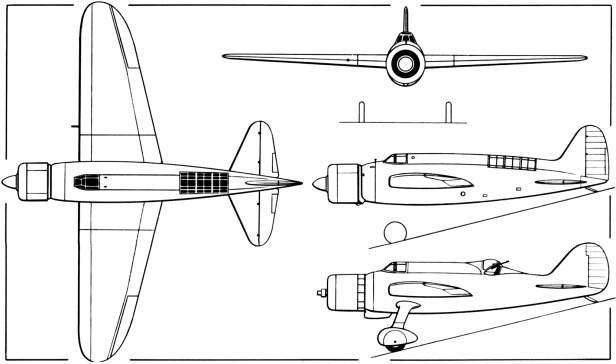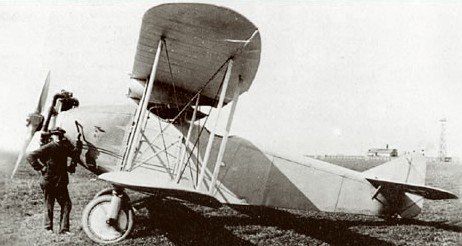
Passenger plane for two passengers, 1923
Passenger plane for two passengers, 1923
Frederick (Frits) Koolhoven (11 January 1886 – 1 July 1946) was an aircraft designer in Britain and his native Netherlands. Koolhoven was born in Bloemendaal, Netherlands. After training as an engineer in Liège and Antwerp, he worked from 1907 as a mechanical engineer for Minerva in Antwerp, and also drove in races and rallies for them. He became interested in aviation. In 1910 he acquiried his own Hanriot aircraft, and was involved in the construction of the first Dutch plane the “Heidevogel”.
He designed many aircraft, initially in England from 1912 for British Deperdussin, then from 1914 for Armstrong Whitworth Aircraft, then from 1917 as chief designer for the British Aerial Transport Company which went bankrupt in 1919.
He returned to the Netherlands, but there the market was dominated by Fokker, so he returned to his old job as an automobile engineer for the Spyker automobile factory.
In 1921, a group of businessmen founded the N.V. Nationale Vliegtuig Industrie (National Aircraft Industry, Inc.), and hired him as their chief designer. The company lasted only four years. As with BAT, N.V.I. turned out many technically advanced designs, which attracted attention from all over the world but virtually no orders.
At the demise of N.V.I. Koolhoven convinced several shareholders that the company would still have been viable if he had had complete control of the operations. So when N.V.I. was dissolved, its assets were taken over by a new company: N.V. Koolhoven vliegtuigen (Koolhoven aircraft, Inc) in 1934, by which time it was claimed that 51 F.K. types had been produced. More followed, including the F.K.52, an outstanding two-seat fighter biplane with cantilever undercarriage, and the F.K.58 single-seat fighter monoplane, ordered in quantity by France.
By 1933 however the military market picked up and Koolhoven increasingly built trainers and observation aircraft for the Dutch air force as well as for various other countries. By 1938, with a new war looming, its order books continued to fill as air forces from all over Europe were virtually fighting over each plane that rolled off the production line. Even France found itself buying Koolhoven FK-58 fighters as its own aircraft industry was unable to keep up with the demand from the Armée de l’Air.
In 1938, the Koolhoven factory at Waalhaven covered 8000 square meters and boasted 1200 employees. While still no match for Fokker, Koolhoven had established itself firmly as the number 2 manufacturer in the Netherlands.
The factory at Waalhaven was destroyed by German bombing in the Blitzkrieg on 10 May 1940 at the outbreak of World War II. More important, with the factory also disappeared all drawings, models, documents of Koolhoven’s projects. Even today, the only photographs remaining of Koolhoven’s planes are newspaper clippings and private snapshots.
Frederick Koolhoven was convinced that the bombing had everything to do with his contribution as an aircraft designer in England during World War I. For unknown reasons he became a very inactive member of the NSB. After the war he was captured by the Dutch police because of this membership but he was released several days later. Frederick Koolhoven died of a stroke at Haarlem in 1946.
Apart from the Heidevogel of 1911, Koolhoven designed 59 aircraft, which he consecutively numbered FK-1 to FK-59. About half of this were design studies that were never built. Koolhoven designed projects FK-1 to FK-28 in England for Armstrong Whitworth and BAT.
His company, although without means of production, continued to exist as a holding. Over the next 10 years various attempts were made to start up new projects, but apart of the construction of two prototype sailplanes nothing happened and in 1956 N.V. Koolhoven Aeroplanes was finally closed and liquidated.
Apart from the Heidevogel of 1911, Koolhoven designed 59 aircraft, which he consecutively numbered FK-1 to FK-59. About half of this were design studies that were never built. Koolhoven designed projects FK-1 to FK-28 in England for Armstrong Whitworth and BAT, projects FK-29 to FK-34 for N.V.I. and projects FK-35 to FK-59 for his own company. The first ‘true’ Koolhoven airplane therefore would have been the FK-35. However on formation of the N.V. Koolhoven, Frits Koolhoven took with him the design of the FK-30 “Toerist” light sportsplane original designed for NVI, but not built. Several “Toerists” built by the new FK Koolhoven therefore constitute the earliest airplanes of that company, if not by production date, then at least by numbering.
The Koolhoven foundation lists 26 Koolhoven designs, starting with the F.K.30 and then going from F.K.35 to F.K.59. It however also notes that the designs F.K.37, 38, 39 and 59 were never built, while only giving pictures of wooden models for the designs F.K.35 and F.K.36. Jane’s Encyclopedia of Aviation only lists the Koolhoven designs F.K.40, 41, 42, 43, 46, 48, 49, 51, 52, 53 and 58 but mentions a F.K.50-b bomber project, which the Koolhoven foundation site doesn’t.
The best-known amongst those designs are the F.K.41 high-wing monoplane, which was built in license as the Desoutter Mk.II and the F.K.50 twin engine transport monoplane, two of which were used by the Swiss aircraft company alpar. Amongst the military designs, the most successful were the Koolhoven F.K.51 biplane reconnaissance aircraft, which saw service in extensive numbers in the Dutch air force from the mid-Thirties until the Second World War, the Koolhoven F.K.52 biplane which was used by the Finnish Air Force and the Koolhoven F.K.58 single-seat monoplane fighter. The latter was the plane ordered by France and flew in the Armée de l’Air during the Battle of France
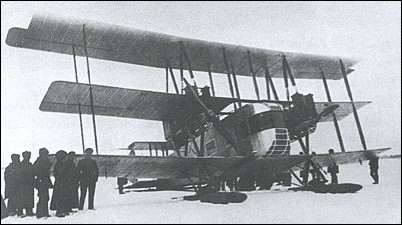
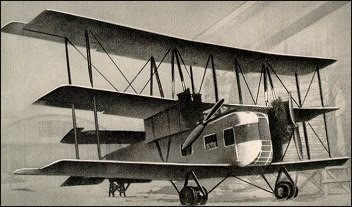
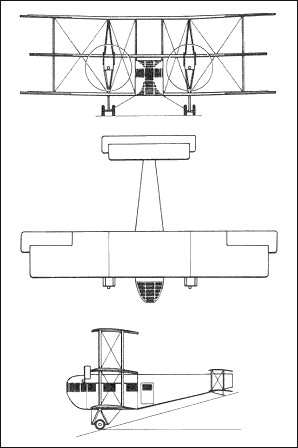
The Komta was not only the name of the aeroplane but also the name of the organisation set up to build it in the first place, under the chairmanship of Zhukovskii he of the ANT, Central Aero and Hydronamic Institute. The name comes from the “KOMissia po Tiazholot Aviatsii or the Commission for a Heavy Aircraft. The plane did not take to the air until late 1923 and by 1924 it had just about had it with the engines worn out. By this time Zhukovskii’s protogee, A.N.Tupolev, had taken over the design of large aircraft at the institute and so the Komta was no more.
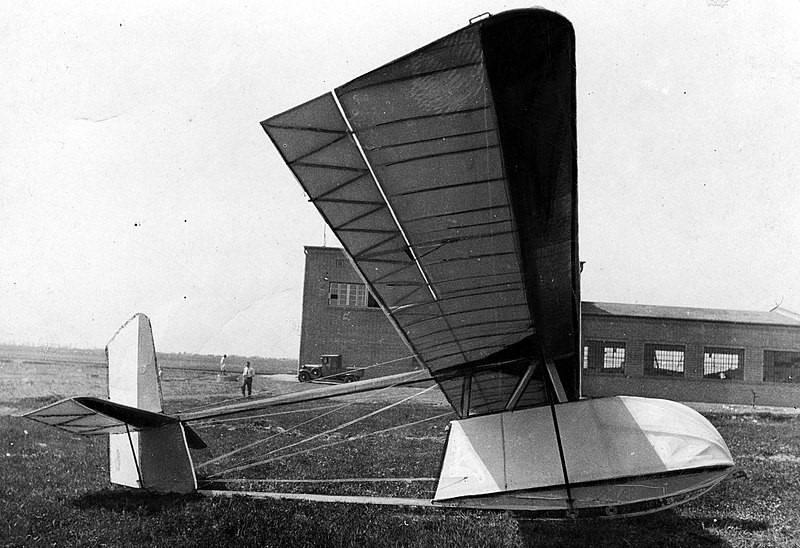
Antoni Kocjan designed the Czajka (transl. Lapwing) secondary training glider in 1931 at Aviation Section workshops of Mechanic Students’ Club of Warsaw University of Technology (KMSPW) at Okęcie near Warsaw. It was intended to provide flight experience at a level between those of the low performing but easy to fly basic trainers and of the high performance cross-country sailplanes.
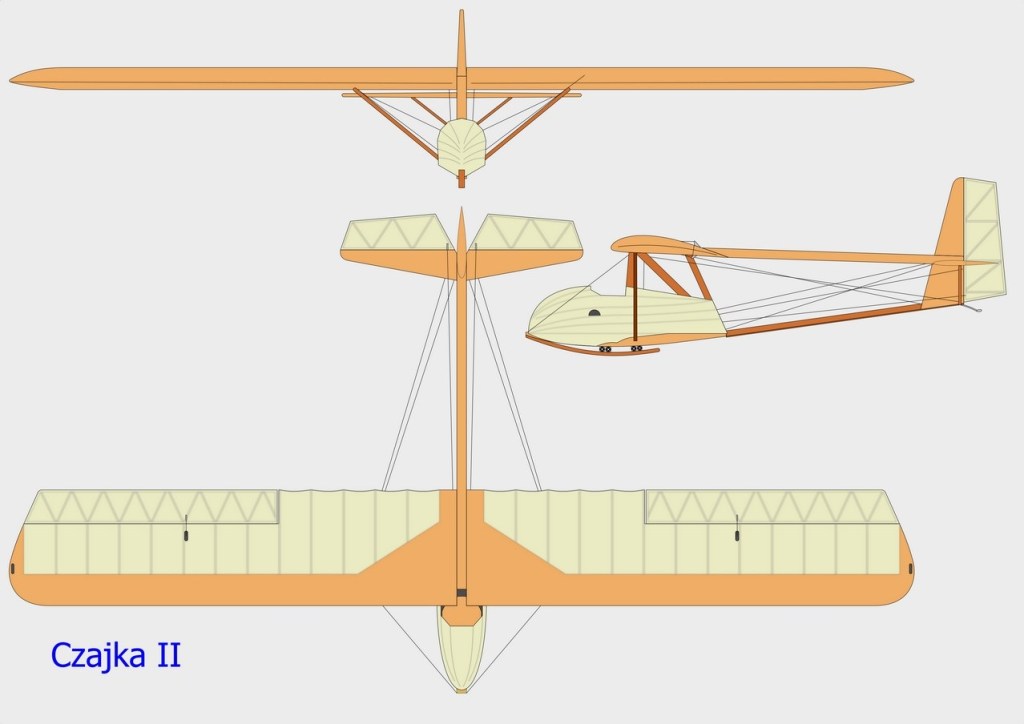
The Czajka was a single-seat, high wing, open frame (uncovered flat girder fuselage} glider. The two-part wing was rectangular in plan apart from blunted, angled tips. Each part was built around a single spar placed well forward, with plywood covering around the leading edge, forming a D-box, and forward of an angled internal drag strut which ran back from the spar to the upper fuselage longeron near the trailing edge. Behind the spar and drag strut the wing was fabric covered. It was mounted on the upper longeron, with a longitudinal N-strut to the lower longeron from the spar and drag strut, and braced on each side with a single, short steel-tube from the lower longeron to the spar at about 25% span. Trapezoidal, largely constant-chord ailerons occupied more than half the span.
The fuselage was extremely simple, with two longerons gently converging rearwards and vertically joined by the forward N-strut, the rudder post and wire bracing from the upper and lower wing spar bracing points. There were four major Czajka variants, which mostly differed in improved accommodation for the pilot. The first prototype, the first Czajka I, had a totally exposed seat on the lower longeron, its back attached to the forward member of the N-strut. On the second prototype, the first Czajka II, the seat was enclosed in a simple, removable fabric-covered nacelle which tapered in plan back to the rear N-strut member. The last prototype, the Czajka III, had a 350 mm (13.8 in) shorter fuselage as well as a span reduced by 1.89 m (6 ft 2 in) and reverted to the exposed seat. The later, 1936, Czajka bis had a ply-covered nacelle as well as a frame strengthened with an additional, vertical tube member at about mid-fuselage. Most produced variants were Czajka II and Czajka-bis.
The tail of the Czajka was conventional and unchanged between the variants. A narrow ply-covered triangular tailplane, mounted on top of the upper longeron and strut-braced to the lower longeron, carried fabric-covered elevators with a gap for rudder movement. The narrow fin was also triangular and, like the slightly tapered, nearly rectangular rudder, reached down to the lower longeron.
The Czajka landed on a rubber-sprung skid mounted on the lower longeron and a tailskid at the foot of the rudder post.
The three prototypes ordered by the government were built at Aviation Section workshops of Mechanic Students’ Club of Warsaw University of Technology (KMSPW) and the first flew on 31 April 1931.
In the summer of 1931, only a few months after the type’s first flight, the three Czajkas joined the Lwów students on their fifth annual gliding expedition to Bezmiechowa. During the year Czajkas set three new Polish duration records, the best lasting 12 min 50 sec, as well as setting the first Polish duration record flown by a woman. On 20 September 1932 one set a new national height gained record of 420 m (1,380 ft).
The Czajka contributed to the development of gliding in Poland in other ways. In April 1935 a Czajka II was used in the first winch-launching in the country. There were also international links: the distinguished glider pilot, Slovenian Boris Cijan gained his C certificate in a Czajka at Bezmiechowa and the type took part in some international events.
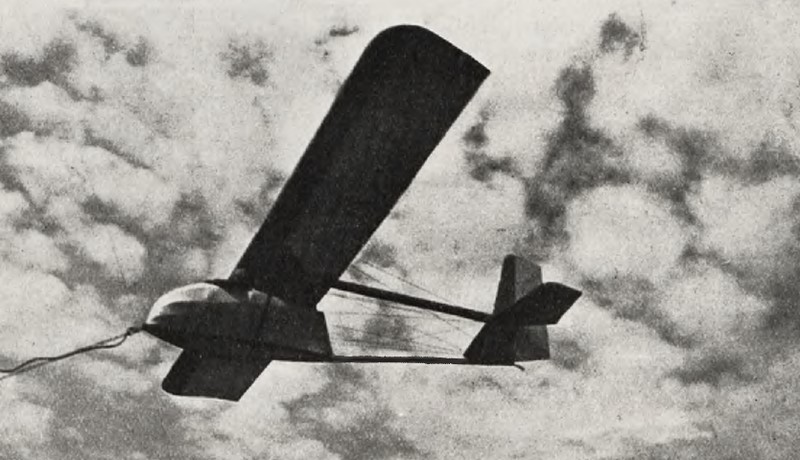
Eighteen Czajkas in total were built at Okęcie. In 1932, the workshops were separated as Warsztaty Szybowcowe (Glider Workshops) in Warsaw, which undertook further production. Orders for the Czajka came from the government, from LOPP and from individual gliding clubs and production, begun in 1931, only ended with the German invasion of Poland in September 1939. Several Polish factories built them as well as club workshops and there were uncompleted airframes at the time of the invasion, so the total number of completed Polish Czajkas, estimated at about 160, is uncertain. In addition, production licenses had been purchased in Bulgaria, Estonia, Palestine and Yugoslavia.
Variants
Czajka I
Exposed seat.
Czajka II
Canvas-covered nacelle.
Czajka III
Exposed seat, shorter fuselage and shorter span, lower aspect ratio wing which reduced its best glide angle.
Czajka bis
Ply nacelle and strengthened fuselage, flown in 1936.
Wingspan: 11.3 m (37 ft 1 in)
Wing area: 15.5 m2 (167 sq ft)
Length: 6 m (19 ft 8 in)
Aspect ratio: 8.2
Empty weight: 95 kg (209 lb)
Gross weight: 170 kg (375 lb)
Maximum speed: 169 km/h (105 mph, 91 kn)
Maximum glide ratio: 13.5 at 53.5 km/h (33.2 mph; 28.9 kn)
Rate of sink: 0.99 m/s (195 ft/min) minimum, at 45 km/h (28 mph; 24 kn)
Minimum speed: 39 km/h (24 mph; 21 kn)
Crew: One
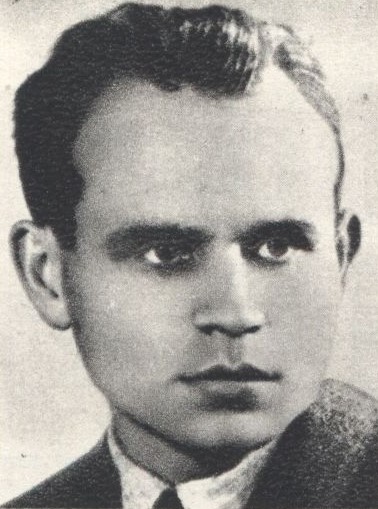
Antoni Kocjan was the son of Michal Kocjan and Franciszka Zurowska, born in the village of Skalskie near Olkusz, Poland, on 12 August 1902. He finished the Gymnasium of Casimir III in Olkusz in 1923 and served in the army during the Polish-Soviet war. Subsequently, he studied at the Warsaw University of Technology in the department of electrical engineering and aviation and at the Warsaw Agricultural University. He married Elizbieta Zanussi on 30 November 1939. During his studies he collaborated with the plane constructors of group RWD.
In 1929 he finished a pilot’s course and in 1930 won the second award at the Young Pilot’s Championship. Later he was part of crew in flights on the airplanes RWD-2 and RWD-7, which beat the world’s height record. In 1931 he obtained an engineer’s degree and began work at the Experimental Aviation Workshops in Warsaw. In the same year he constructed his first plane “Czajka”, a trainer glider that was later put into serialized production in several designs.
Kocjan became the head constructor of the Glider Workshops on the Mokotów Field in Warsaw in 1932. While there he designed the training glider “Wrona” and in 1933 the training-sport glider “Komar”. These three successful gliders and their improved versions, “Czajka-bis”, “Wrona-bis” and “Komar-bis”, became mass-produced in Poland and in lesser quantities under license abroad in Estonia, Finland, Yugoslavia, Bulgaria, and Palestine. In 1934 Kocjan designed a trainer glider “Sroka” that was also built in significant numbers. Subsequently, he designed the aerobatic glider “Sokol” and in 1936, together with Szczepan Frzeszczyk, the aerobatic glider “Mewa”. In 1937 he built his most known single-person aerobatic glider “Orlik”. The version “Orlik 3” took second place in the competition of standard gliders for the anticipated 1940 Summer Olympics. The version “Orlik 2” in the years 1948-49 was piloted by the American Paul MacCready on which he set the world’s height record for gliders of 9,600 metres (31,500 feet). In 1937 Kocjan also designed the motor glider “Bąk” of which ten units were built. The production of “Komar” was also renewed after the war.
In the first days of World War II, Kocjan was wounded by bomb shrapnel. After the defeat of Poland in 1939, he became a soldier of the underground ZWZ which later became the Home Army. On 19 September 1940 he was caught in a street raid and sent to Auschwitz concentration camp. However, he was released after ten months.
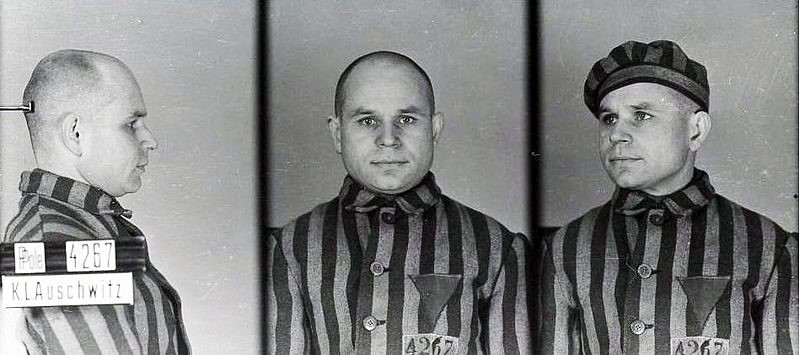
He was characterized by a large degree of daring in planning of actions of the Polish resistance, particularly in connection to the underground production of weapons. He made a significant contribution to the identification of Peenemünde as the testing site of the German Wunderwaffen and recovery of V-2 rocket engine and steering components into London.
On 2 June 1944, he was arrested together with his wife and imprisoned in the Pawiak prison. The Gestapo murdered him on 13 August in the last group of forty prisoners of Pawiak during the Warsaw Uprising.
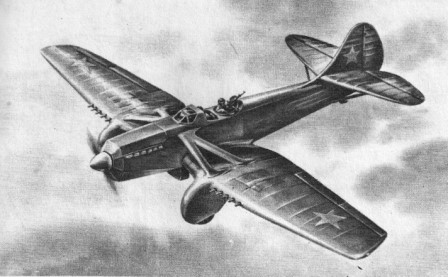
The Kochierigin/Gurievich TSh-3 (Russian: Кочеригин – Гуревич ТШ-3) attack aircraft was developed by S. A. Kochierigin and M. I. Gurievich between 1932 and 1934. It was also known as TsKB-4.
At the beginning of the 1930s, a line of aeronautical development was aimed at the creation of ground attack aircraft for the support of troops on the ground. It was considered that an essential component for this type of aircraft should be armor, capable of guaranteeing protection for the crew and the essential components and systems of the aircraft.
In 1932 a work group led by S. A. Kochierigin as head of the attack aircraft group of the TsKB and M. I. Gurievich, decided to work on the development of an armored attack aircraft, but starting from a monoplane conception with an M-34 750/750 engine of 830 horsepower.
The requirements of the VVS conceived a speed of 250 km/h and a ceiling of 4000 m. The aircraft was also to carry powerful weapons in different combinations.
By the end of 1933 the prototype could be ready. The name of the new model was TSh-3, an acronym for Heavy Attack Aircraft No.3 (ТШ-3 – Тяжелый Штурмовик – 3) and it corresponded to number 4 in the TsKB registry, which is why it is also known as TsKB -4.
Structurally it was a large-area (45.04 m²) low-wing monoplane with strong inverted-V bracing with fixed landing gear covered with “trousers” that blended into the centerplane.
The entire forward portion of the fuselage, including the power plant, cockpit and gunner’s cabin, was formed in the form of an integral armored trunk that was fixed to the duralumin structure. The armor was made up of slats attached by 6 mm screws to the aluminum corners of the structure. The thickness of the armor in the front part reached 8 mm, in the bottom, walls and rear – 6 mm, the top 5 mm. The engine in its upper part did not present armor. The total weight of the armor reached 576 kg.
The radiator was movable and they also featured 6mm armor on the bottom. During the attack it was collected towards the interior of the lower fuselage to avoid being damaged by impacts. In that position the air intake was through an armored inlet located under the propeller. A part of the heat was absorbed by the 106 kg of water in the cooling system, so the radiator was designed oversized.
The lower part of the fuselage was made up of a structure of welded steel tubes and covered with fabric. The tail section added less than 10% to the total weight of the aircraft, weighing only 55 kg.
The wings were constructed of fabric-coated duralumin and featured two-section trailing-edge ailerons that could be used as flaps.
The TSh-3’s armament was made up of two batteries, each with 5 ShKAS machine guns, located in the wings on both sides of the fuselage. In addition, the aircraft had three 250 kg bomb bays located between the wing spars designed to carry small incendiary bombs. Some supports integrated into the wing structure also allowed the fixing of containers for chemical weapons or aviation bombs. The total bomb capacity reached 400 kg. The defensive armament was integrated by a machine gun in the defensive position of the gunner.
The landing gear was of the conventional, fixed type, with a single wheel on each of the main landing gear and tail skid. The main landers were faired by “pants”.
Tests of the prototype were developed in the spring of 1934 by the test pilot V. K. Kokkinaki. Despite the heavy takeoff weight of 3,557 kg, the TSh-3 managed to reach 247 km/h, climbing up to 5,800 meters. These results exceeded the requirements received in 1932, but by 1934, when the tests ended, this speed was already considered quite low. The angular profiles of the armor did not allow thinking about improving aerodynamics and the cooling system did not work effectively, so the TSh-3 was not built in series.
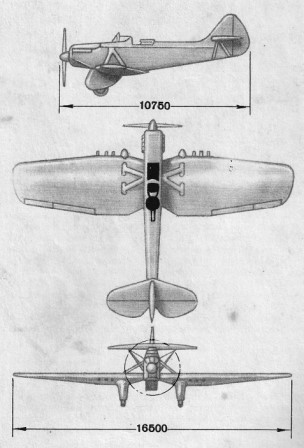
TSh-3 (TsKB-4)
Powerplant: One 750/830 hp M-34F
Wingspan: 16.50 m
Wing area: 45.04 m²
Length: 10.75 m
Empty weight: 2665 kg
Loaded weight: 3557 kg
Wing loading: 79.5 kg/m²
Power load: 4.7 kg/hp
Maximum speed at sea level: 247 km/h
Speed at 1000 m: 243 km/h
Landing speed: 95 km/h
Time to 3000 m: 10.7 min
Range: 470 km
Endurance: 2 h 30 min
Practical ceiling: 5800m
Armament: 11 ShKAS 7.62 mm machine guns
Bomb load: 400 kg
Accommodation: 2 crew
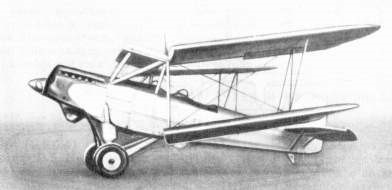
It was thought that an attack aircraft would be useful not only as a land aircraft, but that it could be used on board the Soviet aircraft carriers that were just beginning to be projected in the early 1930s. In particular, it was planned to convert the training ship “Konsomoliets” into an aircraft Carrier, for training with a crew of 26 fighters and 16 attack aircraft.
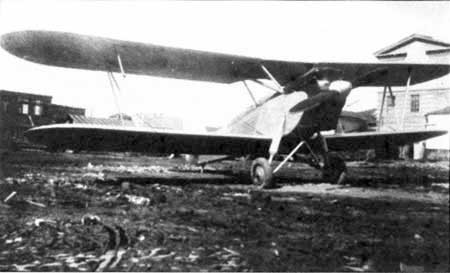
In parallel with the works on the Grigorovich TSh-2 and based on the LSh-1 attack aircraft, the ShON (Russian: ЦКБ ШОН) light two-seat attack aircraft was created. The initials of its name correspond to Attack Plane for Special Missions (ШОН – Ш турмовик О собого Н азначения) and number 23 corresponded to it in the TsKB production plan (TsKB-23). In its development, apart from SA Kochierigin and NN Polikarpov, DP Grigorovich participated.
A development of the Polikarpov R-5 the ShON was to be armed with a four PV-1 machine gun installation located in the lower part of the gunner’s cabin and capable of firing forwards, downwards and backwards, in addition to a capacity of 400 kg of bombs. The defensive armament was made up of a PV-1 machine gun to defend the rear hemisphere.
The aim was achieving a cheap and simple production aircraft. A feature of the design was the use of armor only on the underside of the engine and cockpit.
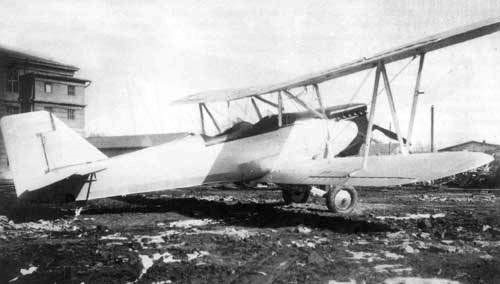
The motor mount was made of welded steel tubes and was fixed to the rest of the structure by means of four screws. The fuselage was made with welded carbon steel tubes and from the cabin to the end of the tail was covered with fabric.
The wings were designed in wood. Its structure included two stringers and had a textile covering. To facilitate the operation and the location of the ShON on the deck of the aircraft carrier, the wings were retracted to the rear. Modifications were made to the landing gear, which was reinforced to allow embarked operations.
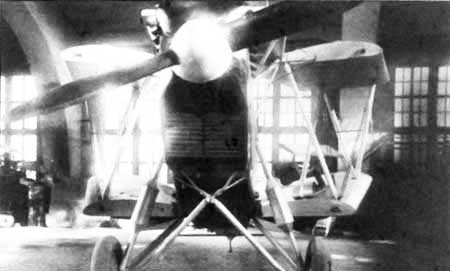
The prototype was built in 1931 and on April 1 of that year it was ready for testing, which lasted until the summer of 1932.
During the first test flights it was found that at an outside temperature of 21°C the water in the cooling system soon began to boil. For this reason it was decided to replace the cooling liquid with one based on alcohol-glycol. The oil temperature would also get quite high.
Despite the fact that the evaluations of the model were generally positive, the ShON did not go to the stage of serial production, since the need for this type of aircraft disappeared with the decision not to produce aircraft carriers.
ShON
Powerplant: 1 x 680 hp BMW-VI
Wingspan of upper plane: 14.20 m
Wingspan of lower plane: 13.00 m
Wing area: 36.52 m²
Length: 8.64m
Empty weight: 1820 kg
Normal takeoff weight: 2670 kg
Wing loading: 66 kg/m²
Power load: 6.4 kg/hp
Top speed: 226 km/h
Cruising speed: 194 km/h
Practical range: 500 km
Practical ceiling: 4000 m
Armament: Five 7.62 mm PV-1 machine guns
Bombload: 400 kg
Accommodation: 2 crew
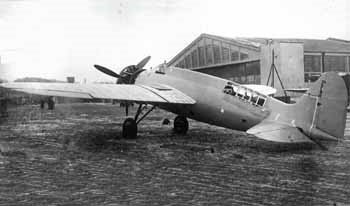
In the early 1930s both GUAP and the leadership of the VVS of the Red Army considered it necessary to replace the biplane reconnaissance aircraft in service with faster aircraft.
One of the first aircraft manufacturers to respond to the request was SA Kochierigin, who presented conceptual ideas for an experimental reconnaissance aircraft, which could be used as both a two-seater fighter and a light bomber.
The Kochierigin SR (TsKB-27) (Russian: Кочеригин СР (ЦКБ-27)) was assigned the 27th consecutive (TsKB-27) by the Central Construction Bureau and designated SR by the VVS, to highlight its role as a fast reconnaissance aircraft (СР – С коростной Р азведчик).
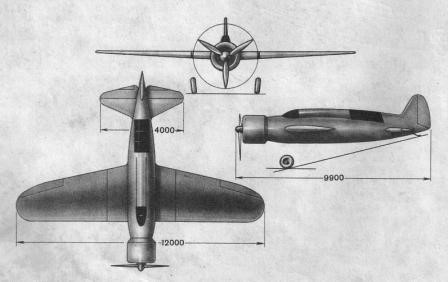
The new scout aircraft featured the classic monoplane layout of the time with a bomb bay between the spars of the centerplane. This distribution made it necessary to locate the gunner’s position well back in the fuselage.
The construction was of mixed construction, with a monocoque wooden fuselage and metal wings. The wings featured straight leading edge and trailing edge flaps for takeoff and landing operations. In order to ensure longitudinal balance, for the first time in the USSR uncontrolled stabilizers and trimmers were used on the elevators. Control surfaces were covered with tissue.
The landing gear, of the conventional type with a tailwheel, was retracted by means of a pneumatic retraction system.
The new model was designed around a 780 – 800 hp Gnome -Rhone Mistral Major 14Krsd air-cooled star engine, driving a three-blade, variable-pitch propeller, which had begun to be produced under license in the USSR by the Tumansky’s office under the designation M-85.
As armament the SR incorporated two 7.62 mm ShKAS machine guns without wing synchronization. The defensive armament consisted of a ShKAS machine gun mounted on a mobile mount. Normally the machine gun was in the cockpit and was only mounted on the mount if necessary. The internal hold had a capacity for 400 kg of bombs.
Compared to the Nieman JAI-VV (ХАИ-ВВ), the new SR presented an important advance from the aerodynamic, constructive and performance point of view. Another point of advantage was the use of the M-85 engine, which was lighter, more powerful and more reliable. The engine was covered by a much more aerodynamically effective NACA type hood than the Townend.
Three prototypes were built between 1935 and 1936.
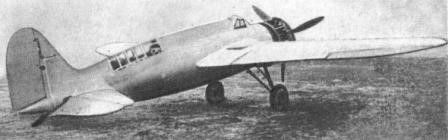
The first TsKB-27 prototype was delivered for testing at the NII VVS in the summer of 1935 and was noted for excellent speed results, reaching 460 km/h with gear up and 360 km/h with gear exposed. The ceiling reached 9000 meters.
Despite these results, the lack of completion and the complexity of the landing gear retraction system were reported. For the process of retraction and lowering, the pilot had to carry out 5-7 operations in order. On the other hand, when the retraction was carried out, the gear was not fully retracted, deforming the covering of the wings and the fuselage when forced. The work to solve these problems during the tests was not considered sufficient.
The manufacturer’s intention to achieve series production of the model at any cost led Kochierigin to make the decision to eliminate the retraction system and provide the model with a fixed gear, leading to the development of a new model that was renamed R -9 and that he ended up losing the contest with the Nieman R-10.
Variation: Kochierigin R -9
SR (TsKB-27)
Power plant: 1 x 780 hp M-85
Wingspan: 12.00 m
Wing area: 24.15 m²
Length: 9.90m
Height: 3.20m
Empty weight: 1862 kg
Normal takeoff weight: 2649 kg
Maximum speed: 460 km/h
Cruising speed: 380 km/h
Practical range: 840 km
ROC: 633 m/min
Practical ceiling: 9000 m
Armament: 3 x 7.62mm ShKAS machine guns
Bombload: 400 kg
Accommodation: 2 crew (pilot and gunner)
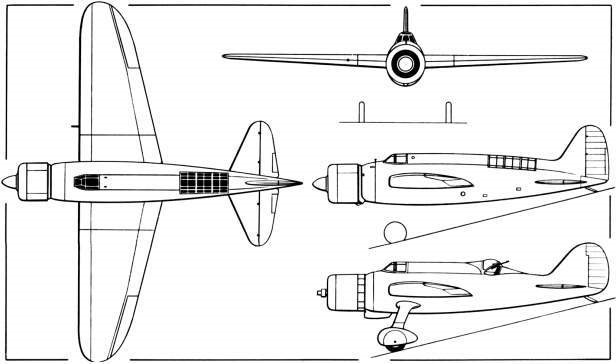
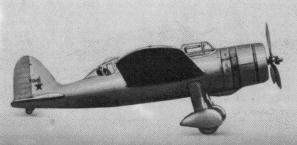
In developing a light ground attack aircraft based on the Kochierigin R-9 reconnaissance aircraft, Kochierigin developed, during 1938–1939, two two-seater models with fixed shrouded landing gear known as the Sh-1 (or LBSh, acronym for light armored attack aircraft; Russian Кочеригин ЛБШ or Ш) with Tumansky M-88 engine and Sh-2 with a Tumansky M-87A engine; both using the fast R-9M-85 (also known as the SR M-85 ) reconnaissance aircraft as a base.
On June 29, 1939, instruction KO 258 was received, which requested the NKAP of Kochierigin as director of Factory No.1 PA Voronin, to finish the aircraft and factory tests of a copy with an M-88 engine and present it to the state tests for July 1939. A second prototype was to be ready for August.
The specifications presented established a speed at sea level of no less than 430 km/h and at 6,000 – 7,000 m it should be between 500 and 530 km/h, with a climb time to 5,000 m of no more than 7 minutes. The required range had to exceed 800 km and the ceiling was established between 10 and 11 thousand meters.
As armament, the attack aircraft was to have two ShBAK heavy-caliber machine guns and two ShKAS or four ShKAS machine guns, all in the wings. The bomb capacity was set at 400 kg.
Compared to the R-9 reconnaissance aircraft, in the M-88- powered Sh-1 the navigator’s cockpit was moved forward. In the cockpit there was a widening of the cockpit. An MV-3 turret was installed in the rear position and the wingspan of the tailplane was increased. The tail skid was replaced by a wheel.
Experience accumulated in the development of the BSh-1 aircraft was used in the development of the wing of the Sh-1.
The report on the tests of the Sh-1 aircraft with the Tumansky M-88 engine at the NII VVS was confirmed on August 23, 1939. During the tests, a maximum speed of 360 km/h was obtained. At a height of 6,650 meters the speed rose to 437 km/h and at 7,650 it was 446 km/h. The flight weight was 3500 kg.
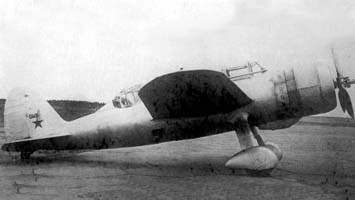
The Sh-1 ‘s armament consisted of two ShBAK cannons with 150 rounds each and two ShKAS machine gunners with 900 rounds. For the first time in an attack aircraft 20 mm aviation cannons were used. The normal load of bombs reached 200 kg, being able to reach up to 400 in overloaded version. Defensive armament included a 500-round ShKAS machine gun, housed in a low-height MV-3 turret.
The tests were unsuccessful due to problems with the M-88 engine and the appearance of metal shavings in the oil. In practice, the M-88 engine was unable to achieve the calculated power, which significantly affected the performance values obtained. Other factors such as the lack of surface finish and the poor selection of the propeller also affected the results.
Another result of the tests was of opinions in the NII VVS that the use of a retractable landing gear could bring a significant gain (20 – 25 km/h) in performance.
The second prototype, called Sh-2, was ready for the month of November. The Sh-2 featured a similar build to the R-9M-85. The fuselage, monocoque type with four spars and birch veneer covering. The NACA type cowl. Ring-type exhaust manifolds were located on both sides under the wing. Fuel was stored in four tanks, two in the fuselage and two in the wing consoles, with a total capacity of 840 litres.
The pilot was located in a cabin covered to the location of the navigator. Another notable feature was the dual control. The plane was equipped with an RSR radio station and a SPU-2 talk set.
The wings, with a double spar made of chrome tubes, had a pressed duraluminium rib cage covered with dural sheets. The centerplane also had two steel tube spars and was covered in duralumin. On this occasion, more attention had been paid to the finish. The entire coating featured smooth lines.
The tail unit had a wooden empennage in its lower part, while the upper part had a textile covering. The stabilizer was made of duralumin and the rudders with an aluminum structure and the surfaces covered with fabric.
The main undercarriage were of the cantilever type with 750×250 mm shrouded wheels. The legs had hydro-pneumatic suspension.
The armament consisted of four ShKAS machine guns with 4,000 shots in total. The Sh-2 could carry 200 kg of bombs (in overloaded version up to 400 kg). Four FAB-100 could be hung in the interior hold and another two outside.
The defensive armament was an ShKAS machine gun in an MV-3 turret with 500 shots.
In mid-November the tests of the Sh-2 were carried out and this time powered by an M-87A engine. The test approval document was signed by the head of the VVS AD Loktionov on November 19, 1939. Engineer 2nd Class Rastrigin was appointed as the main test engineer, Senior Lieutenant Varietin as test pilot, and Major Trietyakov as test navigator.
The overall results were quite acceptable. With a flying weight of 3,450 kg the Sh-2 could reach 350 km/h at sea level and 439 to 4,700 meters. The height of 5000 meters could be reached in 9.5 minutes. The motor group in this case did not present great difficulties.
Other results obtained were a range of 1,300 km and a flight ceiling of 9,800 m. The takeoff and landing run was 370 m. Visibility from the cabin forwards was considered poor, to the sides very good, and to the rear satisfactory. Landing and takeoff were rated as fairly easy.
Despite this, the test results were not acceptable. The requested benefits were not achieved and, on the other hand, there were problems of lack of completion in the pump system, lack of stability in the three axes and a large number of operating defects.
The piloting of the aircraft was considered unsatisfactory in all flight regimes because the pilot found it difficult to coordinate his actions. Due to design problems with the stabilizers the pilot was forced to pull the stick all the time.
The navigator’s cabin was quite cramped. The MV-3 turret presented problems and its replacement with an MV-5 was recommended. The OPB-1 aiming device could be used with a certain level of accuracy only at high altitudes. At low altitude bombardment was impossible.
As a result, neither version was approved for series production. It was recommended to resolve the indications made and present the device for other tests but in a version with a retractable gear.
LBSh (Sh-1)
Powerplant: 1 x 1100 hp Tumansky М-88
Wingspan: 12.00 m
Wing area: 24.15 m²
Length: 10.00m
Empty weight: 2806 kg
Normal takeoff weight: 3450 kg
Wing loading: 146 kg/m²
Power load: 3.2kg/hp
Maximum speed at sea level: 372 km/h
Maximum speed at 6650 m: 437 km/h
Cruising speed: 396 km/h
Projected practical range: 1300 km
ROC: 435 m/min
Practical ceiling: 9820 m
Accommodation: 2 (pilot and navigator)
Armament: 2 x 20mm ShBAK cannon, 150 rounds each / 2 x ShKAS mg, 900 rounds / 1 x 7.62mm ShKAs mg in MV-3 turret
Bombload: 200 – 400 kg
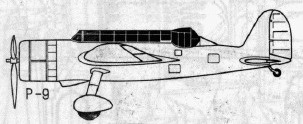
Presenting problems with the SR’s retraction system, SA Kochierigin decided to find the quickest solution to the problem. The result was a new model called R-9 with fixed landing gear and faired wheels, which considerably affected performance.
Other changes included increasing the empennage area in order to improve the aircraft’s directional stability and the addition of a new turret in the gunner’s position.
The M-85 powerplant and three-blade propeller used on the TsKB-27 were retained.
The tests of the Kochierigin R-9 (Russian: Кочеригин Р-9) began in 1936 and in them it was possible to obtain a speed of 447 km/h, which despite the fixed gear was considered a good result. However, it was not possible to achieve stability in the three axes that also affected the TsKB-27.
As a result of the lack of stability, the complete cycle of tests could not be completed. The decision to start producing the R-9 at Factory No.1 was reversed. Some time later its competitor Nieman R-10 began to be produced.
R-9
Engine: 1 x 800 hp M-85
Wingspan: 12.00 m
Length: 9.90m
Height: 3.20m
Wing area: 24.15 m²
Empty weight: 1940 kg
Normal takeoff weight: 2730 kg
Top speed: 447 km/h
Cruising speed: 366 km/h
ROC: 633 m/min
Time to 5000 m: 8.7 min
Practical range: 840 km
Practical ceiling: 9000 m
Crew: 2
Armament: 2 x 7.62mm ShKAS mg wings / 1 x 7.62mm ShKAS mg turret
Bombload: 400 kg