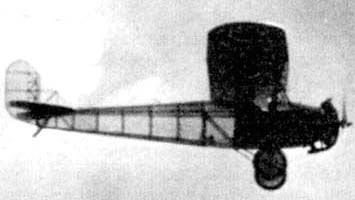
In 1926 the Kreider-Reisner Aircraft Co built the KRA Midget, a small racing plane that won the Scientific American Trophy Race held in Philadelphia in September 1926.
As a result of the recognition achieved with the KRA Midget, Kreider-Reisner began manufacturing the Challenger, which became a popular sport plane in the 1920s.
In 1921, Lewis Reisner, who had worked with Bellanca at Maryland Pressed Steel, founded Reisner Aero Services, a company that serviced and sold aircraft. Four years later in 1925, Reisner and Ammon Kreider, a local shoe manufacturer, formed the Kreider-Reisner Aircraft Company on Pennsylvania Avenue in Hagerstown.
In 1926 the Kreider-Reisner Aircraft Co built the KRA Midget, a small racing plane that won the Scientific American Trophy Race held in Philadelphia in September 1926. In 1927 built the Challenger three-seat open-cockpit biplane using the cheap Curtiss OX-5 (or other) engine. Smaller two-seater also made. In April 1929, Fairchild acquired 82% of the common stock in Kreider-Reisner, making the Hagerstown company a subsidary of the Fairchild Aviation Corporation, which eventually became Fairchild Aircraft Company. The Kreider-Reisner types were added to the Fairchild series, the Challengers then being known as Fairchild KR biplanes (Challenger C-6 was KR-21; C-4 was KR-34). As a division of Fairchild Aviation Corporation in the mid-1930s Kreider-Reisner built the Fairchild 22 two-seat open-cockpit monoplane and the Fairchild 24 cabin type, also producing the Fairchild 71 amphibian.
While attending the Second Aircraft Show in Detroit, Michigan, Kreider was killed when his plane collided with another aircraft at Detroit Ford Airport on 13 April 1929.
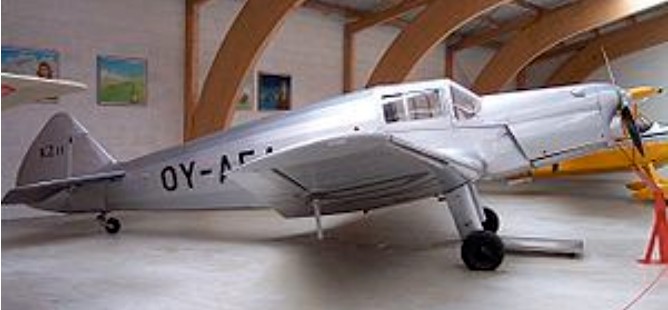
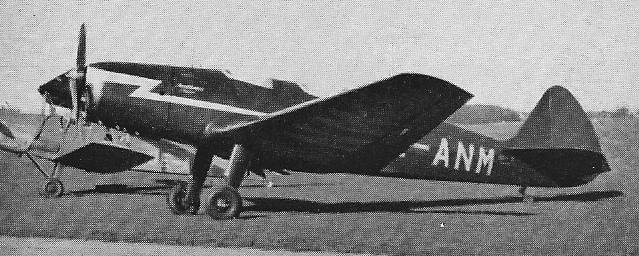
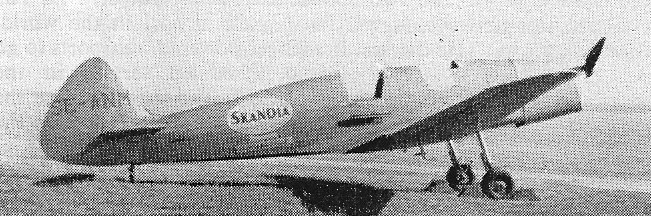
Designed by Viggo Kramme and Karl Gustav Zeuthen, the SAI KZ II was a sport aircraft built in Denmark in 1937, produced by Skandinavisk Aero Industri in three major versions before and after the Second World War. First flown on 11 December 1937, in its original form, designated the Kupé (Danish: “Coupé”) it was a low-wing cantilever monoplane of conventional design with fixed tailwheel undercarriage and two seats side-by-side under an enclosed canopy. the fuselage structure was of steel tube, skinned in plywood and fabric, and the wings were wooden with plywood covering and could be folded back along the fuselage for transport and storage.
KZ-II-T
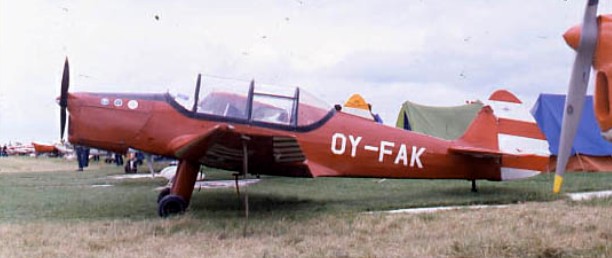
This was followed by the aerobatic KZ II Sport with a revised fuselage design, placing the two seats in separate open cockpits in tandem, and a dedicated military trainer version along the same lines, the KZ II Træner (“Trainer”). The Danish Navy ordered four KZ II Sport, but these were confiscated by Germany before delivery.
This latter type was first produced in 1946, as a step towards rebuilding Denmark’s air force after the war. They remained in service until 1955, when nine examples were sold into private hands. A total of forty-five were built.
In 2008, an example of each variant (including the sole extant KZ II Sport) is preserved in the Danmarks Flymuseum.
KZ-II Sport
Variants
KZ II Kupé – original version with enclosed canopy, side-by-side seating and de Havilland Gipsy Minor or Cirrus Minor engine (14 built)
KZ II Sport – aerobatic version with tandem seating in open cockpits and Hirth HM 504 engine (16 built)
KZ II Træner – military trainer version similar to KZ II Sport with de Havilland Gipsy Major engine (15 built)
Specifications:
KZ II Træner Engine: 1 × de Havilland Gipsy Major, 108 kW (145 hp) Wingspan: 10.20 m (33 ft 6 in) Wing area: 15.0 sq.m (161 sq.ft) Empty weight: 550 kg (1,210 lb) Gross weight: 850 kg (1,870 lb) Maximum speed: 220 km/h (140 mph) Range: 650 km (410 miles) Service ceiling: 5,000 m (16,400 ft) Crew: Two, pilot and instructor
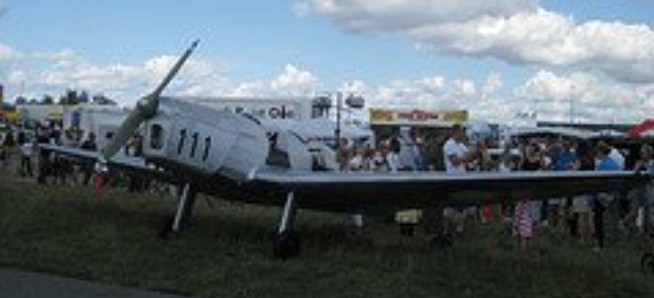
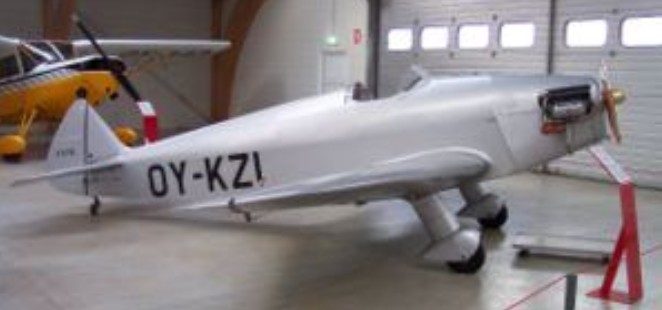
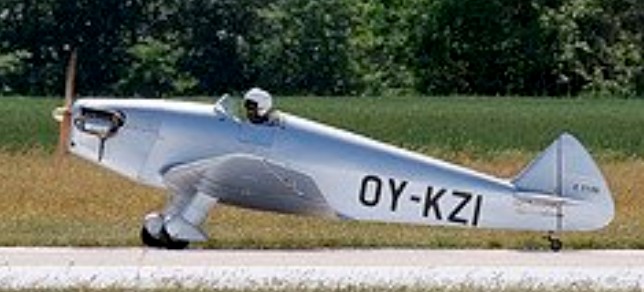
The SAI KZ I was a sport aircraft built in Denmark in 1937, the first aircraft built by the Kramme & Zeuthen firm. First flying on 24 February 1937, it was a low-wing cantilever monoplane of conventional design, with fixed tailwheel undercarriage and an open cockpit with a single seat. Construction throughout was of wood.
Only a single KZ I was constructed, and it disappeared during the course of World War II. During the 1970s, a flying replica was built, with work started by Gunnar Fjord Christensen in 1972 and sold to the Danmarks Flymuseum in 1977. The completed aircraft flew for the first time on 20 November 1988, and in 2008 remains part of the museum’s collection.
KZ I replica
Engine: 1 × ABC Scorpion, 37 kW (50 hp) Wingspan: 7.20 m (23 ft 8 in) Wing area: 8.4 sq.m (90 sq.ft) Empty weight: 192 kg (422 lb) Gross weight: 325 kg (715 lb) Maximum speed: 180 km/h (110 mph) Crew: One, pilot
After a preliminary experiment using a Polikarpov U-2, Professor Sergei Grigorevich Kozlov, of the Nikolai Zhukovsky Air Force Engineering Academy, modified a Yakovlev AIR-4, in 1935, to produce the Kozlov PS (Prozrachnyy Samolyot — transparent aircraft). Fabric covering on the fuselage and wings was replaced with a transparent plastic material, called ”Cellon” or ”Rhodoid”, and the opaque structure was painted with a white paint mixed with aluminium powder. Trials with ground and airborne observations confirmed Kozlov’s theories, with the bonus of excellent visibility for the crew. After the initial success, the film was found to become opaque through dirt collection and the effects of the sun, diminishing the ”invisibility effect”.
Kozlov proposed an invisible single-seat reconnaissance aircraft using the transparent plastic material, but doubts about structural strength of the material precluded development. Further studies into transparent aircraft were ordered from the experimental institute headed by Pyotr I. Grokhovskii but no more transparent aircraft were built using Kozlov’s methods.”
The Korolyev RP-1 was a powered version of the Cheranovsky BICh-11 experimental tailless glider, designed together with Friedrich Zander (Tsander) and other Korolev’s friends from GIRD (ГИРД – Jet Propulsion Research Group).
It was planned to be a rocketplane (therefore RP index) and the Zander OR-2 rocket engine (500 N thrust) was designed especially for it. Development of the engine was very difficult, and Zander didn’t achieve success; furthermore on March 28, 1933 he died of typhus in Kislovodsk. The two RP-1 prototypes were tested in 1932-33 only as “ordinary” powered gliders, each with a 25-hp Scorpion piston engine.
The first of them was flown on June 8, 1932 – Korolyev himself was a test pilot. Totally 34 flights were made by him, but only 5 with the engine powered up.
Engine: 25-hp Scorpion Wing span: 12.1 m Length: 3.81 m Wing area: 20.5 sq.m
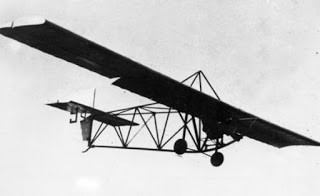
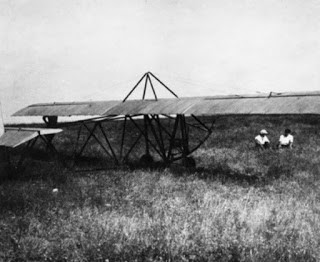
The Korolyev SK-6 experimental two-seat, twin-boom glider of very compact design, made wide usage of Elektron magnesium alloy in the structure. Built in 1931 or early 1932, there is very little information about this glider. It never participated in any All-Union gliding contest and wasn’t among Korolev’s favorite designs. Only one photo remained which is identified as SK-6 glider.
It was designed (very similar project, anyway) in April 1931 as two-seat training aerobatic glider, but under the designation SK-7. The historian Georgy Vetrov guess it’s the same design. But why Korolev changed the designation – it is another mystery.
Calculated, for SK-7 project from April 1931 Wing span: 10.0 m Length: 5.45 m Wing area: 17 sq.m Flight weight: 230 kg Gliding ratio: 15:1 Rate of sink: 0.9 m/s
Sergei Korolyov decided to enrol in the Kiev Polytechnic Institute, where at that time it was supposed to begin training aviation engineers at the mechanical faculty.
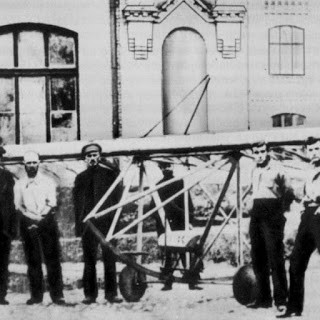
There was a globular circle at the institute. His work was monitored and helped by many prominent scientists who taught at the KPI. Sergey Korolev became a member of it. He worked, as all are many and enthusiastic. Often at night. Korolev slept sometimes in the workshop on the shavings. He loved to work and was a master of all trades. After that, they never altered anything. Gliders built in the institute workshops, participated in international competitions, receiving the highest marks. At circles there was a rule: who built a glider, he flew it.
A training glider KPIR-3 was built, he contributed a share of his work and Korolev. Sergei flew on it. One of the flights almost cost him his life. On the border of the site – wasteland, where the gliders were tested, from a pile of garbage a water pipe was sticking out. Sergei did not notice and planted a glider on it. The blow was strong enough and Korolev lost consciousness for a while.
In 1926, after two years of studying at the KPI, Sergei Korolyov was transferred to Moscow for a special evening group on the aerodynamics of the Moscow Higher Technical School.
Korolev was born to a Russian literature teacher in the town of Zhitomir in the Ukraine. He was fascinated with aircraft at an early age and became a pilot. At the age of 17 he had designed his first glider, the K-5.
Sergei Korolev’s designation system was very irregular and complicated (if there was a system at all). His very first glider project, designed in 1924 at aviation enthusiasts circle in Odessa inhering to ChAG (ЧАГ – Black Sea Aviation Group) when Korolev was 17 years old, was designated “K-5” for some reasons. This project was highly appreciated by aerotechnical department of Odessa OAVUK branch (ОАВУК– Aviation & Aeronautics Society of Ukraine) and recommended for realization. But it was necessary to approve it at OAVUK Central sport section in Kharkov, which allocated funds for construction of gliders to different Ukrainian aviation circles. Korolev sent his project (11 drawing sheets with explanatory comment) to Kharkov… and it was lost somewhere by the post service. So, the first Korolev design became a mystery. It’s known only that Korolev preferred to call it “motorless airplane”, not “glider”.