K+W MA-7 Militar-Apparat / Häfeli MA-7

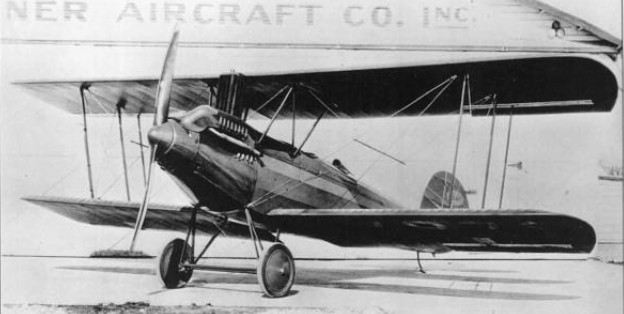
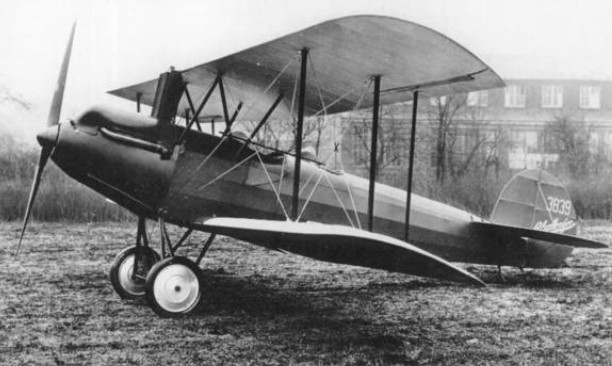
The Militär-Apparat MA-7, also known as the Häfeli MA-7 and K & W MA-7, was a prototype fighter designed by August Häfeli in Switzerland. It flew in two different engine configurations, neither of which were deemed satisfactory and so the type did not enter series production. However, on 23 April 1926, test pilot Max Cartier did achieve a Swiss record for flying at an altitude of 9,800 metres (32,200 feet) above sea level.

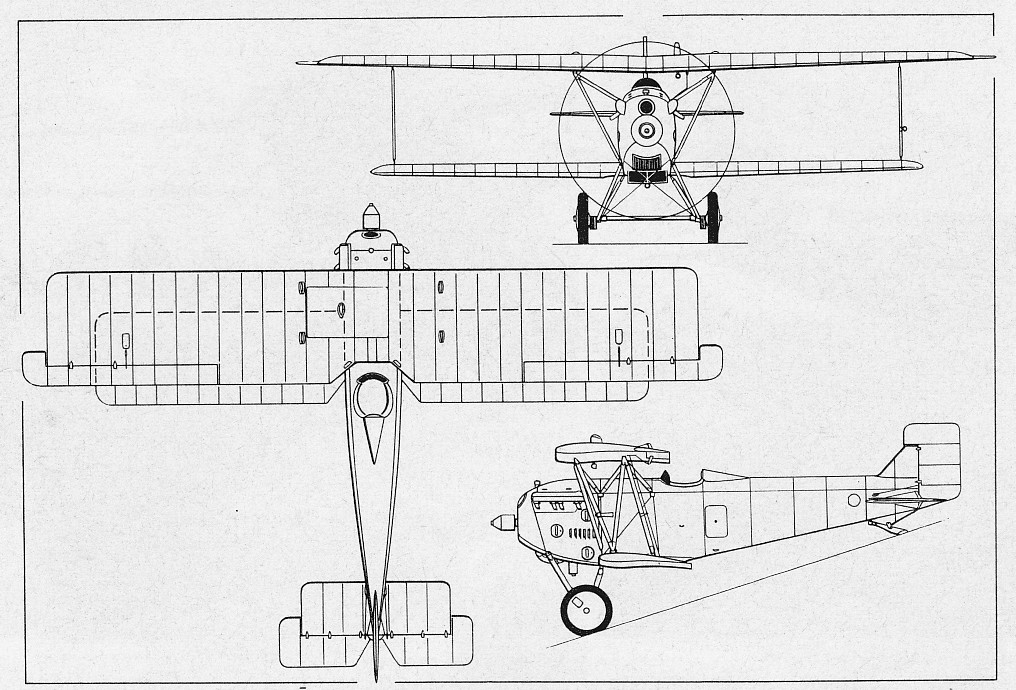
Designed by August Häfeli in response to a Swiss Air Force requirement for an indigenous fighter design, the MA-7 was a biplane of fabric-covered wood construction with N-shaped wing struts like its predecessor the Fokker D.VI of 1918. Ailerons were installed only on the upper wing, which also contained an auxiliary gravity fuel tank. Power was provided by a 300 hp (220 kW) Hispano-Suiza 8Fb HS42 V-8 liquid-cooled engine manufactured in Switzerland under license. The aircraft was built by K & W in 1925 and handed over for trials in February 1926.

The prototype was returned to the manufacturer in April 1926 due to unsatisfactory flight characteristics and performance. K & W responded with the installation of an indigenous 400 hp (300 kW) LFW-12 X-1 engine. This, however, proved too large and heavy for the frame and entire MA-7 project was subsequently discontinued. The Swiss Air Force procured the French Dewoitine D.1 as their replacement fighter instead.

Powerplant: 1 × Hispano-Suiza 8Fb HS-42 V8, , 220 kW (300 hp)
Wingspan: 9.91 m (32 ft 6 in)
Wing area: 23.75 m2 (255.6 sq ft)
Length: 6.61 m (21 ft 8 in)
Height: 2.79 m (9 ft 2 in)
Empty weight: 843 kg (1,858 lb)
Gross weight: 1,213 kg (2,674 lb)
Maximum speed: 235 km/h (146 mph, 127 kn)
Cruise speed: 255 km/h (158 mph, 138 kn) (econ cruise)
Range: 300 km (190 mi, 160 nmi)
Service ceiling: 7,600 m (24,900 ft)
Rate of climb: 9.2 m/s (1,810 ft/min)
Crew: One
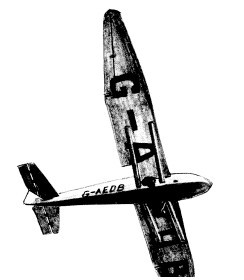
Kronfeld Drone / Super Drone / Planette / BAC Drone

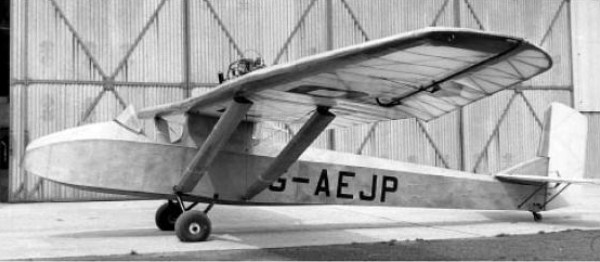
BAC Drone G-AEJP – 10 August 1936

The 1932 Planette was a powered development of the B.A.C.VII. A single-seater, four were built.

Kronfeld Drone Article

A further development was the single-seat, single engine Drone of 1935. A lightly laden high wing monoplane of 40 ft span, the Drone was devised by Charles Herbet Lowe-Wylde by fitting a motor-cycle engine to his sailplane. The idea was to give cheap training to pilots who had already gone solo. The pusher engine was mounted on top of the wing, behind the cockpit. Two were produced and two conversion were made.

Drone

The BAC Drone was the production version of the Lowe-Wylde Planette and was first produced in 1933. B.A.C (1935) Ltd was formed in 1935 to take over production and development of the Drone.

BAC Drone

In 1935 twenty-five of the further developed Super Drone were produced, plus 1 conversion.

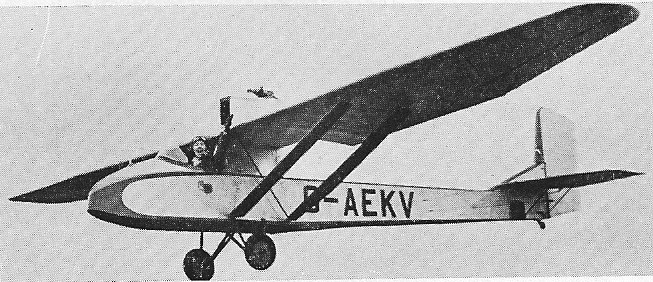
The final B.A.C.VII development was the Drone de Luxe of 1935. One was built and one conversion made.

Kronfeld Drone de Luxe G-AEKV

In 1936 Kronfeld built 20 Drone monoplanes.

In 1937 the Carden Ford 10 engine of 30 hp was fitted, along with the 32 hp Bristol Cherub 3.

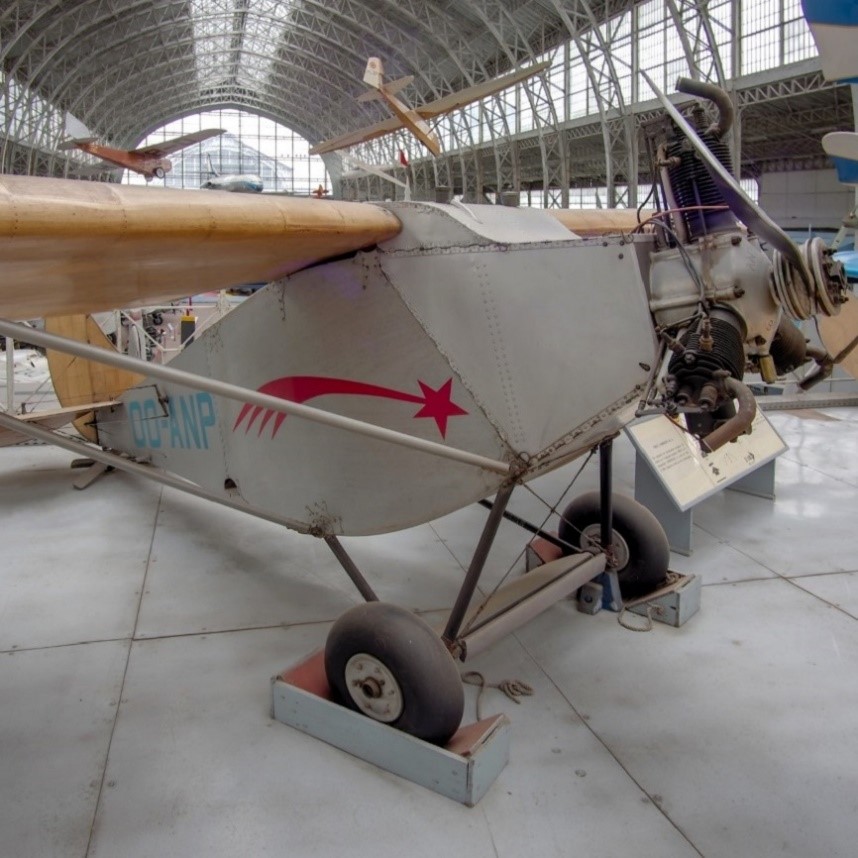
The Drone was also built under licence at Issy les Moulineaux in France by the Societe Francaise des Avions Nouvelles (SFAN), and at Ghent in Belgium by the Societe Gantoise des Avions sans Moteur.

British Aircraft Co Drone
Engine: Douglas Sprite 600cc
Span: 40 ft
Seats: 1
Max level speed: 73 mph
Cruise: 65 mph
Ceiling: 12,500 ft
Range: 340 miles
Price 1936: £295

BAC Drone
Engine: Carden Ford 10, 30 hp
Wingspan: 39 ft 8 in
Length: 22 ft
Height: 8 ft 4.5 in
Empty weight: 453 lb
Loaded weight: 670 lb
Max speed: 73 mph
Cruise: 65 mph
Range: 300 mi

Kronfeld Ltd

UK
Formerly The British Aircraft Co (1935) Ltd. of London Air Park, Feltham, Middlesex. Renamed as Kronfeld Ltd in 1936, in which year 20 Drone ultralight monoplanes were built, one model becoming known as Kronfeld Super Drone.

1936: British Aircraft Co., London Air Park, Feltham, Middlesex, UK.

When designer and company owner C. H. Lowe Wylde was killed while flying on 13 May 1933, the British Aircraft Company (1935) Ltd taken over by Austrian pilot Robert Kronfeld, becoming Kronfeld Ltd.

The firm was re-organised and a new factory was opened in Victoria Road, Feltham, Middlesex, where the Drone was produced.

The Kronfeld Monoplane of 1937, likewise a pusher, was intended as a Drone successor, but only one was built.

The name of the firm was changed to Kronfeld Ltd in 1936 but it closed down in 1937 after twenty-eight Drones and one Kronfeld Monoplane, a revised Drone, had been built.