2415 O St
Lincoln NB.
USA
Circa 1931 airplane builder
2415 O St
Lincoln NB.
USA
Circa 1931 airplane builder
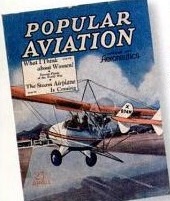
The last design of the Lincoln Aircraft Corp was the parasol wing Lincoln Playboy of 1931. A two place pusher powered by a 25 hp Lincolcn Rocket engine, the aircraft could attain a top speed of 80 mph and cruis at 70 mph. The price in 1931 was US$800.
In 1929 produced a two-seat trainer known as the Lincoln-Page Trainer.
Page acquired the rights to the New Swallow and redesigned this as the three-seater Lincoln-Page LP-3 in 1928, an attempt to catch up with developments in light aircraft design.
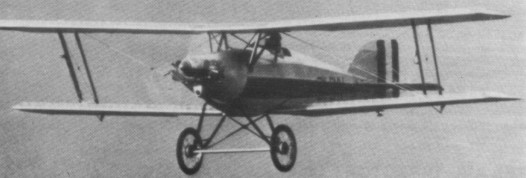
The first sport single-seater of note in the early 1920s was the Lincoln “Sport,” which was a biplane originall~ developed as a homebuilt by S.S. Swanson in 1923. It was put into limited production by the Lincoln Aircraft Co., of Lincoln, Nebraska, when Swanson became chief engineer there. The production model died for lack of a market because there were still plenty of cheap World War 1 surplus single seaters around for the sporting types. The Lincoln design was perpetuated as a homebuilt, however, when the plans were published in Modern Mechanics magazine in the early 1930s.
Capable of 100 mph and fully aerobatic.
Engine: Bristol Cherub III.
Max speed: 100 mph.
Between 1923 and 1925 offered the Lincoln-Standard Tourabout, a three-seat rework of the Standard J.1 of 1916.
Lincoln began construction, in 1922, of the five-seat Air Coach.
Ray A. Page established Nebraska Aircraft Corporation at Lincoln, Nebraska, during the First World War, and was a builder of the Lincoln Standard, a two-bay biplane circa 1920.
Replica
Mexicana Lincoln Standard Replica
Ray A. Page established Nebraska Aircraft Corporation at Lincoln, Nebraska, during the First World War, and was a builder of the Lincoln Standard biplane, and also built aircraft under subcontract to the U.S. government.
Began construction, in 1922, of the five-seat Air Coach. Between 1923 and 1925 offered the Lincoln-Standard Tourabout, a three-seat rework of the Standard J.1 of 1916. Also produced the Sport Lightweight biplane. Page acquired the rights to the New Swallow and redesigned this as the three-seater Lincoln-Page LP-3 in 1928, an attempt to catch up with developments in light aircraft design. In 1929 produced a two-seat trainer known as the Lincoln-Page Trainer.
Lincoln Aircraft Company Inc was the official name of Lincoln-Page from 1929, but both names used indiscriminately.
The last design was the parasolwing Lincoln Playboy of 1931. Firm was by then the Lincoln Airplane and Flying School.
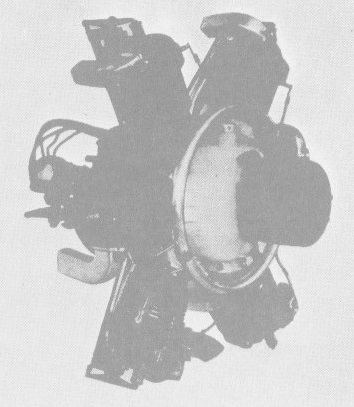
The Brownback Tiger C-400 features overhead valves through rockers and push rods. The cylinder heads are aluminium alloy with cast iron barrels, and one Silchrome inlet and exhaust valve per cylinder
A single piece crankshaft of nickel-chrome steel with double throw design reduces counterbalance weight.
Avialbe at extra cost was any 5 inch standard starter, and exhaust manifold stacks option.
Type: 6 cylnder, double row radial, air cooled, 4 stroke
Dept of Commerce Certificate No.33
Rating: 90 hp at 1700 rpm
Displacement: 397 cu.in
Compression ratio: 4.8-1
Bore: 4.13 in
Stroke: 4.93 in
Length: 29 3/16 in
Diameter: 37 in
Weight: 275 lb
Fuel consumption: not more than .56 lb/hp/hr
Oil consumption: not more than .011 lb/hp/hr
Lubrication: Dry sump, force feed
Ignition: 2 Bosch magneto
Carburation: 1 Stromgerg
Spark plugs: 2 per cylinder Champion
Price: $1840

