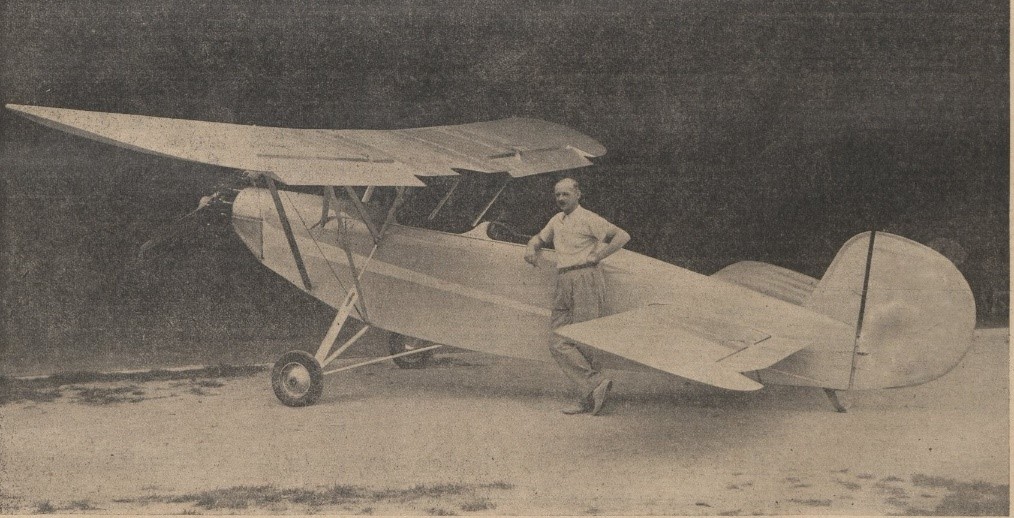
The 1937-1938 Model 8a, of which 1,100 were built, and the 1940 Silvaire, of which production had reached 6,000 by 1961.
The Luscombe Model 8 was the result of the new Continental A-50, dual ignition, 50 hp, flat four engine of 171 Cu.in that became available in early 1937. To promote the new engine, Continental made arrangements with Don Luscombe to accept (on loan) one of the new engines, hoping he might consider designing an engine around it. He accepted and engineers Fred Knack and Jim Rising designed the craft.
The Luscombe 50 (named after the engine) was designed as a high wing monoplane of all metal construction but with metal framed two-seat all-metal light aircraft.
As this was taking place, the metal framed, fabric covered ailerons were changed to corrugated metal, as were the rudder and elevator.
The prototype featured a control wheel on the left side of the cockpit. This was later replaced with a stick after complaints of poor control inputs.
The first flight of the production prototype Luscombe Model 8, NX1327, was made on 6 June 1938. On 11 August 1938, CAA Certificate #693 was issued.
The first Model 8 was basic, with only a tachometer, engine oil temperature gauge, altimeter, and airspeed indicator. Optional was a compass. The series was delivered standard with a tail skid. Floorboards were covered with carpet. Behind the cockpit a baggage compartment was beneath a 14 US gallon fuel tank, the seat swinging forward for access. The seat sat on the cabin floor and wasn’t fastened in any way.
By the end of 1938, Luscombe had built 71 Model 8s. The first of the series, models A-C, were fitted with fabric covered wings on a metal frame. The Model E used a forward squared wingtip, while models A to C were rounded. Model F had squared tips for and aft. The model 8E of 1946 2 place side-by-side high wing metal monoplane.
In all there were 15 model, each differentiated by engine or other changes. Engines varied from 50 to 90 hp with cruise speeds ranging from 95-110 mph. 113 Luscombe 50 were built.
Late in 1938, Continental introduced the 65 hp A-65 engine, with increase power through raising the A-50 rpm to 2300.
One of the first A65s was installed in January 1939 proving successful, and the Luscombe Model 8A replaced the Luscombe 50, which was then phased out.
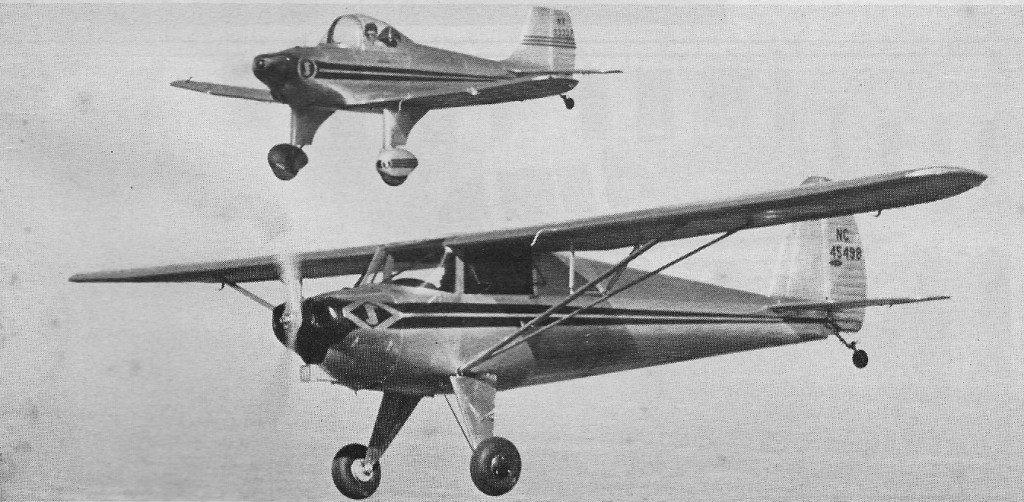
At end of Second World War production tooling for Model 8 Silvaire was moved by Luscombe Airplane Corporation to Dallas, Texas. The postwar company, based at Dallas, Texas, went bankrupt in 1949 and was brought by Temco Aircraft Corporation which built about 50 Silvaires under the old name. In 1955 the Silvaire Aircraft Company acquired rights and equipment for Model 8 Silvaire, inaugurated production at Fort Collins, Colorado, and flew first model 8-F aircraft off line September 1956, production continuing until 1960.
In 1962 Alaska International Corp acquired from Silvaire Aircraft Company all rights to the Luscombe Silvaire
In 1964 M.A.Larson, president of Larson, Luscombe Corp, Belleville, Michigan, announced that his firm purchased the type certificate and all rights for manufacturing Luscombe aircraft. First production models of 8-F and 8-G were due early in 1965.
Renaissance Aircraft announced in 2002 the plan to manufacture an updated version of the single engine, two seat, tail wheel Luscombe 8F, claiming improvements over the original version.
Luscombe Models 8A, 8B, and 8C meet the criteria for a Light Sport Aircraft.
50
Engine: Continental A-50, 50 hp
Model 8
Engine: 50 hp Continental A-50
Luscombe 8A
1946 Luscombe 8A
Engine: Continental A65, 65hp
Fuel type: 80
Propeller: Fixed/Pitch
Landing gear type: Fixed/Conventional
Max ramp weight:1260 lb
Gross weight: 1260 lb
Max landing weight:1260 lb
Empty weight: 750 lb
Useful load: 510 lb
Payload, full fuel: 360 lb
Usable fuel: 25 USgal
Oil capacity: 6 qt
Wingspan: 34 ft. 7 in.
Overall length: 20 ft.
Height: 5 ft. 10 in.
Wing area:140 sq. ft
Wing loading: 9.0 lbs./sq. ft
Power loading: 19.4 lbs./hp
Seating capacity: 2
Cabin width: 39 in
Cabin height: 41 in
Baggage capacity: 80 lb
Cruise speed 75% power: 78 kt
Max range (w/ reserve) 75% power: 390 nm
Fuel consumption 75% power: 4.0 USgph
Stall speed (flaps up): 37 kt
Best rate of climb: 550 fpm
Service ceiling: 14,000 ft
Takeoff ground roll: 1050 ft
Landing ground roll: 450 ft
Model 8B
Engine: 50 hp Lycoming
Model 8C
Engine: 75 hp Continental A-75
Model 8D
Engine: 75 hp Continental A-75
Luscombe Silvaire 8F
2008 Base Price: $89,700
Gross weight: 1320 lb
Empty weight, std: 880 lb
Fuel capacity: 30 USgal
Payload, full std. fuel: 250 lb
Stall: 48 mph
ROC SL: 900 fpm
Service ceiling: 17,000 ft
Cruise 75%: 120 mph
Take off dist: 600 ft
Landing dist: 500 ft
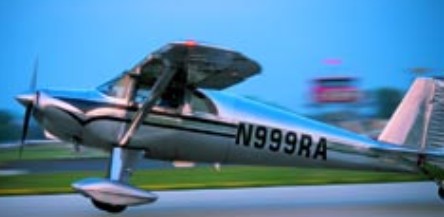
2001 Renaissance Luscombe 8F N999RA
Base/used Price: US$71,200
Engine: Lycoming O-320, 150 hp@2700@SL
TBO: 2000 hs
Fuel type: 100
Propeller type: Sensenich FP
Landing gear type: Fixed/Conv.
Max ramp weight: 1400 lb
Gross weight: 1400 lb
Landing weight:1400 lb
Empty weight, std: 990 lb
Useful load, std. (lbs.): 410
Payload, full std. fuel: 230 lb
Usable fuel, std: 30 USgal
Oil capacity: 8 qt
Wingspan: 35 ft.
Overall length: 20 ft.
Height: 7 ft.
Wing area:140 sq. ft
Wing loading: 9.3 lbs./sq. ft
Power loading: 10 lbs./hp
Seating capacity: 2
Cabin doors: 2
Cabin width: 40 in
Cabin height: 40 in
Cruise speed 75% power @ 8,000 ft: 126 kt
Cruise speed 75% power @ 1,000 ft: 120 kt
Cruise speed 65% power @ 8,000 ft: 120 kt
Cruise speed 55% power @ 10,000 ft: 110 kt
Max range (w/ reserve) 75% power: 375 nm
Max range (w/ reserve) 65% power: 420 nm
Max range (w/ reserve) 55% power: 440 nm
Fuel consumption (@ .42 lbs./hp/hr. sfc) 75% power: 7.9 USgph
Fuel consumption (@ .42 lbs./hp/hr. sfc) 65% power: 6.8 USgph
Fuel consumption (@ .42 lbs./hp/hr. sfc) 55% power: 5.8 USgph
Stall speed (flaps up): 41 kt
Stall speed (flaps down): 37 kt
Best rate of climb (SL): 1500 fpm
Service ceiling: 21,000 ft
Takeoff distance: 400 ft
Landing distance: 300 ft
8E
Engine: Webster 5-cyl radial, 90 hp.
Cruise: 110 mph.