In 1919 built ultralight Butterfly and a three-engined triplane, Model H Owl, based on Caproni design. This was offered to the Army but was not accepted.
Inter-Wars
L-W-F Butterfly
In 1919 built ultralight Butterfly.
L-W-F Engineering Corporation Inc
USA
Formed 1915 at College Point, Long Island, by Joseph Lowe, Charles F. Willard and Robert G. Fowler.
Lowe provided most of the financing, while Fowler attracted Willard. Lowe soon secured total control, renaming the firm L-W-F Engineering, and Fowler and Willard departed in 1916. The company was reorganized as L-W-F Engineering Company in 1917.
Patented Willard’s laminated wooden monocoque fuselage, but all three left in 1916, after which name assumed to mean Laminated Wooden Fuselage. Converted twelve DH-4s to single-seaters for U.S. Post Office, and built experimental twin-engined version.
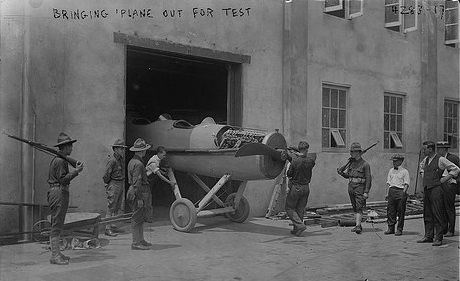
Built series of its own designs, including trainers V-1, -2 and -3 of 1918-1919 for the Army. Constructed also Curtiss HS-2L and Douglas DT-2 for Navy, Martin NBS-1 for Army. In 1919 built ultralight Butterfly and a three-engined triplane, Model H Owl, based on Caproni design. This was offered to the Army but was not accepted. Built Model T-3 for Army, 1923-1924, designed but did not build experimental XNBS-2. Company ceased production in 1924.
The company was declared bankrupt in 1924.
LWS LWS-2
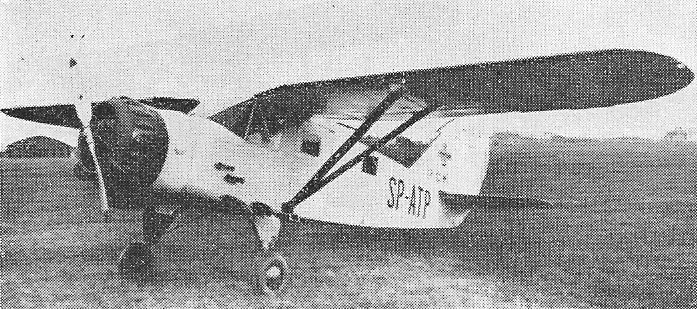
Built in the winter of 1936/37 at the former Plage & Laskiewcz Aircraft Works in Lubin, the LWS-2 was designed as an ambulance in competition with the later successful RWF-13D.
The LWS-2 could carry two plus two stretcher cases.
The LWS-2 never progressed beyond the prototype.
Engine: 220 hp Skoda-Wright Whirlwind
Span: 42 ft 2.5 in
Length: 29 ft 10 in
Height: 9 ft 4 in
AUW: 3700 lb
Load: 1100 lb
Cruise: 115 mph
Range: 320 mi
Max speed: 130 mph
LWS LWS-7 Mewa II
In 1939, the LWS-7 Mewa II was being designed at LWS as a further development of the LWS-3 Mewa. Complete technical drawings were apparantly prepared in summer 1939 and the first prototype was planned to be built in autumn 1939. The development schedule planned for a first flight in Spring or Summer 1940 and the start of production in Autumn/Winter 1940. The first production LWS-7 Mewa II was to be handed over to Polish Air Force in early 1941. The LWS-7 utilised new wings and a semi-monocoque fuselage with less drag and was also to be fitted with a more powerful 916 hp (683 kW) PZL Pegaz XX engine (Bristol Pegasus XX) or a planned 1000 hp (750 kW) PZL Waran. A maximum speed of 400–420 km/h (248-260mph) was estimated from tests performed by the Aerodynamic Institute of the Warsaw University of Technology. Before the war, only a wooden model for aerodynamics testing had been completed. Drawings of the LWS-7 were evacuated in September 1939 to the Polish embassy in Romania by the LWS director Aleksander Sipowicz. Many publications claim that they were handed over to the Bulgarians, but it is not clear whether or not this is correct (possibly, plans for the LWS-3B may have been turned over as the Bulgarian-built KB-11 Fazan reconnaissance plane bore more than a passing resemblance to the Mewa).
LWS LWS-3 Mewa / PZL Mewa
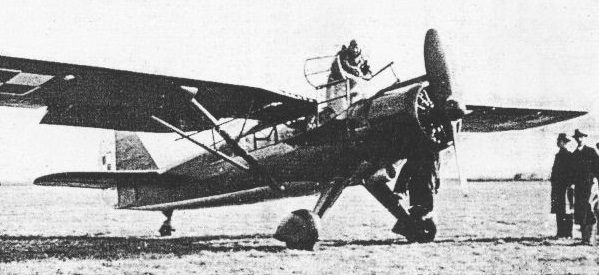
The LWS-3 Mewa (“Seagull”) was a Polish observation and close reconnaissance aircraft, designed in the late-1930s by the LWS factory as the successor to the now-obsolete Lublin R-XIII army cooperation aircraft. The first sketches were drawn up in 1936 by Zbysław Ciołkosz, the chief designer of the LWS factory (Lubelska Wytwórnia Samolotów). It was similar to the earlier light ambulance plane LWS-2, which itself was inspired by the RW-9 STOL aircraft wing design. After Ciołkosz left LWS in 1937, the project, named LWS-3 Mewa, was modified and further developed at the LWS bureau. In the same year, the Polish Air Force ordered three prototypes. The first prototype, the LWS-3/I was flown in November 1937. It revealed some handling deficiencies, but otherwise had good performance. Following tests, the design of the aircraft was improved. In 1938, the second prototype LWS-3/II was flown. It had a crank mechanism to lower the tailfin and rudder in order to increase the angle of rear machine gun fire, but as it proved impractical, the next prototype LWS-3/III which flew in autumn 1938 again had a classic tailfin design. The third prototype, with some further changes, among others to the engine cover and canopy, was the pattern for serial production. The first prototype was exhibited at the 16th International Paris Aviation Salon in November 1938 (as “PZL Mewa”), where it met with considerable interest. The PZL was building the Mewa reconnaissance monoplane by the beginning of Second World War.
The aircraft was a mixed construction (steel and wood) monoplane, conventional in layout, with canvas and plywood covered braced high wings. The wings folded rearwards. Conventional fixed landing gear, with a tailwheel. The crew of two sat in tandem in a glassed-in enclosed cockpit, with large transparent canopy surfaces. The crew had dual controls. Prototypes were armed with two forward-firing 7.92 mm machine guns fixed on the undercarriage covers, but it appeared, that their accuracy was low due to vibration, and (according to J. Cynk) production aircraft were intended to have twin machine guns fitted on the fuselage sides. The observer had a 7.92 mm wz.37 machine gun in a rear station, covered by an opening canopy. The engine was a Gnome-Rhône 14M01 14 cylinder air-cooled radial engine (prototypes) or 14M05 (serial) with 660 hp (490 kW) nominal power and 730 hp (540 kW) maximum power. Three-blade metal propeller (planned) or two-blade wooden propeller (installed on some aircraft). Fuel capacity about 380 liters in wing fuel tanks. The aircraft was fitted with a radio and cameras.
Contrary to its direct predecessor, RWD-14 Czapla, the Mewa was a modern close reconnaissance plane, comparable with leading foreign aircraft of that period, like Henschel Hs 126 or Westland Lysander. Its advantages were quite short take-off and landing, which enabled it to operate from fields. Official tests were satisfactory, and in 1938 the Polish Air Force ordered 200 aircraft of the production variant LWS-3A Mewa (or “Mewa A”). Production started in early 1939, and first aircraft were to be ready in the summer. In August 1939, about 30 aircraft were almost completed (10 ready, but lacking propellers, 7 in painting and 10 in final assembly). At the time the LWS-3B Mewa variant powered with a Fiat R74 860 hp (640 kW) engine was being developed for sale to Bulgaria, as was a floatplane LWS-3H (hydro) variant for Polish naval aviation. None were produced due to the outbreak of war.
None of the aircraft entered service in the Polish Air Force before the outbreak of the World War II on September 1, 1939. The problem was with propellers, which had to be delivered from France. The first two aircraft were ready for delivery on September 2, but one of them was damaged on the factory airfield in Lublin by German bombers. The fate of the other one is not clear. Following that, some of the almost finished aircraft were hidden in Lublin park and in a forest nearby. A couple were modified to use wooden propellers with a fixed pitch. Two such aircraft were evacuated to an airfield near Lwów, and given over to the 26th Observation Escadre on September 12. One of them crashed during a night landing on Medyka airfield near Przemyśl on the same day, the other was burned on September 17, when it could not be evacuated. According to some sources, two other Mewas were assigned to the 23rd Observation Escadre on September 11, but this has not been confirmed. It is not clear whether any of these aircraft were armed. One of the aircraft was also seen during evacuation to Pinsk in mid-September. The rest of the uncompleted aircraft were seized by Germans and scrapped.
The Ilmavoimat / Maavoimat evaluation team performed an extensive series of test flights with the the second Mewa prototype LWS-3/II in early 1938. The aircraft rated comparatively higher and remained in consideration up to the final decision being made. Speed and STOL performance were both excellent and the aircraft itself was rugged and well-constructed.
LWS-3 Mewa
Crew: 2 (Pilot and Observer)
Engine: 1 x Gnome-Rhône 14M05, 492 kW (660 hp)
Prop: two-blade wooden fixed pitch propeller or three-blade metal variable pitch propeller (planned)
Maximum speed: 224mph
Range: 436 miles
Service ceiling: 27,880 ft
Armament: 2× fixed, forward-firing 7.92 mm PWU wz.36 machine guns, 1× rearward-firing 7.92 mm PWU karabin maszynowy obserwatora wz.37
LWS / Lubelska Wytwornia Samolotow
Poland
Formed at Lublin in 1936 to take over the operations of the bankrupt company of E. Plage and T. Laskiewicz. Took over some designs and began work on their own twin-engined bomber and a single-engined air ambulance.
Luton LA3 / LA4 Minor / Phoenix Aircraft Ltd LA4A Minor / Ord-Hume OH-7 Coupe / Parker CA.4

The tandem-wing LA2 never flew, but its fuselage and other components were incorporated into the LA3. The LA3 (also G-AEPD cn LA.3) was built at Barton-in-the-Clay in 1937. It was powered by an Anzani engine. It survived the War in store in Scotland but was destroyed in the 1950s.
The LA3 itself was redesigned for home-assembly as the LA4 Minor. Designed by Mr. C. H. Latimer-Needham, the first was built at the company’s Phoenix Works at Gerrards Cross, Buckinghamshire, and fitted with a 40hp ABC Scorpion, but subsequent models were home-built from drawings and fitted with many different engines.
The Minor is a single seat aircraft with a two piece wooden two spar wing of 5’ 3” chord, attached to a tubular steel pylon on the fuselage. The wings are divided for ease of building, transport and storage. The wing section is RAF 48. The leading edge is plywood covered, the remainder of the wing being fabric covered. The fuselage is a rectangular all wood structure; the sides and bottom being plywood covered, while the top decking behind the cockpit is fabric covered. The under¬carriage incorporates rubber disc shock absorbers for the main legs and optional brakes. The tailwheel is fully castoring.
The first Luton Minor flew in England in 1936 and in 1960 the design was restressed enabling engines up to 55 hp to be fitted. The Minor was designed for the 37 h.p. Aeronca JAP engine, although the 55 hp Lycoming and converted Volkswagen engines may be installed. A 6.5 Imp. gallon fuel tank is located behind the firewall.
A.W.J.G.Ord-Hume designed a modified Luton LA.4 Minor with a totally enclosed cockpit, designated Ord-Hume OH-7 Coupe (previously known as the Luton LA.4C). Construction of the prototype (c/n OH-7, PAL.1401 G-ARIF) was started at Sandown in 1965 and it was nearing competition in early 1975.
Luton Minor G-AFIU built by C.F.Parker was designated Parker CA.4. It was started in 1938 but not finished. It was stored at Peel Green, Manchester.
The design of the Luton Minor was brought up to date by Phoenix Aircraft Ltd., successors to Luton Aircraft Ltd. In 1959-60 the Minor was accredited as one of the finest single seater amateur aircraft in Europe, and the easiest to build.
Engine: Aeronca JAP, 37 h.p.
Span: 25’ 0”.
Length: 20’ 9”.
Wing Area: 125 sq. ft.
Empty Weight: 450 lb.
Loaded Weight: 750 lb.
Wing Loading: 6.0 lb. sq. ft.
Max. Speed: 85 mph.
Cruise Speed: 75 mph.
Stall Speed: 37mph.
Initial Climb: 450 fpm.
Range: 180 miles.
Fuel capacity 6.5 Imp.Gal.
Takeoff run: 250 ft.
Landing roll 120 ft.
Seats: 1.
Luton LA.1 Buzzard
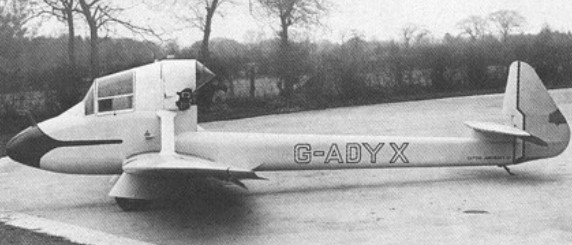
In 1936, Luton Aircraft Ltd of Barton-in-the-Clay, Bedfordshire, flew the Buzzard I, a single-sear open-cockpit wooden ultralight, powered by one 35hp Anzani and designed by C. H. Latimer-Needham. This was rebuilt the following year with short-span wings and enclosed cockpit as the Buzzard II.
Luton
During the years 1935-1939 Luton Aircraft, UK designed and built aircraft. Having developed from the Dunstable Sailplane Company, the first Luton evolved from the high efficiency sailplane formula. In 1936, Luton Aircraft Ltd of Barton-in-the-Clay, Bedfordshire, flew the Buzzard I. A hangar fire at the Phoenix Works in 1943 destroyed the single example of the LA5 Major, a two-seat cabin type first flown on 4 March 1939, and also spelt the end for the company. C. H. Latimer-Needham founded a new company at Cranleigh, Surrey, in March 1958, appropriately named Phoenix Aircraft Ltd, which acquired the rights for the Minor and Major. Both designs were improved, the first as the LA4A Minor, and built in the UK and in several countries across the world.

