W.L.Manuel designed and built the first four types of gliders while he was serving in the RAF. He was the Channel Gliding Club instructor in 1932. In 1933 he established a small workshop at the London Gliding Club, Dunstable (which was known as the Wren Works) and built the second Willow Wren there. At that time he advertised for sale complete Wrens at £90 and Primary gliders at £45 each. In January 1935 he joined the Dunstable Sailplane Co and built a developed version of the Willow Wren which was named the Dunstable Kestrel.
In January 1968, W.L.Manuel retired from the position of Chief Planning Engineer with A.C. Cars Ltd, and, having already designed the Hawk, built this at Fairoaks aerodrome, Surrey.
Inter-Wars
Mantelli-Fossa MF.1
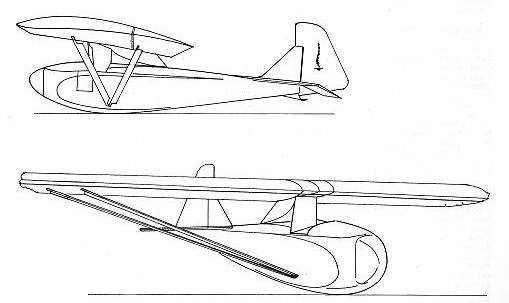
The Mantelli-Fossa MF-1 was designed by Adriano Mantelli, an experienced aircraft modeller. To fund its construction, Mantelli, his cousin Dino Sirocchi and some other aircraft modellers founded a company named SDAM after their senior partners’ initials. The MF-1 was built by Ennio Fossa in his family workshop. It was a high-wing monoplane, its wing supported centrally on a fuselage pedestal and braced on each side with a faired V strut from beyond mid-span to the lower fuselage. It was mounted without dihedral and was rectangular in plan apart from cropped aileron tips.
The fuselage, rectangular in cross-section though with a rounded decking, was entirely fabric-covered. There was an open cockpit immediately ahead of the pedestal. Aft of the wing the fuselage tapered to the tail, where a triangular tailplane with rectangular elevators was placed on top of it. The fin was small and triangular and carried a straight-edged balanced rudder which extended down to the keel, operating in an elevator cut-out. The MF-1 landed on a conventional wooden skid fitted with rubber shock absorbers, assisted by a very small tail skid.
Mantelli flew the MF-1 for the first time on 14 August 1934. Later that year he competed in it at Cantù in the Littoriali Contests.
Only one was constructed.
Wingspan: 11 m (36 ft 1 in)
Wing area: 16.50 m2 (177.6 sq ft)
Aspect ratio: 7.3
Length: 5.70 m (18 ft 8 in)
Empty weight: 95 kg (209 lb)
Gross weight: 170 kg (375 lb)
Maximum glide ratio: estimated 16:1
Wing loading: 10.30 kg/m2 (2.11 lb/sq ft)
Capacity: One
Mantelli, Adriano

Born 13 February 1913, in 1929 Mantelli competed in flying competitions with aircraft that were self-designed and built. In 1931 he started designing gliders.
In the summer of 1936, Adriano Mantelli was the leading Italian fighter pilot in the Spanish Civil War serving in the Regia Aeronautica. Mantelli shot down a Dewoitine piloted by British pilot Edward Hillman. Flying under the alias “Arrighi”, he would later share the title for highest scoring Ace with Mario Bonzano at fifteen victories.
In 1945 Mantelli designed the AM-6 twin boomed pusher aircraft derived from previous glider designs. Mantelli co-founded the company Alaparma with Livio Agostini to produce the AM-6, and later the AM-8 and AM-10 aircraft.
In 1951 Mantelli designed and built two gliders, the AM-10 and AM-12 “Albatross”, in Buenos Aires, Argentina In 1954, Mantelli set an Italian record for altitude in a glider in a two-seat CVV-6 Canguro glider.
Mantelli received the FAI Louis Blériot Medal in 1962, and 1964. Mantelli reached the rank of General.
He died on 6 May 1995 while waiting for a train at Firenze Santa Maria Novella railway station.
Mann, Egerton & Co Type B
At its Norwich factory built 12 Short 184 or Mann, Egerton Type A seaplanes, and from this developed own Type B seaplane powered by Sunbeam engine.
Mann, Egerton & Company Ltd
UK
At its Norwich factory built 12 Short 184 or Mann, Egerton Type A seaplanes, and from this developed own Type B seaplane powered by Sunbeam engine. Built own design H.1 and H.2 shipboard fighters 1917. Subcontract production of Airco D.H.9/9A, D.H.10/10A, Sopwith 1-strutters, Short Bombers, and SPAD 7s.
Mann and Grimmer M.1
Seventeen-year old R. Mann designed M.1 two-seat fighter-reconnaissance biplane, built with assistance of R. P. Grimmer and test-flown at Hendon February 19,1915. Conventional radial engine, nose-mounted, but facing aft so that propeller shaft extending through fuselage drove interplane strut-mounted twin pusher propellers via chain drives. Wrecked November 16,1915, development discontinued.
Maneyrol Tandem
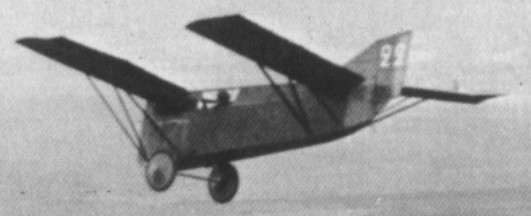
Circa 1921. Won a prize for a flight duration of 3 hr 21 min.
MKEK Model 4 Ugu
MKEK developed the Model 4 Ugur tandem two-seat primary trainer for the Turkish Air Force, three were presented to the Royal Jordanian Air Force.
Makhonine Mak-123
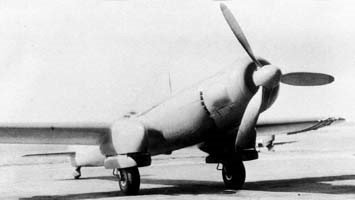
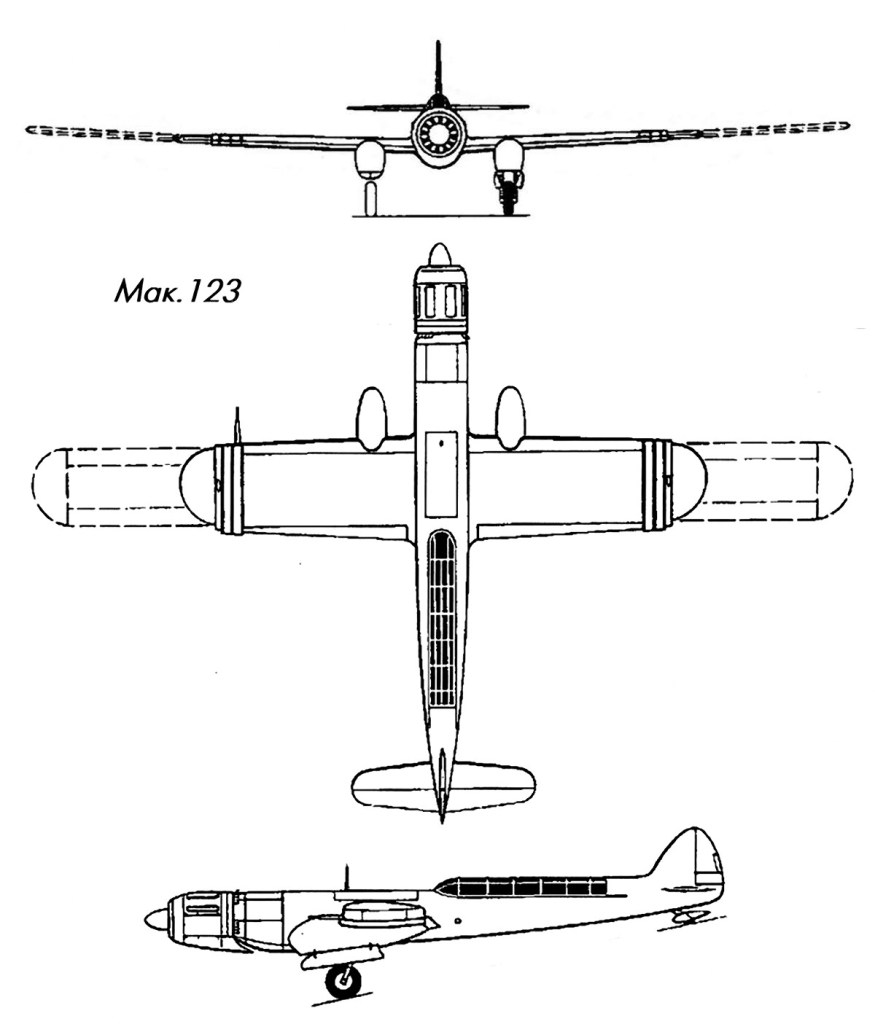
At the end of the war, Ivan Ivanovich Makhonin, with the support of the French Aviation Ministry, built in 1947 a 4-seat Mak.123 aircraft based on the same principles as his predecessors Mak.10 and Mak.101.
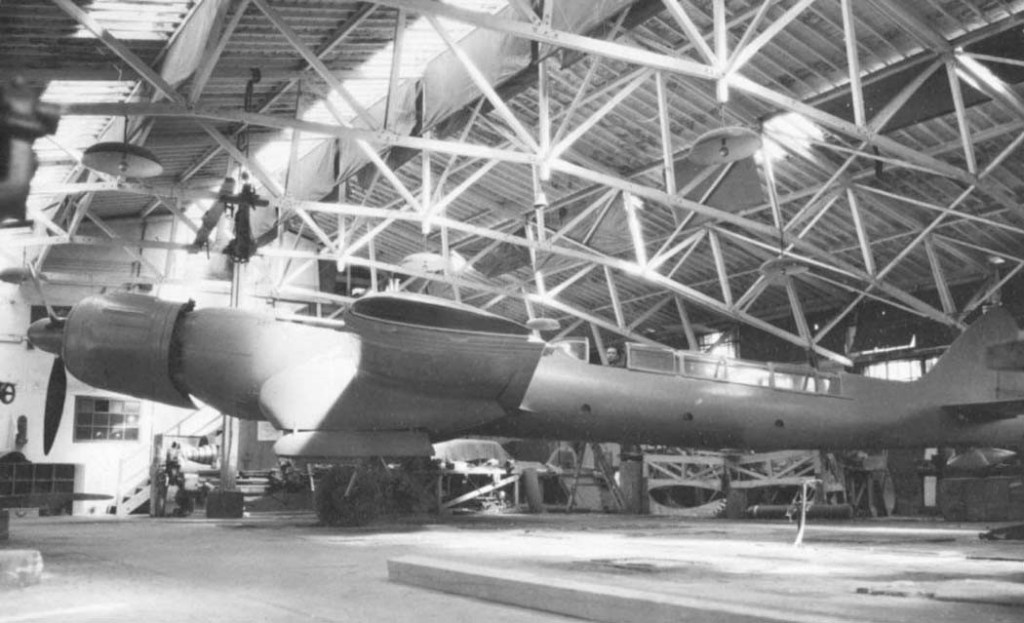
A device with a variable wing length (the wing length varied from 13 to 21 m, and the area from 20 to 36 sq.m) and a captured BMW 801 engine with a power of 1800 hp. tested in the same year.
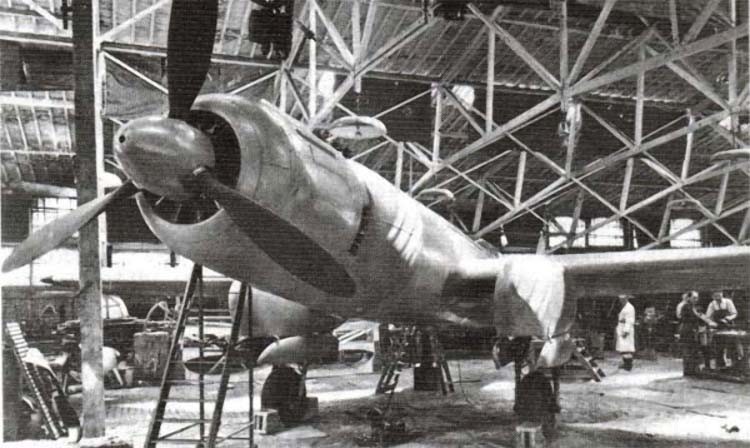
First flying in 1947, the original feature of the aircraft was the cabin with a tandem landing (one behind the other) of all four crew members.
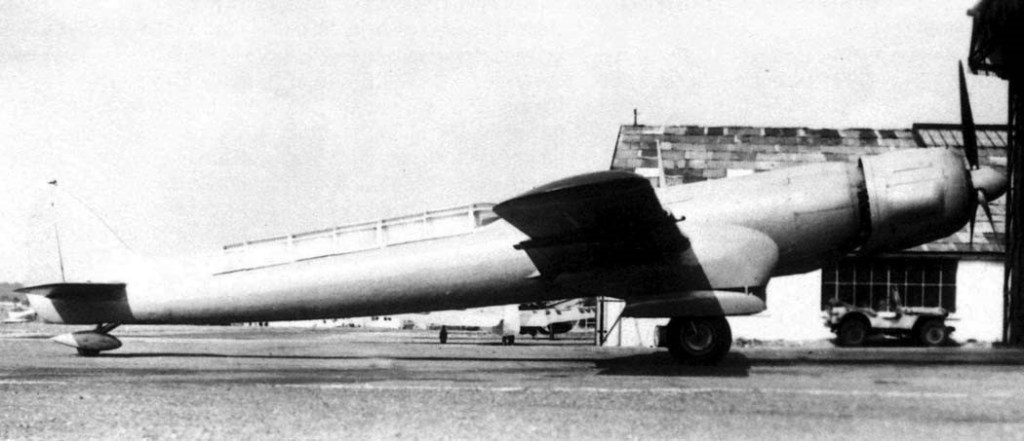
It was assumed that Mak.123 could become the base model for a promising reconnaissance aircraft, but the inventor failed to continue research and the project was terminated after it crashed and not re-built.
Engine: BMW 801, 1800 hp
Wingspan: 13.00 – 21.00 m
Wing area: 20.00 – 36.00 sq.m
Empty weight: 7000 kg
Normal take-off weight: 10,000 kg
Maximum speed: 300 km/h
Practical ceiling: 5500 m
Seats: 4
Makhonine Mak-10 / Mak-101

In the early 1930s several designers became interested in the possibility of changing the configuration of wings between take off and fast flight. Two routes were explored, the first primarily involving camber and hence lift coefficient reduction and the other a decrease of wing area by span reduction at high speed. The Makhonine Mak-10 of the second.
The Makhonine Mak-10, was a variable geometry research aircraft, built to investigate variable area / telescopic wings during 1931 in France. Details of the Mak-10 are sparse but its novel feature was a telescopic wing which increased the span for take-off by 8 m (26 ft 3 in) or 60% of its high-speed configuration. The outer panels retracted into the central ones, their inner ends supported on bearings rolling along one or more spars. The ends of the centre section were reinforced with cuffs. The wing apart, it was a conventional cantilever low wing monoplane, with twin open cockpits, the rear one sometimes faired in, and faired, fixed landing gear. It was powered by a 480 kW (644 hp), three bank, W-configuration, twelve-cylinder Lorraine 12Eb engine.

The first flight of the Mak-10 was on 11 August 1931 During four years of development the Mak-10 was re-engined with a 600 kW (800 hp) Gnome-Rhône 14K Mistral Major fourteen cylinder, two row radial engine which gave it a top speed of 380 km/h (240 mph) and the new designation Mak-101.
Mak-10
Engine: Lorraine 12Eb, 480 kW (644 hp)
Propeller: 2-blade
Wingspan: 13 m (42 ft 8 in) retracted
21 m (69 ft) extended
Wing area: 33 sq.m (230 sq ft) retracted
33 m2 (360 sq ft) extended
Gross weight: 5,000 kg (11,023 lb)
Maximum speed: 300 km/h (190 mph, 160 kn)
Crew: 2
Mak-101
Engine: Gnome-Rhône 14K Mistral Major, 600 kW (800 hp)
Propeller: 2-blade
Wingspan: 13 m (42 ft 8 in) retracted
21 m (69 ft) extended
Wing area: 21 m2 (230 sq ft) retracted
33 m2 (360 sq ft) extended
Top speed 380 km/h (240 mph)
 All Aero