A single-seat fighter
Inter-Wars
Marinens M.F.8
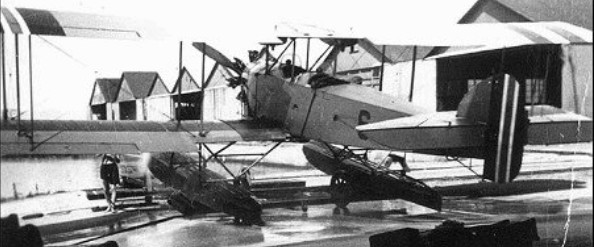
1924
Engine: 1 x 300hp Hispano Suiza
Wingspan: 14.30 m / 47 ft 11 in
Length: 8.80 m / 29 ft 10 in
Height: 4.20 m / 14 ft 9 in
Max take-off weight: 1640 kg / 3616 lb
Empty weight: 1120 kg / 2469 lb
Max. speed: 200 km/h / 124 mph
Cruise speed: 180 km/h / 112 mph
Crew: 2
Marinens Flyvebatfabrikk
Naval Flying-Boat Factory established at Horten in 1915 to build aircraft for Royal Norwegian Navy, including early Farman designs, Hansa Brandenburg W.33 twin-float fighter reconnaissance aircraft and, during 1920s, a small number of Douglas DT-2B and DT-2C torpedo carriers. Breda Ba 28 trainer seaplane also built under license. Indigenous seaplanes included M.F.8 biplane trainer, M.F.9 single-seat fighter, M.F.10 advanced trainer, and M.F.11 three-seat reconnaissance aircraft.
Marendaz Mk.III / Mk.IV

The D. M. K. Marendaz designed four-seat Marendaz III was quite an advanced concept for 1937, but never went into production. Two were built by International Aircraft & Engineering Ltd. at Maidenhead 1937/1938. The first, uncompleted, prototype was destroyed in a factory fire while the second, G-AFGG, although exhibited at the 1938 RAeS garden party, was never completed. The engine was a DH Gipsy VI of 200hp.
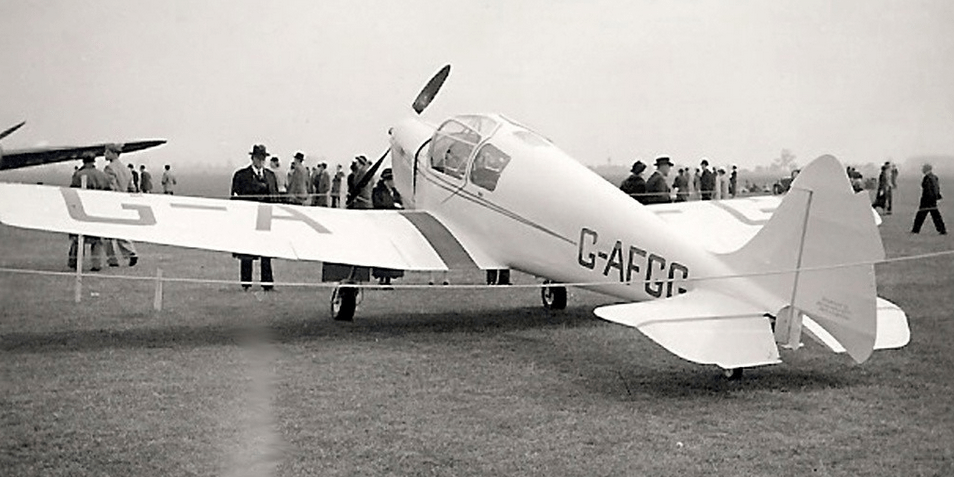
Mk.III
Engine: Gipsy Six
Wingspan: 31 ft
Length: 31 ft
Seats: 4
Mk.IV
Engine: Gipsy Major
Wingspan: 31 ft
Length: 31 ft
Seats: 3
Marendaz Trainer
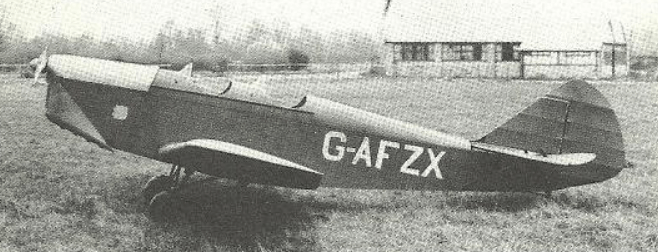
Marendaz company, at Barton-in-the-Clay, Bedfordshire, built prototype Marendaz Trainer two-seat monoplane which first flew December 1939 as G-AFZX c/n A.B.T.1.
The only one built, it was given to the Halton Squadron of the Air Training Corps.
Engine: Blackburn Cirrus Minor I, 90 hp
Span: 34 ft 0 in
Length: 22 ft 4 in
Empty weight: 960 lb
AUW: 1500 lb
Max speed: 124 mph
Cruise: 95 mph
Marendaz Aircraft Ltd
UK
Donald Marendaz was born in Neath in Wales in 1897 to a Swiss family. He later served as a Lieutenant in the R.F.C. with some distinction during World War I. He was it has to be said a bit of a “chancer”. For all that he did start up and design the Marendaz Car business in Brixton later moving the factory to Maidenhead. These cars used Anzani engines and were quite highly regarded, being quite successfully used in competition.
Later on at Barton le Clay aerodrome he registered the Bedford School of Flying and became involved in designing and building the Marendaz MK II and Mk III.
D. M. K. Marendaz designed the four-seat Mk III cabin monoplane, two built by International Aircraft & Engineering Ltd. at Maidenhead 1937/1938. Marendaz company, at Barton-in-the-Clay, Bedfordshire, built prototype Marendaz Trainer two-seat monoplane which first flew December 1939.
Marendaz died in 1988 at the age of 91
Manuel Willow Wren
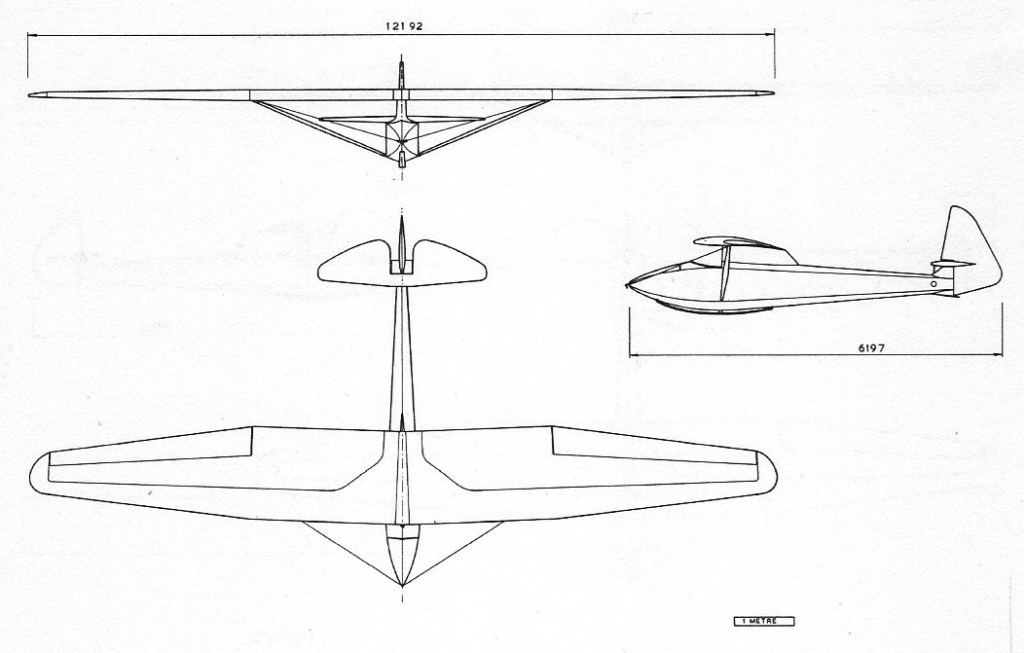
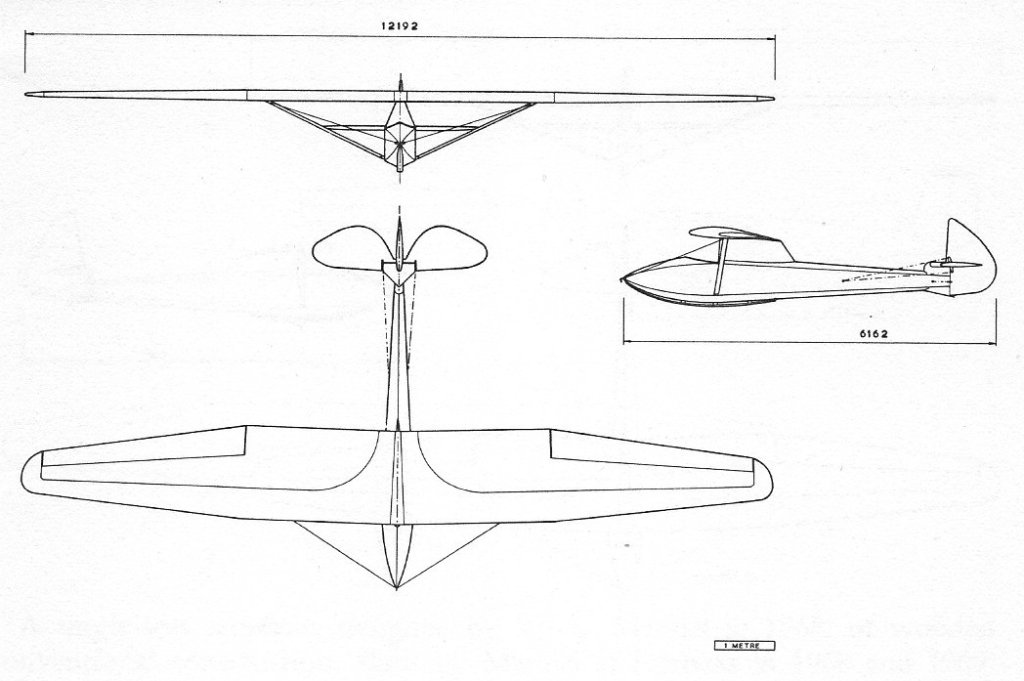
Built by W.L. Manuel, the Willow Wren was a development of the Crested Wren.
A single seat sailplane, the cockpit was deeper, placing the pilot within the fuselage, and the elevators and rear fuselage were revised so enclosing the elevator controls within the fuselage.
The brace wing had no airbrakes or flaps.
The prototype. “Yellow Wren”, first flew in December 1932 from Hawkinge. It became BGA.162.
Manual built a second, “Blue Wren”, BGA.201, which was sold in South Africa as ZS-GAW in 1937. It was written off in April 1949.
Several others were built from plans.
Wingspan: 12.2m / 40ft 0in
Length: 6.2m / 20ft 4 in
Wing area: 13.94 sq.m / 150 sq.ft
Aspect ratio: 12
Wing section: Gottingen 549
Empty weight: 95.26 kg / 210 lb
Wing loading: 11.22 kg/sq.m / 2.3 lb/sq.ftt
Manuel Crested Wren
The single-seat Crested Wren was designed and built by W.L. Manuel in 1931. Of conventional wooden construction, it was designed for slope soaring. Strut braced wing, no flaps of air brakes. The undercarriage was a main skid plus tail skid.
It was first flown at Hawking, UK, in July 1931. BGA.178 “Red Wren”.
W.L. Manuel made his first soaring flights in the Crested Wren in November 1931, flying from hills overlooking Folkestone.
The Crested Wren was eventually bought by E. Thomas in 1938.
Wingspan: 12.2 m / 40 ft 0 in
Length: 6.16 m / 20 ft 3 in
Wing area: 13.94 sq.m / 150 sq.ft
Aspect ration: 12
Wing section: Gottingen 549
Empty weight: 86.18 kg / 190 lb
Flying speed: 48 kph / 30 mph
Manuel 1929 Biplane
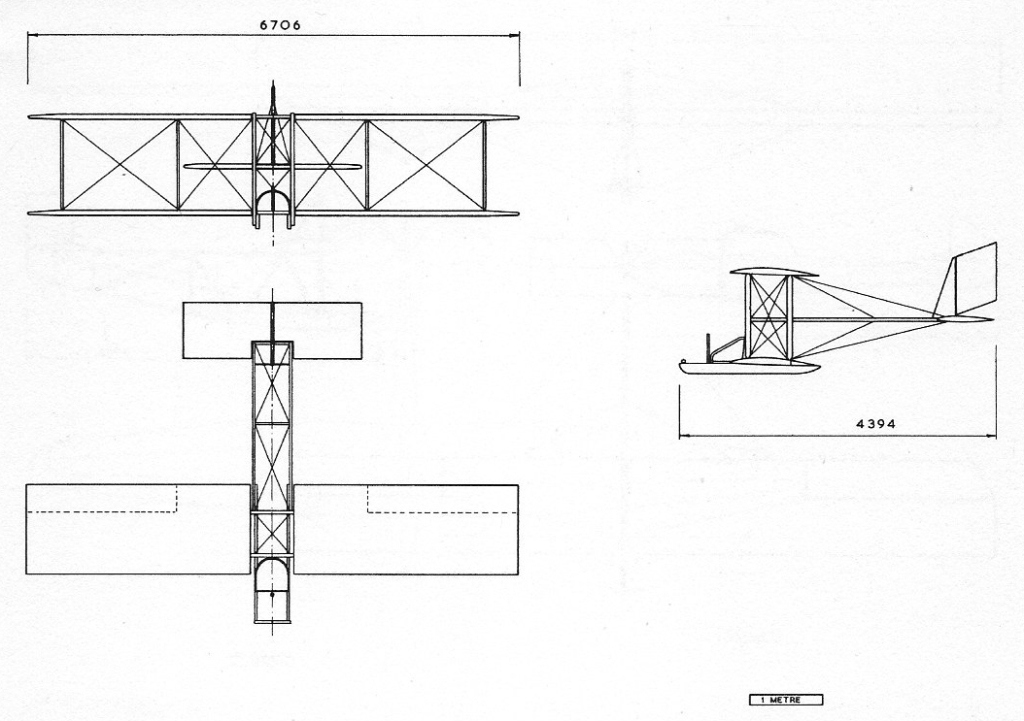
A single-seat Biplane glider was designed and built by W.L. Manuel in 1929. It was of conventional wooden construction.
It was first flown at Hawking, UK, on 18 May 1929. After the first flight, Manuel carried out many flights tethered as a kite. For these flights a twenty foot long tow rope was attached to the tail skid of a Gloster Grebe fighter. The engine of the Grebe was run at full throttle and the glider was flown for about four minutes in the slipstream before the engine of the aircraft overheated. During one of these ‘flights’ a different pilot lost control and it was written off.
Wingspan: 6.70 m / 22 ft 0 in
Length: 4.39 m / 14 ft 5 in
Wing area: 14.86 sq.m / 160 sq.ft
Aspect ratio: 5.5
Manuel VI Primary
The Manuel VI Primary was a wire-braced monoplane primary glider designed and built by W L. (Bill) Manuel whilst serving in the RAF in 1930.
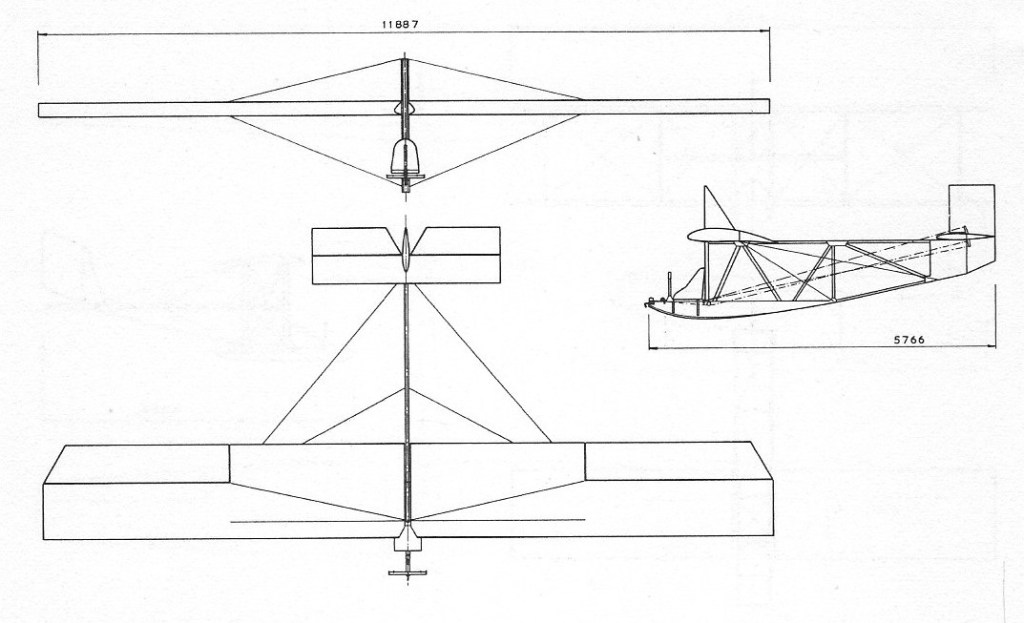
The Manuel Primary was a wooden aircraft built around an open, vertical, tapered girder with a horizontal upper member and a lower one shaped at the front into a shallow keel. The girder was strengthened with a series of vertical and diagonal cross-pieces. The keel projected forward of the foremost vertical member and carried the pilot’s seat on its upper edge. The thick-profile wing was attached to the upper part of the girder and was straight edged with constant chord apart from the angled tips of the ailerons. Extensions of two of the forward girder cross-pieces formed a triangular structure over the wing which acted as a king post for a pair of landing wires. Flying wires from the keel and the upper member about half way to the rear of the girder carried the lifting loads on the wing. There were also bracing wires from wing to the rear of the aircraft to restrain horizontal bending of the girder. The rectangular tailplane was likewise fixed to the top of the girder and carried elevators with a cut-out in which the all-moving rectangular rudder, which extended to the lower girder, could operate.
The glider flew for the first time on 30 August 1930 at RAF Hawkinge in Kent, where Corporal Manuel was based. He made many more flights in it and other Channel Gliding Club pilots also flew it. It was finally destroyed in a road accident in the way to a meeting near Brighton in October 1930.
It flew successfully but only one was built.
Wingspan: 39 ft 0 in (11.89 m)
Wing area: 192.5 sq ft (17.88 m2)
Aspect ratio: 7.8
Length: 18 ft 11 in (5.77 m)
Crew: 1
 All Aero