Miles M.8 Peregrine

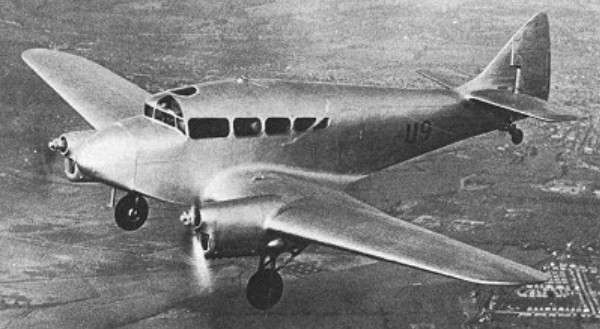
The first twin-engined aircraft produced by Miles, the M.8 Peregrine of 1936 was powered by two 153kW de Havilland Gipsy Queen engines and seats for six passengers plus two crew.

Performance was good, but Magister production took priority and only one more Peregrine, with 216kW Menasco Buccaneer engines, was built as a flying laboratory for the RAE.

Miles M.3 Falcon / Falcon Six / Falcon Major

M.3A Falcon Major

The first true cabin aircraft designed by F. G. Miles, the Miles M.3 Falcon prototype (G-ACTM) was flown first on 12 October 1934. This prototype was a three-seat cabin monoplane, but the first production example seated four in a wider cabin. A number of variants of the basic aircraft were flown under the names M.3A Falcon Major and M.3B Falcon Six.

Miles M.3 Falcon Article

M3B Falcon Six

Total production amounting to 36, of which six were impressed for service with the RAF at the outbreak of World War II. Powered by a 149kW de Havilland Gipsy Six inline engine, the 10.67m span Falcon had a maximum speed of 290km/h and normal range of 901km.

Gallery

Miles M 3 B Falcon Six
Engine: De Havilland Gipsy Six, 197 hp
Length: 25.0 ft / 7.62 m
Height: 6.496 ft / 1.98 m
Wingspan: 35.007 ft / 10.67 m
Wing area: 173.946 sq.ft / 16.16 sq.m
Max take off weight: 2650.4 lb / 1202.0 kg
Weight empty: 1550.1 lb / 703.0 kg
Max. speed: 157 kts / 290 km/h
Cruising speed: 139 kts / 257 km/h
Wing loading: 15.17 lb/sq.ft / 74.0 kg/sq.m
Range: 487 nm / 901 km
Crew: 1
Payload: 2-3pax

Miles M.3 Falcon

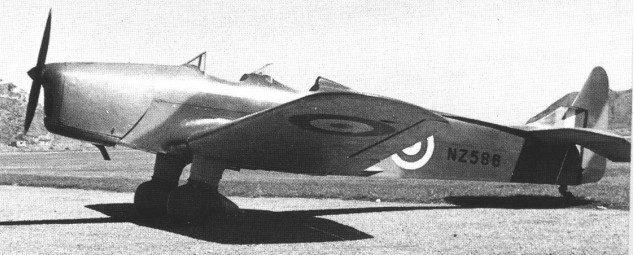
Miles M2 Hawk / Hawk Major / Hawk Trainer / Hawk Speed IV

M2 Hawk

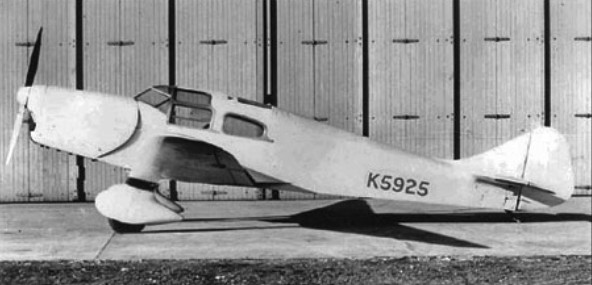
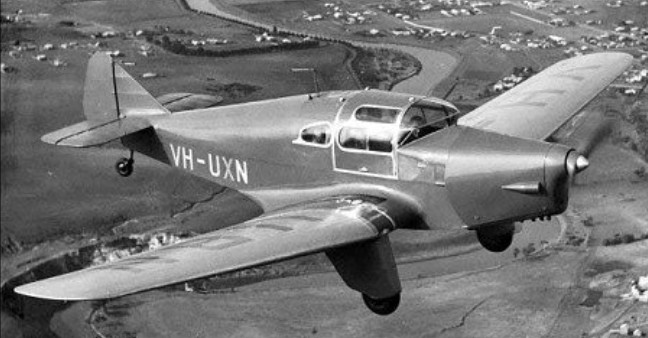
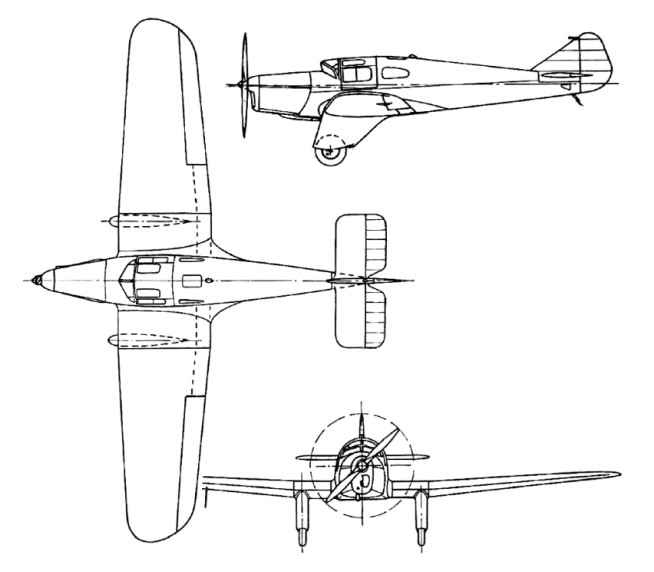
Miles’ previous experience with the Southern Martlet and Metal Martlet biplanes led to the desire to build a two-seat monoplane replacement for biplanes. The result was the M.2 Hawk, flown on 29 March 1933 and powered originally by a 95 hp / 71kW Cirrus IIIA engine. The selling price was £395.

Miles M2 Hawk Article

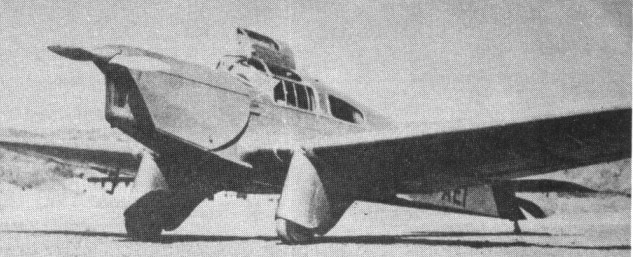
Netherlands East Indies circa 1939-40

Variants included the M.2a with an enclosed cabin, M.2b single-seat long-range version with an 89kW Hermes IV engine. Later M.2c aircraft offered the 89kW de Havilland Gipsy III, and the three-seat M.2d.

Hawk Trainer III – previously a Magister with RAF, the coupe to add as a ‘station modification’

Hawk production totalled 55.

Further development of the basic type led to the Hawk Major series (64 built), beginning with the M.2F with the 97kW de Havilland Gipsy Major engine. The prototype Hawk, designated the Miles M.2F Hawk Major, was temporarily a single seater and finished second in the 1934 Kings Cup race at an average speed of 147.78 mph.

Hawk Major

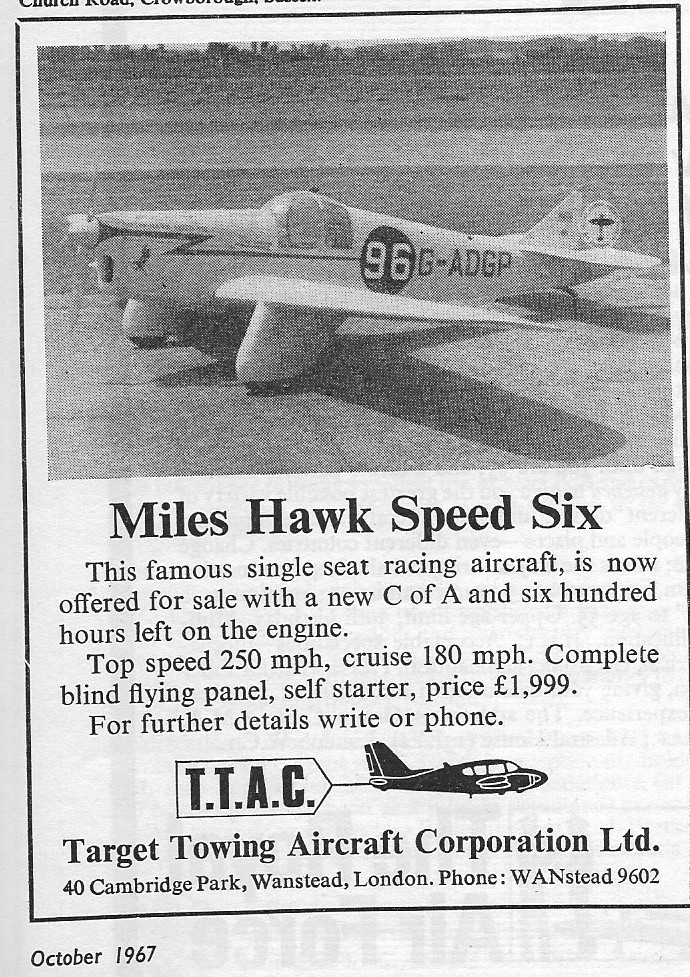
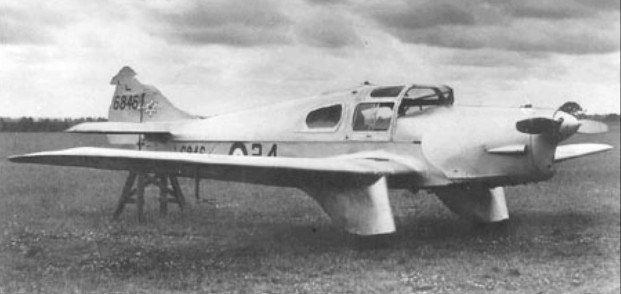
A range of variants up to the M.2T were built. Single-seat racing models were known as the Hawk Speed Six; three were built with 149kW Gipsy Six engines, and another somewhat smaller racing variant was the M.77 Sparrowhawk, of which five were built.

The final pre-war development was the Hawk Trainer, of which 25 were built

Gallery

Engine: de Havilland Gipsy Major, 130 hp
Seats: 2
Max speed: 150 mph
ROC: 1000 fpm

Miles M.1 Satyr

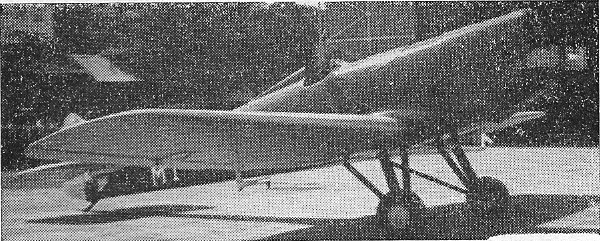
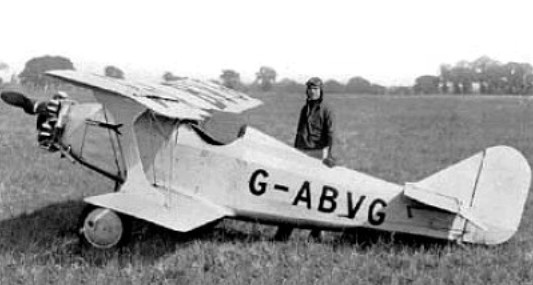
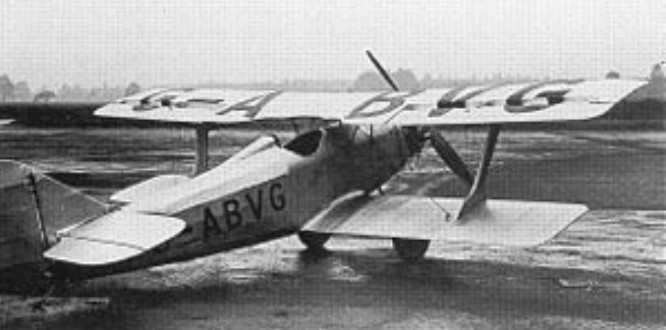
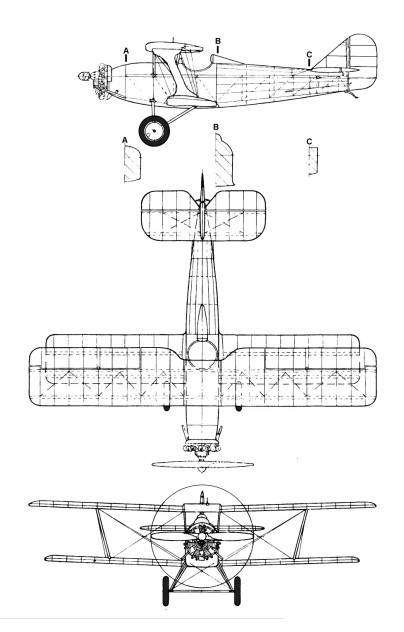
The single-seat, aerobatic, Satyr biplane was designed in 1932 by F.G. Milesat Shoreham, Sussex. It was a wooden single-seat aerobatic biplane powered by a 75 hp Pobjoy R engine. Built by Parnall at Yate, Gloucestershire, the aircraft (registered G-ABVG) first flew in August 1932. Although the aircraft flew well Miles decided to concentrate on monoplane designs and only one was built. The only Satyr crashed in August or September 1936.

In ‘Miles Aircraft since 1925’ Don Brown recounts the crash as follows:

“The end of the Satyr was unusual and dramatic. One day in September 1936 Mrs Victor Bruce was approaching to land in a small field and, at the last moment, when it was too late to take evasive action, she noticed a large mass of telephone wires dead ahead, so close that there was no time either to climb or dive under them. Thinking what bad luck it would be on all the people whose telephones would be disconnected, she sailed on gaily into the wires expecting to go straight through them. However, she had overlooked the number of wires and the low momentum of the little Satyr. Instead of passing through the wires and landing in the field, the wires stretched but did not break. In a matter of seconds the Satyr was stopped dead in the air and then catapulted backwards into the field over which it had just flown. It was all over in a flash. Mrs Victor Bruce was unhurt but it was the end of the Satyr. This must be one of the few instances in which an aeroplane has landed backwards, although not very successfully.”

The autobiography of the Hon. Mrs Victor Bruce (‘Nine Lives Plus’) deals with the circumstances of the crash (“on the green outside Stafford”) she says:

“Suddenly there was an almighty crash. I thought that I had hit one of the houses, because the noise was terrific. Then I realised that I had flown into the telephone wires. The Satyr and I must have remained hanging inthe wires for at least half a minute. Then the wires gave way and we fell fifteen feet to the ground with a bang”.
“The Satyr, of course, was badly damaged…………..” and then: “While the Satyr was being repaired I hired a Gipsy Moth to take its place in the show……….”.

So did the Satyr survive the crash and was repaired.

M.1
Engine: 1 × Pobjoy R, 75 hp (56 kW)
Wingspan: 21 ft 0 in (6.4 m)
Length: 17 ft 8 in (5.38 m)
Empty weight: 594 lb (269 kg)
Gross weight: 900 lb (408 kg)
Maximum speed: 122 mph (196 km/h)
Crew: One
Miles Aircraft Ltd

Phillips & Powis Aircraft was formed in 1935 to take over the aircraft manufacturing business operated by Phillips & Powis Aircraft (Reading) Ltd., which had produced the initial Miles Hawk series of light aircraft.

The name changed in October 1943 to Miles Aircraft, as successor to Phillips & Powis Aircraft Ltd. at Woodley, Reading.

Developed M.33 Monitor target tug. Manufacture included M.38 Messengers, some at Newtownards, Northern Ireland, M.57 Aerovan light freighters, M.65 Gemini light twins. Also developed M.68 Boxcar, with detachable freight container; M.71 Merchantman, which was enlarged four-engined Aerovan, and M.60 Marathon feederliner, later produced by Handley Page.

Miles met financial demise and went into liquidation in November 1947, and was acquired by Handley Page (Reading) Ltd in 1947.