A two-seat light aircraft with 150 hp Menasco C-4S
Inter-Wars
Miller Zeta Z-2
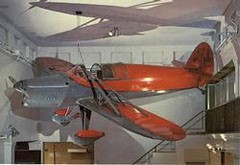
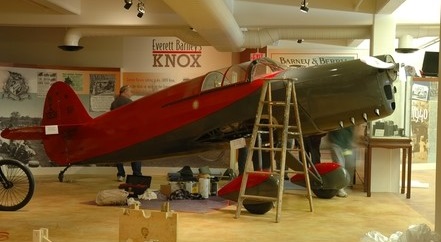
In 1936 Miller Aircraft Corporation built a side-by-side sport plane (NX1331) with a 125 hp Menasco C-4 engine. Designed by Howell “Pete” Miller, Granville Brothers’ chief engineer, and built by Mark Granville. It was named “Zeta” because Miller’s fraternity at NYU was Zeta Psi.
The plane’s first flight was made on 11 December 1937.
No market was found, so Mark Granville and his wife used it for short pleasure trips until W.W.II restrictions on private aircraft forced the plane into retirement with only 200 hours logged.
The dismantled plane was found in a barn, refurbished and donated to the Springfield Science Museum in 1978.
Miller Zeta Z-1
A two-seat light aircraft with 95 hp Menasco B-4
Miller Aircraft Corporation
Mark Granville and “Pete” Miller found twenty people to invest $100 dollars each and formed the Miller Aircraft Corporation.
Formed 1937 at Springfield, Massachusetts, to market Zeta series of two-seat light aircraft; Z-1 with 95 hp Menasco B-4; Z-2 with 125 hp Menasco C-4; and Z-3 with 150 hp Menasco C-4S.
Miles M.18
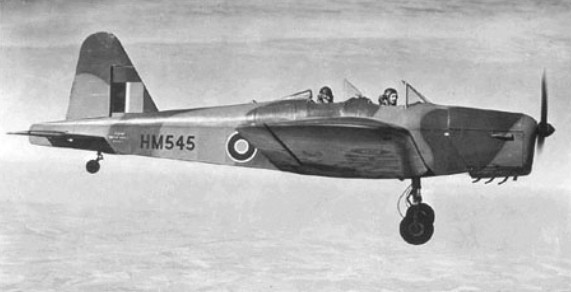
In an attempt to provide a replacement for the Magister, Miles flew the M.18 with a 97kW de Havilland Gipsy Major engine in December 1938. While the fuselage was similar to that of the Magister, the square cut thick wing and tail surfaces were new. A decision against production was reached by the Air Ministry, but a further three M.18s were built, the second having a 112kW Blackburn Cirrus Major III engine.
The first prototype M.18, U-0222, flew for the first time on 4 December 1938. The M.18 had nothing in common with the M.14 Magister. It started with a 150 hp Gipsy Major III engine, tandem open cockpits and a tailwheel undercarriage. During its time, U-0222 had the forward cockpit removed and a fixed nosewheel undercarriage installed.
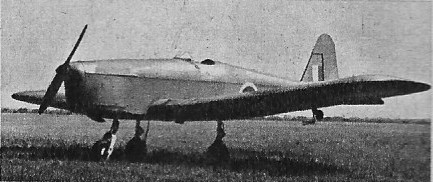
Initially the wingspan remained at 31 ft but this was subsequently reduced to 22 ft 2 in. U-0222 was also flown with an experimental Jameson engine and as a glider.
The second prototype, U-0224, was officially tested as HM545. As a result, it was ordered into production for the RAF. That order was then reversed, in favour of the DH82 Tiger Moth. But in 1942, the M.18 was again ordered into immediate large-scale production, again to be cancelled.
Only two other M.18s were built, U-0238, fitted with an enclosed cabin, and U-0236 / JN703 which, as M.18HL, was fitted with a specially designed wing to ascertain the coefficient of lift obtained by the employment of very large slotted flaps used in conjunction with slats along the whole of the wing leading edge. The machine was extensively tested by the RAE who measured a maximum coefficient of lift of 3.
Miles M.17 Monarch

An improved model of the M.11 was developed with three-seat accommodation and flown as the M.17 Monarch on 21 February 1938. Although this proved satisfactory, the company’s involvement with Master and Magister production meant that it was possible to complete only 11 before the outbreak of World War II, five of these being impressed into RAF service.
M.17 Monarch
Length: 25.984 ft / 7.92 m
Height: 8.76 ft / 2.67 m
Wingspan: 35.597 ft / 10.85 m
Wing area: 179.974 sq.ft / 16.72 sq.m
Max take off weight: 2149.9 lb / 975.0 kg
Weight empty: 1389.2 lb / 630.0 kg
Max. speed: 121 kts / 225 km/h
Cruising speed: 109 kts / 201 km/h
Service ceiling: 17405 ft / 5305 m
Wing loading: 11.89 lb/sq.ft / 58.0 kg/sq.m
Range: 539 nm / 998 km
Miles M.16 Mentor
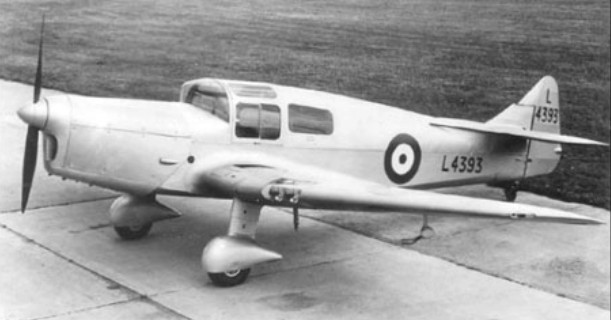
Trainings and communication aircraft, United Kingdom, 1938
Miles M.16 Mentor
Engine: De Havilland Gipsy Six, 197 hp
Length: 26.148 ft / 7.97 m
Height: 9.678 ft / 2.95 m
Wingspan: 34.777 ft / 10.6 m
Wing area: 180.943 sq.ft / 16.81 sq.m
Max take off weight: 2709.9 lb / 1229.0 kg
Weight empty: 1977.9 lb / 897.0 kg
Max. speed: 136 kts / 251 km/h
Service ceiling: 13796 ft / 4205 m
Wing loading: 14.97 lb/sq.ft / 73.0 kg/sq.m
Crew: 2
Payload: 1pax
Miles M.14 Magister / Hawk Trainer 3 / THK- Miles Magister 14

The Miles M.14 Magister originated in 1937 as the ultimate development of the Hawk Major, to meet Air Ministry specification T.40/36 for a basic trainer. The Magister was a two-seat primary-training monoplane based on the Hawk Trainer. Power was provided normally by a 97kW de Havilland Gipsy Major engine, although a 100kW Blackburn Cirrus Major was also fitted.
The M14 entered RAF service in 1937 and while in production it was the only monoplane in Great Britain to be approved by the Air Ministry for ab initio instruction of RAF pilots and was used by RAF training establishments in England and overseas.
In civil guise it was named Hawk Trainer Mk III, and this identity was also applied to Magisters civilianised post-war but with an Arabic 3.
A total of 1,293 was built between 1937 and 1941.
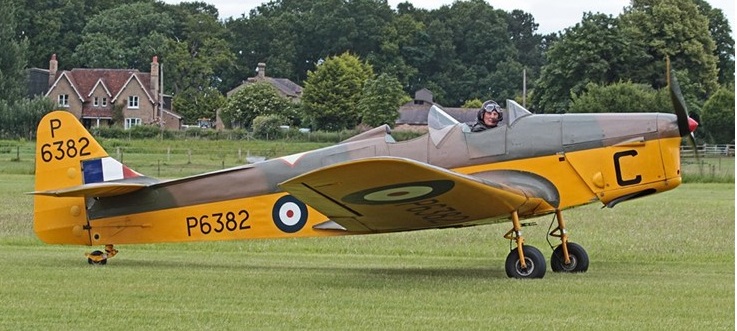
As the Turkish Government was badly in distress because of the world-political situation, it was decided that aircraft under license should be manufactured, with the help of the experienced foreign designers. As a result a new aircraft plant was built at Etimesgut near Ankara in 1941. At first the Miles Magister 14A Mk.I primary training aircraft was manufactured under license.
During 1942-1943, 84 Magister were license built under the Turkish Aeronautical Association as THK- Miles Magister 14, then serving with the Turkish Air Force.
In 1946, as a result of a request from the Turkish Ministry of Hygiene, THK produced a special variant of the Magister for spraying DDT to combat malaria. This had the front seat faired over and was fitted with an atomiser and pulverisers, and a tank containing insecticide, which was pumped through a long pipe under the fuselage.
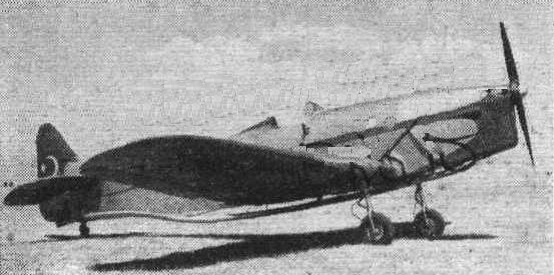
M 14 Magister
Engine: 1 x de Havilland Gipsy Major I, 97kW / 128 hp
Max take-off weight: 836 kg / 1843 lb
Empty weight: 571 kg / 1259 lb
Wingspan: 10.3 m / 33 ft 10 in
Length: 7.5 m / 24 ft 7 in
Height: 2 m / 6 ft 7 in
Wing area: 16.3 sq.m / 175.45 sq ft
Max. speed: 228 km/h / 142 mph
Cruise speed: 107 kts / 200 km/h / 124 mph
Service ceiling: 5480 m / 18000 ft
Range: 330 nm / 612 km / 380 miles
Crew: 2
M.14A
THK- Miles Magister 14
Engine: de Havilland Gipsy Major I, 130 hp / 97 kW
Wingspan: 10,31 m
Height: 2.77 m
Wing area: 16.3 sq.m
Empty weight: 570 kg
Maximum take-off weight: 845 kg
Maximum speed: 212 kph
Range: 610 km and
Service ceiling: 5500 m
Miles M.12 Mohawk
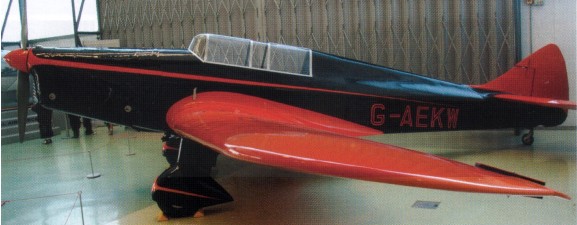
The Miles M.12 Mohawk was a tandem two-seat cabin monoplane, of which only one was completed (G-AEKW), to the requirements of Charles Lindbergh. He needed a fast, long-range touring aircraft for business trips around Europe with his wife.
Built by Phillips and Powis at Woodley Aerodrome, the aircraft was of wooden construction using spruce frames and birch plywood with fabric covering on the tail surfaces with a 200 hp / 149kW Menasco Buccaneer B6S engine. Lindbergh’s personal requirements included rudder pedals adjustable for leg length (as he was over six feet tall) and removable seat backs permitting conversion of the seats into a bed if overnighting in remote areas.
The aircraft first flew on 22 August 1936 and was presented by Lindbergh to the British Government at the outbreak of war in 1939. Following Lindbergh’s return to the US the Mohawk was impressed for the RAF as HM503 in November 1941. It saw only limited wartime use as a communications aircraft with Maintenance Command Communications and Ferry Squadrons.
Restored to the civil register in May 1946 it was later converted to open cockpits. While touring Spain , it was written off in a landing accident in January 1950.
The wreck was discovered by Connie Edwards in a Seville scrap yard in December 1973 and removed to the US by Louis Casey in November 1975. The Mohawk was partially restored before being donated to the RAF Museum and restoration was completed at the Michael Beetham Conservation Centre, RAFM Cosford.
Miles M.11 Whitney Straight
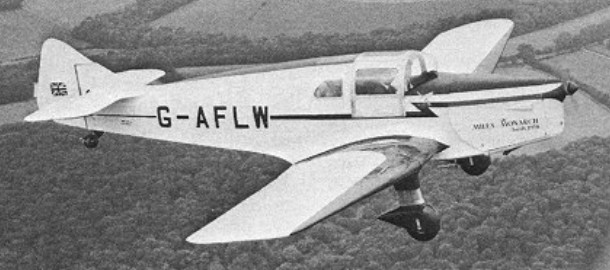
In the mid-1930s wealthy aviation enthusiast Whitney Straight approached F. G. Miles to design a new lightplane for flying club use, the result being the Miles M.11 Whitney Straight two-seat cabin monoplane of low-wing configuration. The prototype (G-AECT) was flown for the first time on 14 May 1936, and its all-round good qualities resulted in the production of 50 M.11A, M.11B and M.11C aircraft over the next two years, until 1937.
The second production Miles M.11A Whitney Straight, G AERS was first registered on January 20, 1937.
A number of these were used for experimental purposes, including the testing of various engines and, on the prototype, of auxiliary aerofoil flaps, the data gained proving beneficial to later Miles aircraft.
No new M.11 aircraft were supplied for military use, but a number were impressed for service as communications aircraft during World War II, their number including 23 for the RAF (21 in the UK and two in India), and three for the Royal New Zealand Air Force.
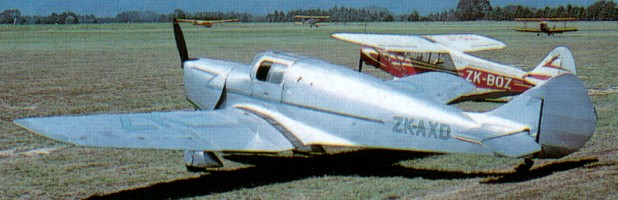
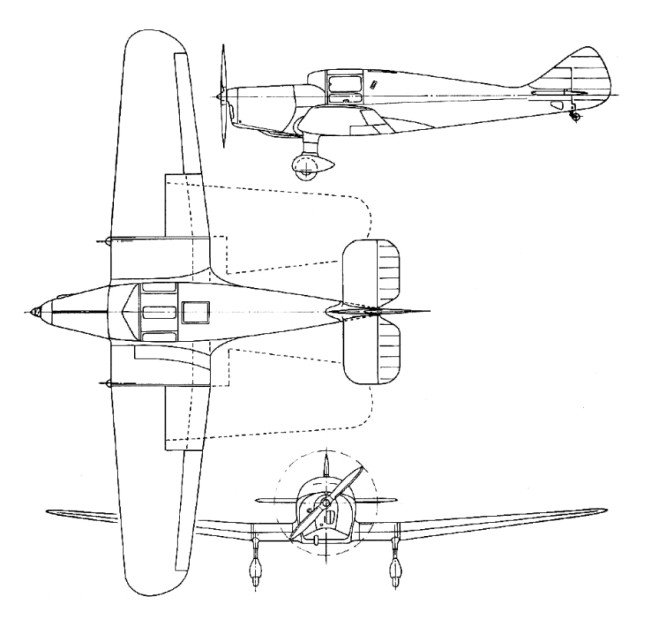
Miles M 11 A Whitney Straight
Engine: De Havilland Gipsy Major, 130 hp
Length: 25.0 ft / 7.62 m
Height: 6.496 ft / 1.98 m
Wingspan: 35.663 ft / 10.87 m
Wing area: 186.971 sq.ft / 17.37 sq.m
Max take off weight: 1896.3 lb / 860.0 kg
Weight empty: 1274.5 lb / 578.0 kg
Max. speed: 153 kts / 283 km/h
Wing load: 10.25 lb/sq.ft / 50.0 kg/sq.m
Range: 495 nm / 917 km
Seats: 2
 All Aero