Two-seat trainer
Inter-Wars
Moravko-Slezka Vazovka Tatra
Czechoslovakia
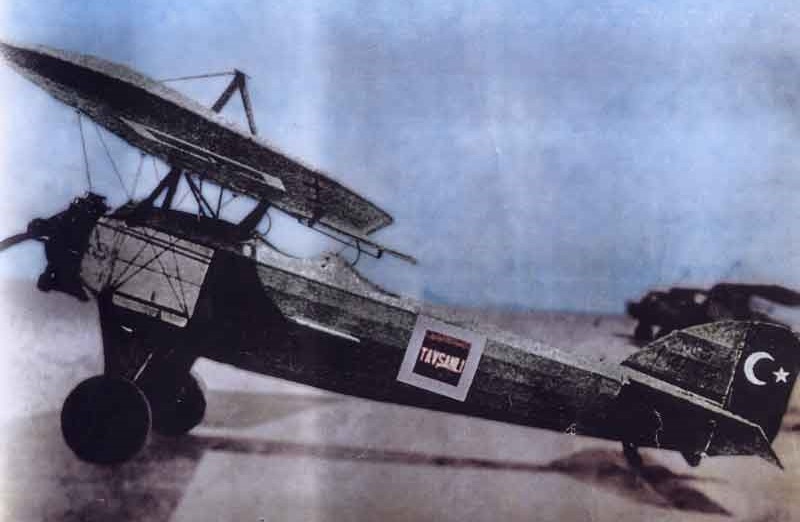
Founded in 1935 as part of the Ringhoff-Tatra combine. Obtained licenses to build the Avro 626 as T.126, and the Bucker Bu 131 Jungmann as the T.131. Produced also an own-design two-seat trainer under the designation T.1. Ceased production at the outbreak of Second World War.
Morane-Saulnier MS.147 / MS.148 / MS.149
The Morane-Saulnier MS.147 and its derivatives, the MS.148 and MS.149 were a family of trainer aircraft produced in France in the late 1920s for civil and military use.
First flying in 1928, they were derived from other machines in Morane-Saulnier’s successful line of monoplane trainers, combining the wire-braced parasol wing of the MS.138 with the fuselage and undercarriage of the MS.130. The M.S.130 had been a training aircraft used by the French Navy, while the M.S.138 was used by the Armée de l’Air in the early 1930s.
The prototype M.S.147 made its maiden flight in 1928. It was powered by a 120hp Salmson 9Ac radial engine and had a top speed of 90mph. 109 were built, of which thirty were sold to Brazil, five to Greece, three to the Aéropostale company.
The M.S.147 was followed by a single M.S.148 and then by fifty-six M.S.149s produced for the French Navy. The M.S.149 first flying in 1929.
A total of 166 were built. The various subtypes saw service with the Aéronavale, Aéropostale, and a number of foreign air arms. They were largely withdrawn from French military service by 1935.
Operators were Aéronavale (56 × MS.149), Aéropostale (3 × MS.147P), Brazil (30 × MS.147), Hellenic Air Force (5 × MS.147), Guatemalan Air Force, Turkish Air Force, Venezuelan Air Force (MS.147).
The aircraft was used as a basic trainer during the early 1930s. Most had been withdrawn from service by 1935, although a small number remained in use as late as 1939.
Variants:
MS.147
production version 106 built
Engine: Salmson 9Ac, 89 kW (120 hp)
Propeller: 2-bladed fixed pitch
Wingspan: 10.9 m (35 ft 9 in)
Wing area: 19.3 m2 (208 sq ft)
Length: 7 m (23 ft 0 in)
Height: 3.69 m (12 ft 1 in)
Empty weight: 584 kg (1,287 lb)
Gross weight: 850 kg (1,874 lb)
Maximum speed: 145 km/h (90 mph, 78 kn)
Wing loading: 43.6 kg/m2 (8.9 lb/sq ft)
Power/mass: 0.1067 kW/kg (0.0649 hp/lb)
Crew: 2
MS.147P
mailplane version for Aéropostale 3 built
MS.148
Engine: Salmson 7Ac
1 built
MS.149
version for Aéronavale (56 built)
Engine: Lorraine 5Pa, 100hp
Top speed: 87mph
Morane-Saulnier MS.405 / MS.406 / Mörkö
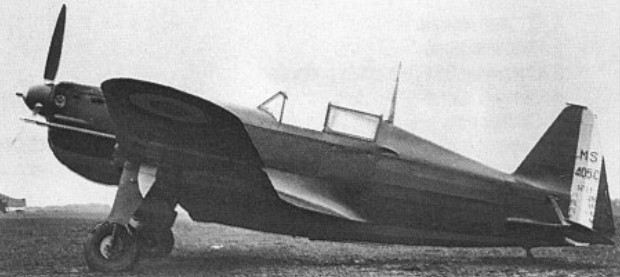
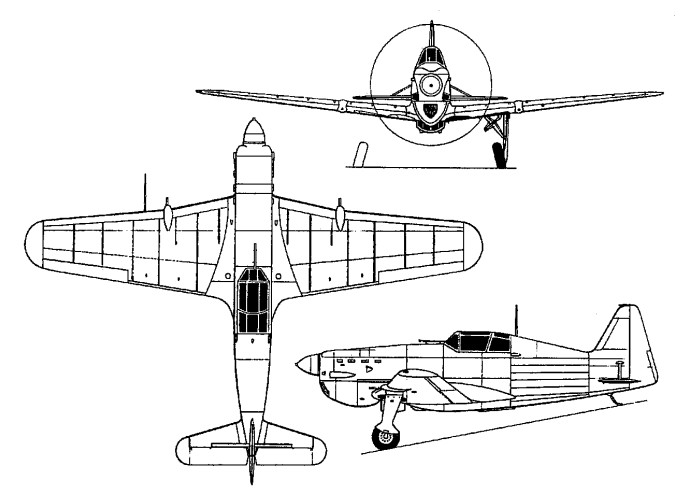
Designed in response to a French Air Force C1 requirement initially issued in September 1934, the M.S.405 was of tubular metal construction, but other than the fabric-covered rear fuselage, it had Plymax – okoume plywood bonded to aluminium – stressed skinning. Powered by an 641-kW / 860hp Hispano-Suiza 12Ygrs engine, the M.S.405.01 first prototype flew on 8 August 1935, and the second, the M.S.405.02, with a 900hp HS 12Ycrs, on 20 January 1937.
Morane-Saulnier MS.405 / MS.406 Article
A pre-series of 15 aircraft was ordered on 1 March 1937, the first flying on 3 February 1938 with an HS 12Ygrs engine and an armament of one 20mm and two 7.5mm guns. Various changes had been proposed meanwhile for the series model to which the designation M.S.406 was assigned, the new features being progressively introduced on successive M.S.405s (eg, the second featured an enlarged fuel tank, the fourth was fitted with the HS 12Y31 engine and the 12th had a simplified and lightened wing structure).
The HS 12Y31-engined 13th and 15th aircraft were delivered to Switzerland (as M.S.406Hs) in September 1938 and April 1939 as pattern aircraft for a licence-built version (D-3800). The 12th was subsequently re-engined with a 910hp HS 12Y45 and fitted with a fixed rather than semi-retractable radiator as the M.S.411 to provide a basis for the HS 12Y51-engined M.S.412 built in Switzerland as the D-3801. The final M.S.405 was flown on 21 June 1938 as a pattern aircraft for the series M.S.406.
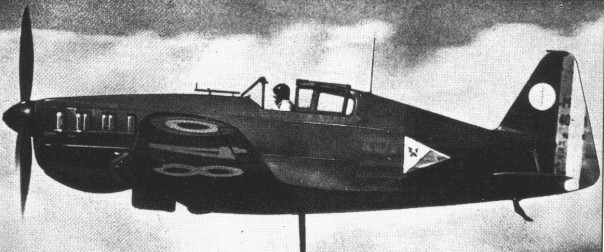
The production version was the M.S.406 with a number of detail improvements, a lightened wing structure, and a more powerful engine: 1,077 of this variant were built. As a first-generation ‘modern’ fighter, the M.S.406 was obsolescent at the beginning of World War II, but was numerically the most important fighter deployed by the French Air Force. Deliveries commenced late in 1938, a production tempo of six daily being attained by April 1939, and 11 daily four months later. Possessing an armament of one engine-mounted 20mm cannon and two 7.5mm machine guns, the M.S.406 had an 860hp Hispano-Suiza 12Y31 engine with which it was markedly underpowered.

The MS.406 was also assembled by SNCAO at St Nazaire-Bouguenais.
Production terminated in March 1940, at which time the Armee de l’Air had taken on charge 1,064 M.S.406s, of which 30 had been supplied to Finland during December 1939- January 1940, and 30 had gone to Turkey during February-March 1940. Subsequent purchases from the German authorities between late 1940 and late 1942 brought total procurement of the Morane-Saulnier fighter by Finland to 87 aircraft (including a number of M.S.410s). With the occupation of Vichy France in November 1942, German forces acquired a further 46 M.S.406s which (apart from two delivered to Finland) were supplied to the Croat Air Force. The Italians obtained 52 M.S.406s of which the 25 airworthy examples were delivered to the Regia Aeronautica.
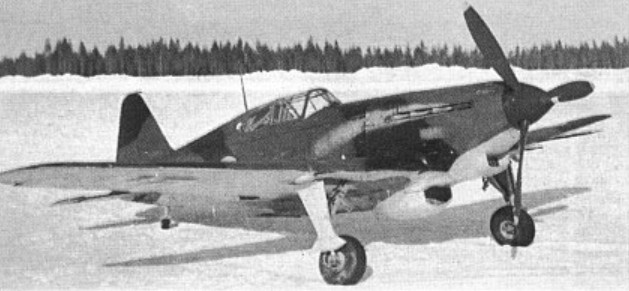
The Finns later re-engined some of their aircraft with the 820-kW (1,100-hp) Klimov M-105P under the revised name Mörkö Moraani. The increasing obsolescence of the MS 406 led the Finnish Air Force to order, on 22 October 1942, the installation of a Klimov M-105P in an MS 406 airframe. The M-105P engine derived from the HS 12Y, afforded 1,100 hp for take-off, and a substantial quantity of this power plant, together with suitable VISh-61P propellers, had been captured by the Wehrmacht and was available to the Finns. A 20-mm MG 151 cannon was mounted between the cylinder banks, a Bf 109G oil cooler was adopted, an aerodynamically-improved engine cowling was introduced, and, with some local structural strengthening, the prototype conversion was flown on 4 February 1943 as the Mörkö (Ghost) or Mörkö-Moraani. Successful trials resulted in the decision to bring all surviving MS 406 and MS 410 fighters to Mörkö standard, but only two more were completed before termination of the Finnish-Soviet conflict. Nevertheless, the conversion programme continued, and by 21 November 1945, the remaining Morane-Saulnier fighters had been modified, bringing the total number of Mörkös delivered into the Finnish inventory to 41 aircraft. These retained the two or (in the case of the MS 410 conversions) four wing-mounted 7,5-mm machine guns, but shortages of the MG 151 cannon necessitated this engine-mounted weapon being replaced by a 12,7-mm Berezina UB machine gun in some aircraft. The Mörkö remained in service until 11 September 1948, when the survivors were placed in storage and scrapped four years later.
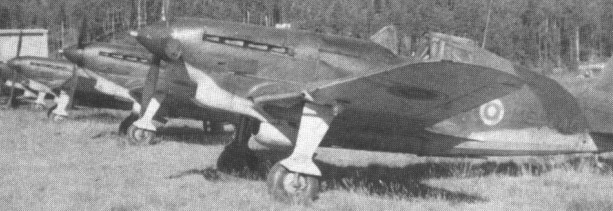
MS.405
Engine: 1 x Hispano-Suiza HS 12Ycrs, 900hp
Max take-off weight: 2440 kg / 5379 lb
Wingspan: 10.62 m / 34 ft 10 in
Length: 8.17 m / 26 ft 10 in
Height: 2.71 m / 8 ft 11 in
Wing area: 17.10 sq.m / 184.06 sq ft
Max. speed: 443 km/h / 275 mph
Range: 1000 km / 621 miles
M.S.406
Engine: l x Hispano-Suiza 12Y-31, 641 kW (860 hp)
Span: 10.6m (34 ft 9.25 in)
Length: 8.15m (26ft 9in)
Height: 2.71 m / 8 ft 11 in
Wing area: 17.10 sq.m / 184.06 sq ft
Empty weight: 1893 kg / 4173 lb
Max T/O weight: 2470 kg. (5,445 lb)
Max speed: 302 mph / 486 km/h at 16,405 ft
Max range: 1000 km / 621 miles
Operational range: 497 miles
Ceiling: 9400 m / 30850 ft
Crew: 1
Armament: 1 x 20-mm Hispano-Suiza cannon and 2 x 7.5-mm (0.295-in) MAC mg
Mörkö
Engine: Klimov M-105P, 1,100 hp
Propeller: VISh-61P
Max take-off weight: 2 849 kg / 6,280 lb
Empty weight: 2106 kg / 4643 lb
Wingspan: 10.62 m / 34 ft 10 in
Length: 8.38 m / 27 ft 6 in
Height: 2.71 m / 8 ft 11 in
Wing area: 17.10 sq.m / 184.06 sq ft
Max. speed: 525 km/h / 326 mph at 13,125 ft (4 000 m)
Initial climb, 4,921 ft/mm (25 m/sec)
Morane-Saulnier MS 350
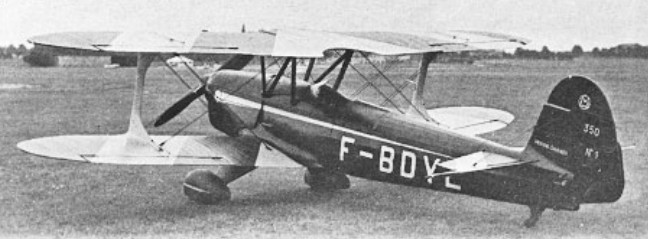
Flown for the first time on 8 February 1936, the Morane-Saulnier M.S.350 was a small single-seat open-cockpit aerobatic biplane with equal-span wings, the independent main legs of the fixed landing gear being fully faired and fitted with streamlined wheel ‘spats’. Powered initially by a Renault 453/01 engine, the prototype was soon fitted with a Renault 478/01 6 Q/01 of 164kW. Despite lack of service orders for the type, the M.S.350 gained a remarkable reputation thanks to a series of breathtaking demonstrations by Detroyat at air shows in France and Switzerland in the period up to September 1939. The aircraft was then much modified and fitted with a new Zenith carburettor to permit prolonged inverted flight. Recovered from storage post-war the M.S.350 saw a limited amount of use until on 8 December 1964 it was damaged beyond repair in Italy and subsequently scrapped.
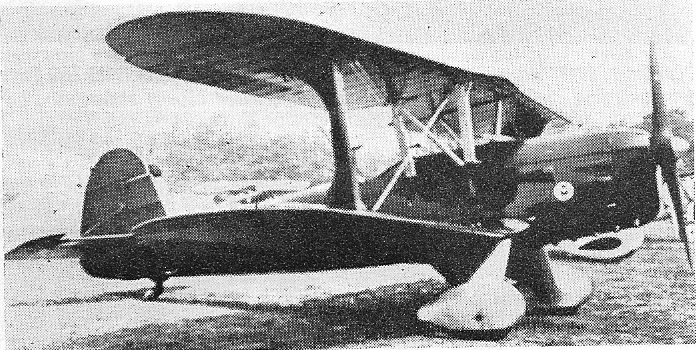
Engine: Renault 6Q-01, 220 hp
Wingspan: 26 ft 3 in
Length: 19 ft 8 in
Max take-off weight: 990 kg / 2183 lb
Max. speed: 255 km/h / 158 mph
Cruise: 132.5 mph
ROC: 920 fpm
Range: 310 mi
Morane-Saulnier MS 340 / MS 341 / MS 342 / MS 343 / MS 345
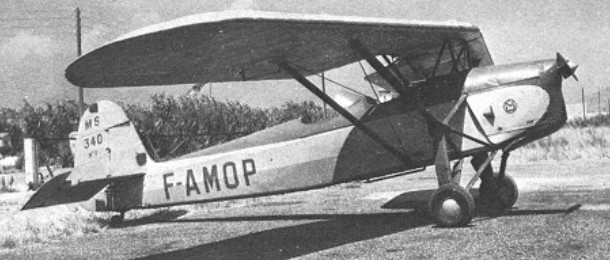
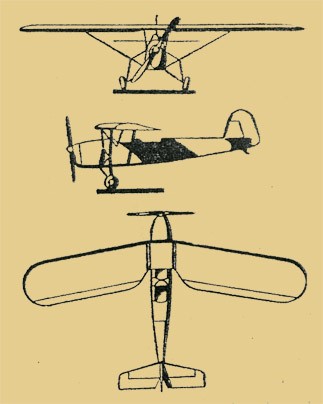
The Morane-Saulnier MS.341 was a parasol wing monoplane of mixed wood and metal construction, fabric-covered, designed for club and training rôles. The wing, with 18° of sweep but with no dihedral, was mounted centrally to the upper fuselage by N-shaped cabane struts and braced with V-form lift struts from mid-span to the lower fuselage longeron. The fuselage was flat sided with a curved decking and tandem open cockpits, the forward one under the wing leading edge where there was a cut-out for better visibility. The MS.341 had a fin with a straight leading edge and a tailplane mounted on top of the fuselage, braced to the fin. The rudder extended to the bottom of the fuselage, moving between the two separate elevators. Both control surfaces were horn balanced.

The MS.340 prototype made its first flight in April 1933, powered by a 90 kW (120 hp) de Havilland Gipsy III but later flew as a MS.341 with a 90 kW (120 hp) Renault 4Pdi engine. The MS.341 had a conventional undercarriage with a small tailwheel. Single mainwheels were mounted on V-form legs hinged centrally under the fuselage. Vertical shock absorber in broad fairings were supported by an array of four struts, one to the forward lift strut’s junction with the wing, one to the upper fuselage longeron and two to the lower one.
Principal production version was the M.S.341 and some 40 aircraft of all versions were built up to 1937. Three were flown as liaison aircraft by Republican government (anti-Franco) forces in the Spanish Civil War.
Most of the variants in the MS.340 family were powered by air-cooled inverted four cylinder in-line piston engines from either Renault or de Havilland. The exception was the MS.343 variant which had a nine cylinder Salmson 9N radial. Twelve MS.343/3s were sold to L’Armée de l’Air.
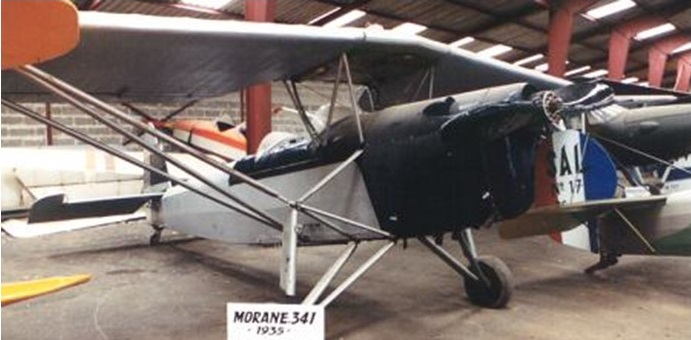
The final variant was the MS.345 which appeared in 1935. It had dihedral on the wings and a taller fin and rudder. The shock absorber mounting was simplified, with the four struts per side replaced with a Y-shaped strut between wing and undercarriage leg. The leg struts were now faired together and the wheels spatted. It was powered by a 100 kW (140 hp) Renault 4Pei engine. The MS.345 first flew in June 1935 but by this time Morane-Saulnier were concentrating on the MS.405/6 fighter and in the absence of orders for the MS.345 development of the lightplane ceased.

The great majority of the MS.340 series aircraft owned by private individuals and clubs were MS.341s, with the French engine. They account for about nineteen of the twenty seven examples of all variants on the reconstructed French Civil register. Five British engined MS.342s appear but four of these were later re-engined to make them MS.341s.
Variants:
MS.340
Prototype with 89.5 kW (120 hp) de Havilland Gipsy III inverted in-line engine.
MS.341
Prototype re-engined with an 89.5 kW (120 hp) Renault 4Pdi inverted in-line.
MS.341/2
89.5 kW (120 hp) Renault 4Pdi inverted in-line engine.
MS.341/3
104 kW (140 hp) Renault 4Pei inverted in-line engine.
MS.342
97 kW (130 hp) de Havilland Gipsy Major inverted in-line engine.
MS.342/2
MS.342 with enclosed cockpits.[2] One only.
MS.343
130.5 kW (175 hp) Salmson 9Nd radial engine.
MS.343/2
100 kW (135 hp) Salmson 9Nc radial engine.
MS.345
Modifications to wings, undercarriage and empennage. 100 kW (140 hp) Renault 4Pei inverted in-line engine.
Specifications
MS.341/3
Engine: 1 × Renault 4Pei, 100 kW (140 hp) at 2,400 rpm
Propeller: 2-bladed
Wingspan: 10.2 m (33 ft 6 in)
Length: 6.94 m (22 ft 9 in)
Height: 2.29 m (7 ft 6 in)
Wing area: 15.75 m2 (169.5 sq ft)
Empty weight: 557 kg (1,228 lb)
Gross weight: 920 kg (2,028 lb)
Maximum speed: 200 km/h (124 mph; 108 kn)
Crew: 2
Morane-Saulnier MS.325
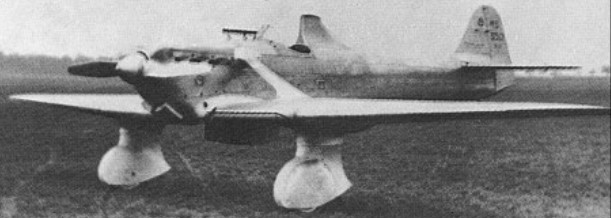
To meet the same C1 requirement as the M.S.275, Morane-Saulnier developed in parallel the M.S.325. This, for the first time since the company resumed single-seat fighter development in 1926, discarded the classic parasol wing configuration in favour of a low-mounted wing. Flown for the first time early in 1933, the prototype M.S.325 was powered by an Hispano- Suiza 12Xbrs engine rated at 690hp and was an all-metal dural-skinned braced low-wing monoplane with an armament of two wing-mounted 7.7mm guns. Initial flight testing dictated lowering of the tailplane and introduction of wing root fairings in an attempt to eradicate a serious buffet problem. Trials continued to suffer aerodynamic difficulties, and, in 1934, further development was discontinued. Full performance trials were never concluded.
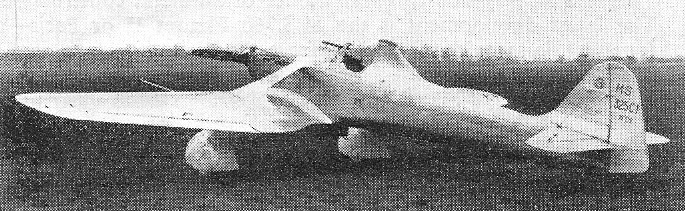
Manufacturer’s estimates
Max take-off weight: 1789 kg / 3944 lb
Empty weight: 1354 kg / 2985 lb
Wingspan: 11.80 m / 38 ft 9 in
Length: 8.25 m / 27 ft 1 in
Height: 3.70 m / 12 ft 2 in
Wing area: 19.73 sq.m / 212.37 sq ft
Max. speed: 365 km/h / 227 mph
Ceiling: 12000 m / 39350 ft
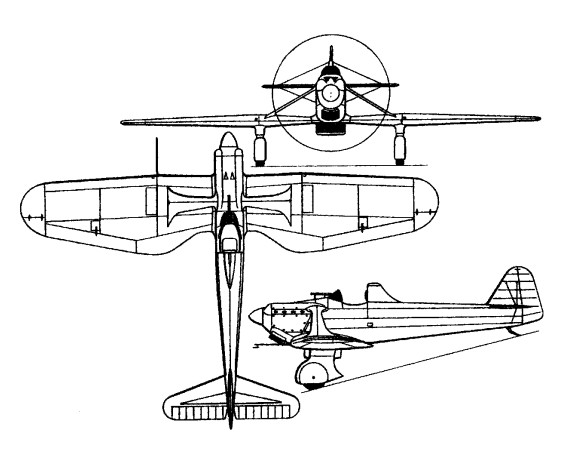
Morane-Saulnier MS.315 / MS.317
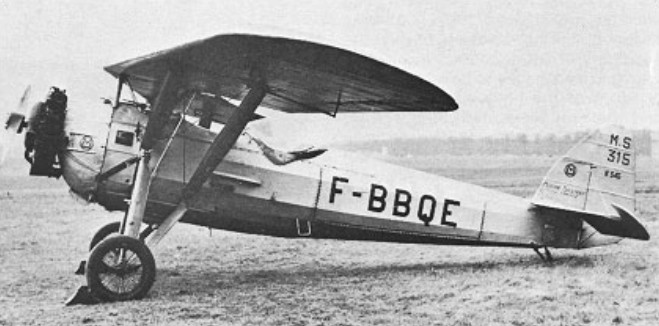
Developed from the M.S.300 primary trainer prototype of 1930, and its M.S.301 and M.S.302 variants, the Morane-Saulnier M.S.315 flew for the first time in October 1932. Of parasol high-wing configuration, it was of mixed construction with divided main landing gear, powered by a 135hp Salmson 9 Nc engine. Four prototypes were followed by 346 series aircraft for the French Air Force, 33 of them built post-war.
In addition, five higher-powered M.S.315/2 aircraft were built for civil use, plus a single M.S.316 with a Regnier inverted-vee engine. The type became the workhorse of the French Armee de I’Air and served also with the Aeronavale and various civil flying schools. It was a favourite at many pre-war airshows flown by such notables as Thoret, Fleurquin and Detroyat.
Next to the Air Force the Navy operated the M.S.315 as a military trainer and as a glider tug.
Produced in substantial quantities pre-war, production was resumed after the war by SNCA du Centre, thirty-three being built.
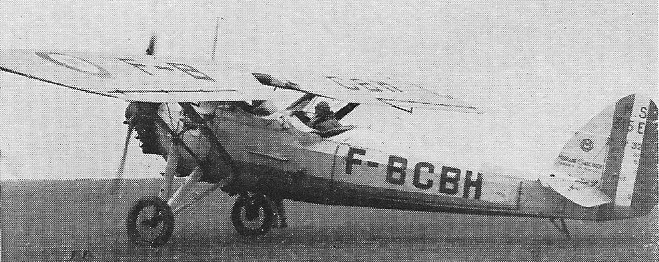
Between 1960 and 1962 the type was withdrawn from military use, 40 M.S.315s then in use as civil glider tugs were re-engined with the 220 hp / 164kW war-surplus Continental W-670K radial, being redesignated M.S.317.
About ten MS.317 were still in flying condition in 2008.
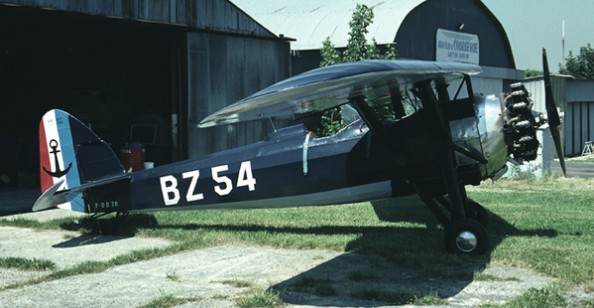
Engine: 1 x Salmson 9Nc radial, 101kW
Max take-off weight: 860 kg / 1896 lb
Loaded weight: 548 kg / 1208 lb
Wingspan: 12.00 m / 39 ft 4 in
Length: 7.60 m / 24 ft 11 in
Height: 2.80 m / 9 ft 2 in
Wing area: 21.60 sq.m / 232.50 sq ft
Max. speed: 170 km/h / 106 mph
Ceiling: 5500 m / 18050 ft
MS.315-II
Engine: Salmson 9Nd, 175 hp
Morane-Saulnier MS.275
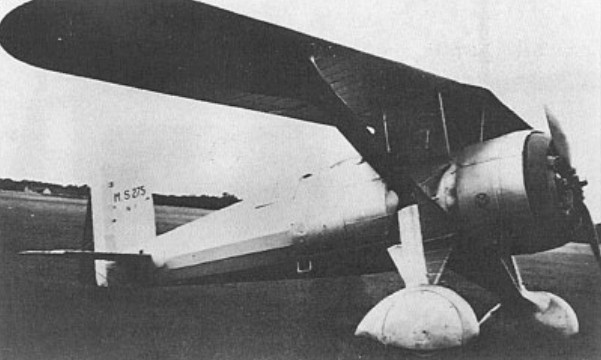
The C1 (monoplace de chasse) requirement first issued by the Service Technique Aeronautique in 1930 – when it was finally conceded that the Jockey programme had failed – and upgraded on 26 January 1931, resulted in no fewer than 10 designs being awarded prototype contracts. These included two Morane-Saulnier proposals.
The first, the M.S.275, retained the classic parasol monoplane configuration of preceding Morane-Saulnier fighters and was flown in 1934. A version of the MS.225 with a modified aerofoil and empennage, powered by a Gnome-Rhone 9Krse nine-cylinder radial rated at 600hp at 4000m and armed with two synchronised 7.7mm guns, the M.S.275 proved exceptionally manoeuvrable and offered a very respectable performance. It found little favour, however, owing to its dated concept, development being discontinued, together with that of the more innovative M.S.325, in favour of the more promising M.S.405 then in preliminary design.
Max take-off weight: 1724 kg / 3801 lb
Empty weight: 1361 kg / 3001 lb
Wingspan: 10.56 m / 34 ft 8 in
Length: 7.24 m / 23 ft 9 in
Height: 3.29 m / 10 ft 10 in
Wing area: 17.20 sq.m / 185.14 sq ft
Max. speed: 363 km/h / 226 mph
Ceiling: 10700 m / 35100 ft
Range: 1150 km / 715 miles
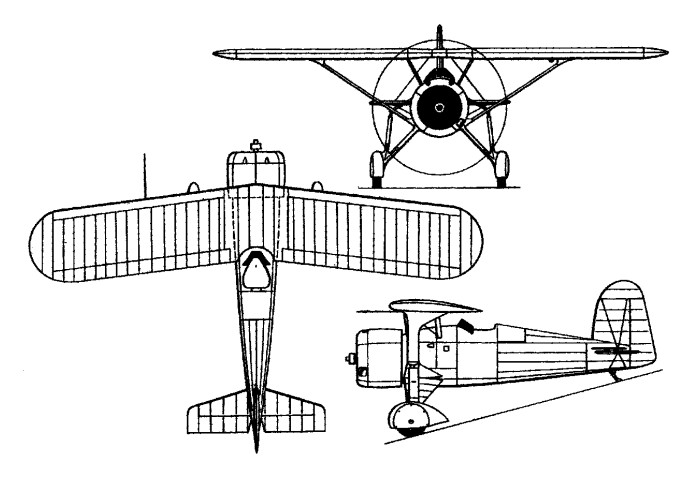
Morane-Saulnier MS.230
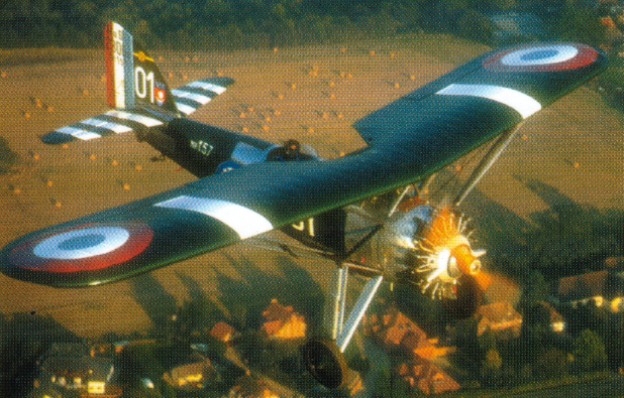
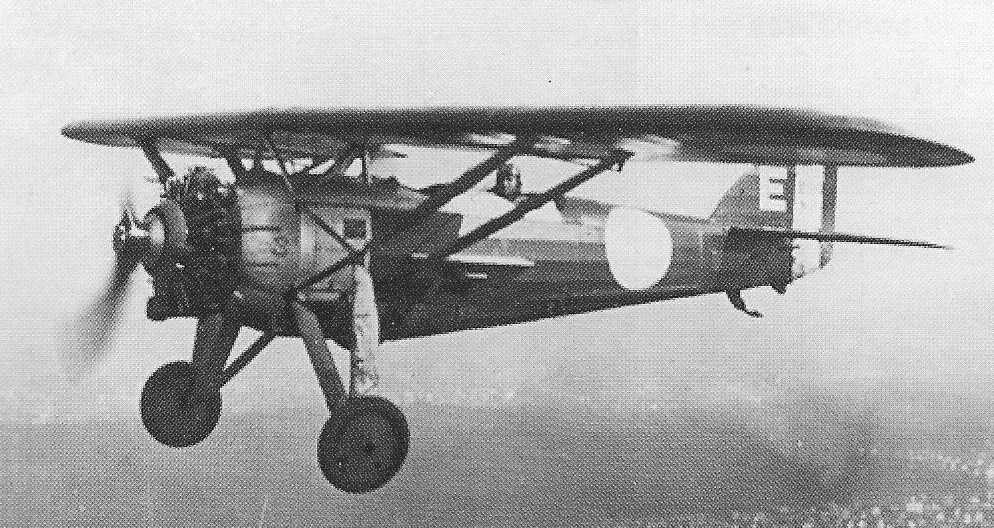
In the inter-war period, Morane Saulnier started its series of high-wing parasol types. The parasol-wing MS.230 that was flown first in February 1929 was the most successful and became a prominent trainer during the 1930’s.
 All Aero