Nicholas-Beazley Pobjoy Special / Phantom I / Wittman Phantom / Flagg Phantom / Reaver Special

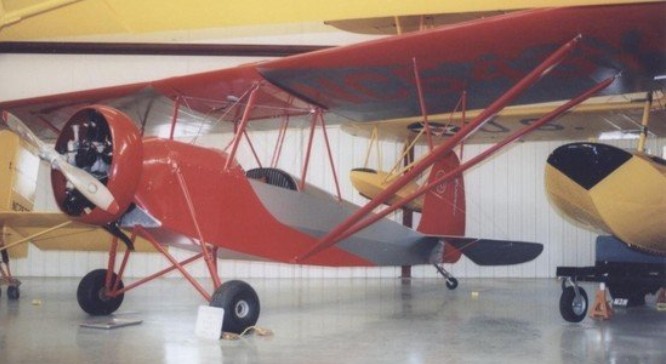
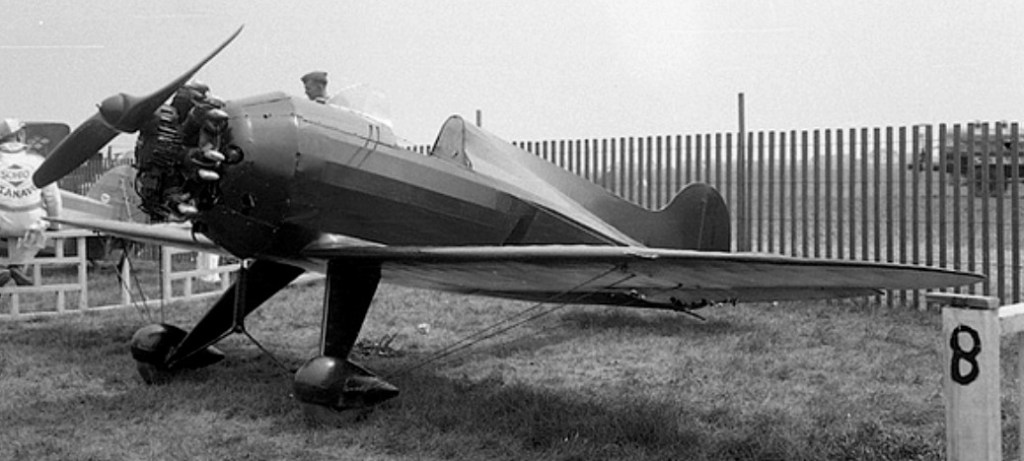
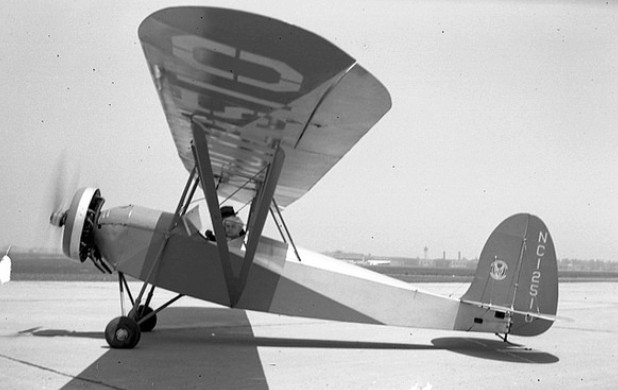
The Nicholas-Beazley Pobjoy Special aka the Nicholas-Beazley Phantom I, aka the Wittman Phantom, aka the Flagg Phantom, aka the Reaver Special was a world record holding air racer of the 1930s

The Nicholas-Beazley Airplane Company had imported a Pobjoy engine with a gear reduction unit for use in its new design the Nicholas-Beazley NB3. Designer Robert T. Jones computed the weight and balance for the setup and proposed a new design as an air-racer. Claude Flagg and H. F. Landis built the aircraft in their spare time under the Marshall Aircraft Laboratories monicker and patented the wing design. The Nicholas-Beazley company conducted the tests and produced the subsequent engineering report on the machine, under the supervision of inhouse chief engineer T. A. Kirkup, who also designed most N.-B.

The fuselage is welded steel with fabric covering. The wings used an early application of lightweight aluminum construction with U shaped cantilever spars with wire bracing and fabric covering. The aircraft used wheels with small tires and without brakes. The cockpit was open and the engine was fully cowled.

The Phantom I was given an “R” license by the federal government and, piloted by Danny A. Fowlie of Morris, Illinois, was entered in the 1930 National Air Races in Chicago from August 23 to September 1.

In 1932 Ownership passed to Air Racer Steve Wittman. A Air Commerce inspector fronted the money, and had Wittman race the aircraft to avoid a conflict of interest. The Pobjoy Special is the only racer Wittman raced that he did not build or design himself. In 1932 the Pobjoy P engine was replaced with a Pobjoy R of 75 hp. The cockpit was also enclosed. In 1933 Wittman lengthened the fuselage by 21 inches, removed the engine cowling and modified the rudder (now called the Pobjoy Special). In 1946 The engine was replaced with a Continental C-85.
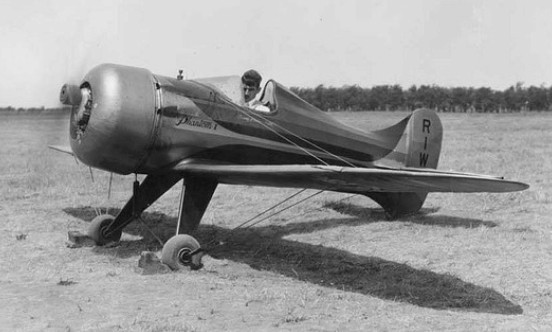
In 1937 the Pobjoy Special was flipped on its back. It was rebuilt sold, and stored until the end of WWII. It resurfaced in 1948 as the Reaver Special midget racer, with a 22′ wing and the more powerful 85 hp Continental engine. John Reaver entered the aircraft as the Reaver Special in the new Goodyear Formula One races.

1930 National Air Races – Registered as R1W, pilot Danny Fowlie reached 115 mph placing third in class with a mismatched prop.

1933 Chicago International Air Races – Pilot Steve Wittman wins all races in the 200ci class with a maximum speed of 120 mph.

1934 New Orleans – Wittman wins the 100 km world speed record of 137.513 mph for aircraft less than 440 pounds.

1934 Cleveland Air Races – Wittman wins all races in the 200ci class with a speed of 129.440 mph.

1935 Cleveland Air Races – New owner Percy V. Chaffee wins all races in 200ci class.

In 1936 the 200ci class is eliminated, making the Pobjoy Special obsolete for racing.

1937 St.Louis – Last race of the Pobjoy Special.

Replica:
Turner / Repeat Aviation Nicholas-Beazley Pobjoy Special

Specifications:

Phantom I
Engine: 65 hp Pobjoy P (Niagara II)
Wingspan: 21′ 9″
Length: 12′ 9″ in
Empty weight: 355 lb
Top speed: 200+ mph

Pobjoy Special
Engine: 1 × Pobjoy R Niagara II Radial, 65 hp (48 kW)
Length: 21 ft 9 in (6.63 m)
Empty weight: 355 lb (161 kg)
Capacity: 1

Reaver Special
Engine: 85 hp Continental
Wing span: 22′
Nicholas-Beazley NB-8 / NB-8G / NG-8G / NM-8G

NB-8G

The NB-8 was a light parasol wing monoplane designed by Tom Kirkup and built by the Nicholas-Beazley Airplane Company at its factory in Marshall, Missouri. The first of 58 examples flew in 1931, and most are powered by the Armstrong-Siddeley Genet Mark II engine of 80 hp (60 kW). Initially a 36 hp Aeronca two-cylinder engine powered the aircraft, subsequently a 45 hp Szekely engine was fitted, while the final choice was an 80 hp Armstrong Siddeley Genet Mk.II. Some were later fitted with the 80 hp (60 kW) Lambert engine.

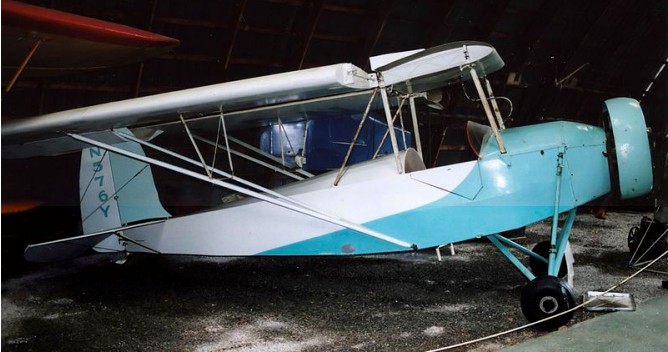
The aircraft has a high strut-mounted parasol wing that can be folded to reduce hangarage space required and to permit towing by road. The two crew seats are arranged side-by-side. Initially the cockpit was open, but some examples later had an enclosure fitted.

The NB-8G was advertised for sale at $1,790. The ‘G’ in the designation originally indicated installation of the A-W Genet radial engine. It was fully aerobatic. 58 examples were purchased, mainly by private pilot owners in the United States. Production ceased in 1935. The 58 aircraft of the type produced were: 1 NB-8, 54 NB-8G’s, 1 NG-8G, and 2 NM-8G’s.

Six examples were still extant in 2009, with at least two being fully airworthy. Examples of these can be viewed at the Old Rhinebeck Aerodrome museum in New York State, and the Historic Aircraft Restoration Museum at Creve Coeur airfield near St Louis Missouri.

N576Y (cn K-18) 1931-built single-seat parasol-winged light aircraft maintained airworthy at Old Rhinebeck. The aircraft is exhibited with its wings folded.

Gallery

NB-8G
Engine: 1 × Armstrong-Siddeley Genet II, 80 hp (60 kW)
Wingspan: 37 ft 6 in (11.43 m)
Length: 20 ft 3 in (6.17 m)
Useful load: 493 lb (224 kg)
Maximum speed: 110 mph (177 km/h)
Cruise speed: 83 mph
Stall speed: 40 mph (64 km/h)
Range: 400 miles (644 km)
Service ceiling: 18,000 ft (5,486 m)
Seats: 2

Production:
Registr. Type c/n
NC436V NB-8 K-1
NC502Y NB-8G K-2
NC517Y NM-8G K-3
NC525Y NB-8G K-4
NC524Y NB-8G K-5
NC541Y NB-8G K-6
NC542Y NB-8G K-7
NC543Y NB-8G K-8
NC544Y NB-8G K-9
NC545Y NB-8G K-10
NC558Y NB-8G K-11
NC559Y NB-8G K-12
NC560Y NB-8G K-13
NC561Y NB-8G K-14
NC562Y NB-8G K-15
NC574Y NB-8G K-16
NC575Y NB-8G K-17
NC576Y NB-8G K-18
NC577Y NB-8G K-19
NC578Y NB-8G K-20
NC580Y NB-8G K-21
NC581Y NB-8G K-22
NC582Y NB-8G K-23
NC583Y NB-8G K-24
NC584Y NB-8G K-25
NC11063 NB-8G K-26
NC11064 NB-8G K-27
NC11065 NB-8G K-28
NC11066 NB-8G K-29
NC11067 NB-8G K-30
NC11071 NB-8G K-31
NC11072 NB-8G K-32
NC11073 NB-8G K-33
NC11074 NB-8G K-34
NC11075 NB-8G K-35
NC11087 NB-8G K-36
NC11088 NB-8G K-37
NC11089 NB-8G K-38
NC11090 NB-8G K-39
NC11091 NG-8G K-40
NC11095 NB-8G K-41
NC11096 NB-8G K-42
NC11097 NB-8G K-43
NC11098 NB-8G K-44
NC11099 NB-8G K-45
NC12505 NB-8G K-46
NC12506 NB-8G K-47
NC12507 NB-8G K-48
NC12508 NB-8G K-49
NC12509 NB-8G K-50
NC12510 NB-8G K-51
NC12514 NB-8G K-52
NC12515 NB-8G K-53
NC12516 NB-8G K-54
NC12517 NB-8G K-55
NC12518 NM-8G K-56
NC12527 NB-8G K-57
NC15498 NB-8G K-58

New Standard D-29 / NT-1

New Standard D-29A NC155M s/n 1007

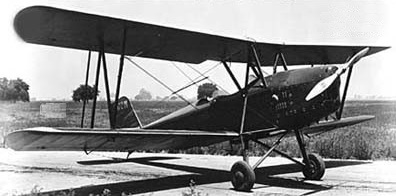
The 1929 New Standard D-29 design (ATC 198) evolved from license-built Belgian Stampe-Vertongen D-29A. Probably only one machine was built, priced at $4,250.

Twenty-six of the 1929 D-29A (ATC 216) were built; NC36K, NC151N/158M, NC164M/172M, NC715Y, NC913V, NC922V/926V, and NC9195, powered by a Kinner K-5 and priced at $4,250.

New Standard D-29 Special NX172M

The D-29 Special of 1929 (2-326) was for 95hp Menasco B-4 installation as D-29 Special in NX172M c/n 1026.

New Standard D-29 Special NX172M

USN version with Kinner B-5 was NT-1.

The D-29S of 1930 (ATC 2-272) was a “Sport” version with coupe-type cockpit priced at $5,000.

One special model built for Charles H Day, NC173M c/n 1020; also appears on registers as D-25C.

D-29
Engine: 85hp Cirrus Mk III
Wingspan: 30’0″
Length: 24’11”
Useful load: 535 lb
Max speed: 88 mph
Cruise: 75 mph
Stall: 37 mph
Range: 300 mi
Seats: 2

D-29A
Engie: 100hp Kinner K-5
Wingspan: 30’0″
Length: 24’8″
Useful load: 625 lb
Max speed:: 98 mph
Cruise: 80 mph
Stall: 42 mph
Range: 250

D-29 Special
Engine: 95hp Menasco B-4 i

NT-1
Engine: Kinner B-5

D-29S
Useful load: 655
Max speed: 102 mph
Cruise: 85 mph
Stall: 45 mph
Range: 340 mi

D-25C
NC173M c/n 1020

New Standard D-25

New Standard D-25 as crop-duster N928V

The 1925 D-25 received ATC 108 and was priced at $9,795. About 45 were built. ATC 2-542 was issued in 1937.

In 1928 the Gates-Day Aircraft Corporation became New Standard Aircraft Corporation, and the following year produced the White New Standard D-25 tandem, open-cockpit four-seat biplane, developed from the Gates-Day GD-24.

With the pilot seated behind and four passengers in front, all in open cockpits, it is a large biplane by any standards.

Designed by Charles H Day, production of D¬25s began at the Gates Day plant at Peterson, New Jersey in 1928 and when production ceased two years later about 65 of the type had been delivered a few were built during the 1930s as crop dusters.

Jones Aircraft Corp was formed in 1935 by Ben Jones after acquiring rights in D-25 biplane previously built by the New Standard Aircraft Company. Jones built 10 of these in 1938, in factory at Schenectady, New York.

New Standard D-25

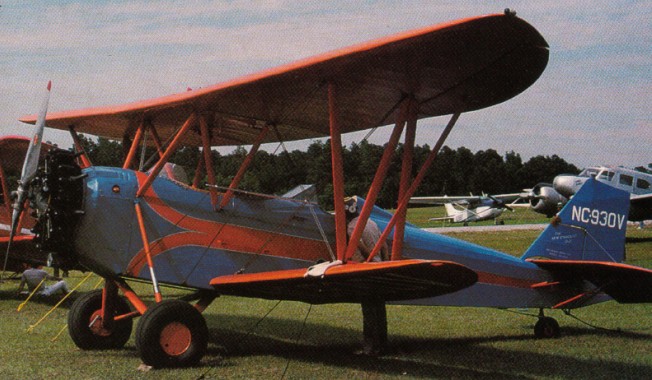
The 1929 D-25A (ATC 224) was powered by a 225hp J-6 for an increase in load. Priced at $7,990, five were built, NC33K, NC38K, NC150M, NC930V, NC9190, the next-to-last of which was modified with 300hp J-6 as D-25B (see White D-25B).

The D-25X was a modification of D-25A, registered N37K c/n 203.

D-25
Engine: 220hp Wright J-5
Wingspan: (upper) 45’0″ (lower) 32’6″
Length: 26’10”
Useful load: 810 lb
Max speed: 110 mph
Cruise: 98 mph
Stall: 37 mph
Range: 490 mi
Ceiling: 18,000′
Seats: 5

D-25A
Engine: 225hp Wright J-6

New Standard D-24

The 1929 New Standard D-24 (ATC 107) was designed by Charles H Day as a five-place open biplane. Selling for $4,600 with a 180hp Wright-Hisso E or $4,250 with a 150hp Hisso A, four were built, NC442, NC9102, NC9756, and NC9794, and two were converted from Standard GD-24, NC193 and NX7286.

D-24
Engine: 180hp Wright-Hisso E
Wingspan: 45’0″
Length: 26’6″
Useful load: 1334 lb
Max speed: 100 mph
Cruise speed: 95 mph
Stall: 37
Range: 550 mi
Seats: 5