The two-seater Mg 9 was designed by Erwin Musger in 1935, and in this Musger himself set up an Austrian duration record of 8.09 hours in 1936. This was followed by a world duration record of 40 hours 51 minutes set up on 10 September 1938, also in an Mg 9; six months before Austria had been annexed by Nazi Germany under the Anschluss.
Inter-Wars
Oberlerchner Mg 4
The Ing Erwin Musger designed Mg 2 of 1930 was followed in 1931 by the Mg 4, Austria’s first high performance glider which made some notable long distance fights, and which was developed into the Mg 10.
Oberlerchner Mg 2
The first of the Mg series designed by Ing Erwin Musger was the gull-winged Mg 2 of 1930, a cantilever shoulder wing monoplane of 18m (59 ft 0.5 in) span, followed in 1931 by the Mg 4.
Nyuxtikov N-4
The N-4 (Russian: Нюхтиков Н-4) glider was conceived as a low-wing glider in a tailless configuration and featured a wing with a 30º sweep and a wingspan of close to 15 meters. Longitudinal and transverse control of the glider was obtained through elevons located on the wing leading edge and the directional one through surfaces located in the lower part of the wing, mediated by the wingspan.
Nyuxtikov put special emphasis on improving the view from the cockpit. The landing gear included a tail wheel located at the base of the empennage.
The N-4 was never finished, even though its construction began in 1932 in the Kacha circle of interest. The main reason for his abandonment was the change of direction in the flight school that decided to prioritize the physical preparation of the pilots over their technical or design capacity. Unfortunately Nyuxtikov did not finish this interesting project in which they included several new details.
In the construction of the N-4 the stringers of a destroyed Polikarpov R-1 were used, as well as various elements of its flight control system. Due to certain doubts about the maneuverability and resistance of the device in the absence of its creator (since July 1933 Mikhail Nyuxtikov had started working as a test pilot on the NII VVS) the glider was never tested.
A scale copy built by technician Bugovsky at Kacha flew without difficulty.
Nyuxtikov had considered the possibility of equipping this glider with a 400 hp Liberty engine obtained from the R-1 itself, turning it into a tailless plane.
N-4
Wingspan: 15. m
Accommodation: 1
Nyuxtikov N-3 Motiliok
Between 1932 and 1933 under the leadership of Nyuxtikov, the members of the Sevastopol circle of interest would develop a new model of glider that received the name “Motiliok”.
The “Motiliok” was designed as a high wing glider braced by struts and with a high tail bar. The wing, with a single spar, was rectangular in plane, with slightly curved ends and a G-652 type profile. The lar bracing was carried out using cables.
The fuselage was conceived in the shape of a gondola covered with fabric, which ended with a wooden bar located high, just at the exit of the wing trailing edge. At the rear end of this bar was the conventional tail with triangular stabilizers to which the elevator rudders were attached and an empennage with offset rudder.
The landing gear consisted of a wooden ski with no depreciation.
Built at the Kacha Flight School, the “Motiliok” glider was entered in the IX Koktebel National Sailing Competitions, held in 1933.
The evaluation commission considered that the glider had been calculated for very small loads, therefore the structural resistance of the wing and the tail planes was insufficient. For this reason the “Motiliok” was not approved to perform the flights in the competition.
Nyuxtikov N-3 Motiliok
Wingspan: 10.70 m
Wing area: 13.20 m²
Aspect ratio: 8
Length: 6.05 m
Height: 1.35 m
Empty weight: 95 kg
Wing loading: 13.2kg / m²
Stabilizers surface: 0.83 m²
Elevator area: 0.94 m²
Rudder surface of the empennage: 0.30 m²
Rudder surface area: 1.26 m²
Aileron surface: 1.70 m²
Accommodation: 1
Nyuxtikov N-2 Sebastopoliets
In 1930 the brothers Mikhail and Konstantin Nyuxtikov developed the “Sevastopoliev” glider. The idea came after they tried to fly without success the single-seater “Koktebel” glider from SP Koroliov and SN Lyushin. The glider was very heavy so the brothers decided to develop a lighter model.
The circle of aeronautical interest of Sebastopol had tried to produce the two-seater glider Kudeyar of AN Sharapov, but desisted as too large. This group of boys aged 15 – 16 years worked on the new model that was ready in a month, using for its development parts and pieces obtained in the naval aviation repair shop. The wing profile selected for the “Sebastopoliets” was E-385.
Built at the Kacha Flight School and first flown in the fall of 1930, the first flights were made by the main builders Mikhail and Konstantin Nyuxtikov and then all the other guys flew.
The “Sevastopoliev” glider participated in the VII National Flying Competition held in Koktebel in 1930. Despite its poor characteristics, this glider underwent intense preparation during the competition. The instructors were Vladimir Verzilov, Konstantin Nyuxtikov and Vladimir Oblachko.
The circle of interest in aviation led to the formation of a flight school which was soon equipped with gliders “Standart” of Oleg Antonov and IT-4 of IP Tolstix , both flown successfully in competition Koktebel.
N-2 Sebastopoliets
Wingspan: 8.80 m
Wing area: 11.40 m²
Aspect ratio: 6.8
Length: 6.00 m
Height: 1.40 m
Empty weight: 65 kg
Wing loading: 12.7 kg / m²
Stabilizers surface: 1.98 m²
Elevator area: 0.78 m²
Accommodation: 1
Nyuxtikov N-1 Kachiniets
The Nyuxtikov N-1 Kachiniets (Russian: Нюхтиков Н-1 Качинец) was the irst glider developed by Mikhail Nyuxtikov at the Kacha flight school in 1929.
Its construction began in 1929. Its wings were obtained from the Pegas glider, which was destroyed two years earlier. The landing ski, the empennage, and the elevator and steering rudders were designed by Nyuxtikov. The tail cone and another set of pieces were taken from an un-used Fokker, the seat and the control lever of a Morane O.
The glider was built under the direction of Nyuxtikov with extensive participation from PM Stefanovski, instructor pilot M Moiseyev, technician Butovsky and G Gribakin.
The glider received the name “Kachiniets” and was used as a trainer at the Kacha Military Pilot School, characterized by being a difficult glider, capricious and little tolerant of pilots’ mistakes.
Nyuxtikov, Mikhail Alexandrovich

Mikhail Alexandrovich Nyuxtikov (In Russian: Михаил Александрович Нюхтиков) was born in Chardzhou (now Türkmenabat), Turkmenistan, near the border with Uzbekistan, on June 16, 1906. In this city he finished middle school.
In 1927 he completed the Leningrad military-theoretical school of pilots and in 1928 he finished his training at the Kacha Military Higher School of Pilots (KVAShL) named AF Myasnikov in Sevastopol, where he continued working as a flight instructor.
During these years in Kacha, Mijail Nyuxtikov, together with his brother Konstantín, developed a set of gliders with the support of aeronautical circles of interest, so popular at the time.
From July 1933 Nyuxtikov was transferred to the NII VVS, participating as a test pilot in the tests of the Túpolev TB-1, TB-3 and Boljovitinov DB-A bombers. On November 10, 1936, aboard the Boljovitinov DB-A and with 10,000 kg of cargo, he reached 7032 meters in height, setting a new world record.
In 1938 he participated in the Battles of Lake Jasan and a year later in the Battle of Jaljin Gol against the Japanese. In 1940, together with PM Stefanovsky and VI Zhdanov, he was selected to test the models developed by the specialists imprisoned in the TsKB-29 NKVD, corresponding to the completion of the entire test program of the Túpolev “103” that would become the famous Tu-2 bomber.
From 1941 he participated as a pilot in the Great Patriotic War, working on the adaptation to the Tu-2 in combat units.
At the end of the war, he initially worked in the VVS and then went on to the OKB of Túpolev, being in charge of the tests of transcendental models such as the Tu-95 or the Tu-114 passenger plane. In this plane he made several historic flights to Javarosk, Paris, Beijing and New York.
As a test pilot he had 232 aircraft and 15 gliders to his credit.
By resolution of the Presidium of the Supreme Soviet of the USSR of May 1, 1957 and for his merits in the preparation of military technique, showing courage and heroism, he received the title of Hero of the Soviet Union.
In April 1963 he retired, dying on May 5, 1998 in the city of Zhukovski, near Moscow.
Awards and distinctions:
Hero of the Soviet Union
Hero of Turkmenistan
Twice Order of Lenin
Three times Order of the Red Banner
Twice First Tier Order of the Patriotic War
Twice Order of the Red Star
Order of the Badge of Honor
USSR Honorary Test Pilot
In Chkalov village (Shiolkovo), in building 7 on Lenin Street there is a plaque on the wall that recalls that Mikhail Alexandrovich Nyuxtikov lived there between 1945 and 1952.
Aeronautical production:
N-1 “Kachiniets” – Nyuxtikov’s first glider built in 1929 and used as a trainer at the Kacha school.
N-2 “Sevastopoliev” – Lightened development of Korolyov’s SK-3 built in 1930 for training purposes.
N-3 “Motyliok” – Glider produced by the Sevastopol circle of interest under the direction of Konstantin Nyuxtikov between 1932 and 1933.
N-4 – Flying wing type glider started in 1932 in the Kacha circle of interest. It was not finished.
NUD NU D.38
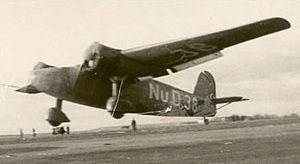
The Nuri Demirağ Nu.D.38 was a Turkish light civil transport, with twin engines and seating for four passengers, built in the early 1940s. Only one was constructed and flown.
Design work on the Nu.D.38 twin engine light transport began about 1938 and the aircraft was largely completed by 1941, but the first flight was delayed until 1944. Turkey remained neutral through most of World War II, only entering the war in 1945, after the first flight.
The Nu.D.38, manufactured by Nuri Demirağ in Istanbul, was a high cantilever wing aircraft. The wing, of tapered plan and all aluminium alloy stressed skin construction had a built up main spar and a secondary spar. There were pairs of split flaps inboard of the fabric covered ailerons. The fixed surfaces of the tail unit were also aluminium alloy structures with stressed metal skin. The tailplane, set at the top of the fuselage, was strut-braced from below. Control surfaces were fabric covered, with trim tabs.
The fuselage of the Nu.D.38 was an oval cross-section aluminium alloy monocoque, with stressed skin over frames and longitudinal stringers. The crew sat side by side at dual controls in a cabin with side access doors. The passenger compartment seated four, each with their own window, and was accessed through a starboard side door. There was a compartment for luggage or mail in the nose.
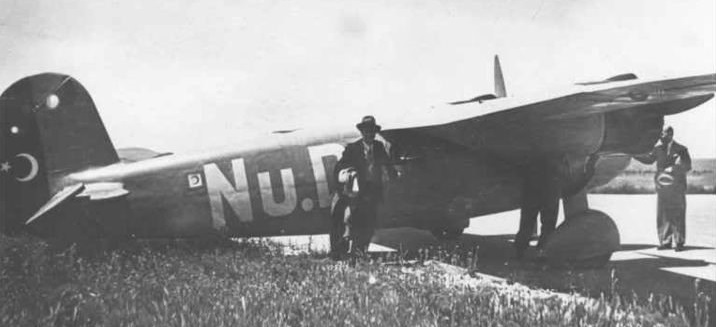
The Nu.D.38 was powered by two 160 hp (120 kW) Bramo Sh 14-A4 radial engines, mounted to the main wing spar on steel frames. It had a fixed, conventional undercarriage. A main shock absorber leg was attached to each of the steel engine frames, braced rearwards by a short auxiliary strut. Legs and wheels were enclosed in fairings.
The Nu.D.38 was first flown on 11 February 1944. No further aircraft were produced.
Engines: 2 × Siemens-Halske (Bramo) Sh 14-A4, 120 kW (160 hp) each
Propellers: 2-bladed
Wingspan: 13.56 m (44 ft 6 in)
Wing area: 22.34 sq.m (240.5 sq ft)
Length: 8.30 m (27 ft 3 in)
Height: 2.20 m (7 ft 3 in)
Empty weight: 1,108 kg (2,443 lb)
Gross weight: 1,850 kg (4,079 lb)
Maximum speed: 271 km/h (168 mph; 146 kn) at sea level
Cruise speed: 250 km/h (155 mph; 135 kn)
Service ceiling: 6,650 m (21,820 ft)
Rate of climb: 3.40 m/s (669 ft/min) to 4,000m (13,120 ft)
Crew: 2
Capacity: 4 passengers
NUD NU D.36
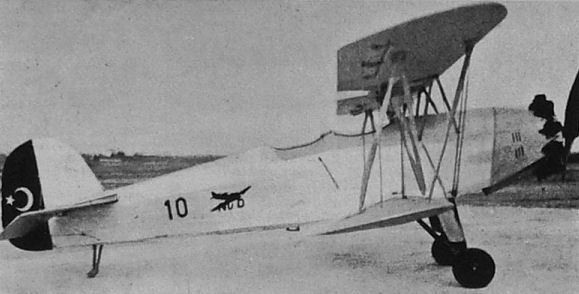
The Nuri Demirağ Nu D.36 was a 1930s Turkish two-seat training biplane built by the Nuri Demirağ Aircraft Works in Istanbul for the Turkish military.
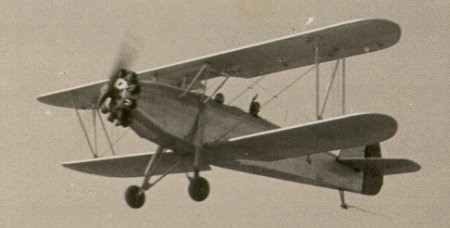
The Nu D.36 is an unequal-span single-bay staggered biplane with a fixed conventional landing gear with a tailskid. It was powered by a 150 hp (112 kW) Walter Gemma I nine-cylinder radial engine. It had two open tandem cockpits for the pilot and trainee.
Engine: 1 × Walter Gemma I, 110 kW (150 hp)
Propeller: 2-bladed fixed pitch wooden propeller
Wingspan: 9.74 m (31 ft 11 in)
Wing area: 21.8 sq.m (235 sq ft)
Length: 7.3 m (23 ft 11 in)
Height: 2.44 m (8 ft 0 in)
Empty weight: 650 kg (1,433 lb)
Max takeoff weight: 1,000 kg (2,205 lb)
Maximum speed: 182 km/h (113 mph; 98 kn)
Range: 500 km (311 mi; 270 nmi)
Endurance: 3 hours 30 minutes
Service ceiling: 3,350 m (10,990 ft)
Time to altitude: 500 m (1,600 ft) in 2 minutes; 1,500 m (4,900 ft) in 10 minutes
Crew: 2
 All Aero