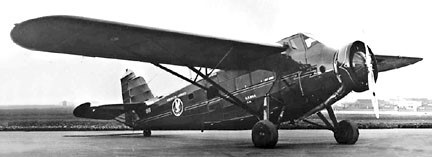
Pilgrim KR-135

Pilgrim KR-135 NC248V

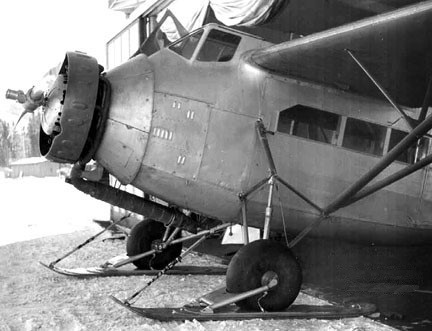
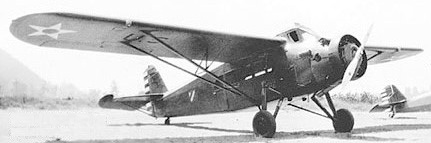
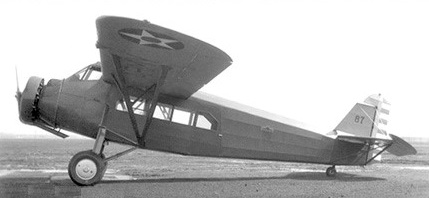
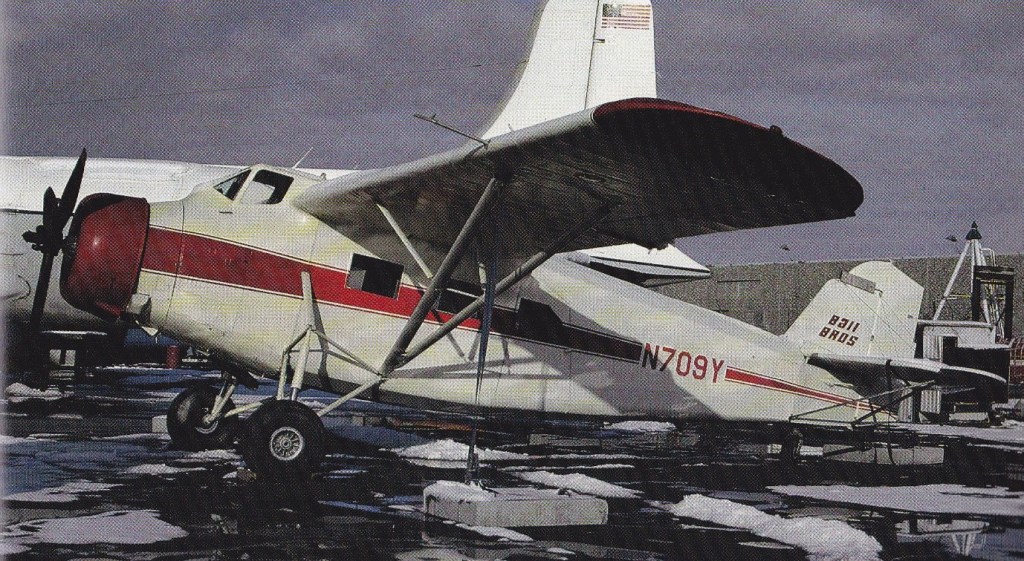
The 1931 Pilgrim KR-135 (ATC 415) was based on the Kreider-Reisner 21 series. Three were built; [NC248V, X311H, and NC963V. X311H was used as a test bed for Fairchild’s 100hp experimental Ranger 6-375 engine.

Engine: 125hp Fairchild (Ranger) 6-390
Wingspan: 27’0″
Length: 21’6″ Useful load: 590 lb
Max speed: 116 mph
Cruise: 93 mph
Stall: 51 mph
Range: 380 mi
Seats: 2

Pilgrim 100 / American Pilgrim / Y1C

Pilgrim 100-A

Designed by Virginius E. Clark, the 1931 100, 100-A or American Pilgrim was essentially a Fairchild product, descended from Fairchild 100.

The Pilgrim 100-A received ATC 443, 2-365.

Pilgrim 100-B

The 1932 100-B was powered by Wright R-1820 Cyclone B engines and received ATC 470. Ten were built, of which six went to American Airways, and four to the Army as Y1C-24.

Priced at $28,750, sixteen P&W Honet-engined Pilgrim 100As and six Wright Cyclone-engined 100B were built, all of which went to American Airlines, later passing to Alaskan Airways.

100 / 100-A / American Pilgrim
Engines: 575hp P&W Hornet B
Wing span: 57’0″
Length: 38’1″
Useful load: 3388 lb
Max speed: 136 mph
Cruise: 118 mph
Stall: 65 mph
Range: 400-500 mi
Seats: 10

100-B
Engines: 575hp Wright R-1820 Cyclone B
Length: 39’2″
Useful load: 3313 lb
Max speed: 135 mph
Cruise: 118 mph
Stall: 65 mph
Range: 510
Seats: 10

PIK

Polyteknikkojen llmailukerho
Finland
The Flying Club of the Finnish Institute of Technology was founded in 1932 and built a series of gliders; the PIK-20 high-performance sailplane was still in production through the 1990s. PIK has also built several low-wing single-engine monoplanes, the PIK-11 in 1953, the PIK-15 glider tug in 1964, and the PIK-19 glider tug and two-seat trainer in 1972.

Pigeon Hollow Spar Co Thomas-Pigeon

The Pigeon Hollow Spar Company also produced a flying boat called the Thomas-Pigeon about 1920. This hydroplane was built for Reginald deNoyes Thomas, a WWI naval aviator and director of the Thomas-Pigeon Aeroplane Corporation of Boston, Massachusetts.

The fuselage is spruce and ash ribboned all-wood construction with mahogany planking. This type of construction was said to insure safety, long life and reliability in all weather conditions.

The engine is mounted over the fuselage and below the upper wing. The only control is a joystick, and it may never have been completed.

The fuselage of which was located and purchased by Cole Palen, and reported in 1994 at “Yanks Air Museum in Chino.”

Pietsuj PAI-3

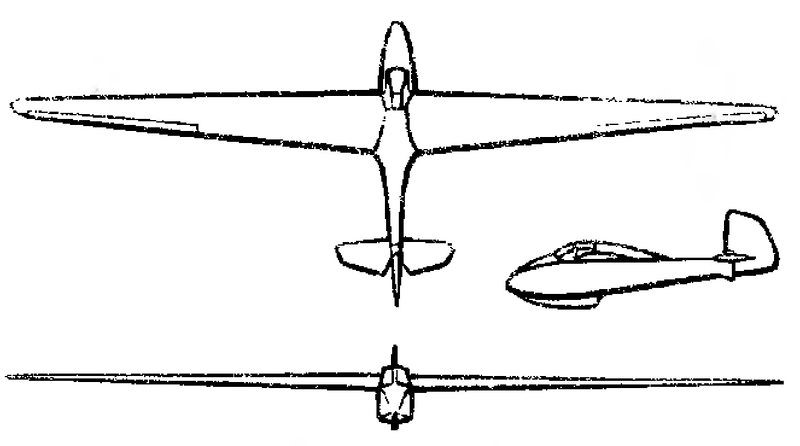
The Pietsuj PAI-3 (Russian: Пьецух ПАИ-3) was a glider designed and built by Alexei Ivanovich Pietsuj as a single-seater training apparatus for the preparation of Class B sport pilots and was built in 1937.

It was designed with the aim of replacing the Gribovski G-9 and Antonov BS-5 gliders, already outdated for the time. It was necessary to have a training glider capable of being towed from another plane and performing all kinds of high school stunts in all weather conditions.

The PAI-3 was designed as a high-wing cantilever monoplane with a trapezoidal wing and high aspect ratio.

The fuselage had a simple construction made up of a series of frames joined by four stringers. The outer covering was made of 2 mm thick plywood covered with fabric.

The wing construction incorporated a single main spar, a secondary spar, and a set of ribs. To fix the ailerons another small auxiliary spar was used. The wing tip was covered with plywood, but the rest of the coating was made of fabric covered with several layers of paint.

The empennage featured a large rudder attached to the shallow keel at three points. The horizontal empennage featured two non-stabilized elevator rudders.

At the bottom of the fuselage there was a ski with a trunk structure, without amortization.

The spacious cabin featured an angular deck constructed of duralumin and celluloid.

From a production point of view the Pietsuj PA-3 glider was easier and cheaper to produce than the Gribovski G-9 and Antonov BS-5.

The flight tests of the PA-3 glider were developed by pilot PI Shelest. Despite showing good performance, series production was not approved. Only the one prototype was built.

Pietsuj PAI-1

Alexei Pietsuj was born in 1918 in Vínnitsa, Ukraine. At age 16, he built a small glider, called PAI-1, in which he learned to fly and demonstrated at Aviation Day parties in Kiev. For this device he would receive the award for the youngest constructor in the national competition for light aircraft.