In 1921, with the help of some fellow students, Vladimir Sergueyevich Pyshnov built his first glider. In November of this year on this glider a group of young students, including Pyshnov himself, BI Cheranovski, VN Belyayev, VV Utkin-Yegorov and others, made more than 20 flights. In the last one carried out, the glider was destroyed and was never restored.
Inter-Wars
Pyshnov, Vladimir Sergueyevich
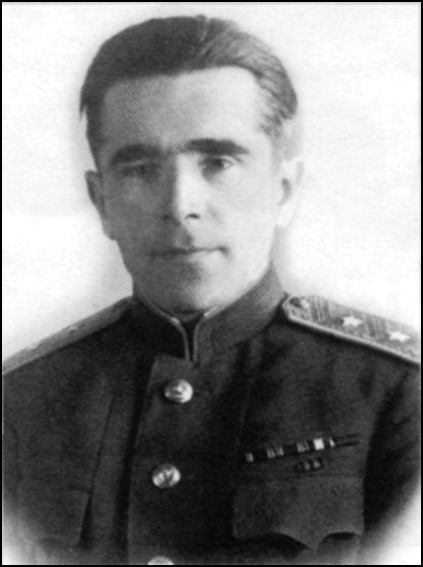
Vladimir Sergueyevich Pyshnov (Russian: Владимир Сергеевич Пышнов) was born on March 6, 1901 in Moscow. In 1918 he finished secondary school at the 3rd Muscovite Gymnasium and in 1919 he entered the Moscow Technical Aviation School, directed by the famous Professor N. Ye. Zhukovski.
In June 1920 VS Pyshnov voluntarily joined the ranks of the Red Army at a call from the school’s leadership and a month later, July 29, 1920 the Revvoyensoviet (Revolutionary Military Soviet) issued an order establishing the transfer of subordination of the school to the Main Directorate of the Red Air Fleet, although methodologically it was still linked to the technical-professional education structure.
Changes continued and the 26 of September of 1920 the Revvoyensoviet N.1946 issued a new order, which established reorganize the School of Aviation Moscow at the Institute of Engineers of Red Zhukovsky Air Fleet (Russian: Институт инженеров Красного Воздушного Флота имени Н. Е. Жуковского) in honor of its creator and on November 23 the state position on the institute was made official.
During the study period, Pyshnov carried out the practices under the guidance of the aeronautical constructor AA Porojovschikov, together with another group of students who worked in his factory as turners, milling cutters and assemblers. On the other hand, from the first year of study Pyshnov decided to try forces in the development of gliders.
In 1921, with the help of some fellow students, he built his first glider. In November of this year on this glider a group of young students, including Pyshnov himself, BI Cheranovski, VN Belyayev, VV Utkin-Yegorov and others, made more than 20 flights. In the last one carried out, the glider was destroyed and was never restored.
These were years of intense development of gliders in the USSR. At the request of the Directorate of the Air Fleet Directorate (Glavvozduxflot), a circle of gliding was created under the auspices of the Air Fleet Scientific Office.
Professor VP Vetchinkin at a meeting on October as November as 1921 asked to name this circle “Paryaschi Poliot” (thermal flying). The first president of the circle was AA Zhavrov, being soon replaced by KK Artseulov. Among the members of this circle, VS Pyshnov was registered.
In May 1923 and from an initiative of the direction of the Academy of the Air Fleet and the Military Academy of the RKKA a military scientific society was organized that greatly promoted the activities of the aviation and planning sections. The AVF leadership allowed students to build gliders and light aircraft using the academy workshops.
By November 1923, the gliding section, with 11 people, participated in the First National Sailing Competitions held in Crimea. Three students from the academy: MK Tijonrarov, VS Pyshnov and SV Ilyushin presented their own gliders named respectively AVF-1 Arap, AVF-2 Strizh and AVF-3 Mastyazhart.
At the Second National Sailing Competitions held in Crimea in September 1924, four-year students Pyhsnov and Tijonrarov were selected for members of the technical committee, led by Professor VP Vetchinkin.
The 2 of April of 1925 there was the first graduation of engineers in the AVF. Among the graduates was Pyshnov, after defending his diploma project under the mentorship of the famous aeronautical builder DP Grigorovch.
After finishing the Pyshnov academy he went on to serve as an engineer in the 8th Squadron of the independent brigade “Krasnaya Moskvá ”. In May 1926, he was placed on the reserve and sent to serve in the industry.
Pyshnov expressed his interest in continuing his studies and in October 1926 he again entered the Military Aeronautical Academy (VVA), where a year later he defended his dissertation, receiving the teaching category. From 1927 he began his work as a teacher at the VVA. As of January 1932, he was appointed head of the chair of Aerodynamics Aeronautics and later, on April 16, 1935, head of the chair of Flight Dynamics.
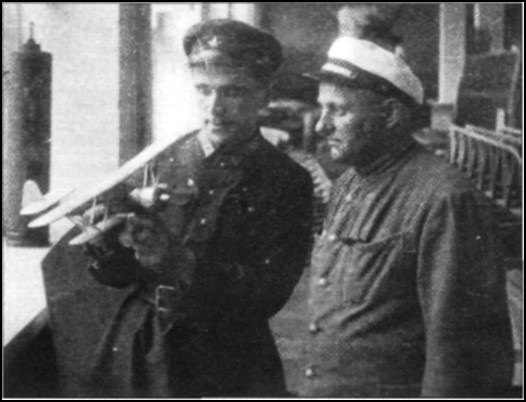
In 1935 Pyshnov developed a light aircraft that received the name VVA-1 of which a copy was built that was flown successfully, although with poor performance.
The 23 of February of 1937 he received the rank of professor and from the 14 of March of 1938, by Resolution No.235 of the SNK, it became part of the Aviation Committee within the Defense Committee of the USSR.
At the beginning of the Great Patriotic War and by order №02201 of the Popular Defense Committee, Pyshnov was appointed consultant to the head of the NII VVS on aviation matters. In this position he stood out for his work to develop a methodology for flight tests and work on the evaluation of military aircraft projects.
In June 1942 he was promoted to Major General of the Aviation Engineering Service and in that same year he received the distinction of Honorary Personality of Science and Technology of the USSR.
In March 1946 he was promoted again to lieutenant general engineer service and order №0763 of the direction of the VVS of the August 12 went on to serve as a consultant scientist and a permanent member of the Technical Committee on Aviation VVS (ATK VVS). Three years later, by ministerial order №01240, he became president of Section 1 (Aeronautics) of the ATK VVS, a position he held until 1958.
In 1958 he received the title of Doctor of Technical Sciences.
In November 1968 Vladimir Pyshnov was graduated, although he remained in teaching until the year of his death, which occurred in 1984, in Moscow.
Titles and distinctions
Twice Order of Lenin ;
Twice Order of the Red Banner ;
Order of the Red Banner of Labor ;
Order of the Patriotic War of the 1st level;
Medals;
Honorary Personality of Science and Technology of the USSR.
Aeronautical construction
1921 glider
AVF-2 “Strizh”
VVA-1
Works and published works
“Aeronautical Auger” (Russian: “Штопор самолета”), 1929;
“Aerodynamics of flight” (in Russian: «Аэродинамика самолета»), 1939;
“Dynamic Properties of Airplanes” (Russian: “Динамические свойства самолета”), 1951;
“Main stages of development of aviation” (in Russian: “Основные этапы развития самолета”), 1984.
Pyshnov was also the author of a large number of articles published by popular and specialized magazines, as well as several text brochures used in the subjects taught at the Zhukovski Military Aeronautical Engineering Academy.
Prudden-San Diego-Whitehead Monoplane / Atlanta PW-1 / PW-2 / Prudden monoplane

The Prudden-Whitehead monoplane (sometimes referred to as the Atlanta PW-1, PW-2 or the Prudden monoplane) is an American three-engined eight-seat commercial transport monoplane. Built by the Atlanta Aircraft Corporation and designed by George H. Prudden,
The Prudden-Whitehead monoplane is an all-metal low-wing cantilever monoplane with a monocoque fuselage and powered by three 240 hp (179 kW) Wright R-760 piston engines. It has a conventional fixed landing gear with a tailwheel. It has an enclosed passenger cabin for eight to ten passengers and a washroom and toilet.
Edward Whitehead was responsible for the sales of the aircraft. Only two of the trimotors were built.
The PW-1 variant, the first aircraft built was registered N366W.
The PW-2 variant, the second aircraft built was registered N280V.
PW-1 / PW-2
1930 (ATC 2-218)
Powerplant: 3 × Wright R-760, 240 hp (179 kW) / 220hp Wright J-6
Wingspan: 66 ft 6 in (20.27 m)
Wing area: 662.5 sq ft (61.6 sq.m)
Length: 44 ft 10 in (13.67 m)
Height: 14 ft 0.88 in (4.29 m)
Empty weight: 5,200 lb (2,359 kg)
Gross weight: 7,735 lb (3,509 kg)
Maximum speed: 145 mph (233 km/h, 126 kn)
Cruise speed: 124 mph (199 km/h, 108 kn)
Stall: 55 mph
Range: 620 mi (998 km, 540 nmi)
Endurance: 5 hours 0 minutes
Service ceiling: 15,000 ft (4,600 m)
Rate of climb: 1,220 ft/min (76.2 m/s)
Crew: 2
Capacity: 8 to 10 passengers
Prudden-San Diego TM-1 / XM-1 / SE-1

The first development of the company was the project of a three-engine transport aircraft. The prototype aircraft, designated XM-1 and registration number X3321, flew for the first time in late 1927.
It was an all-metal high-wing aircraft equipped with three Ryan engines (a copy of the German Siemens-Halske Sh 12) with 125 hp. The passenger cabin was designed for six people, but after a slight transformation it was possible to accommodate seven using the co-pilot’s seat.
This aircraft, built from steel and duralumin, was advertised by the company as being resistant to fire and the whims of the weather and even to damage (crash-proof).
After several months of testing, the aircraft was converted into the TM-1 (changing the registration number to N5728). In this form, the plane took off in June 1928 powered by Siemens-Halske engines.
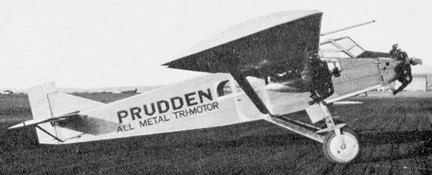
The Super TM-1 had Ryan-Siemens wing engines and a Wright J-5c in the nose position.
Thanks to good publicity, even before the end of testing, a contract was awarded for the production of 16 such aircraft for Beacon Airways.
However, the company soon began to experience serious financial difficulties that prevented the implementation of these plans. The only copy of the aircraft made only a few advertising flights, and then, was converted into a single engine and sold to Mexico. The SE-1 designation showing the largest change to date, into a single-engine configuration.
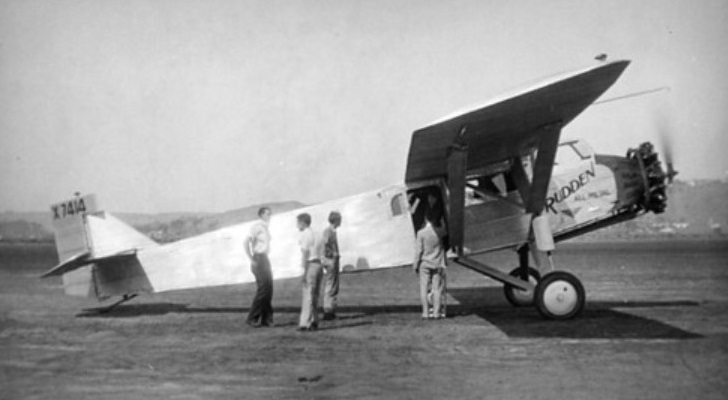
The type was developed into the Solar MS-1.
TM-1
Engines: 3 x Ryan, 125 h.p.
Wingspan: 17.37 m
Wing area: 47.00 sq,m
Length: 11.58 m
Height: 3.67 m
Weight empty: 1820 kg
Maximum speed: 175km / h
Cruising speed: 153km / h
Practical ceiling: 4572m
Crew: 2
Payload: 6 passengers
Prudden-San Diego Airplane Co / Solar Aircraft Co
The Prudden-San Diego Airplane Company was founded in 1927 by George Prudden and seven San Diego area businessmen. Due to differences in management philosophy between Prudden and his investors, Prudden left the company in November 1928.
1929:
1212 Juniper Ave,
San Diego CA,.
USA
Became the Solar Aircraft Company in March 1929.
Later, Prudden developed the Prudden-Whitehead monoplane with the Atlanta Aircraft Corporation. While in Atlanta, Prudden helped develop Candler Field, Atlanta.
The Solar MS-1 was a prototype all-metal sesquiplane airliner built in 1930 at Lindbergh Field, San Diego, California. Due to the Great Depression in 1929, the company was unable to market the aircraft and made only three airplanes. Solar would never build another aircraft after the MS-1, turning to saucepans to survive the depression, and later stainless-steel exhaust shrouds.
During this period, they won a number of contracts to produce jet engine components. Convinced that the gas turbine was the prime mover of the future, the company invested heavily in the development of small turbines.
The company was reincorporated in 1937 as the Solar Aircraft Company, dropping the “Ltd” from its name. By 1939, Solar Aircraft Company had a work force of 229. Military orders during World War II led to rapid expansion and by the end of the war the company had a workforce of 5,000, largely part of a massive effort to build more than 300,000 exhaust manifolds for U.S. airplanes.
Business dropped considerably after World War II and the management developed a plan to diversify into producing other stainless steel products including caskets, frying pans, bulk milk containers and even redwood furniture; immediately after World War II, the company also produced the Solar Midget race car. Solar’s expertise in hard-to-manufacture parts able to withstand high-temperatures led to contracts to produce jet engine components. Solar Aircraft began to design and manufacture completed turbine engines for the United States military for applications such as auxiliary power units, fuselages, and rocket engine components of guided missiles.
Solar Aircraft Company’s expertise in high-temperature metallurgy led to work producing components for some of the first US jet engines, including the General Electric I-40 and a contract from the US Navy to build an afterburner for the Westinghouse J34. Solar Aircraft Company also won contracts for the Allison J33, Allison J35, Avro Canada Orenda, and Bristol Olympus. It was during this time that one of its engineers, Wendell Reed, developed the pneumatic engine microjet controller, for which he won the Wright Brothers Medal in 1955 and which became widely used for gas turbines, afterburners, and ramjets.
Solar Aircraft Company’s work in the jet engine field convinced the company’s president, Edmund Price, that the turbine would be the main prime mover in the future. Solar Aircraft Company assembled a team under the direction of Paul Pitt in 1946 and started developing a small 80 horsepower (60 kW) axial-flow turbine as an auxiliary power unit for the US Army Air Force’s Convair B-36 strategic bomber. The Army eventually cancelled this contract, but Solar Aircraft Company soon won a contract from the US Navy in 1947 for a 250 kW system to provide emergency power on ships. First running in 1949, the T-400 would go on to provide power on minesweepers and landing craft.
In 1947, Leon Wosika and Eric Balje set up a second design line and developed a centrifugal-flow system that was much more compact than Solar’s previous designs. Originally known as the MPM-45, the unit was delivered as the 45 horsepower (34 kW) “Mars”. The Navy purchased the Mars to power portable fire-fighting pumps on ships and gave it the designation T41. In 1956, the Navy turned to Solar to provide a slightly larger design to power a small helicopter, the Gyrodyne XRON-1. Solar Aircraft Company responded by developing a slightly larger version of the Mars, the 55 horsepower (41 kW) “Titan”, which the Navy designated the T62. When the Navy abandoned development of Gyrodyne’s XRON helicopter, Solar Aircraft Company adapted the Titan for service as an auxiliary power unit. Deliveries of this auxiliary power unit started in 1962.
Solar did win the contract to provide the APU for the first 632 KC-135A tankers for the Strategic Air Command.
In the late 1950s, the Navy once again turned to Solar, this time for a larger 750-kilowatt (1,010 hp) unit that would be used as an engine in a high-speed boat. The result was the axial-flow “Saturn” engine, which entered production in 1960. Solar started marketing the Saturn to industrial users needing a 1,000-horsepower (750 kW) unit for any role, and it went on to become the world’s most widely used industrial gas turbine with some 4800 units in 80 countries.
During the next decade, the Solar Division introduced a number of new designs, both larger and smaller than the Saturn. The Centaur, which first entered service in 1968, supplied 2,700 horsepower (2,000 kW), while the modern versions supply 4,700 horsepower (3,500 kW). In 1973, Solar exited the aviation industry to concentrate its resources on industrial gas turbines.
The turbine never came to be the main prime mover, but Solar’s expertise in small turbines found a number of niche roles. The company was purchased by International Harvester Company in early 1960, becoming the Solar Division of International Harvester in 1963. In 1973, the Solar Division exited the aerospace industry to focus solely on industrial turbines. In 1975, the development and manufacture of the Solar Division’s radial engines was moved into a newly formed Radial Engines Group, renamed the Turbomach Division in 1980.
In 1977, the Solar Division introduced a larger version of the Centaur, the 10,600 horsepower (7,900 kW) Mars, re-using the name from the earlier smaller engine.
Solar Turbines Incorporated became a wholly owned subsidiary of Caterpillar Tractor Co. after Caterpillar purchased the assets of the Solar Division and the Turbomach division from International Harvester on 31 May 1981. The newly acquired assets were organized as a wholly owned subsidiary of Caterpillar Tractor Co. named Solar Turbines Incorporated.
After the purchase, Caterpillar assigned development and manufacturing of the Caterpillar Model 5600 to Solar Turbines. The 5600 was originally developed by The Boeing Company as the Boeing 551/553 series, which Caterpillar had purchased when Boeing decided to exit the gas turbine business in 1966.
In 1985, Caterpillar sold the Turbomach Division to Sundstrand Corporation (now Collins Aerospace), exiting the Centrifugal gas turbine engine business.
Solar Turbines Incorporated continued to introduce new versions of their axial-flow industrial engines throughout the 1980s and 90s, often re-using older names instead of introducing new names.
In 2004 Caterpillar acquired Swiss company Turbomach S.A. which had long been a packager of industrial turbines from Solar, Rolls-Royce, and Trent.
Solar has sold more than 15,000 gas turbine systems, with a combined operating history of over 2 billion hours of use, equivalent to over 100,000 years.
Provence-Aviation C.P.A.1
A twin-engine military monoplane with two Lorraine-Dietrich engines.
Provence-Aviation
France
The aircraft branch of Chantiers de Provence, a large naval dockyard in the mid-1920s. Produced the C.P.A.1 twin-engine military monoplane with two Lorraine-Dietrich engines.
Pringle 1937 monoplane
During 1937 Frank L Pringle built a two-place monoplane, registered N18546, and powered with a 45hp Szekely engine:
Pringle, Frank L
Frank L Pringle
Everton MO.
USA
Built a monoplane in 1937.
Prest Baby Pursuit

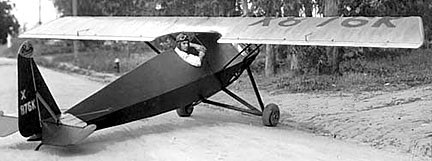
The Prest Baby Pursuit of 1929 was a single-place monoplane with a diamond-shaped fuselage cross-section, designed by Clarence Prest. Priced at $2,100, optional engines were the 40hp Szekely SR-3 and 60hp Lawrance.
Seven were built including prototype NX876K, NX955Y, NX2304, NX13741, and NX17308/17309.
One set a world’s lightplane speed record of 101mph on 28 May 1930, using a 40hp Szekely, piloted by Prest.
Engine: 45hp Anzani
Wingspan: 24’0″
Length: 17’11”
Useful load: 225 lb
Max speed: 100 mph
Cruise: 80 mph
Stall: 40 mph
Range: 250 mi
 All Aero